
Why material extrusion innovations now matter in plant upgrades




For plant upgrades, material extrusion innovations now matter far beyond equipment replacement. They directly influence energy efficiency, product consistency, emissions control, and long-term competitiveness—issues that enterprise decision-makers can no longer treat as secondary. As global industries push for greener materials and smarter production, understanding how extrusion advances reshape operational performance has become essential for making informed, future-ready investment decisions.
Why are material extrusion innovations becoming a board-level upgrade issue?
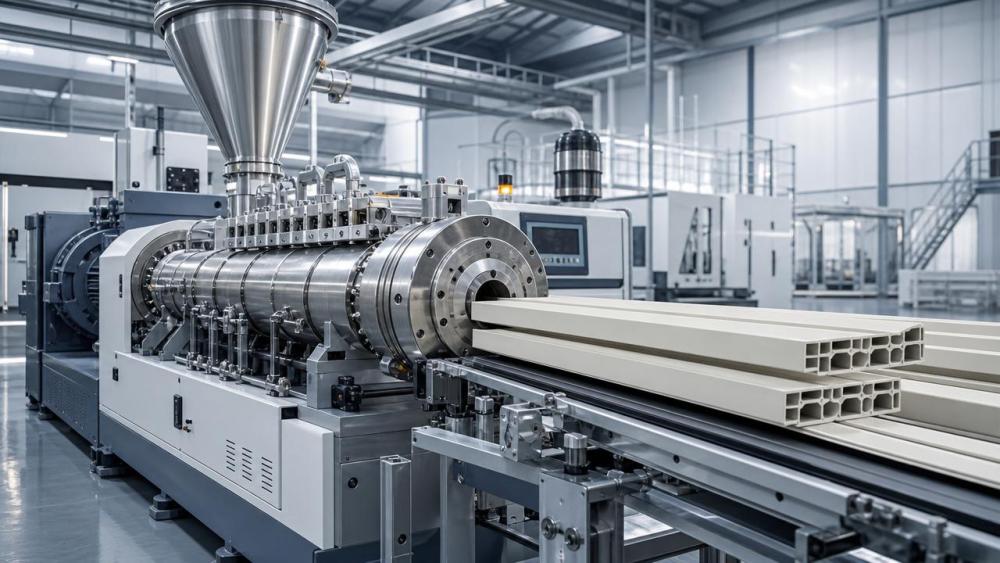
In heavy industrial environments, extrusion is no longer an isolated forming step. It increasingly sits at the intersection of raw material variability, thermal management, line automation, energy recovery, and downstream quality control.
That is why material extrusion innovations now influence plant-level KPIs such as unit energy consumption, scrap rate, maintenance planning, product dimensional stability, and compliance exposure. For enterprise decision-makers, this shifts extrusion from a workshop concern to a capital allocation topic.
This is especially true in silicate, thermal process, and green building material sectors, where pressure-forming performance can affect drying load, kiln behavior, curing uniformity, and the market acceptance of lightweight or low-carbon products.
What changed in the market environment?
- Energy costs have become less predictable, making efficient extrusion and lower moisture carryover more valuable.
- Environmental rules are tightening around dust, waste reuse, and carbon intensity, pushing plants toward more controlled and traceable forming systems.
- Customers expect tighter dimensional tolerances, more stable density, and better surface consistency in advanced building materials.
- Digital operations now require equipment that can produce usable process data rather than just mechanical output.
CF-Elite tracks this shift across cement-related material handling, refractory lines, kilns, incineration-linked resource reuse, and new building material extrusion. That cross-sector view helps decision-makers see where a local extrusion bottleneck is actually part of a broader thermal and materials strategy.
Which plant scenarios benefit most from material extrusion innovations?
Not every factory needs the same level of upgrade. The business case becomes stronger when extrusion performance directly affects energy use, product certification, yield, or throughput stability.
The table below summarizes where material extrusion innovations usually create the clearest operational and financial impact.
The key takeaway is practical: extrusion innovation matters most where upstream raw materials are variable, downstream thermal costs are high, or market standards punish inconsistency. In such cases, even modest improvements in shaping stability can unlock wider line benefits.
High-priority upgrade signals
- Frequent die clogging or screw wear that causes unpredictable stoppages.
- Large moisture correction ranges before or after extrusion.
- Visible dimensional deviation that increases trimming, rejection, or customer complaints.
- Rising electricity consumption per ton without a matching increase in throughput.
What technical indicators should decision-makers compare before investing?
Many procurement teams still compare extrusion equipment mainly by nominal capacity. That is rarely enough. The more important question is whether the line can maintain stable output under real raw material and thermal conditions.
When assessing material extrusion innovations, the following technical parameters deserve structured review.
A strong upgrade decision links these indicators to downstream economics. For example, lower torque fluctuation is not just a mechanical benefit. It can reduce shape distortion, drying defects, and emergency maintenance frequency across the plant.
Why thermal context cannot be ignored
CF-Elite’s specialty lies in connecting extrusion performance with thermal systems, chemical reaction behavior, and decarbonization strategy. That matters because extrusion quality often determines how much energy the next process stage must absorb or correct.
In kilns, dryers, and curing sections, a poorly controlled extrudate can create uneven heat transfer, variable residence time, and a larger reject window. In other words, weak extrusion control often hides inside thermal inefficiency.
How should buyers compare conventional upgrades with newer extrusion solutions?
Decision-makers usually face a difficult choice: refurbish an existing extruder, replace selected wear components, or adopt a more advanced extrusion platform with improved automation and process intelligence.
The comparison below helps frame that decision around lifecycle value rather than only initial expenditure.
This comparison shows why material extrusion innovations should be evaluated as part of a plant system, not as a standalone machine purchase. The cheapest path can become expensive if it preserves instability in energy, yield, or compliance performance.
A practical decision sequence
- Define the business objective first: more capacity, lower energy, better quality, lower downtime, or new product capability.
- Map current line losses, especially moisture variability, scrap causes, and maintenance frequency.
- Test whether the problem is geometric, mechanical, raw-material related, or control-related.
- Choose an upgrade path that improves both forming stability and downstream thermal performance.
What procurement risks do enterprises often overlook?
One common mistake is treating extrusion equipment like a standard commodity. In reality, the wrong configuration can lock a plant into years of hidden inefficiency, especially when recipes, throughput, and environmental obligations are changing.
Frequent misconceptions
- Assuming a higher nominal capacity automatically improves output. If feed preparation and die design are not aligned, bottlenecks simply move downstream.
- Focusing only on purchase price. Wear parts, unplanned shutdowns, moisture correction, and scrap usually decide the real cost.
- Ignoring integration with drying, firing, curing, or incineration-linked heat recovery systems. That can erase part of the expected return.
- Underestimating the effect of alternative raw materials. Recycled inputs and low-carbon formulations often change flow behavior and pressure demand.
A more reliable procurement approach uses a plant-wide review. CF-Elite’s intelligence model is useful here because it combines process engineering, thermal energy logic, and market trend analysis instead of looking at mechanical hardware alone.
Compliance and standards to keep in view
Specific requirements vary by market and product, but buyers should still review electrical safety, industrial control compatibility, dust and emissions implications, and traceability expectations for quality-sensitive materials. Where exports are involved, documentation discipline becomes part of the procurement decision.
For plants pursuing greener product positioning, material extrusion innovations should also be checked against corporate carbon goals, resource circularity targets, and the ability to process secondary or blended feedstocks without destabilizing output.
How can a phased implementation reduce upgrade risk?
Decision-makers do not always need a disruptive replacement. In many cases, a phased implementation lowers financial exposure while building confidence through measurable process gains.
Recommended rollout path
- Audit current process data, including throughput variance, specific energy, scrap distribution, and maintenance history.
- Validate material behavior under target recipes, especially when using recycled or low-carbon components.
- Prioritize the biggest loss point, such as die wear, pressure instability, or control lag.
- Pilot sensor upgrades, geometry refinements, or control improvements before large-scale duplication.
- Track results against production, energy, maintenance, and quality metrics, then decide on full deployment.
This phased method is particularly useful for groups operating multiple plants. A successful pilot can become a standard upgrade framework, reducing procurement uncertainty and improving negotiating leverage with equipment partners.
FAQ: what do enterprise buyers ask most about material extrusion innovations?
How do we know whether our current line needs optimization or full replacement?
If the core structure is sound and the main losses come from controls, wear, or monitoring gaps, optimization may be enough. If the line cannot handle target recipes, throughput, or dimensional stability even after repeated fixes, replacement becomes more rational.
Which plants gain the fastest return from material extrusion innovations?
Plants with high drying or firing costs, unstable raw materials, or strict quality requirements often see the clearest return. Lightweight building materials, refractory shaping, and low-carbon product lines are common examples.
What should procurement teams request before comparing suppliers?
Ask for process suitability analysis, expected wear conditions, integration requirements, data interface options, commissioning scope, and assumptions behind capacity and energy figures. Without those details, quotes are hard to compare fairly.
Can advanced extrusion support carbon reduction goals?
Yes, but indirectly as well as directly. Better forming stability can reduce waste, lower moisture carryover, improve thermal efficiency downstream, and enable more consistent use of recycled or lower-carbon inputs. Those gains often matter more than motor efficiency alone.
Why choose us for upgrade intelligence and next-step planning?
CF-Elite supports enterprise decision-makers who need more than isolated equipment information. Our value lies in linking material extrusion innovations with silicate process engineering, thermal management logic, environmental pressure, and long-cycle industrial investment judgment.
Because we observe cement plants, glass production systems, industrial kilns, incineration processes, refractory lines, and new building material extrusion together, we help buyers evaluate how one upgrade affects the entire production chain.
- Parameter confirmation: review target throughput, material characteristics, moisture range, and downstream thermal constraints.
- Product selection support: compare retrofit paths, wear strategies, control readiness, and data integration options.
- Delivery cycle discussion: identify realistic implementation windows around shutdown schedules and commissioning risk.
- Customized solution planning: match extrusion upgrades with green material recipes, energy goals, and plant-wide optimization priorities.
- Compliance and documentation guidance: clarify what operational and market requirements should be reviewed before purchase.
- Quotation communication: help structure technical comparisons so pricing reflects lifecycle value rather than incomplete scope.
If your plant is evaluating material extrusion innovations for capacity growth, energy reduction, quality consistency, or greener product development, a focused technical consultation can reduce uncertainty early. The most useful starting point is usually a discussion around your current process bottlenecks, target product mix, and upgrade timeline.
Related News
 Optical Glass Tech FellowHow to Evaluate a Glass Annealing Equipment Manufacturer for Production StabilityChoose a glass annealing equipment manufacturer with proven thermal uniformity, reliable controls, lifecycle value, and responsive service for stable production.Sep 08, 2026
 Prof. Marcus ChenThermal Energy Architecture in North America: Strategies for Lower Building Energy UseThermal energy architecture North America helps project leaders cut building energy use through stronger envelopes, right-sized HVAC, storage, and smart commissioning.Sep 07, 2026
 Ms. Elena RodriguezHow Should Buyers Evaluate Building Material Industry Intelligence Pricing?Building material industry intelligence pricing: learn how to compare coverage, technical depth, and ROI to choose intelligence that reduces procurement risk.Sep 07, 2026
 Ms. Elena RodriguezHow to Use Building Material Intelligence Data for Market and Investment DecisionsBuilding material industry intelligence data helps leaders evaluate demand, costs, regulation, capacity, and technology to make smarter market and investment decisions.Sep 05, 2026
 Thermal Energy ArchitectHow PLC Control Improves Energy Efficiency and Temperature Stability in KilnsEnergy efficient kilns PLC control improves temperature stability, cuts fuel waste, and optimizes combustion, draft, and material flow. Explore proven strategies for smarter kiln modernization.Sep 04, 2026
 Optical Glass Tech FellowEuropean Glass Melting Processes: Furnace Choices, Energy Use, and Quality ControlGlass melting process Europe: explore furnace choices, energy efficiency, cullet strategy, and quality control to improve output, compliance, and long-term glass performance.Sep 03, 2026
 Thermal Energy ArchitectWhat Determines Refractory Lining Monitoring Price for Industrial Kilns?Refractory lining monitoring price depends on kiln size, sensor technology, installation, software, and support. Compare total lifecycle costs and choose the right solution.Sep 02, 2026
 Silicate Process EngineerCement Production System Costs: A Plant Buyer’s Guide to Budgeting and ROICement production systems cost planning made clear: compare CAPEX, operating costs, compliance, and ROI to build a resilient, profitable cement plant investment.Sep 01, 2026
 Dr. Alistair VaughnWhat Should a Process Technology Database Track for High-Temperature Plants?Process technology database essentials for high-temperature plants: track thermal profiles, feed chemistry, refractory wear, emissions, energy, and maintenance for safer, data-driven decisions.Aug 31, 2026
 Ms. Elena RodriguezHow to Evaluate a Silicate Processing Equipment Manufacturer for Plant ProjectsSilicate processing equipment manufacturer selection: assess process fit, guarantees, energy, compliance, delivery risk, and lifecycle support for dependable plant performance.Aug 30, 2026
 Dr. Alistair VaughnHow to Specify Custom Agricultural Processing Equipment for Throughput and HygieneEquipment customization services for agricultural processing: learn to specify hygienic, high-throughput lines that improve yield, reliability, and long-term efficiency.Aug 29, 2026
 Dr. Alistair VaughnHow to Select Process Plant Equipment for High-Temperature, Abrasive Production LinesProcess plant equipment selection for high-temperature, abrasive lines: reduce downtime, improve durability, and optimize lifecycle performance.Aug 28, 2026
 Silicate Process EngineerHow Kiln Heat Recovery Systems Cut Fuel Use in Cement and Lime ProductionKiln heat recovery helps cement and lime plants cut fuel use, improve thermal stability, and build practical, reliable decarbonization strategies.Aug 27, 2026
 Ms. Elena RodriguezProcess Equipment Comparison: Which Metrics Matter Most for Reliable Selection?Process equipment comparison made practical: discover which metrics truly drive reliable selection, from energy efficiency and control stability to wear life, maintainability, and uptime.Aug 26, 2026
 Ms. Elena RodriguezWhat Buyers Should Check Before Sourcing Precision Alloy Bars for Critical PartsPrecision Alloy Bars buyers should verify grade, chemistry, tolerances, surface quality, traceability, and lead time before sourcing for critical parts. Learn what prevents costly machining and reliability risks.Aug 27, 2026
 Ms. Elena RodriguezHow to Evaluate Thermal Management Solutions Insulation for High-Heat Industrial SystemsThermal management solutions insulation: learn how to assess high-heat industrial systems by thermal performance, durability, lifecycle cost, and supplier data for smarter decisions.Aug 25, 2026
 Ms. Elena RodriguezWhat Drives Waste Recycling Cost in Industrial Projects and How to Estimate It?Waste recycling cost in industrial projects depends on composition, moisture, transport, pre-treatment, and compliance. Learn how to estimate it accurately and compare suppliers with confidence.Aug 24, 2026
 Silicate Process EngineerHow to Evaluate Cement Production Plants in the Middle East for Capacity, Fuel Flexibility, and ROIcement production plants Middle East: Learn how to assess true capacity, fuel flexibility, and ROI risks to identify resilient assets and smarter investment opportunities.Aug 23, 2026
 Structural Material AnalystHow to Evaluate Lightweight Material Machinery for Output, Energy Use, and Product QualityLightweight material machinery evaluation guide: compare stable output, energy use, and product quality to choose equipment that cuts waste, lowers costs, and improves production confidence.Aug 22, 2026
 Material Heat-Resist ExpertWhat Determines Refractory Production Line Price in a Turnkey Plant Project?Refractory production line price depends on raw materials, forming method, kiln and drying design, automation, utilities, and scope. Learn what really drives turnkey plant cost before you invest.Aug 21, 2026

Related News
- 00
0000-00
How to Evaluate Lightweight Material Machinery for Output, Energy Use, and Product Quality - 00
0000-00
What Thermal Barrier Technology Works Best for Lightweight Industrial Panels? - 00
0000-00
Advanced Ceramic Processing for Honeycomb: Which Methods Improve Strength and Thermal Shock Resistance? - 00
0000-00
Building Material Extrusion Equipment Supplier Selection: 7 Parameters That Affect Line Performance - 00
0000-00
High Pressure Extruder Selection Guide: Output, Material Compatibility, and Wear
Weekly Insights
Stay ahead with our curated technology reports delivered every Monday.