
Building Material Extrusion Equipment Supplier Selection: 7 Parameters That Affect Line Performance




Building Material Extrusion Equipment Supplier Selection: 7 Parameters That Affect Line Performance
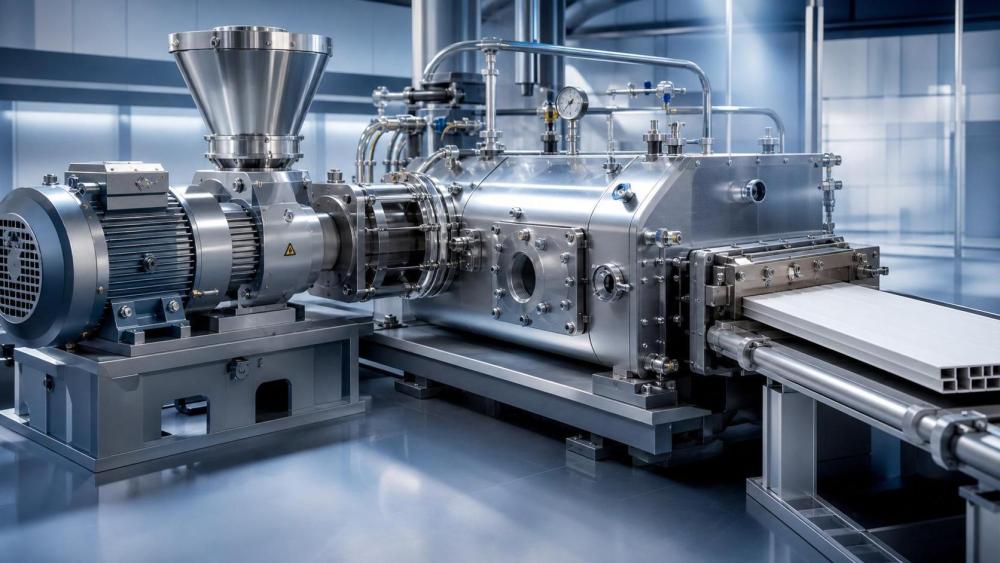
Choosing a building material extrusion equipment supplier shapes far more than the purchase budget.
It affects output stability, material density, energy use, downtime, and the quality consistency of finished blocks, panels, or profiles.
In technical evaluation work, low price alone rarely predicts low lifecycle cost.
A strong building material extrusion equipment supplier usually proves value through process fit, engineering depth, and dependable after-sales execution.
That is why supplier selection should start from measurable line performance parameters, not brochure claims.
For operations linked to green materials and thermal management, this is even more important.
CF-Elite tracks these shifts across silicate production, refractory systems, kiln energy use, and new building material extrusion technology.
From recent market changes, the clearer signal is this: reliable suppliers now compete on process intelligence, not only machine assembly.
1. Material Adaptability Determines Baseline Stability
Every building material extrusion equipment supplier claims wide material compatibility.
The real question is how the line performs when moisture, particle gradation, additives, and recycled content begin to fluctuate.
In actual production, raw material inconsistency is normal.
A capable supplier should provide feed preparation logic, mixing tolerances, vacuum control ranges, and screw configuration recommendations.
Without that support, line speed may look acceptable during testing but drift badly in routine operation.
- Check accepted moisture range under rated output.
- Review material test reports for ash, fiber, clay, or lightweight aggregate blends.
- Ask whether recycled inputs reduce dimensional stability or die life.
This parameter often separates a generic machine builder from a true building material extrusion equipment supplier.
2. Pressure and Vacuum Control Shape Product Quality
Extrusion quality depends heavily on pressure continuity and air removal efficiency.
If the pressure curve fluctuates, surface cracking, density variation, and edge deformation usually follow.
If vacuum performance is weak, internal voids become harder to control.
A dependable building material extrusion equipment supplier should explain how the chamber sealing, vacuum pump sizing, and pressure feedback loop work together.
More importantly, the supplier should provide stable data under continuous load, not only no-load figures.
Look for process records showing vacuum degree, extrusion pressure, and defect rates over long runs.
That evidence gives a clearer view of real line performance risk.
3. Drive System Matching Impacts Throughput and Energy Use
A building material extrusion equipment supplier should never size the drive system only for nameplate output.
The right match depends on material viscosity, screw geometry, torque reserve, and startup load.
Undersized drives increase stoppages.
Oversized drives raise capital cost and often waste power during partial-load operation.
This also matters in carbon reduction planning.
Across heavy industrial lines, energy efficiency is becoming a selection criterion, not a later optimization topic.
Ask suppliers to compare specific energy consumption at different operating loads.
That makes commercial evaluation much sharper.
4. Die Design and Wear Resistance Affect Dimensional Accuracy
Many line problems begin at the die.
Even with stable extrusion pressure, poor die flow distribution can cause warping, uneven density, and edge collapse.
A qualified building material extrusion equipment supplier should discuss die channel design, replaceable wear parts, and maintenance intervals in practical terms.
This becomes critical when abrasive fillers or recycled mineral content are high.
Short die life quickly erodes any price advantage.
The better suppliers usually provide wear forecasts, spare part plans, and dimensional tolerance records from similar applications.
That level of detail indicates process ownership.
5. Automation and Data Visibility Reduce Hidden Operating Risk
Today, a building material extrusion equipment supplier should be evaluated partly as a control system partner.
Manual adjustment may still work, but it creates more operator dependence and slower fault diagnosis.
A stronger solution gives live visibility into motor current, vacuum level, feed rate, pressure trend, and alarm history.
This is where digital thinking starts to influence line performance.
CF-Elite has observed similar patterns in kiln monitoring and refractory lining management.
Once data becomes visible, troubleshooting becomes faster and process optimization becomes repeatable.
- Confirm whether production data can be exported.
- Check if remote diagnosis is included.
- Review alarm logic for vacuum loss, overload, and material interruption.
These details often reveal whether the supplier is prepared for long-cycle industrial support.
6. Service Capability Decides Recovery Speed After Failure
Service quality is easy to undervalue during tender review.
Yet for any building material extrusion equipment supplier, service response can decide annual utilization.
When a gearbox fails or vacuum efficiency drops, every hour matters.
Ask specific questions.
- What are the guaranteed response times?
- Which spare parts are stocked locally?
- How long does commissioning support remain available?
- Can technicians support process tuning after startup?
A serious building material extrusion equipment supplier answers with service structure, not vague promises.
That also lowers decision risk for expansion projects.
7. Supplier Process Knowledge Supports Future Upgrades
The best building material extrusion equipment supplier is rarely just a machine vendor.
It understands drying behavior, thermal balance, material chemistry, and downstream finishing constraints.
That broader knowledge matters when production targets change.
A line designed only for today’s recipe may struggle with lightweight formulations, higher recycled content, or tighter dimensional requirements later.
This is where strategic intelligence becomes useful.
Suppliers with stronger process insight usually give more credible upgrade paths for dies, screws, controls, and energy optimization modules.
That protects both asset value and long-term competitiveness.
A Practical Evaluation Framework
To compare each building material extrusion equipment supplier fairly, use a weighted evaluation sheet.
Score process fit, energy performance, automation depth, wear life, service coverage, and upgrade capability.
Then test supplier claims against three kinds of evidence.
- Verified operating data from similar plants
- Clear boundary conditions for rated performance
- Documented service and spare parts commitments
This method keeps the selection process grounded in operational reality.
It also helps identify whether a quotation reflects real engineering value or missing downstream cost.
Final Takeaway
Selecting a building material extrusion equipment supplier is ultimately a line performance decision.
The seven parameters above give a practical way to assess that decision before capital is committed.
When material adaptability, pressure control, drive matching, die durability, automation, service, and process knowledge are reviewed together, supplier quality becomes much easier to see.
In a market shaped by efficiency pressure, green material growth, and tighter operating margins, disciplined selection creates a real advantage.
Use these parameters to challenge quotations, refine technical scoring, and choose a building material extrusion equipment supplier that can support stable output over the full life of the line.
Related News
 Prof. Marcus ChenIndustrial Decarbonization Strategies in Europe: A Roadmap for Energy-Intensive PlantsIndustrial decarbonization strategies Europe: explore practical pathways for energy-intensive plants to cut emissions, improve efficiency, and protect performance.Oct 07, 2026
 Thermal Energy ArchitectEnergy-Efficient Silicate Production Lines: What to Compare Before SelectionSilicate production lines energy efficient selection guide: compare thermal performance, stability, emissions, controls, and lifecycle value before investing.Oct 06, 2026
 Optical Glass Tech FellowHow to Evaluate Automated Float Glass Lines for Capacity, Quality, and Energy UseEvaluate automated float glass lines for net capacity, consistent quality, energy efficiency, automation reliability, and lifecycle value. Explore key criteria for smarter investment decisions.Oct 05, 2026
 Thermal Energy ArchitectWhat Does CE Marking Require for an Energy-Efficient Industrial Kiln?Energy efficient kiln CE requirements explained: assess safety, technical files, energy performance, and EU compliance before purchase or commissioning.Oct 04, 2026
 Thermal Energy ArchitectRefractory Manufacturing Solutions for Brick Plants: How to Extend Kiln LifeRefractory manufacturing solutions for brick plant operations: discover proven strategies to extend kiln life, reduce heat loss, prevent lining failures, and plan cost-effective repairs.Oct 03, 2026
 Thermal Energy ArchitectHow to Specify Heavy Industrial Process Systems for High-Temperature PlantsHeavy industrial processes systems: learn how to specify high-temperature plants for efficiency, emissions control, maintainability, and lifecycle performance.Oct 02, 2026
 Structural Material AnalystHow Sustainable Material Extrusion Can Improve Wall Panel Durability and Design FlexibilityDiscover how sustainable material extrusion for wall panels improves durability, moisture resistance, design flexibility, and installation consistency for high-performing wall systems.Oct 01, 2026
 Thermal Energy ArchitectHow to Evaluate a High-Temperature Materials Manufacturer for Furnace ApplicationsChoose a high-temperature materials manufacturer with confidence: compare thermal performance, chemical resistance, quality controls, installation support, and lifecycle cost.Sep 30, 2026
 Ms. Elena RodriguezHow to Structure Global Specification Data for Faster Industrial Product EvaluationGlobal specification-oriented product information helps industrial teams compare capacity, energy, emissions, automation, and lifecycle data on a like-for-like basis for faster, confident equipment decisions.Sep 29, 2026
 Thermal Energy ArchitectHow to Specify High-Temperature Process Systems for Continuous Thermal OperationsHigh-temperature process engineering systems: learn how to specify resilient continuous thermal operations for efficiency, compliance, reliable uptime, and long-term performance.Sep 28, 2026
 Thermal Energy ArchitectHow to Evaluate a Thermal Engineering Contractor for High-Temperature Plant ProjectsChoose a thermal engineering contractor with proven process expertise, lifecycle value, emissions control, and delivery discipline for reliable high-temperature plant performance.Sep 27, 2026
 Silicate Process EngineerHow Latin American Cement Plants Can Reduce Dust Emissions in Kilns and Transfer PointsCement plant dust control Latin America: reduce kiln and transfer-point emissions with practical airflow, filtration, monitoring, and maintenance strategies.Sep 26, 2026
 Material Heat-Resist ExpertHow to Evaluate Refractory Production Lines for Output, Quality, and Energy UseRefractory production lines: learn how to assess qualified output, consistent quality, and total energy use for smarter, lower-risk investment decisions.Sep 25, 2026
 Dr. Alistair VaughnHow Waste Recycling Technology Improves Material Recovery in Industrial PlantsWaste recycling technology improves material recovery through source segregation, smart separation, thermal treatment, and quality control for industrial plants.Sep 24, 2026
 Optical Glass Tech FellowHow to Specify Glass Annealing Equipment for European Quality and Energy RequirementsGlass annealing equipment Europe: learn how to specify lehrs for consistent glass quality, energy efficiency, compliance, automation, and reliable long-term performance.Sep 23, 2026
 Optical Glass Tech FellowSilicate Process Automation: Improving Batch Consistency and Energy ControlSilicate process automation improves batch consistency, energy control, traceability, and operator confidence across high-temperature manufacturing operations.Sep 22, 2026
 Optical Glass Tech FellowHow Silicate Industrial Processes Control Viscosity, Energy Use, and Product QualitySilicate industrial processes: learn how viscosity, chemistry, heat transfer, and atmosphere control reduce energy use, improve stability, and protect product quality.Sep 21, 2026
 Thermal Energy ArchitectHow European Plants Can Evaluate Energy Recovery Equipment for High-Temperature ProcessesIndustrial energy recovery equipment Europe: learn how high-temperature plants can assess waste-heat sources, integration risks, lifecycle value, and reliable recovery routes.Sep 20, 2026
 Thermal Energy ArchitectIndustrial Furnace Process Optimization: Reducing Fuel Use Without Sacrificing ThroughputIndustrial process optimization furnace strategies that cut fuel use while protecting throughput. Explore combustion control, heat recovery, refractory performance, and data-driven efficiency gains.Sep 19, 2026
 Ms. Elena RodriguezWhat Drives High-Pressure Extrusion Equipment Cost in Industrial Projects?High pressure extrusion equipment cost explained: compare pressure, die design, automation, wear, energy, and installation factors for smarter industrial investments.Sep 18, 2026

Related News
- 00
0000-00
How Sustainable Material Extrusion Can Improve Wall Panel Durability and Design Flexibility - 00
0000-00
How to Evaluate Lightweight Material Machinery for Output, Energy Use, and Product Quality - 00
0000-00
What Thermal Barrier Technology Works Best for Lightweight Industrial Panels? - 00
0000-00
Advanced Ceramic Processing for Honeycomb: Which Methods Improve Strength and Thermal Shock Resistance? - 00
0000-00
Building Material Extrusion Equipment Supplier Selection: 7 Parameters That Affect Line Performance
Weekly Insights
Stay ahead with our curated technology reports delivered every Monday.