
When Do Bio Processing Equipment Customization Services Make Sense for New Lines?




When Do Bio Processing Equipment Customization Services Make Sense for New Lines?
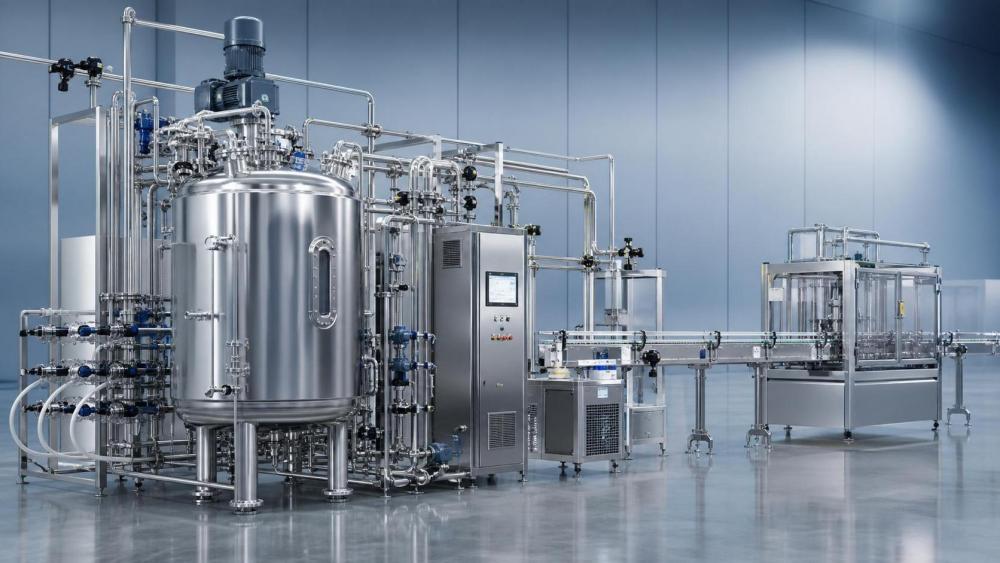
Launching a new line always brings one hard question: should standard equipment be enough, or is customization worth the extra capital and time?
For many projects, equipment customization services for bio processing look attractive early. The real value appears only when process conditions clearly exceed standard design limits.
That usually happens when throughput targets, material behavior, utility constraints, and compliance requirements must work together without much operating margin.
In practical terms, customization is not just about changing dimensions. It can involve thermal control, feed handling, surface treatment, automation logic, cleaning access, and energy integration.
This matters even more in bio processing, where raw material variability can quickly turn a stable design into a bottleneck.
From a decision perspective, the goal is simple: spend on customization only when it lowers total lifecycle risk and improves line economics.
Why Standard Equipment Often Falls Short
Standard equipment works best when material properties stay predictable, recipes rarely change, and production windows leave room for adjustment.
New bio processing lines rarely enjoy that level of simplicity. Moisture swings, particle inconsistency, sticky compounds, and contamination risk can all reshape performance.
A catalog machine may meet nameplate capacity, yet still miss real plant needs. The gap often appears in uptime, cleaning cycles, product loss, or unstable output quality.
This is where equipment customization services for bio processing start to make strategic sense. They align equipment behavior with actual process conditions instead of average assumptions.
The stronger signal is not complexity alone. It is repeated evidence that standard designs would force costly workarounds across operations, maintenance, and compliance.
The Best Situations for Equipment Customization Services for Bio Processing
Customization becomes easier to justify when the line must deliver precise performance under demanding and changing conditions.
1. Feedstock Behavior Is Unstable
If feed properties vary by supplier, season, or storage time, standard handling systems can create surges, buildup, or poor mixing.
In these cases, equipment customization services for bio processing may include feeder redesign, hopper geometry changes, anti-bridging features, or stronger agitation control.
2. Temperature Control Directly Affects Yield
Many biological or bio-derived materials are highly sensitive to heat exposure and residence time.
A custom thermal profile, better insulation, improved transfer surfaces, or tighter control loops can protect product value and reduce waste.
3. Cleaning and Changeovers Drive the Cost Base
Frequent product changes can destroy effective capacity if equipment is difficult to open, clean, inspect, and restart.
In that scenario, equipment customization services for bio processing often focus on access points, removable sections, CIP compatibility, and dead-zone reduction.
4. Utilities Are Limited or Expensive
Power, steam, cooling water, or compressed air constraints can turn a standard line into a poor local fit.
A tailored solution may lower peak loads, recover heat, or match existing infrastructure more efficiently.
5. Compliance Exposure Is High
Where traceability, hygienic design, emissions control, or operator safety standards are strict, retrofits become expensive and disruptive.
Customization from the start can reduce validation delays and future redesign costs.
What Good Customization Actually Changes
Not every custom feature creates business value. The strongest projects improve the core production equation: throughput, quality, uptime, energy use, and controllability.
Well-targeted equipment customization services for bio processing usually affect several layers at once.
- Mechanical fit: geometry, wear surfaces, seals, drive sizing, and materials of construction.
- Process fit: residence time, pressure profile, temperature distribution, and flow stability.
- Operational fit: cleaning time, access safety, inspection points, and operator workload.
- Digital fit: sensor layout, recipe logic, alarms, historian integration, and predictive maintenance inputs.
- Energy fit: heat recovery, insulation quality, motor efficiency, and utility balancing.
When these elements are aligned early, the line tends to start faster and stabilize sooner. That shortens the path from commissioning to dependable output.
How to Decide Whether Customization Pays Back
The right decision is rarely based on purchase price alone. It should be built around avoided losses and future flexibility.
A practical evaluation framework helps separate useful customization from expensive overengineering.
If three or more areas show high exposure, equipment customization services for bio processing usually deserve serious commercial review.
Common Mistakes During Selection
Many teams get the idea right, then weaken the result during specification or vendor comparison.
- Customizing too early, before the process window is defined with enough pilot or operational data.
- Requesting broad customization without linking each feature to a measurable plant outcome.
- Ignoring maintenance access while focusing only on process performance.
- Underestimating controls integration, especially where traceability and remote diagnostics matter.
- Comparing vendors on capital price, while overlooking energy cost, cleaning time, and spare part strategy.
In actual projects, the best equipment customization services for bio processing are disciplined, not excessive. Each modification should remove a known constraint.
A Practical Selection Path for New Lines
A clear selection path keeps the process commercial, technical, and realistic.
Step 1: Define the non-negotiables
List the quality limits, throughput floor, cleaning targets, utility ceiling, and compliance requirements that cannot be compromised.
Step 2: Map process failure points
Identify where standard equipment is most likely to fail: feed stability, thermal control, contamination, wear, or automation response.
Step 3: Quantify the penalty of staying standard
Estimate lost output, higher labor, energy waste, rejected product, and delayed ramp-up. This turns customization from opinion into economics.
Step 4: Specify only high-value changes
Focus equipment customization services for bio processing on features with clear operational returns, not broad design preferences.
Step 5: Validate with scale-up logic
Check whether the custom design still performs at startup, normal load, and upset conditions. Good scale-up discipline prevents expensive surprises.
Final Decision Signals
So when do equipment customization services for bio processing make sense for new lines? The answer is straightforward.
They make sense when standard equipment would weaken throughput, quality consistency, cleaning performance, compliance confidence, or future line flexibility.
They also make sense when the cost of instability is higher than the premium for better-fit equipment.
For decision-making, the most reliable approach is to tie every custom feature to one measurable plant outcome.
That might be lower energy use, faster changeovers, steadier yield, fewer shutdowns, or easier validation.
When that link is clear, equipment customization services for bio processing stop being a design preference and become a disciplined growth decision.
Before committing capital, define the process risks, price the downside of a standard setup, and test whether customization solves those risks better than operational workarounds.
Related News
 Thermal Energy ArchitectEnergy-Efficient Silicate Production Lines: What to Compare Before SelectionSilicate production lines energy efficient selection guide: compare thermal performance, stability, emissions, controls, and lifecycle value before investing.Oct 06, 2026
 Optical Glass Tech FellowHow to Evaluate Automated Float Glass Lines for Capacity, Quality, and Energy UseEvaluate automated float glass lines for net capacity, consistent quality, energy efficiency, automation reliability, and lifecycle value. Explore key criteria for smarter investment decisions.Oct 05, 2026
 Thermal Energy ArchitectWhat Does CE Marking Require for an Energy-Efficient Industrial Kiln?Energy efficient kiln CE requirements explained: assess safety, technical files, energy performance, and EU compliance before purchase or commissioning.Oct 04, 2026
 Thermal Energy ArchitectRefractory Manufacturing Solutions for Brick Plants: How to Extend Kiln LifeRefractory manufacturing solutions for brick plant operations: discover proven strategies to extend kiln life, reduce heat loss, prevent lining failures, and plan cost-effective repairs.Oct 03, 2026
 Thermal Energy ArchitectHow to Specify Heavy Industrial Process Systems for High-Temperature PlantsHeavy industrial processes systems: learn how to specify high-temperature plants for efficiency, emissions control, maintainability, and lifecycle performance.Oct 02, 2026
 Structural Material AnalystHow Sustainable Material Extrusion Can Improve Wall Panel Durability and Design FlexibilityDiscover how sustainable material extrusion for wall panels improves durability, moisture resistance, design flexibility, and installation consistency for high-performing wall systems.Oct 01, 2026
 Thermal Energy ArchitectHow to Evaluate a High-Temperature Materials Manufacturer for Furnace ApplicationsChoose a high-temperature materials manufacturer with confidence: compare thermal performance, chemical resistance, quality controls, installation support, and lifecycle cost.Sep 30, 2026
 Ms. Elena RodriguezHow to Structure Global Specification Data for Faster Industrial Product EvaluationGlobal specification-oriented product information helps industrial teams compare capacity, energy, emissions, automation, and lifecycle data on a like-for-like basis for faster, confident equipment decisions.Sep 29, 2026
 Thermal Energy ArchitectHow to Specify High-Temperature Process Systems for Continuous Thermal OperationsHigh-temperature process engineering systems: learn how to specify resilient continuous thermal operations for efficiency, compliance, reliable uptime, and long-term performance.Sep 28, 2026
 Thermal Energy ArchitectHow to Evaluate a Thermal Engineering Contractor for High-Temperature Plant ProjectsChoose a thermal engineering contractor with proven process expertise, lifecycle value, emissions control, and delivery discipline for reliable high-temperature plant performance.Sep 27, 2026
 Silicate Process EngineerHow Latin American Cement Plants Can Reduce Dust Emissions in Kilns and Transfer PointsCement plant dust control Latin America: reduce kiln and transfer-point emissions with practical airflow, filtration, monitoring, and maintenance strategies.Sep 26, 2026
 Material Heat-Resist ExpertHow to Evaluate Refractory Production Lines for Output, Quality, and Energy UseRefractory production lines: learn how to assess qualified output, consistent quality, and total energy use for smarter, lower-risk investment decisions.Sep 25, 2026
 Dr. Alistair VaughnHow Waste Recycling Technology Improves Material Recovery in Industrial PlantsWaste recycling technology improves material recovery through source segregation, smart separation, thermal treatment, and quality control for industrial plants.Sep 24, 2026
 Optical Glass Tech FellowHow to Specify Glass Annealing Equipment for European Quality and Energy RequirementsGlass annealing equipment Europe: learn how to specify lehrs for consistent glass quality, energy efficiency, compliance, automation, and reliable long-term performance.Sep 23, 2026
 Optical Glass Tech FellowSilicate Process Automation: Improving Batch Consistency and Energy ControlSilicate process automation improves batch consistency, energy control, traceability, and operator confidence across high-temperature manufacturing operations.Sep 22, 2026
 Optical Glass Tech FellowHow Silicate Industrial Processes Control Viscosity, Energy Use, and Product QualitySilicate industrial processes: learn how viscosity, chemistry, heat transfer, and atmosphere control reduce energy use, improve stability, and protect product quality.Sep 21, 2026
 Thermal Energy ArchitectHow European Plants Can Evaluate Energy Recovery Equipment for High-Temperature ProcessesIndustrial energy recovery equipment Europe: learn how high-temperature plants can assess waste-heat sources, integration risks, lifecycle value, and reliable recovery routes.Sep 20, 2026
 Thermal Energy ArchitectIndustrial Furnace Process Optimization: Reducing Fuel Use Without Sacrificing ThroughputIndustrial process optimization furnace strategies that cut fuel use while protecting throughput. Explore combustion control, heat recovery, refractory performance, and data-driven efficiency gains.Sep 19, 2026
 Ms. Elena RodriguezWhat Drives High-Pressure Extrusion Equipment Cost in Industrial Projects?High pressure extrusion equipment cost explained: compare pressure, die design, automation, wear, energy, and installation factors for smarter industrial investments.Sep 18, 2026
 Thermal Energy ArchitectHow to Size a Waste Heat Recovery Exchanger for High-Temperature Kiln Exhaust?Waste heat recovery exchanger sizing for high-temperature kiln exhaust: balance recoverable duty, fouling, corrosion limits, pressure drop, and reliable heat use.Sep 17, 2026

Related News
- 00
0000-00
How Waste Recycling Technology Improves Material Recovery in Industrial Plants - 00
0000-00
Industrial Process Engineering: How to Map Processes for Safer, More Efficient Plants - 00
0000-00
What Should a Process Technology Database Track for High-Temperature Plants? - 00
0000-00
How to Specify Custom Agricultural Processing Equipment for Throughput and Hygiene - 00
0000-00
How to Select Process Plant Equipment for High-Temperature, Abrasive Production Lines
Weekly Insights
Stay ahead with our curated technology reports delivered every Monday.