
Material Extrusion Technology in Europe: Which Materials and Production Goals Fit Best?




Europe’s push toward low-carbon construction and smarter factory control has changed how extrusion lines are evaluated. In that context, material extrusion technology Europe is no longer only about shaping products. It is also about matching raw materials, thermal behavior, compliance pressure, and output targets in a way that protects long-term plant performance.
That shift matters across lightweight panels, calcium silicate boards, ceramic bodies, insulation products, and other formed building materials. The central question is practical: which materials run well on which extrusion setup, and what production goals justify the investment, energy load, and process complexity?
Why the European market is paying closer attention
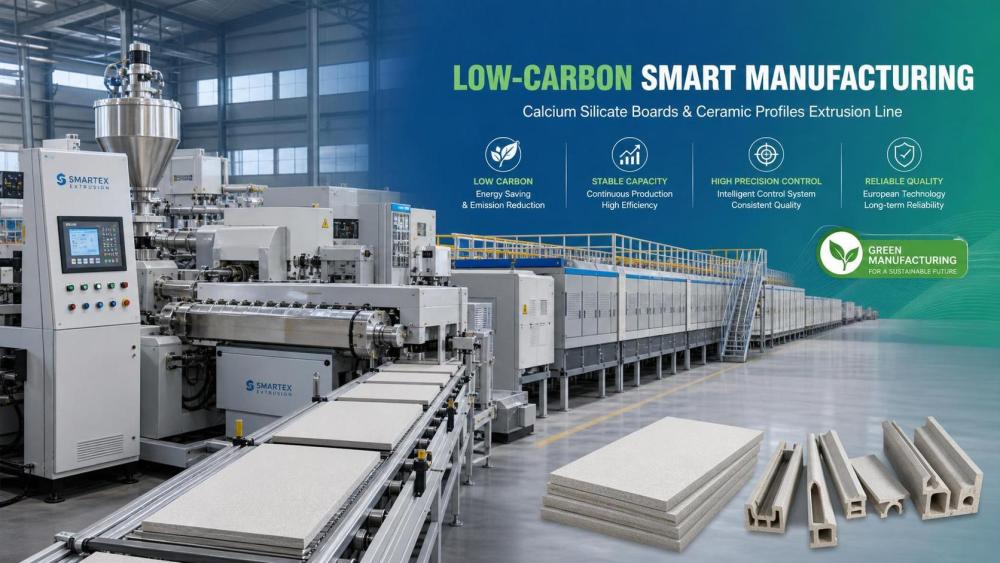
The current European market combines strict environmental rules with pressure for stable throughput. Producers are balancing embodied carbon, waste reuse, fuel efficiency, and product consistency at the same time.
This is where material extrusion technology Europe becomes strategically important. Extrusion can support dense process control, repeatable geometry, and efficient forming for materials that are difficult to handle with less controlled methods.
It is especially relevant in sectors linked to silicates and thermal management. Those areas sit close to CF-Elite’s core observation fields, where production economics are shaped by high temperatures, reaction kinetics, dust behavior, and decarbonization targets.
In practical terms, the market is not asking whether extrusion has value. It is asking where extrusion creates the best fit, and where another forming route may still be more efficient.
What material extrusion means in industrial use
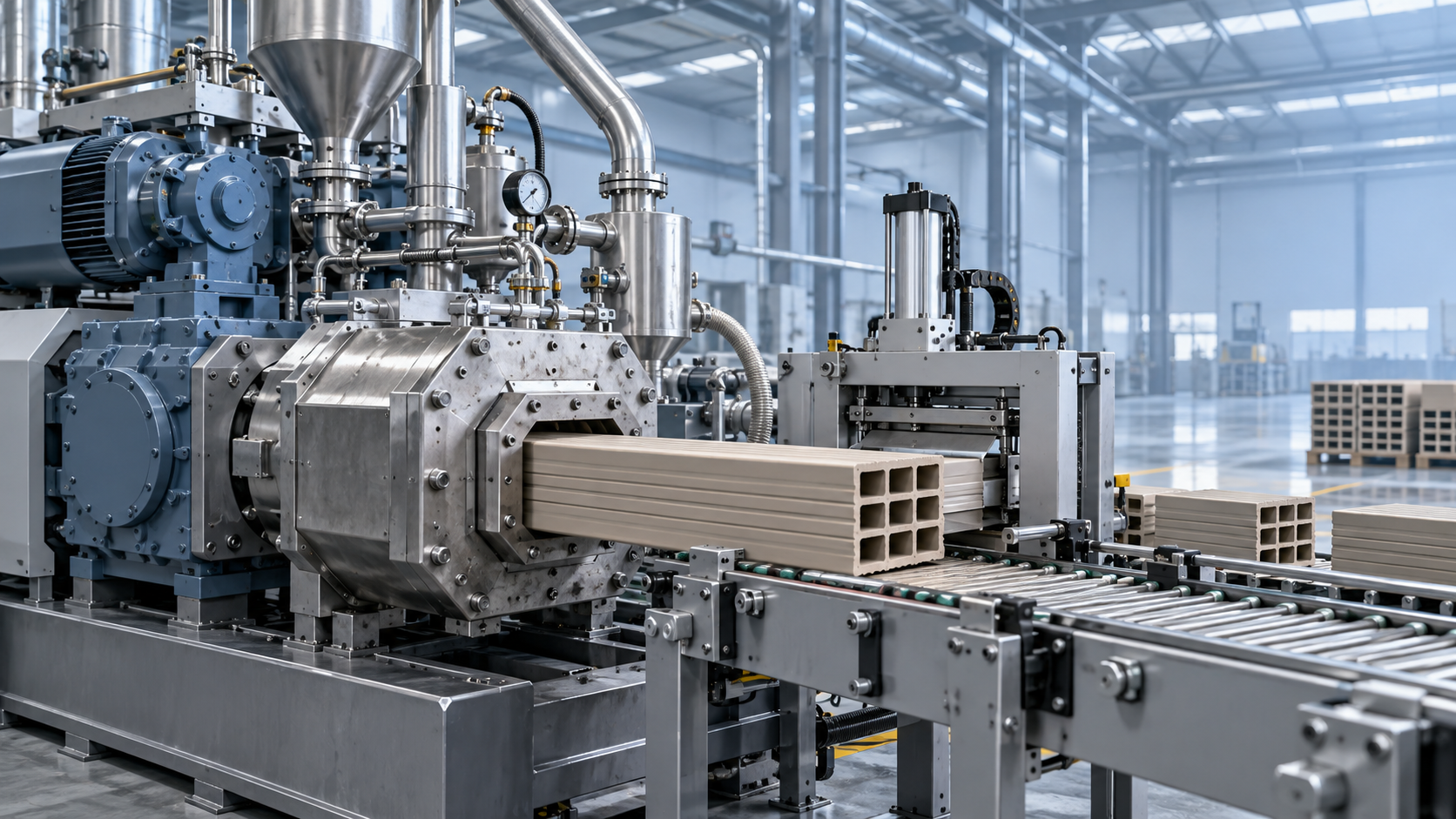
In industrial production, extrusion pushes a prepared material mass through a die under controlled pressure. The process creates continuous shapes with defined cross-sections, which are then cut, dried, cured, or fired depending on the product family.
That sounds straightforward, but performance depends on more than machine force. Moisture range, particle grading, binder chemistry, additive distribution, and thermal sensitivity all influence whether the material flows cleanly or fails in the die.
In material extrusion technology Europe, the conversation usually centers on four linked variables: material compatibility, energy demand, achievable geometry, and line stability. A plant that optimizes only output speed often pays later through cracking, excessive wear, or drying losses.
Materials that usually fit extrusion best
Not every industrial material benefits equally from extrusion. The best candidates share one trait: they can maintain a controlled plastic or paste-like state long enough to be shaped without losing structural integrity.
Silicate-based building materials
Clay blends, ceramic bodies, and several cementitious or calcium silicate formulations are common candidates. They respond well when particle size, water content, and binder balance are engineered around the die and downstream thermal cycle.
These materials suit continuous shaping, especially for boards, hollow sections, facing elements, technical blocks, and specialty profiles. Their value grows when plants need repeatable dimensions and scalable output.
Lightweight and porous formulations
Europe’s green building agenda has increased interest in lighter products with better insulation performance. Extrusion can support these materials, but pore structure must stay stable through drying and firing.
Here, raw mix design matters more than machine power. If gas release, shrinkage, or moisture migration is poorly managed, the line may deliver volume without delivering usable quality.
Refractory and specialty thermal materials
Some refractory shapes and thermal barrier products can also benefit from extrusion. The challenge is usually abrasion, die wear, and sensitivity to firing curves rather than initial forming alone.
This is one reason material extrusion technology Europe is often discussed alongside kiln efficiency and lining life. Forming quality and heat treatment quality are inseparable in these applications.
Production goals that justify extrusion investment
Extrusion is most effective when the production target is clear. It performs best under specific economic and technical conditions, not as a universal answer for every shaped material.
This table also explains why material extrusion technology Europe is often tied to plant modernization. It is less about replacing one machine and more about aligning forming, drying, and thermal treatment into one disciplined system.
Where decision risk usually appears
Many line decisions fail at the interface between material science and production ambition. A raw mix may look promising in laboratory conditions, then behave very differently under full-scale pressure and thermal cycling.
Several recurring issues deserve early review:
- Moisture control that is too narrow for real production fluctuation.
- Additive packages designed for strength, but not for flow stability.
- Underestimated energy demand in drying, curing, or firing.
- Die and screw wear caused by abrasive fillers or refractory aggregates.
- Weak links between extrusion data and downstream quality monitoring.
For that reason, material extrusion technology Europe is increasingly assessed through integrated intelligence, not isolated equipment selection. Market signals, emissions rules, thermal models, and raw material sourcing now influence line viability from the start.
How the broader industrial context changes material choice
Europe’s industrial environment adds several filters to every material decision. Carbon accounting, industrial waste reuse, and product certification standards can shift the preferred material mix even when core process performance looks acceptable.
This is especially visible in sectors surrounding cement, glass, refractory production, and thermal equipment. Those fields shape the same operating logic that CF-Elite tracks closely: heat efficiency, dust control, resource circularity, and equipment durability.
As a result, material extrusion technology Europe is often judged by cross-system impact. A material that extrudes well but raises drying fuel use or complicates kiln behavior may lose its advantage quickly.
On the other hand, a formulation that supports recycled input, lower firing load, and stable profile quality can create stronger long-range value than a faster but less balanced alternative.
A practical way to compare options
A useful evaluation framework begins with the product goal, not the machine brochure. The material, line design, and thermal route should then be tested against that goal in sequence.
Start with the shape and function
Check whether the target product needs continuous profile control, hollow geometry, thin-wall stability, or special surface precision. These factors determine whether extrusion offers a real process advantage.
Then map the thermal path
Look beyond extrusion pressure. Drying shrinkage, curing behavior, calcination response, and firing stress often decide final yield more than forming speed does.
Measure compatibility with regional constraints
In material extrusion technology Europe, regional constraints include emissions thresholds, energy pricing, recycled content expectations, and reporting requirements. These can materially change the best-fit option.
Use operating data, not assumptions
Pilot data, line monitoring, and digital simulation reduce guesswork. CF-Elite’s intelligence approach reflects this reality, especially where thermal management and silicate chemistry interact under full industrial load.
What deserves attention next
The strongest decisions in material extrusion technology Europe usually come from structured comparison rather than broad assumptions about efficiency. Material fit, line stability, and decarbonization value should be reviewed together.
A sensible next step is to rank candidate materials against three questions: Can they run consistently, can they meet downstream thermal requirements, and can they support future compliance without major redesign?
From there, the most reliable path is to compare extrusion routes using actual process windows, energy implications, and product targets. That approach turns material extrusion technology Europe from a broad market topic into a usable decision framework.
Related News
 Thermal Energy ArchitectWhat Does CE Marking Require for an Energy-Efficient Industrial Kiln?Energy efficient kiln CE requirements explained: assess safety, technical files, energy performance, and EU compliance before purchase or commissioning.Oct 04, 2026
 Thermal Energy ArchitectRefractory Manufacturing Solutions for Brick Plants: How to Extend Kiln LifeRefractory manufacturing solutions for brick plant operations: discover proven strategies to extend kiln life, reduce heat loss, prevent lining failures, and plan cost-effective repairs.Oct 03, 2026
 Thermal Energy ArchitectHow to Specify Heavy Industrial Process Systems for High-Temperature PlantsHeavy industrial processes systems: learn how to specify high-temperature plants for efficiency, emissions control, maintainability, and lifecycle performance.Oct 02, 2026
 Structural Material AnalystHow Sustainable Material Extrusion Can Improve Wall Panel Durability and Design FlexibilityDiscover how sustainable material extrusion for wall panels improves durability, moisture resistance, design flexibility, and installation consistency for high-performing wall systems.Oct 01, 2026
 Thermal Energy ArchitectHow to Evaluate a High-Temperature Materials Manufacturer for Furnace ApplicationsChoose a high-temperature materials manufacturer with confidence: compare thermal performance, chemical resistance, quality controls, installation support, and lifecycle cost.Sep 30, 2026
 Ms. Elena RodriguezHow to Structure Global Specification Data for Faster Industrial Product EvaluationGlobal specification-oriented product information helps industrial teams compare capacity, energy, emissions, automation, and lifecycle data on a like-for-like basis for faster, confident equipment decisions.Sep 29, 2026
 Thermal Energy ArchitectHow to Specify High-Temperature Process Systems for Continuous Thermal OperationsHigh-temperature process engineering systems: learn how to specify resilient continuous thermal operations for efficiency, compliance, reliable uptime, and long-term performance.Sep 28, 2026
 Thermal Energy ArchitectHow to Evaluate a Thermal Engineering Contractor for High-Temperature Plant ProjectsChoose a thermal engineering contractor with proven process expertise, lifecycle value, emissions control, and delivery discipline for reliable high-temperature plant performance.Sep 27, 2026
 Silicate Process EngineerHow Latin American Cement Plants Can Reduce Dust Emissions in Kilns and Transfer PointsCement plant dust control Latin America: reduce kiln and transfer-point emissions with practical airflow, filtration, monitoring, and maintenance strategies.Sep 26, 2026
 Material Heat-Resist ExpertHow to Evaluate Refractory Production Lines for Output, Quality, and Energy UseRefractory production lines: learn how to assess qualified output, consistent quality, and total energy use for smarter, lower-risk investment decisions.Sep 25, 2026
 Dr. Alistair VaughnHow Waste Recycling Technology Improves Material Recovery in Industrial PlantsWaste recycling technology improves material recovery through source segregation, smart separation, thermal treatment, and quality control for industrial plants.Sep 24, 2026
 Optical Glass Tech FellowHow to Specify Glass Annealing Equipment for European Quality and Energy RequirementsGlass annealing equipment Europe: learn how to specify lehrs for consistent glass quality, energy efficiency, compliance, automation, and reliable long-term performance.Sep 23, 2026
 Optical Glass Tech FellowSilicate Process Automation: Improving Batch Consistency and Energy ControlSilicate process automation improves batch consistency, energy control, traceability, and operator confidence across high-temperature manufacturing operations.Sep 22, 2026
 Optical Glass Tech FellowHow Silicate Industrial Processes Control Viscosity, Energy Use, and Product QualitySilicate industrial processes: learn how viscosity, chemistry, heat transfer, and atmosphere control reduce energy use, improve stability, and protect product quality.Sep 21, 2026
 Thermal Energy ArchitectHow European Plants Can Evaluate Energy Recovery Equipment for High-Temperature ProcessesIndustrial energy recovery equipment Europe: learn how high-temperature plants can assess waste-heat sources, integration risks, lifecycle value, and reliable recovery routes.Sep 20, 2026
 Thermal Energy ArchitectIndustrial Furnace Process Optimization: Reducing Fuel Use Without Sacrificing ThroughputIndustrial process optimization furnace strategies that cut fuel use while protecting throughput. Explore combustion control, heat recovery, refractory performance, and data-driven efficiency gains.Sep 19, 2026
 Ms. Elena RodriguezWhat Drives High-Pressure Extrusion Equipment Cost in Industrial Projects?High pressure extrusion equipment cost explained: compare pressure, die design, automation, wear, energy, and installation factors for smarter industrial investments.Sep 18, 2026
 Thermal Energy ArchitectHow to Size a Waste Heat Recovery Exchanger for High-Temperature Kiln Exhaust?Waste heat recovery exchanger sizing for high-temperature kiln exhaust: balance recoverable duty, fouling, corrosion limits, pressure drop, and reliable heat use.Sep 17, 2026
 Thermal Energy ArchitectWhy Heat-Resistant Materials Lose Abrasion Resistance at High TemperaturesHeat-resistant materials abrasion resistance can decline at high temperatures. Discover the thermal, chemical, and mechanical causes of wear—and how to choose longer-lasting linings.Sep 16, 2026
 Thermal Energy ArchitectHow to Evaluate a Thermal Energy Optimization Company for High-Temperature PlantsChoose a thermal energy optimization company with proven process expertise, measurable savings, and reliable delivery for high-temperature plants. Learn what to assess.Sep 15, 2026

Related News
- 00
0000-00
Thermal Energy Architecture in North America: Strategies for Lower Building Energy Use - 00
0000-00
How to Evaluate a Green Material Production Line for Energy Use, Output, and Product Quality - 00
0000-00
Silicate Technology Trends: What New Process Upgrades Matter for Refractory and Cement Plants? - 00
0000-00
Thermal Engineering Optimization: Which Process Parameters Most Affect Energy Use? - 00
0000-00
Material Extrusion Technology in Europe: Which Materials and Production Goals Fit Best?
Weekly Insights
Stay ahead with our curated technology reports delivered every Monday.