
Refractory Material Science for Furnaces: What Determines Corrosion and Thermal Shock Resistance?




Refractory Material Science for Furnaces: What Determines Corrosion and Thermal Shock Resistance?
In refractory material science for furnaces, corrosion resistance and thermal shock performance are not decided by chemistry alone.
The real issue is how purity, pore structure, mineral phases, and temperature history behave together under load.
For furnace operations, that interaction often determines lining life, shutdown frequency, and safety margin.
In practice, many failures start long before visible cracking or shell hot spots appear.
This is why refractory material science for furnaces matters in inspection, purchasing, and maintenance planning.
Why furnace linings fail earlier than expected
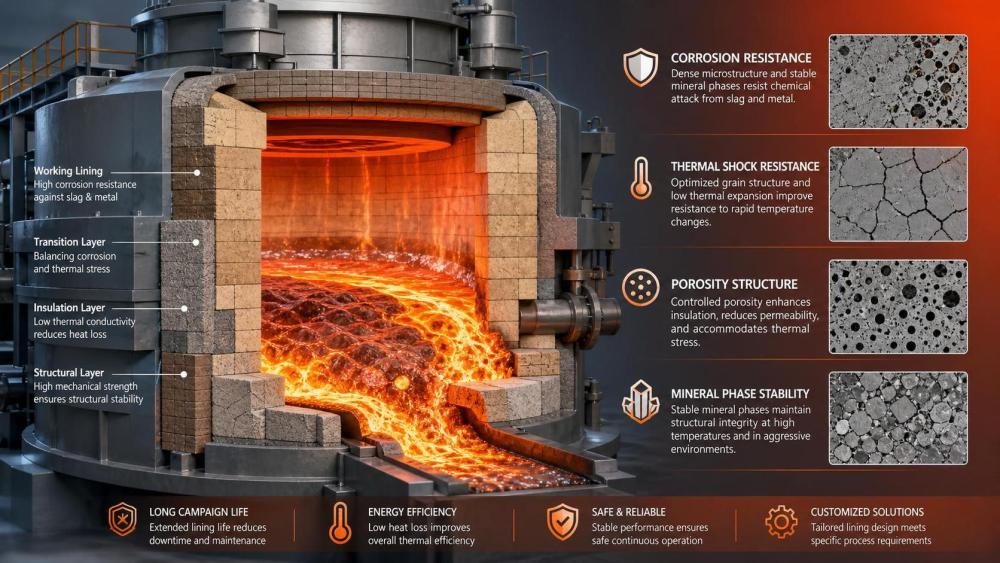
Most premature failures come from combined attack, not from one isolated defect.
Molten slag, alkali vapors, reducing gases, ash, and fast temperature swings often work at the same time.
A brick may pass lab tests, yet still fail when the service profile changes slightly.
That gap between certificate values and field behavior is a core topic in refractory material science for furnaces.
From recent operating trends, the risk is higher in kilns and furnaces with variable fuels and unstable feed chemistry.
More waste-derived inputs mean more chlorides, sulfates, alkalis, and low-melting phases.
This also means lining selection should follow the actual chemical load, not the nameplate temperature alone.
Corrosion resistance starts with chemistry, but does not end there
Corrosion resistance usually begins with chemical compatibility between refractory and process media.
Acidic slags attack basic refractories differently from alkaline slags attacking aluminosilicate products.
However, reaction tendency alone does not predict the corrosion rate.
Penetration depth, wetting behavior, diffusion speed, and liquid viscosity matter just as much.
In refractory material science for furnaces, the structure controls how chemistry reaches the interior.
Raw material purity and impurity control
High-purity raw materials usually provide better high-temperature stability and fewer weak reaction points.
Impurities such as Fe2O3, CaO, Na2O, and K2O can form low-melting phases.
Once these phases appear, softening, infiltration, and volume change become more likely.
For procurement review, purity should be checked against service chemistry, not treated as a generic premium feature.
Pore structure and permeability
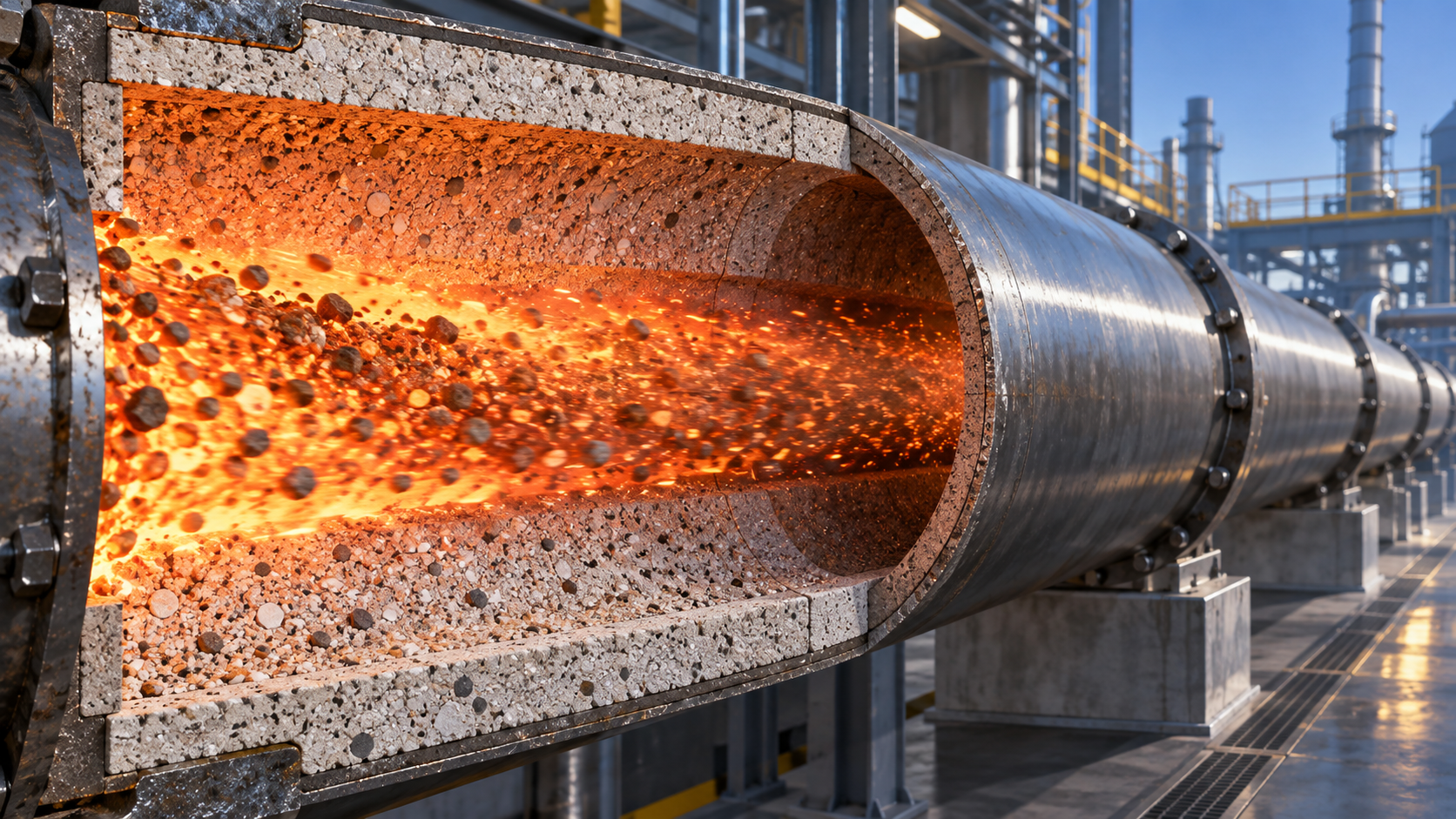
Open porosity is often the doorway for corrosive agents.
Large connected pores let slag and vapor move deeper into the lining.
Fine and well-distributed pores usually slow penetration, but only if the matrix remains stable.
Very low porosity can improve corrosion resistance, yet it may increase thermal stress sensitivity.
This balance is central to refractory material science for furnaces.
Phase composition under operating temperature
A refractory does not behave the same way at room temperature and at 1200 to 1600 degrees C.
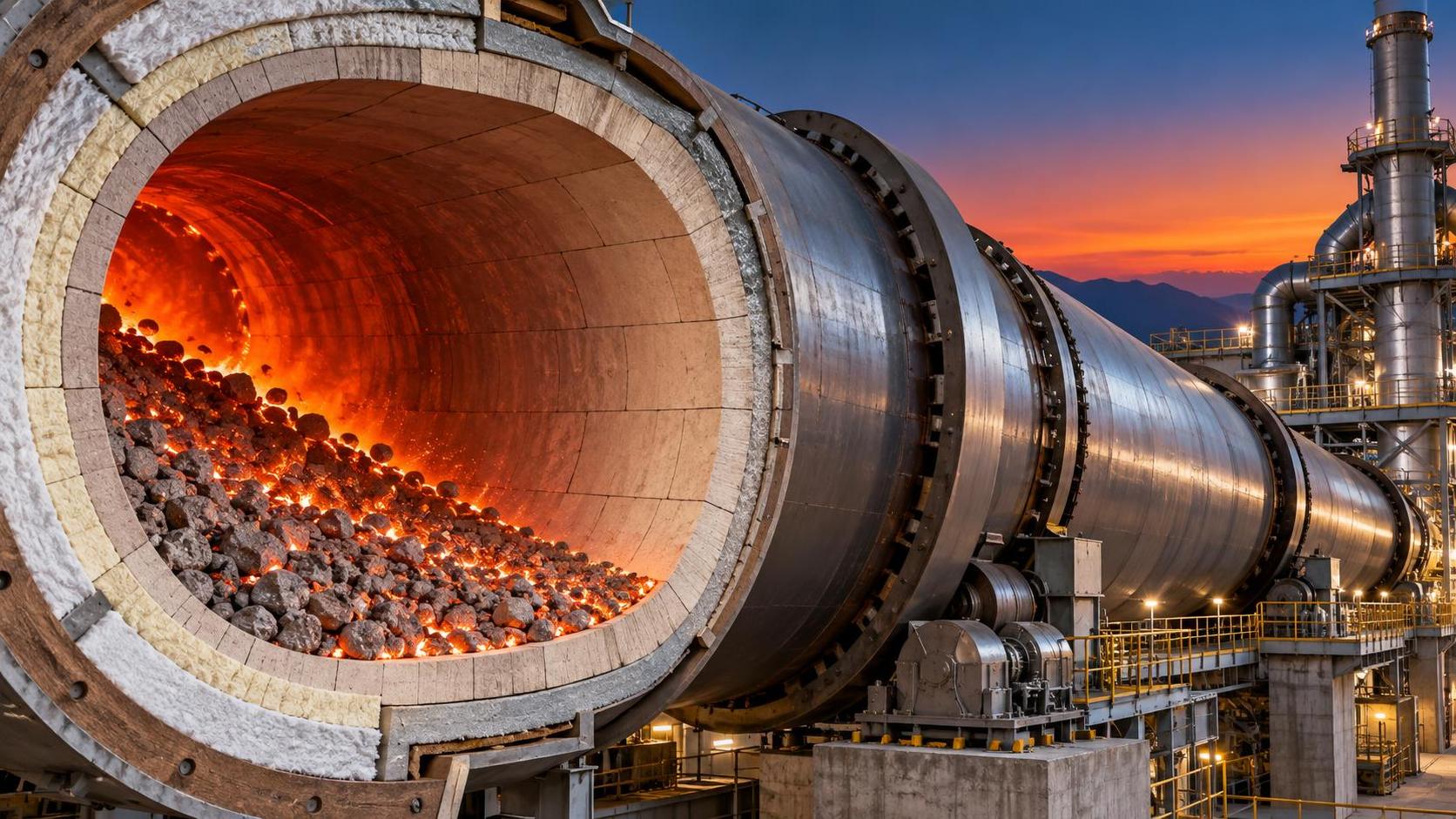
Mineral phases may transform, sinter, soften, or react with infiltrated compounds.
Mullite, corundum, spinel, and periclase each respond differently to thermal and chemical load.
That is why phase analysis is more useful than a simple oxide percentage table.
What really drives thermal shock resistance
Thermal shock resistance is the ability to survive fast temperature change without losing integrity.
Cracks appear when the thermal gradient creates stress beyond the material’s local strength.
But cracking is not only about strength.
Elastic modulus, thermal expansion, thermal conductivity, and fracture behavior all matter.
In refractory material science for furnaces, a material that is very hard may still perform poorly during cycling.
Thermal expansion mismatch
If expansion is high, heating creates stronger internal stress.
If different phases expand at different rates, microcracks may form at their boundaries.
Some controlled microcracking can relieve stress.
Too much of it, however, opens paths for corrosion and mechanical spalling.
Thermal conductivity and stress distribution
Higher thermal conductivity can reduce temperature gradients through the lining thickness.
That may improve thermal shock resistance in cycling zones.
Yet it can also raise shell temperature or shift the hot-face balance.
So the right answer depends on system design, not just material ranking.
Strength versus damage tolerance
Dense refractories often show high cold crushing strength.
That number is useful, but it does not guarantee good thermal shock performance.
Materials with better crack deflection and energy absorption may last longer in cyclic service.
This distinction is often missed when technical approval focuses only on standard datasheets.
How corrosion and thermal shock reinforce each other
Corrosion and thermal shock are usually treated as separate problems.
In service, they often accelerate each other.
Corrosive infiltration weakens the matrix, changes local expansion, and lowers hot strength.
Then normal thermal cycling starts breaking away the damaged zone.
Fresh surface becomes exposed, and the attack repeats.
This cycle explains why wear can suddenly speed up after a stable operating period.
For refractory material science for furnaces, field diagnosis should always evaluate both mechanisms together.
What to check during material selection and quality review
A practical review process should connect lab data with actual furnace conditions.
That means checking service profile, chemistry, cycling rate, and installation quality together.
- Match refractory chemistry with slag, ash, alkali, sulfur, and chlorine exposure.
- Review open porosity, bulk density, and permeability instead of strength values alone.
- Confirm phase composition after firing, not only raw mix composition.
- Check thermal expansion behavior across the real operating temperature range.
- Ask for corrosion test conditions that resemble plant chemistry and residence time.
- Verify installation joints, anchor design, dry-out practice, and startup ramp rate.
In actual operations, installation and heating practice can erase the benefits of a strong material choice.
That is one reason refractory material science for furnaces must be linked with site execution control.
A simple decision table for high-temperature applications
From material data to safer furnace decisions
The value of refractory material science for furnaces is not in isolated numbers.
Its value is in turning material behavior into earlier warnings and better operating decisions.
When corrosion risk and thermal shock risk are reviewed together, lining choices become far more reliable.
That supports cleaner shutdown planning, lower incident exposure, and more predictable campaign life.
For teams tracking furnace integrity, the next step is straightforward.
Review current failure records against chemistry changes, temperature cycling, and lining microstructure data.
That is where better refractory selection usually begins, and where safer long-run performance is won.
Related News
 Thermal Energy ArchitectHow to Specify Heavy Industrial Process Systems for High-Temperature PlantsHeavy industrial processes systems: learn how to specify high-temperature plants for efficiency, emissions control, maintainability, and lifecycle performance.Oct 02, 2026
 Structural Material AnalystHow Sustainable Material Extrusion Can Improve Wall Panel Durability and Design FlexibilityDiscover how sustainable material extrusion for wall panels improves durability, moisture resistance, design flexibility, and installation consistency for high-performing wall systems.Oct 01, 2026
 Thermal Energy ArchitectHow to Evaluate a High-Temperature Materials Manufacturer for Furnace ApplicationsChoose a high-temperature materials manufacturer with confidence: compare thermal performance, chemical resistance, quality controls, installation support, and lifecycle cost.Sep 30, 2026
 Ms. Elena RodriguezHow to Structure Global Specification Data for Faster Industrial Product EvaluationGlobal specification-oriented product information helps industrial teams compare capacity, energy, emissions, automation, and lifecycle data on a like-for-like basis for faster, confident equipment decisions.Sep 29, 2026
 Thermal Energy ArchitectHow to Specify High-Temperature Process Systems for Continuous Thermal OperationsHigh-temperature process engineering systems: learn how to specify resilient continuous thermal operations for efficiency, compliance, reliable uptime, and long-term performance.Sep 28, 2026
 Thermal Energy ArchitectHow to Evaluate a Thermal Engineering Contractor for High-Temperature Plant ProjectsChoose a thermal engineering contractor with proven process expertise, lifecycle value, emissions control, and delivery discipline for reliable high-temperature plant performance.Sep 27, 2026
 Silicate Process EngineerHow Latin American Cement Plants Can Reduce Dust Emissions in Kilns and Transfer PointsCement plant dust control Latin America: reduce kiln and transfer-point emissions with practical airflow, filtration, monitoring, and maintenance strategies.Sep 26, 2026
 Material Heat-Resist ExpertHow to Evaluate Refractory Production Lines for Output, Quality, and Energy UseRefractory production lines: learn how to assess qualified output, consistent quality, and total energy use for smarter, lower-risk investment decisions.Sep 25, 2026
 Dr. Alistair VaughnHow Waste Recycling Technology Improves Material Recovery in Industrial PlantsWaste recycling technology improves material recovery through source segregation, smart separation, thermal treatment, and quality control for industrial plants.Sep 24, 2026
 Optical Glass Tech FellowHow to Specify Glass Annealing Equipment for European Quality and Energy RequirementsGlass annealing equipment Europe: learn how to specify lehrs for consistent glass quality, energy efficiency, compliance, automation, and reliable long-term performance.Sep 23, 2026
 Optical Glass Tech FellowSilicate Process Automation: Improving Batch Consistency and Energy ControlSilicate process automation improves batch consistency, energy control, traceability, and operator confidence across high-temperature manufacturing operations.Sep 22, 2026
 Optical Glass Tech FellowHow Silicate Industrial Processes Control Viscosity, Energy Use, and Product QualitySilicate industrial processes: learn how viscosity, chemistry, heat transfer, and atmosphere control reduce energy use, improve stability, and protect product quality.Sep 21, 2026
 Thermal Energy ArchitectHow European Plants Can Evaluate Energy Recovery Equipment for High-Temperature ProcessesIndustrial energy recovery equipment Europe: learn how high-temperature plants can assess waste-heat sources, integration risks, lifecycle value, and reliable recovery routes.Sep 20, 2026
 Thermal Energy ArchitectIndustrial Furnace Process Optimization: Reducing Fuel Use Without Sacrificing ThroughputIndustrial process optimization furnace strategies that cut fuel use while protecting throughput. Explore combustion control, heat recovery, refractory performance, and data-driven efficiency gains.Sep 19, 2026
 Ms. Elena RodriguezWhat Drives High-Pressure Extrusion Equipment Cost in Industrial Projects?High pressure extrusion equipment cost explained: compare pressure, die design, automation, wear, energy, and installation factors for smarter industrial investments.Sep 18, 2026
 Thermal Energy ArchitectHow to Size a Waste Heat Recovery Exchanger for High-Temperature Kiln Exhaust?Waste heat recovery exchanger sizing for high-temperature kiln exhaust: balance recoverable duty, fouling, corrosion limits, pressure drop, and reliable heat use.Sep 17, 2026
 Thermal Energy ArchitectWhy Heat-Resistant Materials Lose Abrasion Resistance at High TemperaturesHeat-resistant materials abrasion resistance can decline at high temperatures. Discover the thermal, chemical, and mechanical causes of wear—and how to choose longer-lasting linings.Sep 16, 2026
 Thermal Energy ArchitectHow to Evaluate a Thermal Energy Optimization Company for High-Temperature PlantsChoose a thermal energy optimization company with proven process expertise, measurable savings, and reliable delivery for high-temperature plants. Learn what to assess.Sep 15, 2026
 Thermal Energy ArchitectRotary Kiln Efficiency: How Feed Rate, Fuel Use, and Heat Loss Affect OutputRotary kiln efficiency explained: discover how feed rate, fuel use, heat loss, combustion, and cooling performance shape output, quality, and energy costs.Sep 14, 2026
 Thermal Energy ArchitectHow to Select Heat-Resistant Materials That Maintain Abrasion Resistance in KilnsHeat-resistant materials abrasion resistance: learn how to select kiln linings that withstand heat, wear, thermal cycling, and chemical attack for longer service life.Sep 13, 2026

Related News
- 00
0000-00
How to Specify Heavy Industrial Process Systems for High-Temperature Plants - 00
0000-00
How to Evaluate a High-Temperature Materials Manufacturer for Furnace Applications - 00
0000-00
How to Specify High-Temperature Process Systems for Continuous Thermal Operations - 00
0000-00
How to Evaluate a Thermal Engineering Contractor for High-Temperature Plant Projects - 00
0000-00
How European Plants Can Evaluate Energy Recovery Equipment for High-Temperature Processes
Weekly Insights
Stay ahead with our curated technology reports delivered every Monday.