
What Drives Cement Plant Upgrade Cost and How to Estimate ROI Before Investing




For many plant owners, cement plant upgrade cost looks straightforward on paper: replace aging equipment, add emissions controls, improve efficiency, and recover the investment through lower operating cost. In practice, that is rarely how projects unfold. The real cost sits in the interaction between process design, shutdown timing, local regulation, utility constraints, refractory condition, and the level of performance certainty management expects before approving capital.
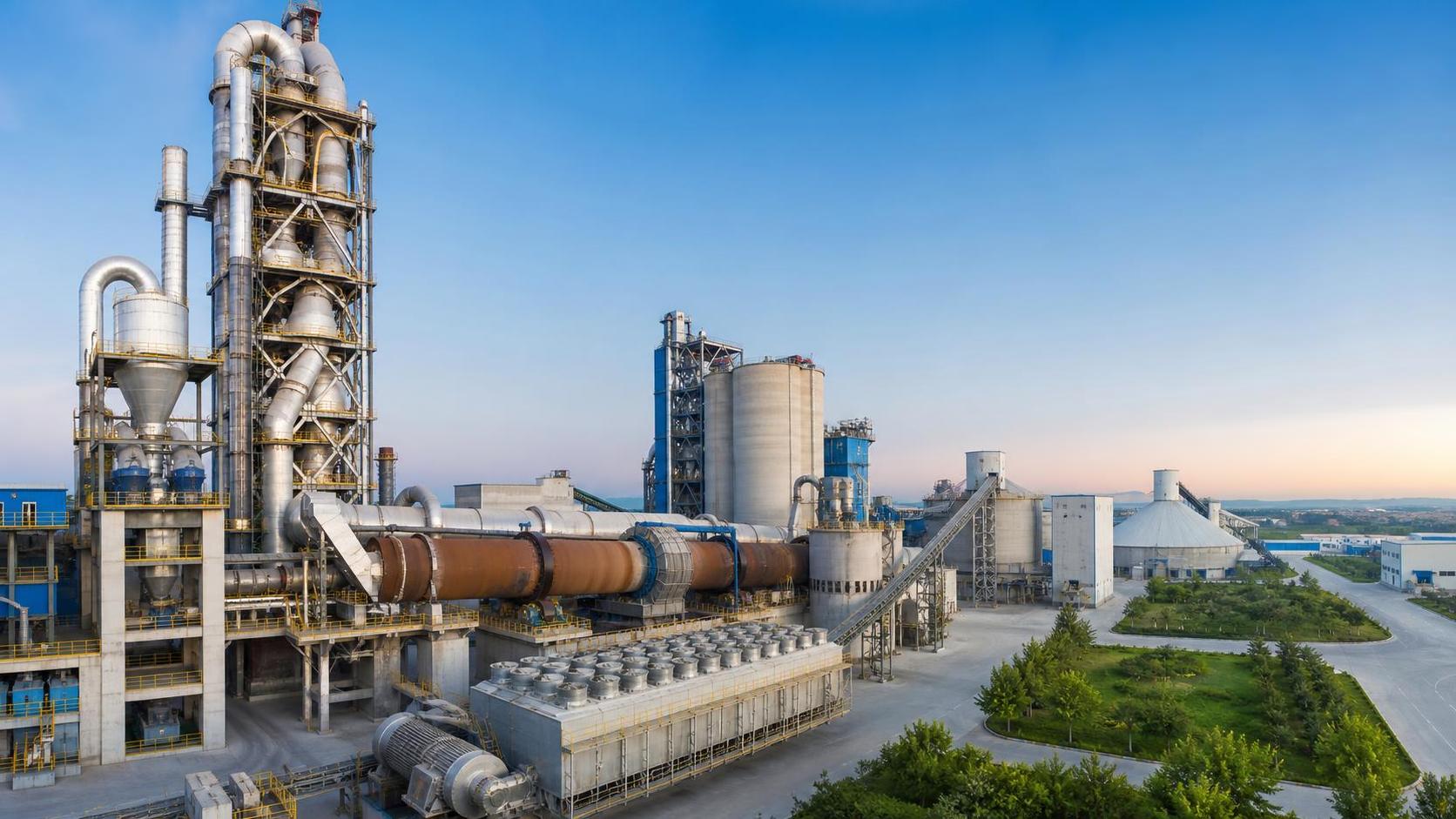
That is why two plants with similar nominal capacity can face very different upgrade budgets. A preheater modification, cooler retrofit, bag filter replacement, alternative fuel system, or digital monitoring package may each look manageable alone. Once tied into an existing kiln line with legacy civil works, compressed turnaround windows, and stricter environmental targets, the number moves quickly.
Before discussing ROI, it helps to separate “equipment price” from “upgrade cost.” Decision-makers who only compare vendor quotations usually underestimate the capital requirement and overestimate the speed of payback.
What actually drives cement plant upgrade cost
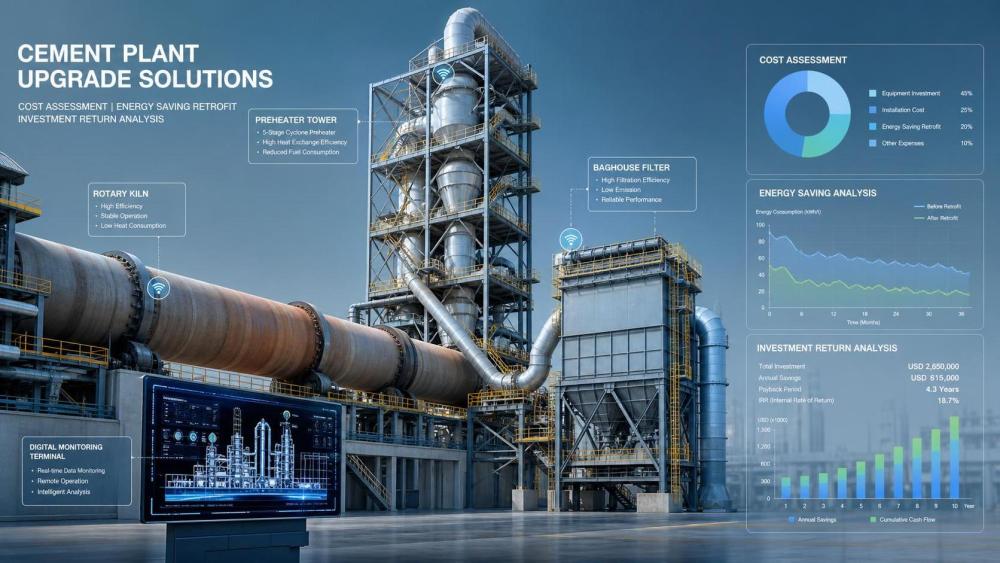
The biggest driver is scope depth. A targeted retrofit on one bottleneck section is fundamentally different from a line-wide modernization. Replacing a fan, adding variable frequency drives, or upgrading an online analyzer may be relatively contained. Modifying kiln feed preparation, clinker cooling, gas handling, fuel firing, and emissions systems at the same time creates engineering overlap and site complexity that multiplies cost.
A second driver is the starting condition of the plant. Older cement lines often carry hidden liabilities: undersized ducts, worn refractory interfaces, obsolete controls, nonstandard foundations, undocumented modifications, and difficult access for heavy lifts. On site, those issues matter more than brochure specifications. Many upgrade budgets increase not because the new equipment is expensive, but because the old line is harder to integrate than expected.
Then there is environmental compliance. In some regions, a plant can continue operating with incremental dust and NOx improvements. In others, a retrofit triggers broader permitting review, stack monitoring requirements, or stricter control technology expectations. The cost of dust collection, burner optimization, gas conditioning, or continuous emissions monitoring can be substantial, especially when civil and electrical modifications are included. This is one area where local interpretation matters, so assumptions should always be checked against site-specific permits and current enforcement practice.
Energy is another major variable. If the objective is to cut thermal consumption or reduce specific power use, the plant may need more than one intervention. A modern cooler may not deliver the expected savings if upstream kiln stability is weak. Waste heat recovery may look attractive, but viability depends on gas temperature profile, operating hours, maintenance capability, and grid economics. In heavy thermal industries, isolated fixes often underperform because the line behaves as a system, not a set of independent machines.
Digitalization can also distort budgeting if it is treated as a low-cost add-on. Basic instrumentation and data visibility are one thing. A serious upgrade involving advanced process control, condition monitoring, quality prediction, or digital twin simulation requires sensor reliability, historian architecture, control-room workflow changes, and operator adoption. The software line item may be modest compared with mechanical works, but the full implementation cost is not.
Where budgets usually get underestimated
Procurement teams often focus on major equipment and freight, but upgrade economics are usually shaped by the less visible items around them.
- Shutdown losses: every extra day off-line has a production cost, not just a maintenance cost.
- Structural and civil adaptation: existing steel, platforms, foundations, and access routes may need reinforcement or redesign.
- Electrical integration: MCC upgrades, cable trays, substation loading, and power quality checks are frequently missed early.
- Refractory and insulation interfaces: especially around kiln hood, calciner, tertiary air duct, and cooler transitions.
- Commissioning risk: production instability in the first weeks can materially affect the real payback curve.
- Training and process tuning: a technically sound retrofit still needs stable operating practice to deliver value.
This is one reason specialized industry intelligence matters. Platforms that track not only equipment trends but also thermal management, refractory behavior, co-processing developments, and regulatory shifts give a more realistic planning baseline. In the cement segment, CF-Elite has been building that kind of cross-disciplinary view around kiln systems, emissions logic, digital monitoring, and energy efficiency. For decision-makers, that broader lens is useful because upgrade cost is never purely mechanical.
A practical way to estimate ROI before investing
A workable ROI estimate starts with one discipline: define the primary value driver. Not everything should be justified the same way.
If the project is mainly about compliance, the return is partly defensive. The financial case may include avoided penalties, avoided forced curtailment, permit continuity, and continued market access. If the project is mainly about energy, the calculation should focus on specific heat consumption, power reduction, fuel flexibility, and maintenance impact. If the project is about throughput, management should test whether downstream sections, raw mix quality, and logistics can actually absorb the extra output. Too many models assume nameplate gains that the rest of the plant cannot convert into saleable cement.
The next step is to build three cases, not one: base case, realistic case, and stressed case. A single optimistic payback number is dangerous in cement because operations are exposed to fuel price swings, clinker factor changes, shutdown risk, and variable utilization rates. A project with an attractive return at full utilization may look far less compelling if dispatch weakens or if commissioning takes longer than planned.
For most boards, the ROI model should at least include:
One subtle point: do not mix “theoretical efficiency gain” with “capturable financial gain.” A cooler supplier may show lower exhaust temperatures under reference conditions. The plant still needs to verify kiln stability, ambient conditions, operator response, and actual operating hours. The same caution applies to alternative fuel projects. The technical possibility of co-processing does not automatically translate into clean savings once preprocessing, storage, dosing reliability, emissions control, and calorific variability are accounted for.
How to prioritize upgrades when capital is limited
Not every plant should pursue a flagship modernization. In many cases, the smarter path is staged investment. The first tranche may focus on instrumentation, control stability, and a high-impact bottleneck. That often gives management better operating data and a more reliable basis for deciding whether a deeper kiln, grinding, or emissions retrofit is justified.
A useful prioritization test is to ask four questions:
- Is this upgrade solving a hard constraint or polishing a secondary issue?
- Will the expected gain survive normal variation in fuel, raw materials, and operator practice?
- Does the line have supporting infrastructure to realize the benefit?
- If the project slips by one shutdown cycle, what is the operational cost of waiting?
That last question often sharpens the decision. A baghouse nearing reliability limits or a refractory issue causing unplanned stoppages may deserve capital sooner than a more glamorous efficiency package. In other words, the best ROI is not always the one with the highest modeled savings. Sometimes it is the one that removes recurring operational fragility.
Common mistakes in board-level approval
One common mistake is treating vendor proposals as directly comparable when the technical boundaries differ. Another is assuming that an upgrade in one region can be copied line-for-line into another plant with different fuel quality, altitude, regulatory pressure, labor capability, or maintenance culture.
It is also risky to approve a project on simple payback alone. Cement assets are long-cycle, and some investments change risk exposure more than they change short-term cash cost. A control upgrade that reduces process variability, for example, may not look dramatic in a narrow one-year model, but it can improve refractory life, energy consistency, clinker quality, and troubleshooting speed over time. Those benefits are real, even if they are harder to value precisely before implementation.
This is where a more integrated intelligence approach helps. The strongest evaluations combine plant data, engineering review, emissions context, and supply-chain realism. That is broadly the logic behind specialized high-temperature industry analysis centers such as CF-Elite’s Strategic Intelligence Center: not just tracking sector news, but connecting thermal performance, process kinetics, equipment evolution, and decarbonization pressure into a usable investment frame.
What a sound pre-investment review should produce
Before capital is committed, management should be able to leave the review with a short list of answers: what problem is being solved, what part of the line truly limits performance, what hidden integration costs are likely, what operational assumptions are carrying the ROI model, and what conditions would make the business case weaken.
If those points are still vague, the project is probably not ready for final approval. Cement plant upgrade cost is not just an EPC number or a vendor quotation total. It is the cost of changing a live thermal system with all the constraints that come with age, compliance, and production pressure. The best investments are usually the ones scoped with enough honesty to expose what could go wrong before the shutdown begins.
Related News
 Thermal Energy ArchitectHow European Plants Can Evaluate Energy Recovery Equipment for High-Temperature ProcessesIndustrial energy recovery equipment Europe: learn how high-temperature plants can assess waste-heat sources, integration risks, lifecycle value, and reliable recovery routes.Sep 20, 2026
 Thermal Energy ArchitectIndustrial Furnace Process Optimization: Reducing Fuel Use Without Sacrificing ThroughputIndustrial process optimization furnace strategies that cut fuel use while protecting throughput. Explore combustion control, heat recovery, refractory performance, and data-driven efficiency gains.Sep 19, 2026
 Ms. Elena RodriguezWhat Drives High-Pressure Extrusion Equipment Cost in Industrial Projects?High pressure extrusion equipment cost explained: compare pressure, die design, automation, wear, energy, and installation factors for smarter industrial investments.Sep 18, 2026
 Thermal Energy ArchitectHow to Size a Waste Heat Recovery Exchanger for High-Temperature Kiln Exhaust?Waste heat recovery exchanger sizing for high-temperature kiln exhaust: balance recoverable duty, fouling, corrosion limits, pressure drop, and reliable heat use.Sep 17, 2026
 Thermal Energy ArchitectWhy Heat-Resistant Materials Lose Abrasion Resistance at High TemperaturesHeat-resistant materials abrasion resistance can decline at high temperatures. Discover the thermal, chemical, and mechanical causes of wear—and how to choose longer-lasting linings.Sep 16, 2026
 Thermal Energy ArchitectHow to Evaluate a Thermal Energy Optimization Company for High-Temperature PlantsChoose a thermal energy optimization company with proven process expertise, measurable savings, and reliable delivery for high-temperature plants. Learn what to assess.Sep 15, 2026
 Thermal Energy ArchitectRotary Kiln Efficiency: How Feed Rate, Fuel Use, and Heat Loss Affect OutputRotary kiln efficiency explained: discover how feed rate, fuel use, heat loss, combustion, and cooling performance shape output, quality, and energy costs.Sep 14, 2026
 Thermal Energy ArchitectHow to Select Heat-Resistant Materials That Maintain Abrasion Resistance in KilnsHeat-resistant materials abrasion resistance: learn how to select kiln linings that withstand heat, wear, thermal cycling, and chemical attack for longer service life.Sep 13, 2026
 Thermal Energy ArchitectHow Rotary Kiln Automation Improves Temperature Control and Fuel EfficiencyRotary kiln technology automation enhances temperature control, stabilizes combustion, and improves fuel efficiency with smarter data, predictive control, and safer operations.Sep 12, 2026
 Silicate Process EngineerCement Plant Emission Control: Selecting Systems for Dust, NOx, and SO2 LimitsCement plant emission control guide: compare dust collectors, NOx reduction, and SO2 systems for reliable compliance across kiln modes, fuel changes, and operating upsets.Sep 11, 2026
 Thermal Energy ArchitectSelecting Abrasion-Resistant High-Temperature Materials for Kiln and Conveyor Wear ZonesHigh-temp material engineering guide to abrasion-resistant kiln and conveyor solutions—match wear, heat, chemistry, and installation design for longer service life.Sep 10, 2026
 Dr. Alistair VaughnIndustrial Process Engineering: How to Map Processes for Safer, More Efficient PlantsIndustrial process engineering reveals bottlenecks, safety risks, and energy losses through practical process mapping for safer, more efficient plants.Sep 09, 2026
 Optical Glass Tech FellowHow to Evaluate a Glass Annealing Equipment Manufacturer for Production StabilityChoose a glass annealing equipment manufacturer with proven thermal uniformity, reliable controls, lifecycle value, and responsive service for stable production.Sep 08, 2026
 Prof. Marcus ChenThermal Energy Architecture in North America: Strategies for Lower Building Energy UseThermal energy architecture North America helps project leaders cut building energy use through stronger envelopes, right-sized HVAC, storage, and smart commissioning.Sep 07, 2026
 Ms. Elena RodriguezHow Should Buyers Evaluate Building Material Industry Intelligence Pricing?Building material industry intelligence pricing: learn how to compare coverage, technical depth, and ROI to choose intelligence that reduces procurement risk.Sep 07, 2026
 Ms. Elena RodriguezHow to Use Building Material Intelligence Data for Market and Investment DecisionsBuilding material industry intelligence data helps leaders evaluate demand, costs, regulation, capacity, and technology to make smarter market and investment decisions.Sep 05, 2026
 Thermal Energy ArchitectHow PLC Control Improves Energy Efficiency and Temperature Stability in KilnsEnergy efficient kilns PLC control improves temperature stability, cuts fuel waste, and optimizes combustion, draft, and material flow. Explore proven strategies for smarter kiln modernization.Sep 04, 2026
 Optical Glass Tech FellowEuropean Glass Melting Processes: Furnace Choices, Energy Use, and Quality ControlGlass melting process Europe: explore furnace choices, energy efficiency, cullet strategy, and quality control to improve output, compliance, and long-term glass performance.Sep 03, 2026
 Thermal Energy ArchitectWhat Determines Refractory Lining Monitoring Price for Industrial Kilns?Refractory lining monitoring price depends on kiln size, sensor technology, installation, software, and support. Compare total lifecycle costs and choose the right solution.Sep 02, 2026
 Silicate Process EngineerCement Production System Costs: A Plant Buyer’s Guide to Budgeting and ROICement production systems cost planning made clear: compare CAPEX, operating costs, compliance, and ROI to build a resilient, profitable cement plant investment.Sep 01, 2026




Related News
- 00
0000-00
Cement Plant Emission Control: Selecting Systems for Dust, NOx, and SO2 Limits - 00
0000-00
Cement Production System Costs: A Plant Buyer’s Guide to Budgeting and ROI - 00
0000-00
How Kiln Heat Recovery Systems Cut Fuel Use in Cement and Lime Production - 00
0000-00
How to Evaluate Cement Production Plants in the Middle East for Capacity, Fuel Flexibility, and ROI - 00
0000-00
What Drives Cement Plant Upgrade Cost and How to Estimate ROI Before Investing
Weekly Insights
Stay ahead with our curated technology reports delivered every Monday.