
Industrial Furnace Process Optimization: Reducing Fuel Use Without Sacrificing Throughput




Fuel reduction in a high-temperature line is rarely a matter of turning down a setpoint or installing one piece of equipment. Technical evaluators know the harder reality: a furnace can appear to be operating steadily while excess air, damaged refractories, uneven material feed, or poorly coordinated controls quietly consume energy. The real challenge is to lower specific fuel use while protecting the output rate, product quality, and operating window that keep the plant commercially viable.
For an industrial process optimization furnace project, the most dependable gains usually come from seeing the furnace as part of a connected thermal system. Combustion, draft, charge preparation, waste-gas handling, lining condition, cooling, and downstream demand all influence one another. A change that improves one reading but destabilizes another is not optimization; it is simply moving the loss to a different point in the process.
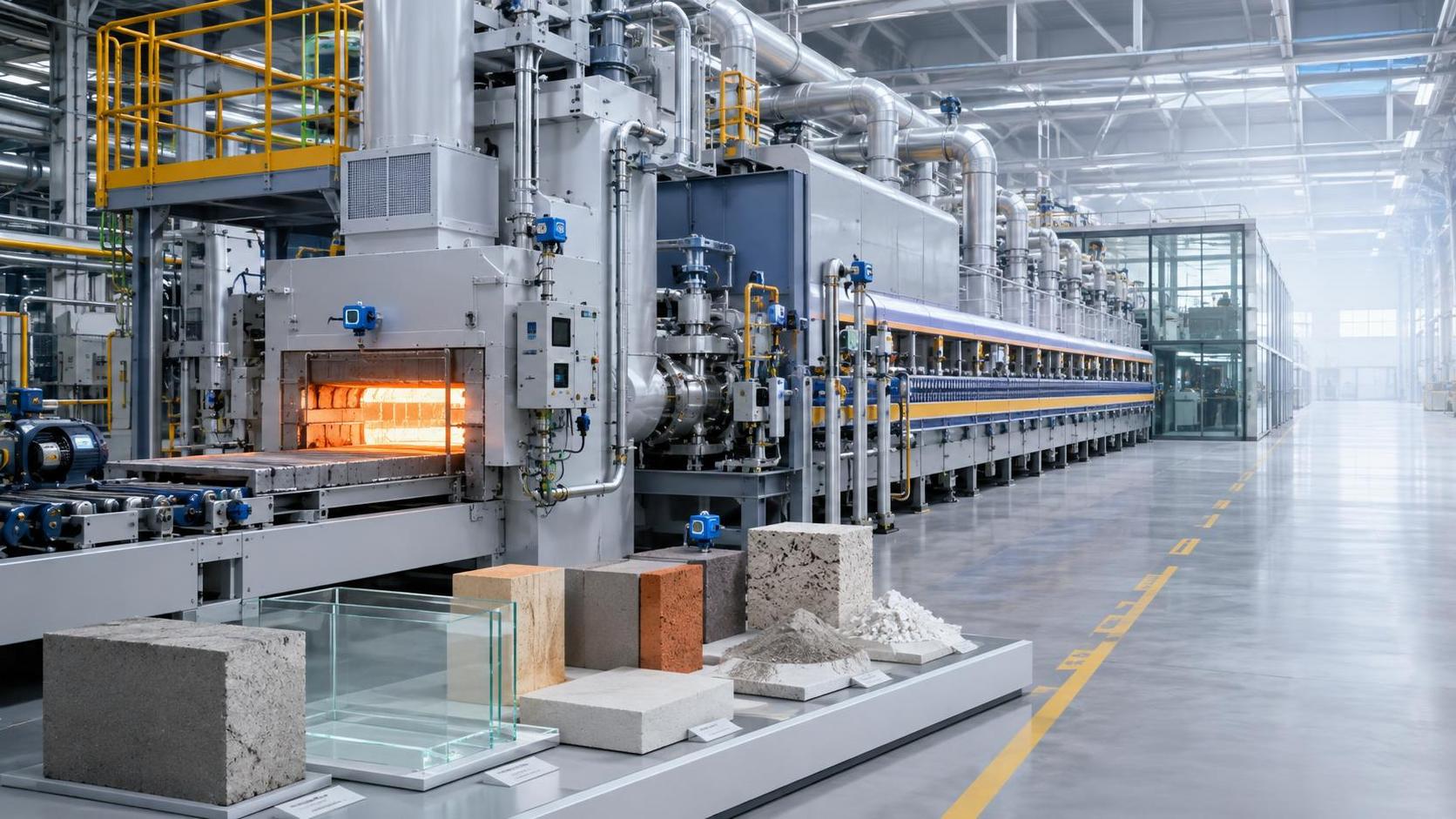
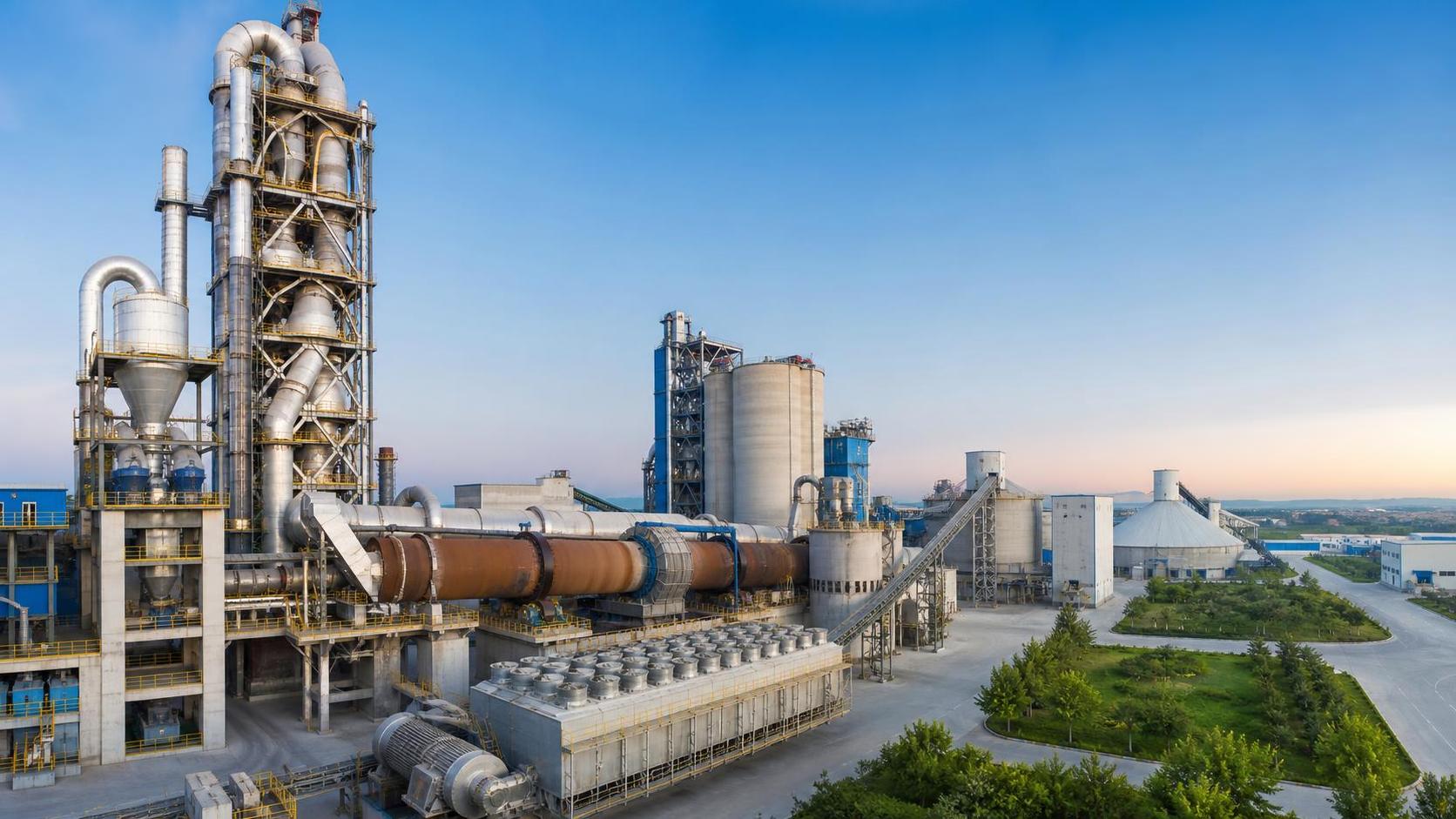
This matters across cement kilns, glass melting furnaces, refractory firing lines, waste-to-energy incinerators, and extrusion-supported building-material plants. Although their chemistry and hardware differ, they share a common decision question: where can energy be removed from the process without removing the thermal conditions needed for reliable production?
Start with the fuel-per-tonne story, not the furnace temperature alone
Operators often focus on peak temperature because it is visible and intuitively linked to firing quality. Yet temperature by itself does not explain energy performance. Two furnaces may run at the same nominal temperature while having very different fuel consumption because one has stronger heat transfer, lower false-air ingress, a more stable feed bed, and better use of exhaust heat.
For evaluation purposes, fuel use should be normalized against production and interpreted with process context. A useful baseline combines fuel consumption per unit of saleable output with variables such as throughput, moisture in the incoming material, oxygen level in flue gas, exhaust temperature, pressure profile, product rejects, and unplanned stoppages. In a kiln, coating behavior and shell temperature may also matter. In glass production, batch quality, pull rate, and furnace pressure should be read alongside gas consumption. For incineration, calorific variability and destruction performance cannot be separated from the energy balance.
That baseline does more than identify a high number. It reveals the pattern behind it. Is fuel use climbing only during load changes? Does consumption increase after a refractory campaign reaches a certain age? Are night shifts producing higher excess oxygen? Does output fall whenever alternative fuel share rises? These questions turn a broad efficiency target into a testable operating hypothesis.
Where thermal losses hide in an operating furnace
The largest opportunities are not always the most obvious. A technical assessment should trace energy from the fuel inlet to the product and then follow what leaves through the stack, the shell, cooling systems, openings, and incomplete reactions. This approach helps distinguish avoidable losses from heat that is intrinsically required by the process.
- Stack losses: High exhaust temperature may indicate recoverable heat, but it can also signal poor convective transfer, fouling, bypass flow, or leakage that dilutes the gas stream.
- Excess combustion air: Additional oxygen protects against incomplete combustion, but every unnecessary unit of air must be heated and exhausted. The correct target is not the lowest possible oxygen reading; it is stable complete combustion at the lowest safe excess-air level.
- False air and pressure imbalance: Air entering through seals, doors, expansion joints, and ductwork reduces available heat and complicates oxygen-based control decisions.
- Wall and shell losses: Refractory wear, wet insulation, thermal bridges, and compromised expansion joints can create persistent heat leakage and, more importantly, shorten lining life.
- Product and material variability: Changes in particle size, feed moisture, bulk density, volatile content, or composition can force the furnace to compensate with additional fuel.
- Unproductive cycling: Repeated warm-up, idling, and aggressive corrective firing often consume more energy than a controlled steady-state regime.
The economic significance of each loss depends on operating duration and interaction. A minor air leak in a continuously operated furnace may have a larger annual impact than a short-term heat loss at an access door. Conversely, a localized refractory hot spot might not dominate current fuel use but could represent an urgent reliability risk. Prioritization needs both energy and asset-integrity perspectives.
Combustion control: reduce variability before chasing a lower setpoint
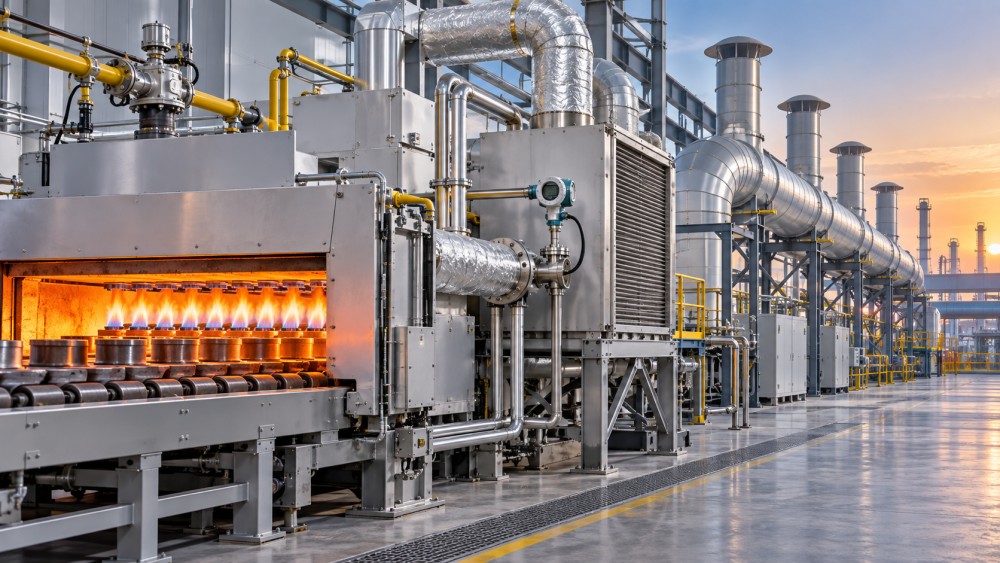
Combustion optimization is often the first practical lever because it can be improved without changing the core production route. However, it should not be treated as a simple oxygen-trimming exercise. Burner tuning must account for fuel composition, fuel pressure stability, atomization quality where liquid fuels are used, combustion-air temperature, flame geometry, furnace draft, and the thermal response of the material.
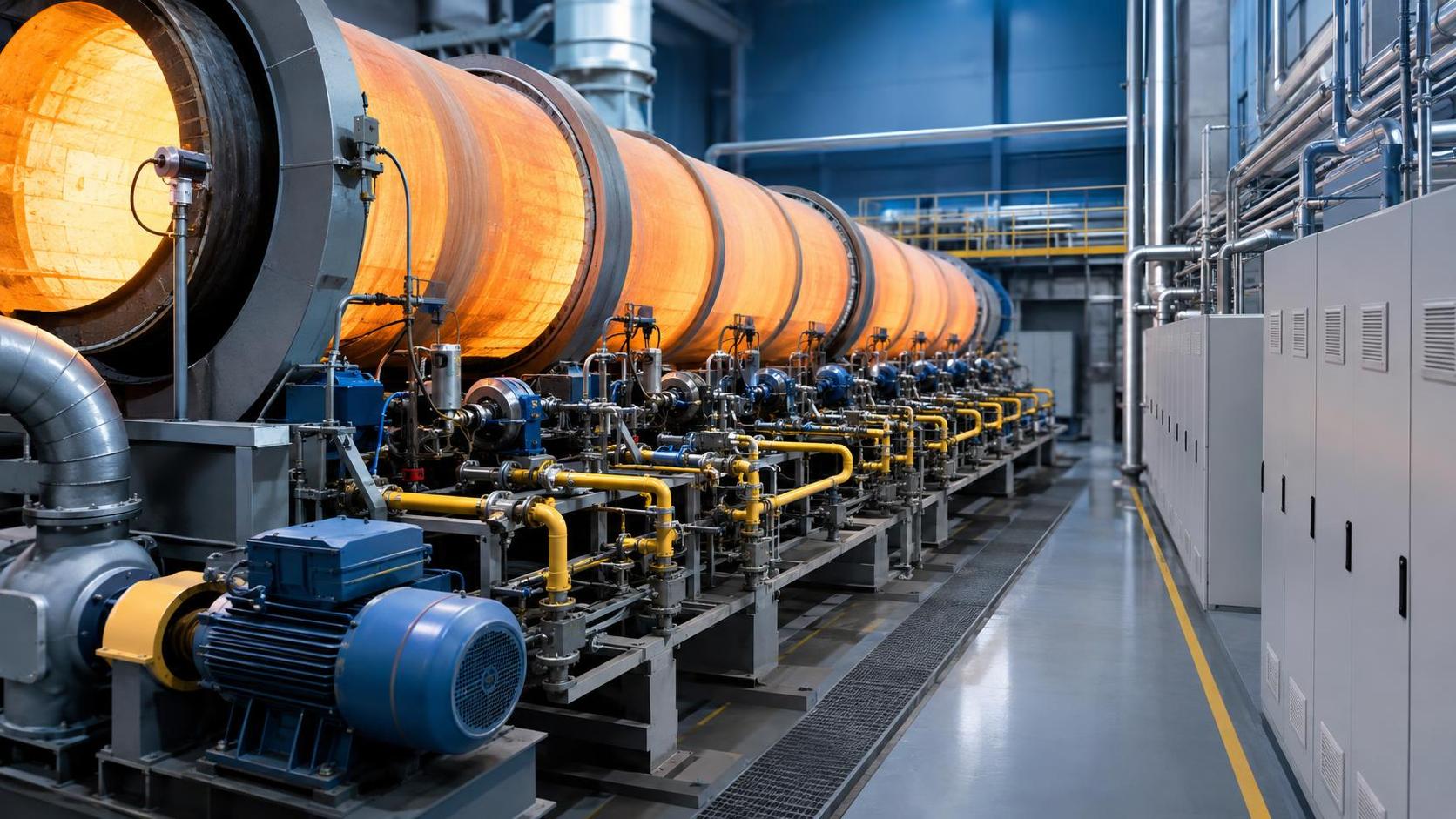
A long, soft flame may improve heat distribution in one rotary kiln but create unwanted impingement or incomplete burnout in another. In glass melting, flame shape affects crown exposure, batch melting behavior, and local redox conditions. In incineration, the residence time, mixing, and oxygen availability needed for compliant destruction may constrain the amount of excess air that can be removed. The optimization target must therefore be process-specific.
Technical evaluators should look for control architectures that coordinate fuel flow, combustion air, draft, and production demand rather than controlling each loop in isolation. Cross-limiting logic is valuable because it prevents unsafe fuel-rich transitions during load changes. Oxygen trim can refine the air-fuel ratio, but only if analyzers are maintained, sampling lines are reliable, and the measurement location represents the gas actually leaving the combustion zone. Carbon monoxide, unburned hydrocarbons, and opacity indicators may be needed to verify that a lower oxygen target is not creating hidden combustion losses.
A common mistake is to tune a burner during a stable, nominal production period and declare the task complete. The more revealing test is how the system behaves during feed disturbances, changes in fuel quality, start-up, and throughput ramps. A furnace that holds a slightly wider but stable operating band may outperform one with an impressive laboratory-style setpoint that operators must constantly override.
Use recovered heat only when it supports the process
Waste heat recovery is attractive because exhaust streams often contain substantial thermal value. Still, recovery equipment should be selected based on the quality, cleanliness, timing, and usability of that heat—not simply its temperature.
Combustion-air preheating can lower direct fuel demand when the flue gas is sufficiently clean and the burner system can accommodate hotter air. Material preheating is often compelling in cement, refractory, and mineral processing where the incoming feed has a large sensible-heat requirement. In incineration, recovered energy may support steam generation, district heating, or electricity production, but corrosion risk, ash deposition, and seasonal demand need to be included in the evaluation. Glass lines may benefit from batch or cullet preheating where dust handling and process control are appropriately designed.
Heat recovery can also introduce operational penalties. A heat exchanger that fouls quickly may raise fan power, restrict draft, or create an unplanned maintenance burden that erodes the expected benefit. High-temperature gas streams containing chlorides, alkalis, sulfur compounds, or abrasive particulates require careful materials selection and cleaning access. The decision is not whether recovery is theoretically possible; it is whether it remains available and controllable over the equipment’s operating cycle.
Refractories are part of the energy strategy, not just a maintenance item
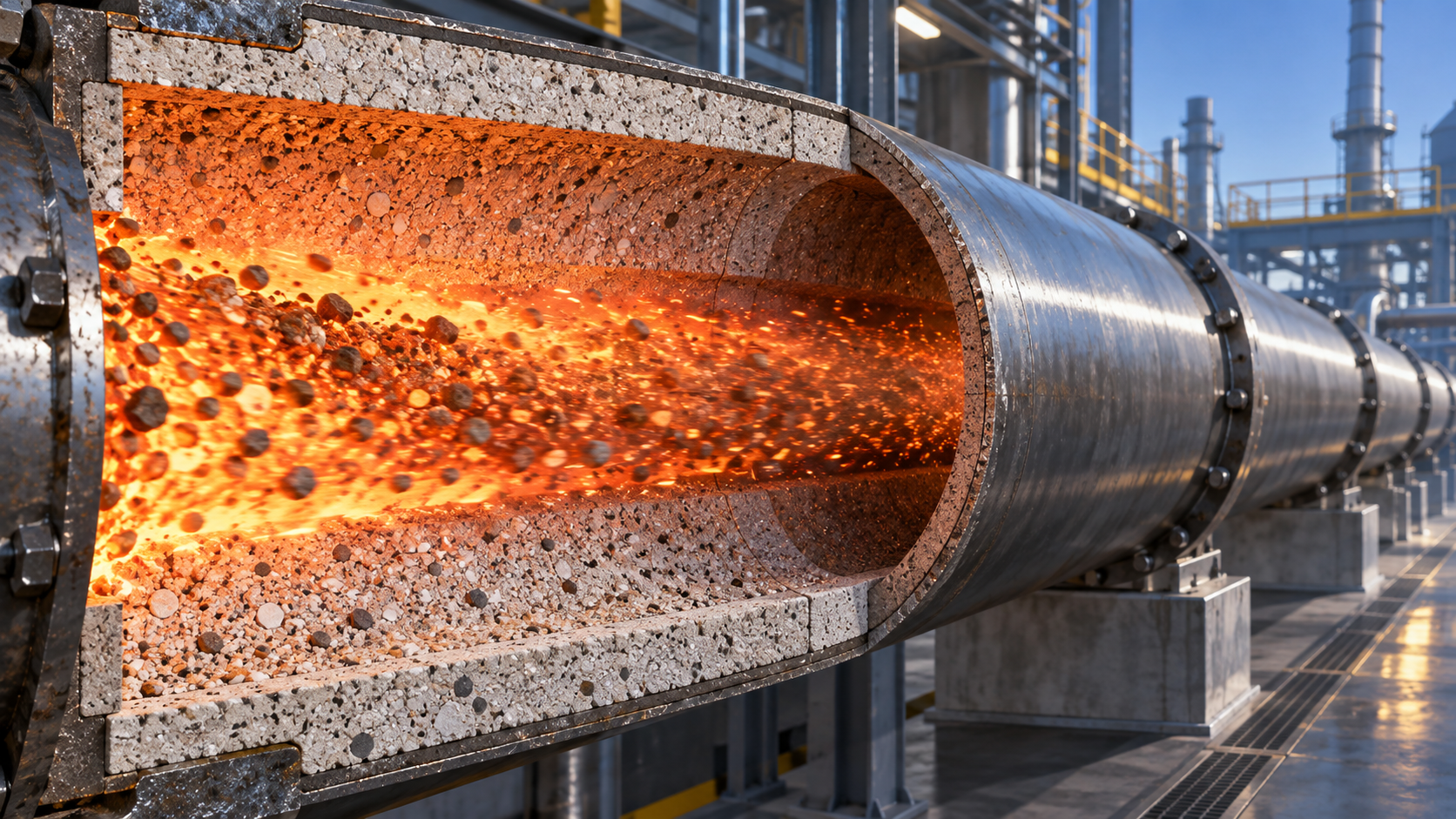
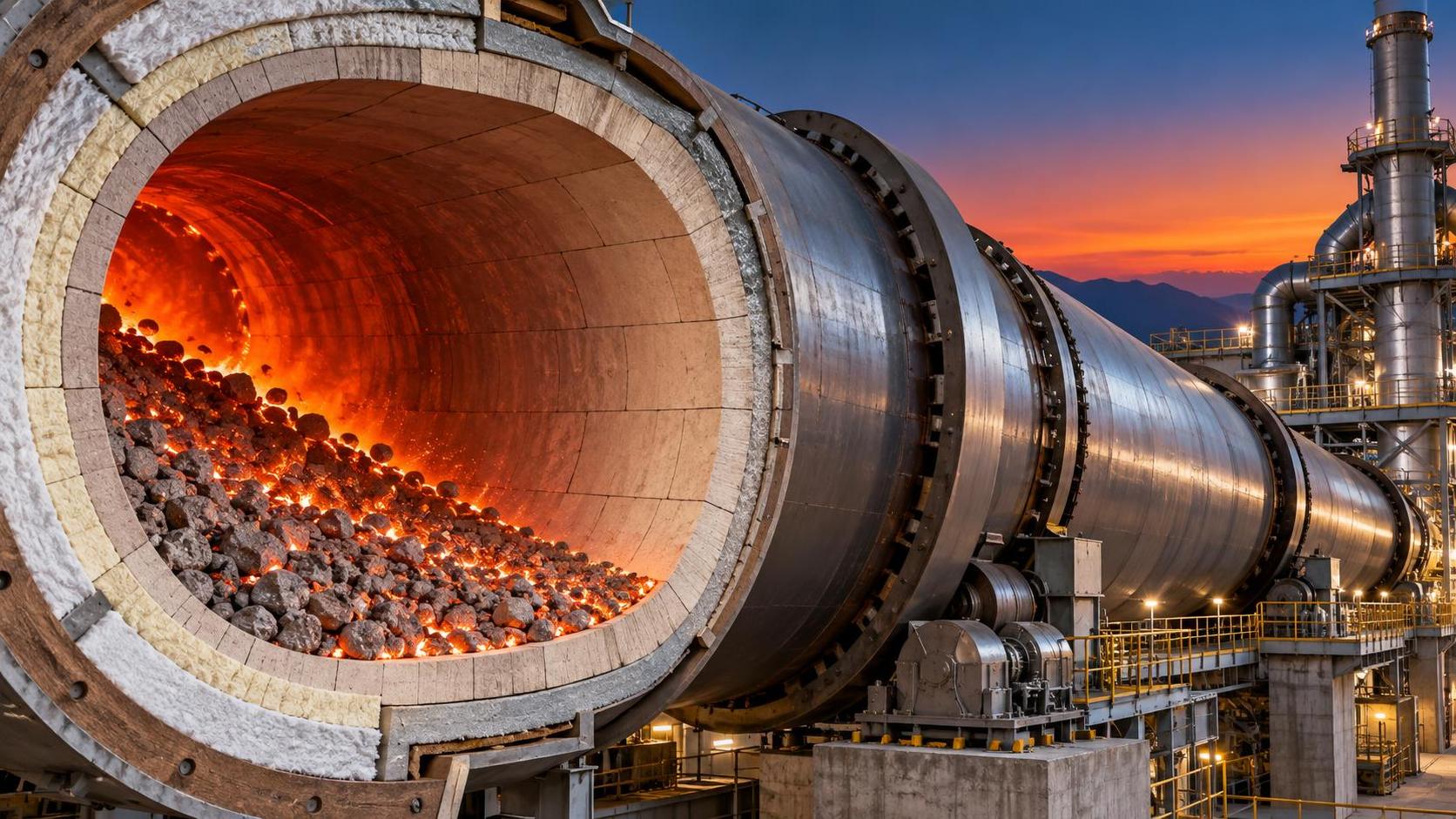
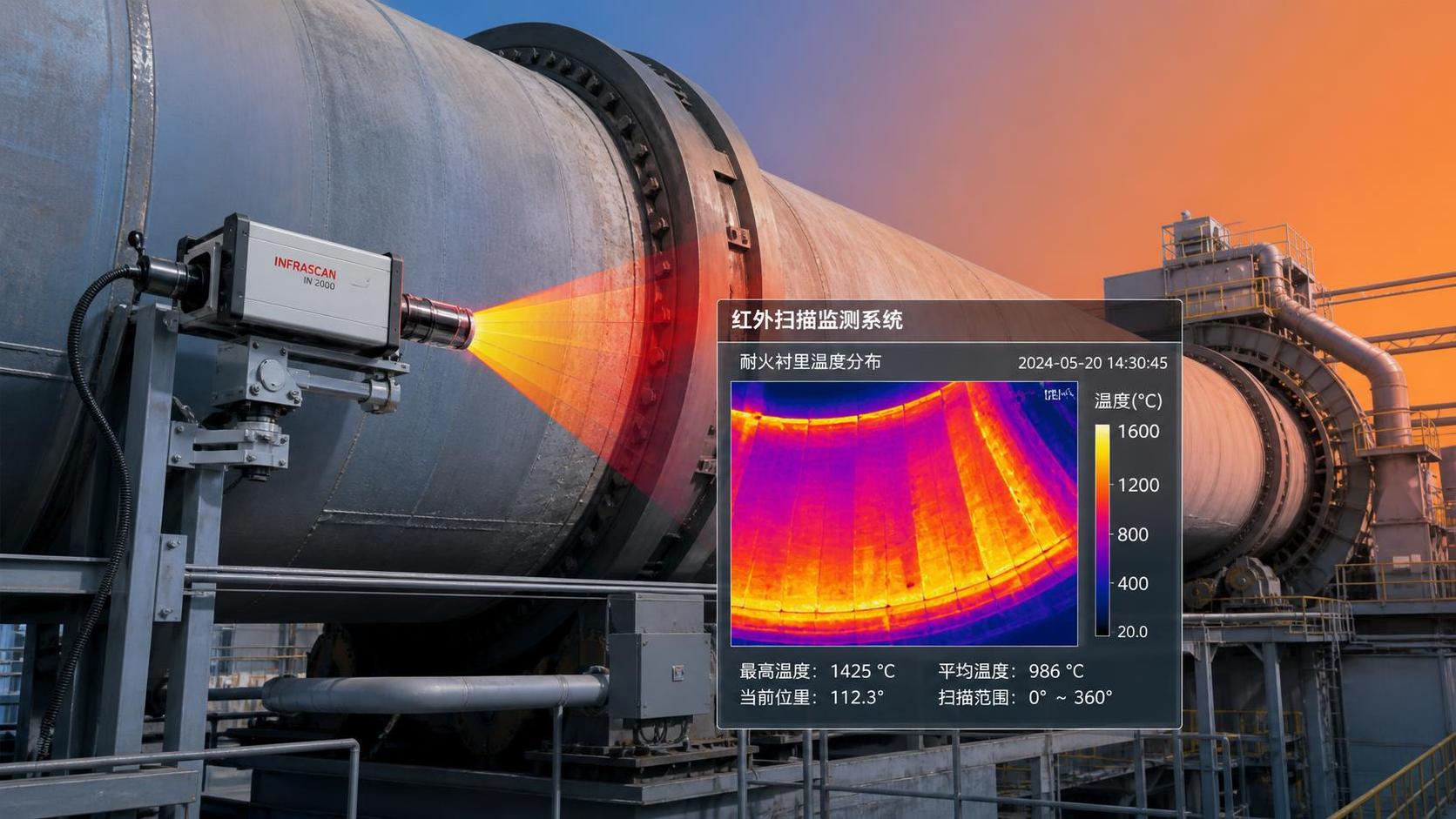
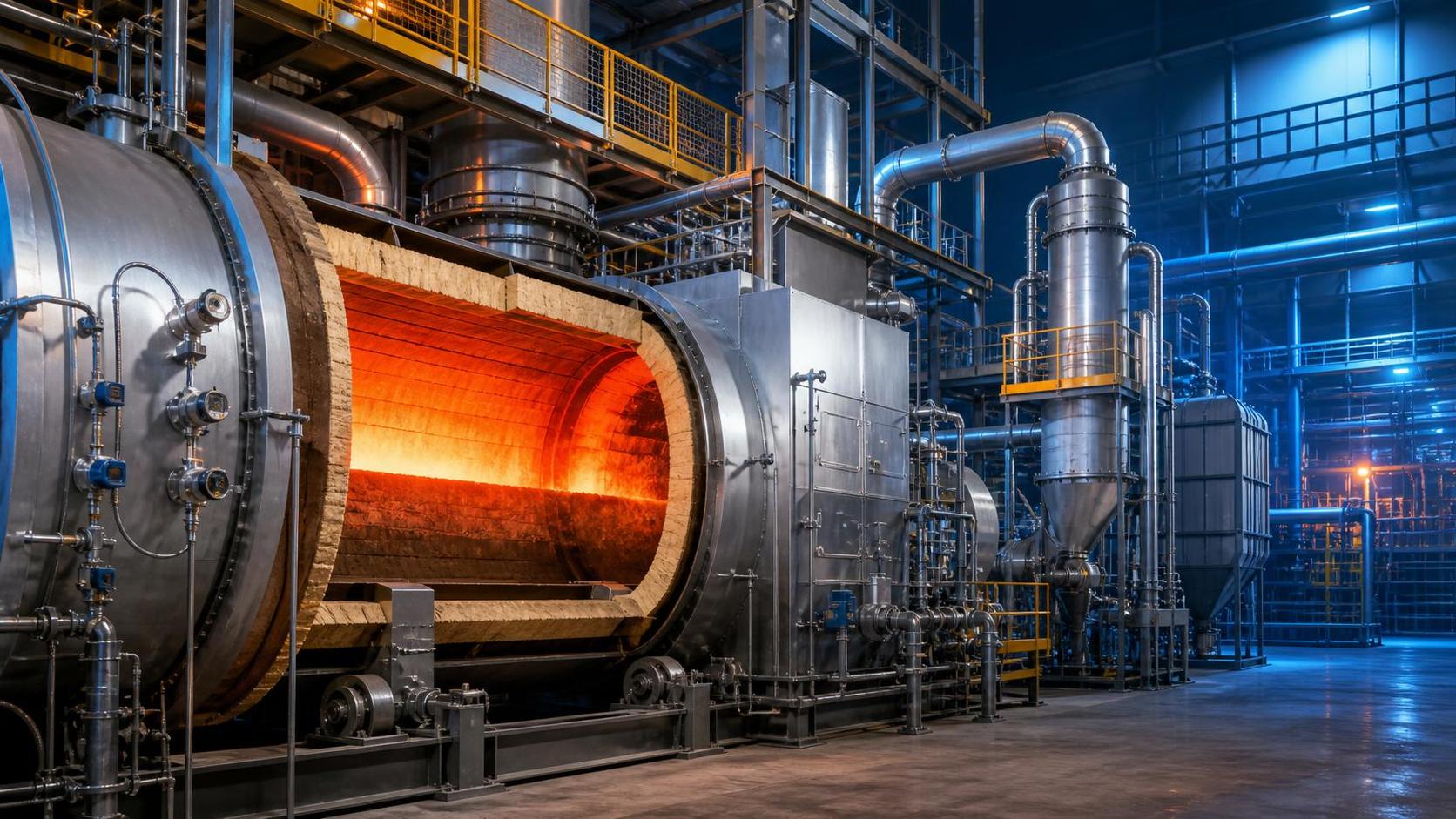
In high-temperature industries, the lining is the boundary that allows the process to exist. Its thermal conductivity, thickness, installation quality, permeability, chemical resistance, and ability to accommodate movement all affect fuel use and production continuity. An aging lining may increase shell losses gradually enough to escape attention until a thermal scan reveals a pronounced hot zone.
Refractory optimization should balance insulation value against process behavior. A lower-conductivity system is not automatically better if it changes heat flux in a way that disrupts clinker formation, glass refining, sintering, or material release. In rotary equipment, lining selection and coating stability are closely connected. In furnaces exposed to frequent cycling, thermal shock resistance and joint design may matter more than a modest improvement in nominal insulation performance.
For this reason, a useful assessment combines infrared shell surveys, lining-thickness data where available, operating history, and process chemistry. Online refractory monitoring can add early warning, but its value lies in how maintenance and operations respond to the signal. A dashboard that identifies a hot spot without a defined escalation path does not protect throughput.
Throughput protection depends on material stability
Fuel use per tonne often rises because the material entering the furnace has become harder to heat or react. Moisture variation is the familiar example, yet the same principle applies to feed particle distribution, mixing consistency, bulk density, mineralogy, volatile content, and recycled-material proportion.
When feed conditions are unstable, operators commonly add thermal margin: more fuel, higher temperature, longer residence time, or reduced line speed. That response can protect quality in the moment, but it creates a costly dependence on operator judgment and masks upstream causes. Better feed preparation, moisture measurement, dosing accuracy, and inventory management can reduce the energy required to maintain a given throughput.
This is especially relevant in plants using alternative fuels, recycled raw materials, waste-derived feeds, or variable cullet streams. These inputs can improve circularity and reduce purchased-fuel exposure, but their use must be supported by an understanding of ash chemistry, particle behavior, calorific variation, contaminants, and the furnace’s thermal response. Co-processing is not merely a fuel substitution project; it is a combined combustion, chemistry, and control project.
A practical industrial process optimization furnace workflow
For technical teams deciding where to invest, a staged workflow reduces the risk of funding isolated improvements that cannot be sustained. The first stage is data validation. Confirm meter accuracy, sensor calibration, production accounting, and time alignment between process systems. Many apparent efficiency opportunities disappear or change shape once inconsistent data is corrected.
Next, map the furnace energy balance under representative conditions: stable high load, reduced load, product transition, and any known difficult operating period. Include direct fuel, electrical auxiliaries, combustion air, induced-draft fan demand, cooling loads, and recoverable heat. Then rank interventions by expected impact, process risk, implementation complexity, maintenance implications, and measurability.
Low-disruption actions may include seal repairs, burner inspection, air-leak testing, setpoint rationalization, fan-control review, and improved operator guidance. Medium-scale actions can involve advanced combustion controls, variable-speed drives, improved instrumentation, feed conditioning, or targeted refractory upgrades. Larger projects—such as preheater modification, heat-recovery installation, digital twin deployment, or furnace rebuilding—require a longer business case that includes downtime, integration risk, and expected operational discipline after commissioning.
Digital monitoring should make decisions clearer
Online monitoring, historian analytics, and digital-twin models are increasingly useful in thermal operations, particularly where experienced operators are managing more complex fuel and feed conditions. Their purpose should be practical: identify drift early, compare current performance with a credible operating envelope, and show which variable is most likely responsible for a deviation.
The most effective systems combine process data with thermal expertise. A model that flags increasing exhaust temperature is useful; a model that distinguishes between exchanger fouling, excess air, reduced feed moisture, and sensor drift is far more valuable. CF-Elite follows these developments across silicate production, industrial kilns, incineration, refractory lines, and extrusion equipment because the same data architecture can support different thermal processes when the underlying physics is respected.
For evaluators, the key question is not whether a platform uses advanced analytics. It is whether the plant has the sensors, operating discipline, engineering ownership, and maintenance routines needed to act on the insights. Technology should reduce the distance between a warning and a well-founded decision.
Efficiency becomes durable when operators can trust it
Lasting fuel reduction is built into daily operation. A revised combustion target, a cleaner heat exchanger, or a new lining design will not hold its value if operators lack clear limits and feedback. The best optimization programs define a small set of shared indicators—specific fuel use, throughput, exhaust oxygen, stack temperature, quality outcomes, and key equipment conditions—and review them against real production events.
Industrial furnace optimization is therefore not about asking a line to do more with less heat. It is about directing heat with greater intention. By stabilizing combustion, preserving refractory integrity, recovering usable energy, controlling feed variability, and validating decisions with reliable data, plants can reduce fuel use without sacrificing the throughput that the operation depends on.
Related News
 Thermal Energy ArchitectIndustrial Furnace Process Optimization: Reducing Fuel Use Without Sacrificing ThroughputIndustrial process optimization furnace strategies that cut fuel use while protecting throughput. Explore combustion control, heat recovery, refractory performance, and data-driven efficiency gains.Sep 19, 2026
 Ms. Elena RodriguezWhat Drives High-Pressure Extrusion Equipment Cost in Industrial Projects?High pressure extrusion equipment cost explained: compare pressure, die design, automation, wear, energy, and installation factors for smarter industrial investments.Sep 18, 2026
 Thermal Energy ArchitectHow to Size a Waste Heat Recovery Exchanger for High-Temperature Kiln Exhaust?Waste heat recovery exchanger sizing for high-temperature kiln exhaust: balance recoverable duty, fouling, corrosion limits, pressure drop, and reliable heat use.Sep 17, 2026
 Thermal Energy ArchitectWhy Heat-Resistant Materials Lose Abrasion Resistance at High TemperaturesHeat-resistant materials abrasion resistance can decline at high temperatures. Discover the thermal, chemical, and mechanical causes of wear—and how to choose longer-lasting linings.Sep 16, 2026
 Thermal Energy ArchitectHow to Evaluate a Thermal Energy Optimization Company for High-Temperature PlantsChoose a thermal energy optimization company with proven process expertise, measurable savings, and reliable delivery for high-temperature plants. Learn what to assess.Sep 15, 2026
 Thermal Energy ArchitectRotary Kiln Efficiency: How Feed Rate, Fuel Use, and Heat Loss Affect OutputRotary kiln efficiency explained: discover how feed rate, fuel use, heat loss, combustion, and cooling performance shape output, quality, and energy costs.Sep 14, 2026
 Thermal Energy ArchitectHow to Select Heat-Resistant Materials That Maintain Abrasion Resistance in KilnsHeat-resistant materials abrasion resistance: learn how to select kiln linings that withstand heat, wear, thermal cycling, and chemical attack for longer service life.Sep 13, 2026
 Thermal Energy ArchitectHow Rotary Kiln Automation Improves Temperature Control and Fuel EfficiencyRotary kiln technology automation enhances temperature control, stabilizes combustion, and improves fuel efficiency with smarter data, predictive control, and safer operations.Sep 12, 2026
 Silicate Process EngineerCement Plant Emission Control: Selecting Systems for Dust, NOx, and SO2 LimitsCement plant emission control guide: compare dust collectors, NOx reduction, and SO2 systems for reliable compliance across kiln modes, fuel changes, and operating upsets.Sep 11, 2026
 Thermal Energy ArchitectSelecting Abrasion-Resistant High-Temperature Materials for Kiln and Conveyor Wear ZonesHigh-temp material engineering guide to abrasion-resistant kiln and conveyor solutions—match wear, heat, chemistry, and installation design for longer service life.Sep 10, 2026
 Dr. Alistair VaughnIndustrial Process Engineering: How to Map Processes for Safer, More Efficient PlantsIndustrial process engineering reveals bottlenecks, safety risks, and energy losses through practical process mapping for safer, more efficient plants.Sep 09, 2026
 Optical Glass Tech FellowHow to Evaluate a Glass Annealing Equipment Manufacturer for Production StabilityChoose a glass annealing equipment manufacturer with proven thermal uniformity, reliable controls, lifecycle value, and responsive service for stable production.Sep 08, 2026
 Prof. Marcus ChenThermal Energy Architecture in North America: Strategies for Lower Building Energy UseThermal energy architecture North America helps project leaders cut building energy use through stronger envelopes, right-sized HVAC, storage, and smart commissioning.Sep 07, 2026
 Ms. Elena RodriguezHow Should Buyers Evaluate Building Material Industry Intelligence Pricing?Building material industry intelligence pricing: learn how to compare coverage, technical depth, and ROI to choose intelligence that reduces procurement risk.Sep 07, 2026
 Ms. Elena RodriguezHow to Use Building Material Intelligence Data for Market and Investment DecisionsBuilding material industry intelligence data helps leaders evaluate demand, costs, regulation, capacity, and technology to make smarter market and investment decisions.Sep 05, 2026
 Thermal Energy ArchitectHow PLC Control Improves Energy Efficiency and Temperature Stability in KilnsEnergy efficient kilns PLC control improves temperature stability, cuts fuel waste, and optimizes combustion, draft, and material flow. Explore proven strategies for smarter kiln modernization.Sep 04, 2026
 Optical Glass Tech FellowEuropean Glass Melting Processes: Furnace Choices, Energy Use, and Quality ControlGlass melting process Europe: explore furnace choices, energy efficiency, cullet strategy, and quality control to improve output, compliance, and long-term glass performance.Sep 03, 2026
 Thermal Energy ArchitectWhat Determines Refractory Lining Monitoring Price for Industrial Kilns?Refractory lining monitoring price depends on kiln size, sensor technology, installation, software, and support. Compare total lifecycle costs and choose the right solution.Sep 02, 2026
 Silicate Process EngineerCement Production System Costs: A Plant Buyer’s Guide to Budgeting and ROICement production systems cost planning made clear: compare CAPEX, operating costs, compliance, and ROI to build a resilient, profitable cement plant investment.Sep 01, 2026
 Dr. Alistair VaughnWhat Should a Process Technology Database Track for High-Temperature Plants?Process technology database essentials for high-temperature plants: track thermal profiles, feed chemistry, refractory wear, emissions, energy, and maintenance for safer, data-driven decisions.Aug 31, 2026



Related News
- 00
0000-00
Industrial Furnace Process Optimization: Reducing Fuel Use Without Sacrificing Throughput - 00
0000-00
How to Size a Waste Heat Recovery Exchanger for High-Temperature Kiln Exhaust? - 00
0000-00
Why Heat-Resistant Materials Lose Abrasion Resistance at High Temperatures - 00
0000-00
How to Evaluate a Thermal Energy Optimization Company for High-Temperature Plants - 00
0000-00
Rotary Kiln Efficiency: How Feed Rate, Fuel Use, and Heat Loss Affect Output
Weekly Insights
Stay ahead with our curated technology reports delivered every Monday.