
Choosing a Vacuum Extrusion System: Capacity, Materials and Vacuum Levels




Choosing a vacuum extrusion system requires more than matching a machine to a production target. Material composition, moisture content, throughput and vacuum level all influence product density, dimensional consistency and process stability. For technical evaluators, the challenge is to assess these factors together while accounting for energy use, maintenance and downstream equipment. This guide examines the key specifications and trade-offs that can help you select a system suited to your material and production requirements.
Start with the product, not the extruder nameplate
A hollow clay block, a dense refractory shape and a lightweight building panel can all be produced by extrusion, but they do not ask the same things of the machine. Their allowable defects, die geometries, handling requirements and firing or curing routes are different. A useful specification therefore begins with the finished product and works backward through the line.
Define the product dimensions and tolerances, acceptable variation in density, green strength needed for handling, and any limits on cracking or internal voids. For hollow products, include web thickness and cavity geometry. For refractory shapes, the particle-size distribution and the need to retain coarse aggregate can be as consequential as the vacuum setting.
The production route matters too. A body that leaves the die looking sound may still dry unevenly or distort during firing. Conversely, an apparent extrusion problem can originate in inconsistent mixing or inadequate downstream support. Evaluation should follow the material from preparation to the accepted finished product, not stop at the die exit.
Capacity: specify what the line must deliver
Supplier capacity figures are useful for screening, but they are not interchangeable unless the test conditions are comparable. Ask whether a quoted rate refers to wet material leaving the die, dry material, or acceptable finished product. Moisture, formulation, die resistance and operating time can all change the relationship between those figures.
Work backward from the required saleable output. Allow for planned operating hours, product changeovers, startup losses, maintenance and expected rejects. Then check the upstream mixer and feeder against the required extruder feed rate, and compare the die output with the cutter, dryer, kiln or curing line. A larger extruder cannot compensate for a dryer that is already the bottleneck.
There is also a downside to excessive oversizing. If the machine spends most of its time well below its intended operating range, feeding and chamber loading may become less predictable, depending on the design and material. Ask suppliers to identify both the demonstrated operating range and the conditions under which they expect stable output—not just the maximum rate.
For a plant making several profiles, evaluate the most restrictive die as well as the highest-volume product. A wide or intricate section may need a different pressure and drive torque from a simpler shape at the same mass throughput. The limiting product is not always the one with the largest cross-section.
Material behavior decides more than the equipment category
Plasticity, particle size, moisture distribution and abrasiveness determine how readily a body mixes, de-airs and passes through the die. Two formulations with similar water content can behave very differently if one contains more fine clay and the other contains coarse grog, recycled mineral fines or lightweight aggregate.
More water may make extrusion easier, but it can weaken the green section, increase drying demand or alter shrinkage. Less water may improve shape retention while raising extrusion resistance and making uniform feed more difficult. The appropriate moisture window is therefore a process result to establish in trials, not a number to copy from another plant.
Pay particular attention to reclaimed or variable feedstock. Changes in particle grading, soluble constituents, organic content or absorbed moisture can shift the process even when the recipe appears unchanged. If recycled material is part of the commercial plan, include its expected variability in the test program. A trial using only the cleanest available batch can give a misleading basis for selection.
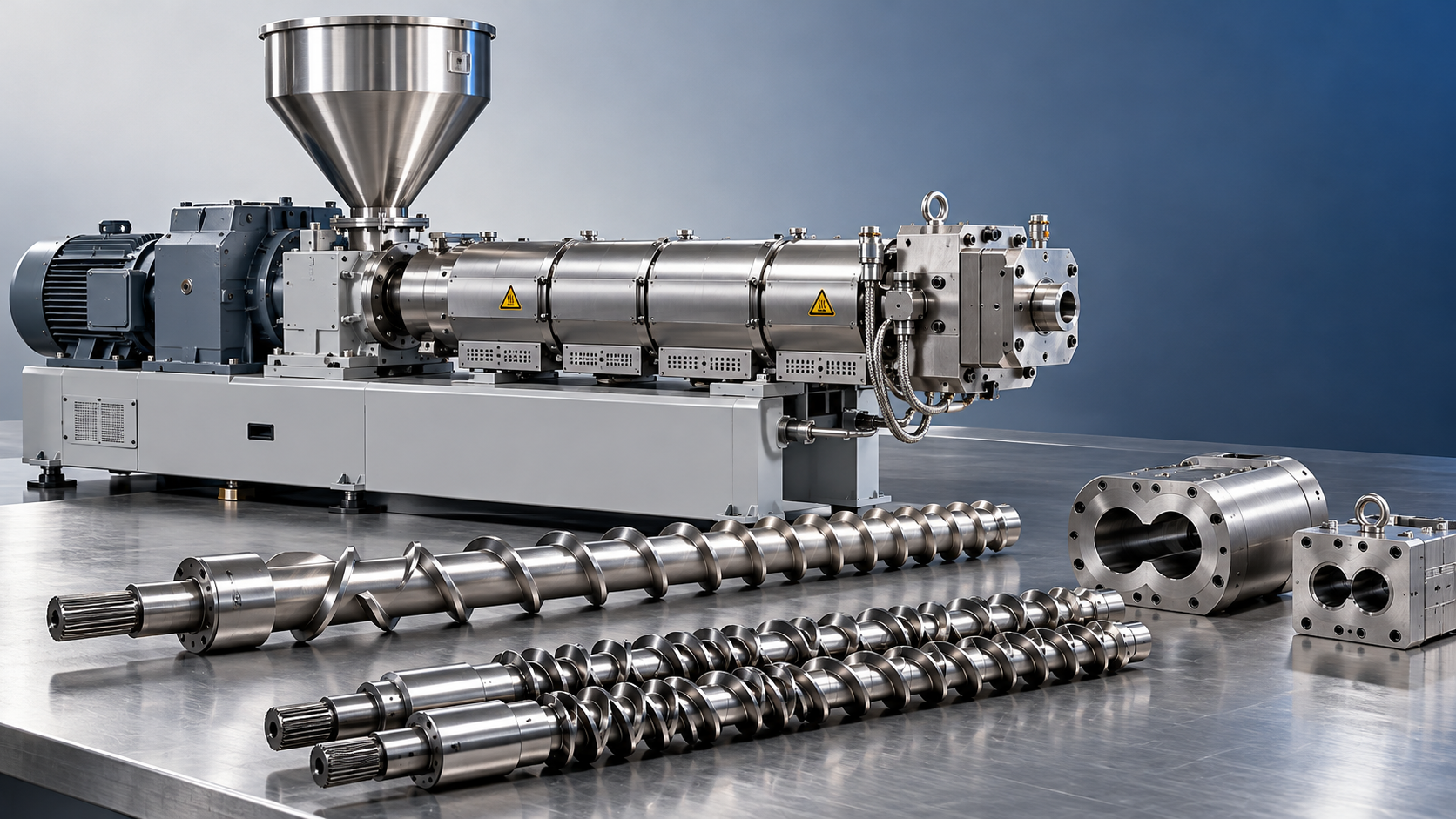
Abrasive bodies also change the economics. Ask how the screw, barrel liners, mixing elements and die components are protected, how wear is measured, and whether the most exposed parts can be replaced without dismantling the whole machine. Hard-facing or wear-resistant materials may help, but their suitability depends on the feed and maintenance strategy.
Vacuum level: compare pressure under load, not pump claims
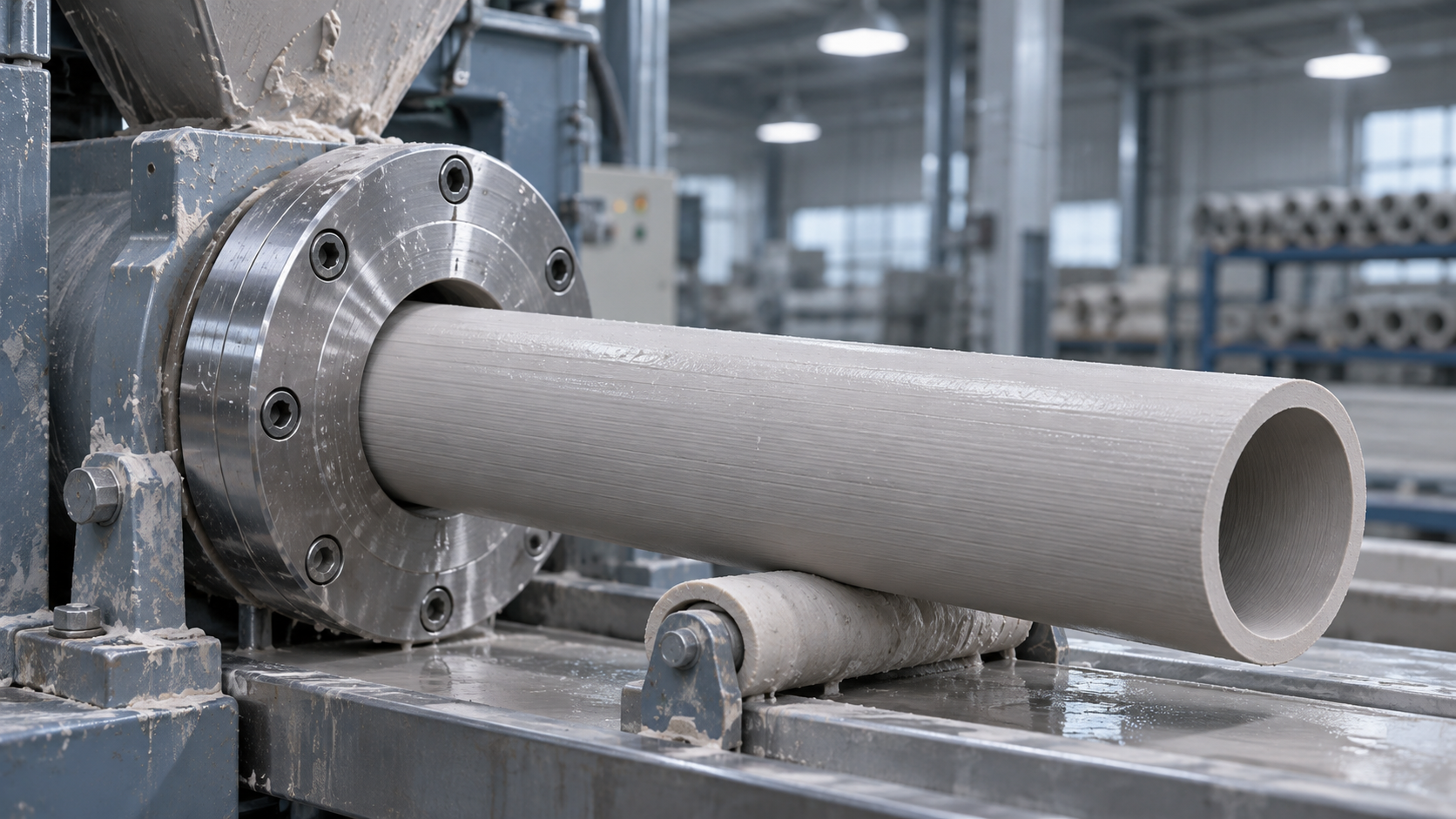
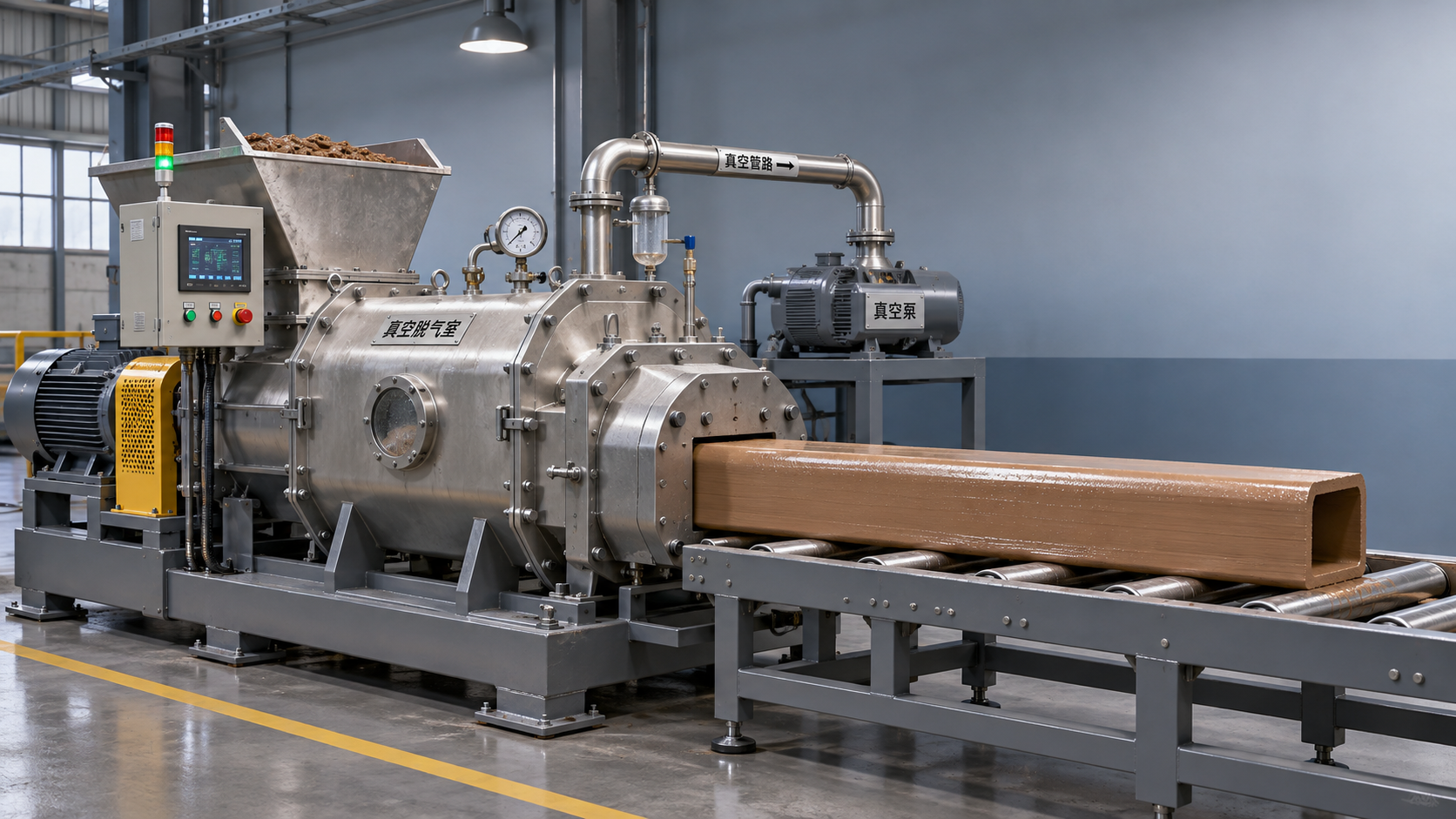
Vacuum extrusion typically uses a de-airing chamber between material preparation and final extrusion. The prepared body is exposed in the chamber so entrained air can be removed before the material is compacted and pushed through the die. The result depends on how the material is presented to the vacuum, the chamber’s sealing and loading, and the capacity of the vacuum package under actual process conditions.
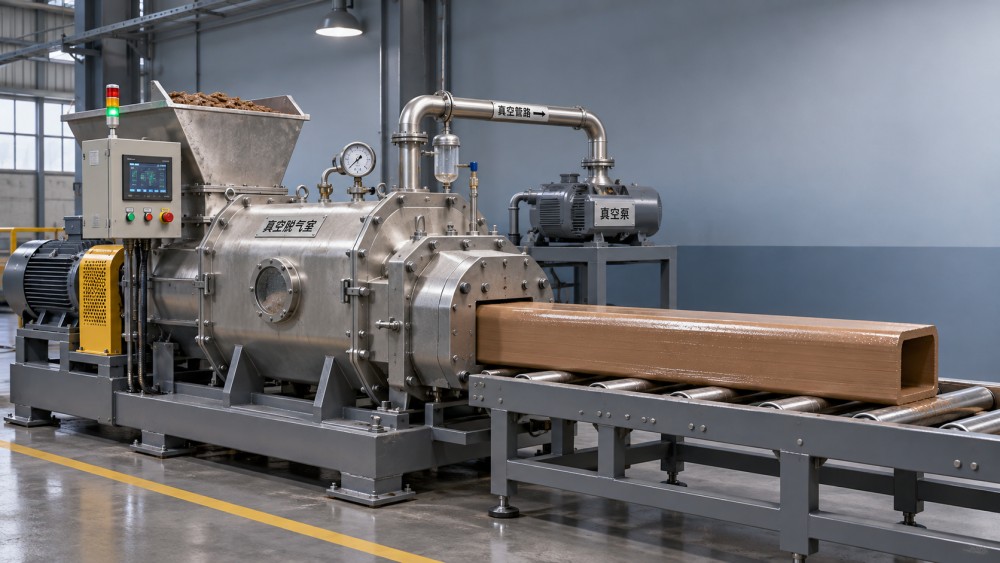
Be precise about pressure terminology. Absolute pressure is measured relative to a perfect vacuum; gauge pressure is referenced to atmospheric pressure. A lower absolute pressure indicates a deeper vacuum, while a negative gauge reading must be interpreted with the local atmospheric pressure. Ask where the pressure is measured and request the operating pressure at the chamber during steady production. A pump’s ultimate pressure with no process load does not establish the chamber pressure achieved with a wet body passing through it.
Deeper vacuum is not automatically better. Depending on the material, temperature and pressure, moisture can evaporate more readily, adding vapor load to the system. Fine particles or carryover may contaminate components, while leaks and restricted pipework can undermine performance. Pump selection should consider air leakage, vapor handling, contamination protection and the required pressure at the chamber—not only nominal pumping capacity.
Different vacuum arrangements also bring different utilities and maintenance needs. For example, where a liquid-ring pump is proposed, examine seal-liquid supply, temperature, treatment and disposal requirements. For any pump type, ask how condensate and solids are separated, how loss of vacuum is detected, and what happens to product during a trip. Confirm the relevant site requirements rather than assuming one arrangement will suit every location.
Pressure, tooling and downstream handling are part of the same decision
Vacuum removes entrained air; it does not replace adequate mixing, die design or extrusion pressure. A well-de-aired body can still produce laminations, surface tearing or dimensional variation if feed is uneven, the screw is worn, or flow through the die is unbalanced.
Request the expected operating and maximum design limits for die pressure and drive torque, along with the assumptions behind them. Check how those values change for the proposed product range. Pressure margin is useful, but specifying the highest possible pressure without understanding the body may lead to unnecessary equipment weight and power demand—or conceal a tooling problem that should be corrected.
At the die exit, look beyond the profile dimensions. Can the green product bridge the distance to the cutter without sagging? Will the cutting method deform thin webs? Can the conveyor support the section without marking it? For material destined for a kiln, drying and firing behavior should be checked against the same trial samples. A marginally faster extrusion rate is a poor trade if it produces a wet product that the dryer cannot process reliably.
Make supplier trials answer purchasing questions
A useful trial is designed around the uncertainties in the specification. Provide representative raw materials, including normal moisture and grading variation, and agree on the preparation method. If the trial machine, die or downstream equipment differs from the proposed installation, record those differences before interpreting the result.
Agree in advance on the observations and acceptance criteria. Depending on the product, these may include:
- Stable throughput and material moisture, with a clear wet or dry basis.
- Chamber pressure under load, together with die pressure, drive load and relevant temperatures.
- Green dimensions, visible defects, handling strength and behavior at the cutter.
- Drying, firing or curing results where those stages determine final acceptance.
- Energy and utility measurements with the included equipment and operating conditions stated.
Allow enough steady-state running time to observe feeding and pressure stability, not merely a brief demonstration after the machine has been adjusted. A short test can support comparison, but it cannot by itself establish long-term wear life or annual availability. Those need separate evidence, maintenance assumptions and contractual discussion.
Compare lifetime operating requirements before signing
The extruder drive is only one part of the energy picture. Mixing, vacuum generation, cooling, material handling and downstream drying all contribute. Compare options on a consistent boundary, preferably against accepted product output, and state whether utilities such as water treatment are included. Lower motor power on a quotation does not necessarily mean lower energy use per usable piece.
Maintenance access deserves the same scrutiny as performance. Check lifting space for screws and dies, access to the vacuum chamber, availability of wear parts, inspection intervals and the skills required for repairs. For an international project, clarify spare-parts lead times, documentation language, commissioning responsibilities and remote support before treating service as an included benefit.
This wider boundary is particularly relevant to silicate and refractory lines, where extrusion choices can affect drying load, firing consistency and material yield. CF-Elite’s broader focus on thermal processes and resource efficiency offers a useful lens: assess the forming machine as one contributor to the line’s performance, rather than treating its nameplate efficiency as the whole answer.
Before selecting a supplier, put the remaining unknowns into a written test and responsibility matrix. If one proposal cannot demonstrate stable chamber pressure with the intended body, while another cannot explain wear-part access or downstream integration, those gaps deserve more attention than a small difference in quoted maximum capacity.
Related News
 Ms. Elena RodriguezProcess Equipment Pricing: How to Compare Quotes and Total CostsMaster process equipment comparison pricing: compare supplier quotes, uncover hidden costs, and evaluate lifetime expenses to make a confident buying decision.Nov 17, 2026
 Prof. Marcus ChenGlobal Cement Industry Decarbonization: Key Technologies and Cost BarriersExplore global cement industry decarbonization technologies, cost barriers, and practical investment strategies to cut emissions while protecting competitiveness.Nov 16, 2026
 Structural Material AnalystChoosing Specification Preparation Support for North American ProjectsChoose specification preparation support North America projects can rely on. Compare technical expertise, compliance, interfaces, and supplier acceptance criteria.Nov 14, 2026
 Structural Material AnalystSpecialty Ceramic Extrusion: How Material Properties Affect FormingExplore how ceramic specialized material extrusion is shaped by particle size, binders, and solids loading—and learn to improve forming and reduce defects.Nov 13, 2026
 Ms. Elena RodriguezHigh-Pressure Molding Equipment Prices in Europe: What Affects the Total Cost?Explore high pressure molding equipment price Europe buyers can expect to assess, from tooling and installation to running costs. Compare quotes with confidence.Nov 12, 2026
 Structural Material AnalystChoosing a Vacuum Extrusion System: Capacity, Materials and Vacuum LevelsChoosing a vacuum extrusion system? Compare capacity, material behavior and vacuum levels to improve product quality and select the right equipment.Nov 11, 2026
 Optical Glass Tech FellowGlass Melting Innovations: Comparing Electric and Hybrid Furnace TechnologiesExplore glass melting innovations and compare electric and hybrid furnaces by energy use, emissions, glass quality and operating costs to find the right fit.Nov 10, 2026
 Thermal Energy ArchitectHow Thermal Barrier Technology for Kilns Reduces Heat LossDiscover how thermal barrier technology for kilns reduces heat loss, and learn how to select insulation and assess savings without compromising lining durability.Nov 09, 2026
 Prof. Marcus ChenGlobal Materials Trends: What North American Manufacturers Need to KnowExplore global material trends North America manufacturers need to know, from energy costs and supply chains to lower-carbon materials and smarter investment decisions.Nov 08, 2026
 Thermal Energy ArchitectSelecting Abrasion-Resistant Refractories for High-Wear Kiln LiningsExplore advanced refractory materials abrasion resistant enough for high-wear kiln linings. Compare wear mechanisms, thermal stability, installation and lifecycle costs.Nov 06, 2026
 Dr. Alistair VaughnIndustrial Energy Efficiency Certification: ISO 50001 Requirements for PlantsExplore industrial energy efficiency certification with ISO 50001. Learn how plants define scope, measure performance and prepare credible evidence for audits.Nov 05, 2026
 Ms. Elena RodriguezWhat Is an Industrial Intelligence Database and How Is It Used?Discover how an industrial intelligence database helps researchers map markets, track projects, compare technologies, and assess evidence with confidence.Nov 04, 2026
 Ms. Elena RodriguezIndustrial Material Pricing: How Freight and Order Volume Affect QuotesExplore industrial material pricing and learn how freight, order volume, and inventory costs affect quotes. Compare suppliers and make smarter purchasing decisions.Nov 03, 2026
 Structural Material AnalystSingle- vs. Twin-Screw Extrusion Systems: Which Suits Your Material?Choose the right specialized extrusion systems screw type for your material. Compare single- and twin-screw options to improve quality and control costs.Nov 02, 2026
 Thermal Energy ArchitectChoosing Thermal Barrier Materials for Kilns: Temperature and Heat LossExplore thermal barrier materials for kilns and learn how to balance temperature resistance, heat loss, durability and operating costs when selecting a lining.Nov 01, 2026
 Ms. Elena RodriguezSupplier Reference Platform Pricing: Fees and Contract Terms to CompareCompare supplier reference platform pricing, hidden fees, verification costs and contract terms to choose the right solution for your sourcing team.Oct 31, 2026
 Ms. Elena RodriguezSupplier Comparison Metrics: How to Score Cost, Quality, and DeliveryUse supplier comparison metrics to score cost, quality, and delivery with a practical weighted scorecard. Make more confident equipment sourcing decisions.Oct 30, 2026
 Ms. Elena RodriguezWhat Does Industrial Waste Heat Recovery Cost, and When Does It Pay Back?Understand industrial waste heat recovery cost, from equipment and installation to net savings. Learn how to compare quotes, assess risks, and calculate realistic payback before investing.Oct 29, 2026
 Thermal Energy ArchitectChoosing Industrial Waste-to-Energy Equipment by Waste Moisture and Heating ValueChoose industrial waste to energy equipment by moisture and heating value. Compare technologies, fuel needs, and supplier guarantees to make a confident investment.Oct 28, 2026
 Thermal Energy ArchitectChoosing Industrial Kiln Insulation for High Heat and Repeated Thermal CyclingExplore high temperature industry solutions for kiln insulation under repeated thermal cycling. Compare materials, reduce heat loss, and select the right lining for your operating conditions.Oct 27, 2026


Related News
- 00
0000-00
Choosing Specification Preparation Support for North American Projects - 00
0000-00
Specialty Ceramic Extrusion: How Material Properties Affect Forming - 00
0000-00
Choosing a Vacuum Extrusion System: Capacity, Materials and Vacuum Levels - 00
0000-00
Single- vs. Twin-Screw Extrusion Systems: Which Suits Your Material? - 00
0000-00
Bioprocessing Equipment Comparisons: Where to Find Reliable Performance Data
0000-00
Weekly Insights
Stay ahead with our curated technology reports delivered every Monday.