
Glass Melting Innovations: Comparing Electric and Hybrid Furnace Technologies




Electric furnaces can be a strong choice when a glass composition is compatible with submerged electrodes, the required output is within a proven design range, and reliable low-emissions electricity is available at a workable cost. Hybrid furnaces offer a different balance: they combine electrical heating with combustion, giving operators more ways to supply heat and potentially making electrification more practical for a wider range of production duties.
Neither option guarantees lower costs, better glass quality or lower total emissions on its own. The useful comparison starts with the same glass, pull rate and quality specification, then tests how each furnace would perform with the site’s electricity supply, fuel costs, cullet availability and operating constraints. For technical evaluators, glass melting innovations matter most when they improve that complete operating case rather than a single furnace metric.
Where the heat enters changes the process
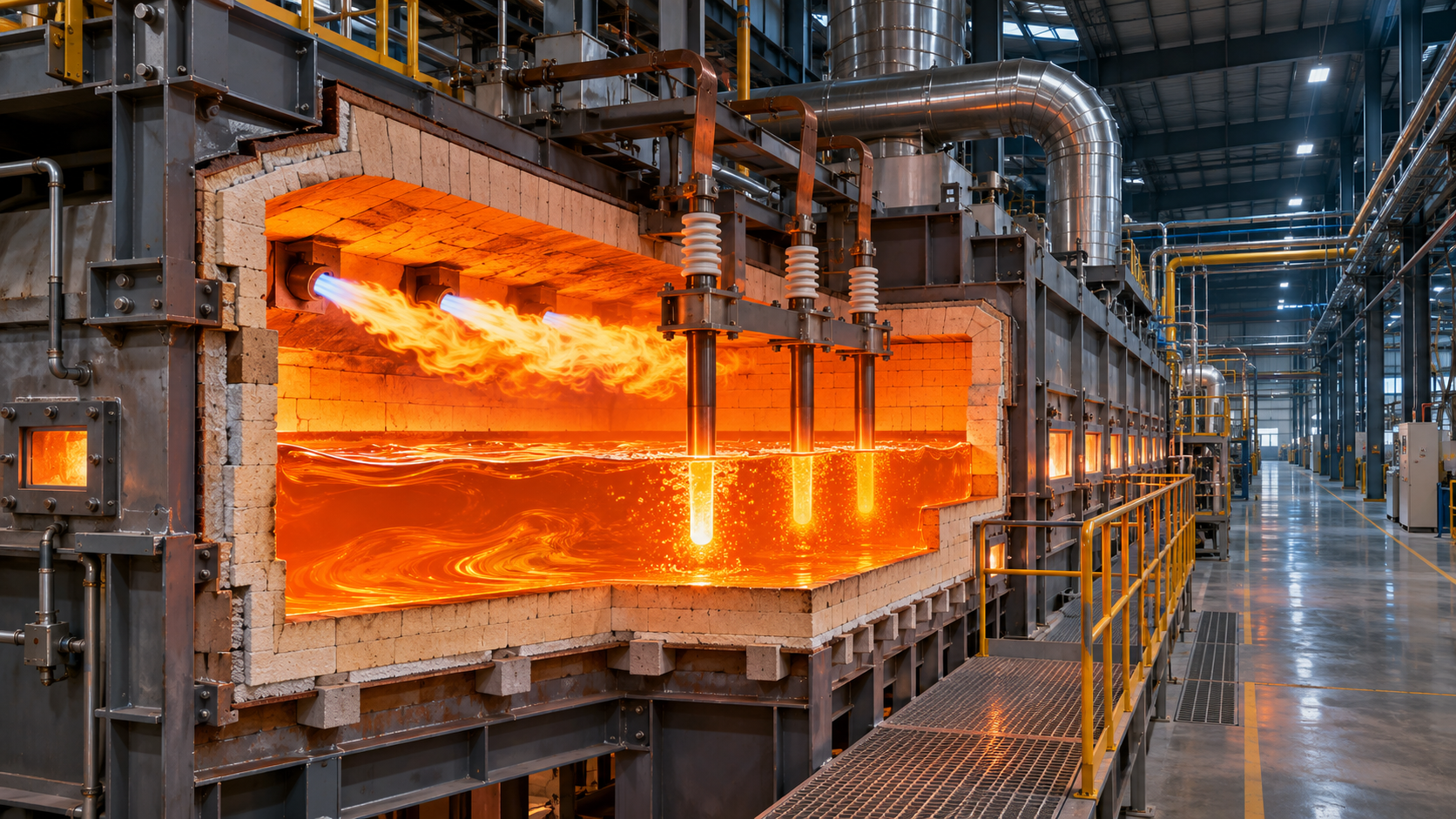
In an electrically heated glass furnace, current passes between submerged electrodes through the molten glass. Because the glass conducts electricity at operating temperature, resistance generates heat within the melt. Many all-electric designs use a batch blanket over the molten surface, although furnace geometry and batch coverage depend on the application.
A hybrid furnace uses both electrical and combustion heat. The term covers several arrangements, from a predominantly fuel-fired furnace with electric boosting to a design in which electricity supplies a larger share of melting energy. A small boost system and a high-electrification hybrid should therefore not be treated as equivalent technologies. The location of the electrodes, the combustion system and the control strategy determine how heat reaches the batch and circulates through the melt.
Combustion transfers heat from flames and hot furnace gases toward the glass surface. Electrical heating deposits energy in the conductive melt. Combining the two changes temperature gradients and glass circulation, which can affect melting, fining and the path taken by glass through the tank. Electrical power is consequently a process variable as well as an energy input.
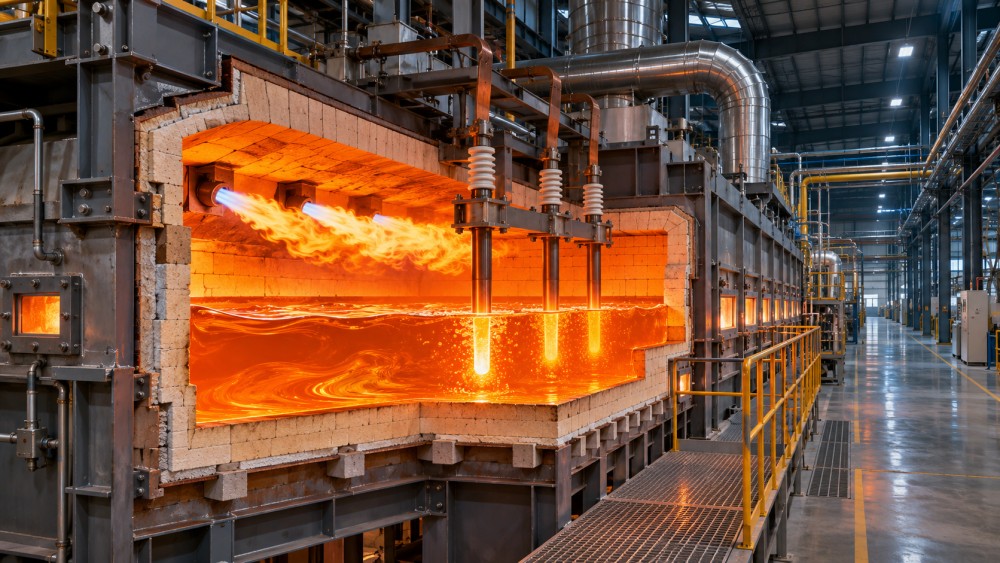
An all-electric furnace has no combustion exhaust from its normal melting operation, but it still needs control of batch-related releases, dust and any other process emissions. A hybrid retains a combustion exhaust stream. Its volume and composition depend on the fuel system, operating conditions and electrical share.
What the production duty allows
Start with the product specification. Container, fibre, specialty and flat-glass applications place different demands on output, composition, colour, homogeneity and defect limits. A furnace that can melt a recipe is not necessarily able to produce the required quality at the required pull rate throughout its campaign.
Glass composition and electrical conductivity. The melt must conduct electricity sufficiently for the electrode arrangement to deliver heat effectively. Conductivity varies with composition and temperature, so electrode spacing, voltage and current cannot be selected independently of the recipe. Redox-sensitive glasses require particular attention: electrode materials and local operating conditions can influence glass chemistry, colour or defects. The evaluation should cover the full range of recipes and cullet compositions expected in production.
Capacity and scale. Fully electric melting may be attractive where the required capacity and glass type fit an established furnace design. As output rises, the electrical installation, heat distribution, electrode arrangement and control of glass flow become more demanding. A hybrid can be a practical candidate where combustion heat remains useful for the duty or where a staged increase in electrical input fits the project constraints. There is no universal capacity threshold that decides the choice; ask for demonstrated performance on a comparable glass and production rate.
Quality and residence time. Melting the batch is only part of the job. Dissolving remaining particles, removing bubbles and delivering thermally and chemically uniform glass also require adequate temperature history and residence time. A proposed reduction in tank size or energy input should be assessed against fining performance and the risk of stones, cords, seeds or colour variation. For demanding products, the evaluator should examine the complete path through melting, refining and conditioning rather than the melting chamber alone.
Cullet and batch variability. Cullet can change melting behaviour and energy demand, but its benefit depends on the share used, its temperature, cleanliness and composition. Contamination or variable chemistry may affect colour, redox conditions and defect rates. Compare furnace options using the expected cullet range, including credible periods of lower availability, rather than an idealized fixed recipe.
Compare electrical share, not just furnace labels
A hybrid furnace can be designed around different objectives: increasing output, reducing fuel use, improving temperature control or raising the proportion of energy supplied electrically. Those objectives do not always produce the same operating point. An installation sized for limited electric boosting may have little scope to displace combustion without changes to power equipment, electrodes or furnace design.
For each proposal, request a heat and mass balance at the specified production rate and at relevant turndown conditions. The balance should identify electricity delivered to the melting system, fuel input, flue-gas losses, cooling losses and other significant energy flows. It should also state whether auxiliary loads are included. Electrical share can be expressed on different bases, so the definition must accompany any percentage used for comparison.
Flexibility deserves a close reading. Having two heat sources does not automatically mean that either can replace the other at full load. The furnace may need a minimum combustion rate, a minimum electrical input or a controlled rate of change to protect temperature distribution and product quality. Ask for the permitted operating envelope, including start-up, reduced pull and recovery after a power interruption.
Power supply and emissions can change the result
Electric melting shifts a substantial part of the energy decision to the electrical network. The assessment should cover available connection capacity, transformer and power-control equipment, voltage stability, planned outages and the consequences of an unplanned loss of supply. A furnace may remain thermally hot for some time after an interruption, but acceptable interruption duration and recovery procedures depend on its design and operating state.
Electricity price also needs more detail than an annual average. Demand charges, network tariffs and the timing of production can materially affect the bill. A lower energy input per tonne does not necessarily produce a lower operating cost if electricity is expensive relative to fuel. Conversely, a site with suitable low-cost power and expensive fuel may find a higher electrical share attractive. Compare total delivered energy costs at the meter, using a consistent production and tariff assumption.
For carbon accounting, separate direct furnace emissions from emissions associated with electricity generation. Fuel combustion produces direct emissions in a hybrid furnace; purchased power carries an emissions factor that varies by location, time and accounting method. Batch materials can also release carbon dioxide during melting regardless of the heat source. If those process emissions are included for one option, include them for the other on the same basis.
A useful comparison reports emissions per tonne of saleable glass and states the boundary: furnace only, site energy use or a broader product assessment. Yield matters because defects and losses increase the energy and emissions attributed to the glass that can be sold. Electricity procurement claims should be distinguished from the physical operating profile, with the applicable accounting method stated explicitly.
Campaign life and retrofit constraints
Electrodes and refractories deserve attention in both all-electric and hybrid designs. Electrode wear, glass chemistry, local current density and temperature can affect contamination risk and maintenance requirements. Refractory selection must account for the glass, atmosphere, temperature profile and interaction with electrical components. The relevant question is not simply whether an electrode or lining can withstand the temperature, but how its condition will be monitored and managed over the intended campaign.
For an existing furnace, adding electric boosting may offer a route to greater electrical input without replacing the entire melting system. Feasibility still depends on available tank geometry, electrode access, cooling, electrical supply and the condition of the existing furnace. A retrofit can also alter circulation and pull-rate capability, so the expected change in quality and output should be assessed together. The remaining campaign life and the outage needed for installation affect the investment case.
When comparing a retrofit with a new furnace, put both options on a common production basis and include the costs that follow from their different boundaries: grid connection, power controls, combustion and exhaust equipment, maintenance, downtime and eventual rebuilds. The lowest quoted furnace cost may leave major site work outside the comparison.
The most useful next step is a set of operating cases: normal and reduced pull, the expected recipe and cullet range, relevant electricity and fuel prices, and a defined emissions boundary. If a design meets quality and availability requirements across those cases, its claimed energy and carbon advantages can be judged against a production plan the site can actually run.
Related News
 Ms. Elena RodriguezProcess Equipment Pricing: How to Compare Quotes and Total CostsMaster process equipment comparison pricing: compare supplier quotes, uncover hidden costs, and evaluate lifetime expenses to make a confident buying decision.Nov 17, 2026
 Prof. Marcus ChenGlobal Cement Industry Decarbonization: Key Technologies and Cost BarriersExplore global cement industry decarbonization technologies, cost barriers, and practical investment strategies to cut emissions while protecting competitiveness.Nov 16, 2026
 Structural Material AnalystChoosing Specification Preparation Support for North American ProjectsChoose specification preparation support North America projects can rely on. Compare technical expertise, compliance, interfaces, and supplier acceptance criteria.Nov 14, 2026
 Structural Material AnalystSpecialty Ceramic Extrusion: How Material Properties Affect FormingExplore how ceramic specialized material extrusion is shaped by particle size, binders, and solids loading—and learn to improve forming and reduce defects.Nov 13, 2026
 Ms. Elena RodriguezHigh-Pressure Molding Equipment Prices in Europe: What Affects the Total Cost?Explore high pressure molding equipment price Europe buyers can expect to assess, from tooling and installation to running costs. Compare quotes with confidence.Nov 12, 2026
 Structural Material AnalystChoosing a Vacuum Extrusion System: Capacity, Materials and Vacuum LevelsChoosing a vacuum extrusion system? Compare capacity, material behavior and vacuum levels to improve product quality and select the right equipment.Nov 11, 2026
 Optical Glass Tech FellowGlass Melting Innovations: Comparing Electric and Hybrid Furnace TechnologiesExplore glass melting innovations and compare electric and hybrid furnaces by energy use, emissions, glass quality and operating costs to find the right fit.Nov 10, 2026
 Thermal Energy ArchitectHow Thermal Barrier Technology for Kilns Reduces Heat LossDiscover how thermal barrier technology for kilns reduces heat loss, and learn how to select insulation and assess savings without compromising lining durability.Nov 09, 2026
 Prof. Marcus ChenGlobal Materials Trends: What North American Manufacturers Need to KnowExplore global material trends North America manufacturers need to know, from energy costs and supply chains to lower-carbon materials and smarter investment decisions.Nov 08, 2026
 Thermal Energy ArchitectSelecting Abrasion-Resistant Refractories for High-Wear Kiln LiningsExplore advanced refractory materials abrasion resistant enough for high-wear kiln linings. Compare wear mechanisms, thermal stability, installation and lifecycle costs.Nov 06, 2026
 Dr. Alistair VaughnIndustrial Energy Efficiency Certification: ISO 50001 Requirements for PlantsExplore industrial energy efficiency certification with ISO 50001. Learn how plants define scope, measure performance and prepare credible evidence for audits.Nov 05, 2026
 Ms. Elena RodriguezWhat Is an Industrial Intelligence Database and How Is It Used?Discover how an industrial intelligence database helps researchers map markets, track projects, compare technologies, and assess evidence with confidence.Nov 04, 2026
 Ms. Elena RodriguezIndustrial Material Pricing: How Freight and Order Volume Affect QuotesExplore industrial material pricing and learn how freight, order volume, and inventory costs affect quotes. Compare suppliers and make smarter purchasing decisions.Nov 03, 2026
 Structural Material AnalystSingle- vs. Twin-Screw Extrusion Systems: Which Suits Your Material?Choose the right specialized extrusion systems screw type for your material. Compare single- and twin-screw options to improve quality and control costs.Nov 02, 2026
 Thermal Energy ArchitectChoosing Thermal Barrier Materials for Kilns: Temperature and Heat LossExplore thermal barrier materials for kilns and learn how to balance temperature resistance, heat loss, durability and operating costs when selecting a lining.Nov 01, 2026
 Ms. Elena RodriguezSupplier Reference Platform Pricing: Fees and Contract Terms to CompareCompare supplier reference platform pricing, hidden fees, verification costs and contract terms to choose the right solution for your sourcing team.Oct 31, 2026
 Ms. Elena RodriguezSupplier Comparison Metrics: How to Score Cost, Quality, and DeliveryUse supplier comparison metrics to score cost, quality, and delivery with a practical weighted scorecard. Make more confident equipment sourcing decisions.Oct 30, 2026
 Ms. Elena RodriguezWhat Does Industrial Waste Heat Recovery Cost, and When Does It Pay Back?Understand industrial waste heat recovery cost, from equipment and installation to net savings. Learn how to compare quotes, assess risks, and calculate realistic payback before investing.Oct 29, 2026
 Thermal Energy ArchitectChoosing Industrial Waste-to-Energy Equipment by Waste Moisture and Heating ValueChoose industrial waste to energy equipment by moisture and heating value. Compare technologies, fuel needs, and supplier guarantees to make a confident investment.Oct 28, 2026
 Thermal Energy ArchitectChoosing Industrial Kiln Insulation for High Heat and Repeated Thermal CyclingExplore high temperature industry solutions for kiln insulation under repeated thermal cycling. Compare materials, reduce heat loss, and select the right lining for your operating conditions.Oct 27, 2026

Related News
- 00
0000-00
Glass Melting Innovations: Comparing Electric and Hybrid Furnace Technologies - 00
0000-00
What Should a Glass Furnace Energy Specification Include? - 00
0000-00
How Glass Furnace Emissions Are Measured and Controlled for Regulatory Compliance - 00
0000-00
How to Evaluate Automated Float Glass Lines for Capacity, Quality, and Energy Use - 00
0000-00
How to Specify Glass Annealing Equipment for European Quality and Energy Requirements
0000-00
Weekly Insights
Stay ahead with our curated technology reports delivered every Monday.