
Single- vs. Twin-Screw Extrusion Systems: Which Suits Your Material?




A single-screw extruder is often the stronger starting point for a stable, well-prepared material that mainly needs conveying, pressure buildup and shaping. A twin-screw system becomes more attractive when the formulation needs controlled mixing, staged addition or devolatilization, or when variations in feed make consistent processing difficult. Neither choice guarantees a good product: the screw design, feed preparation and downstream die can be as consequential as the number of screws.
The decision also depends on what “material” means in the process under review. A thermoplastic compound, a wet clay body and a highly filled construction mix may all be extruded, but they do not behave alike. Their moisture content, particle size, viscosity and sensitivity to shear determine whether the extra control of a twin-screw machine will solve a real production problem or simply add cost and complexity.
Start with the job the extruder must perform
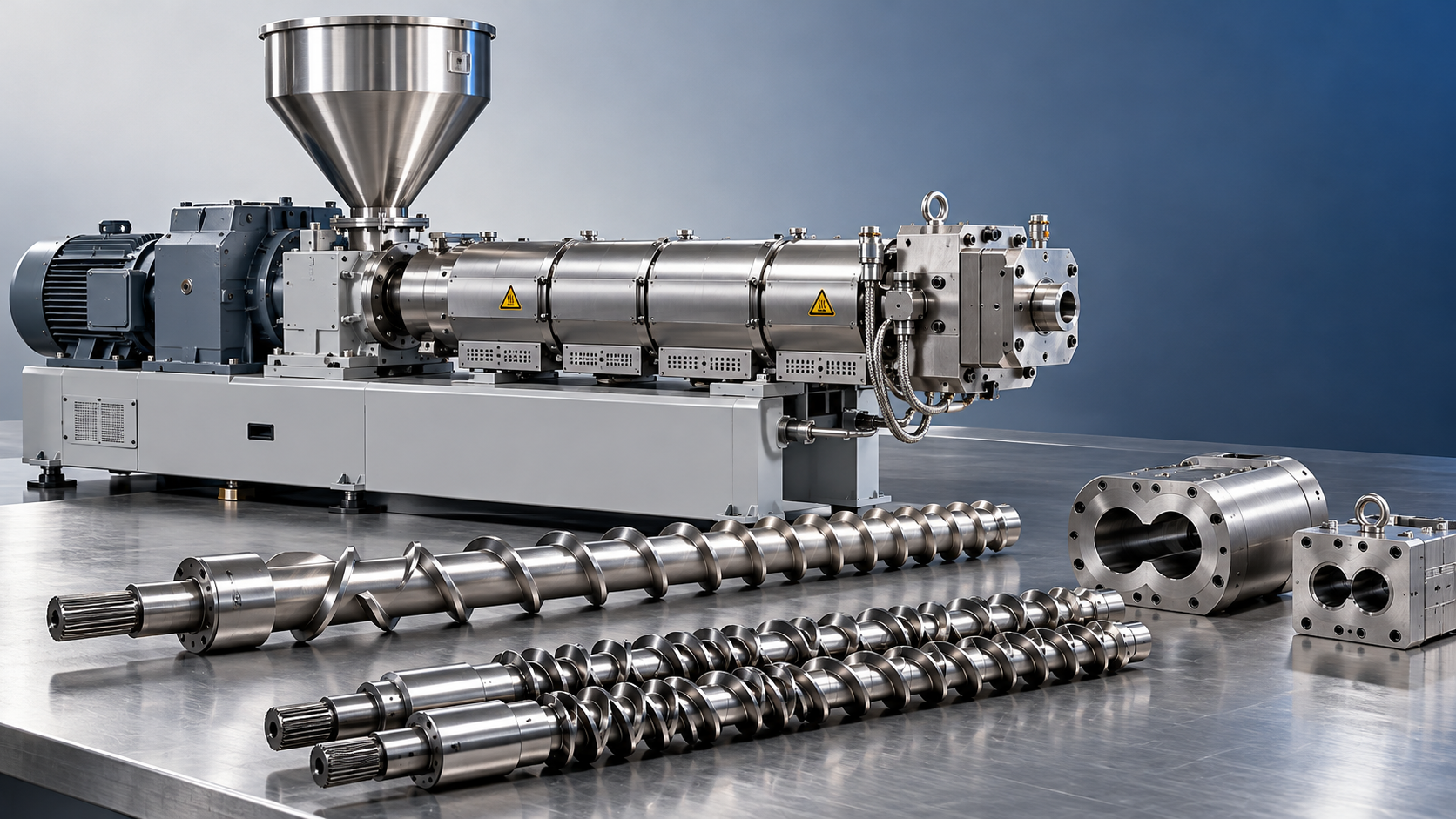
In a single-screw machine, one rotating screw conveys material through a barrel toward a die. Depending on the application and screw geometry, it can also compact, melt, mix or build pressure. Its appeal is strongest when the incoming feed is already reasonably uniform and the process mainly requires a steady output at the required die pressure.
A twin-screw machine uses two screws whose interaction depends on their geometry and direction of rotation. Twin-screw configurations are not interchangeable: intermeshing, co-rotating machines are often selected for compounding and staged processing, while other arrangements can be suited to conveying and shaping particular materials. The useful comparison is therefore between a specific single-screw process and a specific twin-screw process, not between two generic machine labels.
For evaluators of specialized extrusion systems, screw type should follow a clear process objective. Is the machine expected to blend ingredients, remove volatiles and deliver a finished compound? Or will upstream equipment prepare the material, leaving the extruder to form it? Putting both duties into one machine may reduce handling, but it also makes the extrusion line responsible for more variables.
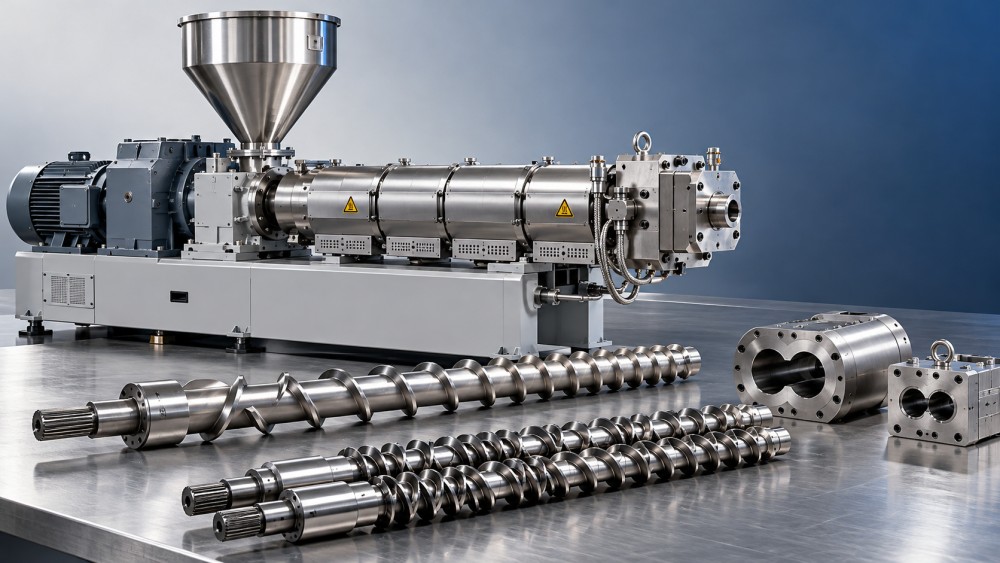
Match screw action to material behavior
Stable formulations and prepared feed
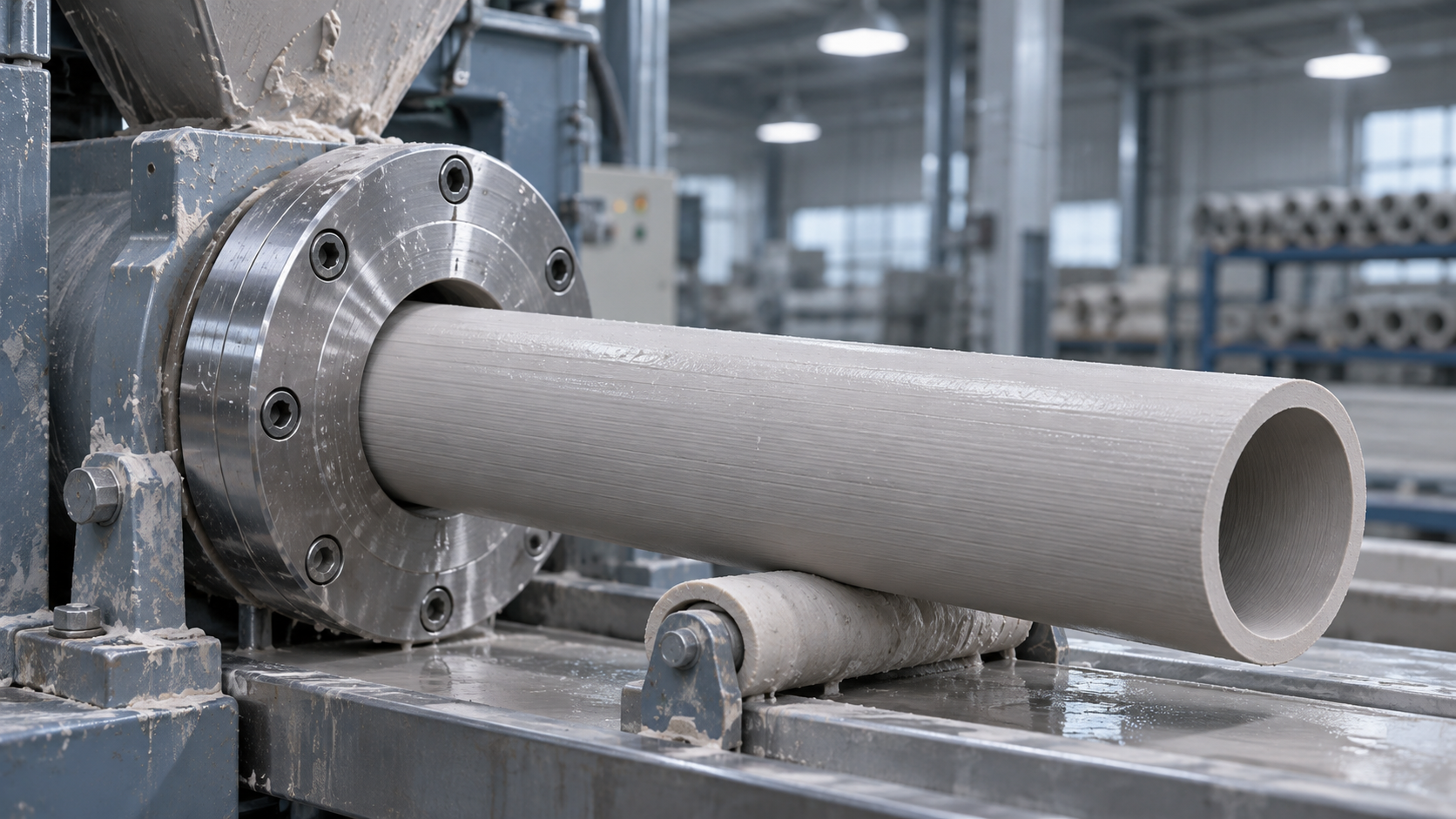
If the formulation reaches the extruder with acceptable uniformity, a single screw can be an efficient way to convey and shape it. Examples include suitable thermoplastic feeds and prepared ceramic or clay-based bodies where upstream mixing and conditioning have already brought moisture and particle distribution within the process window.
That does not make every single-screw design suitable. Feed geometry must accept the material without bridging or slipping, and the screw must generate enough pressure without damaging the feed. A stable rate at the hopper is not enough if pressure at the die fluctuates or the extrudate varies across its section.
Ask how much variation the upstream process can produce during normal operation. A line sized around an ideal feed may struggle when recycled content, moisture or particle-size distribution changes. The question is whether the complete preparation and extrusion system can absorb that variation, not whether the extruder performs well with a single representative sample.
High filler loading and difficult mixing
Fillers, pigments, fibers and additives can make a formulation harder to disperse and convey. A twin-screw compounding system may be appropriate when ingredients must be introduced at different points, when agglomerates need to be broken down, or when product quality depends on a consistent distribution of components.
Higher mixing intensity is not automatically better. Excessive shear can raise material temperature, shorten fibers or damage heat-sensitive ingredients. Screw elements, barrel temperature, feed location and operating speed must be selected together. For an abrasive mineral-filled formulation, the evaluation should also include wear of screws, barrels and downstream tooling; adding mixing elements may improve dispersion while increasing the surfaces exposed to wear.
A single screw can still be viable for a highly filled material if compounding is performed upstream and the extruder can feed the prepared compound reliably. Conversely, a twin screw cannot compensate for poorly controlled ingredient dosing. Compare the quality required at the die with the quality already present in the feed.
Moisture, air and volatile components
Moisture can play very different roles. In some clay-based and other mineral bodies, it provides the plasticity needed for forming. In moisture-sensitive polymers, water may need to be controlled before processing to protect melt quality. A selection discussion that treats all moisture as a contaminant can therefore point to the wrong equipment.
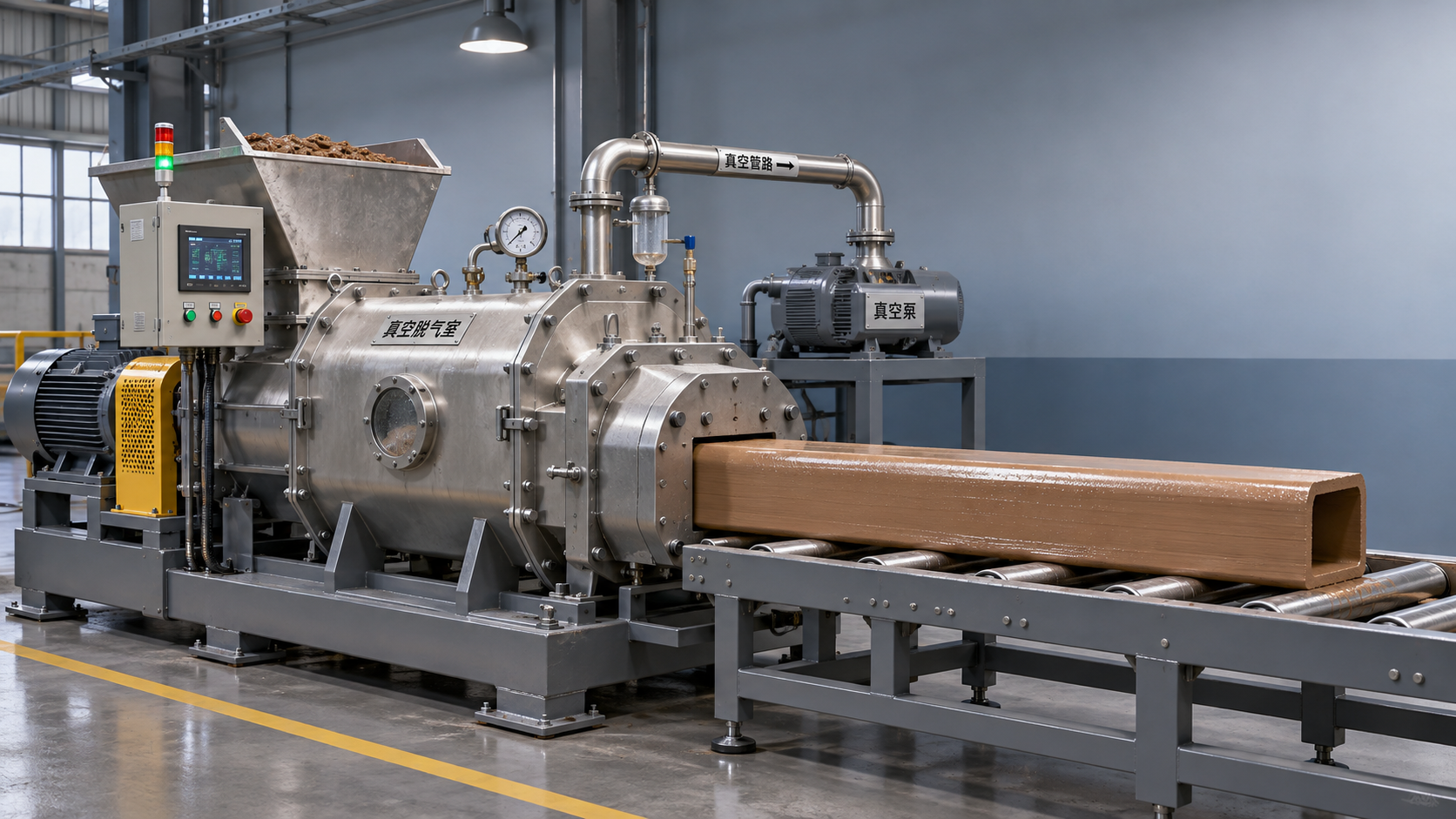
Entrained air or volatile components may cause defects in an extrudate. Vacuum-assisted processing or venting can help when the formulation and machine design support it. Both single- and twin-screw systems can be configured for venting, but the feasibility depends on where the material develops a seal, how much volatile material must be removed and whether material can escape through the vent.
For a wet building-material mix, lowering moisture may also increase the force needed to form the product. For a polymer compound, aggressive venting does not replace appropriate feed preparation. Specify the allowable residual moisture or volatile content in terms of finished-product performance, then test whether the proposed process reaches it consistently.
Compare complete process duties, not rated throughput alone
A quoted output rate is useful only when paired with the formulation, feed condition, operating point and product geometry behind it. A machine that reaches a target rate with one die or recipe may not sustain it with a more restrictive die or a more abrasive, variable feed. Compare proposals at the required product dimensions and quality, with realistic startup, changeover and cleaning allowances.
Energy use deserves the same care. A twin screw may draw more power for intensive mixing, while a single-screw line may rely on a separate mixer or preparation stage. Compare energy across the relevant process boundary, including upstream preparation and downstream equipment where they differ. Express the result per unit of acceptable product rather than per hour of machine operation; scrap and unstable production can change the calculation.
Pressure generation is another reason to examine the line as a whole. A compounding twin screw may perform the necessary mixing and devolatilization, but a downstream melt pump or forming extruder may be needed for a particular die and pressure requirement. Conversely, a single-screw forming line may need additional upstream mixing or vacuum preparation. Neither arrangement should be treated as incomplete without first defining the required duty.
Maintenance comparisons should account for the material and operating schedule. Abrasion, corrosion, deposits and thermal cycling can dominate component life. Twin-screw assemblies may offer configuration flexibility, but additional elements can also mean more inspection and replacement work. Request the expected wear locations, access requirements and replacement procedure for the proposed material rather than relying on a general statement about machine durability.
Use trials to resolve the close calls
When either configuration appears plausible, a representative material trial is more informative than a broad equipment comparison. The trial should reproduce the intended feed preparation, moisture range, additives, recycled content and die restrictions as closely as practical. Small-scale equipment can screen behavior, but its output, heat transfer and residence-time profile should not be assumed to match a production line directly.
Agree on the measures before running the material. Depending on the product, these may include dimensional stability, surface quality, dispersion, residual moisture, mechanical performance and the rate of acceptable output. Record operating conditions alongside results: feed rate, screw speed, barrel temperatures where relevant, pressure, torque and any vacuum settings. A good sample produced during a brief stable interval is less useful than evidence that the process can maintain quality over a representative run.
Include at least one realistic challenge, such as an expected shift in feed moisture or a planned formulation change. The goal is not to push equipment beyond safe limits; it is to establish how much operating margin remains before product quality or throughput becomes unacceptable. For abrasive materials, a short trial may reveal handling and quality issues but is unlikely to establish long-term wear life on its own.
Where the material is uniform and the required product can be made reliably with upstream preparation, the simpler single-screw route may be the better investment. Where mixing, staged feeding or volatile removal determines whether the formulation can be processed at all, a properly configured twin screw may justify its added complexity. The final choice should rest on demonstrated product quality and a sustainable operating window for the whole line.
Related News
 Ms. Elena RodriguezProcess Equipment Pricing: How to Compare Quotes and Total CostsMaster process equipment comparison pricing: compare supplier quotes, uncover hidden costs, and evaluate lifetime expenses to make a confident buying decision.Nov 17, 2026
 Prof. Marcus ChenGlobal Cement Industry Decarbonization: Key Technologies and Cost BarriersExplore global cement industry decarbonization technologies, cost barriers, and practical investment strategies to cut emissions while protecting competitiveness.Nov 16, 2026
 Structural Material AnalystChoosing Specification Preparation Support for North American ProjectsChoose specification preparation support North America projects can rely on. Compare technical expertise, compliance, interfaces, and supplier acceptance criteria.Nov 14, 2026
 Structural Material AnalystSpecialty Ceramic Extrusion: How Material Properties Affect FormingExplore how ceramic specialized material extrusion is shaped by particle size, binders, and solids loading—and learn to improve forming and reduce defects.Nov 13, 2026
 Ms. Elena RodriguezHigh-Pressure Molding Equipment Prices in Europe: What Affects the Total Cost?Explore high pressure molding equipment price Europe buyers can expect to assess, from tooling and installation to running costs. Compare quotes with confidence.Nov 12, 2026
 Structural Material AnalystChoosing a Vacuum Extrusion System: Capacity, Materials and Vacuum LevelsChoosing a vacuum extrusion system? Compare capacity, material behavior and vacuum levels to improve product quality and select the right equipment.Nov 11, 2026
 Optical Glass Tech FellowGlass Melting Innovations: Comparing Electric and Hybrid Furnace TechnologiesExplore glass melting innovations and compare electric and hybrid furnaces by energy use, emissions, glass quality and operating costs to find the right fit.Nov 10, 2026
 Thermal Energy ArchitectHow Thermal Barrier Technology for Kilns Reduces Heat LossDiscover how thermal barrier technology for kilns reduces heat loss, and learn how to select insulation and assess savings without compromising lining durability.Nov 09, 2026
 Prof. Marcus ChenGlobal Materials Trends: What North American Manufacturers Need to KnowExplore global material trends North America manufacturers need to know, from energy costs and supply chains to lower-carbon materials and smarter investment decisions.Nov 08, 2026
 Thermal Energy ArchitectSelecting Abrasion-Resistant Refractories for High-Wear Kiln LiningsExplore advanced refractory materials abrasion resistant enough for high-wear kiln linings. Compare wear mechanisms, thermal stability, installation and lifecycle costs.Nov 06, 2026
 Dr. Alistair VaughnIndustrial Energy Efficiency Certification: ISO 50001 Requirements for PlantsExplore industrial energy efficiency certification with ISO 50001. Learn how plants define scope, measure performance and prepare credible evidence for audits.Nov 05, 2026
 Ms. Elena RodriguezWhat Is an Industrial Intelligence Database and How Is It Used?Discover how an industrial intelligence database helps researchers map markets, track projects, compare technologies, and assess evidence with confidence.Nov 04, 2026
 Ms. Elena RodriguezIndustrial Material Pricing: How Freight and Order Volume Affect QuotesExplore industrial material pricing and learn how freight, order volume, and inventory costs affect quotes. Compare suppliers and make smarter purchasing decisions.Nov 03, 2026
 Structural Material AnalystSingle- vs. Twin-Screw Extrusion Systems: Which Suits Your Material?Choose the right specialized extrusion systems screw type for your material. Compare single- and twin-screw options to improve quality and control costs.Nov 02, 2026
 Thermal Energy ArchitectChoosing Thermal Barrier Materials for Kilns: Temperature and Heat LossExplore thermal barrier materials for kilns and learn how to balance temperature resistance, heat loss, durability and operating costs when selecting a lining.Nov 01, 2026
 Ms. Elena RodriguezSupplier Reference Platform Pricing: Fees and Contract Terms to CompareCompare supplier reference platform pricing, hidden fees, verification costs and contract terms to choose the right solution for your sourcing team.Oct 31, 2026
 Ms. Elena RodriguezSupplier Comparison Metrics: How to Score Cost, Quality, and DeliveryUse supplier comparison metrics to score cost, quality, and delivery with a practical weighted scorecard. Make more confident equipment sourcing decisions.Oct 30, 2026
 Ms. Elena RodriguezWhat Does Industrial Waste Heat Recovery Cost, and When Does It Pay Back?Understand industrial waste heat recovery cost, from equipment and installation to net savings. Learn how to compare quotes, assess risks, and calculate realistic payback before investing.Oct 29, 2026
 Thermal Energy ArchitectChoosing Industrial Waste-to-Energy Equipment by Waste Moisture and Heating ValueChoose industrial waste to energy equipment by moisture and heating value. Compare technologies, fuel needs, and supplier guarantees to make a confident investment.Oct 28, 2026
 Thermal Energy ArchitectChoosing Industrial Kiln Insulation for High Heat and Repeated Thermal CyclingExplore high temperature industry solutions for kiln insulation under repeated thermal cycling. Compare materials, reduce heat loss, and select the right lining for your operating conditions.Oct 27, 2026

Related News
- 00
0000-00
Choosing Specification Preparation Support for North American Projects - 00
0000-00
Specialty Ceramic Extrusion: How Material Properties Affect Forming - 00
0000-00
Choosing a Vacuum Extrusion System: Capacity, Materials and Vacuum Levels - 00
0000-00
Single- vs. Twin-Screw Extrusion Systems: Which Suits Your Material? - 00
0000-00
Bioprocessing Equipment Comparisons: Where to Find Reliable Performance Data
0000-00
Weekly Insights
Stay ahead with our curated technology reports delivered every Monday.