Selecting Abrasion-Resistant Refractories for High-Wear Kiln Linings




Selecting Abrasion-Resistant Refractories for High-Wear Kiln Linings
Selecting advanced refractory materials abrasion resistant enough for high-wear kiln linings requires more than comparing abrasion test results. Temperature, impact, chemical attack, thermal cycling, and installation conditions all influence lining performance and service life. For technical evaluators, the challenge is to balance these factors against maintenance costs, downtime, and energy efficiency. This article examines the key material properties and operating conditions that can guide refractory selection for demanding kiln applications.
The first question is not “Which refractory has the highest alumina content?” or even “Which has the lowest abrasion loss?” It is “What is removing the existing lining, and under what conditions?” A material that withstands dry particle erosion may fail where chemical infiltration weakens its surface, while a dense, hard lining may crack if the equipment experiences severe thermal cycling.
Identify the Wear Mechanism Before Choosing a Material
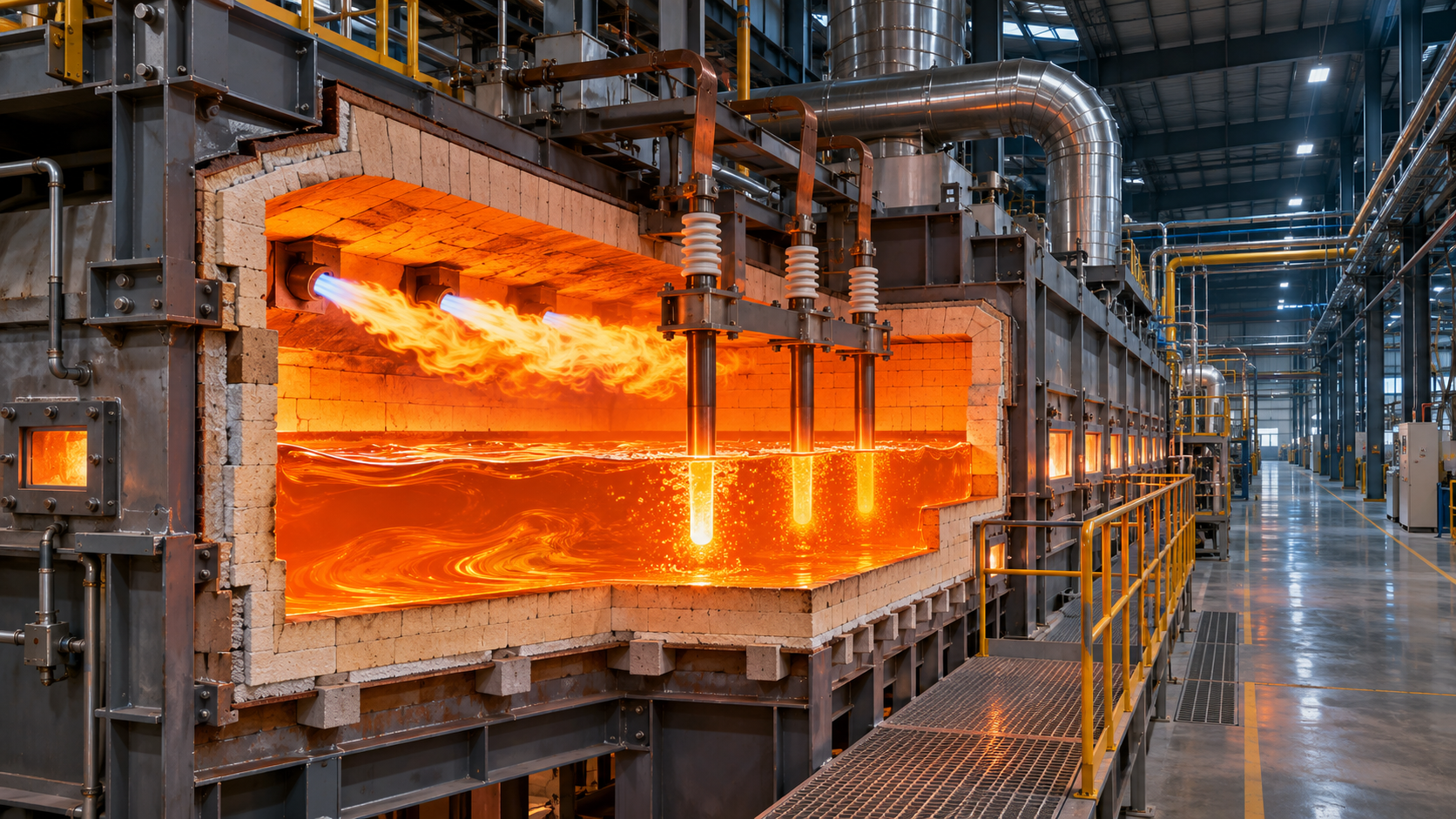
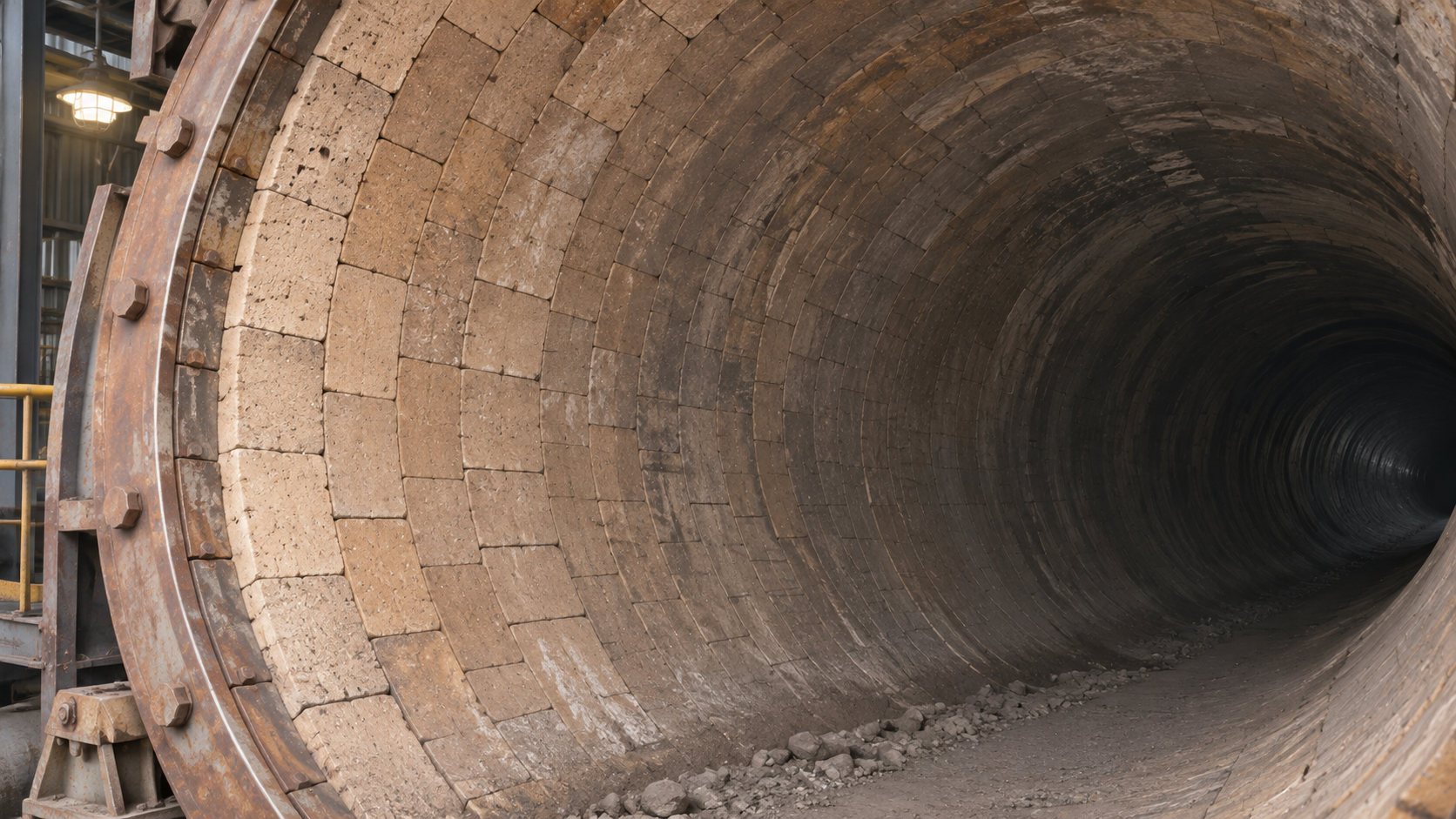
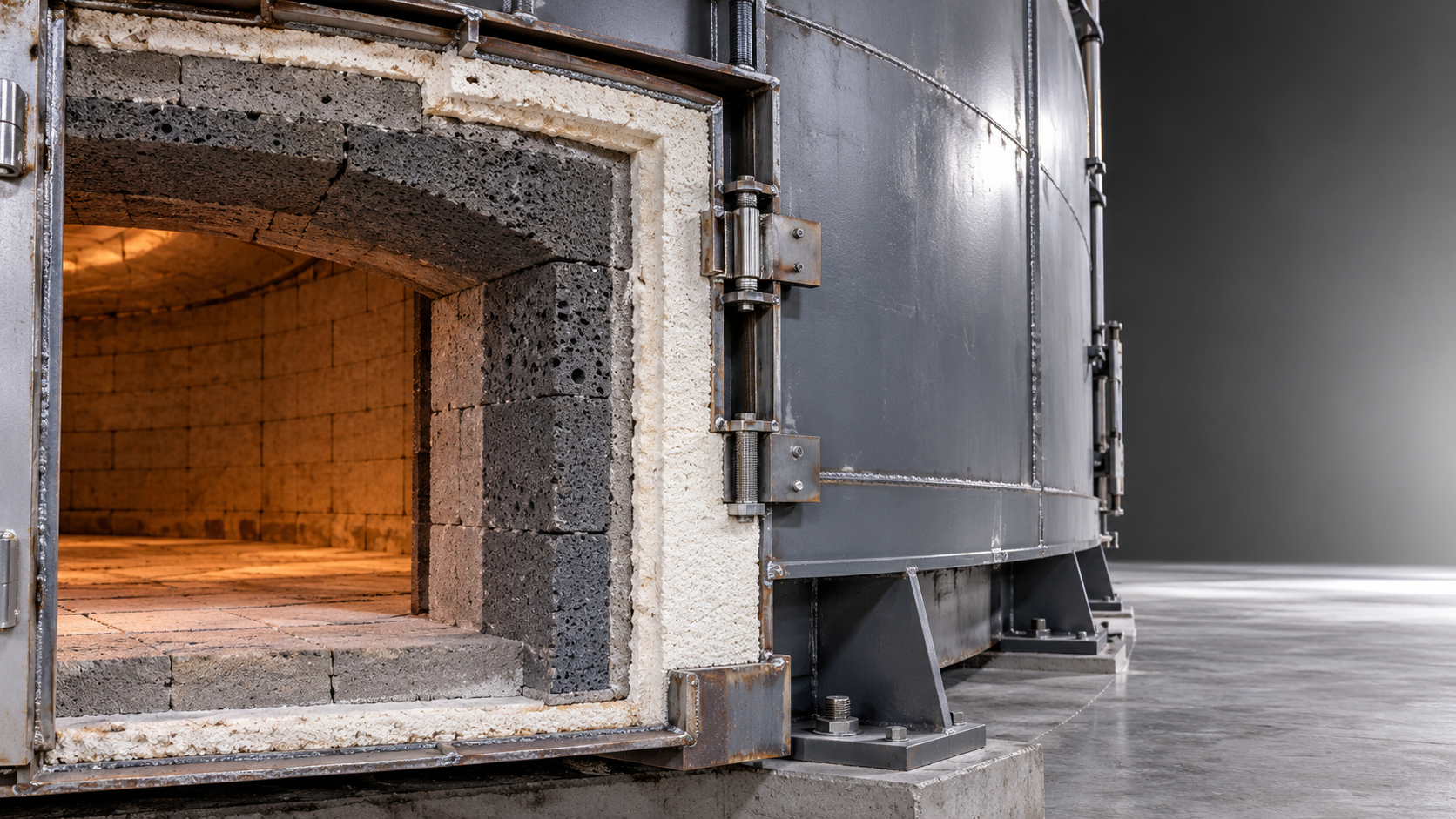
Kiln linings rarely wear evenly. In a rotary kiln, feed movement can cause sliding abrasion along the working surface, while falling material can produce repeated impact. At a burner pipe, inlet chamber, or transfer point, particles carried by gas may strike the lining at high velocity. Incineration systems add further uncertainty because ash composition and feed variability can change both the mechanical and chemical environment.
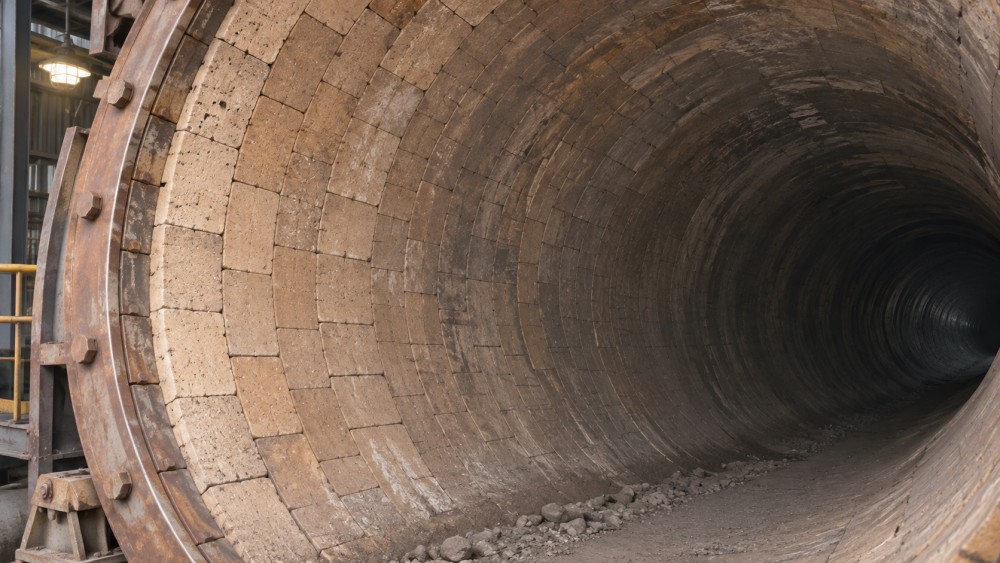
Examine the removed lining and map its condition before the evidence is discarded. Smooth, directional grooves may suggest sliding abrasion; local craters or broken edges may indicate impact. A brittle, discolored layer beneath the hot face can point toward infiltration or chemical reaction. Broad cracking and detached layers may be associated with thermal or structural stresses. These are diagnostic clues, not definitive failure analyses: more than one mechanism can be present in the same area.
Record the location, remaining thickness, crack pattern, coating condition, and distance from feed or burner entry points. Where chemical attack is suspected, retain representative samples from both the damaged zone and a less-affected reference area. Sample preparation and analysis should be agreed with a qualified laboratory so that the altered hot face is not confused with the original material.
A useful operating profile also distinguishes normal conditions from short excursions. Maximum hot-face temperature matters, but so do startup frequency, flame impingement, feed interruptions, and the temperature at which abrasive solids contact the lining. A refractory specified only against the kiln’s average process temperature may be evaluated against the wrong duty.
Read Abrasion Data in Context
Abrasion resistance is commonly reported as material loss under a defined test method. ASTM C704/C704M, for example, addresses abrasion resistance of refractory materials at room temperature. A lower reported loss under the same method can help distinguish candidates, but it does not predict service life on its own.
Before comparing figures from different suppliers, check the specimen preparation, firing or drying history, test method, and reporting units. Castable results can change with installation water, curing, and heat treatment. If one data sheet presents a dried specimen and another a fired specimen, the numbers should not be treated as directly equivalent without clarification.
Room-temperature results also do not capture every change that occurs in service. Bond development, oxidation, chemical attack, and thermal cycling can alter a refractory’s surface and microstructure. Where the application justifies it, ask whether comparative testing after relevant heat treatment or chemical exposure is available. The aim is not to reproduce the entire kiln in a laboratory; it is to remove candidates whose apparent advantage depends on unrealistic test conditions.
Compare Material Families Against the Actual Duty
Refractory families provide a starting point, not a performance guarantee. Aggregate quality, particle sizing, bonding system, porosity, forming method, and installation all influence the finished lining. Two materials with similar headline chemistry can behave differently.
High alumina content alone does not establish resistance to every slag or deposit. Likewise, silicon carbide can be useful in abrasive service, but its behavior depends on grade, bond, temperature, and atmosphere. Ask suppliers to explain why their proposed composition fits the actual ash, dust, fuel, and gas conditions rather than relying on a generic material label.
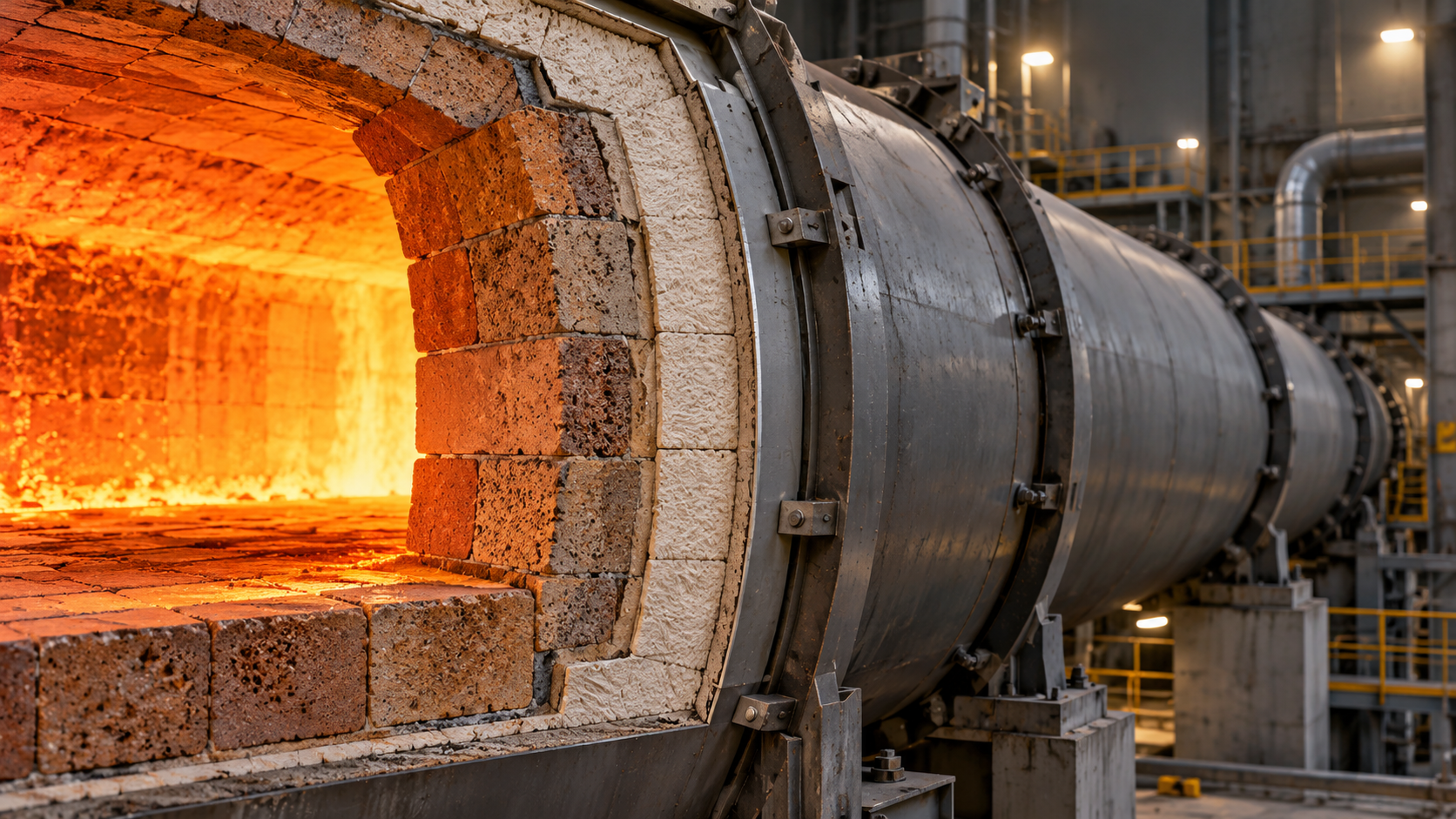
Shape matters as much as chemistry. Brick can be practical where geometry and mechanical support suit a laid lining. Monolithics can accommodate complex shapes and eliminate some joints, but their field performance depends heavily on mixing, placement, curing, and anchoring. A change from brick to castable is therefore a lining-design decision, not simply a material substitution.
Balance Wear Resistance With Thermal and Chemical Stability
A harder or denser material is not automatically the better choice. Dense structures can limit penetration in some environments, yet they may also be less tolerant of rapid temperature changes depending on composition and microstructure. If the kiln stops frequently or receives cold feed against a hot lining, thermal shock deserves as much attention as room-temperature abrasion.
Chemical compatibility requires a similarly specific assessment. Alkalis, chlorides, sulfur-bearing compounds, fuel ash, and molten phases can interact with refractories in different ways. In waste co-processing or incineration, feed changes can shift those interactions over time. Provide suppliers with representative analyses where available, including expected variability, rather than a single nominal composition.
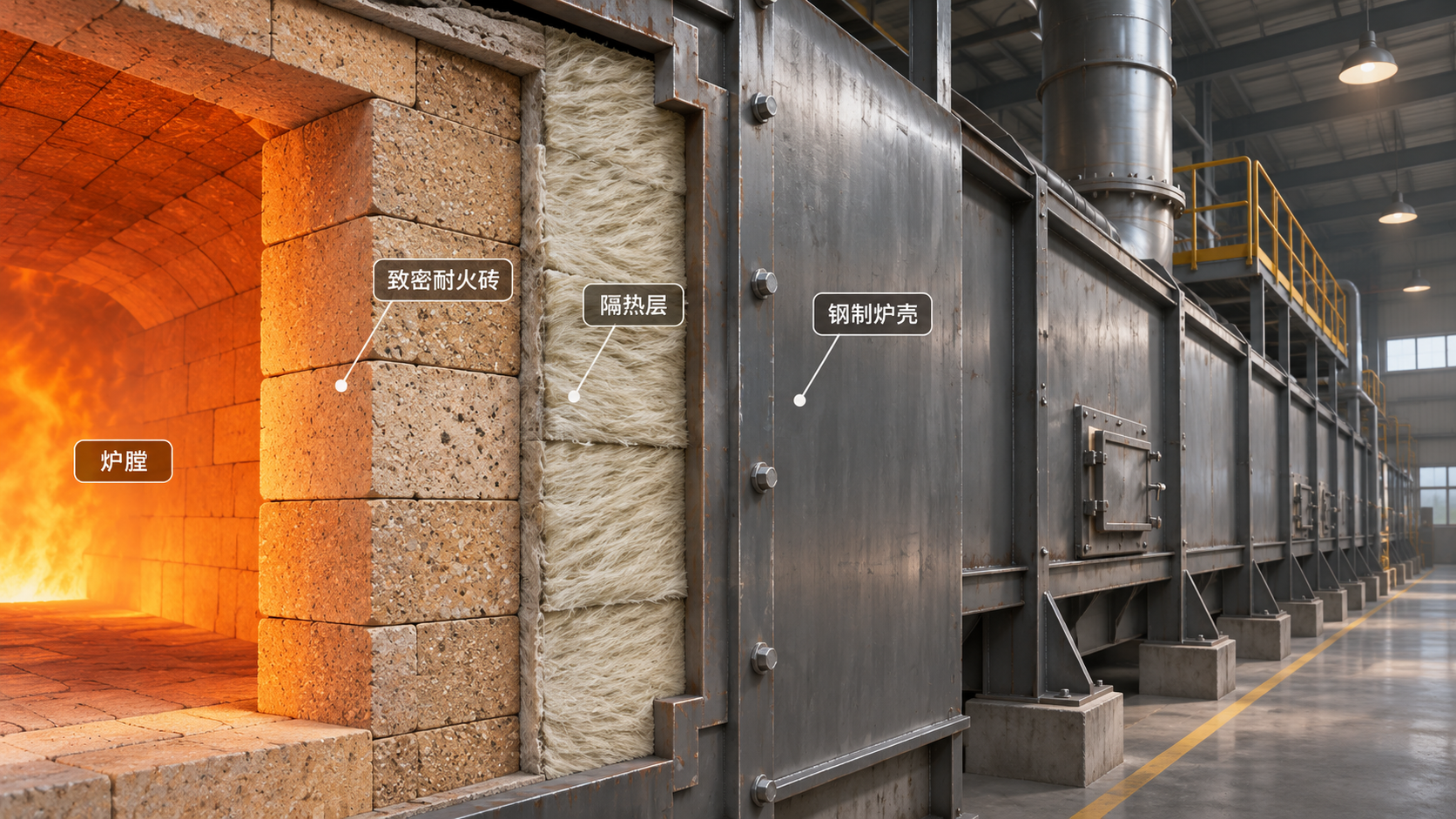
Also check the interfaces. A highly abrasion-resistant working layer may protect the hot face, but its expansion, conductivity, and bond to adjacent materials must suit the overall construction. Differential movement between layers, an incompatible repair patch, or an anchor exposed after local wear can initiate failure before the bulk refractory reaches its expected limit.
Design for Installation, Dry-Out, and Inspection
A technically suitable castable can still underperform if it is installed outside its intended water range or heated before sufficient moisture has been removed. Too much water can change the installed structure; inadequate mixing or compaction can leave weak areas. Conversely, attempting to force placement with insufficient workability can create voids around anchors and corners.
Before approving a material, confirm that the site can execute its installation procedure within the available shutdown. Review access, equipment, crew capability, ambient conditions, curing time, and the manufacturer’s dry-out instructions. For anchored linings, anchor alloy, geometry, spacing, attachment quality, and protection against differential expansion require project-specific engineering.
For brick, check shell condition, ovality where relevant, support details, joint practice, and the specified expansion allowance. A refractory cannot compensate indefinitely for a structural or mechanical problem in the kiln. If brick displacement or recurrent cracking appears in the same location, investigate shell movement and operating conditions before changing grades again.
Build inspection into the selection. Establish a baseline thickness map after installation where practical, identify accessible measurement points, and agree on the minimum remaining thickness or other replacement criteria with the equipment and refractory specialists. Surface temperature monitoring can help identify changes, but a hot spot is a diagnostic signal, not a direct measurement of remaining lining thickness.
Compare the Whole Lining Cost, Not Just the Material Price
The lowest purchase price can be misleading if a lining requires a longer installation window, more frequent local repairs, or an unscheduled shutdown. Compare candidates using the same scope: material, freight, anchors or accessories, installation labor, curing and dry-out time, planned inspection, removal, and disposal. Include the operational consequence of failure where it can be reasonably estimated, but keep assumptions visible.
Thermal conductivity is another trade-off. A dense wear layer may conduct more heat than an insulating alternative, depending on the products compared. Model the complete lining, including thickness and backup insulation, against operating temperature and allowable shell temperature. A thicker or more conductive working layer should not be assumed to save energy simply because it lasts longer; service life and heat loss must be considered together.
For a credible comparison, ask each supplier for the same information: test conditions behind reported properties, recommended lining configuration, installation and heat-up requirements, shelf life for monolithics, lead time, and limitations in the stated environment. Request supporting data for the proposed grade rather than relying on a general product-family brochure.
Make the Decision Zone by Zone
A practical specification separates the kiln into zones with different failure mechanisms. The material chosen for a high-impact feed entry need not be the same as the lining for a chemically aggressive transition area or a gas-erosion-prone burner region. Where the evidence is incomplete, a controlled trial in a representative, inspectable location can be more useful than replacing an entire lining on the strength of a data sheet.
Document the trial boundary, installation conditions, operating history, inspection method, and comparison baseline. A change in feed, fuel, throughput, or shutdown pattern during the trial can otherwise obscure whether the material itself made the difference.
CF-Elite’s focus on silicate processing, industrial kilns, and thermal management reflects the cross-disciplinary nature of this decision: wear behavior must be assessed alongside process chemistry, heat transfer, and maintenance realities. Before final approval, bring those disciplines together around a single zone map and an agreed set of operating assumptions. The most defensible selection is the one whose limitations are understood before the kiln is relined.
Related News
 Ms. Elena RodriguezProcess Equipment Pricing: How to Compare Quotes and Total CostsMaster process equipment comparison pricing: compare supplier quotes, uncover hidden costs, and evaluate lifetime expenses to make a confident buying decision.Nov 17, 2026
 Prof. Marcus ChenGlobal Cement Industry Decarbonization: Key Technologies and Cost BarriersExplore global cement industry decarbonization technologies, cost barriers, and practical investment strategies to cut emissions while protecting competitiveness.Nov 16, 2026
 Structural Material AnalystChoosing Specification Preparation Support for North American ProjectsChoose specification preparation support North America projects can rely on. Compare technical expertise, compliance, interfaces, and supplier acceptance criteria.Nov 14, 2026
 Structural Material AnalystSpecialty Ceramic Extrusion: How Material Properties Affect FormingExplore how ceramic specialized material extrusion is shaped by particle size, binders, and solids loading—and learn to improve forming and reduce defects.Nov 13, 2026
 Ms. Elena RodriguezHigh-Pressure Molding Equipment Prices in Europe: What Affects the Total Cost?Explore high pressure molding equipment price Europe buyers can expect to assess, from tooling and installation to running costs. Compare quotes with confidence.Nov 12, 2026
 Structural Material AnalystChoosing a Vacuum Extrusion System: Capacity, Materials and Vacuum LevelsChoosing a vacuum extrusion system? Compare capacity, material behavior and vacuum levels to improve product quality and select the right equipment.Nov 11, 2026
 Optical Glass Tech FellowGlass Melting Innovations: Comparing Electric and Hybrid Furnace TechnologiesExplore glass melting innovations and compare electric and hybrid furnaces by energy use, emissions, glass quality and operating costs to find the right fit.Nov 10, 2026
 Thermal Energy ArchitectHow Thermal Barrier Technology for Kilns Reduces Heat LossDiscover how thermal barrier technology for kilns reduces heat loss, and learn how to select insulation and assess savings without compromising lining durability.Nov 09, 2026
 Prof. Marcus ChenGlobal Materials Trends: What North American Manufacturers Need to KnowExplore global material trends North America manufacturers need to know, from energy costs and supply chains to lower-carbon materials and smarter investment decisions.Nov 08, 2026
 Thermal Energy ArchitectSelecting Abrasion-Resistant Refractories for High-Wear Kiln LiningsExplore advanced refractory materials abrasion resistant enough for high-wear kiln linings. Compare wear mechanisms, thermal stability, installation and lifecycle costs.Nov 06, 2026
 Dr. Alistair VaughnIndustrial Energy Efficiency Certification: ISO 50001 Requirements for PlantsExplore industrial energy efficiency certification with ISO 50001. Learn how plants define scope, measure performance and prepare credible evidence for audits.Nov 05, 2026
 Ms. Elena RodriguezWhat Is an Industrial Intelligence Database and How Is It Used?Discover how an industrial intelligence database helps researchers map markets, track projects, compare technologies, and assess evidence with confidence.Nov 04, 2026
 Ms. Elena RodriguezIndustrial Material Pricing: How Freight and Order Volume Affect QuotesExplore industrial material pricing and learn how freight, order volume, and inventory costs affect quotes. Compare suppliers and make smarter purchasing decisions.Nov 03, 2026
 Structural Material AnalystSingle- vs. Twin-Screw Extrusion Systems: Which Suits Your Material?Choose the right specialized extrusion systems screw type for your material. Compare single- and twin-screw options to improve quality and control costs.Nov 02, 2026
 Thermal Energy ArchitectChoosing Thermal Barrier Materials for Kilns: Temperature and Heat LossExplore thermal barrier materials for kilns and learn how to balance temperature resistance, heat loss, durability and operating costs when selecting a lining.Nov 01, 2026
 Ms. Elena RodriguezSupplier Reference Platform Pricing: Fees and Contract Terms to CompareCompare supplier reference platform pricing, hidden fees, verification costs and contract terms to choose the right solution for your sourcing team.Oct 31, 2026
 Ms. Elena RodriguezSupplier Comparison Metrics: How to Score Cost, Quality, and DeliveryUse supplier comparison metrics to score cost, quality, and delivery with a practical weighted scorecard. Make more confident equipment sourcing decisions.Oct 30, 2026
 Ms. Elena RodriguezWhat Does Industrial Waste Heat Recovery Cost, and When Does It Pay Back?Understand industrial waste heat recovery cost, from equipment and installation to net savings. Learn how to compare quotes, assess risks, and calculate realistic payback before investing.Oct 29, 2026
 Thermal Energy ArchitectChoosing Industrial Waste-to-Energy Equipment by Waste Moisture and Heating ValueChoose industrial waste to energy equipment by moisture and heating value. Compare technologies, fuel needs, and supplier guarantees to make a confident investment.Oct 28, 2026
 Thermal Energy ArchitectChoosing Industrial Kiln Insulation for High Heat and Repeated Thermal CyclingExplore high temperature industry solutions for kiln insulation under repeated thermal cycling. Compare materials, reduce heat loss, and select the right lining for your operating conditions.Oct 27, 2026

Related News
- 00
0000-00
How Thermal Barrier Technology for Kilns Reduces Heat Loss - 00
0000-00
Selecting Abrasion-Resistant Refractories for High-Wear Kiln Linings - 00
0000-00
Choosing Thermal Barrier Materials for Kilns: Temperature and Heat Loss - 00
0000-00
Choosing Industrial Waste-to-Energy Equipment by Waste Moisture and Heating Value - 00
0000-00
Choosing Industrial Kiln Insulation for High Heat and Repeated Thermal Cycling
0000-00
Weekly Insights
Stay ahead with our curated technology reports delivered every Monday.