
Supplier Comparison Metrics: How to Score Cost, Quality, and Delivery




Choosing an industrial equipment supplier involves more than comparing quotations. A low purchase price can quickly lose its appeal if quality problems, delayed delivery, or expensive maintenance interrupt production. For procurement professionals sourcing kilns, production lines, and extrusion equipment, clear supplier comparison metrics provide a more reliable basis for decisions. The challenge is to score suppliers consistently without reducing complex technical and commercial risks to a misleading single number.
A useful comparison starts with three questions: What will the equipment really cost over its operating life? How confidently can the supplier meet the required performance? And can it deliver the equipment, documentation, and support when the project needs them? The answers should come from comparable evidence, not just polished proposals.
Set the comparison rules before reviewing bids
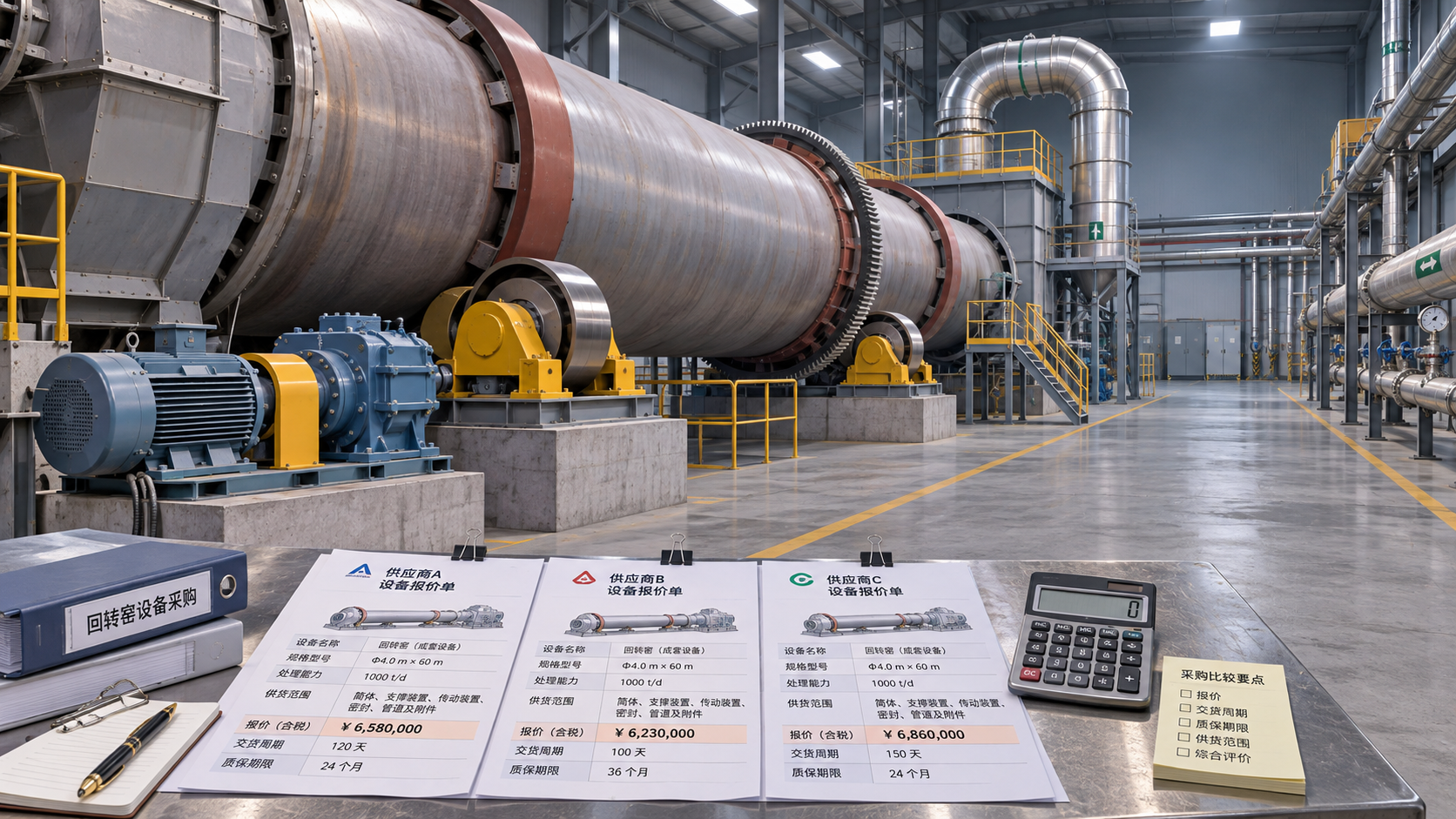
Industrial quotations rarely arrive in identical formats. One supplier may include commissioning and operator training, while another lists them as optional extras. A kiln supplier might quote the main shell and burner but exclude refractory installation, emissions equipment, or site utilities. Comparing the headline prices without resolving those differences rewards an incomplete offer rather than a better one.
Before scoring, issue a common scope of supply and ask each bidder to identify inclusions, exclusions, assumptions, and deviations. The baseline should cover capacity, feedstock or raw material characteristics, operating conditions, site interfaces, required documentation, and the expected project schedule. For a glass line, it may also define product specifications and annealing requirements; for an extruder, it may specify material properties, output range, and dimensional tolerances.
Separate mandatory requirements from scored preferences. A supplier that cannot meet an essential safety, regulatory, or process requirement should not become the preferred bidder simply because its price is attractive. Check whether a deviation can be corrected, document the cost and schedule impact, and apply the same decision rule to every bidder.
Build a practical supplier scorecard
A weighted scorecard gives procurement, engineering, operations, and project teams a common language. The weights below are illustrative, not universal: a replacement component needed for an imminent shutdown may justify a higher delivery weight, while a new high-temperature production line may place more emphasis on technical quality and operating performance.
Use a defined scale, such as 1 to 5, for each category. A score of 1 might indicate a major weakness or unsupported claim; 3 could represent an acceptable offer with manageable gaps; and 5 could require strong, independently verifiable evidence against the agreed criteria. Define the anchors before opening bids, including how reviewers will treat missing information.
For each category, multiply the score by its weight, then add the results. With scores out of 5 and weights expressed as percentages, the total also remains out of 5. More detailed evaluations can use subcriteria, provided their weights add up to the relevant category weight. Keep the calculation visible so reviewers can see what drives the result.
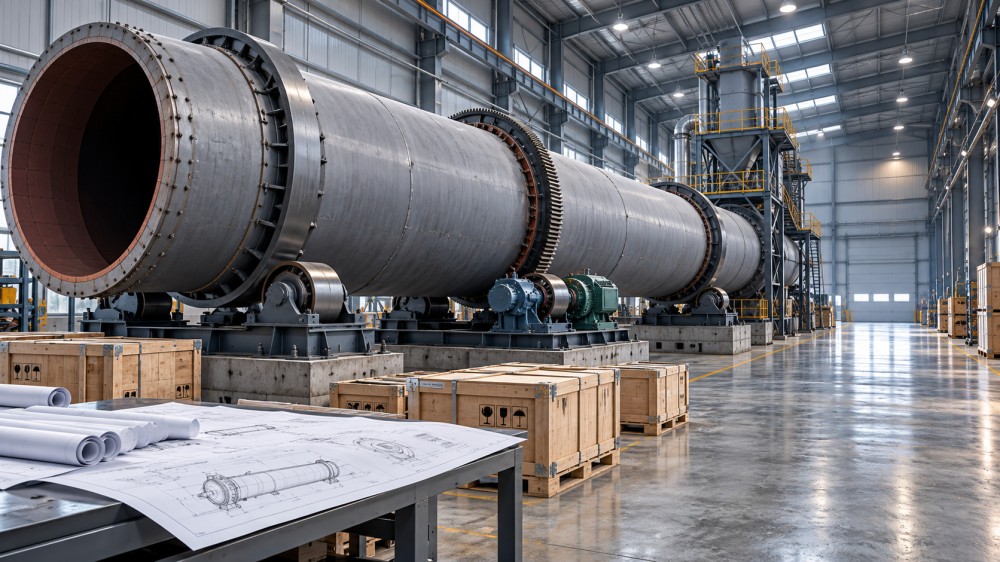
Cost metrics: compare the whole commitment, not just the quote
The purchase price matters, particularly when capital budgets are tight. But equipment for cement, glass, incineration, or refractory production can remain in service for years. Energy use, wear parts, downtime, and maintenance access may shape the financial outcome long after the contract is signed.
Start by normalizing each offer to the same scope and currency. Record the exchange-rate date and any assumptions used. Where an item is excluded, obtain a comparable price or add a clearly identified estimate; do not quietly treat the missing item as free. Depending on the project, the comparison may include:
- Equipment, controls, instrumentation, and required auxiliary systems.
- Engineering, freight, insurance, duties, and applicable taxes.
- Foundations, installation, commissioning, training, and site support.
- Initial spare parts, consumables, and maintenance tools.
- Expected electricity and fuel consumption under the same operating assumptions.
- Planned maintenance, refractory replacement, and other recurring costs.
A total cost of ownership model does not need to predict the future perfectly. It does need a consistent time horizon, utilization rate, energy price assumption, and treatment of residual value for every supplier. If the model uses discounted cash flows, apply the same discount rate and timing assumptions across bids. Show uncertain figures as ranges or run a sensitivity check rather than presenting an estimate as a guarantee.
Commercial terms belong in the assessment too. Payment milestones, warranty coverage, liability limits, performance remedies, and price escalation clauses affect the buyer’s exposure. A low quote with substantial advance payments and weak remedies may be less attractive than it first appears. Keep financial terms separate from technical promises so that a favorable payment schedule does not conceal an unresolved performance gap.
Quality metrics: look for evidence that the design will perform
In equipment procurement, quality is more than a clean factory or a well-written brochure. It is the likelihood that the supplied system will meet the agreed process duty, withstand its operating environment, and remain maintainable in service.
Evaluate the proposal against the actual application. A rotary kiln handling variable feed or co-processing waste may face different thermal and chemical demands from one operating on a stable feed. A glass melting system needs a credible approach to temperature control and product consistency. An extrusion line must be assessed against the properties of the intended mixture, not just a generic output figure.
Turn performance claims into testable requirements
Ask suppliers to identify the conditions behind quoted capacity, energy consumption, emissions, product quality, and equipment life. The same capacity figure can mean very different things if one supplier assumes a narrower feed specification or excludes downtime. Agree on measurement methods, operating conditions, tolerances, and responsibility for test utilities before contract award.
Useful quality evidence can include design calculations, material specifications, inspection and test plans, manufacturing records, and relevant operating references. References are most meaningful when the application, scale, and operating conditions are reasonably comparable. Where practical, speak with reference customers about commissioning, maintenance access, spare parts, and how the supplier handled problems—not only whether the equipment started.
For high-temperature systems, also review the interfaces between components. The refractory lining, burner, kiln shell, monitoring instruments, and control system may come from different parties, but they still need to function together. Clarify who is accountable for interface design and for investigating failures at those boundaries.
Include maintainability in the quality score
An efficient machine that is difficult to inspect or repair can become an operational burden. Examine access to wear components, expected replacement procedures, control-system support, spare-parts identification, and the availability of drawings and manuals. Ask whether critical parts are proprietary and what information the buyer will receive to plan maintenance.
Factory acceptance tests and site acceptance tests can provide valuable checkpoints, but they serve different purposes. A factory test may verify fabrication and controls before shipment; a site test can assess performance after installation under agreed conditions. Neither should be assumed to cover every contractual requirement unless the test plan says so.
Delivery metrics: test the schedule behind the promise
A promised delivery date is only useful if it is supported by a credible sequence of work. For complex production lines, late engineering approval, a delayed drive system, or an incomplete shipping document can disrupt the entire project. Ask for a milestone schedule that shows design, procurement, fabrication, inspection, shipment, installation, and commissioning where applicable.
Review the supplier’s current capacity and identify long-lead components. Which items are made in-house, and which depend on subcontractors? What approvals or information must the buyer provide, and by when? A schedule that assumes immediate drawing approval or unrestricted site access is not necessarily achievable.
For international projects, specify the delivery point and the responsibilities under the agreed trade terms. Compare bids at the same point in the logistics chain: an equipment-ready date at the factory is not equivalent to arrival at site. Customs clearance, oversized transport, unloading, and storage may require separate planning.
Score delivery confidence using evidence such as a resource-loaded schedule, subcontractor commitments, progress-reporting arrangements, and a recovery plan for critical delays. Historical on-time delivery data can be helpful if its definition is clear. Check whether it refers to the original contractual date or a later revised date, and whether it covers comparable projects.
Example: how the weighted decision can change the ranking
Suppose three suppliers have passed the mandatory requirements for a production-line project. The team applies the illustrative weights above and assigns scores from 1 to 5. These figures demonstrate the method; they are not performance benchmarks.
Supplier A scores highest on cost, but Supplier B ranks first overall because of stronger quality and delivery scores. For B, the calculation is (3 × 0.35) + (5 × 0.40) + (4 × 0.25) = 4.05. The result does not automatically prove B is the right choice. It indicates where the team should focus its final discussion: whether the quality evidence is strong enough to justify the additional cost, and whether the schedule advantage matters to the project.
Run a sensitivity check before making the recommendation. If a small change in weights reverses the ranking, the decision is close and deserves more scrutiny. Review the assumptions, request clarification, or negotiate the gaps rather than treating a narrow numerical difference as decisive.
Avoid the mistakes that make supplier comparison metrics unreliable
Scoring incomplete information as if it were confirmed. Record missing data as an open issue and request evidence. If the deadline prevents clarification, apply the predefined scoring rule and make the uncertainty visible in the recommendation.
Counting the same risk twice without realizing it. For example, spare-parts availability might affect both maintenance cost and service quality. That can be justified, but the scorecard should explain the distinct effect in each category rather than inflating one concern through repeated scoring.
Allowing averages to hide a critical weakness. A supplier may earn a good overall score while lacking an acceptable emissions-control interface or a credible delivery plan. Use mandatory requirements and, where appropriate, minimum category scores to prevent unacceptable gaps from being averaged away.
Ignoring the people who will operate the equipment. Procurement can structure the comparison, but engineering, maintenance, operations, finance, and environmental specialists may see different risks. Document disagreements and the evidence used to resolve them; consensus without examination is not the same as a sound decision.
From scorecard to contract
The final recommendation should include more than a ranking. Summarize the normalized cost, technical deviations, schedule assumptions, key risks, and proposed actions for the preferred supplier. Identify which claims must become contractual obligations, including performance criteria, test procedures, delivery milestones, documentation, warranties, and remedies where agreed.
Retain the evidence behind the scores and revisit unresolved items during negotiation. If the scope or schedule changes, update the comparison rather than relying on the original result. For procurement teams working across high-temperature industries, CF-Elite’s Strategic Intelligence Center offers sector context on equipment trends, thermal management, and resource efficiency that can inform the questions asked during evaluation. The strongest decision, however, remains grounded in the project’s own requirements and verified supplier evidence.
Related News
 Ms. Elena RodriguezProcess Equipment Pricing: How to Compare Quotes and Total CostsMaster process equipment comparison pricing: compare supplier quotes, uncover hidden costs, and evaluate lifetime expenses to make a confident buying decision.Nov 17, 2026
 Prof. Marcus ChenGlobal Cement Industry Decarbonization: Key Technologies and Cost BarriersExplore global cement industry decarbonization technologies, cost barriers, and practical investment strategies to cut emissions while protecting competitiveness.Nov 16, 2026
 Structural Material AnalystChoosing Specification Preparation Support for North American ProjectsChoose specification preparation support North America projects can rely on. Compare technical expertise, compliance, interfaces, and supplier acceptance criteria.Nov 14, 2026
 Structural Material AnalystSpecialty Ceramic Extrusion: How Material Properties Affect FormingExplore how ceramic specialized material extrusion is shaped by particle size, binders, and solids loading—and learn to improve forming and reduce defects.Nov 13, 2026
 Ms. Elena RodriguezHigh-Pressure Molding Equipment Prices in Europe: What Affects the Total Cost?Explore high pressure molding equipment price Europe buyers can expect to assess, from tooling and installation to running costs. Compare quotes with confidence.Nov 12, 2026
 Structural Material AnalystChoosing a Vacuum Extrusion System: Capacity, Materials and Vacuum LevelsChoosing a vacuum extrusion system? Compare capacity, material behavior and vacuum levels to improve product quality and select the right equipment.Nov 11, 2026
 Optical Glass Tech FellowGlass Melting Innovations: Comparing Electric and Hybrid Furnace TechnologiesExplore glass melting innovations and compare electric and hybrid furnaces by energy use, emissions, glass quality and operating costs to find the right fit.Nov 10, 2026
 Thermal Energy ArchitectHow Thermal Barrier Technology for Kilns Reduces Heat LossDiscover how thermal barrier technology for kilns reduces heat loss, and learn how to select insulation and assess savings without compromising lining durability.Nov 09, 2026
 Prof. Marcus ChenGlobal Materials Trends: What North American Manufacturers Need to KnowExplore global material trends North America manufacturers need to know, from energy costs and supply chains to lower-carbon materials and smarter investment decisions.Nov 08, 2026
 Thermal Energy ArchitectSelecting Abrasion-Resistant Refractories for High-Wear Kiln LiningsExplore advanced refractory materials abrasion resistant enough for high-wear kiln linings. Compare wear mechanisms, thermal stability, installation and lifecycle costs.Nov 06, 2026
 Dr. Alistair VaughnIndustrial Energy Efficiency Certification: ISO 50001 Requirements for PlantsExplore industrial energy efficiency certification with ISO 50001. Learn how plants define scope, measure performance and prepare credible evidence for audits.Nov 05, 2026
 Ms. Elena RodriguezWhat Is an Industrial Intelligence Database and How Is It Used?Discover how an industrial intelligence database helps researchers map markets, track projects, compare technologies, and assess evidence with confidence.Nov 04, 2026
 Ms. Elena RodriguezIndustrial Material Pricing: How Freight and Order Volume Affect QuotesExplore industrial material pricing and learn how freight, order volume, and inventory costs affect quotes. Compare suppliers and make smarter purchasing decisions.Nov 03, 2026
 Structural Material AnalystSingle- vs. Twin-Screw Extrusion Systems: Which Suits Your Material?Choose the right specialized extrusion systems screw type for your material. Compare single- and twin-screw options to improve quality and control costs.Nov 02, 2026
 Thermal Energy ArchitectChoosing Thermal Barrier Materials for Kilns: Temperature and Heat LossExplore thermal barrier materials for kilns and learn how to balance temperature resistance, heat loss, durability and operating costs when selecting a lining.Nov 01, 2026
 Ms. Elena RodriguezSupplier Reference Platform Pricing: Fees and Contract Terms to CompareCompare supplier reference platform pricing, hidden fees, verification costs and contract terms to choose the right solution for your sourcing team.Oct 31, 2026
 Ms. Elena RodriguezSupplier Comparison Metrics: How to Score Cost, Quality, and DeliveryUse supplier comparison metrics to score cost, quality, and delivery with a practical weighted scorecard. Make more confident equipment sourcing decisions.Oct 30, 2026
 Ms. Elena RodriguezWhat Does Industrial Waste Heat Recovery Cost, and When Does It Pay Back?Understand industrial waste heat recovery cost, from equipment and installation to net savings. Learn how to compare quotes, assess risks, and calculate realistic payback before investing.Oct 29, 2026
 Thermal Energy ArchitectChoosing Industrial Waste-to-Energy Equipment by Waste Moisture and Heating ValueChoose industrial waste to energy equipment by moisture and heating value. Compare technologies, fuel needs, and supplier guarantees to make a confident investment.Oct 28, 2026
 Thermal Energy ArchitectChoosing Industrial Kiln Insulation for High Heat and Repeated Thermal CyclingExplore high temperature industry solutions for kiln insulation under repeated thermal cycling. Compare materials, reduce heat loss, and select the right lining for your operating conditions.Oct 27, 2026
















Related News
- 00
0000-00
Process Equipment Pricing: How to Compare Quotes and Total Costs - 00
0000-00
High-Pressure Molding Equipment Prices in Europe: What Affects the Total Cost? - 00
0000-00
What Is an Industrial Intelligence Database and How Is It Used? - 00
0000-00
Industrial Material Pricing: How Freight and Order Volume Affect Quotes - 00
0000-00
Supplier Reference Platform Pricing: Fees and Contract Terms to Compare
0000-00
Weekly Insights
Stay ahead with our curated technology reports delivered every Monday.