
How to Evaluate Automated Float Glass Lines for Capacity, Quality, and Energy Use




How to Evaluate Automated Float Glass Lines for Capacity, Quality, and Energy Use
Evaluating automated float glass lines requires more than comparing nameplate output. A line may be designed for a high daily pull, yet its commercial value depends on how consistently it can sustain that pull across the intended thickness range, product mix, maintenance cycle, fuel conditions, and quality targets. For technical assessors, the real question is not “How many tonnes per day can this furnace produce?” but “What proportion of planned output can become saleable glass at predictable energy and operating cost?”
That distinction matters because float glass production is an integrated thermal process. Batch preparation, melting, refining, tin-bath forming, annealing, cutting, inspection, and cullet return all influence one another. A strong furnace design cannot fully compensate for unstable batch chemistry. Advanced inspection systems cannot recover glass that has accumulated residual stress in the lehr. Likewise, a high degree of automation is not useful if operators cannot understand alarms, validate sensor drift, or safely maintain the controls architecture.
When reviewing automated float glass lines, it is useful to evaluate three connected outcomes: achievable capacity, quality consistency, and energy intensity. The most credible proposals explain the relationship between these outcomes rather than presenting each as an isolated advantage.
Start With Net Saleable Capacity, Not Furnace Pull
Nameplate capacity normally refers to a design condition. It may assume a particular glass composition, width, thickness, cullet ratio, furnace campaign stage, and stable downstream demand. Those assumptions should be made visible before capacity figures are compared. A technically sound supplier should be able to distinguish between furnace melting pull, ribbon output, cut-size output, and net saleable production after defects, trimming, off-spec material, and planned downtime.
The required production profile should be defined early. A line focused on a relatively narrow set of architectural glass thicknesses is evaluated differently from one expected to switch frequently between thin glass, solar glass substrates, coated-glass feedstock, or specialty products. Changes in thickness and ribbon width affect draw control, edge trimming, annealing settings, cutting yield, and downstream handling. A quoted capacity that looks attractive for one stable product may be much less useful in a mixed schedule.
Ask suppliers to provide a capacity model using the buyer’s anticipated mix rather than a single best-case condition. The model should identify assumptions for operating days, planned furnace maintenance, production transitions, yield, cullet handling, and glass rejected by online inspection. If those assumptions cannot be reviewed, capacity comparisons remain too abstract for an investment decision.
Quality Is Built Through the Whole Thermal Chain
Float glass quality is often discussed in terms of visible defects, but technical assessment should go further. Depending on the target market, relevant characteristics may include thickness uniformity, optical distortion, surface condition, inclusions, bubbles, stones, seeds, edge quality, flatness, and residual stress. The acceptable threshold is not universal. It depends on the intended application, customer specifications, downstream coating or tempering process, and local market expectations.
The furnace and refining section deserve close attention because they determine the thermal and chemical condition of glass entering the tin bath. Review how the design addresses batch melting, homogenization, residence time, thermal control, and the management of volatile components. The evaluation should also cover refractories, because furnace lining performance affects not only campaign duration but potentially glass contamination risk, thermal losses, and maintenance planning.
At the tin bath, assess the controls that govern ribbon geometry and surface formation. The relevant issue is not merely whether automated actuators are installed, but whether the system provides stable, traceable control of temperature zones, atmosphere conditions, top rollers, edge control, and draw settings. For thin or high-optical-quality glass, small disturbances can have disproportionate consequences. The supplier should explain which process variables are measured continuously, which are inferred by models, and which still require operator judgement.
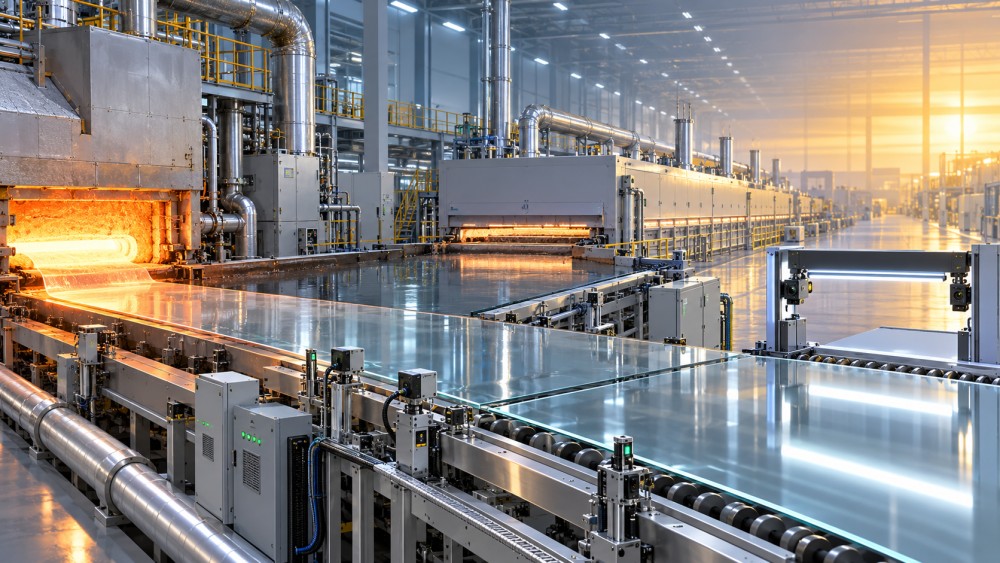
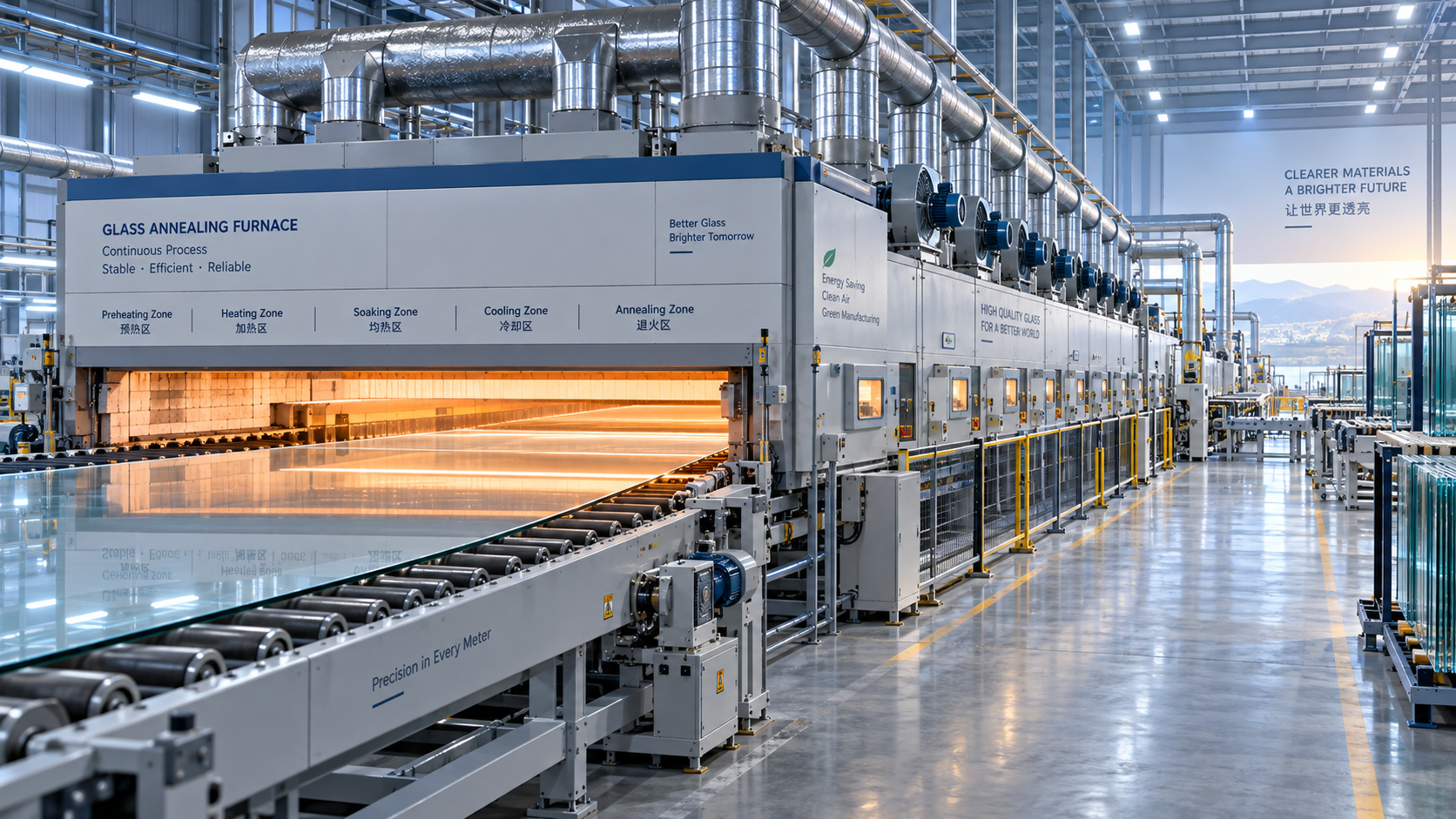
The annealing lehr is equally important. A line may produce a visually acceptable ribbon while carrying stress patterns that later cause breakage, distortion, or inconsistent downstream processing. Assess the lehr’s zoning logic, temperature measurement arrangement, drive stability, cooling control, and the method used to confirm annealing quality. The key is evidence of control capability across the full intended operating range, not a general statement that the lehr is automated.
Evaluate Automation as an Operating System
Automation in a float line should reduce variation and improve response time without creating a black box. A practical assessment separates process automation from plant-wide digital features. Process control includes combustion management, furnace pressure, thermal zones, tin-bath conditions, lehr profiles, conveyance, cutting, and inspection. Plant-wide systems may include production scheduling, maintenance records, quality traceability, energy dashboards, recipe management, and reporting interfaces.
Inspect the controls architecture in detail. Clarify the boundaries between programmable logic controllers, distributed control systems, safety systems, supervisory platforms, drives, instrumentation, and remote support tools. Determine who owns configuration files, recipes, historical data, source documentation, and access rights after commissioning. This is especially important where the line will be integrated with existing batch plants, warehouse systems, coating lines, or enterprise platforms.
A good automation proposal also includes failure behavior. What happens when an instrument fails, a communication link is interrupted, a camera is unavailable, or a critical measurement becomes implausible? There should be clear fallback modes, alarm priorities, manual operating procedures, and defined responsibilities. Sophisticated predictive models can be useful, but only if site personnel can validate their recommendations and the underlying data are reliable.
Online inspection deserves separate scrutiny. Check the defect types it is designed to detect, the placement of cameras and lighting, calibration practices, data retention, reject logic, and how inspection findings connect to upstream process diagnosis. An inspection system that only classifies defects at the cold end is less valuable than one that helps process teams locate likely sources in melting, forming, annealing, or handling.
Energy Use Must Be Read in Context
Energy is usually one of the largest controllable costs in float glass manufacturing, but simple consumption comparisons can mislead. Specific energy use is affected by furnace size, pull rate, cullet ratio, glass color and composition, fuel type, oxygen enrichment strategy where applicable, combustion technology, ambient conditions, production stability, and the stage of the furnace campaign. A supplier’s reference figure may be technically valid while still being poorly matched to a proposed project.
Request an energy balance with boundaries clearly stated. It should distinguish fuel and electricity, identify major consumers, and show whether values are calculated for a cold start, normal stabilized production, or another condition. Review the energy implications of batch handling, boosting, furnace combustion, tin bath operation, lehr drives and cooling, compressed air, cooling water, cutting, extraction, and waste-gas treatment. The calculation should also state whether energy allocated to auxiliary facilities is included.
Combustion design requires more than a burner brochure. Assess fuel flexibility, flame control, furnace pressure stability, combustion-air arrangements, exhaust-gas management, access for maintenance, and instrumentation redundancy. If alternative fuels or future electrification are part of the site strategy, ask what physical space, electrical infrastructure, control modifications, refractory implications, and permitting considerations would be required. “Ready for” should be translated into drawings, interfaces, and documented constraints.
Energy recovery options should be judged against site conditions rather than assumed to be beneficial in every case. The practical value depends on the quality and continuity of recoverable heat, nearby heat demand, local utility economics, maintenance capability, and emissions-control configuration. A technically elegant recovery concept may be difficult to justify if the site has no dependable use for the recovered energy.
Look Beyond Commissioning: Refractories, Spares, and Maintainability
Float lines are long-cycle assets. The economic impact of a design decision may emerge years after startup, when access becomes difficult, a proprietary component is unavailable, or a furnace repair must be planned around customer commitments. Technical evaluation should therefore include maintainability from the beginning: access platforms, isolation points, lifting routes, instrument replacement, spare-part lead times, local service capability, and documentation quality.
Refractory strategy should be examined as a lifecycle issue, not only as a material selection exercise. Ask for the basis of refractory selection by furnace zone, expected wear mechanisms, inspection methods, repair philosophy, and the operational data needed to monitor furnace condition. Exact campaign life cannot be responsibly inferred from a generic proposal; it depends on operation, materials, thermal discipline, and unforeseen events. What can be assessed is whether the design makes degradation visible early enough to support informed intervention.
Acceptance testing should reflect the project’s real priorities. Factory acceptance tests may be suitable for selected equipment and control panels, while site acceptance should cover installation quality, interlocks, functional sequences, safety systems, data acquisition, and performance verification under agreed conditions. Capacity, yield, quality, and energy guarantees need precise definitions. Without agreed measurement periods, product mix, input conditions, calibration responsibilities, and exclusions, later disputes are almost inevitable.
Build a Decision File That Can Survive Scrutiny
The strongest selection process does not rely on an impressive technical presentation. It creates a comparable evidence file for each proposed line. Include process-flow diagrams, equipment scope boundaries, utility balances, layout drawings, automation architecture, quality-control methodology, spare-parts philosophy, training plan, commissioning schedule, and a list of assumptions requiring confirmation. Commercial teams, process engineers, maintenance leaders, energy specialists, and future operators should all review the same underlying basis.
It is also worth identifying the questions a supplier has not answered. Missing information about cullet preparation, raw-material variability, emissions interfaces, cybersecurity responsibilities, plant integration, or operator training often creates more risk than a visible price difference. A lower initial capital figure may simply shift cost into scope gaps, additional utilities, lost yield, specialist service, or later modifications.
CF-Elite approaches float glass assessment within the wider relationship between silicate process engineering, thermal management, refractory performance, and carbon-reduction planning. Its Strategic Intelligence Center focuses on the operational links that are easy to separate on a procurement spreadsheet but inseparable in a working plant: melting chemistry, heat flow, digital monitoring, maintenance decisions, and market-driven product requirements.
Before selecting an automated float glass line, validate the proposed production model against the actual product portfolio, local energy conditions, raw-material characteristics, workforce capability, and downstream demand. The right line is rarely the one with the largest stated output or the longest feature list. It is the one whose capacity, quality controls, energy assumptions, and lifecycle support remain credible when tested against the operating conditions the plant will actually face.
Related News
 Optical Glass Tech FellowHow to Evaluate Automated Float Glass Lines for Capacity, Quality, and Energy UseEvaluate automated float glass lines for net capacity, consistent quality, energy efficiency, automation reliability, and lifecycle value. Explore key criteria for smarter investment decisions.Oct 05, 2026
 Thermal Energy ArchitectWhat Does CE Marking Require for an Energy-Efficient Industrial Kiln?Energy efficient kiln CE requirements explained: assess safety, technical files, energy performance, and EU compliance before purchase or commissioning.Oct 04, 2026
 Thermal Energy ArchitectRefractory Manufacturing Solutions for Brick Plants: How to Extend Kiln LifeRefractory manufacturing solutions for brick plant operations: discover proven strategies to extend kiln life, reduce heat loss, prevent lining failures, and plan cost-effective repairs.Oct 03, 2026
 Thermal Energy ArchitectHow to Specify Heavy Industrial Process Systems for High-Temperature PlantsHeavy industrial processes systems: learn how to specify high-temperature plants for efficiency, emissions control, maintainability, and lifecycle performance.Oct 02, 2026
 Structural Material AnalystHow Sustainable Material Extrusion Can Improve Wall Panel Durability and Design FlexibilityDiscover how sustainable material extrusion for wall panels improves durability, moisture resistance, design flexibility, and installation consistency for high-performing wall systems.Oct 01, 2026
 Thermal Energy ArchitectHow to Evaluate a High-Temperature Materials Manufacturer for Furnace ApplicationsChoose a high-temperature materials manufacturer with confidence: compare thermal performance, chemical resistance, quality controls, installation support, and lifecycle cost.Sep 30, 2026
 Ms. Elena RodriguezHow to Structure Global Specification Data for Faster Industrial Product EvaluationGlobal specification-oriented product information helps industrial teams compare capacity, energy, emissions, automation, and lifecycle data on a like-for-like basis for faster, confident equipment decisions.Sep 29, 2026
 Thermal Energy ArchitectHow to Specify High-Temperature Process Systems for Continuous Thermal OperationsHigh-temperature process engineering systems: learn how to specify resilient continuous thermal operations for efficiency, compliance, reliable uptime, and long-term performance.Sep 28, 2026
 Thermal Energy ArchitectHow to Evaluate a Thermal Engineering Contractor for High-Temperature Plant ProjectsChoose a thermal engineering contractor with proven process expertise, lifecycle value, emissions control, and delivery discipline for reliable high-temperature plant performance.Sep 27, 2026
 Silicate Process EngineerHow Latin American Cement Plants Can Reduce Dust Emissions in Kilns and Transfer PointsCement plant dust control Latin America: reduce kiln and transfer-point emissions with practical airflow, filtration, monitoring, and maintenance strategies.Sep 26, 2026
 Material Heat-Resist ExpertHow to Evaluate Refractory Production Lines for Output, Quality, and Energy UseRefractory production lines: learn how to assess qualified output, consistent quality, and total energy use for smarter, lower-risk investment decisions.Sep 25, 2026
 Dr. Alistair VaughnHow Waste Recycling Technology Improves Material Recovery in Industrial PlantsWaste recycling technology improves material recovery through source segregation, smart separation, thermal treatment, and quality control for industrial plants.Sep 24, 2026
 Optical Glass Tech FellowHow to Specify Glass Annealing Equipment for European Quality and Energy RequirementsGlass annealing equipment Europe: learn how to specify lehrs for consistent glass quality, energy efficiency, compliance, automation, and reliable long-term performance.Sep 23, 2026
 Optical Glass Tech FellowSilicate Process Automation: Improving Batch Consistency and Energy ControlSilicate process automation improves batch consistency, energy control, traceability, and operator confidence across high-temperature manufacturing operations.Sep 22, 2026
 Optical Glass Tech FellowHow Silicate Industrial Processes Control Viscosity, Energy Use, and Product QualitySilicate industrial processes: learn how viscosity, chemistry, heat transfer, and atmosphere control reduce energy use, improve stability, and protect product quality.Sep 21, 2026
 Thermal Energy ArchitectHow European Plants Can Evaluate Energy Recovery Equipment for High-Temperature ProcessesIndustrial energy recovery equipment Europe: learn how high-temperature plants can assess waste-heat sources, integration risks, lifecycle value, and reliable recovery routes.Sep 20, 2026
 Thermal Energy ArchitectIndustrial Furnace Process Optimization: Reducing Fuel Use Without Sacrificing ThroughputIndustrial process optimization furnace strategies that cut fuel use while protecting throughput. Explore combustion control, heat recovery, refractory performance, and data-driven efficiency gains.Sep 19, 2026
 Ms. Elena RodriguezWhat Drives High-Pressure Extrusion Equipment Cost in Industrial Projects?High pressure extrusion equipment cost explained: compare pressure, die design, automation, wear, energy, and installation factors for smarter industrial investments.Sep 18, 2026
 Thermal Energy ArchitectHow to Size a Waste Heat Recovery Exchanger for High-Temperature Kiln Exhaust?Waste heat recovery exchanger sizing for high-temperature kiln exhaust: balance recoverable duty, fouling, corrosion limits, pressure drop, and reliable heat use.Sep 17, 2026
 Thermal Energy ArchitectWhy Heat-Resistant Materials Lose Abrasion Resistance at High TemperaturesHeat-resistant materials abrasion resistance can decline at high temperatures. Discover the thermal, chemical, and mechanical causes of wear—and how to choose longer-lasting linings.Sep 16, 2026

Related News
- 00
0000-00
How to Evaluate Automated Float Glass Lines for Capacity, Quality, and Energy Use - 00
0000-00
How to Specify Glass Annealing Equipment for European Quality and Energy Requirements - 00
0000-00
Silicate Process Automation: Improving Batch Consistency and Energy Control - 00
0000-00
How Silicate Industrial Processes Control Viscosity, Energy Use, and Product Quality - 00
0000-00
How to Evaluate a Glass Annealing Equipment Manufacturer for Production Stability
Weekly Insights
Stay ahead with our curated technology reports delivered every Monday.