
Rotary Kiln Efficiency: How Feed Rate, Fuel Use, and Heat Loss Affect Output




Rotary Kiln Efficiency: How Feed Rate, Fuel Use, and Heat Loss Affect Output
Rotary kiln efficiency is often reduced to one familiar question: how much fuel is consumed per tonne of product? That number matters, but it is not enough to explain whether a kiln is operating well. A kiln can show acceptable specific fuel consumption while losing output through unstable feed, poor material conversion, excessive circulating loads, refractory deterioration, or avoidable false-air infiltration. It can also achieve a short-term production increase that later appears as poor clinker quality, coating instability, higher maintenance demand, or emissions-control pressure.
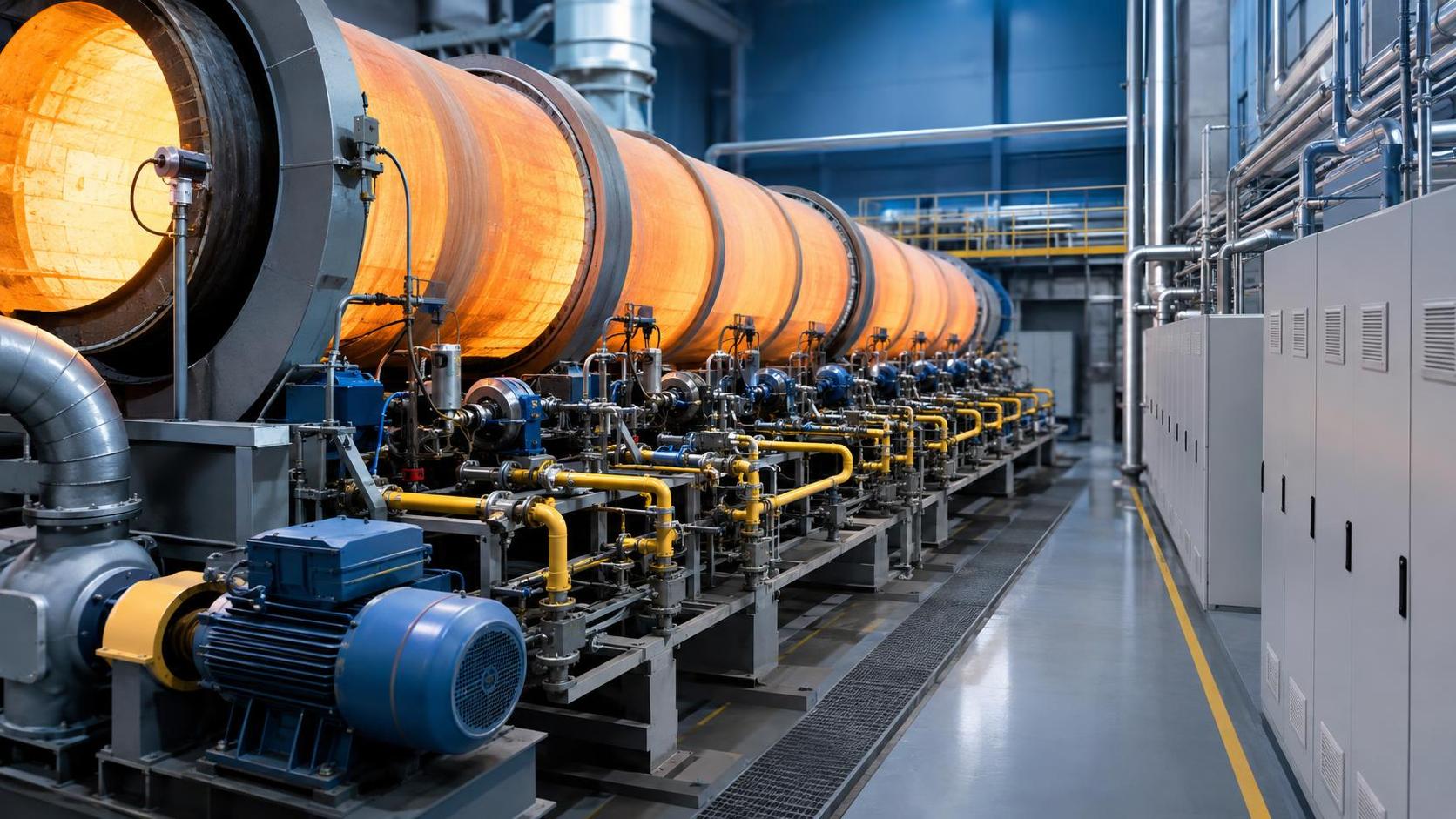
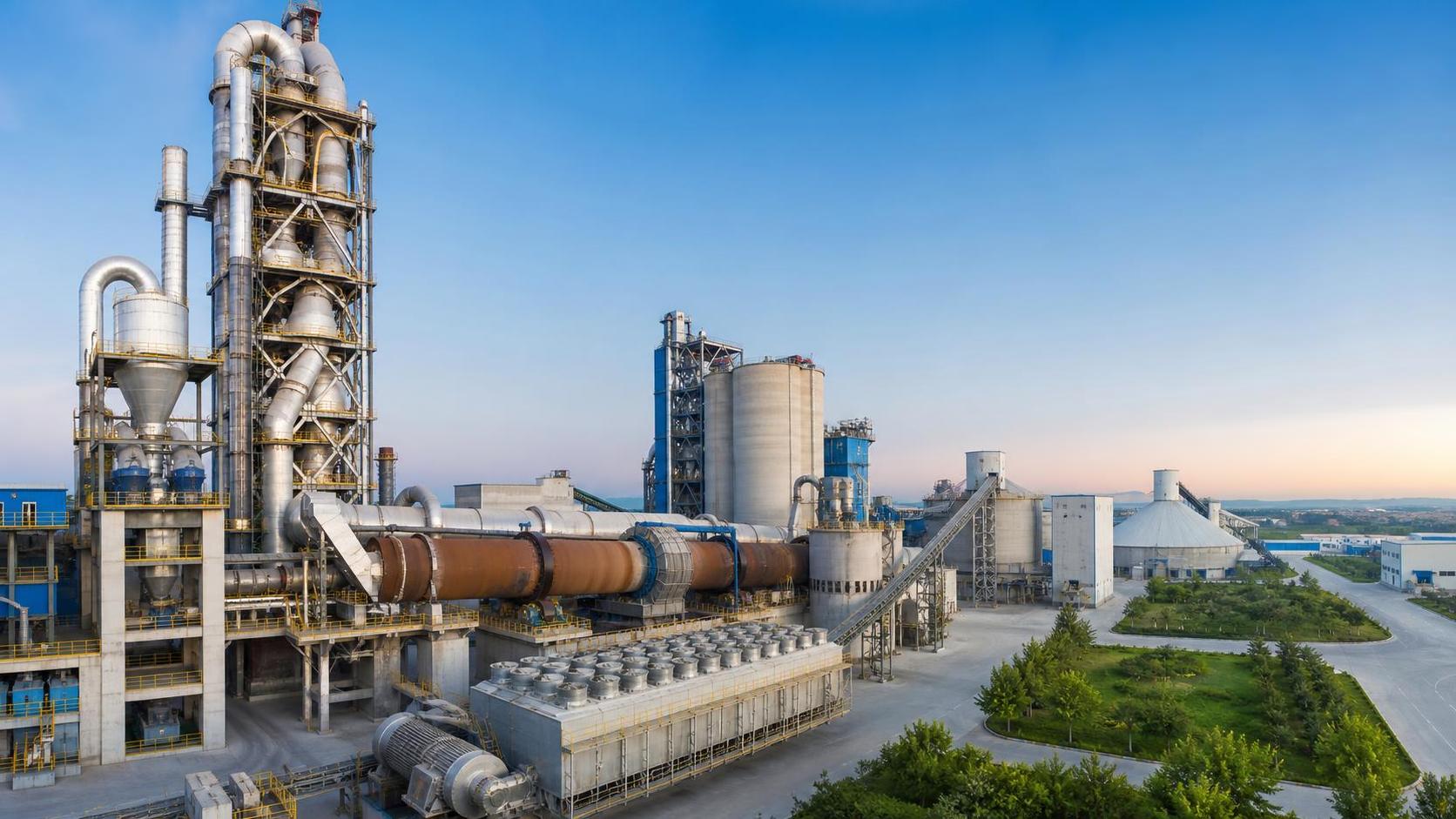
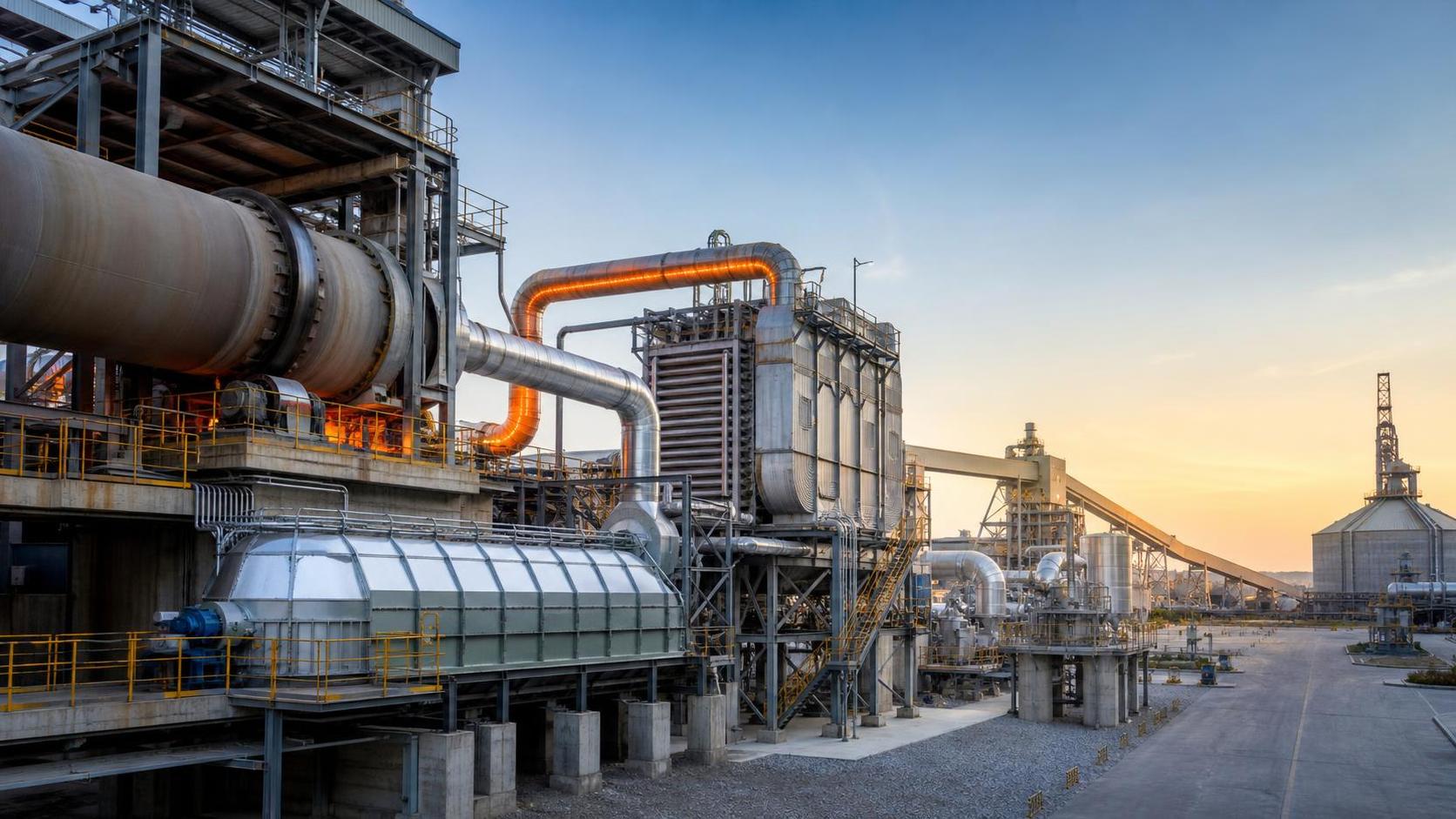
For technical evaluation, kiln efficiency should be treated as a thermal-and-process balance rather than a single energy indicator. The relationship between feed rate, fuel input, and heat loss determines how much usable reaction heat reaches the material, how steadily the burning zone performs, and whether the final output meets the intended quality criteria. This applies most visibly in cement clinker production, but the same reasoning is relevant to lime, refractory raw materials, mineral processing, hazardous-waste co-processing, and other high-temperature rotary systems.
The practical challenge is that these variables are coupled. Raising feed rate changes the thermal load. Changing fuel changes flame shape and combustion behavior. Heat loss can indicate either a manageable operating condition or an emerging mechanical and refractory risk. A useful assessment therefore asks not only whether each value is within a nominal range, but whether the values remain stable together across normal production conditions.
Efficiency Begins with a Defensible Heat and Mass Balance
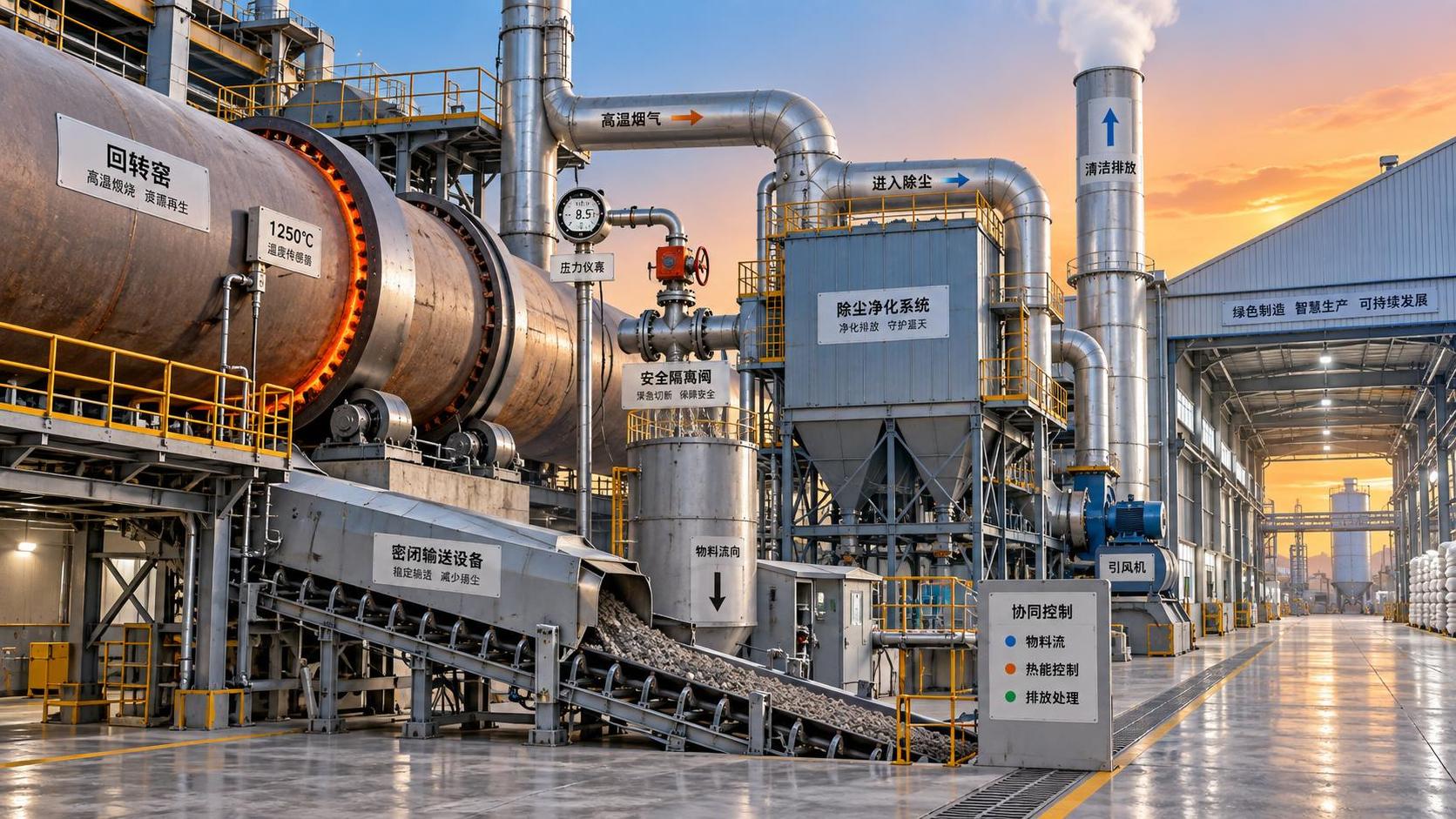
At its simplest, a rotary kiln receives material, fuel, combustion air, and—in some systems—alternative fuels or secondary waste-derived inputs. It discharges calcined or sintered product, hot gases, dust streams, and heat through the shell and ancillary equipment. The purpose of a heat balance is to identify where the fuel’s chemical energy goes: into material heating and reaction, exhaust gases, product sensible heat, shell radiation, cooling losses, incomplete combustion, and other measurable or estimated losses.
A heat balance is never stronger than its measurements. Feed moisture, raw meal chemistry, fuel lower heating value, oxygen concentration, gas flow, dust return, and product temperature all affect the result. A review based on one operating shift may be misleading if the kiln normally experiences feed variability, changes in fuel preparation, or irregular coating conditions. For this reason, technical teams typically compare stable operating windows rather than isolated daily averages.
The target is not necessarily the lowest possible fuel rate. In a process kiln, fuel input must maintain the temperature profile, residence time, atmosphere, and reaction conditions required for the intended product. Reducing thermal input without confirming mineralogical conversion, free-lime control where relevant, loss-on-ignition performance, or product strength characteristics can simply transfer cost from fuel to quality losses and reprocessing.
Feed Rate Is a Thermal Decision, Not Just a Throughput Setting
Increasing feed rate is the most direct route to higher kiln output, yet it also raises the heat demand placed on the system. More solids must be dried, heated, calcined or decomposed, and brought to the required reaction temperature. If fuel and heat-transfer capacity do not rise in step, the process may become under-fired. The consequences vary by application, but may include incomplete reaction, lower product consistency, unstable burning-zone conditions, higher dust carryover, and a greater likelihood of upset conditions downstream.
The more revealing variable is not feed rate alone, but feed-rate stability. Even when the average feed rate appears reasonable, rapid fluctuations force the operator to chase changing thermal demand. A temporary feed surge can cool the material bed and shift the burning zone. A sudden reduction in feed may overheat the kiln, affect coating behavior, or create unnecessary thermal stress on refractory. These disturbances are often visible first in process trends: oxygen swings, pressure instability, changing kiln-drive load, temperature oscillation, and inconsistent product chemistry.
Raw material characteristics influence the sustainable operating point. Moisture increases drying duty; changing particle-size distribution affects heat transfer and dust entrainment; chemistry influences reaction heat and liquid-phase formation in clinker systems. Feed that is chemically consistent but physically variable can still destabilize a kiln. Technical reviews should therefore examine feeder calibration, weigh-feeder trend quality, raw-mill variability, homogenization performance, and the timing of any material-source changes.
A common mistake is to judge capacity only by tonnes per hour. A more meaningful view combines production rate with product conformity, fuel consumption, kiln availability, emissions behavior, and the duration of stable operation. A kiln that holds a slightly lower rate without frequent interventions can produce more saleable material over a campaign than one run aggressively at the edge of its thermal limit.
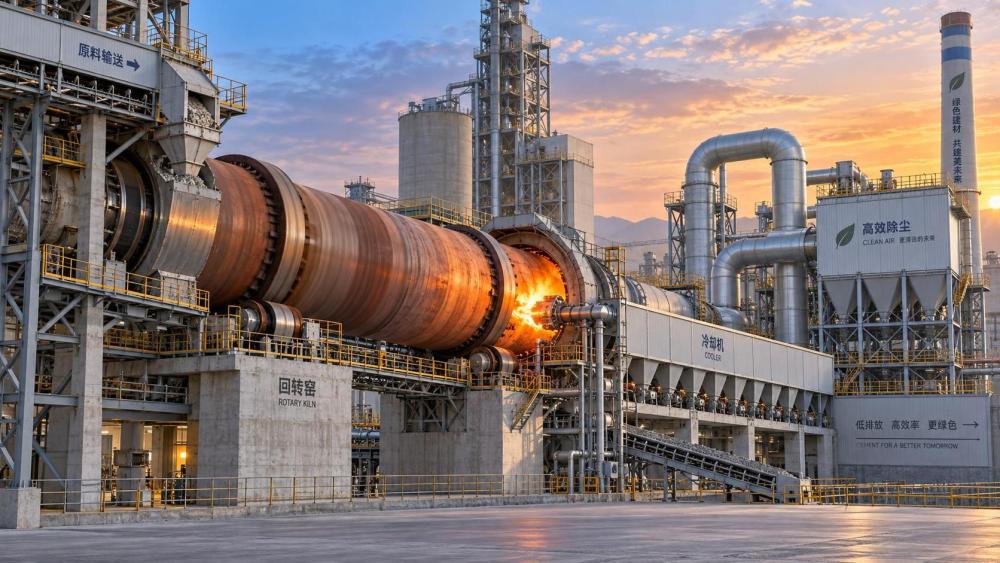
Fuel Use Depends on Combustion Quality as Much as Fuel Quantity
Specific fuel consumption is shaped by fuel quality, firing-system design, air distribution, flame geometry, and the kiln’s capacity to transfer heat to the material. Fuels with variable moisture, ash, particle size, volatile content, or calorific value introduce additional uncertainty. This is particularly important when alternative fuels are used. Their circular-economy potential can be substantial, but their substitution rate should be assessed against combustion stability, chlorine and alkali cycles, ash chemistry, gas-cleaning capability, and the operating permit applicable to the site.
A long, lazy flame may transfer heat differently from a short, intense flame. Neither is automatically preferable. The correct flame profile depends on kiln geometry, material behavior, burner design, secondary-air conditions, and the required temperature zone. Poorly adjusted primary air can cool the flame or reduce momentum; insufficient mixing can leave unburned combustibles; excessive excess air adds nitrogen that must be heated and exhausted. Every one of these conditions consumes useful energy.
Fuel evaluation should include the full combustion chain rather than the burner alone. Verify fuel sampling and laboratory methods, storage conditions, dosing accuracy, conveying reliability, burner settings, and combustion-gas trends. Carbon monoxide excursions, oxygen variability, kiln inlet temperature behavior, and pressure changes should be interpreted together. One instrument rarely tells the complete story, especially where gas analyzers are affected by sampling-line condition or calibration discipline.
Heat Loss: Look Beyond the Kiln Shell
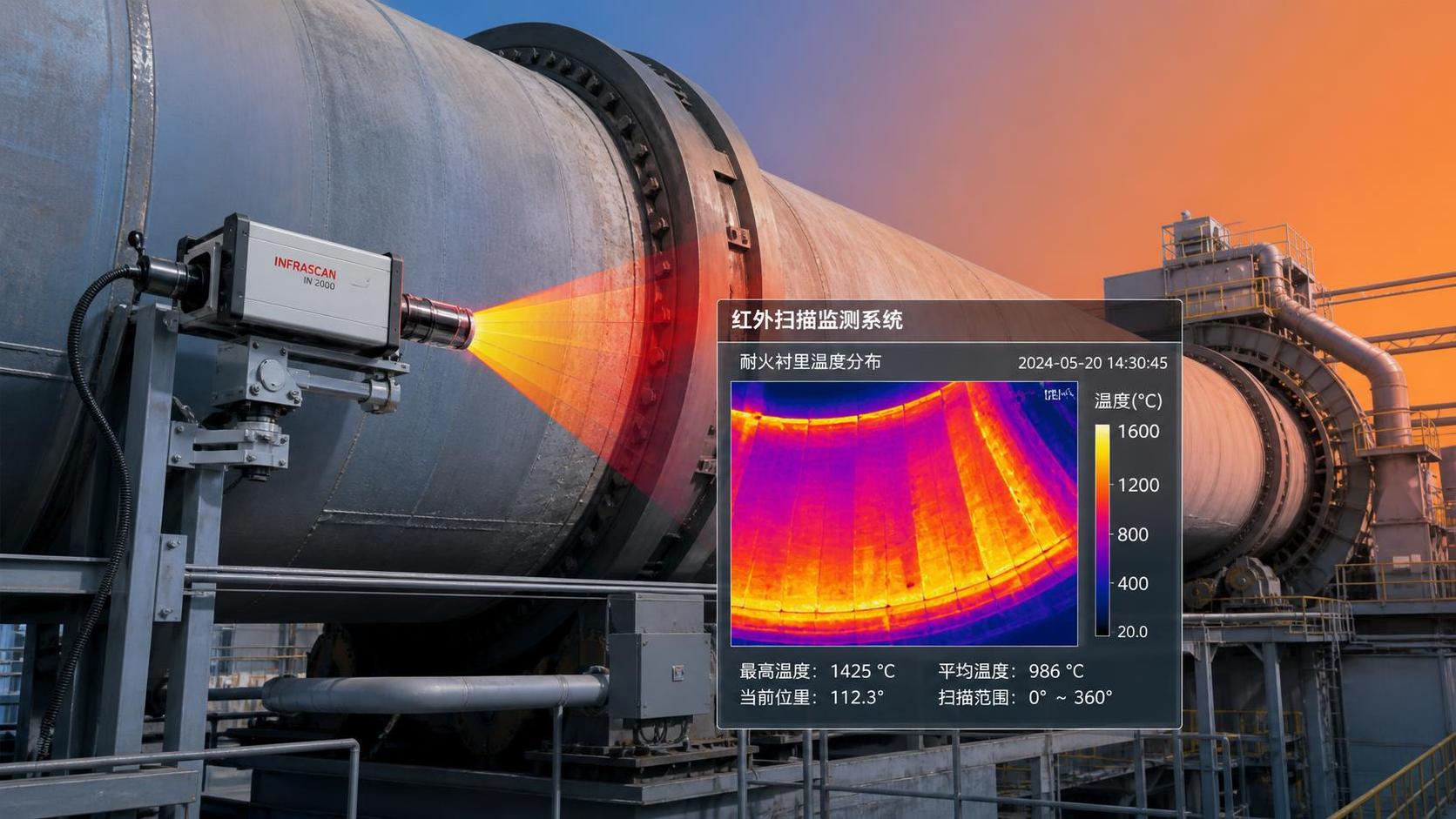
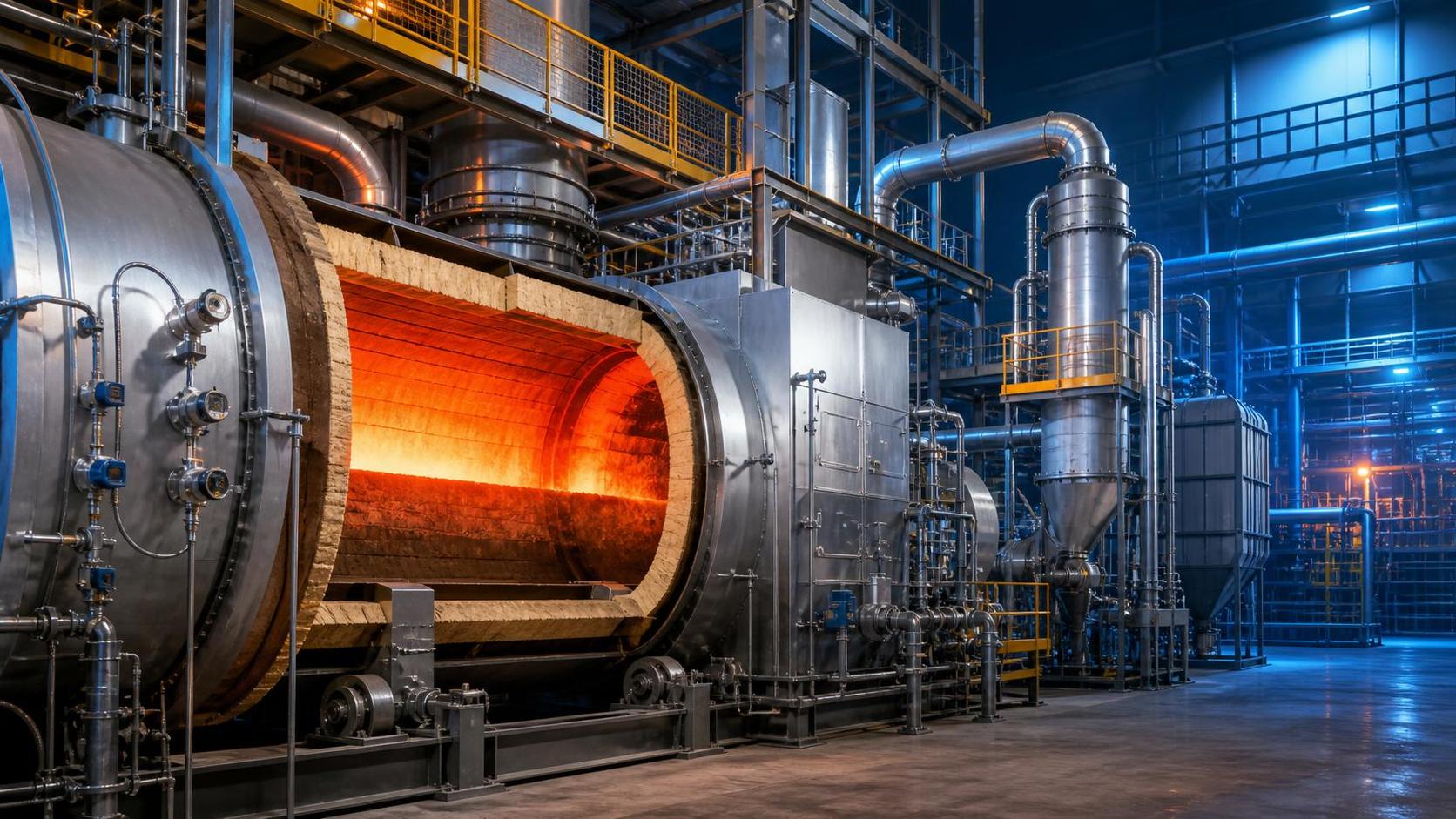
Radiation and convection from the kiln shell are visible indicators of heat loss, but they should not be interpreted casually. A localized high shell temperature can point to thin refractory, coating loss, damaged insulation, or an abnormal process condition. It is also a safety and asset-integrity concern. Infrared shell scanning, combined with refractory history and process data, is more useful than periodic visual checks alone. The objective is not merely to locate hot spots, but to understand whether their pattern is stable, expanding, or linked to a change in operating practice.
Exhaust gas often represents a larger energy issue than shell loss. High gas temperature may be caused by incomplete heat recovery, excess air, poor material-gas contact, bypass operation, or process instability. Yet lowering exhaust temperature is not universally beneficial if it increases risks of condensation, build-up, corrosion, or contamination in downstream equipment. The acceptable limit depends on fuel composition, gas-cleaning arrangement, material chemistry, and equipment design.
False air deserves particular attention because it is easy to underestimate. Air entering through leaking seals, inspection openings, joints, or ductwork does not contribute oxygen in a controlled way. It increases the gas volume handled by fans and carries additional heat through the system. In preheater-equipped lines, that can disrupt pressure balance and alter separation efficiency. Repair priorities should be based on measured process impact and accessibility, not on the assumption that every leakage point has equal value.
Cooling Performance Affects the Kiln’s Fuel Requirement
Kiln efficiency cannot be assessed in isolation from the cooler. In clinker production, an effective cooler recovers sensible heat from hot clinker and returns it as secondary or tertiary air for combustion. If cooler airflow, grate condition, clinker-bed distribution, or air leakage deteriorates, more energy may be required at the main burner to maintain the same kiln condition. Similar logic applies to other thermal lines where hot product or exhaust is intended to preheat combustion air or incoming material.
Evaluation should distinguish a transient cooler upset from a structural limitation. Sudden changes in clinker size distribution, coating fall, or material flow can disturb cooler performance temporarily. Repeated high-temperature discharge, abnormal fan loading, or persistently weak secondary-air conditions point to a more fundamental issue. The correct response may involve mechanical inspection, airflow balancing, control review, or material-flow analysis; it is rarely solved by simply adding fuel.
A Practical Evaluation Sequence
Before recommending a capacity increase, burner change, refractory upgrade, or fuel substitution strategy, establish a common operating baseline. It should cover feed tonnes and moisture, product quality measures, fuel mass and heating value, gas composition, key temperatures, pressure profile, electrical demand, kiln speed, and major maintenance events. The selected time period should exclude known start-ups, shutdowns, and severe upsets unless those events are the subject of the investigation.
Then test the relationships rather than reviewing each signal separately. Does fuel use rise after moisture rises? Do oxygen swings follow feed fluctuations? Does a hot-shell zone correlate with coating instability or a material change? Does output fall only when cooler temperatures increase? This correlation work does not replace a formal process model, but it prevents premature conclusions.
Any proposed improvement should also be checked against applicable emissions limits, safety procedures, refractory constraints, and maintenance windows. Where formal energy management systems are used, frameworks such as ISO 50001 can help organize energy baselines and improvement verification. They do not substitute for kiln-specific engineering judgment, and local legal or permit requirements remain decisive.
Turning Operating Data into Better Thermal Decisions
The most valuable efficiency work often starts with disciplined data rather than major capital expenditure. Reliable instruments, clear sampling rules, consistent laboratory testing, and a shared definition of stable operation make it easier to separate genuine energy losses from normal variation. Digital models can add value when they are grounded in validated operating data; a digital twin built on poorly maintained measurements will only produce more precise-looking uncertainty.
This systems perspective is central to the work followed by the Global Cera-Forge Hub (CF-Elite). Across cement production, industrial kilns and incineration, refractory lines, glass thermal systems, and building-material extrusion, the recurring issue is the same: physical parameters, reaction kinetics, equipment condition, and carbon objectives must be read together. Useful intelligence is not a collection of isolated trends. It is the ability to connect a thermal signal to its likely process, maintenance, and compliance implications.
A sound rotary kiln efficiency review should end with a short list of verified constraints: the maximum stable feed condition, the combustion limits of the available fuel mix, the dominant heat-loss paths, and the measurements that require better confidence. Once those points are clear, decisions about throughput, fuel strategy, heat recovery, refractory monitoring, or control-system tuning become far less speculative.
Related News
 Thermal Energy ArchitectRotary Kiln Efficiency: How Feed Rate, Fuel Use, and Heat Loss Affect OutputRotary kiln efficiency explained: discover how feed rate, fuel use, heat loss, combustion, and cooling performance shape output, quality, and energy costs.Sep 14, 2026
 Thermal Energy ArchitectHow to Select Heat-Resistant Materials That Maintain Abrasion Resistance in KilnsHeat-resistant materials abrasion resistance: learn how to select kiln linings that withstand heat, wear, thermal cycling, and chemical attack for longer service life.Sep 13, 2026
 Thermal Energy ArchitectHow Rotary Kiln Automation Improves Temperature Control and Fuel EfficiencyRotary kiln technology automation enhances temperature control, stabilizes combustion, and improves fuel efficiency with smarter data, predictive control, and safer operations.Sep 12, 2026
 Silicate Process EngineerCement Plant Emission Control: Selecting Systems for Dust, NOx, and SO2 LimitsCement plant emission control guide: compare dust collectors, NOx reduction, and SO2 systems for reliable compliance across kiln modes, fuel changes, and operating upsets.Sep 11, 2026
 Thermal Energy ArchitectSelecting Abrasion-Resistant High-Temperature Materials for Kiln and Conveyor Wear ZonesHigh-temp material engineering guide to abrasion-resistant kiln and conveyor solutions—match wear, heat, chemistry, and installation design for longer service life.Sep 10, 2026
 Dr. Alistair VaughnIndustrial Process Engineering: How to Map Processes for Safer, More Efficient PlantsIndustrial process engineering reveals bottlenecks, safety risks, and energy losses through practical process mapping for safer, more efficient plants.Sep 09, 2026
 Optical Glass Tech FellowHow to Evaluate a Glass Annealing Equipment Manufacturer for Production StabilityChoose a glass annealing equipment manufacturer with proven thermal uniformity, reliable controls, lifecycle value, and responsive service for stable production.Sep 08, 2026
 Prof. Marcus ChenThermal Energy Architecture in North America: Strategies for Lower Building Energy UseThermal energy architecture North America helps project leaders cut building energy use through stronger envelopes, right-sized HVAC, storage, and smart commissioning.Sep 07, 2026
 Ms. Elena RodriguezHow Should Buyers Evaluate Building Material Industry Intelligence Pricing?Building material industry intelligence pricing: learn how to compare coverage, technical depth, and ROI to choose intelligence that reduces procurement risk.Sep 07, 2026
 Ms. Elena RodriguezHow to Use Building Material Intelligence Data for Market and Investment DecisionsBuilding material industry intelligence data helps leaders evaluate demand, costs, regulation, capacity, and technology to make smarter market and investment decisions.Sep 05, 2026
 Thermal Energy ArchitectHow PLC Control Improves Energy Efficiency and Temperature Stability in KilnsEnergy efficient kilns PLC control improves temperature stability, cuts fuel waste, and optimizes combustion, draft, and material flow. Explore proven strategies for smarter kiln modernization.Sep 04, 2026
 Optical Glass Tech FellowEuropean Glass Melting Processes: Furnace Choices, Energy Use, and Quality ControlGlass melting process Europe: explore furnace choices, energy efficiency, cullet strategy, and quality control to improve output, compliance, and long-term glass performance.Sep 03, 2026
 Thermal Energy ArchitectWhat Determines Refractory Lining Monitoring Price for Industrial Kilns?Refractory lining monitoring price depends on kiln size, sensor technology, installation, software, and support. Compare total lifecycle costs and choose the right solution.Sep 02, 2026
 Silicate Process EngineerCement Production System Costs: A Plant Buyer’s Guide to Budgeting and ROICement production systems cost planning made clear: compare CAPEX, operating costs, compliance, and ROI to build a resilient, profitable cement plant investment.Sep 01, 2026
 Dr. Alistair VaughnWhat Should a Process Technology Database Track for High-Temperature Plants?Process technology database essentials for high-temperature plants: track thermal profiles, feed chemistry, refractory wear, emissions, energy, and maintenance for safer, data-driven decisions.Aug 31, 2026
 Ms. Elena RodriguezHow to Evaluate a Silicate Processing Equipment Manufacturer for Plant ProjectsSilicate processing equipment manufacturer selection: assess process fit, guarantees, energy, compliance, delivery risk, and lifecycle support for dependable plant performance.Aug 30, 2026
 Dr. Alistair VaughnHow to Specify Custom Agricultural Processing Equipment for Throughput and HygieneEquipment customization services for agricultural processing: learn to specify hygienic, high-throughput lines that improve yield, reliability, and long-term efficiency.Aug 29, 2026
 Dr. Alistair VaughnHow to Select Process Plant Equipment for High-Temperature, Abrasive Production LinesProcess plant equipment selection for high-temperature, abrasive lines: reduce downtime, improve durability, and optimize lifecycle performance.Aug 28, 2026
 Silicate Process EngineerHow Kiln Heat Recovery Systems Cut Fuel Use in Cement and Lime ProductionKiln heat recovery helps cement and lime plants cut fuel use, improve thermal stability, and build practical, reliable decarbonization strategies.Aug 27, 2026
 Ms. Elena RodriguezProcess Equipment Comparison: Which Metrics Matter Most for Reliable Selection?Process equipment comparison made practical: discover which metrics truly drive reliable selection, from energy efficiency and control stability to wear life, maintainability, and uptime.Aug 26, 2026



Related News
- 00
0000-00
Rotary Kiln Efficiency: How Feed Rate, Fuel Use, and Heat Loss Affect Output - 00
0000-00
How to Select Heat-Resistant Materials That Maintain Abrasion Resistance in Kilns - 00
0000-00
How Rotary Kiln Automation Improves Temperature Control and Fuel Efficiency - 00
0000-00
Selecting Abrasion-Resistant High-Temperature Materials for Kiln and Conveyor Wear Zones - 00
0000-00
How PLC Control Improves Energy Efficiency and Temperature Stability in Kilns
Weekly Insights
Stay ahead with our curated technology reports delivered every Monday.