
How to Select Heat-Resistant Materials That Maintain Abrasion Resistance in Kilns




How to Select Heat-Resistant Materials That Maintain Abrasion Resistance in Kilns
Selecting heat-resistant materials that retain abrasion resistance in kilns requires more than comparing maximum service temperatures on a data sheet. A lining can survive the stated temperature yet fail prematurely because hot clinker, ash, cullet, raw meal, or refractory particles continually scour its surface. In other cases, a nominally hard material cracks under thermal cycling, allowing abrasion to accelerate from beneath the working face.
For technical evaluators, the relevant question is not simply “Which material is most wear-resistant?” It is: “Which lining system will maintain a stable protective surface under this kiln’s temperature profile, chemistry, particle movement, mechanical stress, and maintenance reality?” The answer is usually zone-specific. A material that performs well at a kiln inlet may be a poor choice at a burner hood, transition chamber, calciner, glass forehearth, or waste-incineration grate.
That distinction matters as plants pursue lower fuel consumption, alternative-fuel substitution, higher throughput, and longer shutdown intervals. These operating changes can alter flame shape, alkali circulation, chlorine loading, redox conditions, and temperature variability. Abrasion is therefore rarely an isolated material problem; it is often the visible result of a broader process-material mismatch.
Start with the Wear Mechanism, Not the Material Name
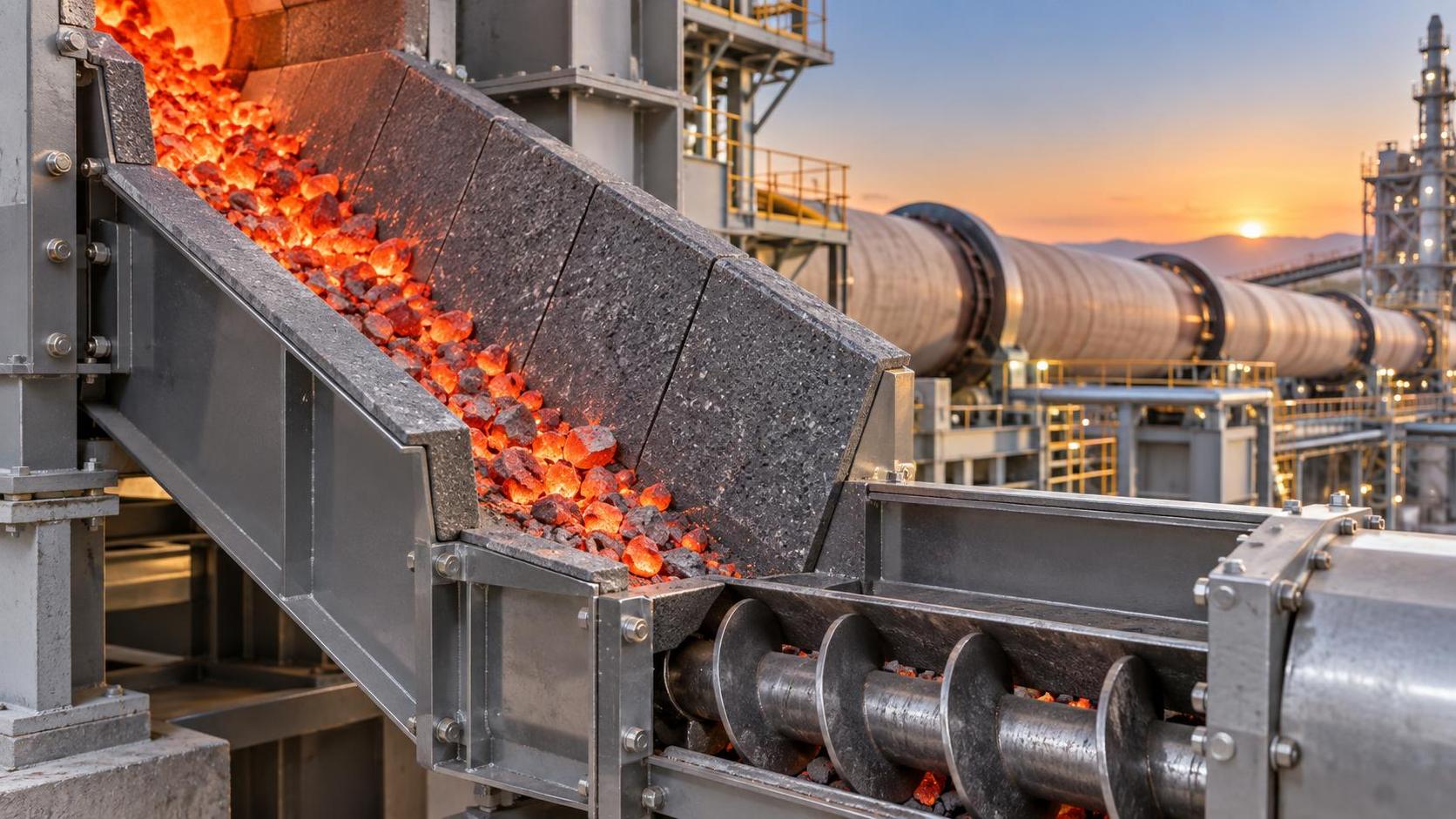
“Abrasion” covers several different mechanisms. Sliding wear occurs where moving solids rub continuously across a refractory surface. Impact wear is more severe where coarse feed, clinker, ash, or scrap falls onto a lining. Erosion arises when gas streams carry fine particles at high velocity, especially through ducts, cyclones, risers, calciners, incineration chambers, and bends. A fourth mechanism, often underestimated, is chemical wear that weakens the material matrix before mechanical forces remove it.
A useful inspection begins by looking at the failure pattern. Smooth, progressively thinned surfaces may indicate sliding abrasion. Localized craters often point to impact. A rough, washed-out profile in a high-velocity gas zone can suggest erosion. Spalling, open joints, and deep cracking may mean thermal shock or chemical infiltration is the initiating event, even if the final loss appears to be abrasion.
This diagnosis should be supported by operating records: feed composition, fuel mix, coating behavior, kiln rotation, gas velocity, temperature trends, unplanned stops, and the position of the worn area. Replacing a failed lining with a denser or harder grade without this review can repeat the same failure at a higher installed cost.
Temperature Resistance Is Necessary, but It Does Not Define Service Life
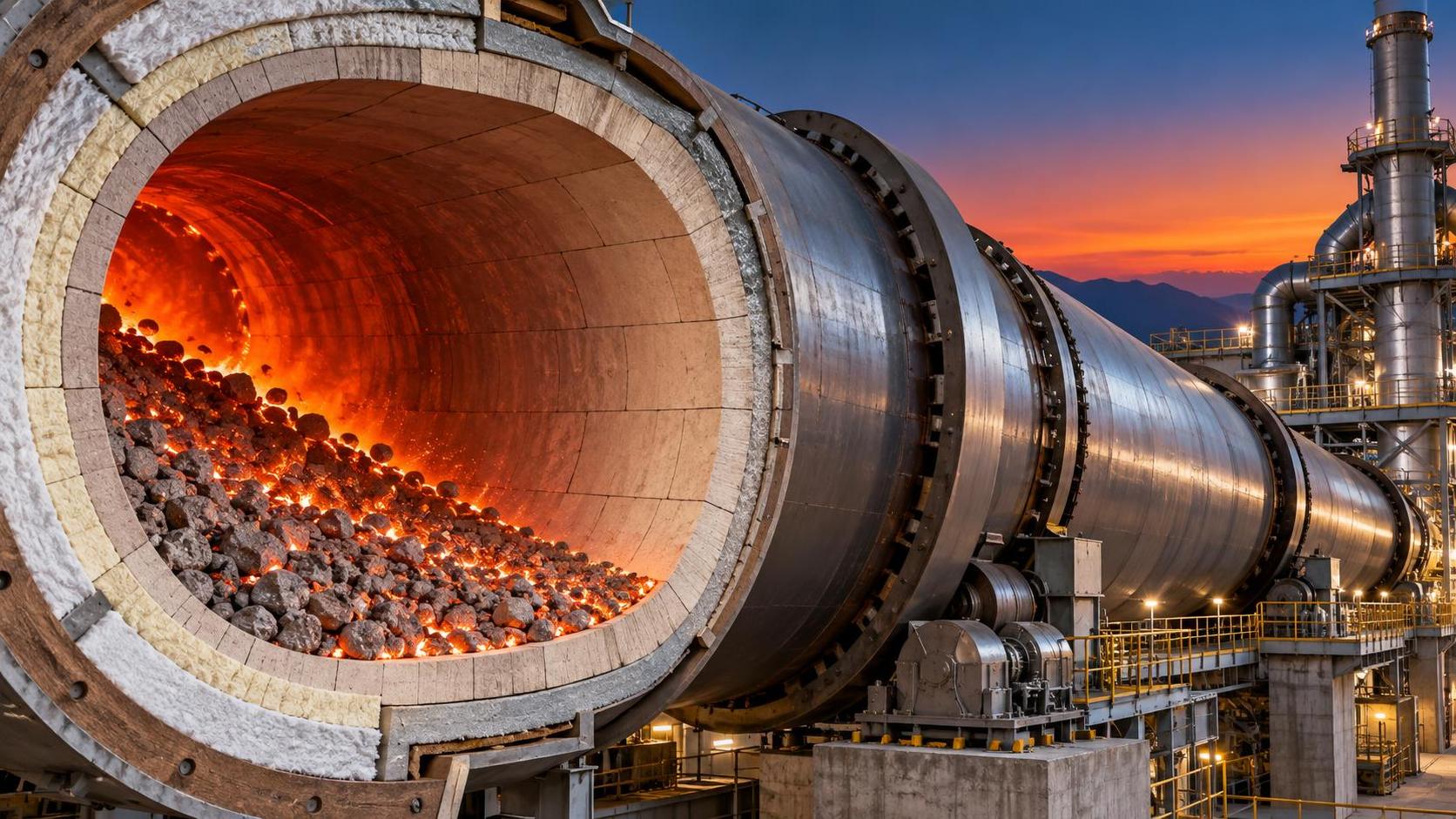
Maximum temperature rating is a screening value, not a complete selection criterion. The hot-face temperature, temperature gradient through the lining, duration of exposure, atmosphere, and frequency of heating and cooling all influence how a material behaves. A refractory with excellent refractoriness under load may still be vulnerable if frequent cycling creates microcracks or if its thermal expansion differs sharply from adjacent materials and steel shell constraints.
In rotary kilns, thermal cycling is not limited to full shutdowns. Changes in feed rate, flame stability, coating formation, burner adjustment, and process upset can impose repeated local temperature swings. In waste-to-energy and industrial incineration systems, variable waste composition can produce similarly uneven thermal conditions, along with corrosive deposits. Glass operations may face a different balance: long campaign life and chemical compatibility can outweigh simple abrasion performance, while batch-charging or cullet-contact zones still need robust resistance to mechanical attack.
The practical target is a material that retains enough structural integrity at operating temperature to resist wear after cycling—not merely one that remains technically “refractory.” Residual strength, thermal shock behavior, permanent linear change, porosity, and hot mechanical properties should be reviewed together when those data are available from the supplier and relevant to the application.
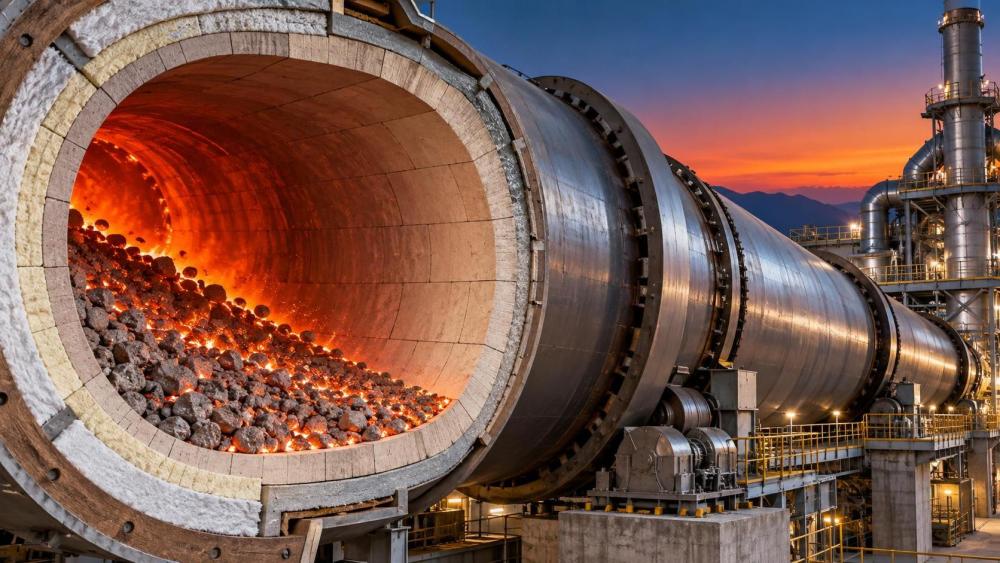
Match Chemistry to the Process Environment
Chemical compatibility frequently determines whether abrasion resistance remains meaningful over time. Cement kiln systems may expose linings to lime-rich material, alkalis, sulfur compounds, chlorides, and changing clinker phases. Depending on the zone, basic, alumina-silicate, silicon carbide-containing, or other engineered refractory systems may be considered—but no family should be selected by label alone.
Industrial incineration introduces another level of complexity. Ash can contain chlorides, alkalis, heavy-metal compounds, or other aggressive constituents, while the gas atmosphere may shift between oxidizing and reducing conditions. In these environments, a material with strong room-temperature abrasion values can lose surface cohesion after chemical attack. The evaluation must consider the deposit chemistry and whether protective layers are likely to form, remain stable, or detach repeatedly.
For glass melting and thermal-treatment equipment, contact chemistry may include glass vapors, batch dust, fluxing components, or molten material in localized areas. In refractory manufacturing, the firing schedule and the composition of products being processed can create their own combinations of abrasion and vapor attack. The right choice is often the material that sacrifices a small amount of nominal hardness in exchange for better chemical stability and lower crack propagation risk.
Questions that should be answered before comparing grades
- What is the normal and upset-condition temperature at the lining hot face?
- Which solids contact the surface, and are they fine, angular, coarse, molten, sticky, or partially sintered?
- Is wear driven by sliding, impact, gas-borne erosion, or a combination?
- What are the relevant alkali, sulfur, chlorine, lime, acid, or reducing-gas exposures?
- Does a coating form on the lining, and is it protective or unstable?
- How frequently does the zone experience thermal cycling, kiln stops, or rapid restart conditions?
- What installation method, dry-out procedure, anchoring arrangement, and repair access are realistic for the plant?
If several of these questions cannot be answered, a site survey, process review, or examination of retained lining samples is often more valuable than requesting a broader catalog of refractory options.
Read Abrasion Data in Context
Abrasion test results are useful for comparing candidate materials tested by the same method, but they do not reproduce every kiln condition. Test method, sample preparation, firing condition, abrasive medium, and test temperature can materially affect results. A low abrasion-loss value should therefore be treated as comparative evidence rather than a direct prediction of campaign life.
The strongest evaluation combines abrasion data with density, apparent porosity, cold crushing strength, modulus of rupture, thermal expansion, thermal conductivity, and chemical-resistance information. None of these properties alone proves suitability. High density may improve wear resistance but can increase stiffness and make thermal shock behavior less forgiving. Lower porosity can reduce penetration, yet the material’s bond system and microstructure still determine whether it withstands chemical attack at service temperature.
Choose a Lining System, Not a Single Universal Grade
Kiln linings are systems composed of working linings, backup layers, insulation, expansion allowances, anchors, joints, and installation practices. A technically suitable hot-face material can underperform if the backing layer allows excessive heat loss, if differential expansion is unmanaged, or if metal anchoring is exposed to temperatures beyond its intended range.
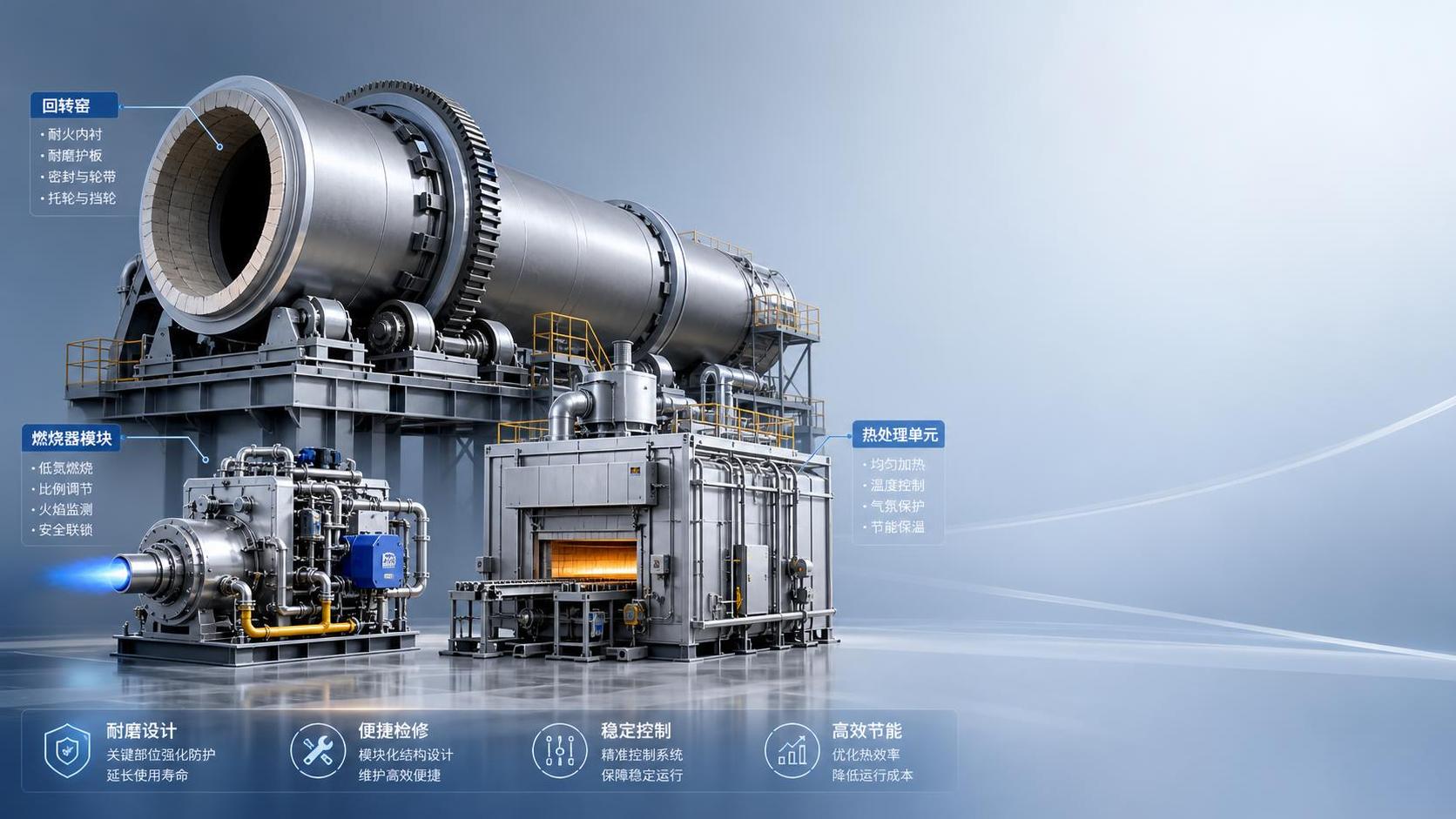
Zone mapping is particularly important in rotary kilns. The inlet, transition, burning, discharge, hood, and cooler areas face different combinations of heat, coating, impact, and abrasion. A one-grade strategy may simplify purchasing, but it can force compromises that increase repair frequency. The same principle applies to incinerator chambers and ductwork: high-velocity turns, waste-feed impact points, and areas beneath deposit formation may require distinct solutions.
Monolithic materials deserve the same scrutiny as brick linings. Castables, plastics, gunning mixes, and ramming materials can offer practical repair advantages and may be well suited to complex geometry. Their service performance, however, depends heavily on storage, mixing water, placement, vibration where applicable, curing, and dry-out. Evaluators should request installation instructions and clarify who is responsible for these controls before the shutdown begins.
Lifecycle Cost Should Include Energy and Downtime Exposure
Initial material price is easy to compare and often misleading. The more relevant cost model includes installation labor, shell-temperature implications, fuel use associated with heat loss, expected repair scope, lost production during shutdowns, safety exposure, and availability of emergency repair material. A thicker or denser lining is not automatically economical if it changes thermal behavior unfavorably or creates a difficult dry-out schedule.
Conversely, a material that appears expensive per tonne may be justified where access is limited and an unplanned stop is operationally disruptive. The key is to make assumptions explicit. If a proposed material claims longer life, ask what service conditions that expectation assumes and whether the kiln’s actual operation resembles them. If it requires a different anchoring design or heat-up curve, those changes belong in the evaluation, not in a later construction note.
This is also where decarbonization decisions intersect with refractory selection. Alternative fuels and circular feedstocks can change the chemical and thermal load on a kiln. Energy-efficiency measures can alter process stability. Neither change is an argument against operational improvement, but both require the lining specification to be revisited rather than treated as fixed.
Build a Defensible Technical Selection File
A strong decision file records the operating zone, observed failure mechanism, current lining history, candidate material data, installation requirements, and unresolved risks. It should distinguish verified plant conditions from assumptions. Photographs of worn linings, shell-temperature trends, samples of deposits, and maintenance notes can be more informative than a long list of generic performance claims.
Where the risk is high, consider a controlled trial in a defined zone, with agreed inspection points and a clear comparison basis. A trial should not be judged only by remaining thickness. Inspect crack patterns, adhesion of coatings or deposits, edge wear near joints, hot-face integrity, and the condition of nearby anchors or backup materials. These observations help separate genuine material performance from changes in process conditions.
CF-Elite approaches this kind of assessment from the intersection of silicate process engineering, thermal management, and operating intelligence. Across cement production, glass manufacturing, industrial kilns and incineration, refractory production, and building-material extrusion, the useful comparison is rarely a product-to-product contest. It is a structured reading of process kinetics, physical properties, maintenance constraints, and the evolving burden created by fuel and raw-material changes.
The final specification should state more than a material family and thickness. It should define the service zone, relevant operating envelope, acceptance data, installation method, dry-out responsibilities, inspection criteria, and repair approach. That level of clarity gives heat-resistant materials abrasion resistance a practical meaning: not an isolated laboratory property, but durable performance in the kiln conditions that actually determine plant reliability.
Related News
 Thermal Energy ArchitectHow to Select Heat-Resistant Materials That Maintain Abrasion Resistance in KilnsHeat-resistant materials abrasion resistance: learn how to select kiln linings that withstand heat, wear, thermal cycling, and chemical attack for longer service life.Sep 13, 2026
 Thermal Energy ArchitectHow Rotary Kiln Automation Improves Temperature Control and Fuel EfficiencyRotary kiln technology automation enhances temperature control, stabilizes combustion, and improves fuel efficiency with smarter data, predictive control, and safer operations.Sep 12, 2026
 Silicate Process EngineerCement Plant Emission Control: Selecting Systems for Dust, NOx, and SO2 LimitsCement plant emission control guide: compare dust collectors, NOx reduction, and SO2 systems for reliable compliance across kiln modes, fuel changes, and operating upsets.Sep 11, 2026
 Thermal Energy ArchitectSelecting Abrasion-Resistant High-Temperature Materials for Kiln and Conveyor Wear ZonesHigh-temp material engineering guide to abrasion-resistant kiln and conveyor solutions—match wear, heat, chemistry, and installation design for longer service life.Sep 10, 2026
 Dr. Alistair VaughnIndustrial Process Engineering: How to Map Processes for Safer, More Efficient PlantsIndustrial process engineering reveals bottlenecks, safety risks, and energy losses through practical process mapping for safer, more efficient plants.Sep 09, 2026
 Optical Glass Tech FellowHow to Evaluate a Glass Annealing Equipment Manufacturer for Production StabilityChoose a glass annealing equipment manufacturer with proven thermal uniformity, reliable controls, lifecycle value, and responsive service for stable production.Sep 08, 2026
 Prof. Marcus ChenThermal Energy Architecture in North America: Strategies for Lower Building Energy UseThermal energy architecture North America helps project leaders cut building energy use through stronger envelopes, right-sized HVAC, storage, and smart commissioning.Sep 07, 2026
 Ms. Elena RodriguezHow Should Buyers Evaluate Building Material Industry Intelligence Pricing?Building material industry intelligence pricing: learn how to compare coverage, technical depth, and ROI to choose intelligence that reduces procurement risk.Sep 07, 2026
 Ms. Elena RodriguezHow to Use Building Material Intelligence Data for Market and Investment DecisionsBuilding material industry intelligence data helps leaders evaluate demand, costs, regulation, capacity, and technology to make smarter market and investment decisions.Sep 05, 2026
 Thermal Energy ArchitectHow PLC Control Improves Energy Efficiency and Temperature Stability in KilnsEnergy efficient kilns PLC control improves temperature stability, cuts fuel waste, and optimizes combustion, draft, and material flow. Explore proven strategies for smarter kiln modernization.Sep 04, 2026
 Optical Glass Tech FellowEuropean Glass Melting Processes: Furnace Choices, Energy Use, and Quality ControlGlass melting process Europe: explore furnace choices, energy efficiency, cullet strategy, and quality control to improve output, compliance, and long-term glass performance.Sep 03, 2026
 Thermal Energy ArchitectWhat Determines Refractory Lining Monitoring Price for Industrial Kilns?Refractory lining monitoring price depends on kiln size, sensor technology, installation, software, and support. Compare total lifecycle costs and choose the right solution.Sep 02, 2026
 Silicate Process EngineerCement Production System Costs: A Plant Buyer’s Guide to Budgeting and ROICement production systems cost planning made clear: compare CAPEX, operating costs, compliance, and ROI to build a resilient, profitable cement plant investment.Sep 01, 2026
 Dr. Alistair VaughnWhat Should a Process Technology Database Track for High-Temperature Plants?Process technology database essentials for high-temperature plants: track thermal profiles, feed chemistry, refractory wear, emissions, energy, and maintenance for safer, data-driven decisions.Aug 31, 2026
 Ms. Elena RodriguezHow to Evaluate a Silicate Processing Equipment Manufacturer for Plant ProjectsSilicate processing equipment manufacturer selection: assess process fit, guarantees, energy, compliance, delivery risk, and lifecycle support for dependable plant performance.Aug 30, 2026
 Dr. Alistair VaughnHow to Specify Custom Agricultural Processing Equipment for Throughput and HygieneEquipment customization services for agricultural processing: learn to specify hygienic, high-throughput lines that improve yield, reliability, and long-term efficiency.Aug 29, 2026
 Dr. Alistair VaughnHow to Select Process Plant Equipment for High-Temperature, Abrasive Production LinesProcess plant equipment selection for high-temperature, abrasive lines: reduce downtime, improve durability, and optimize lifecycle performance.Aug 28, 2026
 Silicate Process EngineerHow Kiln Heat Recovery Systems Cut Fuel Use in Cement and Lime ProductionKiln heat recovery helps cement and lime plants cut fuel use, improve thermal stability, and build practical, reliable decarbonization strategies.Aug 27, 2026
 Ms. Elena RodriguezProcess Equipment Comparison: Which Metrics Matter Most for Reliable Selection?Process equipment comparison made practical: discover which metrics truly drive reliable selection, from energy efficiency and control stability to wear life, maintainability, and uptime.Aug 26, 2026
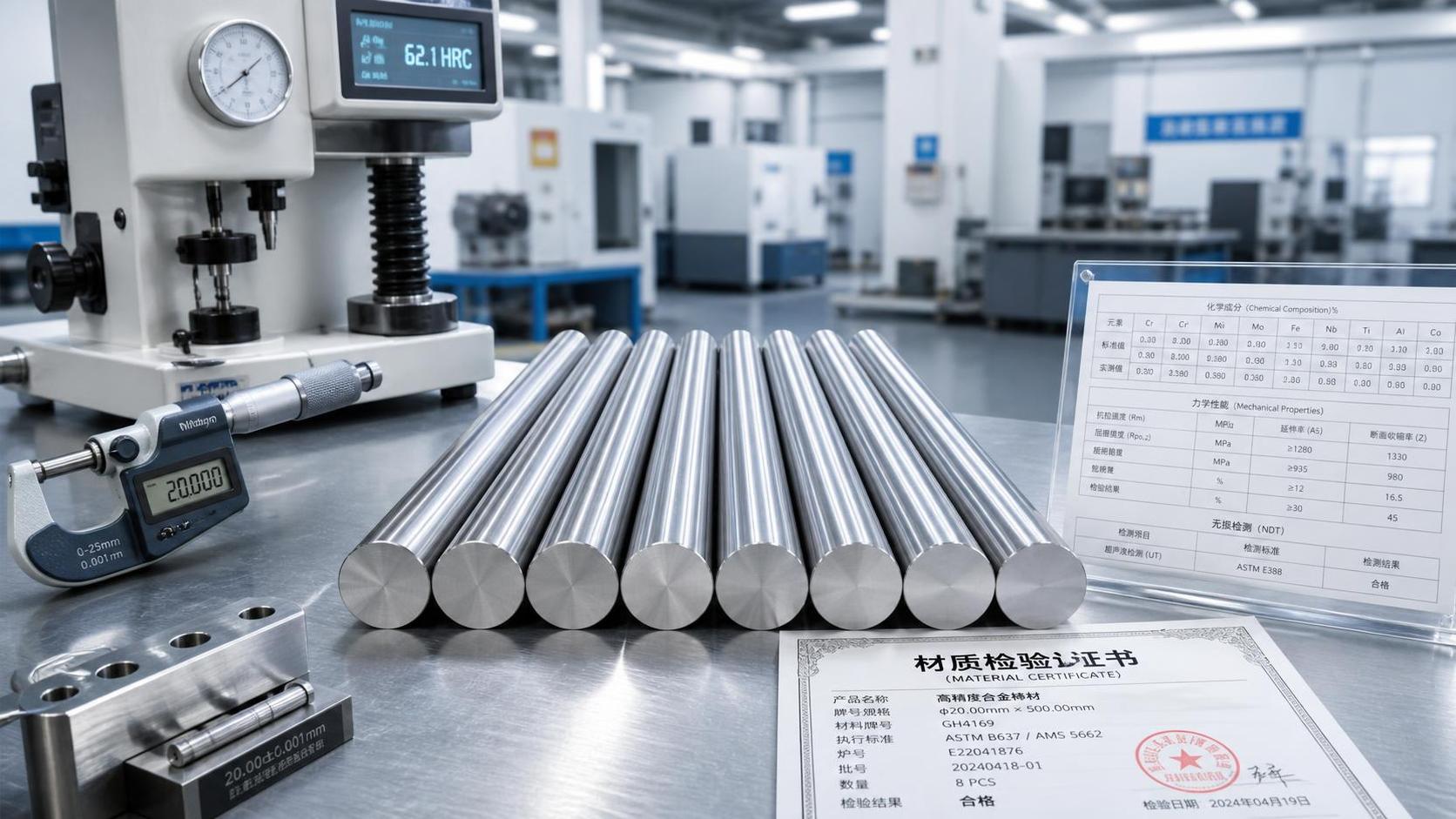
 Ms. Elena RodriguezWhat Buyers Should Check Before Sourcing Precision Alloy Bars for Critical PartsPrecision Alloy Bars buyers should verify grade, chemistry, tolerances, surface quality, traceability, and lead time before sourcing for critical parts. Learn what prevents costly machining and reliability risks.Aug 27, 2026



Related News
- 00
0000-00
How to Select Heat-Resistant Materials That Maintain Abrasion Resistance in Kilns - 00
0000-00
How Rotary Kiln Automation Improves Temperature Control and Fuel Efficiency - 00
0000-00
Selecting Abrasion-Resistant High-Temperature Materials for Kiln and Conveyor Wear Zones - 00
0000-00
How PLC Control Improves Energy Efficiency and Temperature Stability in Kilns - 00
0000-00
What Determines Refractory Lining Monitoring Price for Industrial Kilns?
Weekly Insights
Stay ahead with our curated technology reports delivered every Monday.