
How Kiln Heat Recovery Systems Cut Fuel Use in Cement and Lime Production




For project managers in cement and lime production, kiln heat recovery is no longer a peripheral efficiency upgrade. It is a practical route to lower fuel consumption, stabilize thermal performance, and support decarbonization plans without treating the kiln as an isolated asset. Heat leaving through exhaust gases, clinker coolers, shell losses, and downstream gas-cleaning systems is often part of the plant’s largest untapped energy balance.
The opportunity is real, but so is the engineering complexity. A recovery project that looks attractive on a process flow diagram can become difficult when dust loading, gas composition, kiln operating variability, refractory condition, water availability, and maintenance access are considered. The right question is not simply how much heat is available. It is whether that heat is available at a usable temperature, with sufficient continuity, and in a form that can be integrated without disrupting production.
Why kiln heat recovery directly affects fuel use
Cement clinker and quicklime production depend on high-temperature reactions, so thermal losses cannot be eliminated entirely. Yet a plant does not need to recover every lost joule for a project to make sense. The practical objective is to redirect suitable waste heat toward a demand that would otherwise require purchased electricity or additional fuel.
In cement plants, the most commonly evaluated sources are preheater exhaust, cooler exhaust air, kiln hood gases, and sometimes bypass gas. In lime plants, the useful source depends heavily on kiln design, feedstone characteristics, product specification, and whether the operation uses regenerative, parallel-flow regenerative, rotary, or shaft kiln technology. The same nominal exhaust temperature can have very different value depending on gas volume, dust burden, moisture, pressure conditions, and operating hours.
Recovered heat can displace fuel when it is used to dry raw materials, coal, alternative fuels, limestone, additives, or other moisture-bearing feeds. It can also reduce electrical demand where a waste heat-to-power configuration is technically justified. Other uses include combustion-air preheating, hot-water generation, low-temperature process heating, and support for nearby industrial or district-energy loads where infrastructure and contractual conditions exist.
The fuel-saving mechanism should be stated clearly at the start of a project. If recovered heat replaces a burner duty, the link to fuel consumption is direct. If it produces electricity, the value depends on the site’s electrical balance, grid arrangement, and avoided power cost. If the project only lowers stack temperature without creating a useful heat sink, it may improve thermal performance but will not automatically produce a material operating benefit.
Start with an energy map, not a preferred technology
Technology selection too often begins with a familiar package: a waste heat boiler, an organic Rankine cycle unit, a recuperator, or a hot-gas duct. That sequence is backwards. A project team should first build an operating energy map that reflects normal production, reduced-load operation, startup, shutdown, and known process disturbances.
For each potential source, the assessment should establish gas temperature, flow range, oxygen content, moisture, dust characteristics, pressure margin, corrosive constituents, and the expected duration of stable availability. For each possible heat user, it should define the required temperature, load profile, permitted contamination risk, control response, and consequence of supply interruption. The match between source and sink is more important than the theoretical heat quantity alone.
This is particularly important when alternative fuels are involved. Changes in fuel mix can alter exhaust temperature, chlorine and sulfur circulation, dust chemistry, and deposit formation tendencies. A heat exchanger designed around one set of conditions may need a different material selection, cleaning arrangement, or bypass strategy when co-processing expands. Project managers should ensure that the design basis reflects the plant’s intended future operating envelope, not only a short historical average.
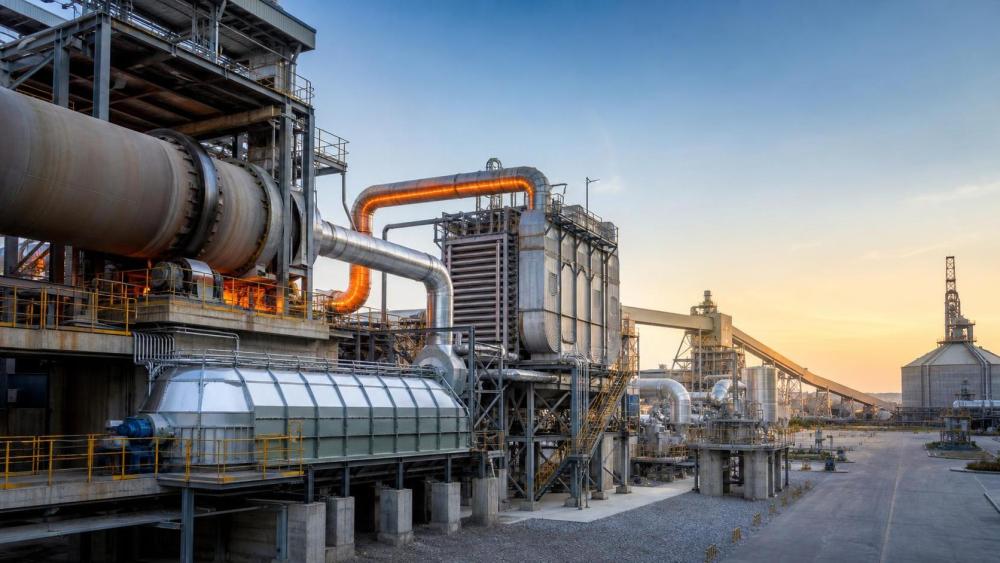
A useful early deliverable is a source-to-sink matrix rather than a single savings number. It forces the team to compare reliability, controllability, temperature compatibility, fouling exposure, and integration effort across possible uses of waste heat.
Cement and lime plants do not face the same constraints
Cement production offers several interconnected heat sources and sinks, but that does not make integration simple. A clinker cooler may supply hot air that is valuable for combustion or drying. Preheater exhaust may be available in larger volumes but at a lower temperature and with a high dust burden. Diverting one stream to a recovery system can alter fan duty, gas balance, material drying capability, or emission-control performance elsewhere in the line.
For cement projects, the most durable designs usually preserve the core role of the cooler and preheater: stable clinker cooling, reliable kiln draft, and consistent meal preparation. Any recovery system should be evaluated against those operating priorities. A marginal gain in recovered energy is not worthwhile if it increases false air, creates unstable draft, restricts cooler performance, or complicates maintenance during a critical production period.
Lime production often requires even closer attention to product quality and kiln-specific behavior. Calcination conditions affect reactivity, residual carbon dioxide, porosity, and physical strength. Waste heat may be available, but using it for combustion-air heating or feed drying must not narrow the operating window needed for the required lime grade. In shaft kilns, gas flow and regenerative cycles can produce a different recovery profile from a continuously operating rotary kiln. A solution transferred directly from a cement line may therefore be unsuitable.
The hidden risks are usually mechanical and operational
The heat exchanger itself is rarely the only concern. Dust erosion, deposit accumulation, alkali and chloride-related corrosion, thermal expansion, and access for cleaning can determine whether a theoretically sound project remains reliable after commissioning. Where gas is dirty, designers may need to consider gas conditioning, separation equipment, robust tube arrangements, soot-blowing or other cleaning methods, bypass capability, and conservative gas velocities. Each measure has a cost and can add pressure drop.
Pressure drop deserves early attention because induced-draft fans are not an unlimited resource. Additional resistance can require fan modifications, increased electrical consumption, or operating compromises. The recovery system must be assessed as part of the full gas path, including ducts, dampers, filters, mills, stacks, and emergency bypass routes. A plant may have enough thermal energy to recover but insufficient pressure margin to move it through a new arrangement economically.
Availability is another common blind spot. Kiln heat recovery depends on the production line being in operation. A power-generation system, dryer, or external heat customer must have a credible plan for kiln outages and unstable periods. This does not necessarily rule out the project; it changes the required redundancy, storage, backup fuel, contractual terms, and financial assumptions.
How to evaluate lifecycle value without overstating the business case
A credible business case separates recoverable heat from usable heat, and usable heat from monetized heat. It should account for auxiliary electricity, fan power, pumping, water treatment where relevant, cleaning, planned shutdown work, spare parts, and any impact on existing equipment. It should also test lower kiln availability, changes in fuel mix, seasonal variation in drying demand, and the possibility that the preferred heat sink is unavailable when the kiln is running.
Project teams should avoid relying on a single annual average. Hourly or shift-based operating data often reveal constraints that annual figures conceal: cooler-air temperature swings, mill operation patterns, wet-season drying loads, or frequent transitions between fuels. A practical feasibility study usually benefits from historian data, site surveys, process simulations where appropriate, and a review of maintenance records. The aim is not to produce a perfect forecast. It is to identify the variables that can materially change the decision.
Carbon considerations should be treated with the same discipline. Lower fuel use may reduce combustion-related emissions, while on-site power generation can reduce imported electricity depending on the local grid and accounting rules. The applicable reporting method, emissions boundary, and any local requirements need confirmation before environmental benefits are incorporated into an investment case.
Build control and maintainability into the project scope
A heat recovery retrofit should not leave operators with a system that is efficient only under one narrow condition. Controls need to protect kiln draft, temperature limits, boiler or exchanger integrity, and downstream equipment. Bypass dampers, interlocks, temperature monitoring, differential-pressure measurement, and alarm logic should be designed around credible operating events rather than added late as compliance items.
The same applies to maintenance. Ask how inspection will be performed, which components are expected to wear, how deposits will be removed, whether lifting space exists, and whether repairs can be completed during the plant’s planned shutdown schedule. A compact installation may look efficient in layout drawings yet impose years of difficult access. In high-temperature plants, maintainability is part of energy performance because degraded surfaces, leakage, and unplanned outages erode recovered value.
Digital monitoring can strengthen this discipline. Trend data from exhaust temperatures, oxygen levels, pressure drops, cooler performance, and refractory condition can help teams distinguish a recovery-system problem from an upstream process issue. It also supports better timing for cleaning and maintenance. The data must be interpreted in process context; a lower stack temperature is not automatically a positive result if it signals fouling, restricted flow, or an unintended change in kiln conditions.
A more informed path from concept to execution
The Global Cera-Forge Hub (CF-Elite) follows this intersection of thermal physics, reaction kinetics, and industrial carbon reduction across cement plants, industrial kilns, incineration, refractories, glass operations, and extrusion lines. The common lesson across these sectors is that heat recovery is not a standalone equipment decision. It is a production-system decision shaped by materials, gas chemistry, operating rhythm, and the condition of thermal barriers.
For project leaders, the most productive next step is usually a structured pre-feasibility review: validate heat-source conditions, identify the highest-value and most reliable sink, map gas-path constraints, and define the operating scenarios that the system must survive. Only then should equipment configurations, supplier assumptions, construction sequencing, and lifecycle economics be compared.
Kiln heat recovery cuts fuel use when it is matched to a genuine demand and integrated without weakening kiln stability. The strongest projects are not necessarily those that claim the highest theoretical recovery. They are the ones that keep producing, remain serviceable, and continue to deliver usable energy after operating conditions change.
Related News
 Ms. Elena RodriguezGlass Market Intelligence: How to Assess Demand, Capacity, and Regional Growth RisksGlass market intelligence for evaluating demand, effective capacity, energy exposure, trade dynamics, and regional growth risks before investing in glass manufacturing.Oct 11, 2026
 Optical Glass Tech FellowWhat Should a Glass Furnace Energy Specification Include?What should be included in a glass furnace energy specification? Explore performance, fuel flexibility, heat recovery, emissions, and monitoring essentials.Oct 11, 2026
 Dr. Alistair VaughnHow Process Technology Platforms Improve Control Across Multi-Line ManufacturingDiscover how a process technology platform strengthens cross-line control, connects operational data, and improves energy, quality, and maintenance decisions.Oct 10, 2026
 Optical Glass Tech FellowHow Glass Furnace Emissions Are Measured and Controlled for Regulatory ComplianceGlass furnace emissions: learn how to measure, monitor, and control NOx, SOx, particulate, CO, and CO2 for reliable regulatory compliance.Oct 08, 2026
 Prof. Marcus ChenIndustrial Decarbonization Strategies in Europe: A Roadmap for Energy-Intensive PlantsIndustrial decarbonization strategies Europe: explore practical pathways for energy-intensive plants to cut emissions, improve efficiency, and protect performance.Oct 07, 2026
 Thermal Energy ArchitectEnergy-Efficient Silicate Production Lines: What to Compare Before SelectionSilicate production lines energy efficient selection guide: compare thermal performance, stability, emissions, controls, and lifecycle value before investing.Oct 06, 2026
 Optical Glass Tech FellowHow to Evaluate Automated Float Glass Lines for Capacity, Quality, and Energy UseEvaluate automated float glass lines for net capacity, consistent quality, energy efficiency, automation reliability, and lifecycle value. Explore key criteria for smarter investment decisions.Oct 05, 2026
 Thermal Energy ArchitectWhat Does CE Marking Require for an Energy-Efficient Industrial Kiln?Energy efficient kiln CE requirements explained: assess safety, technical files, energy performance, and EU compliance before purchase or commissioning.Oct 04, 2026
 Thermal Energy ArchitectRefractory Manufacturing Solutions for Brick Plants: How to Extend Kiln LifeRefractory manufacturing solutions for brick plant operations: discover proven strategies to extend kiln life, reduce heat loss, prevent lining failures, and plan cost-effective repairs.Oct 03, 2026
 Thermal Energy ArchitectHow to Specify Heavy Industrial Process Systems for High-Temperature PlantsHeavy industrial processes systems: learn how to specify high-temperature plants for efficiency, emissions control, maintainability, and lifecycle performance.Oct 02, 2026
 Structural Material AnalystHow Sustainable Material Extrusion Can Improve Wall Panel Durability and Design FlexibilityDiscover how sustainable material extrusion for wall panels improves durability, moisture resistance, design flexibility, and installation consistency for high-performing wall systems.Oct 01, 2026
 Thermal Energy ArchitectHow to Evaluate a High-Temperature Materials Manufacturer for Furnace ApplicationsChoose a high-temperature materials manufacturer with confidence: compare thermal performance, chemical resistance, quality controls, installation support, and lifecycle cost.Sep 30, 2026
 Ms. Elena RodriguezHow to Structure Global Specification Data for Faster Industrial Product EvaluationGlobal specification-oriented product information helps industrial teams compare capacity, energy, emissions, automation, and lifecycle data on a like-for-like basis for faster, confident equipment decisions.Sep 29, 2026
 Thermal Energy ArchitectHow to Specify High-Temperature Process Systems for Continuous Thermal OperationsHigh-temperature process engineering systems: learn how to specify resilient continuous thermal operations for efficiency, compliance, reliable uptime, and long-term performance.Sep 28, 2026
 Thermal Energy ArchitectHow to Evaluate a Thermal Engineering Contractor for High-Temperature Plant ProjectsChoose a thermal engineering contractor with proven process expertise, lifecycle value, emissions control, and delivery discipline for reliable high-temperature plant performance.Sep 27, 2026
 Silicate Process EngineerHow Latin American Cement Plants Can Reduce Dust Emissions in Kilns and Transfer PointsCement plant dust control Latin America: reduce kiln and transfer-point emissions with practical airflow, filtration, monitoring, and maintenance strategies.Sep 26, 2026
 Material Heat-Resist ExpertHow to Evaluate Refractory Production Lines for Output, Quality, and Energy UseRefractory production lines: learn how to assess qualified output, consistent quality, and total energy use for smarter, lower-risk investment decisions.Sep 25, 2026
 Dr. Alistair VaughnHow Waste Recycling Technology Improves Material Recovery in Industrial PlantsWaste recycling technology improves material recovery through source segregation, smart separation, thermal treatment, and quality control for industrial plants.Sep 24, 2026
 Optical Glass Tech FellowHow to Specify Glass Annealing Equipment for European Quality and Energy RequirementsGlass annealing equipment Europe: learn how to specify lehrs for consistent glass quality, energy efficiency, compliance, automation, and reliable long-term performance.Sep 23, 2026
 Optical Glass Tech FellowSilicate Process Automation: Improving Batch Consistency and Energy ControlSilicate process automation improves batch consistency, energy control, traceability, and operator confidence across high-temperature manufacturing operations.Sep 22, 2026

Related News
- 00
0000-00
How Latin American Cement Plants Can Reduce Dust Emissions in Kilns and Transfer Points - 00
0000-00
Cement Plant Emission Control: Selecting Systems for Dust, NOx, and SO2 Limits - 00
0000-00
Cement Production System Costs: A Plant Buyer’s Guide to Budgeting and ROI - 00
0000-00
How Kiln Heat Recovery Systems Cut Fuel Use in Cement and Lime Production - 00
0000-00
How to Evaluate Cement Production Plants in the Middle East for Capacity, Fuel Flexibility, and ROI
Weekly Insights
Stay ahead with our curated technology reports delivered every Monday.