
What Does CE Marking Require for an Energy-Efficient Industrial Kiln?




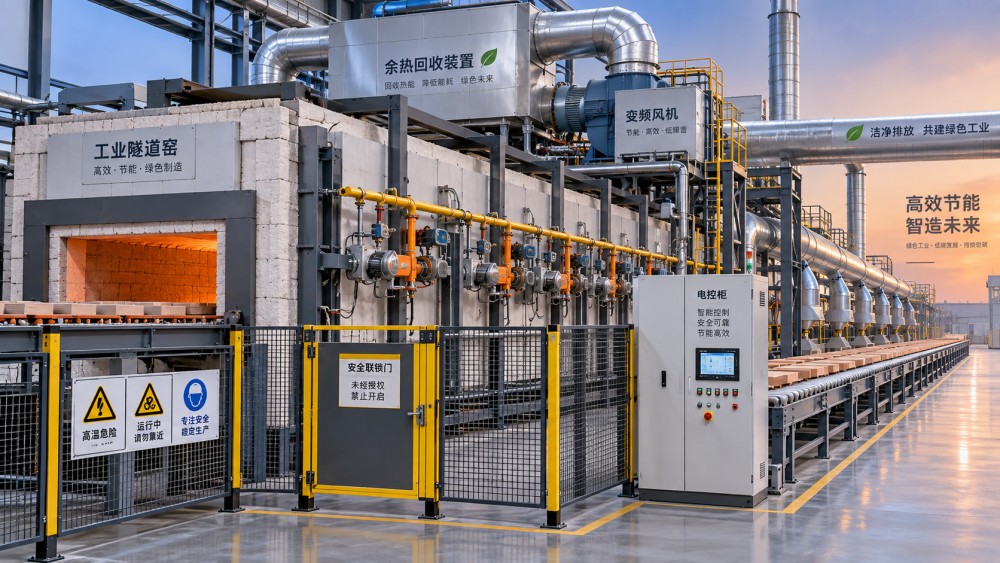
For a technical evaluator, an energy efficient kiln CE review is not a paperwork exercise performed at the end of a project. It is the point where mechanical design, burner safety, electrical architecture, control logic, refractory construction, operator access, and environmental obligations are tested against the rules for placing equipment on the EU market.
An industrial kiln may be sold as a complete machine, a modular thermal process line, or a major upgrade to an existing plant. In each case, CE marking must reflect the equipment’s actual configuration and intended use. A low specific energy consumption is commercially valuable, but it does not, by itself, establish conformity. The manufacturer must show that all applicable EU requirements have been identified, risks have been reduced appropriately, and the technical evidence supports the CE declaration.
That distinction matters in high-temperature sectors. A kiln can recover waste heat, use variable-speed combustion air fans, and deliver excellent thermal efficiency, yet still present unacceptable risks through inadequate guarding, poor access around hot surfaces, unsafe emergency stops, burner faults, or incomplete electrical documentation. Conversely, a mechanically safe kiln may face project-level emissions constraints that fall outside the CE-marking file. Evaluators need to keep these boundaries clear.
Start with the real question: what is being placed on the market?
Before listing directives or standards, define the supply boundary. Is the supplier delivering a stand-alone shuttle kiln, a rotary kiln with a firing hood, a tunnel kiln with loading and unloading equipment, or an integrated production line containing conveyors, fans, burners, pumps, PLC cabinets, sensors, and remote diagnostics?
The answer affects who carries the role of manufacturer. A company that assembles components from several suppliers into one functioning installation may become responsible for the final conformity assessment. This is common in ceramics, refractory production, glass-related thermal equipment, and waste-derived fuel systems, where the process line evolves during engineering and commissioning.
Technical evaluators should ask for a clear functional description that identifies:
- the kiln’s intended materials, throughput, temperature range, and operating modes;
- fuel and energy sources, including gas, electricity, hydrogen blends, biomass, or recovered heat;
- normal operation, start-up, shutdown, maintenance, cleaning, and foreseeable malfunction conditions;
- interfaces with upstream batching, extrusion, drying, emissions treatment, and downstream handling equipment;
- the point at which the delivered equipment becomes a complete machine rather than partly completed machinery.
A vague description such as “high-efficiency firing system” is not enough. The conformity route must be based on a machine that can be understood, inspected, and operated in the conditions declared by its manufacturer.
CE marking is a framework, not a single kiln certificate
For most industrial kilns, the Machinery Directive 2006/42/EC remains a central legal reference during the current transition period. The EU Machinery Regulation (EU) 2023/1230 will replace it and becomes applicable from 20 January 2027. Evaluators working on projects with long design and delivery cycles should already consider the coming regulation, especially where digital controls, cybersecurity-related functions, or substantial modifications are involved.
Depending on the design, other EU legislation may also apply. A well-built compliance matrix is more useful than a generic statement that the kiln is “CE certified.” It should identify each applicable act, the reason it applies, relevant standards, evidence available, and any exclusions.
RoHS may also be relevant to in-scope electrical and electronic equipment. Where a kiln uses gas-fired burners, the evaluator should carefully examine the scope of the Gas Appliances Regulation and the status of individual burner assemblies. The correct route depends on the delivered system and its intended function, not merely on the fuel type listed in a brochure.
Energy efficiency belongs in the engineering evidence—without overstating its CE role
Energy performance is central to kiln selection, but it is not a universal, stand-alone CE requirement for every industrial furnace. Product-specific ecodesign rules may apply to certain energy-related products or subassemblies, while industrial-process efficiency can also be shaped by customer specifications, national permitting, energy-management targets, and best available techniques.
For this reason, an evaluator should separate three questions that are frequently blended together:
- Is the kiln safe and compliant for CE marking? This concerns applicable EU harmonisation legislation and conformity assessment.
- Does the kiln meet the contracted energy-performance target? This concerns measurable process design: fuel consumption, electrical load, heat loss, heat recovery, and production yield.
- Can the plant legally operate at the proposed site? This may involve environmental permits, industrial-emissions controls, local construction requirements, and grid or fuel-network conditions.
For a serious energy efficient kiln CE evaluation, request defined performance boundaries. “Reduced energy use” has little meaning unless the supplier states whether consumption is measured per tonne of fired product, per square metre, per batch, or at a stated moisture content and production rate. The calculation should disclose operating temperature, firing curve, fuel basis, ambient assumptions, exhaust conditions, and whether energy used by dryers, induced-draft fans, or loading systems is included.
Efficiency features deserve a safety review of their own. Recuperators and waste-heat boilers introduce hot-gas and pressure hazards. Oxygen trim controls may alter combustion behavior. Variable-speed drives can affect purge flows and interlocks. Refractory upgrades may lower shell losses while changing thermal expansion behavior. Good design treats efficiency and functional safety as connected disciplines, not competing priorities.
The risk assessment should follow the kiln through its full life cycle
The risk assessment is the working core of the technical file. It should be specific to the machine rather than copied from a generic furnace template. EN ISO 12100 is widely used as the foundational methodology for identifying hazards, estimating risk, and applying the hierarchy of protective measures.
High-temperature equipment needs evaluators to look beyond obvious pinch points. Consider charging and discharging zones; door movement; rail-car or pusher interfaces; access to burners and fans; refractory repairs; dust accumulation; hot surfaces; flame loss; delayed ignition; loss of combustion air; power interruption; control-system failure; and residual heat after shutdown.
Safety-related control functions require particular attention. Interlocks that govern fuel shutoff, purge sequences, emergency stops, door permissions, fan operation, and over-temperature protection should be assigned an appropriate performance level or safety integrity approach. EN ISO 13849-1 and EN 62061 are commonly relevant references, while EN 60204-1 is important for electrical equipment of machines. For industrial thermoprocessing equipment, the EN 746 series is often highly relevant, especially its safety requirements for combustion and fuel-handling systems.
Harmonised standards can provide a presumption of conformity when correctly applied and cited in the Official Journal. They do not remove the need for engineering judgment. If a standard is only partly applicable, the manufacturer should state what was used, what was not used, and how equivalent safety has been demonstrated.
What a credible technical file looks like
A technical file does not need to be handed over in full to every buyer, but it must exist, be coherent, and be available to market-surveillance authorities when required. For an industrial kiln, the file should make it possible to reconstruct the compliance logic from design intent to final verification.
Key records normally include general assembly drawings; process and piping diagrams where relevant; electrical schematics; bills of materials; safety component specifications; calculations; test results; risk assessment; standards list; control-system validation; installation requirements; copies of declarations for incorporated components; and the final EU Declaration of Conformity.
The operating instructions are not an afterthought. They need to address transport, installation, anchoring, utility connections, commissioning, normal operation, alarm response, emergency shutdown, isolation of energy sources, inspection intervals, refractory maintenance, replacement parts affecting safety, and residual risks. If safe kiln performance depends on a minimum extraction rate, a particular gas pressure, or a specified refractory dry-out schedule, that information must be unmistakable.
For equipment supplied from outside the EU, the responsible economic operator and language requirements also deserve early review. Instructions, warnings, and declarations must be provided in the language required by the Member State where the kiln is made available. A technically sound document package can still fail in practice if the site team cannot use it safely.
Do not confuse CE marking with emissions permitting
This is one of the most expensive misunderstandings in thermal-process projects. CE marking addresses the conformity of the equipment under applicable EU product legislation. It does not automatically prove that a kiln installation meets permit limits for NOx, SOx, dust, VOCs, dioxins, carbon monoxide, or greenhouse-gas obligations.
For incineration and co-processing applications, environmental compliance is often governed by the Industrial Emissions Directive, permit conditions, monitoring expectations, and best available techniques conclusions. In cement, refractory, and mineral-processing environments, the kiln’s emissions-control train—such as bag filters, scrubbers, selective reduction systems, or continuous monitoring—may be integral to the project but assessed across more than one legal and operational framework.
The practical solution is a two-column review: one column for CE conformity of the supplied machinery and another for site permitting, emissions guarantees, and operator obligations. This prevents an equipment declaration from being misread as a plant operating licence.
A disciplined evaluation sequence before purchase or commissioning
Technical teams usually gain the most value by reviewing CE obligations before the purchase order freezes the design. Begin with a supply-boundary meeting involving process engineering, electrical engineering, EHS, automation, procurement, and the party expected to sign the declaration. Then build the legislation-and-standards matrix, identify high-risk interfaces, and agree on the evidence that must be delivered at factory acceptance testing and site acceptance testing.
At FAT, verify that safety functions, alarms, burner sequences, emergency-stop behavior, and HMI messages match the documented design. At SAT, confirm that installation-dependent measures work in the real environment: protective earth, ventilation, exhaust routing, guarding interfaces, access clearances, local lockout arrangements, and communication with upstream or downstream systems.
Be cautious when modifying an existing kiln. A new burner train, automated charging system, major capacity increase, control-system replacement, or change in intended fuel may create a substantially modified machine. The original CE declaration may no longer cover the altered configuration. This should trigger a documented reassessment rather than an assumption that the old nameplate resolves the issue.
Closing perspective for high-temperature projects
The strongest energy efficient kiln CE submission tells one consistent story: the kiln is clearly defined; its hazards are understood; efficiency measures have been engineered without weakening safety; relevant directives have been assessed; and documentation matches the machine installed on site.
For evaluators working across cement, glass, refractory, incineration, and advanced building-material lines, that discipline is especially important. Thermal equipment often operates for decades, with upgrades and changing fuels along the way. A defensible CE strategy gives the project a safer starting point—and provides the traceable technical foundation needed when performance, compliance, and plant responsibility are questioned later.
Related News
 Thermal Energy ArchitectWhat Does CE Marking Require for an Energy-Efficient Industrial Kiln?Energy efficient kiln CE requirements explained: assess safety, technical files, energy performance, and EU compliance before purchase or commissioning.Oct 04, 2026
 Thermal Energy ArchitectRefractory Manufacturing Solutions for Brick Plants: How to Extend Kiln LifeRefractory manufacturing solutions for brick plant operations: discover proven strategies to extend kiln life, reduce heat loss, prevent lining failures, and plan cost-effective repairs.Oct 03, 2026
 Thermal Energy ArchitectHow to Specify Heavy Industrial Process Systems for High-Temperature PlantsHeavy industrial processes systems: learn how to specify high-temperature plants for efficiency, emissions control, maintainability, and lifecycle performance.Oct 02, 2026
 Structural Material AnalystHow Sustainable Material Extrusion Can Improve Wall Panel Durability and Design FlexibilityDiscover how sustainable material extrusion for wall panels improves durability, moisture resistance, design flexibility, and installation consistency for high-performing wall systems.Oct 01, 2026
 Thermal Energy ArchitectHow to Evaluate a High-Temperature Materials Manufacturer for Furnace ApplicationsChoose a high-temperature materials manufacturer with confidence: compare thermal performance, chemical resistance, quality controls, installation support, and lifecycle cost.Sep 30, 2026
 Ms. Elena RodriguezHow to Structure Global Specification Data for Faster Industrial Product EvaluationGlobal specification-oriented product information helps industrial teams compare capacity, energy, emissions, automation, and lifecycle data on a like-for-like basis for faster, confident equipment decisions.Sep 29, 2026
 Thermal Energy ArchitectHow to Specify High-Temperature Process Systems for Continuous Thermal OperationsHigh-temperature process engineering systems: learn how to specify resilient continuous thermal operations for efficiency, compliance, reliable uptime, and long-term performance.Sep 28, 2026
 Thermal Energy ArchitectHow to Evaluate a Thermal Engineering Contractor for High-Temperature Plant ProjectsChoose a thermal engineering contractor with proven process expertise, lifecycle value, emissions control, and delivery discipline for reliable high-temperature plant performance.Sep 27, 2026
 Silicate Process EngineerHow Latin American Cement Plants Can Reduce Dust Emissions in Kilns and Transfer PointsCement plant dust control Latin America: reduce kiln and transfer-point emissions with practical airflow, filtration, monitoring, and maintenance strategies.Sep 26, 2026
 Material Heat-Resist ExpertHow to Evaluate Refractory Production Lines for Output, Quality, and Energy UseRefractory production lines: learn how to assess qualified output, consistent quality, and total energy use for smarter, lower-risk investment decisions.Sep 25, 2026
 Dr. Alistair VaughnHow Waste Recycling Technology Improves Material Recovery in Industrial PlantsWaste recycling technology improves material recovery through source segregation, smart separation, thermal treatment, and quality control for industrial plants.Sep 24, 2026
 Optical Glass Tech FellowHow to Specify Glass Annealing Equipment for European Quality and Energy RequirementsGlass annealing equipment Europe: learn how to specify lehrs for consistent glass quality, energy efficiency, compliance, automation, and reliable long-term performance.Sep 23, 2026
 Optical Glass Tech FellowSilicate Process Automation: Improving Batch Consistency and Energy ControlSilicate process automation improves batch consistency, energy control, traceability, and operator confidence across high-temperature manufacturing operations.Sep 22, 2026
 Optical Glass Tech FellowHow Silicate Industrial Processes Control Viscosity, Energy Use, and Product QualitySilicate industrial processes: learn how viscosity, chemistry, heat transfer, and atmosphere control reduce energy use, improve stability, and protect product quality.Sep 21, 2026
 Thermal Energy ArchitectHow European Plants Can Evaluate Energy Recovery Equipment for High-Temperature ProcessesIndustrial energy recovery equipment Europe: learn how high-temperature plants can assess waste-heat sources, integration risks, lifecycle value, and reliable recovery routes.Sep 20, 2026
 Thermal Energy ArchitectIndustrial Furnace Process Optimization: Reducing Fuel Use Without Sacrificing ThroughputIndustrial process optimization furnace strategies that cut fuel use while protecting throughput. Explore combustion control, heat recovery, refractory performance, and data-driven efficiency gains.Sep 19, 2026
 Ms. Elena RodriguezWhat Drives High-Pressure Extrusion Equipment Cost in Industrial Projects?High pressure extrusion equipment cost explained: compare pressure, die design, automation, wear, energy, and installation factors for smarter industrial investments.Sep 18, 2026
 Thermal Energy ArchitectHow to Size a Waste Heat Recovery Exchanger for High-Temperature Kiln Exhaust?Waste heat recovery exchanger sizing for high-temperature kiln exhaust: balance recoverable duty, fouling, corrosion limits, pressure drop, and reliable heat use.Sep 17, 2026
 Thermal Energy ArchitectWhy Heat-Resistant Materials Lose Abrasion Resistance at High TemperaturesHeat-resistant materials abrasion resistance can decline at high temperatures. Discover the thermal, chemical, and mechanical causes of wear—and how to choose longer-lasting linings.Sep 16, 2026
 Thermal Energy ArchitectHow to Evaluate a Thermal Energy Optimization Company for High-Temperature PlantsChoose a thermal energy optimization company with proven process expertise, measurable savings, and reliable delivery for high-temperature plants. Learn what to assess.Sep 15, 2026

Related News
- 00
0000-00
What Does CE Marking Require for an Energy-Efficient Industrial Kiln? - 00
0000-00
Refractory Manufacturing Solutions for Brick Plants: How to Extend Kiln Life - 00
0000-00
How to Specify Heavy Industrial Process Systems for High-Temperature Plants - 00
0000-00
How to Evaluate a High-Temperature Materials Manufacturer for Furnace Applications - 00
0000-00
How to Specify High-Temperature Process Systems for Continuous Thermal Operations
Weekly Insights
Stay ahead with our curated technology reports delivered every Monday.