
How to Structure Global Specification Data for Faster Industrial Product Evaluation




Comparable specifications are a decision system, not a document format
Industrial equipment comparisons slow down when each supplier describes performance through a different technical lens. One kiln proposal may state nominal throughput, another gives annual output; one incineration supplier reports furnace temperature, another focuses on heat recovery; one extrusion line lists installed power while another lists specific energy consumption. All figures may be accurate, yet the comparison remains weak because the operating basis is unclear.
For technical evaluators, global specification-oriented product information is valuable when it turns those differently presented claims into a common decision structure. The purpose is not to make every machine appear identical. It is to preserve the conditions behind each value so that capacity, thermal duty, emissions performance, automation scope, material selection, and lifecycle requirements can be judged on like-for-like terms.
A useful specification structure starts with the intended duty cycle and process boundary. Only after those are fixed do individual values become meaningful. This matters particularly for cement production equipment, glass melting and annealing lines, waste-to-energy systems, refractory production machinery, and building-material extrusion plants, where upstream feed variation and downstream quality requirements can alter equipment performance substantially.
Start with the operating case, not the equipment nameplate
The most common source of misleading comparisons is treating a rated value as a universal capability. A rotary kiln rated for a particular daily output may achieve it only with a specified feed chemistry, fuel mix, moisture range, residence time, and clinker quality target. A glass furnace may be sized around a defined cullet ratio, glass composition, pull rate, and campaign expectation. An incinerator’s stated thermal capacity may exclude auxiliary fuel demand during startup or low-calorific feed conditions.
Before collecting component data, define the reference operating case for every bidder or product record. That record should state enough context for an evaluator to answer a basic question: under what conditions does this number hold?
- Feedstock or raw-material basis: chemistry, particle size, moisture, contamination level, calorific value, bulk density, and permitted variability.
- Product basis: output grade, dimensional tolerance, strength or density targets, moisture limit, glass quality criteria, or other required final-state properties.
- Operating profile: continuous or batch operation, annual operating hours, startup and shutdown frequency, load range, and expected ramping behavior.
- Site basis: ambient temperature, elevation, power quality, available fuels, utilities, space constraints, and local discharge conditions.
- System boundary: whether the stated performance includes raw-material preparation, feeding, thermal processing, flue-gas treatment, cooling, material handling, heat recovery, and controls.
This reference case should sit above the detailed specification tables. It prevents a familiar mistake: comparing the main machine capacity of one offer with the complete-line capacity of another. It also exposes areas where a supplier has assumed cleaner feed, steadier production, or more favorable utility conditions than the project can support.
For global comparisons, unit normalization is necessary but insufficient. Converting tonnes per day to tonnes per hour does not solve a mismatch between dry feed and wet feed, net output and gross output, or design output and guaranteed output. Every normalized value should retain its qualifier.
Build the data model around decision-critical layers
A long equipment datasheet often mixes performance claims, mechanical dimensions, optional features, commercial exclusions, and general descriptions. That may serve sales communication, but it is difficult to use in a technical evaluation. A better structure separates information into layers that correspond to different engineering questions.
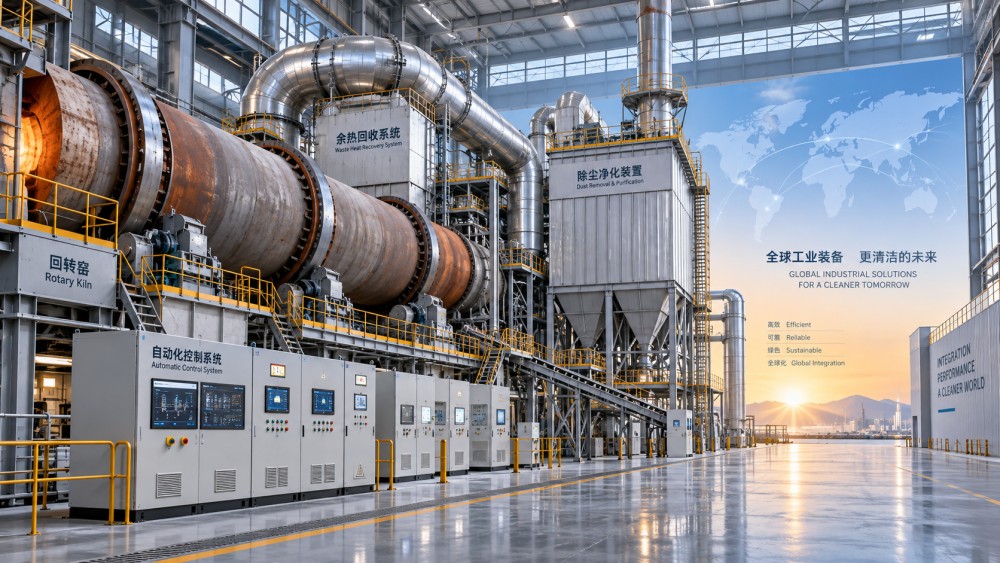
The value of this layout is that it distinguishes a machine’s process role from the systems required to operate it reliably. A high-temperature line is rarely defined by the furnace shell or kiln body alone. Fans, burners, combustion air systems, refractory lining, cooling circuits, dust collection, conveying equipment, sensors, and control logic may all determine whether the guaranteed output is sustainable.
For each layer, use three field types: a numeric value, a measurement or design condition, and a source status. The source status can distinguish a guaranteed figure, a design assumption, a calculated estimate, an equipment rating, or a user-specified requirement. This keeps preliminary figures from acquiring more authority than they deserve as the evaluation moves from concept selection to contract negotiation.
For example, “specific thermal energy” should not stand alone. The record should identify the fuel reference, feed and product moisture basis, production rate, operating load, heat-recovery configuration, and whether the figure covers the full line or only the thermal unit. The same discipline applies to electrical power. Installed motor power, normal operating demand, peak demand, and energy per tonne answer different questions and should be stored separately.
Thermal equipment needs a deeper treatment of performance conditions
In high-temperature applications, temperature is one of the most frequently overinterpreted fields. A maximum furnace temperature does not describe usable process capacity, temperature uniformity, refractory durability, atmospheric control, or the energy required to maintain the operating setpoint. For glass equipment, a melting-zone temperature alone says little about glass homogeneity or downstream annealing stability. For waste incineration, nominal combustion temperature cannot establish destruction performance without residence time, oxygen conditions, feed characteristics, and flue-gas treatment context.
Evaluation records should therefore separate thermal design data into at least four groups:
- Process temperatures: required material temperature profile, setpoints, allowable deviation, heating and cooling rates, and measurement locations.
- Heat balance inputs: fuel type, fuel quality assumptions, combustion air conditions, heat recovery boundaries, and expected heat losses.
- Equipment thermal limits: shell temperatures, refractory hot-face ratings, insulation class, burner turndown, and cooling-system design limits.
- Thermal reliability indicators: refractory zoning, expansion allowances, temperature monitoring points, access for inspection, and replacement strategy.
This distinction is especially important when comparing equipment intended for alternative fuels, mixed industrial residues, recycled raw materials, or changing product formulations. Thermal flexibility often has more commercial value than the best efficiency number at a single steady-state design point. A line that operates efficiently only within a narrow feed window may create larger production and compliance exposure than a line with slightly higher base energy use but stronger tolerance for variable inputs.
Material specifications deserve the same treatment. Terms such as “high-temperature steel,” “wear-resistant lining,” or “premium refractory” do not allow a meaningful durability assessment. The evaluator needs the material grade or performance class, the component location, the exposure mechanism, the expected inspection interval, and the replacement method. Abrasion, alkali attack, thermal cycling, corrosion, and mechanical impact do not affect every zone equally. A single lining description for an entire kiln, furnace, or incinerator usually conceals the locations where maintenance risk will concentrate.
Make emissions claims traceable to the process configuration
Environmental data should be assessed as part of the process design, not as a detachable compliance appendix. A stated pollutant concentration may depend on fuel composition, feed chlorine or sulfur content, gas temperature, oxygen correction basis, averaging period, treatment train configuration, and the condition of filter media or reagent injection. Without these conditions, a comparison can produce false confidence.
A practical emissions section identifies the pollutant or operating parameter, the applicable reference condition, the control method, the measurement point, and the responsibility boundary. Where continuous monitoring is planned, distinguish the equipment’s provision for instrumentation from the complete monitoring system and its reporting logic. A supplier may provide ports, analyzers, or PLC interfaces without assuming responsibility for the full monitoring architecture.
Technical teams should also inspect the link between air-pollution control and production stability. Bag filters, scrubbers, selective reduction systems, dry sorbent injection, activated-carbon dosing, and induced-draft fans influence pressure balance, operating cost, residue handling, maintenance requirements, and restart procedures. Selecting a control train solely against a nominal emission limit can miss the effect it has on availability and process control.
Do not let automation language hide integration gaps
“PLC-controlled,” “smart,” and “digital-ready” are broad labels. They do not establish what the equipment can measure, how it responds to deviations, who owns sequence logic, or whether production data can be exchanged with the site’s wider systems. A robust global specification format separates hardware, functionality, and integration responsibility.
At the hardware level, capture the controller family where relevant, field instruments, variable-speed drives, safety devices, cameras, analyzers, and network interfaces. At the functional level, document start-up sequences, combustion or temperature control loops, alarm philosophy, automatic changeover logic, recipe handling, reporting functions, and remote-access conditions. The third layer should show whether the supplier, an engineering contractor, or the plant team is responsible for connection to supervisory control, historian, maintenance, laboratory, or energy-management systems.
For evaluators, the important question is often not whether data are available, but whether they are usable. A temperature trend without a tag convention, timestamp discipline, operating-state label, calibration record, and alarm context has limited value for diagnosing energy loss or refractory deterioration. Product information should make these data requirements visible early, especially where digital twins, condition monitoring, or predictive maintenance tools may be considered later.
Use a comparison matrix that preserves exceptions
A single scorecard is useful for screening, but it should not erase engineering differences. Weighted scoring can rank candidates on throughput, energy, footprint, emissions scope, and automation, yet a low score in one category may be acceptable if the project has a clear mitigation path. Conversely, a strong total score can conceal an unresolved constraint, such as an unproven feedstock assumption or a maintenance shutdown that exceeds the site’s available window.
Keep a structured exception register alongside the matrix. Each entry should identify the affected specification, the stated value, the missing condition or mismatch, the operational consequence, and the action needed to close it. This turns vague comments such as “clarify with vendor” into an auditable technical question. It also prevents the team from reopening the same issue during successive review cycles.
There are several questions that should remain visible until the evaluation is complete:
- Is the capacity figure a guarantee, a design target, or a rating under selected conditions?
- Which utilities, auxiliaries, and environmental systems are included in the energy and performance boundary?
- What feed variation can be handled without reducing product quality, availability, or emissions margin?
- Which wear parts and refractory zones determine the planned maintenance interval?
- Who is responsible for control-system integration, data ownership, and functional acceptance testing?
The result is faster evaluation because technical discussions become narrower and more evidence-based. Teams stop exchanging disconnected brochures and begin testing competing assumptions against the same operating case. That is the practical role of a global specification-oriented information structure: it gives capacity, efficiency, compliance, and lifecycle claims enough context to support a defensible industrial decision.
Related News
 Ms. Elena RodriguezHow to Structure Global Specification Data for Faster Industrial Product EvaluationGlobal specification-oriented product information helps industrial teams compare capacity, energy, emissions, automation, and lifecycle data on a like-for-like basis for faster, confident equipment decisions.Sep 29, 2026
 Thermal Energy ArchitectHow to Specify High-Temperature Process Systems for Continuous Thermal OperationsHigh-temperature process engineering systems: learn how to specify resilient continuous thermal operations for efficiency, compliance, reliable uptime, and long-term performance.Sep 28, 2026
 Thermal Energy ArchitectHow to Evaluate a Thermal Engineering Contractor for High-Temperature Plant ProjectsChoose a thermal engineering contractor with proven process expertise, lifecycle value, emissions control, and delivery discipline for reliable high-temperature plant performance.Sep 27, 2026
 Silicate Process EngineerHow Latin American Cement Plants Can Reduce Dust Emissions in Kilns and Transfer PointsCement plant dust control Latin America: reduce kiln and transfer-point emissions with practical airflow, filtration, monitoring, and maintenance strategies.Sep 26, 2026
 Material Heat-Resist ExpertHow to Evaluate Refractory Production Lines for Output, Quality, and Energy UseRefractory production lines: learn how to assess qualified output, consistent quality, and total energy use for smarter, lower-risk investment decisions.Sep 25, 2026
 Dr. Alistair VaughnHow Waste Recycling Technology Improves Material Recovery in Industrial PlantsWaste recycling technology improves material recovery through source segregation, smart separation, thermal treatment, and quality control for industrial plants.Sep 24, 2026
 Optical Glass Tech FellowHow to Specify Glass Annealing Equipment for European Quality and Energy RequirementsGlass annealing equipment Europe: learn how to specify lehrs for consistent glass quality, energy efficiency, compliance, automation, and reliable long-term performance.Sep 23, 2026
 Optical Glass Tech FellowSilicate Process Automation: Improving Batch Consistency and Energy ControlSilicate process automation improves batch consistency, energy control, traceability, and operator confidence across high-temperature manufacturing operations.Sep 22, 2026
 Optical Glass Tech FellowHow Silicate Industrial Processes Control Viscosity, Energy Use, and Product QualitySilicate industrial processes: learn how viscosity, chemistry, heat transfer, and atmosphere control reduce energy use, improve stability, and protect product quality.Sep 21, 2026
 Thermal Energy ArchitectHow European Plants Can Evaluate Energy Recovery Equipment for High-Temperature ProcessesIndustrial energy recovery equipment Europe: learn how high-temperature plants can assess waste-heat sources, integration risks, lifecycle value, and reliable recovery routes.Sep 20, 2026
 Thermal Energy ArchitectIndustrial Furnace Process Optimization: Reducing Fuel Use Without Sacrificing ThroughputIndustrial process optimization furnace strategies that cut fuel use while protecting throughput. Explore combustion control, heat recovery, refractory performance, and data-driven efficiency gains.Sep 19, 2026
 Ms. Elena RodriguezWhat Drives High-Pressure Extrusion Equipment Cost in Industrial Projects?High pressure extrusion equipment cost explained: compare pressure, die design, automation, wear, energy, and installation factors for smarter industrial investments.Sep 18, 2026
 Thermal Energy ArchitectHow to Size a Waste Heat Recovery Exchanger for High-Temperature Kiln Exhaust?Waste heat recovery exchanger sizing for high-temperature kiln exhaust: balance recoverable duty, fouling, corrosion limits, pressure drop, and reliable heat use.Sep 17, 2026
 Thermal Energy ArchitectWhy Heat-Resistant Materials Lose Abrasion Resistance at High TemperaturesHeat-resistant materials abrasion resistance can decline at high temperatures. Discover the thermal, chemical, and mechanical causes of wear—and how to choose longer-lasting linings.Sep 16, 2026
 Thermal Energy ArchitectHow to Evaluate a Thermal Energy Optimization Company for High-Temperature PlantsChoose a thermal energy optimization company with proven process expertise, measurable savings, and reliable delivery for high-temperature plants. Learn what to assess.Sep 15, 2026
 Thermal Energy ArchitectRotary Kiln Efficiency: How Feed Rate, Fuel Use, and Heat Loss Affect OutputRotary kiln efficiency explained: discover how feed rate, fuel use, heat loss, combustion, and cooling performance shape output, quality, and energy costs.Sep 14, 2026
 Thermal Energy ArchitectHow to Select Heat-Resistant Materials That Maintain Abrasion Resistance in KilnsHeat-resistant materials abrasion resistance: learn how to select kiln linings that withstand heat, wear, thermal cycling, and chemical attack for longer service life.Sep 13, 2026
 Thermal Energy ArchitectHow Rotary Kiln Automation Improves Temperature Control and Fuel EfficiencyRotary kiln technology automation enhances temperature control, stabilizes combustion, and improves fuel efficiency with smarter data, predictive control, and safer operations.Sep 12, 2026
 Silicate Process EngineerCement Plant Emission Control: Selecting Systems for Dust, NOx, and SO2 LimitsCement plant emission control guide: compare dust collectors, NOx reduction, and SO2 systems for reliable compliance across kiln modes, fuel changes, and operating upsets.Sep 11, 2026
 Thermal Energy ArchitectSelecting Abrasion-Resistant High-Temperature Materials for Kiln and Conveyor Wear ZonesHigh-temp material engineering guide to abrasion-resistant kiln and conveyor solutions—match wear, heat, chemistry, and installation design for longer service life.Sep 10, 2026







Related News
- 00
0000-00
How to Structure Global Specification Data for Faster Industrial Product Evaluation - 00
0000-00
What Drives High-Pressure Extrusion Equipment Cost in Industrial Projects? - 00
0000-00
How Should Buyers Evaluate Building Material Industry Intelligence Pricing? - 00
0000-00
How to Use Building Material Intelligence Data for Market and Investment Decisions - 00
0000-00
How to Evaluate a Silicate Processing Equipment Manufacturer for Plant Projects
Weekly Insights
Stay ahead with our curated technology reports delivered every Monday.