
What Drives High-Pressure Extrusion Equipment Cost in Industrial Projects?




For procurement teams planning industrial material projects, high pressure extrusion equipment cost is shaped by far more than machine size or a supplier’s opening quotation. A line that appears economical on a technical brochure may require expensive civil works, oversized power infrastructure, frequent die replacement, or long commissioning support once it reaches the factory floor.
This is especially relevant in new building material, refractory, ceramic, and mineral-based production, where extrusion is not simply a shaping step. It sits at the intersection of material formulation, moisture control, pressure generation, die geometry, cutting accuracy, drying performance, and plant-wide energy consumption. Buyers who understand these links are in a better position to compare proposals fairly, avoid under-scoped packages, and protect the economics of a long-life industrial asset.
The quoted machine price is only the visible layer
When people ask what a high-pressure extruder costs, they often expect a single figure. In reality, the answer depends on what is included in the definition of “equipment.” One quotation may cover a core extruder with a standard die head; another may include vacuum conditioning, feeding equipment, hydraulic controls, die tooling, cutting systems, electrical cabinets, commissioning, and spare parts. Comparing the two as if they were identical creates a false economy.
For a meaningful procurement comparison, separate the investment into three levels:
- Core machine cost: the extruder body, screws or augers, gearbox, drive motor, pressure chamber, bearings, lubrication, and basic control system.
- Process package cost: upstream mixing and feeding, vacuum section, die assembly, cutting or handling equipment, instrumentation, safety guarding, dust control interfaces, and automation integration.
- Project and lifecycle cost: freight, installation, structural foundations, electrical work, commissioning, operator training, consumables, wear parts, maintenance labor, and expected energy use.
The most useful question is not “Which supplier has the lowest price?” It is “What production result, operating boundary, and responsibility does each supplier’s price actually cover?”
Pressure capacity changes the entire mechanical design
High pressure is not an isolated specification. As required forming pressure rises, the equipment needs stronger structural components, more robust seals, heavier-duty gear transmission, tighter machining tolerances, and a drive system capable of handling variable loads without damaging the product or the machine.
In mineral and silicate applications, material behavior can be unpredictable. Clay-rich bodies, recycled aggregates, lightweight fillers, refractory mixes, and industrial by-product blends may all respond differently under compression. Abrasive particles increase wear. A narrow moisture window can make torque fluctuate sharply. If the material is prone to cracking, lamination, or density variation, the extruder may also need more refined vacuum control and pressure monitoring.
These factors directly influence high pressure extrusion equipment cost because they affect metallurgy, chamber wall thickness, screw design, gearbox rating, bearing selection, and control architecture. A machine designed for occasional peak pressure is not equivalent to one designed to operate reliably near its rated load through multiple shifts.
Buyers should request not only the stated pressure rating, but also the supplier’s explanation of continuous operating conditions. Ask whether the quoted throughput is based on the actual feed material, its expected moisture range, the die restriction, and the intended operating hours. A capacity claim without these conditions has limited value.
Die design is often the most underestimated cost driver
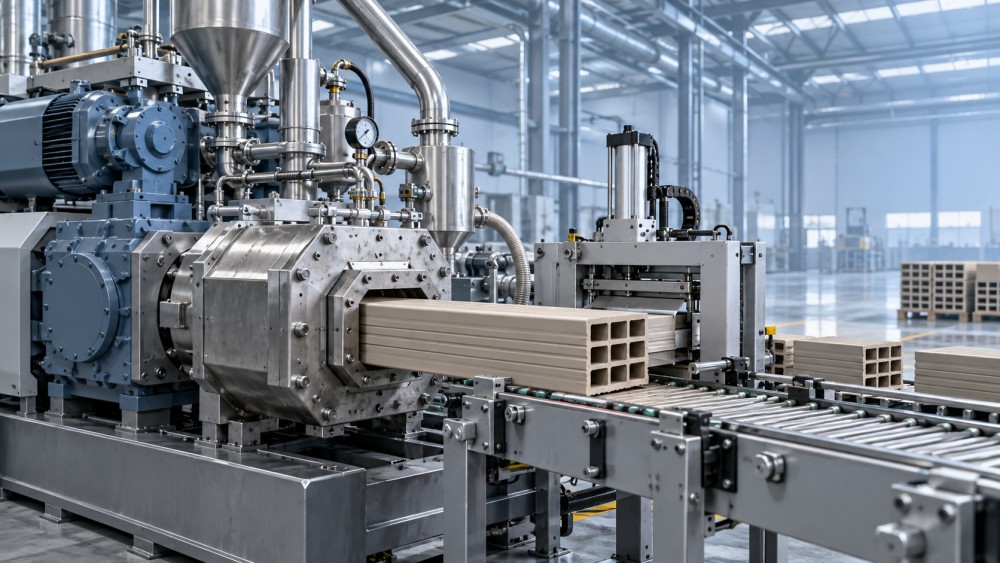
The die is where the project’s product specification becomes physical reality. It determines profile shape, dimensional accuracy, surface quality, material flow balance, and the risk of defects. For hollow bricks, lightweight blocks, specialty refractory shapes, insulated panels, or complex green-building profiles, die design may require careful flow analysis and repeated trials rather than a simple standard tool.
A low-cost die can become expensive if it produces uneven density, excessive edge cracking, distorted voids, or high scrap rates downstream. Conversely, an over-engineered die may add unnecessary expense when the product tolerance is broad and production volume is limited.
Procurement teams should clarify the following before accepting a die-related price:
- How many profiles and die sets are included?
- What material grade and wear protection are specified for the die and internal flow surfaces?
- Who owns final responsibility for product dimensions after drying or firing shrinkage?
- Are calibration, die adjustment, and trial materials included in commissioning?
- What is the expected replacement strategy for wear inserts, bridges, and mandrels?
In many projects, the lowest first-cost tooling is not the best choice. The right decision depends on expected production volume, abrasive content, changeover frequency, and the financial impact of off-spec product.
Automation adds cost, but it can also remove expensive uncertainty
Automation is frequently treated as an optional extra during early budgeting. Yet extrusion lines are sensitive to changes in moisture, feed consistency, pressure, vacuum, motor load, and cutting speed. A basic machine may be acceptable for a stable, experienced operation producing a limited product range. A line serving varied formulations or demanding delivery schedules may need much more visibility and control.
The difference is not merely whether the equipment has a PLC screen. Useful automation can include recipe management, pressure and torque trend logging, interlocks for overload conditions, moisture-related alarms, variable-speed coordination between feeder and extruder, remote diagnostics, and data interfaces with upstream mixing or downstream drying systems.
For buyers, the commercial issue is to distinguish between meaningful controls and decorative complexity. Specify the operational decisions the system must support. If operators need to identify a developing blockage before it causes a shutdown, trend data and alarm logic have real value. If a plant only requires manual operation with basic safety protection, a highly customized digital platform may not justify its cost.
CF-Elite’s industrial intelligence coverage consistently points to the same broader lesson across silicate production lines: digital features deliver the greatest return when they are tied to a process variable that operators can act on. Data without a maintenance routine, response procedure, or trained user rarely improves throughput on its own.
Material compatibility determines wear, downtime, and spare-part exposure
Two extrusion projects with the same nominal capacity can have very different lifecycle budgets because their raw materials are different. A relatively plastic and uniform body places different demands on the machine than a blend containing grog, recycled glass fines, hard mineral particles, ash, or other abrasive additions. In circular-material projects, feed consistency may also vary from batch to batch.
Wear-resistant liners, hardfaced screws, specialized alloys, replaceable wear segments, and reinforced die components usually increase the initial purchase price. However, they may reduce unplanned stoppages and make maintenance more predictable. The right specification should be based on actual material testing, not on a generic description such as “ceramic material” or “recycled feedstock.”
Energy efficiency should be evaluated as an operating profile, not a slogan
Electricity consumption is a long-term cost, particularly where extrusion runs continuously or works alongside energy-intensive drying and firing stages. But evaluating energy efficiency requires more than comparing motor nameplate ratings. A larger motor is not automatically inefficient; it may be necessary to maintain stable torque, avoid overload trips, and operate within a more favorable efficiency range.
Look instead at the expected specific energy use under real production conditions. This should account for feed preparation, vacuum operation, drive control, cooling needs, idle periods, and the losses created by poor material flow. An extruder that creates unstable green products may push costs into drying, handling, rework, or firing—areas that never appear in the extruder’s power consumption figure.
For plants pursuing lower-carbon manufacturing, equipment selection should also be aligned with the wider process route. Better material homogenization, reduced scrap, stable density, and less moisture variability can all contribute to lower thermal demand downstream. In this sense, extrusion equipment is part of a thermal-management decision, not just a mechanical purchase.
Why installation scope can distort a capital budget
Many projects encounter budget pressure after the purchase order is issued because installation assumptions were not made explicit. High-pressure equipment may require reinforced foundations, precise alignment, access for maintenance lifting, ventilation, electrical distribution, hydraulic fluid management, and safe material handling around the die and cutter.
There may also be integration work with mixers, conveyors, vacuum pumps, dust collection, dryers, kilns, storage systems, or plant-level supervisory controls. If these interfaces are divided among several contractors, the buyer needs a clear responsibility matrix. A supplier may be responsible for supplying a signal cable but not for pulling it; another may provide a skid but not the field piping needed to connect it.
Before approval, ask for a defined battery limit drawing and an exclusions list. These documents are less glamorous than a machine layout, but they are often where unexpected project costs are prevented.
How to compare suppliers without rewarding an incomplete offer
A disciplined comparison starts with a common technical basis. Issue the same raw-material information, expected product range, capacity target, operating schedule, utilities, site constraints, and acceptance criteria to every bidder. If each supplier is allowed to interpret the project differently, the quotations will not be comparable.
Then assess the proposals against a weighted commercial and technical matrix. Purchase price matters, but so do guaranteed throughput, product quality, energy assumptions, warranty conditions, delivery schedule, spare-parts strategy, control scope, installation support, and the supplier’s experience with similar material behavior. Avoid scoring only on broad claims of “high quality.” Request evidence in the form of drawings, component lists, process assumptions, and defined performance boundaries.
It is also wise to evaluate the cost of being wrong. A line that misses capacity by a small margin can affect labor planning, customer commitments, kiln loading, and return on invested capital for years. The procurement decision should therefore reflect both the cost of the equipment and the cost of production instability.
A practical request-for-quotation checklist
To obtain a more reliable view of high pressure extrusion equipment cost, include these points in the RFQ:
- Detailed feed material characteristics, including abrasiveness, particle distribution, moisture range, and variability.
- Required output per hour and per year, with planned shift pattern and expected uptime.
- Product drawings, dimensional tolerances, hollow sections, and shrinkage considerations.
- Required pressure, vacuum, drive, and control-performance parameters.
- Full equipment scope, including feeding, die tooling, cutting, guarding, electrical panels, and automation interfaces.
- Utilities and civil requirements, including foundation loads and maintenance access.
- Factory acceptance testing, site acceptance criteria, commissioning duration, and training requirements.
- Recommended commissioning spares, wear-part pricing, and lead times for critical components.
- Warranty language that clearly identifies process conditions and supplier responsibilities.
These details may make the inquiry feel more demanding, but they reduce ambiguity for every party. Suppliers can engineer more accurately, and buyers can identify where a lower bid has omitted necessary scope.
Making the investment decision with a lifecycle view
The right extrusion system is rarely the cheapest machine or the most elaborate one. It is the configuration that fits the raw material, product portfolio, production target, maintenance capability, energy strategy, and future expansion plan of the facility.
For industrial buyers, this means treating the quotation as the beginning of technical due diligence rather than the conclusion of it. Examine how pressure requirements affect mechanical durability, how die design affects sellable output, how automation supports daily decisions, and how wear parts influence the true operating budget. When those relationships are visible, high pressure extrusion equipment cost becomes easier to control—and much easier to defend in a capital approval meeting.
As global construction materials move toward lighter products, recycled inputs, and stricter energy expectations, extrusion choices will increasingly shape both commercial resilience and environmental performance. Reliable intelligence from process engineers, thermal specialists, and market observers can help procurement teams place that equipment decision in its full industrial context.
Related News
 Ms. Elena RodriguezWhat Drives High-Pressure Extrusion Equipment Cost in Industrial Projects?High pressure extrusion equipment cost explained: compare pressure, die design, automation, wear, energy, and installation factors for smarter industrial investments.Sep 18, 2026
 Thermal Energy ArchitectHow to Size a Waste Heat Recovery Exchanger for High-Temperature Kiln Exhaust?Waste heat recovery exchanger sizing for high-temperature kiln exhaust: balance recoverable duty, fouling, corrosion limits, pressure drop, and reliable heat use.Sep 17, 2026
 Thermal Energy ArchitectWhy Heat-Resistant Materials Lose Abrasion Resistance at High TemperaturesHeat-resistant materials abrasion resistance can decline at high temperatures. Discover the thermal, chemical, and mechanical causes of wear—and how to choose longer-lasting linings.Sep 16, 2026
 Thermal Energy ArchitectHow to Evaluate a Thermal Energy Optimization Company for High-Temperature PlantsChoose a thermal energy optimization company with proven process expertise, measurable savings, and reliable delivery for high-temperature plants. Learn what to assess.Sep 15, 2026
 Thermal Energy ArchitectRotary Kiln Efficiency: How Feed Rate, Fuel Use, and Heat Loss Affect OutputRotary kiln efficiency explained: discover how feed rate, fuel use, heat loss, combustion, and cooling performance shape output, quality, and energy costs.Sep 14, 2026
 Thermal Energy ArchitectHow to Select Heat-Resistant Materials That Maintain Abrasion Resistance in KilnsHeat-resistant materials abrasion resistance: learn how to select kiln linings that withstand heat, wear, thermal cycling, and chemical attack for longer service life.Sep 13, 2026
 Thermal Energy ArchitectHow Rotary Kiln Automation Improves Temperature Control and Fuel EfficiencyRotary kiln technology automation enhances temperature control, stabilizes combustion, and improves fuel efficiency with smarter data, predictive control, and safer operations.Sep 12, 2026
 Silicate Process EngineerCement Plant Emission Control: Selecting Systems for Dust, NOx, and SO2 LimitsCement plant emission control guide: compare dust collectors, NOx reduction, and SO2 systems for reliable compliance across kiln modes, fuel changes, and operating upsets.Sep 11, 2026
 Thermal Energy ArchitectSelecting Abrasion-Resistant High-Temperature Materials for Kiln and Conveyor Wear ZonesHigh-temp material engineering guide to abrasion-resistant kiln and conveyor solutions—match wear, heat, chemistry, and installation design for longer service life.Sep 10, 2026
 Dr. Alistair VaughnIndustrial Process Engineering: How to Map Processes for Safer, More Efficient PlantsIndustrial process engineering reveals bottlenecks, safety risks, and energy losses through practical process mapping for safer, more efficient plants.Sep 09, 2026
 Optical Glass Tech FellowHow to Evaluate a Glass Annealing Equipment Manufacturer for Production StabilityChoose a glass annealing equipment manufacturer with proven thermal uniformity, reliable controls, lifecycle value, and responsive service for stable production.Sep 08, 2026
 Prof. Marcus ChenThermal Energy Architecture in North America: Strategies for Lower Building Energy UseThermal energy architecture North America helps project leaders cut building energy use through stronger envelopes, right-sized HVAC, storage, and smart commissioning.Sep 07, 2026
 Ms. Elena RodriguezHow Should Buyers Evaluate Building Material Industry Intelligence Pricing?Building material industry intelligence pricing: learn how to compare coverage, technical depth, and ROI to choose intelligence that reduces procurement risk.Sep 07, 2026
 Ms. Elena RodriguezHow to Use Building Material Intelligence Data for Market and Investment DecisionsBuilding material industry intelligence data helps leaders evaluate demand, costs, regulation, capacity, and technology to make smarter market and investment decisions.Sep 05, 2026
 Thermal Energy ArchitectHow PLC Control Improves Energy Efficiency and Temperature Stability in KilnsEnergy efficient kilns PLC control improves temperature stability, cuts fuel waste, and optimizes combustion, draft, and material flow. Explore proven strategies for smarter kiln modernization.Sep 04, 2026
 Optical Glass Tech FellowEuropean Glass Melting Processes: Furnace Choices, Energy Use, and Quality ControlGlass melting process Europe: explore furnace choices, energy efficiency, cullet strategy, and quality control to improve output, compliance, and long-term glass performance.Sep 03, 2026
 Thermal Energy ArchitectWhat Determines Refractory Lining Monitoring Price for Industrial Kilns?Refractory lining monitoring price depends on kiln size, sensor technology, installation, software, and support. Compare total lifecycle costs and choose the right solution.Sep 02, 2026
 Silicate Process EngineerCement Production System Costs: A Plant Buyer’s Guide to Budgeting and ROICement production systems cost planning made clear: compare CAPEX, operating costs, compliance, and ROI to build a resilient, profitable cement plant investment.Sep 01, 2026
 Dr. Alistair VaughnWhat Should a Process Technology Database Track for High-Temperature Plants?Process technology database essentials for high-temperature plants: track thermal profiles, feed chemistry, refractory wear, emissions, energy, and maintenance for safer, data-driven decisions.Aug 31, 2026
 Ms. Elena RodriguezHow to Evaluate a Silicate Processing Equipment Manufacturer for Plant ProjectsSilicate processing equipment manufacturer selection: assess process fit, guarantees, energy, compliance, delivery risk, and lifecycle support for dependable plant performance.Aug 30, 2026



Related News
- 00
0000-00
What Drives High-Pressure Extrusion Equipment Cost in Industrial Projects? - 00
0000-00
How Should Buyers Evaluate Building Material Industry Intelligence Pricing? - 00
0000-00
How to Use Building Material Intelligence Data for Market and Investment Decisions - 00
0000-00
How to Evaluate a Silicate Processing Equipment Manufacturer for Plant Projects - 00
0000-00
Process Equipment Comparison: Which Metrics Matter Most for Reliable Selection?
Weekly Insights
Stay ahead with our curated technology reports delivered every Monday.