
How Silicate Industrial Processes Control Viscosity, Energy Use, and Product Quality




Silicate industrial processes are often evaluated through equipment capacity, fuel consumption, and nominal temperature range. Those indicators matter, but they do not explain whether a line can hold a stable operating window. The central variable is material rheology: how a silicate-bearing feed, melt, slurry, or plastic body resists flow as temperature, composition, particle size, gas content, and shear conditions change.
Viscosity is therefore not simply a laboratory property. In glass furnaces it controls melting, fining, homogenization, forming, and annealing response. In cement kilns it influences the liquid phase that enables clinker mineral formation and coating stability. In ceramic and refractory extrusion, it determines whether the green body can pass through a die without lamination, cracking, or excessive dimensional variation. In incineration and ash vitrification systems, it affects slag tapping, refractory attack, and the risk of uncontrolled deposits.
A technically credible assessment of silicate industrial processes must trace the connection from feed chemistry to thermal behavior, then from thermal behavior to control architecture and product acceptance. A furnace can reach its design temperature and still perform poorly if the material’s effective viscosity is outside the range required by the process.
Viscosity is a moving process target, not a single number
Silicate materials are network-forming systems. Silicon dioxide creates the basic glassy or polymerized network, while oxides such as Na2O, K2O, CaO, MgO, Al2O3, Fe2O3, and B2O3 alter the network structure and therefore the temperature-dependent resistance to flow. A reported viscosity value is meaningful only when tied to a specific composition, temperature, redox condition, and measurement method.
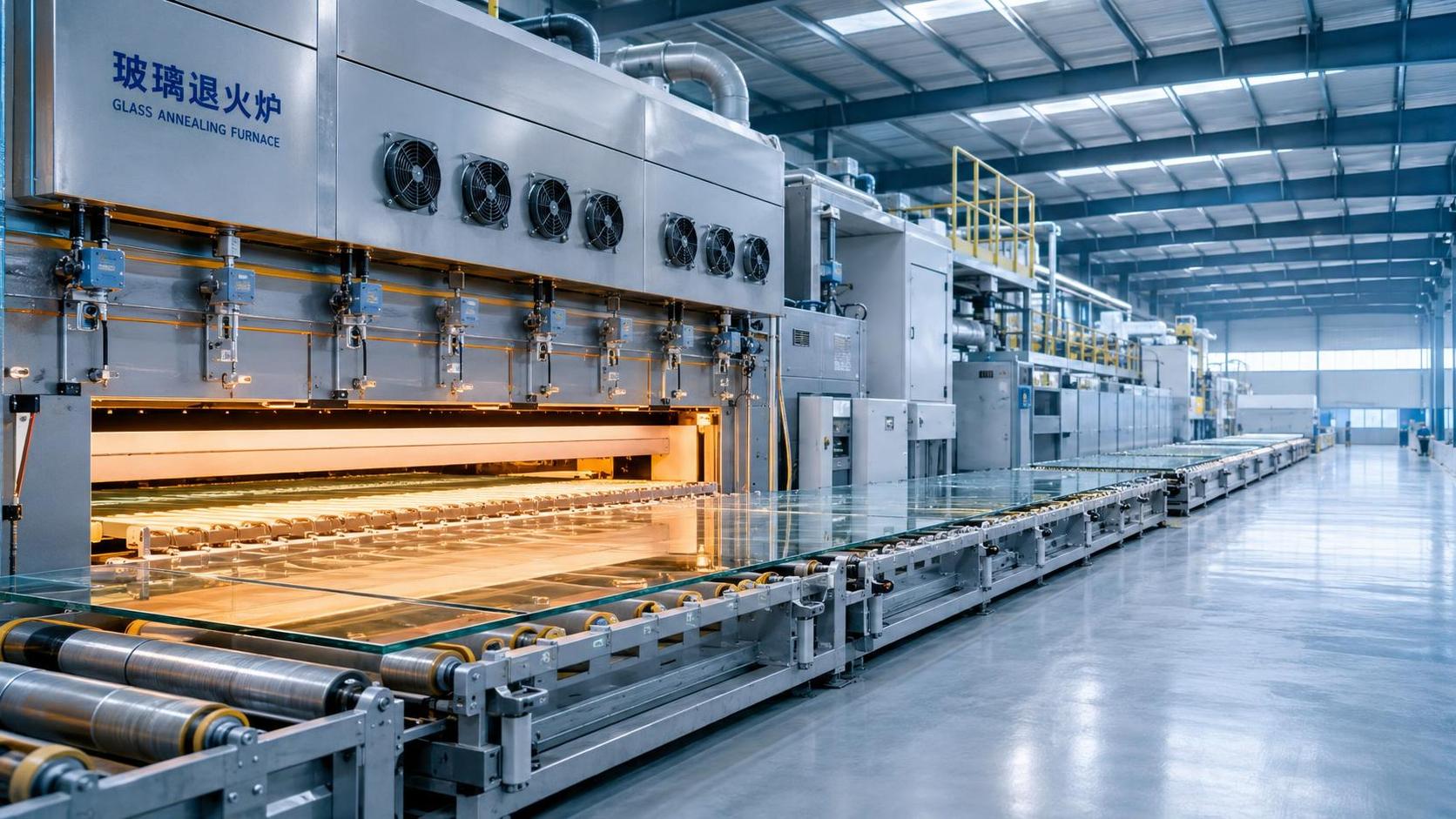
For a glass melt, increasing temperature generally lowers viscosity, but the relationship is strongly non-linear. A modest temperature deviation can create a large change in forming behavior when the process is operating near a sensitive viscosity range. A melt that is too viscous may retain bubbles, cords, unmelted particles, or compositional streaks. A melt that is too fluid may create instability in forehearth conditioning and reduce dimensional control during forming.
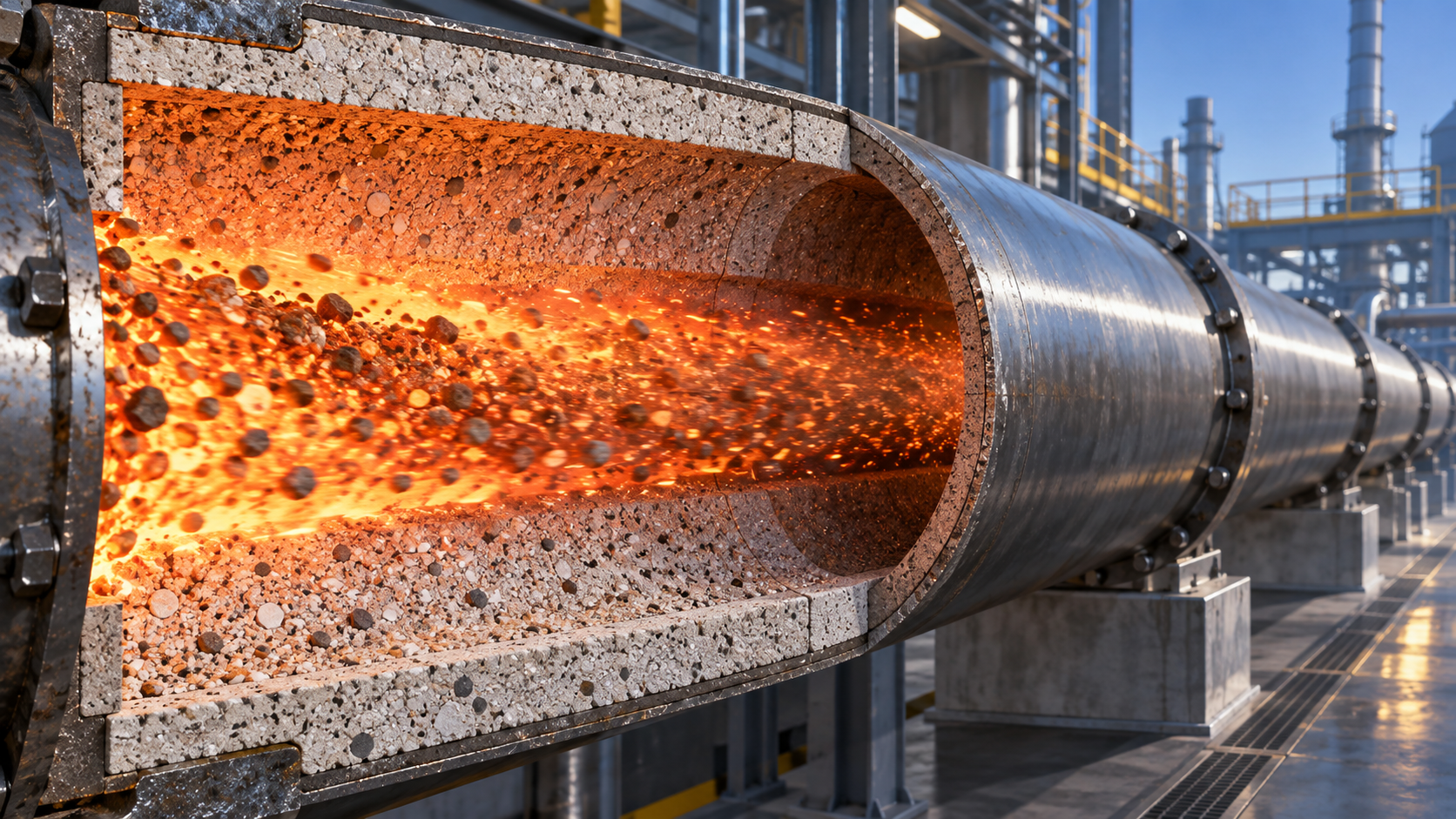
In non-glass silicate systems, the same principle applies differently. Cement raw meal is predominantly a solid-state reacting system until the high-temperature zone develops a mineral liquid phase. The amount and character of that liquid affect clinker nodulization, burnability, and the tendency of material to form coatings inside the kiln. In refractory production, the objective may be the opposite of free flow: a carefully controlled plastic mass must retain enough internal strength to keep its shape after extrusion while remaining sufficiently lubricated to avoid die pressure spikes.
Technical review should therefore avoid asking whether a material has “good viscosity.” The useful questions are:
- At what temperature and shear condition is viscosity relevant to the process step?
- How wide is the acceptable viscosity window before quality or operability degrades?
- Which feed components create the largest shift in that window?
- Can the plant measure or infer the shift early enough to correct it?
These questions distinguish a stable process from one that is merely capable of operating under ideal feed conditions.
Composition control sets the thermal burden before fuel is burned
Energy demand in high-temperature silicate production is frequently discussed as a burner, furnace, kiln, or insulation issue. Those are important design elements, but material chemistry establishes much of the underlying burden. Every batch adjustment changes not only the theoretical melting or reaction requirement, but also the rate at which heat can be transferred through the material and the extent to which the material can be homogenized.
High silica content generally raises network connectivity and increases the temperature required to achieve a given fluidity. Fluxing oxides can reduce viscosity and lower melting temperature, yet an apparently beneficial reduction in melting demand may introduce other constraints: volatility, altered redox behavior, reduced chemical durability, phase separation, or incompatibility with refractory linings. Alumina can improve certain performance characteristics but may increase melt stiffness and complicate dissolution. The engineering issue is not whether one oxide is desirable in isolation; it is whether the complete oxide balance supports the targeted thermal profile and finished-product specification.
Feedstock variability deserves the same attention as nominal formulation. Recycled glass, industrial residues, alternative raw minerals, secondary fuels, and ash-bearing inputs can contain variations in alkalis, chlorides, sulfates, heavy metals, organics, or moisture. A batch formula based on average chemistry may conceal short-term excursions that affect melting rate, foaming, slag viscosity, or emissions control loading.
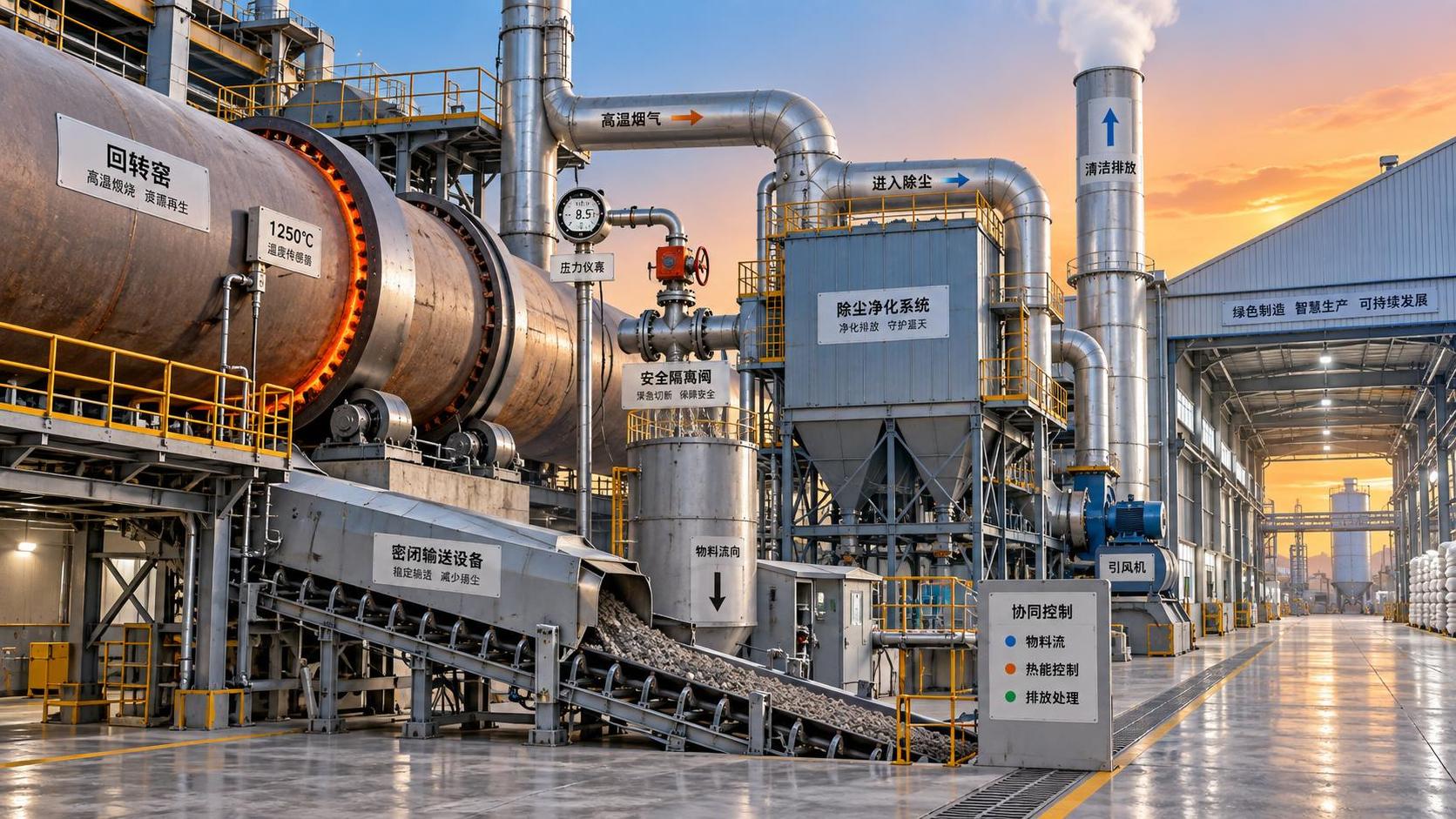
For cement and incineration systems, ash chemistry from alternative fuels or waste-derived feedstreams can be particularly consequential. Alkali, sulfur, chlorine, and volatile trace components participate in internal cycles. They may contribute to buildups, ring formation, coating instability, or deposition in cooler sections. The correct technical question is not simply whether the material has adequate calorific value or mineral content. It is whether its total chemical contribution remains compatible with kiln circulation, gas-cleaning design, clinker chemistry, and refractory limits.
A robust specification should define allowable variability bands for critical oxides and contaminants, not only a target average. It should also state the sampling and analytical frequency required to detect meaningful excursions. Without that discipline, process control is forced to compensate for chemistry changes after they have already entered the thermal system.
Heat transfer and residence time determine whether viscosity can be controlled
Temperature setpoint alone does not guarantee that a silicate material reaches the intended rheological state. The relevant condition is the temperature history of the bulk material, including the time available for reaction, dissolution, bubble removal, and homogenization.
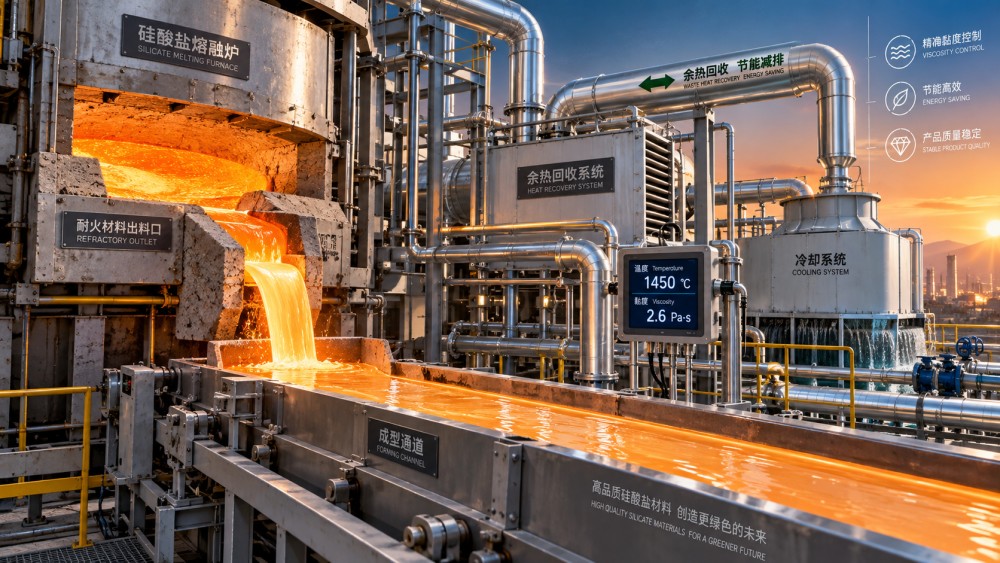
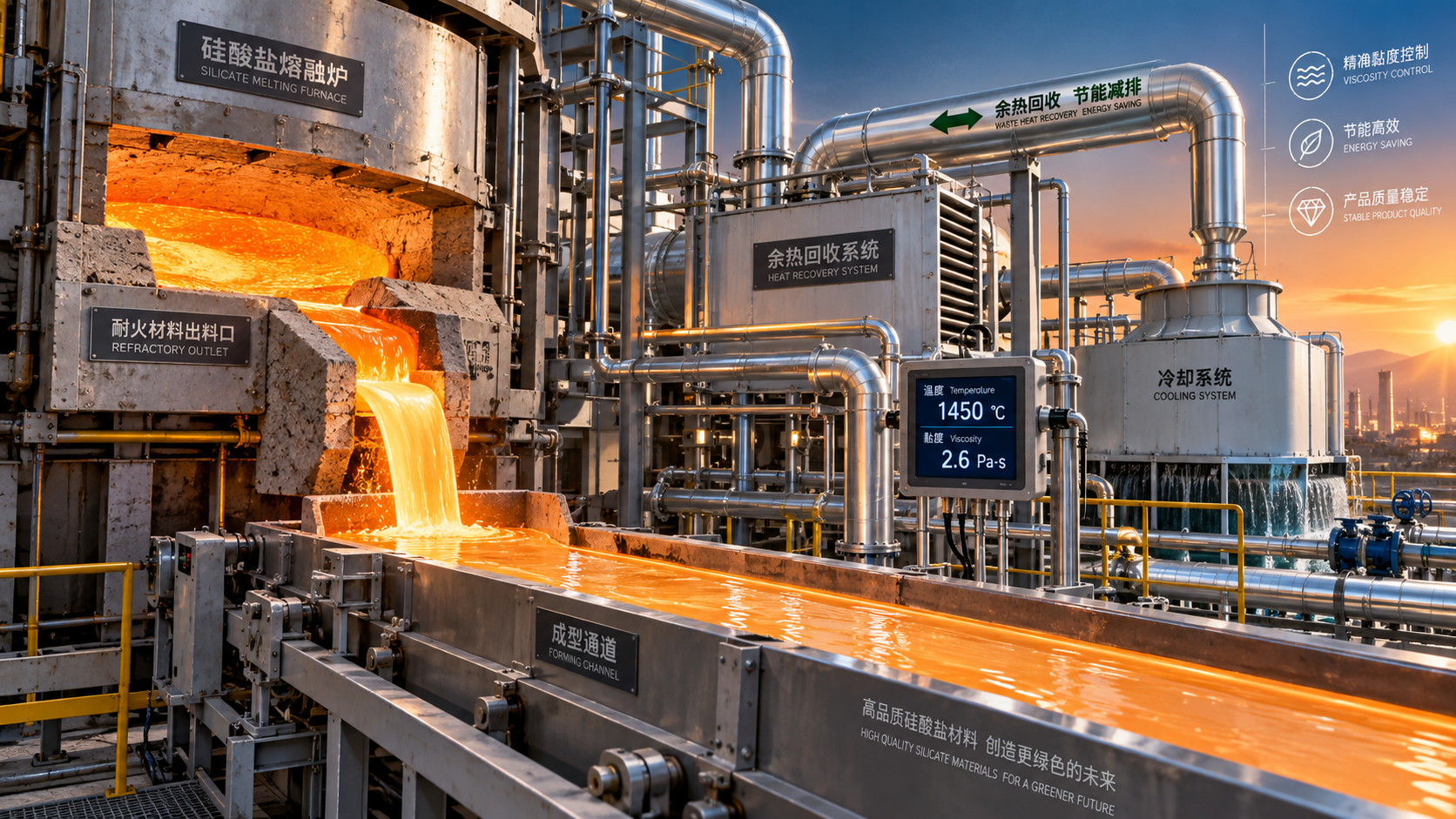
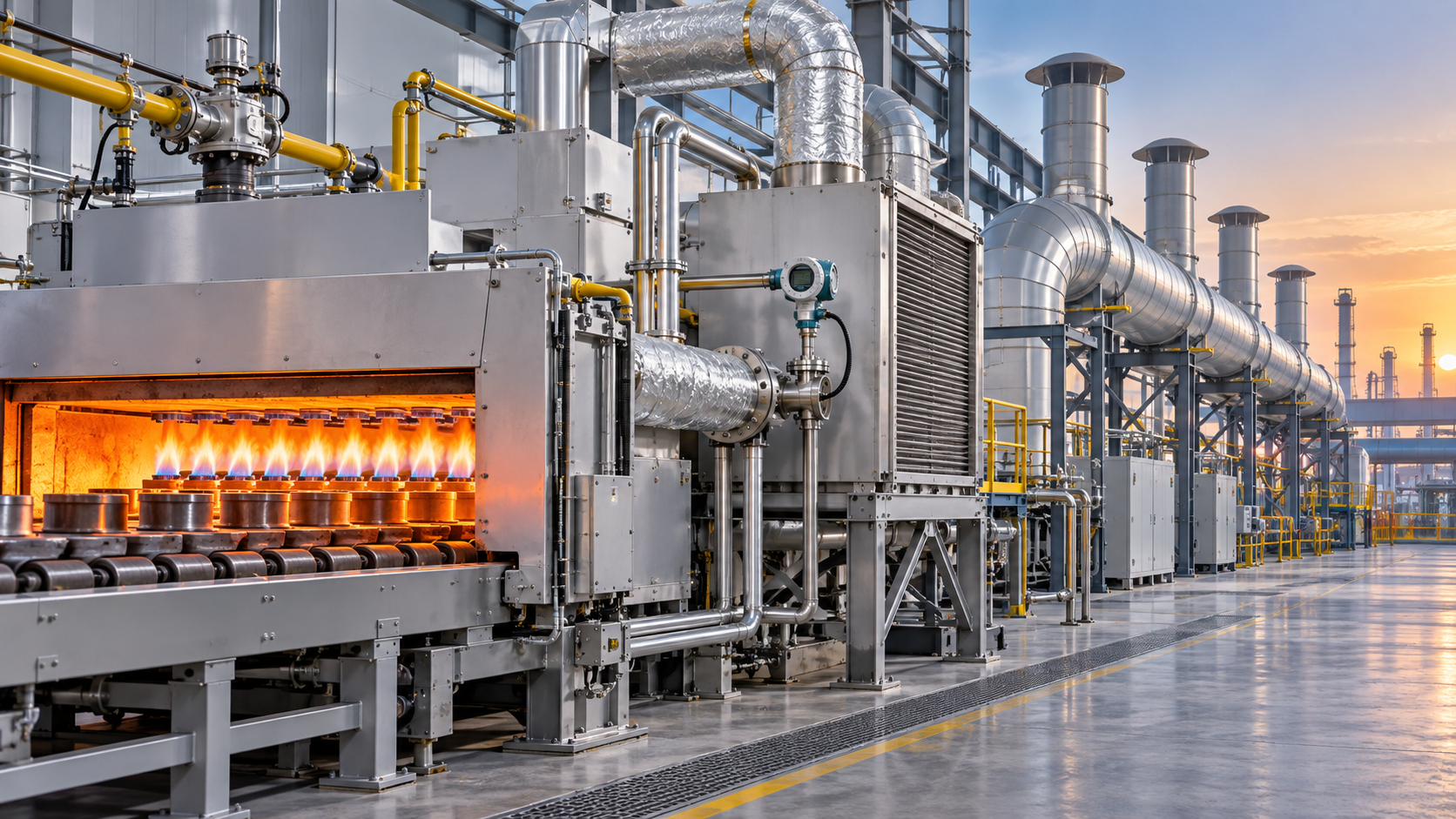
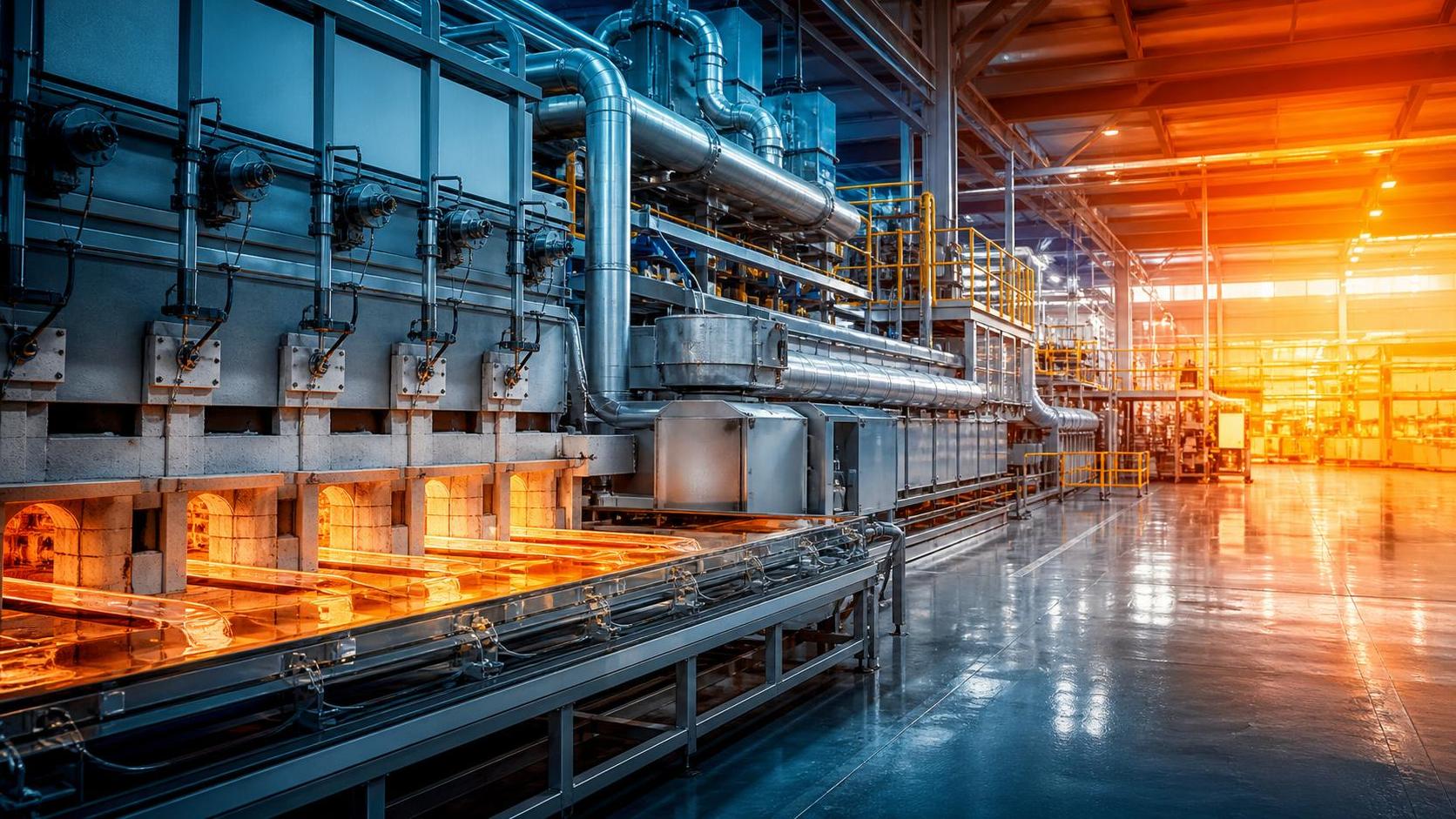
In a glass furnace, heat must pass through the batch blanket and into the melt. Incomplete batch conversion, poor convective circulation, or insufficient residence time can leave local regions chemically and thermally different from the measured furnace temperature. Surface temperature readings and combustion-zone measurements may look stable while downstream forming quality deteriorates because the melt has not become uniform.
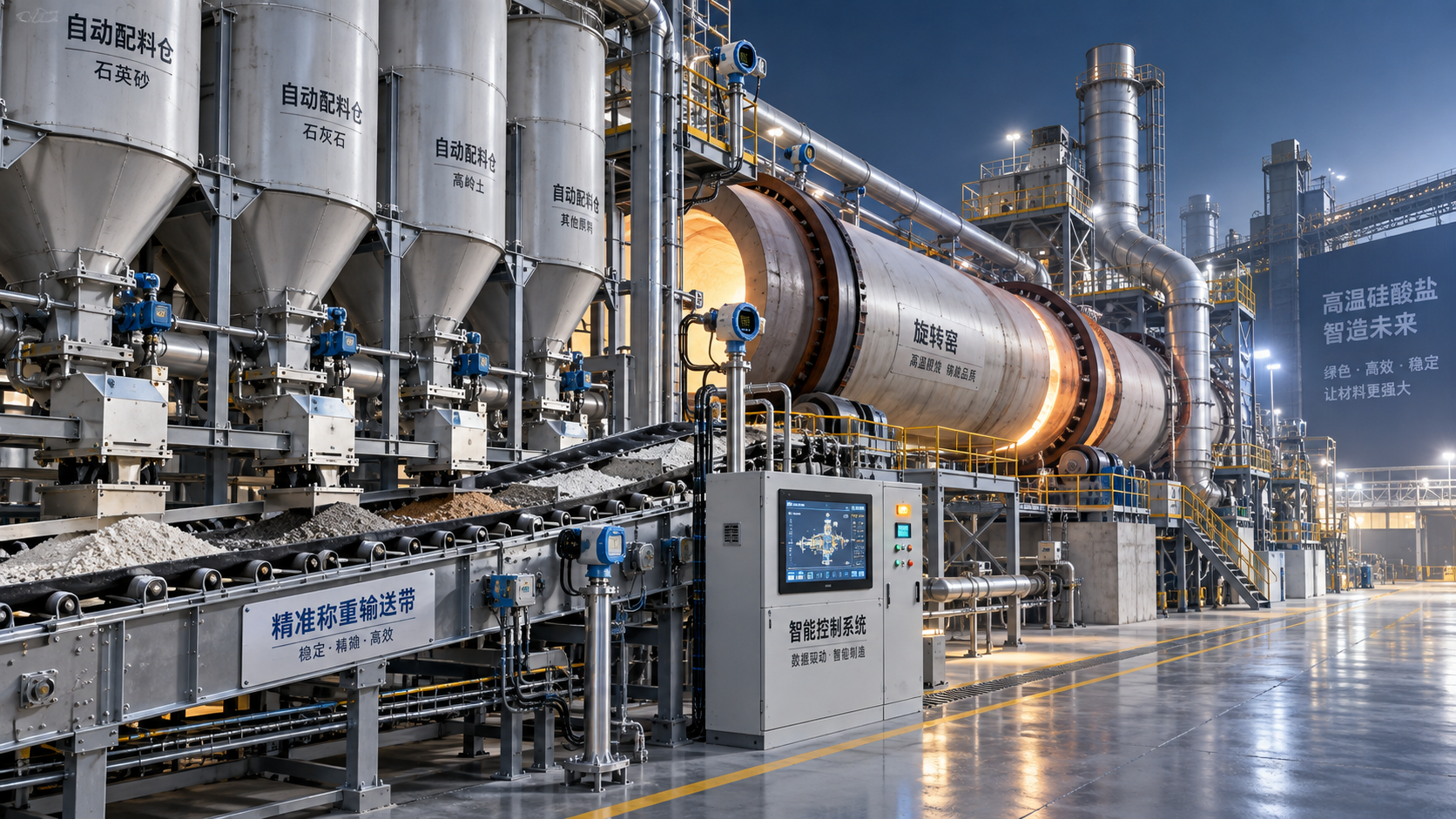
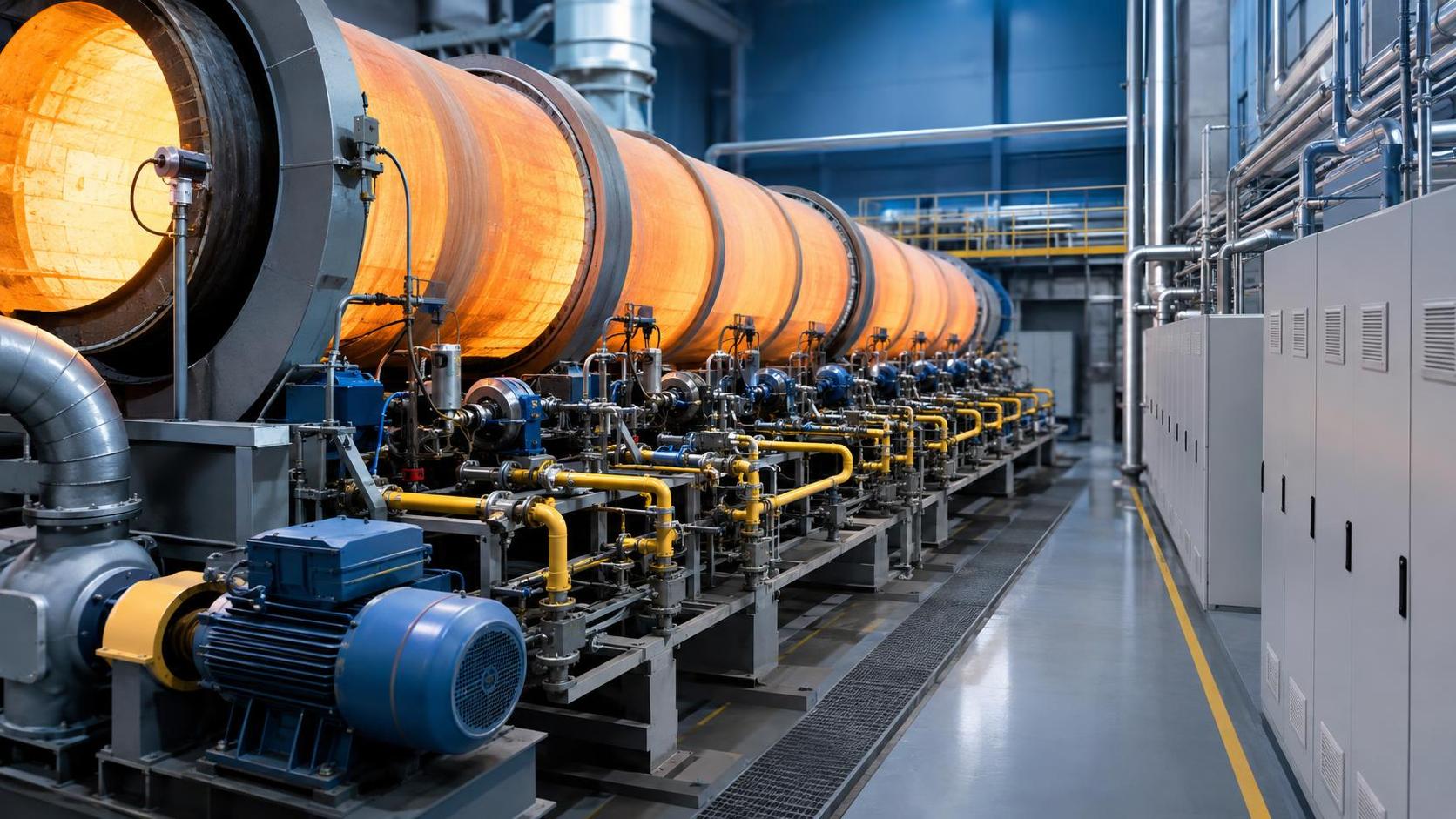
In rotary kilns, residence time interacts with particle size, feed moisture, kiln fill, gas velocity, flame shape, and heat-transfer mode. A short-lived high-temperature peak cannot replace sufficient time in the reaction zone. Conversely, excessive exposure can increase fuel use, volatilization, or refractory wear without improving product quality. The target is a temperature-time profile matched to the kinetics of the specific material transformation.
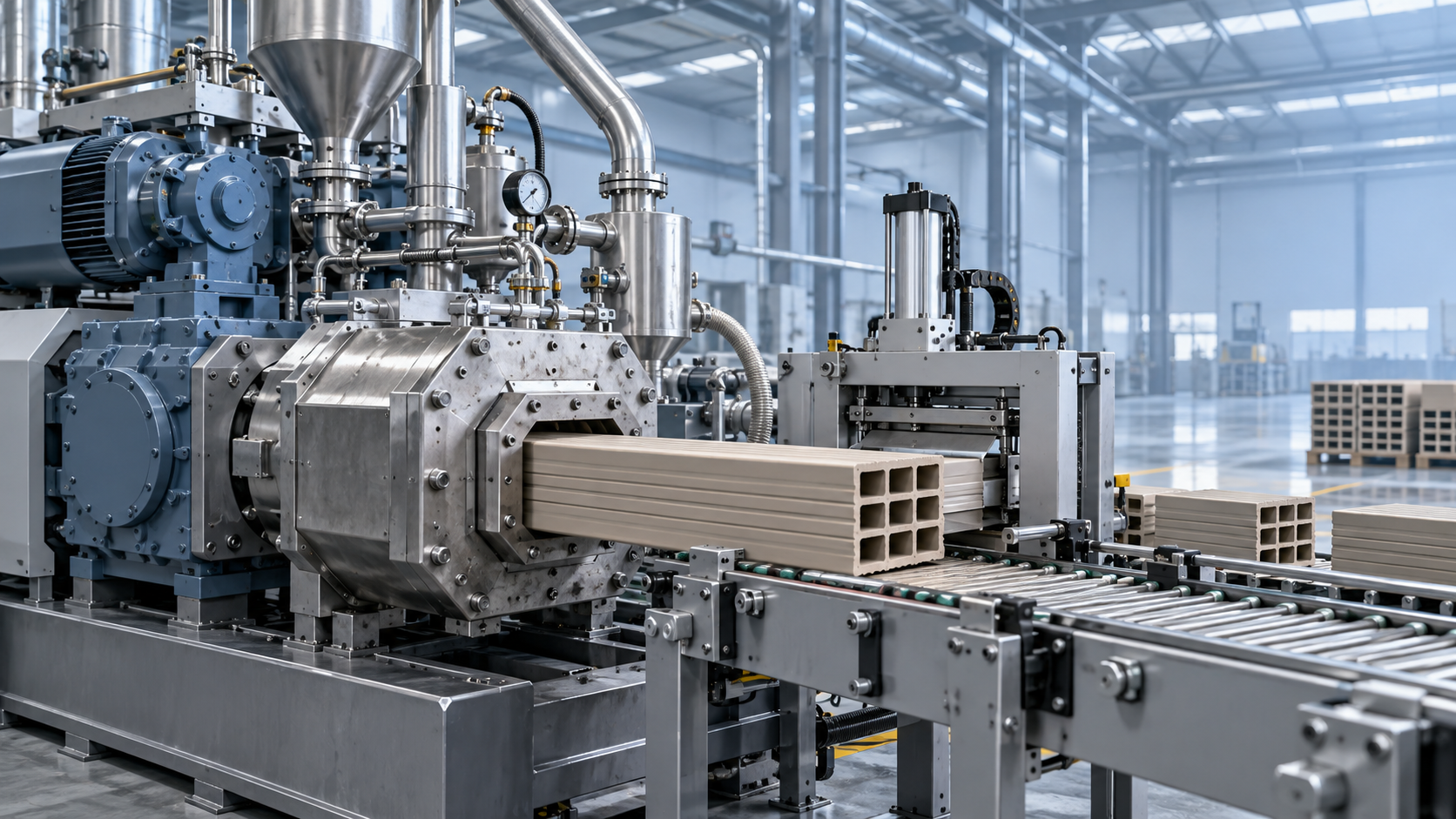
Extrusion systems illustrate a lower-temperature version of the same problem. The bulk temperature of a clay or silicate composite may be within specification, yet frictional heating near the screw, mixer, or die can change local water distribution and plasticity. The result can be die lines, surface tearing, uneven density, or cracking during drying. Thermal management is not confined to furnaces; it includes controlling the heat generated by mechanical work.
Process design should separate three measurements that are often conflated: equipment temperature, surface material temperature, and internal material state. The first is easy to obtain. The third is what determines quality. Sensors, process models, and laboratory validation are needed to bridge the gap.
Atmosphere control changes both material behavior and refractory risk
Redox conditions affect silicate processes through more than combustion efficiency. Iron-bearing materials can change color, oxidation state, and melting behavior as oxygen potential changes. Sulfur-bearing compounds may alter fining, volatilization, deposit formation, or emissions treatment requirements. Carbonaceous residues and incomplete combustion products can create local reducing zones even where the overall exhaust oxygen level appears acceptable.
In glass melting, redox balance influences fining reactions, optical properties, and the behavior of multivalent elements. In cement production, combustion conditions affect heat release, kiln atmosphere, sulfur circulation, and the stability of the burning zone. In waste incineration and vitrification, feed heterogeneity can create rapidly changing gas compositions that influence slag flow and corrosive attack on refractories.
Refractory selection cannot be assessed independently from these atmosphere and slag conditions. A lining that performs well against a relatively basic clinker environment may not be suitable for acidic, alkali-rich, chlorine-bearing, or highly fluid slags. Chemical compatibility, thermal shock resistance, abrasion exposure, anchor design, and installation quality all affect lining life. However, repeated refractory failure is not necessarily a refractory-material problem. It may be evidence that the process is operating outside its intended chemical or thermal envelope.
Quality control depends on linking upstream signals to downstream defects
Finished-product defects are often detected far downstream from their origin. A glass inclusion may arise from incomplete melting, refractory erosion, batch contamination, or poor refining. Weak or variable clinker can be associated with raw meal chemistry, inadequate reaction conditions, unstable coating, or cooling performance. Extruded building materials can show warpage or cracking because of a combined effect of particle-size distribution, moisture gradients, die pressure, drying profile, and firing shrinkage.
Effective control requires a defect logic that connects each quality characteristic to the process variables most capable of changing it. A simple alarm on furnace temperature is rarely enough. The relevant control set may include:
- feed chemistry and moisture;
- particle-size distribution and mixing uniformity;
- fuel composition and combustion-air balance;
- temperature distribution rather than a single-zone temperature;
- pressure, draft, and gas-flow stability;
- torque, motor load, extrusion pressure, or kiln drive behavior;
- melt level, residence-time indicators, and cooling conditions;
- refractory temperature trends and deposit formation indicators.
The value of online instrumentation lies in correlation, not in the number of sensors installed. For example, a rise in kiln drive load may be significant only when considered alongside feed chemistry, shell temperature, oxygen profile, and coating condition. Likewise, a forming defect in glass may require interpretation of batch moisture, furnace pull, forehearth temperatures, and gob or ribbon conditions rather than a single viscosity proxy.
Digital models can improve this interpretation when they are constrained by reliable material data and operating measurements. A model that ignores feed variability, refractory condition, or actual thermal losses may produce visually convincing but operationally weak recommendations. Model use should begin with a defined decision: predicting a viscosity-related excursion, optimizing heat distribution, estimating lining exposure, or identifying a likely cause of quality drift.
Energy efficiency and quality are coupled, but not interchangeable
Reducing fuel consumption by lowering furnace or kiln temperature can be beneficial only if the required material transformation is preserved. In silicate processing, a short-term reduction in specific energy may be offset by higher reject rates, unstable operation, reduced campaign life, or increased downstream rework. The technically sound metric is not energy use alone, but energy used per unit of conforming product over a stable operating period.
Several efficiency measures can affect rheology directly. Increasing cullet in a compatible glass batch may reduce the energy required for melting, but contamination and color control must remain within product limits. Improving raw meal fineness can support reaction efficiency in cement production, but excessive grinding energy or handling difficulties may erode the net benefit. Raising alternative-fuel substitution can alter flame characteristics and ash input, requiring corresponding adjustments in feeding, gas control, and material balance.
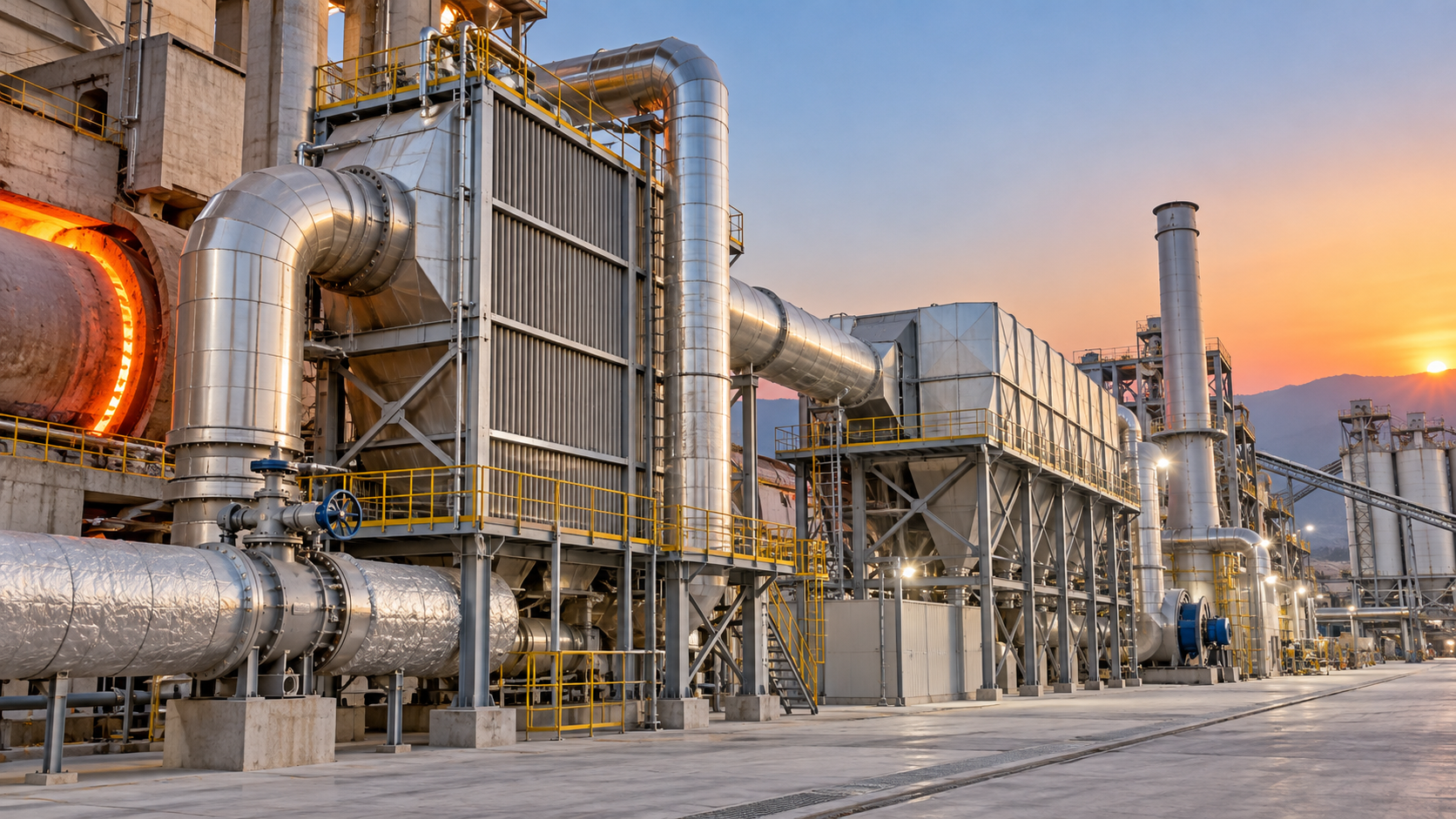
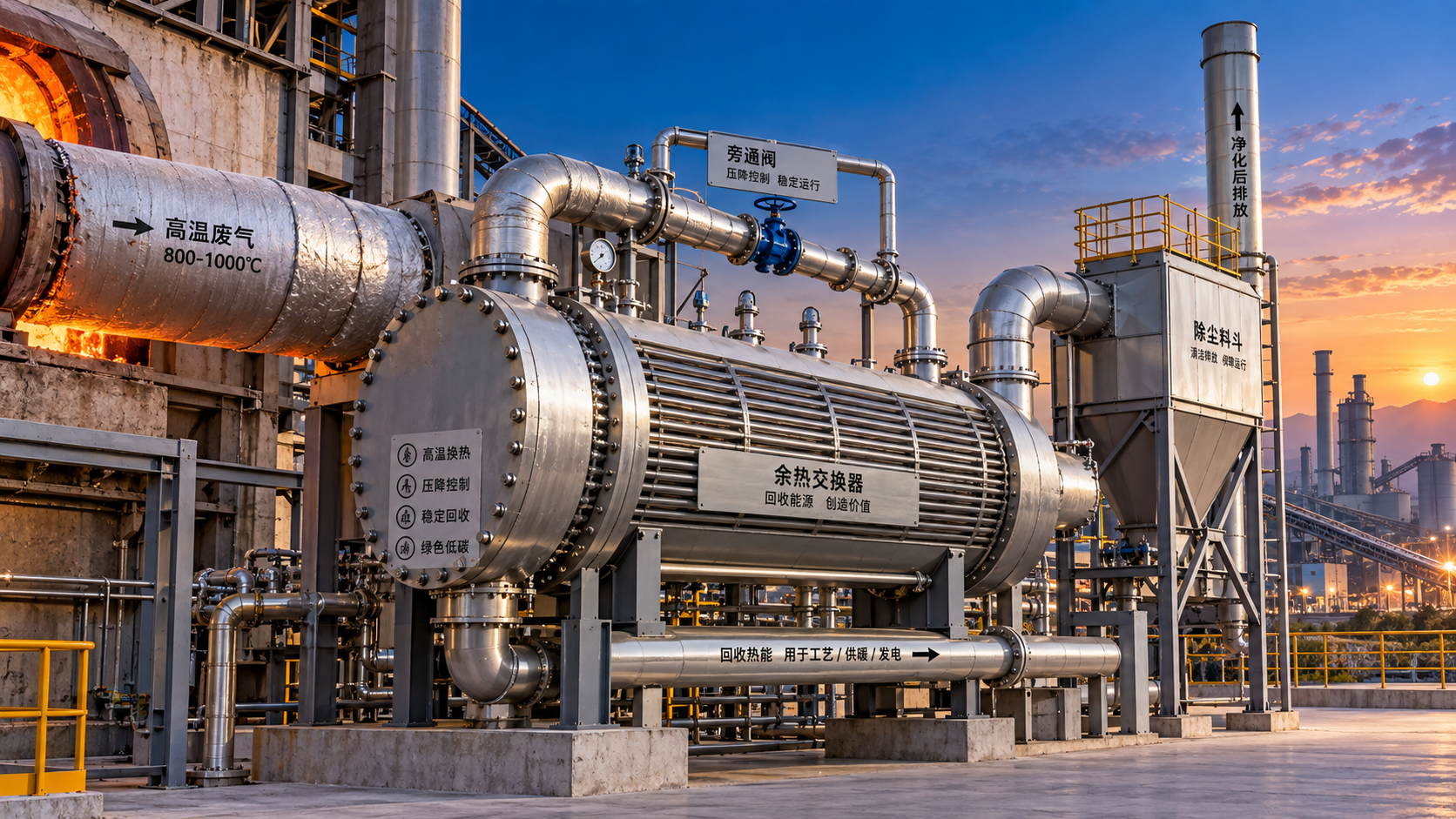
Heat recovery also has process consequences. Preheating combustion air, raw materials, or feedwater changes thermal integration and may alter gas volumes, dust behavior, and temperature control response. These changes should be evaluated as a system, especially where volatile cycles, dust recirculation, or emissions-control equipment impose practical limits.
What a technical evaluation should verify
Equipment specifications should be tested against the actual material envelope rather than nominal production figures. The most useful review documents are a composition range, a temperature-viscosity or plasticity relationship where applicable, expected contaminants, target product tolerances, and a description of upset conditions the line must tolerate.
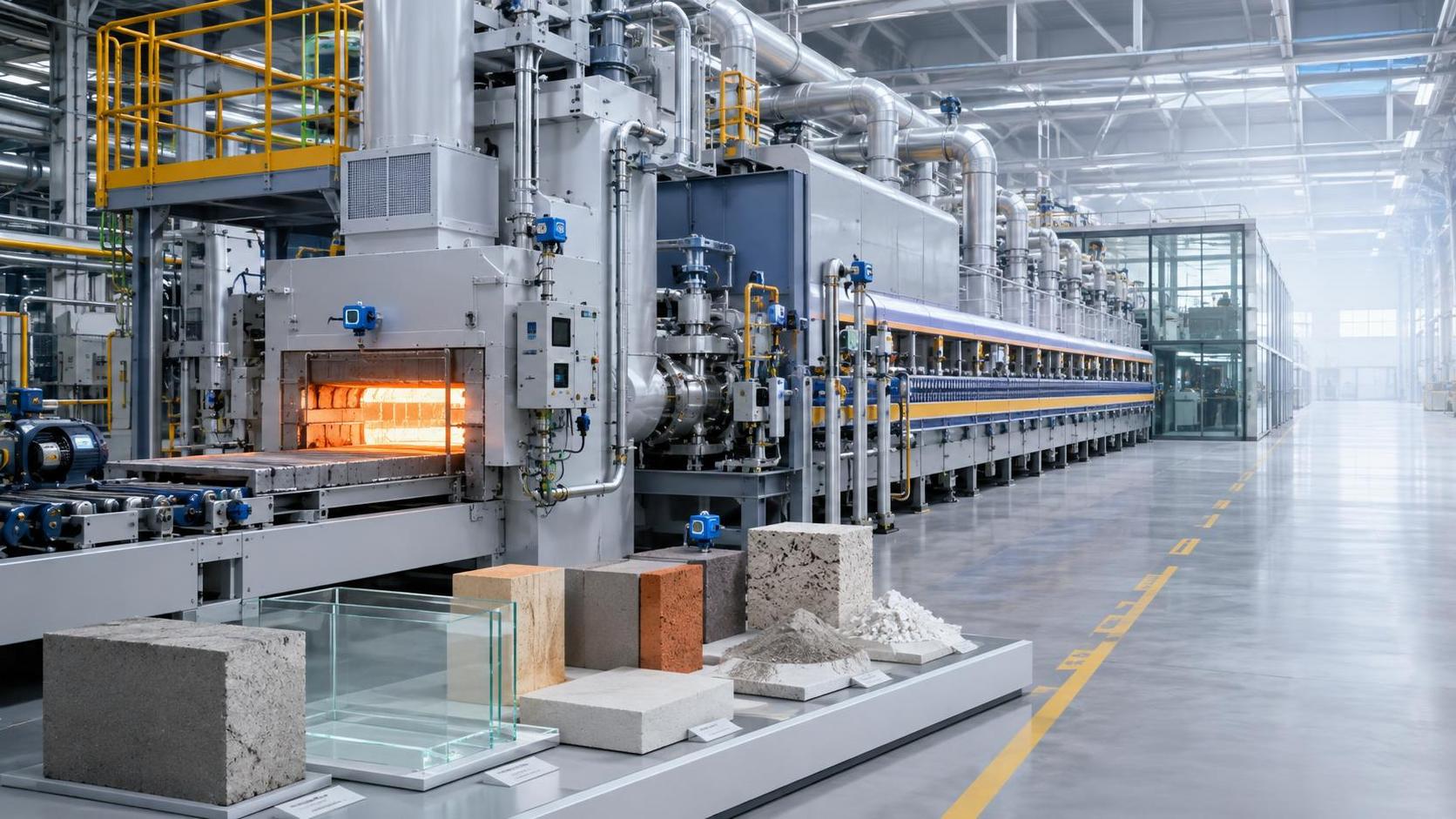
For melting and vitrification equipment, assess the available heat flux, circulation pattern, batch-to-melt conversion capacity, fining or degassing capability, tapping arrangement, and refractory compatibility with the expected slag or melt chemistry. For kilns, assess thermal profile control, flame flexibility, gas handling, feed variability tolerance, coating behavior, and the interaction between process conditions and refractory zones. For extrusion lines, focus on feed preparation, vacuum de-airing where required, screw and die geometry, pressure stability, moisture control, and the transition from green shaping to drying and firing.
Acceptance criteria should include dynamic performance. A line that meets output and energy targets only under narrow, steady feed conditions may not provide the operational margin required for commercial production. The important evidence is the ability to detect deviation, correct it within the material residence time, and return to specification without creating a secondary defect or abnormal refractory exposure.
Silicate industrial processes are governed by a practical chain: chemistry determines flow behavior; flow behavior determines the thermal and mechanical conditions required; those conditions shape energy demand, emissions behavior, equipment stress, and final quality. Breaking that chain into separate departmental metrics can obscure the source of instability. Evaluating it as one connected material-and-energy system provides a more reliable basis for judging process capability.
Related News
 Optical Glass Tech FellowSilicate Process Automation: Improving Batch Consistency and Energy ControlSilicate process automation improves batch consistency, energy control, traceability, and operator confidence across high-temperature manufacturing operations.Sep 22, 2026
 Optical Glass Tech FellowHow Silicate Industrial Processes Control Viscosity, Energy Use, and Product QualitySilicate industrial processes: learn how viscosity, chemistry, heat transfer, and atmosphere control reduce energy use, improve stability, and protect product quality.Sep 21, 2026
 Thermal Energy ArchitectHow European Plants Can Evaluate Energy Recovery Equipment for High-Temperature ProcessesIndustrial energy recovery equipment Europe: learn how high-temperature plants can assess waste-heat sources, integration risks, lifecycle value, and reliable recovery routes.Sep 20, 2026
 Thermal Energy ArchitectIndustrial Furnace Process Optimization: Reducing Fuel Use Without Sacrificing ThroughputIndustrial process optimization furnace strategies that cut fuel use while protecting throughput. Explore combustion control, heat recovery, refractory performance, and data-driven efficiency gains.Sep 19, 2026
 Ms. Elena RodriguezWhat Drives High-Pressure Extrusion Equipment Cost in Industrial Projects?High pressure extrusion equipment cost explained: compare pressure, die design, automation, wear, energy, and installation factors for smarter industrial investments.Sep 18, 2026
 Thermal Energy ArchitectHow to Size a Waste Heat Recovery Exchanger for High-Temperature Kiln Exhaust?Waste heat recovery exchanger sizing for high-temperature kiln exhaust: balance recoverable duty, fouling, corrosion limits, pressure drop, and reliable heat use.Sep 17, 2026
 Thermal Energy ArchitectWhy Heat-Resistant Materials Lose Abrasion Resistance at High TemperaturesHeat-resistant materials abrasion resistance can decline at high temperatures. Discover the thermal, chemical, and mechanical causes of wear—and how to choose longer-lasting linings.Sep 16, 2026
 Thermal Energy ArchitectHow to Evaluate a Thermal Energy Optimization Company for High-Temperature PlantsChoose a thermal energy optimization company with proven process expertise, measurable savings, and reliable delivery for high-temperature plants. Learn what to assess.Sep 15, 2026
 Thermal Energy ArchitectRotary Kiln Efficiency: How Feed Rate, Fuel Use, and Heat Loss Affect OutputRotary kiln efficiency explained: discover how feed rate, fuel use, heat loss, combustion, and cooling performance shape output, quality, and energy costs.Sep 14, 2026
 Thermal Energy ArchitectHow to Select Heat-Resistant Materials That Maintain Abrasion Resistance in KilnsHeat-resistant materials abrasion resistance: learn how to select kiln linings that withstand heat, wear, thermal cycling, and chemical attack for longer service life.Sep 13, 2026
 Thermal Energy ArchitectHow Rotary Kiln Automation Improves Temperature Control and Fuel EfficiencyRotary kiln technology automation enhances temperature control, stabilizes combustion, and improves fuel efficiency with smarter data, predictive control, and safer operations.Sep 12, 2026
 Silicate Process EngineerCement Plant Emission Control: Selecting Systems for Dust, NOx, and SO2 LimitsCement plant emission control guide: compare dust collectors, NOx reduction, and SO2 systems for reliable compliance across kiln modes, fuel changes, and operating upsets.Sep 11, 2026
 Thermal Energy ArchitectSelecting Abrasion-Resistant High-Temperature Materials for Kiln and Conveyor Wear ZonesHigh-temp material engineering guide to abrasion-resistant kiln and conveyor solutions—match wear, heat, chemistry, and installation design for longer service life.Sep 10, 2026
 Dr. Alistair VaughnIndustrial Process Engineering: How to Map Processes for Safer, More Efficient PlantsIndustrial process engineering reveals bottlenecks, safety risks, and energy losses through practical process mapping for safer, more efficient plants.Sep 09, 2026
 Optical Glass Tech FellowHow to Evaluate a Glass Annealing Equipment Manufacturer for Production StabilityChoose a glass annealing equipment manufacturer with proven thermal uniformity, reliable controls, lifecycle value, and responsive service for stable production.Sep 08, 2026
 Prof. Marcus ChenThermal Energy Architecture in North America: Strategies for Lower Building Energy UseThermal energy architecture North America helps project leaders cut building energy use through stronger envelopes, right-sized HVAC, storage, and smart commissioning.Sep 07, 2026
 Ms. Elena RodriguezHow Should Buyers Evaluate Building Material Industry Intelligence Pricing?Building material industry intelligence pricing: learn how to compare coverage, technical depth, and ROI to choose intelligence that reduces procurement risk.Sep 07, 2026
 Ms. Elena RodriguezHow to Use Building Material Intelligence Data for Market and Investment DecisionsBuilding material industry intelligence data helps leaders evaluate demand, costs, regulation, capacity, and technology to make smarter market and investment decisions.Sep 05, 2026
 Thermal Energy ArchitectHow PLC Control Improves Energy Efficiency and Temperature Stability in KilnsEnergy efficient kilns PLC control improves temperature stability, cuts fuel waste, and optimizes combustion, draft, and material flow. Explore proven strategies for smarter kiln modernization.Sep 04, 2026
 Optical Glass Tech FellowEuropean Glass Melting Processes: Furnace Choices, Energy Use, and Quality ControlGlass melting process Europe: explore furnace choices, energy efficiency, cullet strategy, and quality control to improve output, compliance, and long-term glass performance.Sep 03, 2026



Related News
- 00
0000-00
Silicate Process Automation: Improving Batch Consistency and Energy Control - 00
0000-00
How Silicate Industrial Processes Control Viscosity, Energy Use, and Product Quality - 00
0000-00
How to Evaluate a Glass Annealing Equipment Manufacturer for Production Stability - 00
0000-00
European Glass Melting Processes: Furnace Choices, Energy Use, and Quality Control - 00
0000-00
How Glass Melting Furnace Design Impacts Energy Use and Glass Quality
Weekly Insights
Stay ahead with our curated technology reports delivered every Monday.