
Selecting Abrasion-Resistant High-Temperature Materials for Kiln and Conveyor Wear Zones




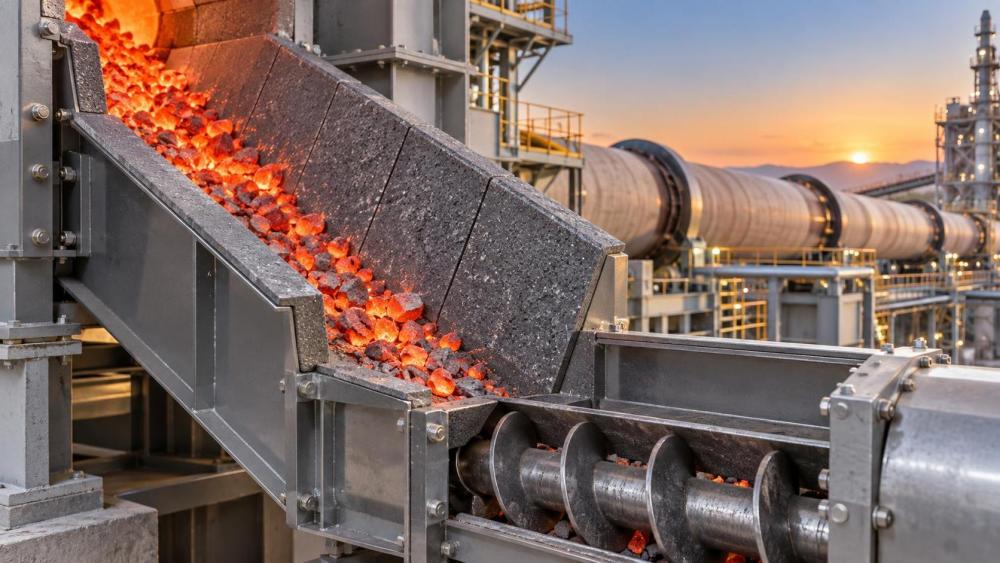
A kiln hood, transfer chute, clinker cooler inlet, screw conveyor, or hot-material belt transition can fail long before its nominal temperature limit is reached. The usual reason is that temperature rating was treated as the primary selection criterion, while the actual damage mechanism was a combined attack of sliding abrasion, impact, thermal cycling, chemical infiltration, and mechanical restraint.
The correct material is therefore not the one with the highest advertised refractoriness or hardness. It is the material system that maintains an acceptable wear profile, bond integrity, and dimensional stability under the specific thermal, chemical, and mechanical conditions of the zone. In high-temp material engineering, abrasion resistance must be assessed as part of the operating environment rather than as an isolated laboratory property.
Start with the wear mechanism, not the material family
“Wear zone” is too broad to support a sound specification. A moving bed of calcined material, a high-velocity dust stream, and intermittent large-particle impact can all occur at similar temperatures while requiring very different lining or component designs.
Sliding abrasion is common where bulk solids move continuously across a surface under load. It produces progressive material loss and often favors dense, hard compositions with a stable microstructure. Impact abrasion is different: coarse particles strike a surface, sometimes at steep angles, generating local crushing, spalling, or crack initiation. A material optimized solely for hardness may perform poorly if it lacks sufficient fracture toughness or if its installation geometry concentrates impact energy.
Erosive wear arises when dust-laden gas travels at high velocity through bends, ducts, cyclones, chutes, and transition sections. Here, particle velocity, impingement angle, particle hardness, and flow turbulence can matter as much as the bulk temperature. Fine, sharp particles may progressively remove the bonding phase from a refractory or coating, exposing aggregate grains and accelerating loss.
There is also a crucial distinction between wear occurring while the material is hot and wear occurring during upset conditions. A cooler discharge area may see short-lived thermal excursions, while a kiln inlet may operate at elevated temperature but experience substantial temperature cycling during shutdowns, feed interruptions, or flame instability. The first task is to identify which condition actually governs failure.
- What is moving against the surface: powder, granular feed, clinker, ash, cullet, metal-bearing residue, or another abrasive solid?
- Is wear caused by sliding, impact, erosion, or a changing combination of all three?
- What are the normal, maximum, and transient temperatures at the material’s hot face and cold face?
- Does the component see direct flame radiation, localized hot spots, or rapid cooling from air leaks or cleaning activity?
- Are alkalis, chlorides, sulfur compounds, slag-forming oxides, reducing gases, or condensable vapors present?
Without these answers, a specification based on a generic “abrasion-resistant high-temperature material” description is likely to compare products that are not designed for the same duty.
Temperature rating is a screening limit, not a performance guarantee
Maximum service temperature is useful for eliminating unsuitable candidates, but it does not predict wear life. A dense alumina-based refractory, silicon-carbide-containing composition, cast basalt, high-chromia material, metallic alloy, ceramic tile, or engineered overlay may all have plausible roles in hot-material handling. Their practical limits depend on far more than their published temperature figures.
At elevated temperature, the bond phase may soften, oxidize, react with penetrants, or lose strength. Aggregate grains can remain intrinsically hard while the matrix that holds them becomes vulnerable. Conversely, a material with a lower maximum temperature may provide better service in a conveyor transition if its thermal expansion, anchoring arrangement, and resistance to particle impact are better matched to the actual zone.
Thermal gradient deserves separate attention. A lining exposed to hot solids and a cooled steel shell does not experience one uniform temperature. The hot face expands while the colder support structure resists movement. If the lining is too rigid, poorly jointed, or anchored with incompatible hardware, cyclic stresses can exceed the material’s tolerance even when the hot-face temperature remains within specification.
This is why a material should be reviewed at operating temperature, not only through room-temperature data. Cold crushing strength and room-temperature abrasion figures can be relevant indicators, but they cannot by themselves establish resistance to hot abrasion, thermal shock, or chemical attack.
Hardness helps, but toughness and bonding determine whether hardness can be retained
A common selection error is to equate abrasion resistance with maximum hardness. Hardness is valuable where fine particles slide over a stable surface, but high hardness does not automatically protect against large-particle impact or repeated thermal stress. Very hard, brittle materials can crack under impact; once cracking begins, fragments may detach rapidly and expose the steel substrate or underlying backup lining.
The relevant balance changes by application:
Material microstructure is central. Low open porosity can reduce pathways for hot gases, molten salts, and fine particles to enter the structure. However, a very dense body can also be less forgiving of severe thermal gradients. Grain size distribution, binder chemistry, fiber reinforcement where applicable, additives, curing practice, and firing profile can all affect the relationship between abrasion resistance and thermal reliability.
For monolithic refractory systems, installation quality is inseparable from material performance. Water addition, mixing energy, placement method, vibration, curing, dry-out, and heat-up schedule determine the final pore structure and bond development. A technically appropriate castable can underperform if excess water increases porosity or if inadequate dry-out creates internal steam pressure during initial heating.
Chemical exposure often explains “unexpected” wear
Where high-temperature solids contain alkalis, chlorides, sulfur, iron-bearing compounds, or fluxing oxides, mechanical wear may be only the visible result of a chemical degradation process. Penetrants can enter pores and grain boundaries, form lower-melting phases, alter the bonding matrix, or generate expansion stresses. The surface then becomes easier to erode or spall.
In cement and lime-related processes, alkali and sulfur cycling can be particularly important around kiln inlet and preheater-adjacent conditions. In waste thermal treatment, ash chemistry can vary widely with feed composition and may introduce corrosive salts, metals, or low-melting deposits. Glass and mineral-processing applications can expose materials to specific fluxes or dust compositions that are not represented by a generic abrasion test.
Selection should therefore include an exposure map. It should identify the process-side chemistry, the likelihood of deposits, the presence of reducing versus oxidizing conditions, and whether the material will see direct contact with partially molten phases. A high-alumina, silicon carbide, alumina-chrome, or other specialized composition should be considered only after confirming compatibility with the actual chemical environment and local atmosphere. No material family is universally superior across all hot wear duties.
Metal components require the same discipline. Heat-resistant alloys may offer useful mechanical strength and fabrication flexibility, but oxidation, sulfidation, carburization, chloride attack, or high-temperature loss of yield strength can limit use. Ceramic linings and metallic structures are often combined, yet their differential expansion must be accommodated rather than assumed away.
Geometry and installation can defeat an otherwise sound material choice
Wear is rarely uniform. It concentrates at the first impact point in a chute, the outside radius of a bend, the leading edge of a scraper path, a step between liner sections, or a location where material velocity changes abruptly. A material decision made from a general equipment drawing can miss the local geometry that governs life.
Before finalizing a lining or wear-part specification, review the material flow path with attention to impact angle and trajectory. A shallow, controlled impact is usually less destructive than a direct drop onto a flat surface. Deflector geometry, rock-box arrangements, replaceable impact pads, and changes in chute angle can reduce the energy reaching the wear surface. In some cases, changing flow geometry produces more reliable value than upgrading to a harder material.
Anchors, studs, shell attachments, and expansion joints need equivalent scrutiny. Refractory anchors must maintain integrity at their actual embedded temperature and should not create restraint patterns that promote cracking. Ceramic tiles require a substrate and attachment method capable of handling vibration and thermal movement. Weld overlays must be evaluated for dilution, heat-affected-zone behavior, distortion, and accessibility for repair. Bolted modular liners may simplify replacement but can introduce gaps, exposed fasteners, and stress concentrations.
A specification should state not only the wear material but also thickness, attachment design, permissible joint arrangement, substrate preparation, dry-out requirements where relevant, and acceptance criteria after installation. “Supply abrasion-resistant lining” leaves critical engineering decisions unresolved.
Evaluate candidate materials through the failure mode they must prevent
The most useful comparison is not a broad ranking of material types. It is a duty-specific review of how each candidate responds to the anticipated failure mechanism.
Dense refractory castables can provide continuous protection over complex shapes and are suitable where joints or tile edges would create weaknesses. Their performance depends heavily on installation control and dry-out. Precast refractory shapes can improve dimensional control and reduce some field variables, but joints, lifting, transport, and replacement access need attention.
Silicon-carbide-containing refractories can offer strong resistance to abrasion and useful thermal conductivity in appropriate environments. Their suitability depends on oxidation conditions, bond system, chemical exposure, and the required insulation effect. They should not be selected merely because silicon carbide has a reputation for hardness.
High-alumina materials are widely relevant where elevated temperature capability and mechanical durability are required, but alumina content alone is not a complete selection basis. Matrix composition, porosity, aggregate quality, and resistance to the process chemistry can vary substantially among formulations.
Ceramic tiles, plates, and modular liners can be effective where the substrate temperature remains within the attachment system’s limits and where impact is controlled. They are often less suitable at severe impact points unless the design provides adequate support and avoids concentrated loading at edges.
Metallic liners and hardfacing systems remain important in zones with moderate temperatures, difficult shapes, or frequent maintenance needs. Their allowable temperature must include the effect of oxidation and retained strength, not just melting point. Their greatest advantage may be repairability rather than absolute abrasion performance.
Lifecycle cost should be calculated around outage exposure
The lowest installed cost can be misleading in an area that requires difficult access, extended cool-down, confined-space work, or a production stoppage to repair. Conversely, an expensive lining is not automatically economical if the dominant problem is poor flow geometry, a misaligned conveyor, or abnormal feed size.
A useful lifecycle comparison includes material price, installation labor, shell preparation, curing and heat-up time, expected repair method, spare-part lead time, and the operational consequence of reaching the wear limit. It should also distinguish planned replacement from unplanned failure. A liner that can be exchanged during a scheduled shutdown may be preferable to a marginally longer-lived design that fails unpredictably or requires extensive demolition.
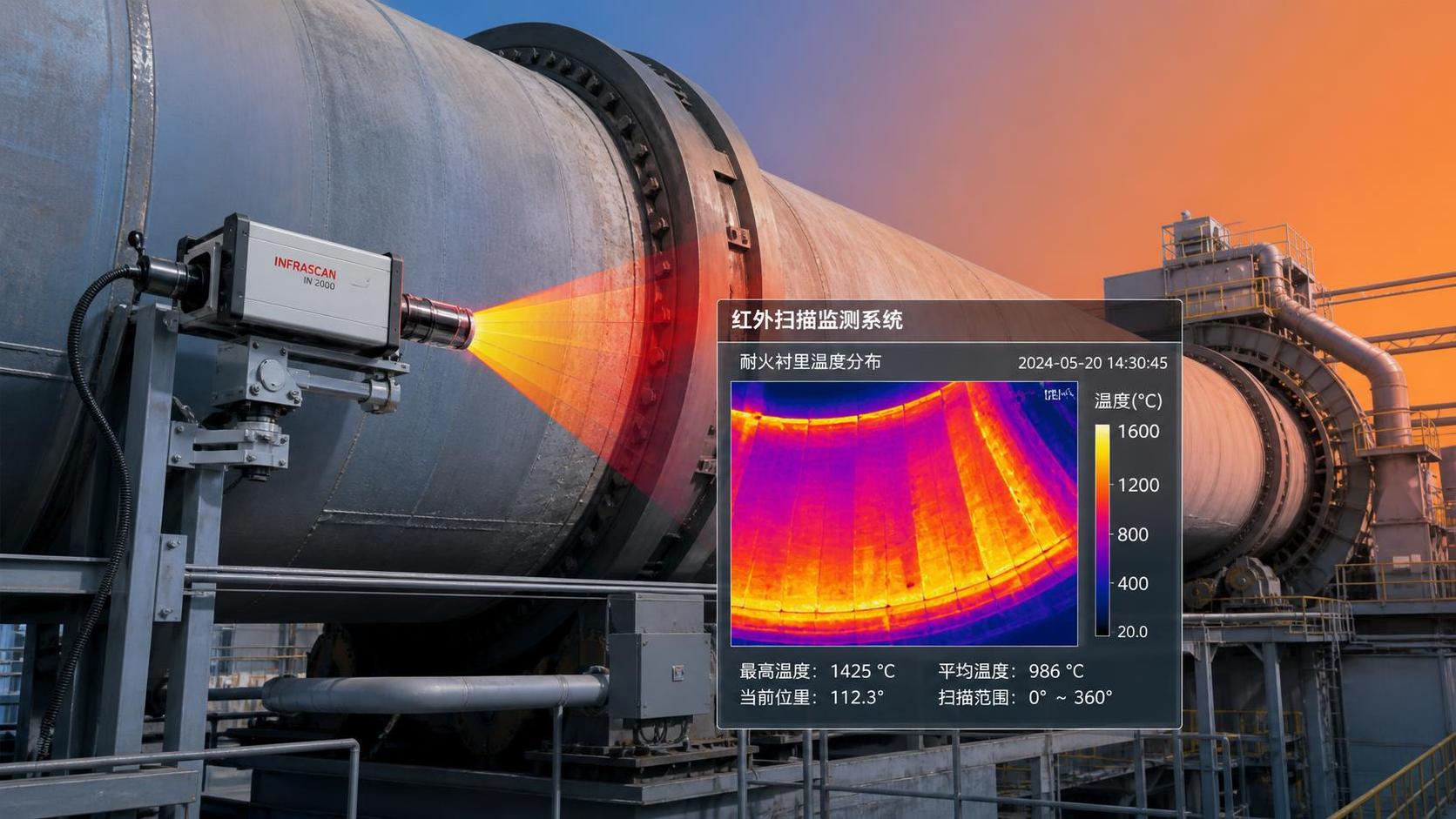
Thickness should be chosen with inspection capability in mind. If wear cannot be measured or observed until breakthrough is near, the operating risk remains high even with a theoretically durable material. Wear indicators, inspection ports, ultrasonic methods where suitable, thermal monitoring, shell-temperature trends, and accessible visual checks can turn lining life from an assumption into a managed condition.
Build the specification around verifiable conditions
A robust procurement or engineering specification should define the duty rather than prescribe a material name alone. It should include process temperature ranges and excursions, solids characteristics, particle size and hardness where known, gas composition, expected impact and flow conditions, equipment geometry, substrate details, installation method, and allowable downtime.
Performance data should be requested in a form that can be interpreted. Relevant information may include bulk density, apparent porosity, cold crushing strength, permanent linear change after heating, thermal shock behavior, abrasion-test methodology, chemical composition, and recommended installation and heat-up procedures. Test methods and conditions matter: results generated under different standards, specimen preparations, or temperatures are not directly interchangeable.
When a proposed solution relies on a proprietary formulation, the technical review should still establish what failure mode it is intended to address, what environmental limits apply, how it will be installed, and how repair or replacement will be handled. A supplier’s thermal rating or abrasion claim is useful evidence, but it does not substitute for compatibility with the actual zone.
The strongest selection decisions connect material properties to a defined damage mechanism, a realistic thermal profile, chemical exposure, and maintainable installation design. That approach avoids the recurring mistake of purchasing a harder or more refractory material only to discover that the actual failure originated in thermal restraint, chemical penetration, impact geometry, or inadequate field execution.
Related News
 Thermal Energy ArchitectSelecting Abrasion-Resistant High-Temperature Materials for Kiln and Conveyor Wear ZonesHigh-temp material engineering guide to abrasion-resistant kiln and conveyor solutions—match wear, heat, chemistry, and installation design for longer service life.Sep 10, 2026
 Dr. Alistair VaughnIndustrial Process Engineering: How to Map Processes for Safer, More Efficient PlantsIndustrial process engineering reveals bottlenecks, safety risks, and energy losses through practical process mapping for safer, more efficient plants.Sep 09, 2026
 Optical Glass Tech FellowHow to Evaluate a Glass Annealing Equipment Manufacturer for Production StabilityChoose a glass annealing equipment manufacturer with proven thermal uniformity, reliable controls, lifecycle value, and responsive service for stable production.Sep 08, 2026
 Prof. Marcus ChenThermal Energy Architecture in North America: Strategies for Lower Building Energy UseThermal energy architecture North America helps project leaders cut building energy use through stronger envelopes, right-sized HVAC, storage, and smart commissioning.Sep 07, 2026
 Ms. Elena RodriguezHow Should Buyers Evaluate Building Material Industry Intelligence Pricing?Building material industry intelligence pricing: learn how to compare coverage, technical depth, and ROI to choose intelligence that reduces procurement risk.Sep 07, 2026
 Ms. Elena RodriguezHow to Use Building Material Intelligence Data for Market and Investment DecisionsBuilding material industry intelligence data helps leaders evaluate demand, costs, regulation, capacity, and technology to make smarter market and investment decisions.Sep 05, 2026
 Thermal Energy ArchitectHow PLC Control Improves Energy Efficiency and Temperature Stability in KilnsEnergy efficient kilns PLC control improves temperature stability, cuts fuel waste, and optimizes combustion, draft, and material flow. Explore proven strategies for smarter kiln modernization.Sep 04, 2026
 Optical Glass Tech FellowEuropean Glass Melting Processes: Furnace Choices, Energy Use, and Quality ControlGlass melting process Europe: explore furnace choices, energy efficiency, cullet strategy, and quality control to improve output, compliance, and long-term glass performance.Sep 03, 2026
 Thermal Energy ArchitectWhat Determines Refractory Lining Monitoring Price for Industrial Kilns?Refractory lining monitoring price depends on kiln size, sensor technology, installation, software, and support. Compare total lifecycle costs and choose the right solution.Sep 02, 2026
 Silicate Process EngineerCement Production System Costs: A Plant Buyer’s Guide to Budgeting and ROICement production systems cost planning made clear: compare CAPEX, operating costs, compliance, and ROI to build a resilient, profitable cement plant investment.Sep 01, 2026
 Dr. Alistair VaughnWhat Should a Process Technology Database Track for High-Temperature Plants?Process technology database essentials for high-temperature plants: track thermal profiles, feed chemistry, refractory wear, emissions, energy, and maintenance for safer, data-driven decisions.Aug 31, 2026
 Ms. Elena RodriguezHow to Evaluate a Silicate Processing Equipment Manufacturer for Plant ProjectsSilicate processing equipment manufacturer selection: assess process fit, guarantees, energy, compliance, delivery risk, and lifecycle support for dependable plant performance.Aug 30, 2026
 Dr. Alistair VaughnHow to Specify Custom Agricultural Processing Equipment for Throughput and HygieneEquipment customization services for agricultural processing: learn to specify hygienic, high-throughput lines that improve yield, reliability, and long-term efficiency.Aug 29, 2026
 Dr. Alistair VaughnHow to Select Process Plant Equipment for High-Temperature, Abrasive Production LinesProcess plant equipment selection for high-temperature, abrasive lines: reduce downtime, improve durability, and optimize lifecycle performance.Aug 28, 2026
 Silicate Process EngineerHow Kiln Heat Recovery Systems Cut Fuel Use in Cement and Lime ProductionKiln heat recovery helps cement and lime plants cut fuel use, improve thermal stability, and build practical, reliable decarbonization strategies.Aug 27, 2026
 Ms. Elena RodriguezProcess Equipment Comparison: Which Metrics Matter Most for Reliable Selection?Process equipment comparison made practical: discover which metrics truly drive reliable selection, from energy efficiency and control stability to wear life, maintainability, and uptime.Aug 26, 2026
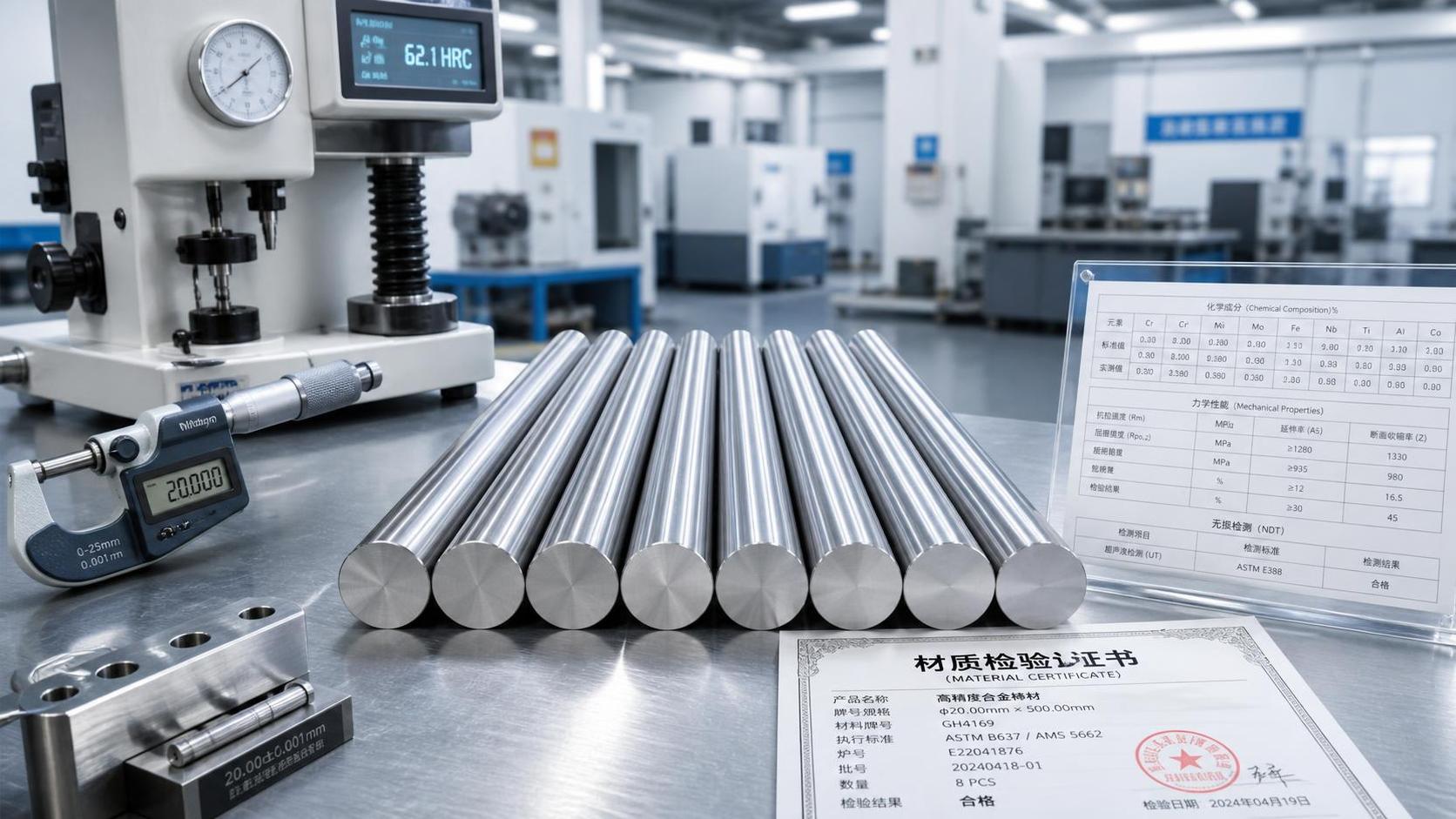
 Ms. Elena RodriguezWhat Buyers Should Check Before Sourcing Precision Alloy Bars for Critical PartsPrecision Alloy Bars buyers should verify grade, chemistry, tolerances, surface quality, traceability, and lead time before sourcing for critical parts. Learn what prevents costly machining and reliability risks.Aug 27, 2026
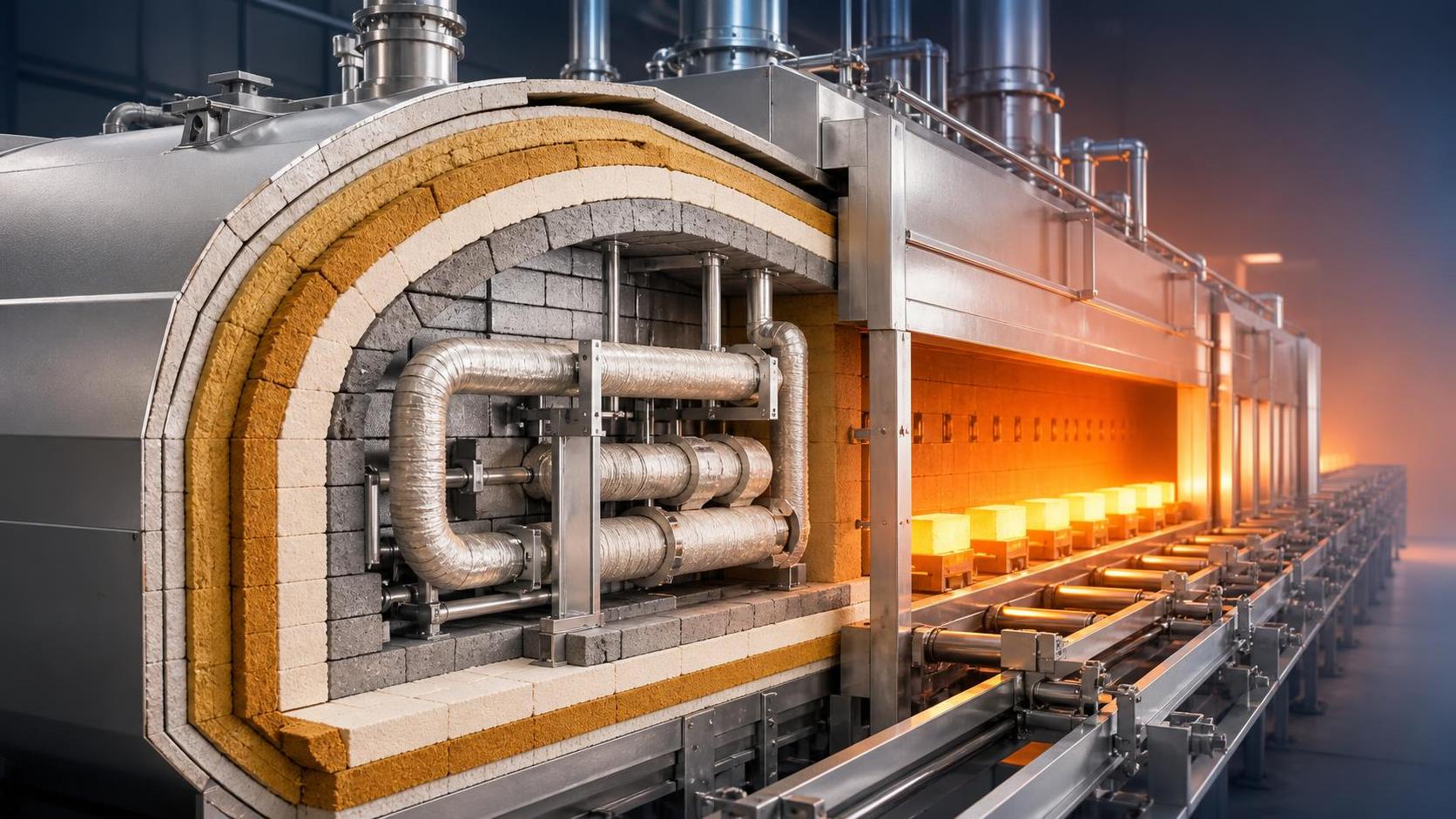
 Ms. Elena RodriguezHow to Evaluate Thermal Management Solutions Insulation for High-Heat Industrial SystemsThermal management solutions insulation: learn how to assess high-heat industrial systems by thermal performance, durability, lifecycle cost, and supplier data for smarter decisions.Aug 25, 2026
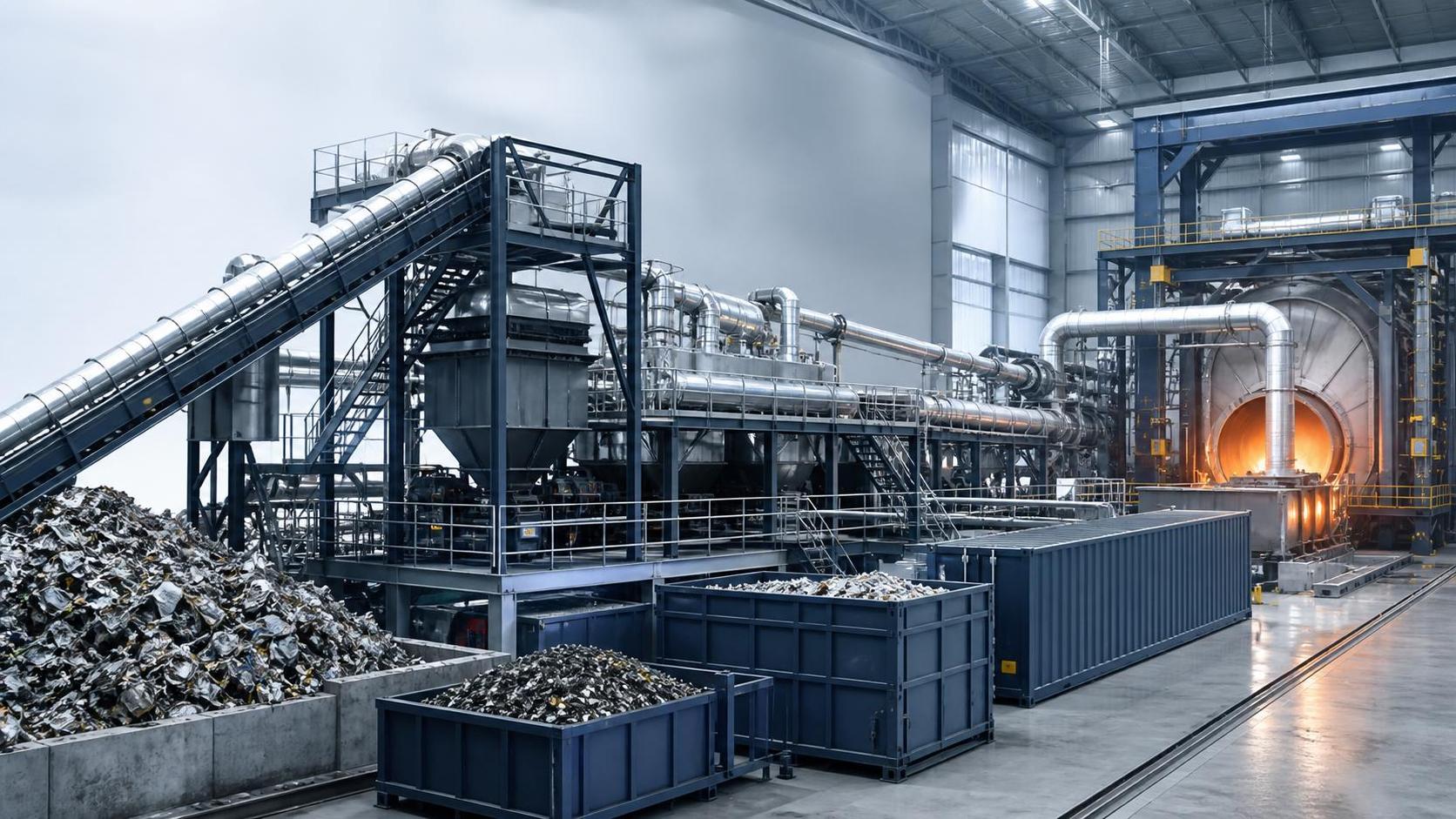
 Ms. Elena RodriguezWhat Drives Waste Recycling Cost in Industrial Projects and How to Estimate It?Waste recycling cost in industrial projects depends on composition, moisture, transport, pre-treatment, and compliance. Learn how to estimate it accurately and compare suppliers with confidence.Aug 24, 2026
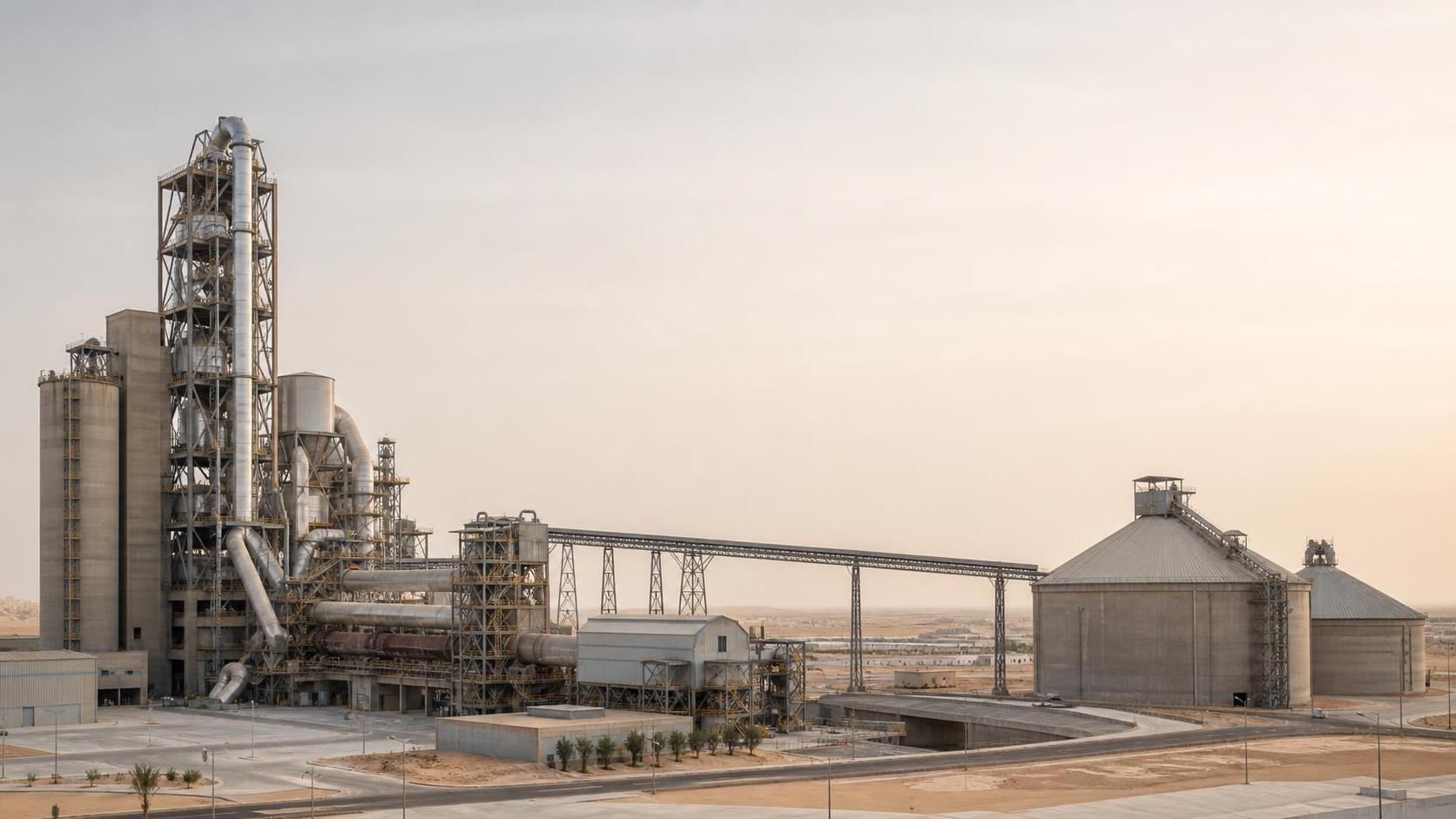
 Silicate Process EngineerHow to Evaluate Cement Production Plants in the Middle East for Capacity, Fuel Flexibility, and ROIcement production plants Middle East: Learn how to assess true capacity, fuel flexibility, and ROI risks to identify resilient assets and smarter investment opportunities.Aug 23, 2026

Related News
- 00
0000-00
Selecting Abrasion-Resistant High-Temperature Materials for Kiln and Conveyor Wear Zones - 00
0000-00
How PLC Control Improves Energy Efficiency and Temperature Stability in Kilns - 00
0000-00
What Determines Refractory Lining Monitoring Price for Industrial Kilns? - 00
0000-00
How Digital Twin Simulations Help Kiln Operators Cut Fuel Use and Stabilize Output - 00
0000-00
What to Evaluate in a Rotary Kiln Technology Manufacturer for High-Temperature Process Projects
Weekly Insights
Stay ahead with our curated technology reports delivered every Monday.