
How PLC Control Improves Energy Efficiency and Temperature Stability in Kilns




Energy efficiency in a kiln is not determined by burner efficiency alone. It depends on how accurately the control system matches heat input, material flow, combustion air, exhaust conditions, and process demand. A programmable logic controller (PLC) improves this coordination by converting temperature and process measurements into repeatable control actions. The result can be lower fuel waste, fewer thermal deviations, and more consistent product quality—provided that the control architecture, instrumentation, and operating logic are correctly engineered.
For kiln modernization, the relevant question is therefore not whether a PLC is present, but whether the system can control the actual causes of energy loss. A basic sequence controller may start burners and operate fans, while a properly designed PLC-based system can manage interdependent loops, identify abnormal conditions, maintain operating limits, and produce data for evaluating performance. This distinction is central to assessing energy efficient kilns PLC control as a technical solution rather than treating automation as a simple equipment replacement.
Why kiln energy efficiency depends on control quality
Kilns operate under constantly changing conditions. Feed moisture, particle size, material loading, residence time, ambient temperature, fuel pressure, and refractory condition can all affect the heat required to maintain the process. If the control system responds only to a single temperature measurement, it may compensate for one deviation while creating another.
For example, an increase in fuel flow can raise the measured temperature near a burner, but it may not improve heat transfer to the material. Excess fuel can increase exhaust losses, generate incomplete combustion, or create local hot spots. Similarly, increasing combustion air may support more complete combustion, but excessive air carries useful heat out of the kiln and increases fan power. Efficient operation requires coordinated adjustment rather than isolated actuator changes.
A PLC provides the logic platform for this coordination. It can receive signals from thermocouples, pressure transmitters, oxygen analyzers, flowmeters, level sensors, speed drives, and weighing systems. It then applies programmed control strategies to burners, dampers, fans, feeders, valves, and material-handling equipment. The quality of the result depends on the measurement chain and the control philosophy, not simply on the PLC’s processing speed.
How PLC control reduces avoidable energy loss
Maintaining the required thermal profile
Most continuous kilns have several thermal zones, each with a different process function. Preheating, drying, calcination, firing, soaking, cooling, or annealing may require different temperature ranges and rates of change. A PLC can control each zone independently while coordinating the overall profile.
Temperature control is typically based on PID algorithms, in which the controller responds to the difference between the measured value and the setpoint. Proportional action addresses the present error, integral action corrects accumulated deviation, and derivative action can anticipate the direction of change. In a kiln, PID settings must account for long transport delays, large thermal inertia, and changing material loads. Poorly tuned loops can oscillate, causing repeated over-firing and under-firing that consumes energy without improving production.
More advanced arrangements may use cascade control. A master temperature loop determines the required heat demand, while a secondary loop regulates fuel flow, combustion-air flow, or a related process variable. This allows the system to react more quickly to disturbances in fuel pressure or air supply before they produce a significant kiln-temperature deviation.
Controlling the air-to-fuel relationship
Combustion control has a direct effect on both fuel consumption and product stability. The PLC can regulate fuel valves and combustion-air dampers or variable-frequency drives according to a defined ratio. In more demanding applications, oxygen or flue-gas measurements can be used as a trim signal.
Ratio control alone is not sufficient in every operating condition. Burner characteristics, fuel composition, pressure, leakage, and air temperature can change the actual combustion result. An oxygen-trim loop may help correct these variations, but the analyzer must be located, maintained, and validated appropriately. A slow or contaminated analyzer can cause the controller to make incorrect corrections. For this reason, oxygen feedback should be treated as one part of the combustion strategy, with defined limits and fallback behavior rather than as an unquestioned source of truth.
Reducing excess air can lower stack losses, but the minimum safe air level depends on the fuel, burner design, process chemistry, and applicable safety requirements. The control objective is not to minimize oxygen as far as possible. It is to maintain combustion within a verified operating window while avoiding unnecessary heated gas flow.
Managing draft and exhaust flow
Kiln pressure influences air infiltration, flame behavior, heat distribution, and emissions. A PLC can control induced-draft and forced-draft equipment using pressure transmitters and variable-speed drives. Stable draft helps prevent uncontrolled cold-air entry through doors, seals, inspection openings, or material transfer points.
Excessive negative pressure can draw ambient air into the kiln, increasing the volume of gas that must be heated and discharged. Insufficient draft can allow hot gases or combustion products to move into areas where they do not belong. A pressure-control loop should therefore be linked to the kiln’s operating state, not run at one fixed setpoint under all production conditions.
Fan speed control also creates an energy opportunity. Throttling a damper while a motor continues to operate at full speed may waste power. Where the process and motor system permit it, a variable-frequency drive can adjust fan output more efficiently. The PLC must still prevent unstable combustion, excessive pressure fluctuation, and operation outside the fan’s reliable range.
Matching heat input to material throughput
Heat demand is closely related to production rate and material condition. If the feeder slows while burner output remains unchanged, the kiln may overheat. If the feed rate increases without a corresponding adjustment in heat input or residence time, the product may leave the process under-treated.
PLC logic can link feeder speed, weighing data, moisture information, and zone temperature requirements. Feedforward control is useful in this situation because it adjusts heat demand when a known disturbance occurs, rather than waiting for the kiln temperature to move outside its target. Feedback from temperature and product-quality measurements then corrects the remaining error.
This approach is particularly valuable where the process has a long response time. Waiting for a temperature deviation before changing fuel can result in delayed correction and subsequent overshoot. However, feedforward control requires a reasonably stable relationship between material input and thermal demand. If feed moisture or composition varies widely and is not measured, the feedforward model should be conservative and supported by feedback control.
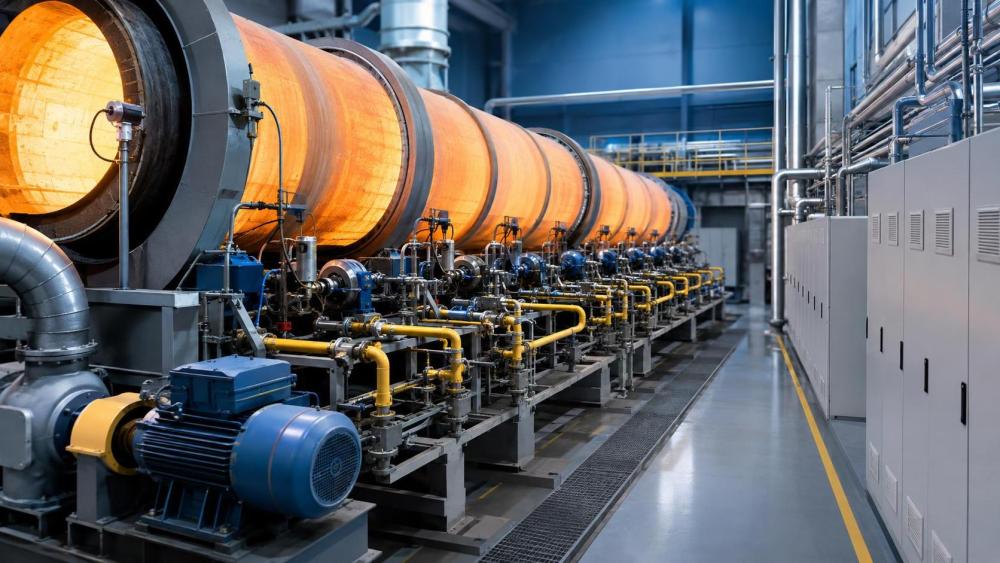
Temperature stability is a control-system issue, not only a heating issue
Stable temperature does not mean that every sensor must display the same value. It means that the material experiences a controlled thermal history within the required process limits. Sensor placement, response time, calibration, and protection from radiation all affect whether the measured temperature represents the process condition that matters.
A PLC-based system can improve stability by filtering noise, identifying implausible signals, and using multiple measurements to control a zone. Yet excessive filtering creates its own risk: if the signal is delayed too much, the controller reacts after the process has already changed. The appropriate filtering time must reflect the dynamics of the kiln and the response of the sensor.
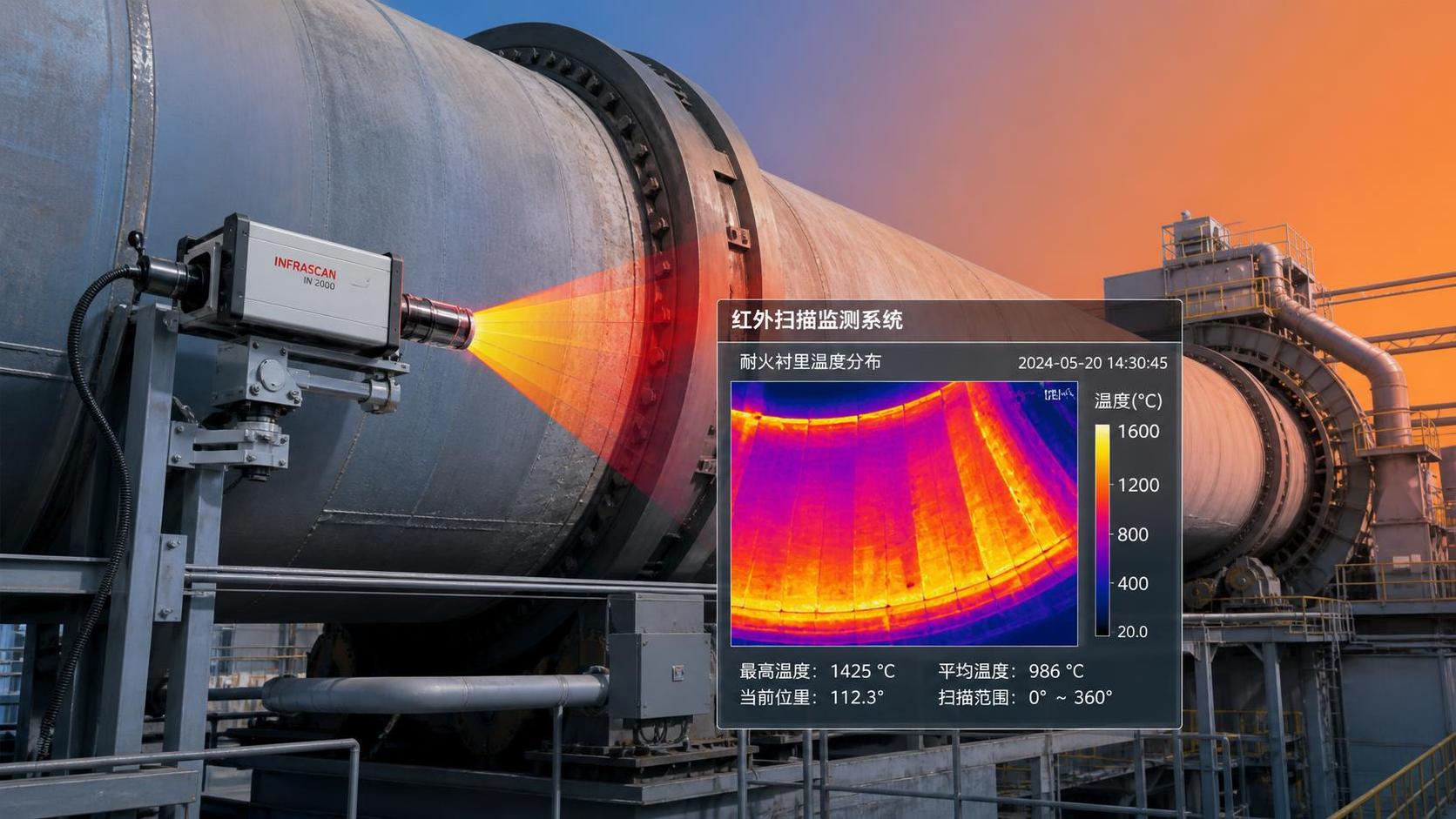
Temperature measurement should also be evaluated against the intended use. A thermocouple suitable for monitoring a general chamber temperature may not be suitable for precise control near a high-radiation flame. In some installations, infrared instruments, protected thermocouples, or different measurement locations may be required. Replacing a legacy controller without resolving measurement weaknesses will not produce reliable temperature stability.
PLC functions that support predictive process management
The PLC can do more than execute start and stop sequences. With appropriate programming and data access, it can calculate trends and operating indicators such as fuel consumption per unit of production, temperature deviation, burner operating time, fan loading, pressure variation, and the frequency of alarm conditions.
These indicators help separate a real efficiency improvement from a temporary reduction in fuel use caused by lower production. A useful energy metric should be related to a defined production quantity or material output and should account for relevant operating conditions. Raw fuel totals alone are not sufficient for comparing different shifts, product grades, or moisture levels.
Alarm history is equally important. Repeated high-temperature alarms, unstable draft alarms, oxygen deviations, or feeder interruptions may indicate a control-loop problem, air leakage, sensor degradation, or mechanical wear. A modern system should preserve time-stamped events and distinguish between warnings, trips, permissives, and operator acknowledgements. Without this context, a large alarm list can obscure rather than improve troubleshooting.
Historian or supervisory-system integration can support longer-term analysis, but the basic PLC should remain capable of maintaining safe and stable local control if communication with a higher-level system is interrupted. Network connectivity should not create a single point of failure for essential process functions.
Implementation limits and common evaluation errors
Replacing the PLC without reviewing the process
A controller upgrade cannot compensate for damaged refractory, poor kiln sealing, blocked air passages, leaking dampers, fouled heat-transfer surfaces, or incorrectly sized burners. These conditions create disturbances that software can only partly correct. A modernization assessment should therefore examine mechanical and thermal losses alongside automation hardware.
Using too many automatic loops without clear priorities
Adding control loops does not automatically improve operation. Conflicting loops can cause one function to increase fuel while another reduces air, or one loop to change draft while another attempts to restore it. The control hierarchy should define which variable has priority, which limits are hard constraints, and how the system behaves during start-up, shutdown, low-load operation, and sensor failure.
Ignoring manual and fallback modes
Automatic control must include controlled fallback states. If a temperature sensor fails, the system needs a defined response based on redundancy, a substitute measurement, a limited-output mode, or a safe shutdown. Manual operation should not allow the operator to bypass essential burner permissives, purge sequences, flame detection, or pressure protections.
Confusing control accuracy with safety compliance
Process control and functional safety are related but distinct. A PLC used for ordinary regulation is not automatically a safety instrumented system. Burner management, fuel-train protection, flame supervision, purge verification, emergency shutdown, and other safety functions must be designed according to the applicable fuel, equipment, and jurisdictional requirements. Where a safety integrity assessment is required, the safety function should be engineered and validated separately from ordinary temperature-control logic.
Programming practices should also be documented. IEC 61131-3 is commonly referenced for PLC programming languages and engineering practices, but compliance with a programming standard does not by itself verify the complete kiln design. The equipment specification should identify applicable electrical, machinery, combustion, emissions, and workplace-safety requirements for the installation location.
What to verify before approving a PLC modernization
A technical evaluation should request more than a PLC model number and a list of control features. The relevant evidence is the relationship between process objectives, measurements, control actions, and performance verification.
- Control narrative: Define operating modes, zone setpoints, cascade or ratio strategies, permissives, interlocks, alarm priorities, and fallback behavior.
- Instrumentation plan: Identify sensor types, measurement ranges, installation locations, calibration intervals, redundancy, and signal validation methods.
- Combustion strategy: Explain fuel and air regulation, oxygen trim if used, purge logic, flame supervision, and responses to abnormal fuel or air pressure.
- Energy measurement: Provide fuel-flow measurement, relevant electrical measurements, production quantity, and the calculation method for normalized energy performance.
- Dynamic performance: Evaluate settling time, overshoot, response to feed changes, response to fuel-pressure variation, and stability during low-load operation.
- Integration and reliability: Check communication architecture, local control availability, backup and restoration procedures, cybersecurity controls, spare-part strategy, and maintainability.
- Commissioning evidence: Require loop checks, interlock tests, alarm tests, sensor calibration records, and a defined comparison between baseline and post-upgrade operation.
Performance claims should be tied to measurement boundaries and operating conditions. A credible comparison states what fuel, production rate, product type, moisture condition, ambient condition, and kiln operating state were used. It should also distinguish energy savings caused by improved control from savings caused by maintenance, reduced throughput, or changes in product specification.
The practical value of PLC control
PLC control improves kiln energy performance when it closes the gap between process demand and equipment response. Its strongest contribution is coordinated, repeatable control: maintaining a thermal profile, regulating combustion and draft, adapting to material flow, and recording the information needed to identify drift.
It is not an independent source of efficiency. The result depends on accurate sensors, sound burner and fan design, reliable mechanical equipment, appropriate loop tuning, disciplined safety logic, and a commissioning method that verifies both temperature stability and normalized energy use. For that reason, the best modernization proposals describe the complete control strategy and its verification method—not merely the automation platform being installed.
Related News
 Thermal Energy ArchitectHow PLC Control Improves Energy Efficiency and Temperature Stability in KilnsEnergy efficient kilns PLC control improves temperature stability, cuts fuel waste, and optimizes combustion, draft, and material flow. Explore proven strategies for smarter kiln modernization.Sep 04, 2026
 Optical Glass Tech FellowEuropean Glass Melting Processes: Furnace Choices, Energy Use, and Quality ControlGlass melting process Europe: explore furnace choices, energy efficiency, cullet strategy, and quality control to improve output, compliance, and long-term glass performance.Sep 03, 2026
 Thermal Energy ArchitectWhat Determines Refractory Lining Monitoring Price for Industrial Kilns?Refractory lining monitoring price depends on kiln size, sensor technology, installation, software, and support. Compare total lifecycle costs and choose the right solution.Sep 02, 2026
 Silicate Process EngineerCement Production System Costs: A Plant Buyer’s Guide to Budgeting and ROICement production systems cost planning made clear: compare CAPEX, operating costs, compliance, and ROI to build a resilient, profitable cement plant investment.Sep 01, 2026
 Dr. Alistair VaughnWhat Should a Process Technology Database Track for High-Temperature Plants?Process technology database essentials for high-temperature plants: track thermal profiles, feed chemistry, refractory wear, emissions, energy, and maintenance for safer, data-driven decisions.Aug 31, 2026
 Ms. Elena RodriguezHow to Evaluate a Silicate Processing Equipment Manufacturer for Plant ProjectsSilicate processing equipment manufacturer selection: assess process fit, guarantees, energy, compliance, delivery risk, and lifecycle support for dependable plant performance.Aug 30, 2026
 Dr. Alistair VaughnHow to Specify Custom Agricultural Processing Equipment for Throughput and HygieneEquipment customization services for agricultural processing: learn to specify hygienic, high-throughput lines that improve yield, reliability, and long-term efficiency.Aug 29, 2026
 Dr. Alistair VaughnHow to Select Process Plant Equipment for High-Temperature, Abrasive Production LinesProcess plant equipment selection for high-temperature, abrasive lines: reduce downtime, improve durability, and optimize lifecycle performance.Aug 28, 2026
 Silicate Process EngineerHow Kiln Heat Recovery Systems Cut Fuel Use in Cement and Lime ProductionKiln heat recovery helps cement and lime plants cut fuel use, improve thermal stability, and build practical, reliable decarbonization strategies.Aug 27, 2026
 Ms. Elena RodriguezProcess Equipment Comparison: Which Metrics Matter Most for Reliable Selection?Process equipment comparison made practical: discover which metrics truly drive reliable selection, from energy efficiency and control stability to wear life, maintainability, and uptime.Aug 26, 2026
 Ms. Elena RodriguezWhat Buyers Should Check Before Sourcing Precision Alloy Bars for Critical PartsPrecision Alloy Bars buyers should verify grade, chemistry, tolerances, surface quality, traceability, and lead time before sourcing for critical parts. Learn what prevents costly machining and reliability risks.Aug 27, 2026
 Ms. Elena RodriguezHow to Evaluate Thermal Management Solutions Insulation for High-Heat Industrial SystemsThermal management solutions insulation: learn how to assess high-heat industrial systems by thermal performance, durability, lifecycle cost, and supplier data for smarter decisions.Aug 25, 2026
 Ms. Elena RodriguezWhat Drives Waste Recycling Cost in Industrial Projects and How to Estimate It?Waste recycling cost in industrial projects depends on composition, moisture, transport, pre-treatment, and compliance. Learn how to estimate it accurately and compare suppliers with confidence.Aug 24, 2026
 Silicate Process EngineerHow to Evaluate Cement Production Plants in the Middle East for Capacity, Fuel Flexibility, and ROIcement production plants Middle East: Learn how to assess true capacity, fuel flexibility, and ROI risks to identify resilient assets and smarter investment opportunities.Aug 23, 2026
 Structural Material AnalystHow to Evaluate Lightweight Material Machinery for Output, Energy Use, and Product QualityLightweight material machinery evaluation guide: compare stable output, energy use, and product quality to choose equipment that cuts waste, lowers costs, and improves production confidence.Aug 22, 2026
 Material Heat-Resist ExpertWhat Determines Refractory Production Line Price in a Turnkey Plant Project?Refractory production line price depends on raw materials, forming method, kiln and drying design, automation, utilities, and scope. Learn what really drives turnkey plant cost before you invest.Aug 21, 2026
 Thermal Energy ArchitectHow Digital Twin Simulations Help Kiln Operators Cut Fuel Use and Stabilize OutputDigital twin simulations for kilns help operators cut fuel use, reduce overcorrection, and stabilize output by testing process changes safely before they impact quality and cost.Aug 20, 2026
 Dr. Alistair VaughnWhat Causes Thermal Shock Failure in Heat-Resistant Materials During Development?Heat-resistant material development thermal shock failures often stem from expansion mismatch, weak microstructure, and residual stress. Learn the real causes and smarter evaluation steps.Aug 19, 2026
 Ms. Elena RodriguezWhat Is a Real Time Digital Twin and Where Does It Deliver Measurable Value?Real time digital twin explained: discover where it delivers measurable value in energy, quality, maintenance, and carbon performance for industrial operations.Aug 18, 2026
 Structural Material AnalystWhat Thermal Barrier Technology Works Best for Lightweight Industrial Panels?Thermal barrier technology lightweight industrial panels use works best when fire safety, heat stability, and weight are balanced. Compare mineral wool, silicate, ceramic, and hybrid options.Aug 17, 2026
Related News
- 00
0000-00
How PLC Control Improves Energy Efficiency and Temperature Stability in Kilns - 00
0000-00
What Determines Refractory Lining Monitoring Price for Industrial Kilns? - 00
0000-00
How Digital Twin Simulations Help Kiln Operators Cut Fuel Use and Stabilize Output - 00
0000-00
What to Evaluate in a Rotary Kiln Technology Manufacturer for High-Temperature Process Projects - 00
0000-00
How to Evaluate an Incineration Equipment Exporter for Compliance, Capacity, and After-Sales Support
Weekly Insights
Stay ahead with our curated technology reports delivered every Monday.