
How Waste Recycling Technology Improves Material Recovery in Industrial Plants




Material recovery improves when waste is treated as a variable feedstock with a defined composition, moisture range, particle-size profile, and contamination limit. Sending all residues to a single disposal route hides these differences and often destroys recoverable value. Waste recycling technology separates streams early, preserves useful fractions, and directs each fraction to the process that can accept it without creating instability elsewhere in the plant.
For industrial facilities handling mineral residues, process scrap, packaging waste, sludge, dust, metal-bearing fractions, or energy-rich by-products, the practical objective is not simply to reduce the volume leaving the site. It is to recover materials at a quality that has a viable internal or external use. A recovered fraction that contains excessive chlorine, alkalis, free moisture, organics, or mixed metals may look acceptable by mass while causing handling, combustion, product-quality, or emissions problems later.
Start with the Waste Stream, Not the Equipment
Sorting equipment, shredders, separators, and thermal units are selected too early when the waste stream has only been described as “mixed industrial waste” or “production residue.” That label is insufficient. Material recovery depends on knowing what changes from shift to shift, what enters during maintenance periods, and which contaminants arrive intermittently rather than continuously.
A useful characterization program distinguishes between physical and chemical variation. Physical variation includes particle size, bulk density, moisture, shape, friability, and the tendency to bridge or wrap around moving equipment. Chemical variation includes ash content, calorific value, halogens, sulfur, alkalis, heavy metals, soluble salts, and reactive components. These properties affect different parts of the recovery train. A stream may be easy to screen but difficult to reuse because its chemistry is incompatible with the receiving process. Conversely, a chemically suitable mineral fraction may require dewatering, drying, or agglomeration before it can be conveyed reliably.
Sampling must reflect actual operating conditions. Grab samples taken from the top of a stockpile can miss fines that settle below, trapped moisture, or heavy fragments concentrated at discharge points. Sampling after homogenization often provides a more representative view, while samples before and after each separation stage reveal where valuable material is being lost. The purpose is to establish a working material balance, not merely to obtain a laboratory result.
Recovery Begins with Segregation at the Point of Generation
Many recovery losses occur before waste reaches the recycling line. Clean refractory demolition material mixed with insulation, anchors, dust, and general debris becomes much harder to grade for secondary use. Glass cullet contaminated by ceramics, stones, and heat-resistant fragments can create defects if it returns to a melting process. Dry process scrap mixed with washdown water can become a costly sludge-management issue.
Source segregation does not require every stream to have a separate building or complex handling system. It requires clear boundaries between fractions whose downstream routes are materially different. A plant may use dedicated collection points for ferrous and non-ferrous metals, a covered bay for dry mineral fines, sealed containers for dust with elevated soluble salts, and separate storage for high-calorific residues intended for thermal recovery. The value lies in preventing irreversible mixing.
Storage conditions are part of recovery quality. Rain exposure changes moisture and leachate behavior. Wind can carry fine material across stockpiles. Long dwell times can promote degradation, oxidation, odor formation, or self-heating in organic-rich materials. Where incoming feed varies, covered storage and controlled blending create a more stable feed for downstream equipment than direct transfer from collection bins.
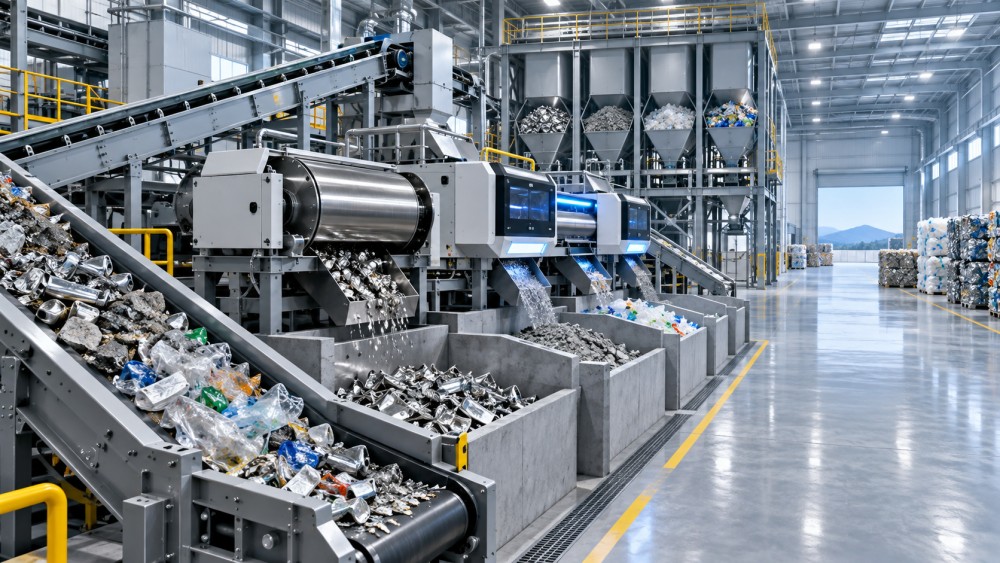
Choose Separation Methods Around the Material Contrast
Separation works when the target material differs from unwanted material in a measurable property. The relevant contrast may be size, density, magnetism, electrical conductivity, optical response, shape, or thermal behavior. A recycling line should exploit the strongest available contrast first, because removing obvious contaminants early protects more selective and sensitive equipment later in the sequence.
Screening is effective for dividing coarse oversize, usable middlings, and fine fractions, but screen aperture alone does not define performance. Wet, fibrous, plate-like, or sticky particles can blind apertures and send recoverable material to the wrong fraction. Vibratory settings, screen media, feed depth, and cleaning systems matter as much as nominal opening size. When fines carry most of the contaminant load, a fine cut may improve the quality of the retained material but reduce total recovery. The preferred cut point should be based on the value and permitted impurity level of the output, not on achieving the highest apparent yield.
Magnetic separation can recover ferrous metal and protect shredders, mills, and conveyors from tramp iron. Its position in the line matters. A magnet installed before size reduction captures large pieces and reduces equipment damage; a later stage may retrieve liberated metal from broken composite material. Eddy-current separation addresses non-ferrous conductive metals, although performance falls when feed is too moist, particle sizes are highly mixed, or flat and tangled pieces do not present consistently to the separator.
Air classification and density separation are useful where light films, paper, fibers, char, or low-density contaminants need to be removed from mineral or rigid-plastic fractions. These systems require controlled air flow and stable feed presentation. A change in moisture can alter the trajectory of fine particles enough to contaminate both outputs. Dust extraction also has to be integrated into the design, since captured dust may contain recoverable fine material or may require a separate route because it concentrates undesirable compounds.
Optical sorting is best used where color, spectral response, or surface characteristics correlate reliably with the desired material. It is less reliable when material surfaces are heavily coated, wet, blackened, or obscured by dust. Installing optical sensors without upstream cleaning and particle-size conditioning often creates a false impression of poor sensor performance when the actual problem is inconsistent feed preparation.
Thermal Treatment Can Recover Energy and Stabilize Residues
For combustible industrial residues, thermal treatment can recover energy while reducing mass and destroying certain organic contaminants. The route may include preparation of a solid recovered fuel, controlled combustion, gasification under selected conditions, or co-processing in a high-temperature kiln. Each route imposes a different acceptance window for moisture, ash, chlorine, sulfur, particle size, and heating value.
High calorific value alone does not make a residue suitable for thermal recovery. Excessive moisture reduces net useful energy and can limit feeding stability. Chlorine and sulfur can increase corrosion risk, influence flue-gas treatment demand, or affect downstream product chemistry. Fine materials may entrain into gas streams, while oversized pieces can cause feed interruptions. Blending can smooth variation, but blending incompatible waste only spreads the problem across a larger inventory.
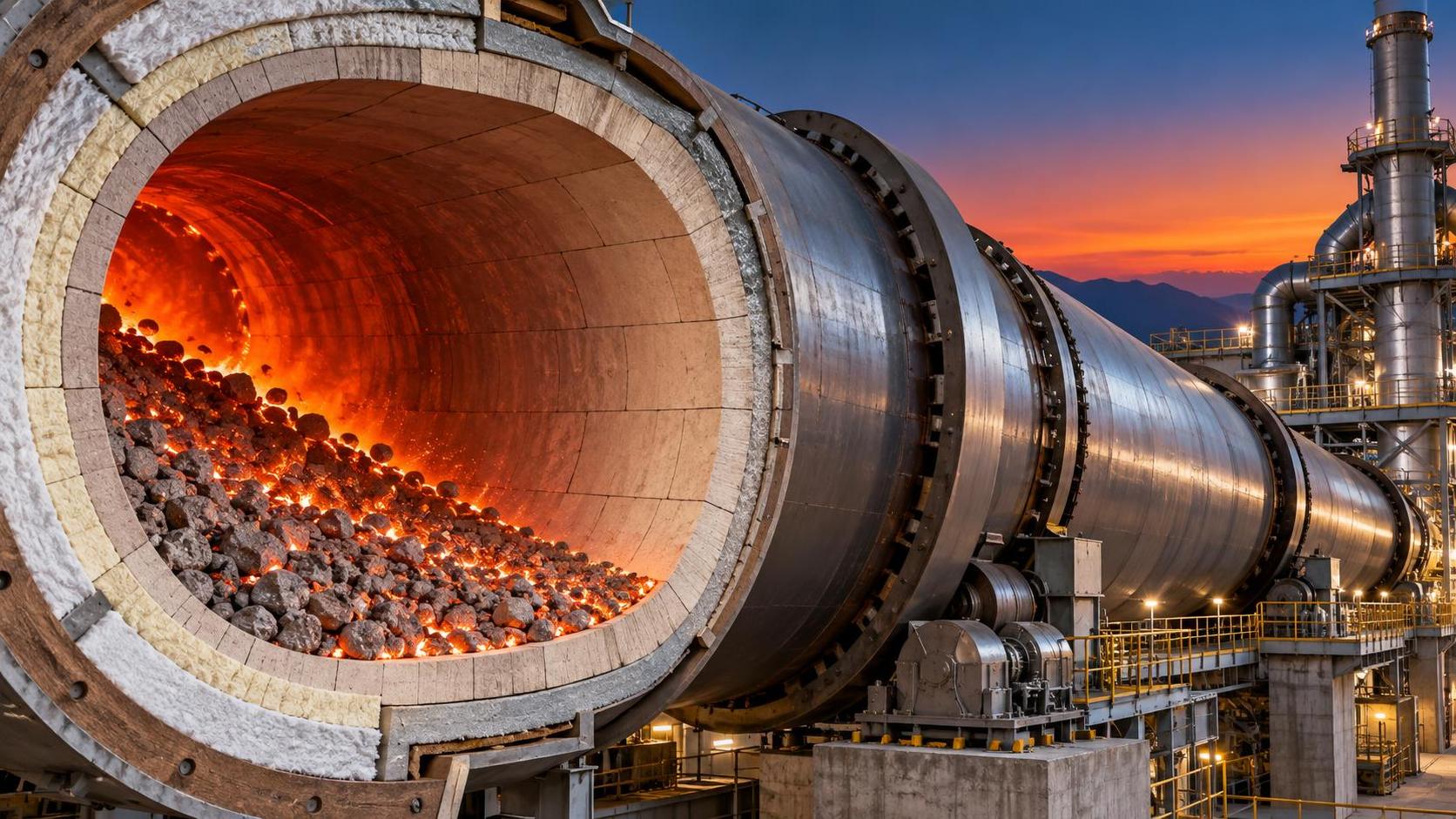
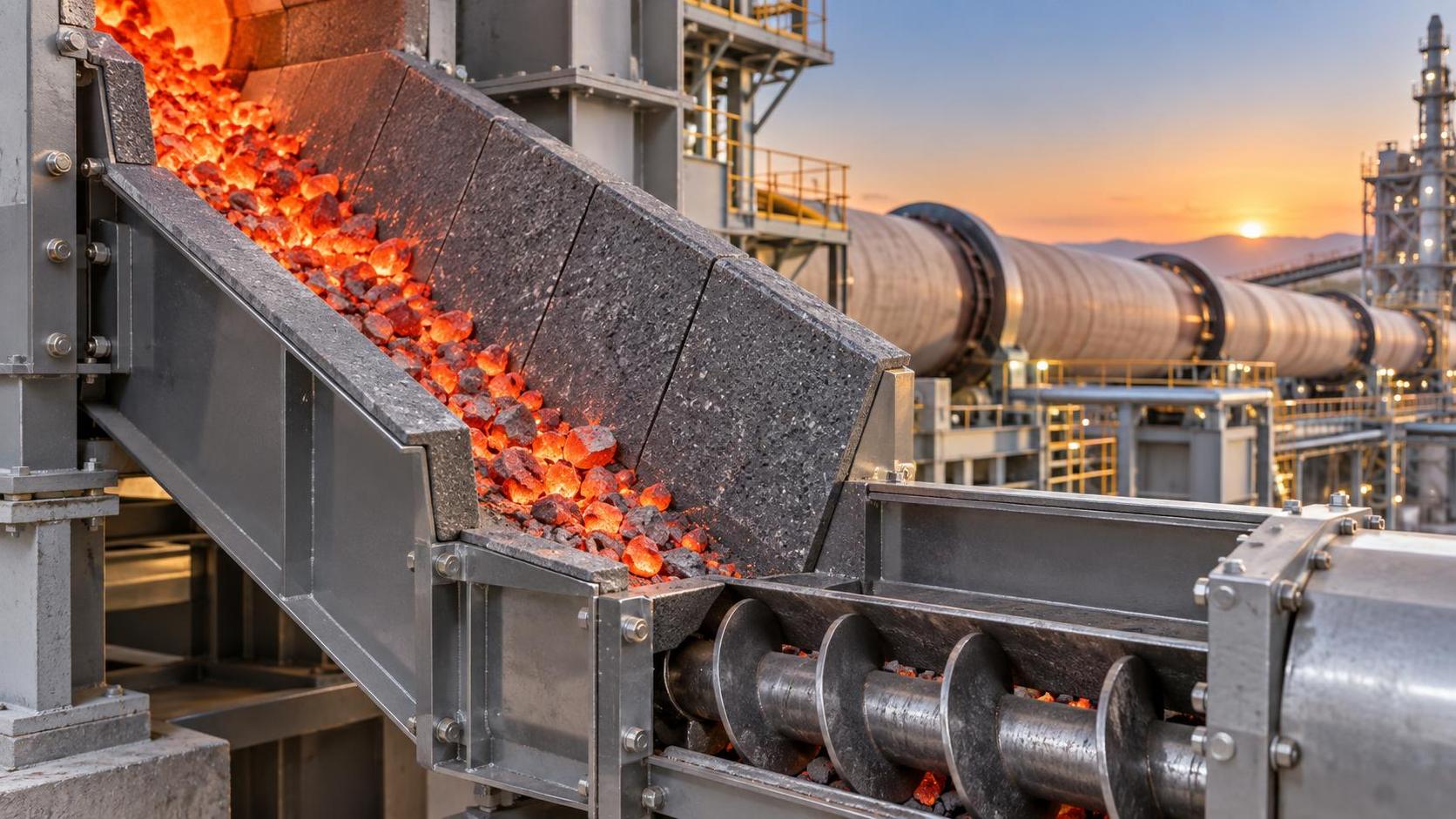
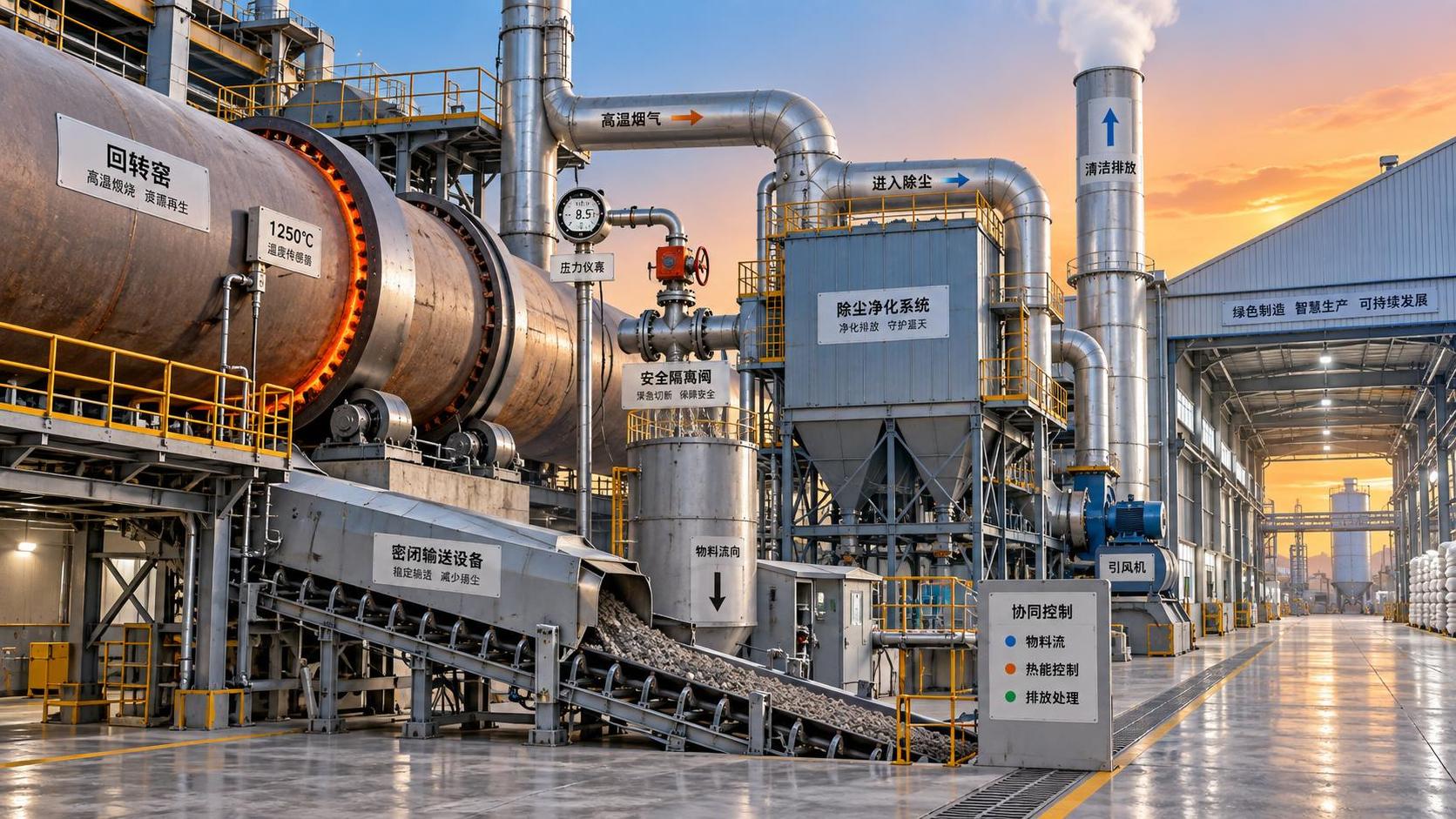
In kiln-based co-processing, the mineral ash fraction may become part of the clinker-forming system when its oxide composition is compatible with the raw mix and process conditions. That potential should be evaluated against alkali balance, volatile cycles, trace elements, sulfur behavior, and the position at which the material enters the kiln system. A residue suitable for a main burner may be unsuitable for another injection point because residence time, oxygen availability, and temperature profile differ. Thermal substitution and material substitution must therefore be assessed together.
Incineration bottom ash, fly ash, and air-pollution-control residues should never be treated as one category. Bottom ash can contain recoverable metals and mineral fractions after aging, screening, and separation. Fly ash and treatment residues often concentrate fine particles and soluble compounds, making their handling and recovery path more constrained. Combining them prematurely compromises both recovery options and containment strategy.
Close the Loop Only When the Recovered Material Has a Defined Specification
Recovery is complete only when a fraction has an approved destination, a quality definition, and a repeatable handoff. Internal reuse may involve returning clean cullet to a glass batch, reintroducing selected mineral fines into a raw-material blend, using recovered metal as a secondary feed, or incorporating compatible recycled aggregates into a building-material formulation. External outlets require the same discipline: the material must be described by properties that matter to the receiving process rather than by an ambiguous waste label.
A specification should include the sampling method and the basis for each reported value. Moisture is commonly misunderstood because a material can meet composition limits on a dry basis while exceeding practical storage, conveying, or feed limits in its delivered condition. Likewise, average contaminant content can mask isolated but damaging events. A small amount of wire, film, refractory fragment, or alkaline dust can cause disproportionate disruption in a receiving process.
Instrumentation Turns Recovery from an Estimate into a Controlled Operation
Weighing systems, belt scales, moisture measurement, online analyzers, cameras, and laboratory confirmation each answer different questions. A belt scale tracks mass movement; it does not establish material quality. A moisture sensor may support feed control but needs validation against the actual material, especially where particle size or surface condition changes. Online elemental or spectral measurement can identify drift quickly, yet it should be tied to a sampling and calibration routine rather than treated as an independent final verdict.
Recovery performance should be reviewed as a chain of losses. Incoming mass, rejects, dust collection, oversize disposal, recovered output, and internal return all need reconciliation. When recovery drops, the cause may be a poorer incoming stream, a worn screen, a separator setting, excess moisture, an operator bypass, or a change in downstream acceptance criteria. Without stage-level information, the response often becomes a broad equipment adjustment that creates a different problem.
Condition monitoring deserves equal attention. Worn crusher liners change liberation size. Damaged conveyor skirts allow material loss and cross-contamination. Poorly maintained magnets collect less metal and can shed accumulated material unexpectedly. Air leaks alter classifier performance. These failures tend to appear first as gradual quality drift rather than a total shutdown, which makes routine inspection data valuable for protecting recovery yield.
Design for Variable Feed and Maintainable Access
Industrial waste streams rarely remain constant after installation. Maintenance shutdowns, product changes, seasonal moisture, altered packaging, and supplier variation can shift feed properties. Equipment sizing based only on average throughput may perform poorly during short periods of dense, wet, or high-volume material. Surge capacity, bypass arrangements, accessible cleanout points, and provision for manual inspection reduce the likelihood that a temporary upset becomes prolonged contamination.
Layout decisions also shape long-term recovery. Transfer points should minimize drop height where fragile recyclables need to remain intact. Dusty fractions require enclosed chutes and extraction points that are reachable for cleaning. Magnetic separators, optical sorters, and sampling points need safe access without stopping unrelated plant sections wherever possible. A line that is difficult to inspect will eventually be operated on assumptions, and assumptions are where recoverable material is most easily lost.
The strongest recycling systems make material quality visible from collection through final use. When separation stages, thermal routes, storage controls, and receiving specifications are connected, waste recycling technology becomes a practical production function: it retains usable material, isolates harmful variation, and keeps recovery decisions aligned with the conditions of the plant that must absorb the output.
Related News
 Dr. Alistair VaughnHow Waste Recycling Technology Improves Material Recovery in Industrial PlantsWaste recycling technology improves material recovery through source segregation, smart separation, thermal treatment, and quality control for industrial plants.Sep 24, 2026
 Optical Glass Tech FellowHow to Specify Glass Annealing Equipment for European Quality and Energy RequirementsGlass annealing equipment Europe: learn how to specify lehrs for consistent glass quality, energy efficiency, compliance, automation, and reliable long-term performance.Sep 23, 2026
 Optical Glass Tech FellowSilicate Process Automation: Improving Batch Consistency and Energy ControlSilicate process automation improves batch consistency, energy control, traceability, and operator confidence across high-temperature manufacturing operations.Sep 22, 2026
 Optical Glass Tech FellowHow Silicate Industrial Processes Control Viscosity, Energy Use, and Product QualitySilicate industrial processes: learn how viscosity, chemistry, heat transfer, and atmosphere control reduce energy use, improve stability, and protect product quality.Sep 21, 2026
 Thermal Energy ArchitectHow European Plants Can Evaluate Energy Recovery Equipment for High-Temperature ProcessesIndustrial energy recovery equipment Europe: learn how high-temperature plants can assess waste-heat sources, integration risks, lifecycle value, and reliable recovery routes.Sep 20, 2026
 Thermal Energy ArchitectIndustrial Furnace Process Optimization: Reducing Fuel Use Without Sacrificing ThroughputIndustrial process optimization furnace strategies that cut fuel use while protecting throughput. Explore combustion control, heat recovery, refractory performance, and data-driven efficiency gains.Sep 19, 2026
 Ms. Elena RodriguezWhat Drives High-Pressure Extrusion Equipment Cost in Industrial Projects?High pressure extrusion equipment cost explained: compare pressure, die design, automation, wear, energy, and installation factors for smarter industrial investments.Sep 18, 2026
 Thermal Energy ArchitectHow to Size a Waste Heat Recovery Exchanger for High-Temperature Kiln Exhaust?Waste heat recovery exchanger sizing for high-temperature kiln exhaust: balance recoverable duty, fouling, corrosion limits, pressure drop, and reliable heat use.Sep 17, 2026
 Thermal Energy ArchitectWhy Heat-Resistant Materials Lose Abrasion Resistance at High TemperaturesHeat-resistant materials abrasion resistance can decline at high temperatures. Discover the thermal, chemical, and mechanical causes of wear—and how to choose longer-lasting linings.Sep 16, 2026
 Thermal Energy ArchitectHow to Evaluate a Thermal Energy Optimization Company for High-Temperature PlantsChoose a thermal energy optimization company with proven process expertise, measurable savings, and reliable delivery for high-temperature plants. Learn what to assess.Sep 15, 2026
 Thermal Energy ArchitectRotary Kiln Efficiency: How Feed Rate, Fuel Use, and Heat Loss Affect OutputRotary kiln efficiency explained: discover how feed rate, fuel use, heat loss, combustion, and cooling performance shape output, quality, and energy costs.Sep 14, 2026
 Thermal Energy ArchitectHow to Select Heat-Resistant Materials That Maintain Abrasion Resistance in KilnsHeat-resistant materials abrasion resistance: learn how to select kiln linings that withstand heat, wear, thermal cycling, and chemical attack for longer service life.Sep 13, 2026
 Thermal Energy ArchitectHow Rotary Kiln Automation Improves Temperature Control and Fuel EfficiencyRotary kiln technology automation enhances temperature control, stabilizes combustion, and improves fuel efficiency with smarter data, predictive control, and safer operations.Sep 12, 2026
 Silicate Process EngineerCement Plant Emission Control: Selecting Systems for Dust, NOx, and SO2 LimitsCement plant emission control guide: compare dust collectors, NOx reduction, and SO2 systems for reliable compliance across kiln modes, fuel changes, and operating upsets.Sep 11, 2026
 Thermal Energy ArchitectSelecting Abrasion-Resistant High-Temperature Materials for Kiln and Conveyor Wear ZonesHigh-temp material engineering guide to abrasion-resistant kiln and conveyor solutions—match wear, heat, chemistry, and installation design for longer service life.Sep 10, 2026
 Dr. Alistair VaughnIndustrial Process Engineering: How to Map Processes for Safer, More Efficient PlantsIndustrial process engineering reveals bottlenecks, safety risks, and energy losses through practical process mapping for safer, more efficient plants.Sep 09, 2026
 Optical Glass Tech FellowHow to Evaluate a Glass Annealing Equipment Manufacturer for Production StabilityChoose a glass annealing equipment manufacturer with proven thermal uniformity, reliable controls, lifecycle value, and responsive service for stable production.Sep 08, 2026
 Prof. Marcus ChenThermal Energy Architecture in North America: Strategies for Lower Building Energy UseThermal energy architecture North America helps project leaders cut building energy use through stronger envelopes, right-sized HVAC, storage, and smart commissioning.Sep 07, 2026
 Ms. Elena RodriguezHow Should Buyers Evaluate Building Material Industry Intelligence Pricing?Building material industry intelligence pricing: learn how to compare coverage, technical depth, and ROI to choose intelligence that reduces procurement risk.Sep 07, 2026
 Ms. Elena RodriguezHow to Use Building Material Intelligence Data for Market and Investment DecisionsBuilding material industry intelligence data helps leaders evaluate demand, costs, regulation, capacity, and technology to make smarter market and investment decisions.Sep 05, 2026



Related News
- 00
0000-00
How Waste Recycling Technology Improves Material Recovery in Industrial Plants - 00
0000-00
Industrial Process Engineering: How to Map Processes for Safer, More Efficient Plants - 00
0000-00
What Should a Process Technology Database Track for High-Temperature Plants? - 00
0000-00
How to Specify Custom Agricultural Processing Equipment for Throughput and Hygiene - 00
0000-00
How to Select Process Plant Equipment for High-Temperature, Abrasive Production Lines
Weekly Insights
Stay ahead with our curated technology reports delivered every Monday.