
Advanced Ceramic Processing for Honeycomb: Which Methods Improve Strength and Thermal Shock Resistance?




For technical evaluators comparing extrusion, firing, infiltration, and microstructure control routes, advanced ceramic processing for honeycomb is central to balancing mechanical strength with thermal shock resistance. This article outlines how processing variables influence cell integrity, crack propagation, porosity, and heat tolerance, helping decision-makers identify scalable methods that improve performance, reduce failure risk, and align with demanding industrial thermal management applications.
What Technical Evaluators Are Really Comparing in Honeycomb Ceramic Processing
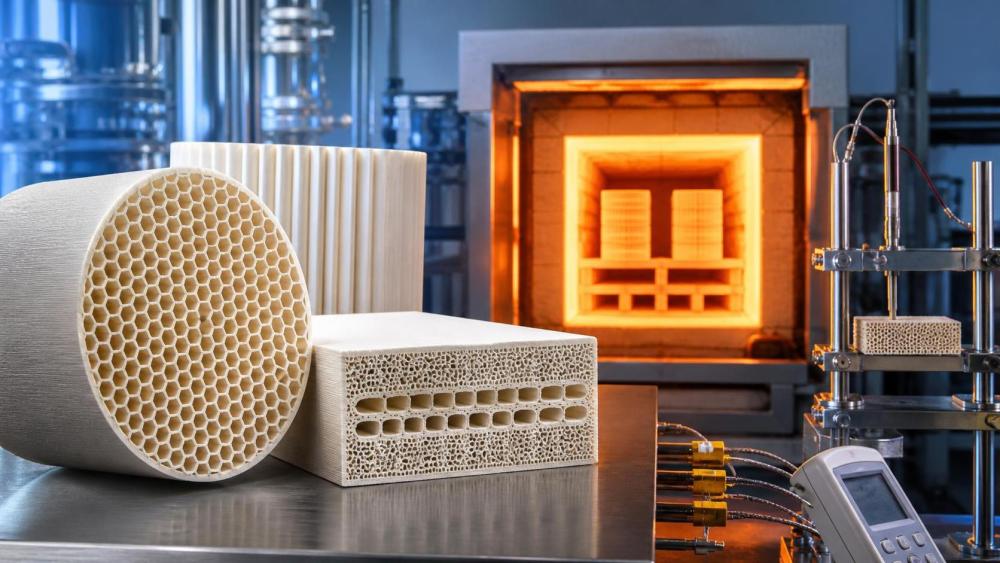
The core search intent behind advanced ceramic processing for honeycomb is practical evaluation. Readers are not looking for generic ceramic theory. They want to know which process routes measurably improve strength and thermal shock resistance.
That usually means comparing manufacturing decisions across extrusion quality, raw material design, drying control, firing profile, pore architecture, and post-treatment methods. The real question is which variables improve field reliability without creating excessive cost or scale-up risk.
For technical evaluators, the most important concern is not the highest laboratory value in isolation. It is whether a given process can protect thin walls, preserve open channels, and survive repeated heating and cooling cycles.
In industrial honeycomb components, strength and thermal shock resistance are linked but not identical. A body can show good room-temperature crushing strength, yet still fail under thermal gradients if microcracks, anisotropy, or pore stress concentrations are poorly controlled.
That is why the best processing route is usually not one dramatic step. It is a coordinated chain of material formulation, shaping precision, binder burnout discipline, sintering strategy, and microstructure engineering matched to the end-use duty cycle.
Why Strength and Thermal Shock Resistance Often Compete
Honeycomb ceramics operate under difficult conditions because geometry amplifies processing defects. Thin walls, sharp intersections, and high surface area make these structures efficient for heat exchange and filtration, but also sensitive to thermal and mechanical damage.
Higher densification often improves mechanical strength by reducing flaw size and increasing load-bearing continuity. However, if densification also increases elastic modulus or thermal expansion mismatch, the structure may become less forgiving during rapid temperature changes.
Likewise, adding porosity can improve thermal shock behavior by lowering elastic stiffness and helping the body absorb thermal strain. Yet excessive or poorly distributed porosity weakens walls, reduces edge strength, and accelerates crack initiation at cell corners.
Technical evaluation therefore depends on understanding the target failure mode. In some applications, compressive strength and abrasion resistance dominate. In others, resistance to quenching, burner cycling, soot regeneration, or uneven heat fronts matters more.
The best advanced ceramic processing for honeycomb does not simply maximize density or minimize pores. It builds a controlled microstructure where pore size, grain size, phase composition, and wall uniformity work together under realistic thermal loading.
How Extrusion Quality Sets the Ceiling for Final Performance
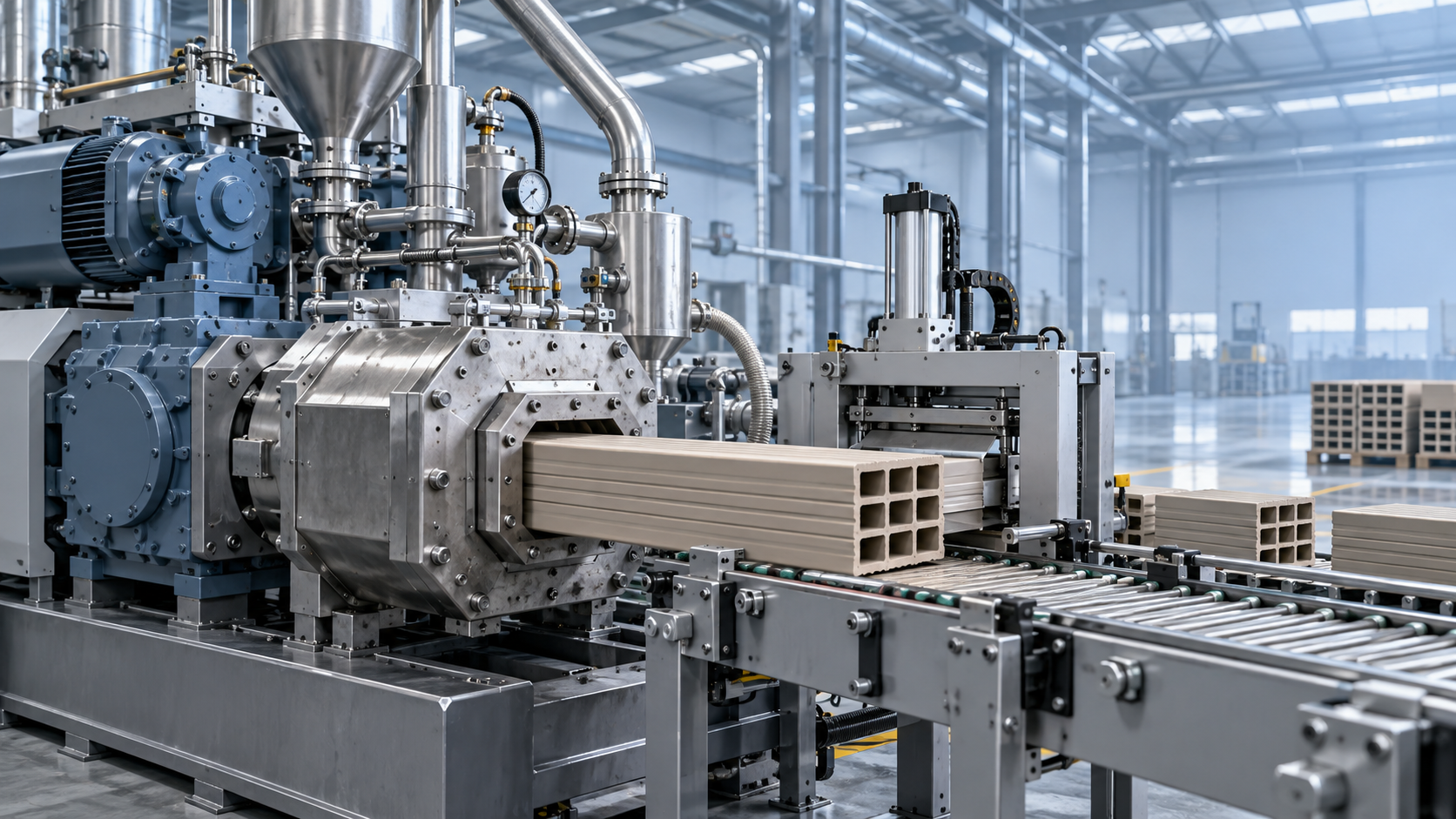
For most large-scale honeycomb production, extrusion remains the decisive shaping method. It is also the step that often determines whether later thermal treatments can succeed. Poorly formed green bodies rarely become robust fired structures.
Extrusion strength begins with rheology control. The batch must flow uniformly through the die while maintaining enough green strength to prevent wall tearing, lamination, and channel distortion. These defects can remain hidden until firing or service exposure.
Particle size distribution strongly affects packing, plasticity, and wall integrity. A well-graded powder system improves extrusion stability and reduces voids, while excessive coarse particles or agglomerates create local stress raisers in thin sections.
Binder and plasticizer selection also matters. Too little organic support can cause cracking during drying and handling. Too much can increase shrinkage variation, burnout defects, and pore irregularity, which later reduce both strength and thermal shock resistance.
Die design and flow balance are equally important for technical evaluators to review. Uneven pressure distribution during extrusion can create density gradients across the honeycomb cross-section, leading to differential shrinkage and weak thermal response.
In practice, when extrusion control is poor, downstream process improvements have limited value. Sintering, infiltration, or coatings may mask some issues, but they rarely eliminate structural anisotropy or hidden flaws created during green forming.
Drying and Binder Burnout: The Overlooked Source of Hidden Cracks
Many failures attributed to firing or service conditions actually begin in drying and debinding. Honeycomb geometries are especially vulnerable because thin walls dry quickly while intersections and thicker regions retain moisture and organics longer.
If drying is too fast, capillary stress can create microcracks that remain invisible before firing. If too slow or poorly ventilated, internal moisture gradients can still distort walls and generate nonuniform shrinkage across channel networks.
Binder burnout must be matched to wall thickness, organic content, and furnace atmosphere. Rapid decomposition can generate internal gas pressure, causing blistering, crack formation, or local weakening that later appears as thermal shock failure.
Evaluators should pay attention to weight-loss curves, thermal analysis data, and the reproducibility of burnout schedules. A supplier that cannot document controlled organic removal is a higher process-risk candidate, even if sample strength data looks acceptable.
In scalable production, drying and debinding discipline often separate repeatable industrial quality from promising pilot results. This stage deserves more weight in procurement and qualification than it usually receives.
Which Firing Methods Most Effectively Improve Honeycomb Strength
Firing is the main route for developing bonding, phase stability, and final strength. The most effective method depends on the ceramic system, but the strongest results usually come from precise temperature uniformity and tightly controlled shrinkage evolution.
Conventional pressureless sintering remains the most practical method for many honeycomb products because it supports scale and predictable cost. Its success depends on maintaining homogeneous green density and avoiding exaggerated grain growth.
Higher peak temperatures can improve neck formation and densification, but only up to the point where grain coarsening increases brittleness or shrinkage mismatch begins to damage wall geometry. More heat is not automatically better.
Fast firing can reduce cycle time and, in some formulations, help suppress undesirable grain growth. However, it requires excellent thermal uniformity and debinding control. Otherwise, the risk of trapped defects and warped channels increases sharply.
For advanced applications, reaction sintering or phase-forming sintering can offer attractive combinations of strength and thermal performance. These routes are especially relevant when final crystal phases such as mullite, cordierite, or silicon carbide are central to service behavior.
Technical evaluators should prioritize firing methods that produce narrow property variation across batches. A slightly lower average strength with stable reproducibility is usually more valuable than a high peak result with wide scatter and weak process control.
How Microstructure Control Improves Thermal Shock Resistance
Thermal shock resistance depends on more than bulk composition. It is strongly controlled by microstructure, especially pore architecture, grain size, phase distribution, and the continuity of crack paths through honeycomb walls.
Fine and uniform grains generally improve reliability because they reduce critical flaw size and limit unstable crack propagation. By contrast, abnormal grain growth can create local weak regions that fail under combined thermal and mechanical loading.
Controlled porosity is often beneficial when it is small, well distributed, and integrated into the wall structure without forming large void clusters. This kind of porosity can reduce stiffness and thermal stress concentration during rapid temperature change.
Phase selection is another major lever. Cordierite is widely valued for low thermal expansion, making it highly resistant to thermal shock. Mullite often offers a more balanced profile of strength, creep resistance, and thermal stability at elevated temperatures.
Silicon carbide honeycombs can provide high conductivity and strong high-temperature capability, but the evaluation must include oxidation behavior, joining compatibility, and cost implications. Material choice is inseparable from processing route and use environment.
In the best examples of advanced ceramic processing for honeycomb, microstructure is designed intentionally. It is not treated as a passive consequence of firing. That distinction usually separates engineered performance from commodity manufacturing.
Do Infiltration and Post-Treatment Methods Actually Deliver Better Results?
Infiltration can improve honeycomb performance, but its value depends on the defect profile being addressed. It is most useful when the base structure has adequate geometry and connectivity, yet still contains open porosity or weak interparticle bonding.
Ceramic or glass infiltration may strengthen wall surfaces, reduce open flaw severity, and improve oxidation or corrosion resistance. In some cases, it also helps stabilize microcracked networks that would otherwise propagate under thermal cycling.
However, infiltration is not a universal fix. If pore filling raises stiffness too much or introduces thermal expansion mismatch, thermal shock resistance can worsen even as room-temperature strength appears to improve.
Coatings and surface sealing treatments raise similar questions. They can protect against chemical attack or erosion, but they also create interfacial stress during heating and cooling. Evaluators should ask whether post-treatment data includes cyclic testing, not just static strength values.
From a scale-up perspective, infiltration also adds complexity, cycle time, and consistency risk. It is most compelling in premium applications where service failure is costly and the added process control can be justified economically.
How to Judge the Best Route for Different Industrial Honeycomb Applications
There is no single best process for every honeycomb ceramic. The right answer depends on whether the application prioritizes diesel filtration, regenerative heat exchange, kiln furniture support, catalyst hosting, hot gas cleaning, or corrosion-exposed thermal management.
For high thermal cycling environments, low expansion compositions with controlled porosity and tight extrusion quality often outperform denser structures designed mainly for static strength. Cordierite-based systems commonly fit this profile.
Where structural load, abrasion, or severe temperature exposure dominates, mullite or silicon carbide routes may offer better long-term value, provided the firing method and wall design control brittleness and thermal stress distribution.
For technical evaluators, the strongest assessment framework includes four filters: property targets, process repeatability, defect sensitivity, and scale economics. A method that looks ideal in one category can still fail overall if the other three are weak.
Suppliers should therefore be asked for data beyond datasheet averages. Useful evidence includes thermal cycling results, Weibull variability, microstructural images, green-to-fired shrinkage control, and failure analysis from production or field use.
That evidence reveals whether the manufacturing route is fundamentally robust or simply optimized for isolated sample performance. In industrial procurement, that difference matters more than marketing language around advanced processing.
What CF-Elite Readers Should Conclude When Comparing Process Options
For readers in high-temperature industries, the central conclusion is straightforward. The best advanced ceramic processing for honeycomb is usually the route that controls defects earliest, engineers microstructure deliberately, and proves repeatability under thermal cycling.
Extrusion quality sets the structural baseline. Drying and debinding protect that baseline from hidden cracks. Firing develops the final phase and bonding state. Microstructure tuning determines how strength and thermal shock resistance are balanced in service.
Infiltration and post-treatment can add value, but they should be treated as targeted optimization steps, not substitutes for disciplined core processing. When the base body is inconsistent, downstream enhancement rarely solves the real reliability problem.
For technical evaluators, the most defensible decision is the one supported by process transparency and application-matched testing. That is the clearest way to reduce failure risk, compare suppliers rigorously, and select scalable honeycomb solutions with lasting thermal performance.
Related News
 Silicate Process EngineerHow Latin American Cement Plants Can Reduce Dust Emissions in Kilns and Transfer PointsCement plant dust control Latin America: reduce kiln and transfer-point emissions with practical airflow, filtration, monitoring, and maintenance strategies.Sep 26, 2026
 Material Heat-Resist ExpertHow to Evaluate Refractory Production Lines for Output, Quality, and Energy UseRefractory production lines: learn how to assess qualified output, consistent quality, and total energy use for smarter, lower-risk investment decisions.Sep 25, 2026
 Dr. Alistair VaughnHow Waste Recycling Technology Improves Material Recovery in Industrial PlantsWaste recycling technology improves material recovery through source segregation, smart separation, thermal treatment, and quality control for industrial plants.Sep 24, 2026
 Optical Glass Tech FellowHow to Specify Glass Annealing Equipment for European Quality and Energy RequirementsGlass annealing equipment Europe: learn how to specify lehrs for consistent glass quality, energy efficiency, compliance, automation, and reliable long-term performance.Sep 23, 2026
 Optical Glass Tech FellowSilicate Process Automation: Improving Batch Consistency and Energy ControlSilicate process automation improves batch consistency, energy control, traceability, and operator confidence across high-temperature manufacturing operations.Sep 22, 2026
 Optical Glass Tech FellowHow Silicate Industrial Processes Control Viscosity, Energy Use, and Product QualitySilicate industrial processes: learn how viscosity, chemistry, heat transfer, and atmosphere control reduce energy use, improve stability, and protect product quality.Sep 21, 2026
 Thermal Energy ArchitectHow European Plants Can Evaluate Energy Recovery Equipment for High-Temperature ProcessesIndustrial energy recovery equipment Europe: learn how high-temperature plants can assess waste-heat sources, integration risks, lifecycle value, and reliable recovery routes.Sep 20, 2026
 Thermal Energy ArchitectIndustrial Furnace Process Optimization: Reducing Fuel Use Without Sacrificing ThroughputIndustrial process optimization furnace strategies that cut fuel use while protecting throughput. Explore combustion control, heat recovery, refractory performance, and data-driven efficiency gains.Sep 19, 2026
 Ms. Elena RodriguezWhat Drives High-Pressure Extrusion Equipment Cost in Industrial Projects?High pressure extrusion equipment cost explained: compare pressure, die design, automation, wear, energy, and installation factors for smarter industrial investments.Sep 18, 2026
 Thermal Energy ArchitectHow to Size a Waste Heat Recovery Exchanger for High-Temperature Kiln Exhaust?Waste heat recovery exchanger sizing for high-temperature kiln exhaust: balance recoverable duty, fouling, corrosion limits, pressure drop, and reliable heat use.Sep 17, 2026
 Thermal Energy ArchitectWhy Heat-Resistant Materials Lose Abrasion Resistance at High TemperaturesHeat-resistant materials abrasion resistance can decline at high temperatures. Discover the thermal, chemical, and mechanical causes of wear—and how to choose longer-lasting linings.Sep 16, 2026
 Thermal Energy ArchitectHow to Evaluate a Thermal Energy Optimization Company for High-Temperature PlantsChoose a thermal energy optimization company with proven process expertise, measurable savings, and reliable delivery for high-temperature plants. Learn what to assess.Sep 15, 2026
 Thermal Energy ArchitectRotary Kiln Efficiency: How Feed Rate, Fuel Use, and Heat Loss Affect OutputRotary kiln efficiency explained: discover how feed rate, fuel use, heat loss, combustion, and cooling performance shape output, quality, and energy costs.Sep 14, 2026
 Thermal Energy ArchitectHow to Select Heat-Resistant Materials That Maintain Abrasion Resistance in KilnsHeat-resistant materials abrasion resistance: learn how to select kiln linings that withstand heat, wear, thermal cycling, and chemical attack for longer service life.Sep 13, 2026
 Thermal Energy ArchitectHow Rotary Kiln Automation Improves Temperature Control and Fuel EfficiencyRotary kiln technology automation enhances temperature control, stabilizes combustion, and improves fuel efficiency with smarter data, predictive control, and safer operations.Sep 12, 2026
 Silicate Process EngineerCement Plant Emission Control: Selecting Systems for Dust, NOx, and SO2 LimitsCement plant emission control guide: compare dust collectors, NOx reduction, and SO2 systems for reliable compliance across kiln modes, fuel changes, and operating upsets.Sep 11, 2026
 Thermal Energy ArchitectSelecting Abrasion-Resistant High-Temperature Materials for Kiln and Conveyor Wear ZonesHigh-temp material engineering guide to abrasion-resistant kiln and conveyor solutions—match wear, heat, chemistry, and installation design for longer service life.Sep 10, 2026
 Dr. Alistair VaughnIndustrial Process Engineering: How to Map Processes for Safer, More Efficient PlantsIndustrial process engineering reveals bottlenecks, safety risks, and energy losses through practical process mapping for safer, more efficient plants.Sep 09, 2026
 Optical Glass Tech FellowHow to Evaluate a Glass Annealing Equipment Manufacturer for Production StabilityChoose a glass annealing equipment manufacturer with proven thermal uniformity, reliable controls, lifecycle value, and responsive service for stable production.Sep 08, 2026
 Prof. Marcus ChenThermal Energy Architecture in North America: Strategies for Lower Building Energy UseThermal energy architecture North America helps project leaders cut building energy use through stronger envelopes, right-sized HVAC, storage, and smart commissioning.Sep 07, 2026





Related News
- 00
0000-00
How to Evaluate Lightweight Material Machinery for Output, Energy Use, and Product Quality - 00
0000-00
What Thermal Barrier Technology Works Best for Lightweight Industrial Panels? - 00
0000-00
Advanced Ceramic Processing for Honeycomb: Which Methods Improve Strength and Thermal Shock Resistance? - 00
0000-00
Building Material Extrusion Equipment Supplier Selection: 7 Parameters That Affect Line Performance - 00
0000-00
High Pressure Extruder Selection Guide: Output, Material Compatibility, and Wear
Weekly Insights
Stay ahead with our curated technology reports delivered every Monday.