
How to Evaluate an Equipment Customization Services Factory for Industrial Projects




Start with the process, not the machine list
When an industrial project goes off track because of custom equipment, the problem usually starts long before fabrication. A factory may quote quickly, show impressive workshop photos, and still be the wrong fit. For project managers and engineering leads, the real job is to judge whether that supplier can translate process requirements into equipment that will actually run inside your line, under your utility conditions, with your maintenance reality.
That is why evaluating an equipment customization services factory has to go beyond unit price. You are not buying a standalone object. You are buying engineering interpretation, manufacturing discipline, delivery control, and a support relationship that may last years. If any one of those is weak, the damage shows up later as installation conflict, unstable throughput, excess energy use, poor wear life, or expensive downtime during commissioning.
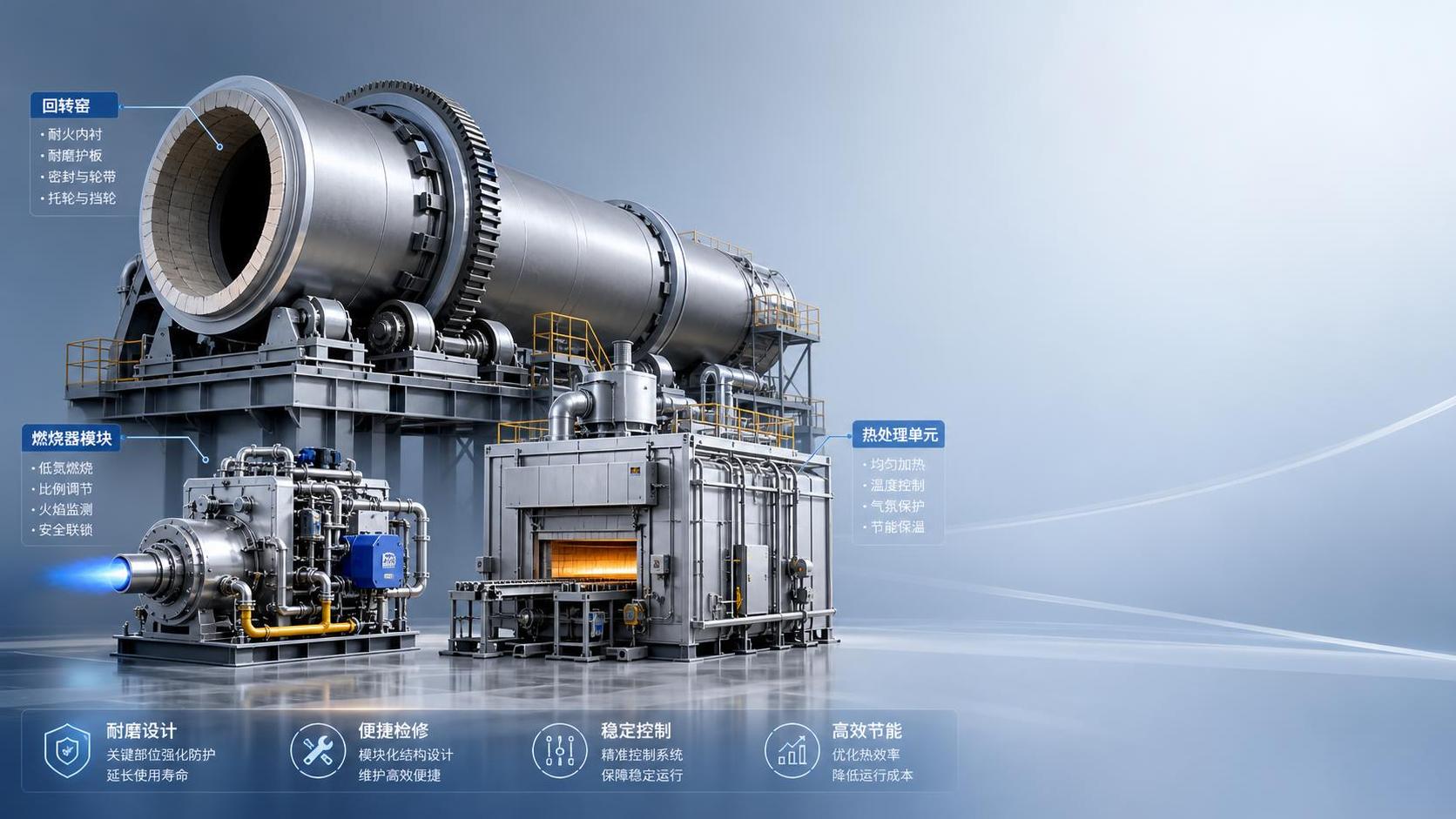
A practical review starts with one question: does this factory understand the process duty of the equipment, or are they only reacting to drawings and dimensions? In cement, glass, kilns, refractory handling, incineration, or extrusion-related projects, the answer matters because thermal load, feed variability, dust behavior, residence time, lining choices, and upstream/downstream interfaces often drive the final design more than nominal size does.
Check whether they can define the duty correctly
Before you compare quotations, look at the questions the factory asks. A capable custom equipment supplier does not begin with “What capacity do you need?” and stop there. They should ask for operating temperature range, material characteristics, expected moisture or abrasiveness, utility conditions, ambient environment, available footprint, control philosophy, maintenance access, and how the equipment connects to the rest of the plant.
If the factory is comfortable working in high-temperature or heavy-process environments, they will usually push for a clear duty specification early. That is a good sign. It means they know many failures come from bad assumptions made in the proposal stage.
- Ask what inputs they need before freezing design.
- See whether they distinguish normal operation, startup, upset, and shutdown conditions.
- Check if they flag unknowns instead of quietly designing around guesses.
- Watch for generic proposals that look reusable across unrelated process duties.
A common mistake is approving a concept based on nameplate capacity alone. Two systems with the same throughput can behave very differently if one handles sticky feed, thermal cycling, corrosive off-gas exposure, or tight dimensional tolerance downstream.
Look for engineering depth behind the sales response
Some factories are good at machining and assembly but weak in application engineering. Others have strong process understanding but poor production execution. You need both.
During evaluation, ask who owns the technical definition of the customized equipment. Is it handled by a sales engineer, a design office, a process specialist, or an outsourced drafter? The handoff matters. In industrial projects, a lot of risk hides in those internal transitions.
Useful signs of real engineering capability include design reviews tied to process conditions, interface drawings that show more than outline dimensions, and a willingness to discuss wear points, refractory contact areas, thermal expansion, sealing arrangements, instrumentation locations, and maintenance removal paths. You do not need a lecture. You need evidence that the factory sees failure modes before the equipment is built.
Verify integration discipline early
Industrial projects rarely fail because a single machine cannot run in isolation. They fail because the machine does not fit the plant. That is why integration checks should happen before contract award, not during site installation.
For a custom equipment factory, ask them to show how they manage these interfaces:
- Mechanical tie-ins: supports, anchor points, lifting provisions, expansion allowances, access doors, and platform conflicts.
- Process tie-ins: feed consistency, discharge behavior, pressure balance, residence time, and line bottlenecks.
- Electrical and controls: motor lists, instrument tags, interlocks, local versus remote operation, alarm philosophy.
- Utilities: power quality, cooling water, compressed air, combustion support systems, extraction or dust handling where relevant.
If their answer is “that will be handled on site,” treat it as a warning. Site fixes are where schedule loss and cost escalation begin.
Do not treat material selection as a routine detail
In heavy industrial environments, material selection is often the difference between stable service life and repeated shutdowns. This is especially true for high-temperature, abrasive, corrosive, or thermally cycling duties. A reliable factory should be able to explain why a given shell material, wear liner, refractory interface part, seal element, fastener grade, or insulation arrangement was chosen for your service condition.
You do not need them to claim a perfect solution. You need them to show the reasoning. If they jump straight to “standard material” without linking it to duty, cleaning regime, atmosphere, and expected maintenance interval, the design may be under-thought.
This is also where target market matters. The same equipment may need different documentation, traceability depth, guarding arrangement, or electrical component selection depending on where the project will be installed and who will accept it at handover. Ask the factory which parts of the build are fixed by your destination market and which are still open engineering choices.
Audit the manufacturing system, not just the workshop floor
A factory visit can be useful, but polished workshops can hide weak execution control. What you really want to know is whether the factory can hold dimensional accuracy, manage fabrication sequence, control outsourced items, and keep records clean enough that problems can be traced back to source.
Focus your questions on the manufacturing system:
A short but revealing question is this: what defects have delayed shipment in similar builds, and how do you prevent repeat issues? The answer tells you more than a brochure does.
Test their quality assurance through documents they can actually produce
Many buyers ask, “Do you have quality control?” Every factory says yes. A better approach is to ask for the document trail that would support your project. Inspection and test plans, material certificates where required by the specification, dimensional inspection records, non-destructive testing records where applicable, packing lists by erection sequence, and final as-built documentation are all more meaningful than general promises.
The exact document package depends on the equipment type and project scope. That is the point. A capable factory should be able to map required records to your order rather than pushing one generic dossier for every job.
Interrogate the delivery plan, because late custom equipment is rarely “just a few weeks” late
For industrial projects, schedule damage compounds fast. A delayed custom component can stall civil work, hold back installation teams, or shift hot commissioning windows. When reviewing an equipment customization services factory, ask for a real production schedule broken into engineering release, procurement, fabrication, inspection, trial assembly if needed, packing, and dispatch.
Then look at the long-lead risk. Which parts depend on external suppliers? What has to be frozen early? Which design changes after approval will hit delivery hardest? Good factories usually know where the schedule can slip. Weak ones hide behind a single shipment date.
Also check packaging and transport readiness. Oversized, heat-sensitive, machined, or lined assemblies can be damaged or distorted if packaging is treated as an afterthought.
Evaluate service support in the context of your startup plan
After-sales support is easy to oversell and hard to measure, so tie it to specific project stages. Who supports installation queries? Who reviews foundation or interface deviations from site? Who is available during cold commissioning and hot commissioning? What spare parts should be ordered with the original package, especially for wear items or components with long replenishment time?
For process industries with harsh duty cycles, the first months after startup often reveal whether the original design assumptions were sound. The right supplier stays engaged long enough to help separate operator issues, process instability, and equipment design faults. The wrong one disappears after final shipment.
Use a short decision filter before you move to commercial negotiation
Before discussing final price, run the factory through a simple filter:
- Can they define the operating duty with enough precision to avoid redesign later?
- Can they show engineering ownership of interfaces, materials, and failure points?
- Can they manufacture and document the build in a controlled way?
- Can they deliver on a schedule that matches your installation sequence, not just their sales promise?
- Can they support startup and early operation without turning every issue into a contract argument?
If one of those answers is weak, the low quote is usually not low.
What experienced buyers usually do differently
They do not compare suppliers only on proposal totals. They compare assumptions, exclusions, document quality, interface ownership, and the factory’s willingness to surface risk early. They also know that the best custom equipment factory is not always the one with the broadest catalog. It is often the one that understands your process duty, communicates design boundaries clearly, and has the manufacturing discipline to build what was actually agreed.
For a project manager, the cleanest sequence is straightforward: lock the duty, review interfaces, challenge material and design choices, inspect manufacturing control, test the document trail, then negotiate delivery and support. That order prevents a familiar mistake in industrial procurement: buying confidence from a quote before the technical risk has been exposed.
Related News
 Thermal Energy ArchitectRotary Kiln Efficiency: How Feed Rate, Fuel Use, and Heat Loss Affect OutputRotary kiln efficiency explained: discover how feed rate, fuel use, heat loss, combustion, and cooling performance shape output, quality, and energy costs.Sep 14, 2026
 Thermal Energy ArchitectHow to Select Heat-Resistant Materials That Maintain Abrasion Resistance in KilnsHeat-resistant materials abrasion resistance: learn how to select kiln linings that withstand heat, wear, thermal cycling, and chemical attack for longer service life.Sep 13, 2026
 Thermal Energy ArchitectHow Rotary Kiln Automation Improves Temperature Control and Fuel EfficiencyRotary kiln technology automation enhances temperature control, stabilizes combustion, and improves fuel efficiency with smarter data, predictive control, and safer operations.Sep 12, 2026
 Silicate Process EngineerCement Plant Emission Control: Selecting Systems for Dust, NOx, and SO2 LimitsCement plant emission control guide: compare dust collectors, NOx reduction, and SO2 systems for reliable compliance across kiln modes, fuel changes, and operating upsets.Sep 11, 2026
 Thermal Energy ArchitectSelecting Abrasion-Resistant High-Temperature Materials for Kiln and Conveyor Wear ZonesHigh-temp material engineering guide to abrasion-resistant kiln and conveyor solutions—match wear, heat, chemistry, and installation design for longer service life.Sep 10, 2026
 Dr. Alistair VaughnIndustrial Process Engineering: How to Map Processes for Safer, More Efficient PlantsIndustrial process engineering reveals bottlenecks, safety risks, and energy losses through practical process mapping for safer, more efficient plants.Sep 09, 2026
 Optical Glass Tech FellowHow to Evaluate a Glass Annealing Equipment Manufacturer for Production StabilityChoose a glass annealing equipment manufacturer with proven thermal uniformity, reliable controls, lifecycle value, and responsive service for stable production.Sep 08, 2026
 Prof. Marcus ChenThermal Energy Architecture in North America: Strategies for Lower Building Energy UseThermal energy architecture North America helps project leaders cut building energy use through stronger envelopes, right-sized HVAC, storage, and smart commissioning.Sep 07, 2026
 Ms. Elena RodriguezHow Should Buyers Evaluate Building Material Industry Intelligence Pricing?Building material industry intelligence pricing: learn how to compare coverage, technical depth, and ROI to choose intelligence that reduces procurement risk.Sep 07, 2026
 Ms. Elena RodriguezHow to Use Building Material Intelligence Data for Market and Investment DecisionsBuilding material industry intelligence data helps leaders evaluate demand, costs, regulation, capacity, and technology to make smarter market and investment decisions.Sep 05, 2026
 Thermal Energy ArchitectHow PLC Control Improves Energy Efficiency and Temperature Stability in KilnsEnergy efficient kilns PLC control improves temperature stability, cuts fuel waste, and optimizes combustion, draft, and material flow. Explore proven strategies for smarter kiln modernization.Sep 04, 2026
 Optical Glass Tech FellowEuropean Glass Melting Processes: Furnace Choices, Energy Use, and Quality ControlGlass melting process Europe: explore furnace choices, energy efficiency, cullet strategy, and quality control to improve output, compliance, and long-term glass performance.Sep 03, 2026
 Thermal Energy ArchitectWhat Determines Refractory Lining Monitoring Price for Industrial Kilns?Refractory lining monitoring price depends on kiln size, sensor technology, installation, software, and support. Compare total lifecycle costs and choose the right solution.Sep 02, 2026
 Silicate Process EngineerCement Production System Costs: A Plant Buyer’s Guide to Budgeting and ROICement production systems cost planning made clear: compare CAPEX, operating costs, compliance, and ROI to build a resilient, profitable cement plant investment.Sep 01, 2026
 Dr. Alistair VaughnWhat Should a Process Technology Database Track for High-Temperature Plants?Process technology database essentials for high-temperature plants: track thermal profiles, feed chemistry, refractory wear, emissions, energy, and maintenance for safer, data-driven decisions.Aug 31, 2026
 Ms. Elena RodriguezHow to Evaluate a Silicate Processing Equipment Manufacturer for Plant ProjectsSilicate processing equipment manufacturer selection: assess process fit, guarantees, energy, compliance, delivery risk, and lifecycle support for dependable plant performance.Aug 30, 2026
 Dr. Alistair VaughnHow to Specify Custom Agricultural Processing Equipment for Throughput and HygieneEquipment customization services for agricultural processing: learn to specify hygienic, high-throughput lines that improve yield, reliability, and long-term efficiency.Aug 29, 2026
 Dr. Alistair VaughnHow to Select Process Plant Equipment for High-Temperature, Abrasive Production LinesProcess plant equipment selection for high-temperature, abrasive lines: reduce downtime, improve durability, and optimize lifecycle performance.Aug 28, 2026
 Silicate Process EngineerHow Kiln Heat Recovery Systems Cut Fuel Use in Cement and Lime ProductionKiln heat recovery helps cement and lime plants cut fuel use, improve thermal stability, and build practical, reliable decarbonization strategies.Aug 27, 2026
 Ms. Elena RodriguezProcess Equipment Comparison: Which Metrics Matter Most for Reliable Selection?Process equipment comparison made practical: discover which metrics truly drive reliable selection, from energy efficiency and control stability to wear life, maintainability, and uptime.Aug 26, 2026








Related News
- 00
0000-00
How Should Buyers Evaluate Building Material Industry Intelligence Pricing? - 00
0000-00
How to Use Building Material Intelligence Data for Market and Investment Decisions - 00
0000-00
How to Evaluate a Silicate Processing Equipment Manufacturer for Plant Projects - 00
0000-00
Process Equipment Comparison: Which Metrics Matter Most for Reliable Selection? - 00
0000-00
What Buyers Should Check Before Sourcing Precision Alloy Bars for Critical Parts
Weekly Insights
Stay ahead with our curated technology reports delivered every Monday.