
Technical Comparison of Material Processing Methods: Key Factors for Process Selection




Technical Comparison of Material Processing Methods: Key Factors for Process Selection
For technical evaluators, a reliable technical comparison for material processing starts with understanding how thermal behavior, chemical kinetics, energy use, and equipment stability interact across different production routes. In high-temperature industries such as cement, glass, incineration, refractories, and extrusion, process selection directly affects efficiency, emissions, product quality, and long-term operating value. This article highlights the key factors that shape smarter, data-driven decisions.
When people compare processing methods, they often jump straight to capacity or quoted energy consumption. That is usually too early. A process route that looks efficient on paper can become expensive once feed variability, refractory wear, shutdown frequency, emissions control, and operator skill are added back into the picture. In practice, the better selection process is a disciplined checklist: what must the line handle every day, what failure modes matter most, and what constraints cannot be negotiated later.
Start with the material, not the machine brochure
The first screen in any technical comparison for material processing is material behavior under real operating conditions. Not lab-perfect feed. Real feed. Moisture swings, particle size distribution, volatile content, ash composition, softening point, abrasiveness, chloride or alkali load, and contamination risk all change the answer.
- If the feed has wide moisture variation, thermal stability and drying load may matter more than nameplate throughput.
- If the material tends to sinter, stick, or ring, some kiln or thermal treatment options will lose availability long before they lose theoretical efficiency.
- If fine control of glass melt quality or refractory phase development is required, residence time distribution becomes a selection issue, not a process detail.
- For extrusion-based building materials, green strength and die pressure behavior often decide whether a route is commercially workable.
A useful rule: ask for feed envelope data, not just average values. Average data can hide the very peaks that break stable operation.
Check whether the process window is wide enough
Some methods are efficient only inside a narrow operating band. Others are less elegant but more forgiving. For evaluators, that distinction matters because real plants spend more time recovering from disturbances than vendors like to admit.
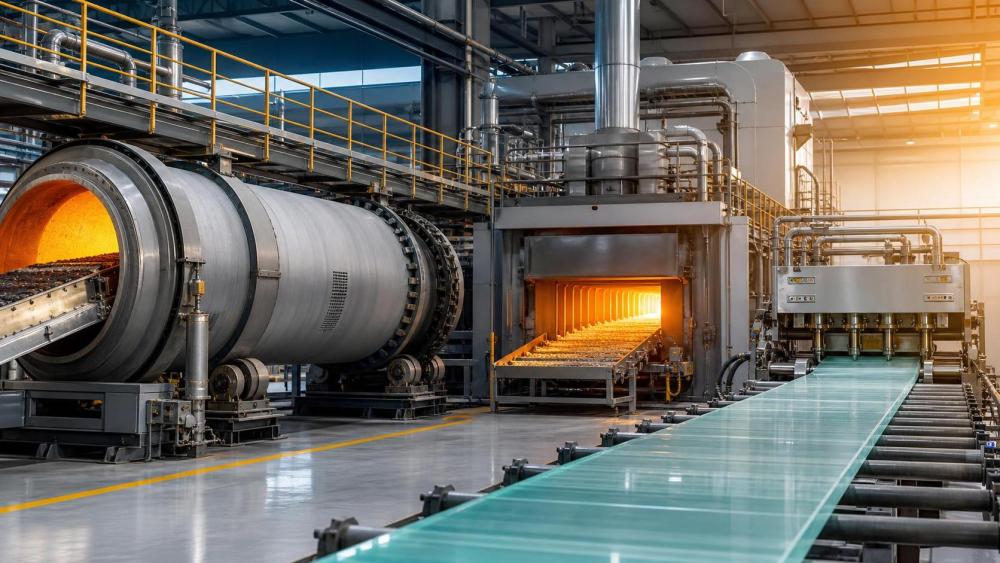
Look at the usable process window in terms of temperature uniformity, atmosphere control, pressure balance, mixing quality, and response time. In cement and incineration, unstable combustion or oxygen distribution can quickly undermine both throughput and emissions. In glass, minor thermal non-uniformity can show up later as defects, stress issues, or inconsistent forming performance. In refractory production, an unstable firing curve may not fail immediately, but it can weaken final product consistency batch after batch.
A simple evaluation question works well here: when the feed changes unexpectedly, how fast can the process recover without quality loss or forced slowdown?
Energy numbers need context or they mislead
Specific energy consumption is important, but a quoted number without boundary conditions is not decision-grade information. You need to know what is included: drying, preheating, waste heat recovery, secondary air handling, pollution control load, startup fuel, and off-spec recycle. In high-temperature systems, the thermal balance can shift dramatically with raw material condition and operating discipline.
If one route claims a lower fuel rate, ask what that route demands from upstream preparation. Sometimes energy is not reduced; it is merely moved. A more energy-efficient kiln line may require tighter feed preparation, better fuel quality, or more advanced control architecture. That can still be the right choice, but only if the plant can support it consistently.
Quality risk usually shows up later than process risk
That is why it gets underweighted. A process can hit output targets and still be the wrong fit because quality variation becomes visible only downstream or in service. Technical evaluators should map process choice directly to the quality characteristics that customers or regulators actually care about.
For example, in glass production, the route must be judged against melt homogeneity, inclusion risk, thermal history, and annealing compatibility. In refractory manufacturing, phase formation, firing shrinkage, bulk density, and thermal shock behavior may be more decision-critical than simple output rate. In new building material extrusion, dimensional stability after forming and curing can outweigh line speed.
If the supplier cannot relate process design to measurable product acceptance criteria, you are still in the marketing stage, not technical evaluation.
Maintenance reality belongs in the shortlist stage
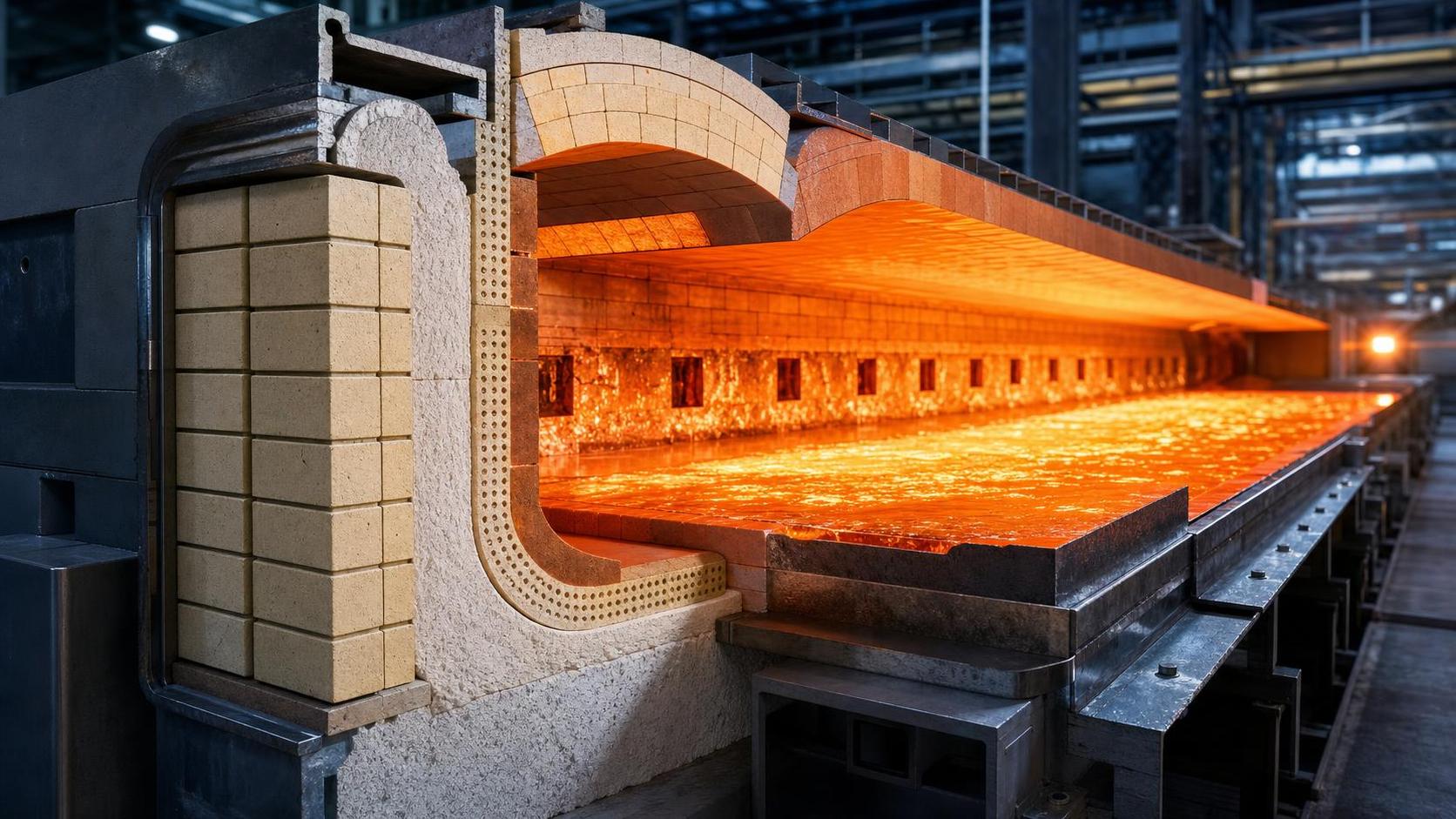
Do not leave maintenance and refractory life for the final negotiation round. By then, the process preference is usually emotionally fixed. Compare wear mechanisms early: abrasion, coating, chemical attack, thermal cycling, seal degradation, burner fouling, fan reliability, instrumentation drift, and spare part criticality.
This matters especially in kilns, incineration systems, and high-temperature conveying sections. A route that saves fuel but requires frequent refractory intervention can lose its advantage quickly. The same applies to extrusion lines where screw, die, or vacuum section wear alters quality before the team notices it in production data.
- Ask for typical maintenance intervals and the conditions behind them.
- Check whether key parts are standard industrial items or supplier-specific components.
- Confirm which instruments are essential for stable operation and how they are protected from heat, dust, and corrosion.
If those answers stay vague, assume the risk is being pushed downstream to the operator.
Emissions and compliance are process issues, not add-ons
In cross-border projects, this is where weak comparisons often fail. Dust, NOx, SOx, acid gases, heavy metals, VOCs, dioxin-related controls in waste-related thermal systems, and CO2 exposure all depend partly on process route and partly on end-of-pipe design. Those should not be separated too casually.
The exact limits depend on jurisdiction and application, so site-specific compliance review is always required. For EU projects, evaluators commonly need to review Industrial Emissions Directive applicability and current BAT-related expectations【待核实 based on project scope and country implementation】. In other regions, permit frameworks differ sharply. The practical lesson is simple: a route that performs well technically but relies on a difficult emissions control package may create more operating risk than a slightly less efficient but cleaner baseline process.
Automation depth should match plant capability
A more automated line is not automatically a better line. It is better only when the site can maintain sensors, trust data quality, and respond correctly to alarms and model outputs. Digital twin tools, advanced combustion control, online lining monitoring, and predictive diagnostics are valuable, but they depend on stable data collection and disciplined plant routines.
For selection work, ask where manual intervention is expected. Ask what happens when critical analyzers fail. Ask whether the process remains stable under degraded instrumentation. In heavy thermal operations, graceful degradation is a serious design advantage.
Feedstock flexibility can be worth more than peak efficiency
This comes up repeatedly in projects tied to alternative fuels, waste-derived inputs, recycled glass cullet, secondary mineral streams, or variable clay and aggregate sources. A narrow process route may look excellent with premium feed and become fragile when the supply chain shifts. A more tolerant route can protect output, permit continuity, and commercial resilience.
The right question is not “Can this method run the target material?” It is “How far can the material drift before quality, emissions, or availability become unacceptable?” Those are different questions, and only the second one helps with procurement reality.
Use total operating value, not just CAPEX, to break ties
When two processing methods are technically feasible, the decision usually turns on lifetime operating value. That includes fuel and power, refractory and wear parts, labor intensity, planned maintenance duration, emissions treatment consumables, quality losses, restart time, and the cost of unstable output to downstream users.
A frequent mistake is to model OPEX using supplier best-case assumptions. Use your own operating scenarios instead: conservative, expected, and stressed. If the economics only work in the best-case column, the route is probably too brittle.
A shortlist should survive these final checks
- The process has been compared using the same scope, same feed assumptions, and same production target.
- Critical quality outputs are tied to measurable process controls, not generic promises.
- Thermal efficiency claims have clear system boundaries and part-load behavior.
- Maintenance, refractory life, and spare strategy have been discussed in operational terms.
- Compliance review has been started early enough to influence process choice.
- The site team can realistically operate and maintain the proposed control depth.
- Stress-case feed variability has been included in trials, simulations, or design review.
That is usually enough to expose weak comparisons. Not every project will have full pilot data, and not every supplier will disclose the same level of field evidence. When information is incomplete, document the assumption explicitly and rank the risk instead of smoothing it over.
A solid technical comparison for material processing is less about finding the most impressive method and more about finding the route that stays controllable under real plant conditions. If you are evaluating kilns, glass systems, refractory lines, incineration equipment, or extrusion processes, stay close to what the material actually does, what the operators must live with, and what the permit will allow. That is where good selection decisions usually come from.
Related News
![]() Ms. Elena RodriguezTechnical Comparison of Material Processing Methods: Key Factors for Process SelectionTechnical comparison for material processing made practical: learn how to evaluate energy, quality, maintenance, emissions, and feed variability to choose the right process with confidence.Jul 29, 2026
Ms. Elena RodriguezTechnical Comparison of Material Processing Methods: Key Factors for Process SelectionTechnical comparison for material processing made practical: learn how to evaluate energy, quality, maintenance, emissions, and feed variability to choose the right process with confidence.Jul 29, 2026![]() Silicate Process EngineerHow Cement Grinding Technology Affects Energy Use, Fineness, and Plant OutputCement grinding technology shapes energy use, fineness, and plant output. Learn how to compare mills, separators, drying, and control systems for smarter upgrades.Jul 28, 2026
Silicate Process EngineerHow Cement Grinding Technology Affects Energy Use, Fineness, and Plant OutputCement grinding technology shapes energy use, fineness, and plant output. Learn how to compare mills, separators, drying, and control systems for smarter upgrades.Jul 28, 2026![]() Ms. Elena RodriguezHeavy Equipment Trade Cost Trends: What Buyers Should Track in 2025Heavy equipment trade cost trends in 2025 reveal how freight, energy, lead times, and compliance reshape total equipment costs. Learn what buyers must track to reduce risk and protect budgets.Jul 27, 2026
Ms. Elena RodriguezHeavy Equipment Trade Cost Trends: What Buyers Should Track in 2025Heavy equipment trade cost trends in 2025 reveal how freight, energy, lead times, and compliance reshape total equipment costs. Learn what buyers must track to reduce risk and protect budgets.Jul 27, 2026![]() Material Heat-Resist ExpertSilicate Production Line Process Explained: Key Stages, Equipment, and Quality ControlSilicate production line process explained with key stages, core equipment, quality control, and energy checks—helping buyers and engineers assess stability, efficiency, and supplier capability.Jul 26, 2026
Material Heat-Resist ExpertSilicate Production Line Process Explained: Key Stages, Equipment, and Quality ControlSilicate production line process explained with key stages, core equipment, quality control, and energy checks—helping buyers and engineers assess stability, efficiency, and supplier capability.Jul 26, 2026 Optical Glass Tech FellowRefractory Material Science for Glass Furnaces: Key Properties That Drive Furnace LifeRefractory material science for glass furnaces explains how corrosion resistance, thermal shock, creep, and microstructure shape furnace life, glass quality, and campaign reliability.Jul 25, 2026
![]() Silicate Process EngineerCement Plant Equipment Price Guide: What Drives Cost and How to Budget WiselyCement plant equipment price explained: discover what drives costs, compare quotes wisely, spot hidden expenses, and build a smarter budget for long-term plant value.Jul 24, 2026
Silicate Process EngineerCement Plant Equipment Price Guide: What Drives Cost and How to Budget WiselyCement plant equipment price explained: discover what drives costs, compare quotes wisely, spot hidden expenses, and build a smarter budget for long-term plant value.Jul 24, 2026![]() Dr. Alistair VaughnHow Digital Twin Simulations Improve Process Plant Design, Safety, and UptimeDigital twin simulations for process plants help teams improve plant design, reduce safety risks, and protect uptime by validating thermal, control, and retrofit decisions before costly failures occur.Jul 23, 2026
Dr. Alistair VaughnHow Digital Twin Simulations Improve Process Plant Design, Safety, and UptimeDigital twin simulations for process plants help teams improve plant design, reduce safety risks, and protect uptime by validating thermal, control, and retrofit decisions before costly failures occur.Jul 23, 2026![]() Thermal Energy ArchitectRotary Kilns Price Guide: What Determines Cost and How to Compare Quotes?Rotary kilns price varies by capacity, fuel, refractory, automation, and emissions scope. Learn what drives cost, what cheap quotes may miss, and how to compare suppliers wisely.Jul 22, 2026
Thermal Energy ArchitectRotary Kilns Price Guide: What Determines Cost and How to Compare Quotes?Rotary kilns price varies by capacity, fuel, refractory, automation, and emissions scope. Learn what drives cost, what cheap quotes may miss, and how to compare suppliers wisely.Jul 22, 2026 Ms. Elena RodriguezHow to Evaluate Green Building Material Equipment Suppliers in Europe?Green building material equipment Europe buyers: learn how to evaluate suppliers by technical fit, compliance, lifecycle cost, and after-sales support for smarter sourcing decisions.Jul 21, 2026
![]() Thermal Energy ArchitectHow to Evaluate an Energy Efficient Tunnel Kiln for Lower Fuel Costs and Stable OutputEnergy efficient tunnel kiln evaluation starts with fuel cost, but real value comes from thermal stability, heat recovery, and consistent output. Learn what truly lowers cost per qualified ton.Jul 20, 2026
Thermal Energy ArchitectHow to Evaluate an Energy Efficient Tunnel Kiln for Lower Fuel Costs and Stable OutputEnergy efficient tunnel kiln evaluation starts with fuel cost, but real value comes from thermal stability, heat recovery, and consistent output. Learn what truly lowers cost per qualified ton.Jul 20, 2026![]() Ms. Elena RodriguezSustainable Material Production Compliance: Key Standards, Risks, and Audit ChecksSustainable material production compliance explained: key standards, audit checks, and hidden plant risks across cement, glass, and thermal lines—learn how to spot gaps before audits fail.Jul 19, 2026
Ms. Elena RodriguezSustainable Material Production Compliance: Key Standards, Risks, and Audit ChecksSustainable material production compliance explained: key standards, audit checks, and hidden plant risks across cement, glass, and thermal lines—learn how to spot gaps before audits fail.Jul 19, 2026![]() Thermal Energy ArchitectProcess Monitoring for Incinerators: Key Parameters, Sensors, and Compliance ChecksProcess monitoring for incinerators covers key parameters, sensor selection, and compliance checks to improve combustion stability, emissions control, and plant performance.Jul 18, 2026
Thermal Energy ArchitectProcess Monitoring for Incinerators: Key Parameters, Sensors, and Compliance ChecksProcess monitoring for incinerators covers key parameters, sensor selection, and compliance checks to improve combustion stability, emissions control, and plant performance.Jul 18, 2026![]() Thermal Energy ArchitectWhat Is Industrial Co-Processing? Process, Acceptable Waste Types, and Kiln Use CasesIndustrial co-processing explained: learn the process, acceptable waste types, and kiln use cases in cement and thermal industries to improve efficiency, compliance, and resource recovery.Jul 17, 2026
Thermal Energy ArchitectWhat Is Industrial Co-Processing? Process, Acceptable Waste Types, and Kiln Use CasesIndustrial co-processing explained: learn the process, acceptable waste types, and kiln use cases in cement and thermal industries to improve efficiency, compliance, and resource recovery.Jul 17, 2026![]() Ms. Elena RodriguezGlass Industry Intelligence in Europe: Key Market Signals Buyers Should TrackGlass industry intelligence Europe reveals the key market signals buyers should track, from energy and carbon exposure to furnace upgrades and usable capacity for smarter sourcing decisions.Jul 16, 2026
Ms. Elena RodriguezGlass Industry Intelligence in Europe: Key Market Signals Buyers Should TrackGlass industry intelligence Europe reveals the key market signals buyers should track, from energy and carbon exposure to furnace upgrades and usable capacity for smarter sourcing decisions.Jul 16, 2026![]() Ms. Elena RodriguezIndustrial Market Intelligence in North America: What Buyers Should Track in Supply, Pricing, and DemandIndustrial market intelligence North America reveals what buyers must track in supply, pricing, demand, and compliance to reduce risk and time smarter industrial investments.Jul 15, 2026
Ms. Elena RodriguezIndustrial Market Intelligence in North America: What Buyers Should Track in Supply, Pricing, and DemandIndustrial market intelligence North America reveals what buyers must track in supply, pricing, demand, and compliance to reduce risk and time smarter industrial investments.Jul 15, 2026![]() Optical Glass Tech FellowCommon Problems in Glass Annealing Lehr Systems and How to Improve Temperature UniformityGlass annealing lehr systems often suffer from uneven cooling, stress, and defects. Learn common causes and practical fixes to improve temperature uniformity, quality, and line stability.Jul 15, 2026
Optical Glass Tech FellowCommon Problems in Glass Annealing Lehr Systems and How to Improve Temperature UniformityGlass annealing lehr systems often suffer from uneven cooling, stress, and defects. Learn common causes and practical fixes to improve temperature uniformity, quality, and line stability.Jul 15, 2026![]() Optical Glass Tech FellowOxy Fuel Glass Melting Furnace vs Air-Fuel Systems: Which Fits Your Glass Plant Better?Oxy fuel glass melting furnace or air-fuel system? Compare energy use, NOx, melt quality, oxygen cost, and ROI to choose the best-fit furnace for your glass plant.Jul 15, 2026
Optical Glass Tech FellowOxy Fuel Glass Melting Furnace vs Air-Fuel Systems: Which Fits Your Glass Plant Better?Oxy fuel glass melting furnace or air-fuel system? Compare energy use, NOx, melt quality, oxygen cost, and ROI to choose the best-fit furnace for your glass plant.Jul 15, 2026![]() Dr. Alistair VaughnSilicate Processing Equipment Production Line: Key Machines, Layout Options, and Output PlanningSilicate processing equipment production line guide covering key machines, layout models, output planning, and control strategies to help improve efficiency, stability, and project ROI.Jul 15, 2026
Dr. Alistair VaughnSilicate Processing Equipment Production Line: Key Machines, Layout Options, and Output PlanningSilicate processing equipment production line guide covering key machines, layout models, output planning, and control strategies to help improve efficiency, stability, and project ROI.Jul 15, 2026![]() Material Heat-Resist ExpertHow to Evaluate a Refractory Production Line in Southeast Asia: Capacity, Fuel, and Raw Material FactorsRefractory production Southeast Asia: learn how to assess capacity, fuel strategy, and raw material stability to reduce risk, improve efficiency, and build a scalable, compliant plant.Jul 15, 2026
Material Heat-Resist ExpertHow to Evaluate a Refractory Production Line in Southeast Asia: Capacity, Fuel, and Raw Material FactorsRefractory production Southeast Asia: learn how to assess capacity, fuel strategy, and raw material stability to reduce risk, improve efficiency, and build a scalable, compliant plant.Jul 15, 2026![]() Ms. Elena RodriguezIndustrial Solution Comparison for Procurement: How to Compare CAPEX, OPEX, and Delivery RiskIndustrial solution comparison procurement made practical: compare CAPEX, OPEX, and delivery risk with a lifecycle approach to reduce downtime, control cost, and choose suppliers with confidence.Jul 14, 2026
Ms. Elena RodriguezIndustrial Solution Comparison for Procurement: How to Compare CAPEX, OPEX, and Delivery RiskIndustrial solution comparison procurement made practical: compare CAPEX, OPEX, and delivery risk with a lifecycle approach to reduce downtime, control cost, and choose suppliers with confidence.Jul 14, 2026

Related News
- 00
0000-00
Technical Comparison of Material Processing Methods: Key Factors for Process Selection - 00
0000-00
Heavy Equipment Trade Cost Trends: What Buyers Should Track in 2025 - 00
0000-00
How to Evaluate Green Building Material Equipment Suppliers in Europe? - 00
0000-00
Sustainable Material Production Compliance: Key Standards, Risks, and Audit Checks - 00
0000-00
Glass Industry Intelligence in Europe: Key Market Signals Buyers Should Track
Weekly Insights
Stay ahead with our curated technology reports delivered every Monday.