
Heavy Equipment Trade Cost Trends: What Buyers Should Track in 2025




Heavy Equipment Trade Cost Trends: What Buyers Should Track in 2025
For procurement teams planning capital purchases in 2025, understanding heavy equipment trade cost trends is no longer optional. Price shifts in raw materials, freight, energy, compliance, and supplier lead times are reshaping total acquisition costs across industrial sectors. This article highlights the signals buyers should monitor early to control budgets, reduce sourcing risk, and make smarter equipment decisions in a more volatile global market.
The most useful starting point is this: purchase price is becoming a smaller share of the real trade decision. In heavy industrial equipment, especially for kilns, incineration systems, glass line components, refractory production assets, and extrusion machinery, buyers are paying for a cost stack that has become far less stable than the quoted machine value suggests. Steel, alloy parts, refractory materials, burners, drives, controls, marine freight, inland transport, export compliance, insurance, and installation labor now move on different clocks. That matters because many 2025 budgets are still being built on the assumption that equipment inflation behaves like a single line item. It does not.
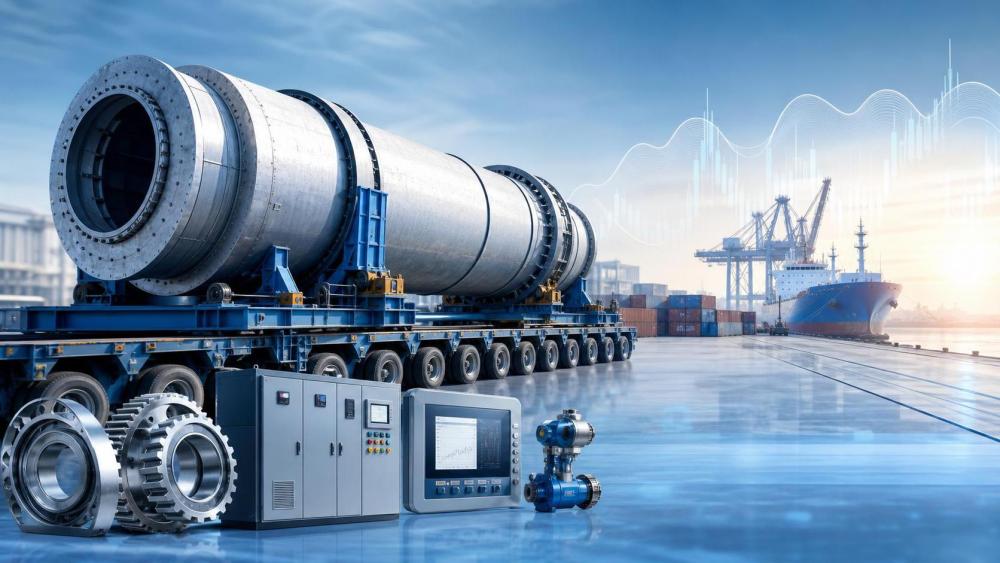
One clear shift is the widening gap between “factory gate price” and “landed, ready-to-commission cost.” That gap grew during the logistics shocks of recent years, but it has not fully normalized into the predictable trading environment many buyers expected. Ocean freight may be lower than its crisis peaks on some routes, yet route disruption, insurance adjustments, port congestion risk, and container or breakbulk availability can still change the economics of cross-border equipment sourcing late in the buying cycle. For oversized modules, the issue is sharper. A kiln shell section or specialized furnace module can become expensive not because fabrication changed, but because transport windows narrowed or handling requirements increased.
That is why 2025 cost tracking needs to follow logistics in layers. It is not enough to watch freight indexes in general terms. Procurement teams need route-specific visibility: which suppliers depend on constrained ports, which shipments require special permits, which components need heavy-lift transport, and where transshipment risk can add both time and claims exposure. In practice, the cheapest supplier quote is often attached to the least transparent logistics plan.
Energy and emissions are now trade-cost variables
For sectors connected to high-temperature processing, energy is no longer just an operating expense after commissioning. It is already embedded in the equipment trade itself. Fabricators facing volatile electricity and gas costs pass those pressures into welding, casting, machining, heat treatment, drying, and testing. Suppliers producing energy-intensive subassemblies or refractory-lined systems have less room to absorb swings than buyers sometimes assume. The result is uneven quoting behavior: some vendors shorten quote validity, others carve out explicit energy surcharges, and some raise contingency inside base pricing without making it visible.
Environmental policy adds another layer. Buyers in Europe and export-oriented markets are paying closer attention to the embedded carbon profile of equipment production, transport distance, combustion design, and future retrofitability. The policy picture is still moving and differs by jurisdiction, but the direction is clear enough to affect sourcing decisions now. Equipment that can accommodate alternative fuels, waste-heat integration, tighter combustion control, or digital energy monitoring may carry a higher upfront price while reducing future compliance and retrofit costs. In 2025, that premium is likely to be judged less as a technology add-on and more as insurance against regulatory tightening.
This is especially visible in combustion-heavy assets. Buyers of kilns and incineration systems increasingly ask not only what the equipment costs today, but how expensive it will be to modify when fuel mixes change or emissions thresholds narrow. A low initial bid that locks a plant into narrow operating parameters can become the most expensive option on a five- to eight-year view.
Lead times still distort pricing, even when supply seems calmer
A common mistake in procurement planning is to read shorter headline lead times as proof that cost pressure has eased. In heavy equipment, lead times often improve first in standard items, while bottlenecks remain in the parts that actually decide project schedules: high-spec burners, large bearings, specialized motors, instrumentation, control hardware, cast components, and heat-resistant materials. When those inputs remain tight, suppliers protect themselves by building schedule risk into price or by limiting performance guarantees tied to delivery timing.
That creates a pattern buyers should recognize. Two suppliers may offer similar total prices, yet one is pricing certainty and the other is pricing hope. The difference shows up in milestone definitions, escalation clauses, substitution rights, spare parts assumptions, and the exact point at which title and risk transfer. In markets where industrial rebuilding, waste-to-energy expansion, glass capacity adjustments, and plant modernization continue in parallel, supplier production slots still have value of their own. Securing a slot earlier can protect budget more effectively than squeezing a late-stage discount.
For CF-Elite’s focus areas, this matters because process equipment rarely operates as a standalone purchase. A delay in one thermal subsystem can idle civil work, refractory installation, or line integration crews. The financial effect lands outside the machine invoice, but it is still part of acquisition cost.
Regional pricing is fragmenting
Global buyers used to rely more heavily on broad assumptions about low-cost manufacturing regions. That model is weakening. Trade policy, currency volatility, local energy prices, export controls, and industrial subsidy programs are creating sharper regional differences in both cost and reliability. A supplier base that looks competitive on a spreadsheet can become less attractive once buyers account for exchange-rate risk, financing conditions, after-sales coverage, or spare part localization.
This does not mean international sourcing is losing relevance. It means comparisons need more discipline. A lower-cost fabrication source may still win for standard structures or mechanical assemblies, while high-consequence thermal components, automation packages, or emissions-critical systems may justify a supplier with stronger documentation, commissioning support, and lifecycle service access. In 2025, regional arbitrage is still available, but it is narrower and more conditional than many procurement playbooks suggest.
Digital scope is no longer a soft add-on
Another change buyers should treat seriously is the way digital functionality is entering cost negotiations. Monitoring packages, remote diagnostics, digital twin support, advanced control layers, refractory condition tracking, and process analytics used to sit at the edge of the equipment offer. For many plants, they are moving toward the center. That shift is not about fashion. It reflects labor constraints, energy management pressure, and a stronger need to stabilize output with fewer experienced operators on site.
Still, procurement teams should separate useful digital scope from bundled noise. Some suppliers genuinely reduce commissioning time and maintenance guesswork through better data visibility. Others add software layers that increase license cost without changing plant economics. The right question is not whether a line is “smart,” but whether instrumentation and analytics reduce measurable uncertainty: fuel use drift, refractory wear, unscheduled shutdowns, combustion instability, quality variation, or remote troubleshooting delays. Where the answer is yes, digital scope belongs inside cost evaluation, not in a separate innovation bucket.
Buyers are putting more value on cost resilience than on headline discounts
One of the quieter market changes is behavioral. Many industrial buyers are less willing than they were a few years ago to optimize purely for the lowest capex line. They have seen what happens when aggressive sourcing leaves no room for freight swings, specification disputes, weak documentation, or delayed field service. This does not mean price discipline is fading. It means the procurement conversation is becoming more forensic.
In bid reviews, the strongest teams now spend more time on exclusions, site assumptions, packaging definitions, customs responsibilities, commissioning scope, training depth, wear-part baselines, and performance test conditions. These details sound contractual, but they are actually cost signals. A bid that looks expensive may simply be more honest about what the project needs. A lower bid may be postponing spend into change orders, emergency freight, or post-startup fixes.
That is particularly relevant in long-cycle heavy equipment trade, where the buying decision can outlive the market conditions under which it was approved. By the time a system ships, interest rates, energy costs, foreign exchange, and local permit requirements may all have moved. Buyers who lock in only the machine price are exposed to everything else.
What deserves close watching through 2025
The strongest procurement signal is not a single index. It is the combination of supplier behavior and project-level friction. If vendors begin shortening quote windows, insisting on broader escalation language, or showing less confidence in delivery milestones, the market is telling you cost volatility is still under the surface. If suppliers with robust service networks remain firm on price while lightly staffed traders discount heavily, that may indicate support capacity is tightening again.
Watch policy exposure where equipment crosses borders or enters regulated thermal applications. Watch energy-sensitive component categories more closely than general inflation. Watch freight for abnormal route risk rather than average market rates. And watch whether retrofit-ready designs are starting to price in as standard on serious industrial tenders. In several high-temperature segments, that appears to be where the market is heading, although the pace will differ by region and end-use sector.
For buyers, the practical implication is straightforward. In 2025, the real edge will come from seeing cost formation earlier than the competition sees it. Not just who offers the lowest number, but whose quote best survives energy volatility, logistics disruption, compliance drift, and commissioning reality. That is where heavy equipment trade cost trends become decision intelligence rather than background market noise.
Related News
![]() Ms. Elena RodriguezHeavy Equipment Trade Cost Trends: What Buyers Should Track in 2025Heavy equipment trade cost trends in 2025 reveal how freight, energy, lead times, and compliance reshape total equipment costs. Learn what buyers must track to reduce risk and protect budgets.Jul 27, 2026
Ms. Elena RodriguezHeavy Equipment Trade Cost Trends: What Buyers Should Track in 2025Heavy equipment trade cost trends in 2025 reveal how freight, energy, lead times, and compliance reshape total equipment costs. Learn what buyers must track to reduce risk and protect budgets.Jul 27, 2026![]() Material Heat-Resist ExpertSilicate Production Line Process Explained: Key Stages, Equipment, and Quality ControlSilicate production line process explained with key stages, core equipment, quality control, and energy checks—helping buyers and engineers assess stability, efficiency, and supplier capability.Jul 26, 2026
Material Heat-Resist ExpertSilicate Production Line Process Explained: Key Stages, Equipment, and Quality ControlSilicate production line process explained with key stages, core equipment, quality control, and energy checks—helping buyers and engineers assess stability, efficiency, and supplier capability.Jul 26, 2026 Optical Glass Tech FellowRefractory Material Science for Glass Furnaces: Key Properties That Drive Furnace LifeRefractory material science for glass furnaces explains how corrosion resistance, thermal shock, creep, and microstructure shape furnace life, glass quality, and campaign reliability.Jul 25, 2026
![]() Silicate Process EngineerCement Plant Equipment Price Guide: What Drives Cost and How to Budget WiselyCement plant equipment price explained: discover what drives costs, compare quotes wisely, spot hidden expenses, and build a smarter budget for long-term plant value.Jul 24, 2026
Silicate Process EngineerCement Plant Equipment Price Guide: What Drives Cost and How to Budget WiselyCement plant equipment price explained: discover what drives costs, compare quotes wisely, spot hidden expenses, and build a smarter budget for long-term plant value.Jul 24, 2026![]() Dr. Alistair VaughnHow Digital Twin Simulations Improve Process Plant Design, Safety, and UptimeDigital twin simulations for process plants help teams improve plant design, reduce safety risks, and protect uptime by validating thermal, control, and retrofit decisions before costly failures occur.Jul 23, 2026
Dr. Alistair VaughnHow Digital Twin Simulations Improve Process Plant Design, Safety, and UptimeDigital twin simulations for process plants help teams improve plant design, reduce safety risks, and protect uptime by validating thermal, control, and retrofit decisions before costly failures occur.Jul 23, 2026![]() Thermal Energy ArchitectRotary Kilns Price Guide: What Determines Cost and How to Compare Quotes?Rotary kilns price varies by capacity, fuel, refractory, automation, and emissions scope. Learn what drives cost, what cheap quotes may miss, and how to compare suppliers wisely.Jul 22, 2026
Thermal Energy ArchitectRotary Kilns Price Guide: What Determines Cost and How to Compare Quotes?Rotary kilns price varies by capacity, fuel, refractory, automation, and emissions scope. Learn what drives cost, what cheap quotes may miss, and how to compare suppliers wisely.Jul 22, 2026 Ms. Elena RodriguezHow to Evaluate Green Building Material Equipment Suppliers in Europe?Green building material equipment Europe buyers: learn how to evaluate suppliers by technical fit, compliance, lifecycle cost, and after-sales support for smarter sourcing decisions.Jul 21, 2026
![]() Thermal Energy ArchitectHow to Evaluate an Energy Efficient Tunnel Kiln for Lower Fuel Costs and Stable OutputEnergy efficient tunnel kiln evaluation starts with fuel cost, but real value comes from thermal stability, heat recovery, and consistent output. Learn what truly lowers cost per qualified ton.Jul 20, 2026
Thermal Energy ArchitectHow to Evaluate an Energy Efficient Tunnel Kiln for Lower Fuel Costs and Stable OutputEnergy efficient tunnel kiln evaluation starts with fuel cost, but real value comes from thermal stability, heat recovery, and consistent output. Learn what truly lowers cost per qualified ton.Jul 20, 2026![]() Ms. Elena RodriguezSustainable Material Production Compliance: Key Standards, Risks, and Audit ChecksSustainable material production compliance explained: key standards, audit checks, and hidden plant risks across cement, glass, and thermal lines—learn how to spot gaps before audits fail.Jul 19, 2026
Ms. Elena RodriguezSustainable Material Production Compliance: Key Standards, Risks, and Audit ChecksSustainable material production compliance explained: key standards, audit checks, and hidden plant risks across cement, glass, and thermal lines—learn how to spot gaps before audits fail.Jul 19, 2026![]() Thermal Energy ArchitectProcess Monitoring for Incinerators: Key Parameters, Sensors, and Compliance ChecksProcess monitoring for incinerators covers key parameters, sensor selection, and compliance checks to improve combustion stability, emissions control, and plant performance.Jul 18, 2026
Thermal Energy ArchitectProcess Monitoring for Incinerators: Key Parameters, Sensors, and Compliance ChecksProcess monitoring for incinerators covers key parameters, sensor selection, and compliance checks to improve combustion stability, emissions control, and plant performance.Jul 18, 2026![]() Thermal Energy ArchitectWhat Is Industrial Co-Processing? Process, Acceptable Waste Types, and Kiln Use CasesIndustrial co-processing explained: learn the process, acceptable waste types, and kiln use cases in cement and thermal industries to improve efficiency, compliance, and resource recovery.Jul 17, 2026
Thermal Energy ArchitectWhat Is Industrial Co-Processing? Process, Acceptable Waste Types, and Kiln Use CasesIndustrial co-processing explained: learn the process, acceptable waste types, and kiln use cases in cement and thermal industries to improve efficiency, compliance, and resource recovery.Jul 17, 2026![]() Ms. Elena RodriguezGlass Industry Intelligence in Europe: Key Market Signals Buyers Should TrackGlass industry intelligence Europe reveals the key market signals buyers should track, from energy and carbon exposure to furnace upgrades and usable capacity for smarter sourcing decisions.Jul 16, 2026
Ms. Elena RodriguezGlass Industry Intelligence in Europe: Key Market Signals Buyers Should TrackGlass industry intelligence Europe reveals the key market signals buyers should track, from energy and carbon exposure to furnace upgrades and usable capacity for smarter sourcing decisions.Jul 16, 2026![]() Ms. Elena RodriguezIndustrial Market Intelligence in North America: What Buyers Should Track in Supply, Pricing, and DemandIndustrial market intelligence North America reveals what buyers must track in supply, pricing, demand, and compliance to reduce risk and time smarter industrial investments.Jul 15, 2026
Ms. Elena RodriguezIndustrial Market Intelligence in North America: What Buyers Should Track in Supply, Pricing, and DemandIndustrial market intelligence North America reveals what buyers must track in supply, pricing, demand, and compliance to reduce risk and time smarter industrial investments.Jul 15, 2026![]() Optical Glass Tech FellowCommon Problems in Glass Annealing Lehr Systems and How to Improve Temperature UniformityGlass annealing lehr systems often suffer from uneven cooling, stress, and defects. Learn common causes and practical fixes to improve temperature uniformity, quality, and line stability.Jul 15, 2026
Optical Glass Tech FellowCommon Problems in Glass Annealing Lehr Systems and How to Improve Temperature UniformityGlass annealing lehr systems often suffer from uneven cooling, stress, and defects. Learn common causes and practical fixes to improve temperature uniformity, quality, and line stability.Jul 15, 2026![]() Optical Glass Tech FellowOxy Fuel Glass Melting Furnace vs Air-Fuel Systems: Which Fits Your Glass Plant Better?Oxy fuel glass melting furnace or air-fuel system? Compare energy use, NOx, melt quality, oxygen cost, and ROI to choose the best-fit furnace for your glass plant.Jul 15, 2026
Optical Glass Tech FellowOxy Fuel Glass Melting Furnace vs Air-Fuel Systems: Which Fits Your Glass Plant Better?Oxy fuel glass melting furnace or air-fuel system? Compare energy use, NOx, melt quality, oxygen cost, and ROI to choose the best-fit furnace for your glass plant.Jul 15, 2026![]() Dr. Alistair VaughnSilicate Processing Equipment Production Line: Key Machines, Layout Options, and Output PlanningSilicate processing equipment production line guide covering key machines, layout models, output planning, and control strategies to help improve efficiency, stability, and project ROI.Jul 15, 2026
Dr. Alistair VaughnSilicate Processing Equipment Production Line: Key Machines, Layout Options, and Output PlanningSilicate processing equipment production line guide covering key machines, layout models, output planning, and control strategies to help improve efficiency, stability, and project ROI.Jul 15, 2026![]() Material Heat-Resist ExpertHow to Evaluate a Refractory Production Line in Southeast Asia: Capacity, Fuel, and Raw Material FactorsRefractory production Southeast Asia: learn how to assess capacity, fuel strategy, and raw material stability to reduce risk, improve efficiency, and build a scalable, compliant plant.Jul 15, 2026
Material Heat-Resist ExpertHow to Evaluate a Refractory Production Line in Southeast Asia: Capacity, Fuel, and Raw Material FactorsRefractory production Southeast Asia: learn how to assess capacity, fuel strategy, and raw material stability to reduce risk, improve efficiency, and build a scalable, compliant plant.Jul 15, 2026![]() Ms. Elena RodriguezIndustrial Solution Comparison for Procurement: How to Compare CAPEX, OPEX, and Delivery RiskIndustrial solution comparison procurement made practical: compare CAPEX, OPEX, and delivery risk with a lifecycle approach to reduce downtime, control cost, and choose suppliers with confidence.Jul 14, 2026
Ms. Elena RodriguezIndustrial Solution Comparison for Procurement: How to Compare CAPEX, OPEX, and Delivery RiskIndustrial solution comparison procurement made practical: compare CAPEX, OPEX, and delivery risk with a lifecycle approach to reduce downtime, control cost, and choose suppliers with confidence.Jul 14, 2026![]() Thermal Energy ArchitectRotary Kiln Technology Manufacturer Selection: Which Technical Capabilities Should You Verify?Rotary kiln technology manufacturer selection starts with verifying thermal design, process know-how, refractory strategy, and compliance support. Learn what to check before you shortlist suppliers.Jul 14, 2026
Thermal Energy ArchitectRotary Kiln Technology Manufacturer Selection: Which Technical Capabilities Should You Verify?Rotary kiln technology manufacturer selection starts with verifying thermal design, process know-how, refractory strategy, and compliance support. Learn what to check before you shortlist suppliers.Jul 14, 2026![]() Thermal Energy ArchitectIndustrial Co-Processing Solutions Turnkey: What Is Included From Design to Commissioning?Industrial co-processing solutions turnkey explained from design to commissioning. Learn scope, risks, compliance points, and how to choose a partner for stable, high-value plant performance.Jul 14, 2026
Thermal Energy ArchitectIndustrial Co-Processing Solutions Turnkey: What Is Included From Design to Commissioning?Industrial co-processing solutions turnkey explained from design to commissioning. Learn scope, risks, compliance points, and how to choose a partner for stable, high-value plant performance.Jul 14, 2026

Related News
- 00
0000-00
Heavy Equipment Trade Cost Trends: What Buyers Should Track in 2025 - 00
0000-00
How to Evaluate Green Building Material Equipment Suppliers in Europe? - 00
0000-00
Sustainable Material Production Compliance: Key Standards, Risks, and Audit Checks - 00
0000-00
Glass Industry Intelligence in Europe: Key Market Signals Buyers Should Track - 00
0000-00
Industrial Market Intelligence in North America: What Buyers Should Track in Supply, Pricing, and Demand
Weekly Insights
Stay ahead with our curated technology reports delivered every Monday.