
Industrial Kiln Design in Europe: Key Efficiency, Emissions, and Layout Factors




Industrial Kiln Design in Europe: Key Efficiency, Emissions, and Layout Factors
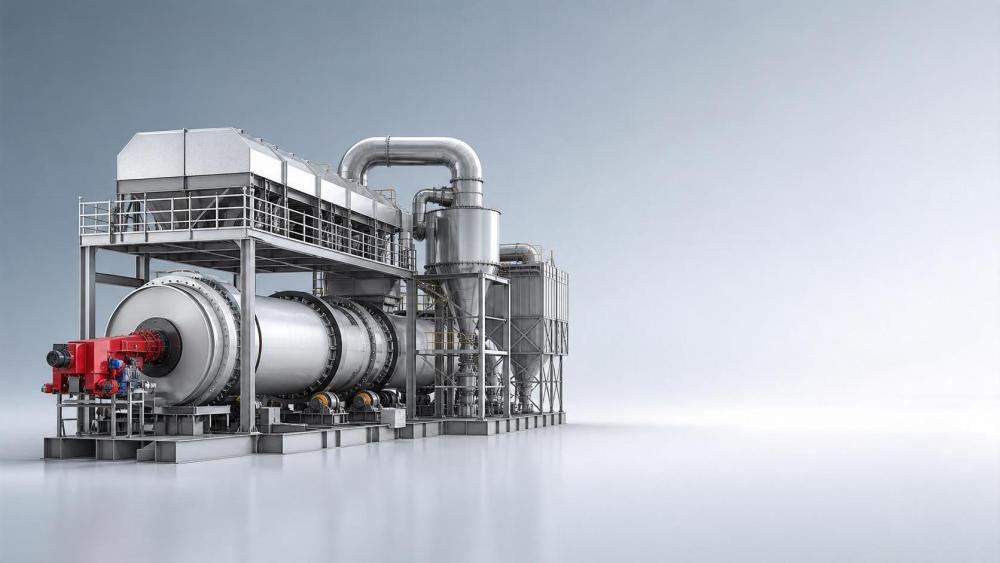
Industrial kiln design Europe is no longer driven by heat duty alone.
Recent projects show that efficiency, emissions, and layout now shape the design brief from day one.
That shift is especially visible in cement, refractories, glass, waste co-processing, and specialty mineral production.
In practice, industrial kiln design Europe must respond to tighter carbon targets, rising fuel costs, and stricter local permitting.
At the same time, brownfield sites leave limited room for equipment, access roads, ducting, and utilities.
This makes early design coordination more valuable than late equipment optimization.
For teams evaluating industrial kiln design Europe, the strongest results usually come from integrated thermal, environmental, and civil planning.
The goal is simple: stable output, lower energy intensity, easier compliance, and fewer surprises during commissioning.
Why Efficiency Is the First Design Lever
Efficiency sets the economic baseline for any kiln project.
In Europe, that baseline must remain competitive under volatile energy markets and carbon pricing pressure.
A weak thermal design can lock in years of avoidable operating cost.
A strong one improves fuel flexibility, product consistency, and maintenance planning.
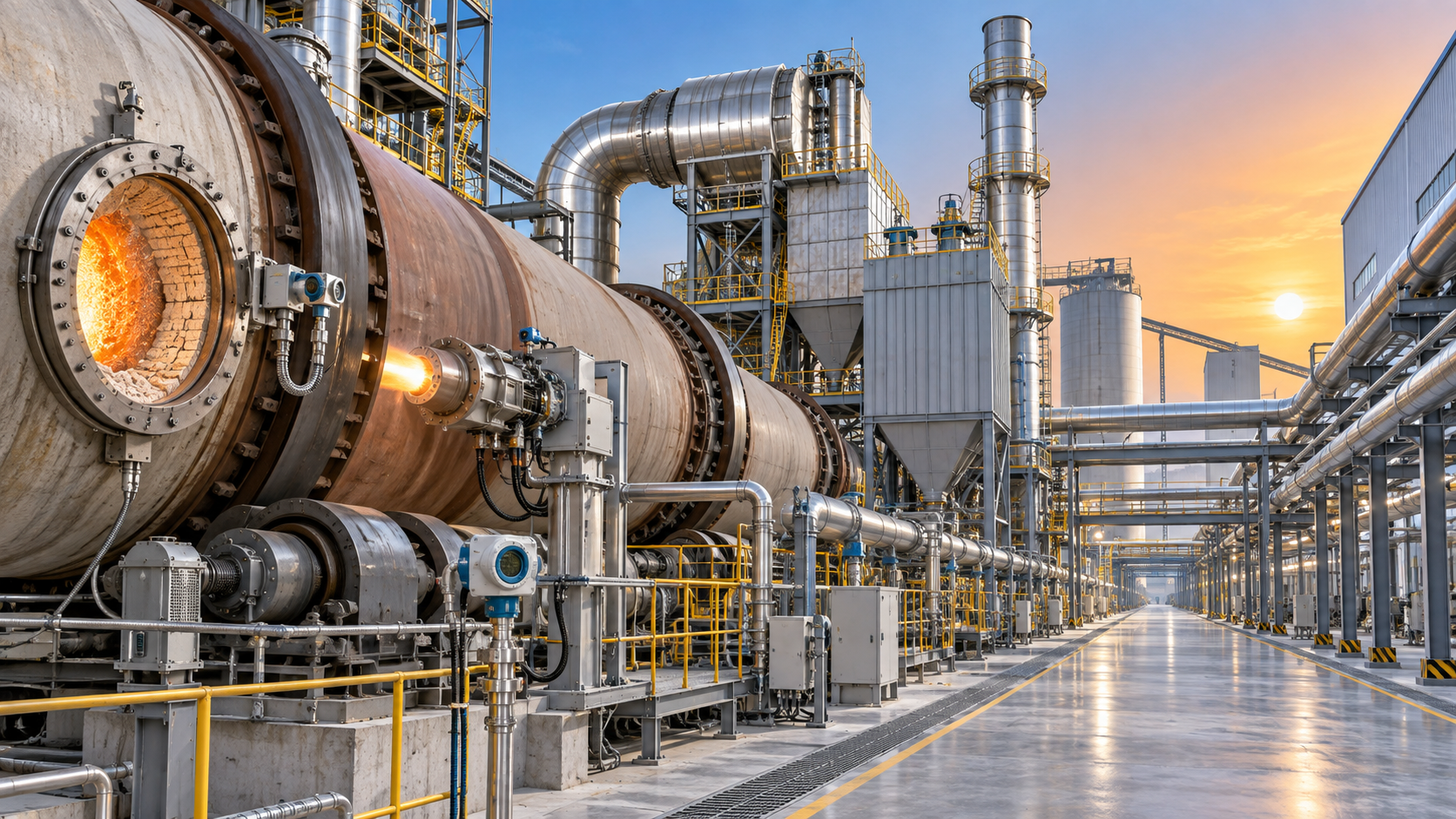
For industrial kiln design Europe, the core efficiency questions usually include residence time, heat transfer mode, shell losses, and combustion stability.
These are not isolated calculations.
They directly affect burner sizing, refractory selection, exhaust handling, and upstream material preparation.
- Match kiln geometry to actual feed behavior, not nominal throughput only.
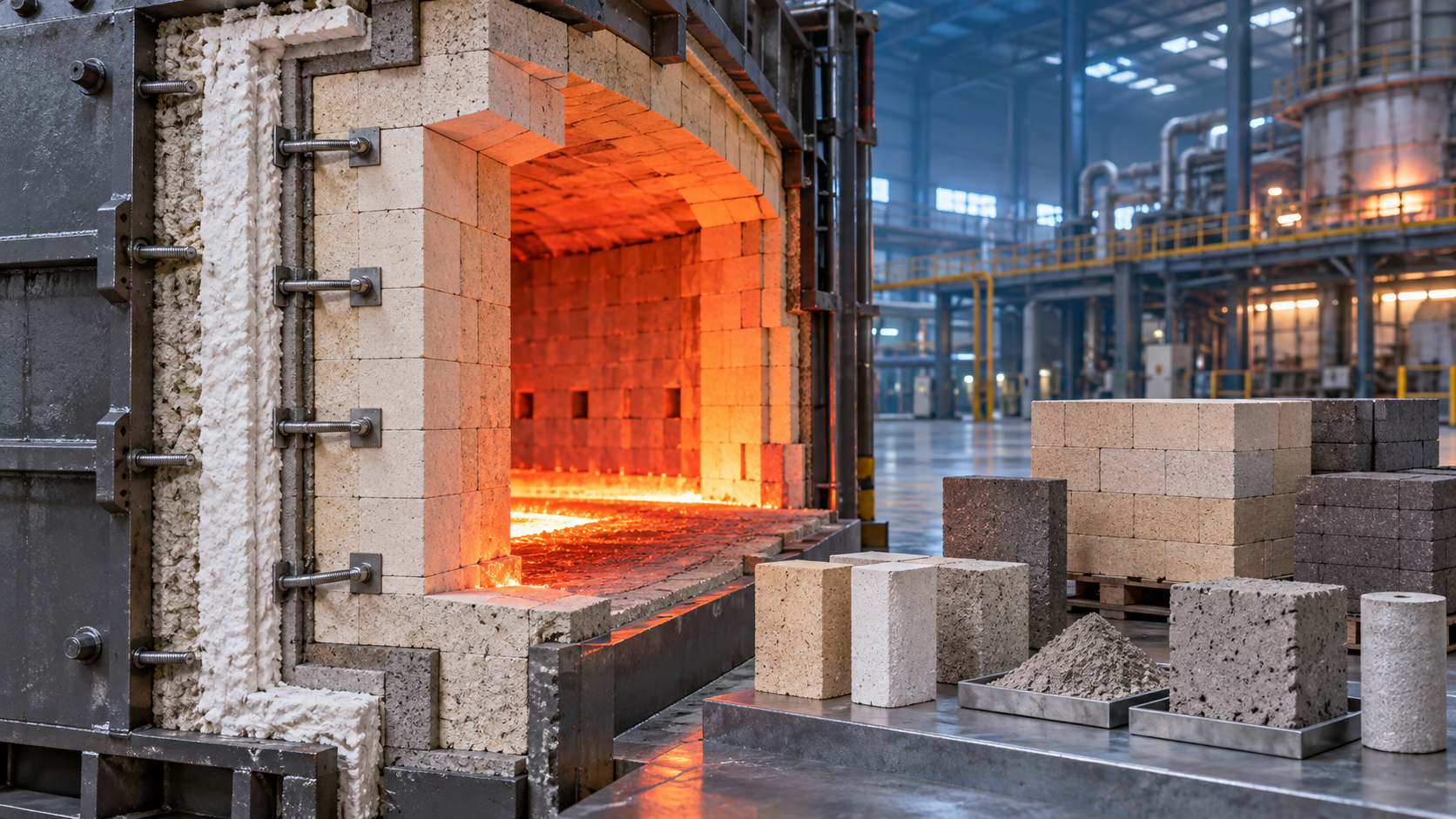
- Use refractory systems that balance insulation value with service life.
- Plan heat recovery around real operating windows, not idealized peak conditions.
- Model startup, turndown, and fuel switching before freezing equipment scope.
This is where process intelligence matters.
Platforms such as CF-Elite track how thermal performance, raw mix chemistry, and operating constraints interact across high-temperature industries.
That broader view helps avoid copying a design from one sector into another without checking process fit.
Emissions Control Starts at the Concept Stage
A common mistake is treating emissions control as a downstream package.
In industrial kiln design Europe, that approach usually raises both capex and compliance risk.
NOx, SOx, particulates, VOCs, acid gases, and CO are influenced by the kiln itself.
Flame shape, excess air, feed composition, and temperature uniformity all matter before gas reaches the filter.
That also means layout decisions can affect emissions performance.
Long duct runs, dead zones, and poor fan placement can reduce control efficiency or complicate maintenance.
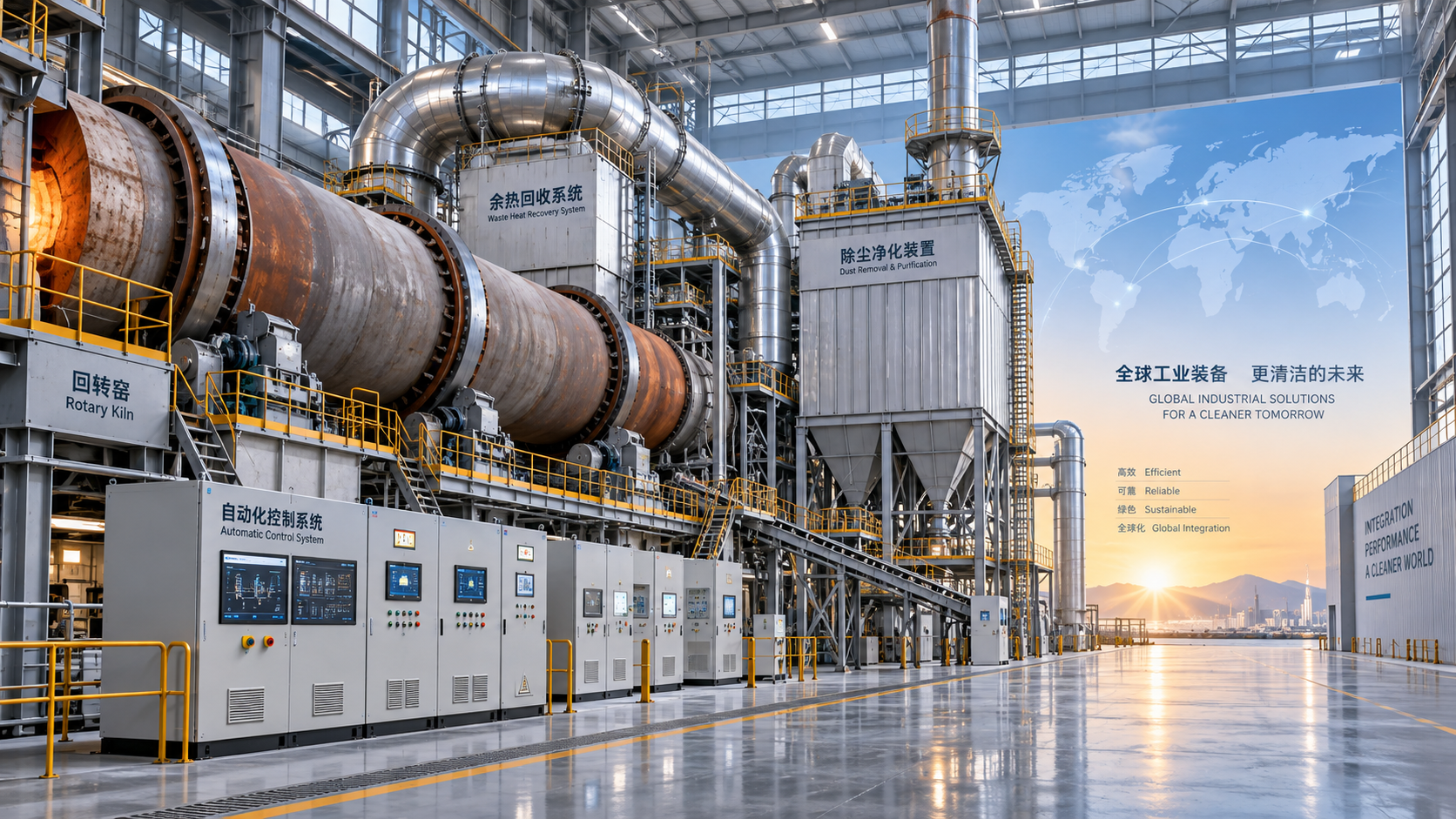
The stronger approach is to link kiln design, combustion design, and gas cleaning from the same engineering baseline.
- Define expected fuel mix and worst-case feed chemistry early.
- Set emissions targets with permit margins, not just legal thresholds.
- Select burner and control logic around stable low-emission operation.
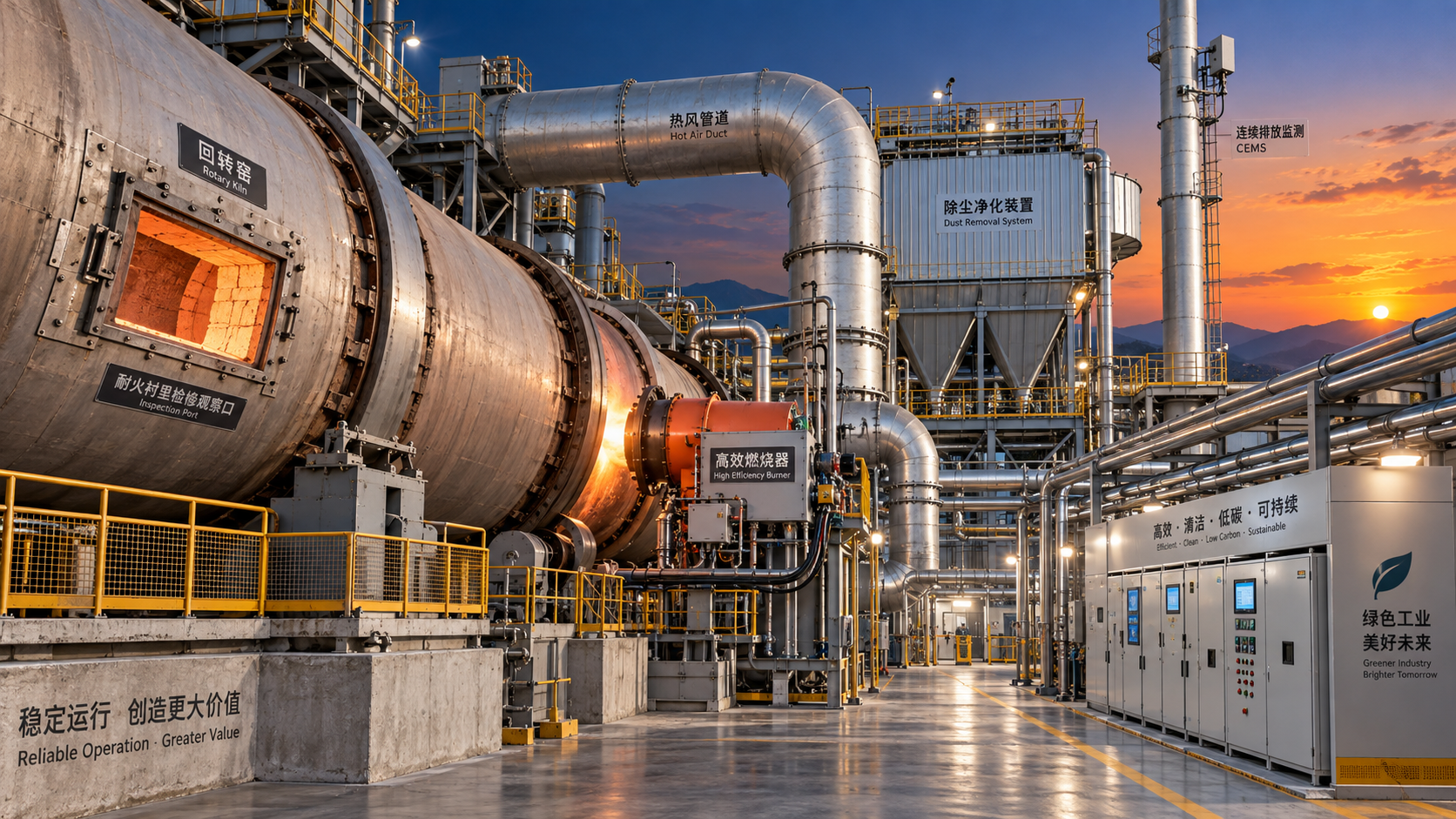
- Reserve physical space for monitoring, sampling, and future retrofit modules.
From a risk perspective, this is one of the most important lessons in industrial kiln design Europe.
Permitting delays often come from incomplete assumptions about fuels, waste streams, or flue gas variability.
Early clarity reduces redesign, vendor conflict, and commissioning drift.
Layout Constraints Can Decide Project Viability
Many European kiln projects happen on existing industrial sites.
That creates a layout challenge long before detailed design begins.
Access routes, height restrictions, neighboring facilities, and utility tie-ins can narrow the feasible options quickly.
In industrial kiln design Europe, layout is not only a civil issue.
It affects pressure drop, heat loss, maintenance access, and the ability to expand later.
A compact arrangement may reduce footprint, but it can also complicate crane access and refractory replacement.
A generous arrangement may improve serviceability, yet increase duct cost and fan power.
The useful question is not whether a layout fits on paper.
It is whether the site can operate safely and efficiently for the next fifteen to twenty years.
This is one reason digital layout review has become standard in industrial kiln design Europe.
It helps teams catch construction conflicts while options are still affordable to change.
Fuel Flexibility and Carbon Strategy Are Now Linked
A clearer signal across Europe is the move toward fuel diversification.
Natural gas, alternative fuels, biomass fractions, and process-derived energy sources are being considered together.
That changes the requirements for industrial kiln design Europe in a practical way.
Burners, storage, dosing, combustion control, and emissions systems must tolerate variation without losing stability.
The carbon strategy is therefore not a separate report.
It becomes part of process design, supplier selection, and future retrofit planning.
In real projects, the most resilient kiln designs usually share three traits.
- They maintain acceptable performance across more than one fuel scenario.
- They include instrumentation for combustion tuning and traceable energy data.
- They leave room for later upgrades, including carbon reduction technologies.
This broader framing aligns with CF-Elite’s focus on thermal management, decarbonization, and resource circularity.
The underlying point is straightforward.
A kiln that cannot adapt to changing fuel economics may become technically sound, yet commercially weak.
A Practical Evaluation Framework for New Projects
When comparing concepts, a structured screen helps keep decisions grounded.
This is especially useful when industrial kiln design Europe involves multiple stakeholders and long equipment lead times.
A workable evaluation framework should test each option across process, compliance, and lifecycle dimensions.
- Confirm throughput, product quality, and thermal duty under realistic feed variability.
- Check emissions performance against current permits and likely future tightening.
- Review layout fit, constructability, and shutdown access on the actual site model.
- Estimate total energy cost, not only nameplate consumption.
- Score adaptability for fuel change, monitoring upgrades, and carbon programs.
- Stress-test vendor assumptions during startup and off-design operation.
This process usually exposes trade-offs that look small in brochures but become major in operation.
For example, a lower purchase price may come with higher fan power, tighter maintenance windows, or weaker fuel flexibility.
That is why industrial kiln design Europe benefits from independent market and technical intelligence, especially in cross-border sourcing.
Turning Design Choices Into Long-Term Performance
The strongest kiln projects are rarely defined by one breakthrough component.
They succeed because key decisions are aligned early and checked against real operating conditions.
Industrial kiln design Europe now demands that level of discipline.
Efficiency cannot be separated from emissions.
Emissions cannot be separated from layout.
And layout cannot be separated from long-term operability.
The practical path is to define performance targets early, model the real site carefully, and test flexibility before procurement starts.
That approach gives industrial kiln design Europe a better chance of delivering stable production, lower energy intensity, and smoother compliance over time.
For projects moving from concept to execution, the next useful step is a design review that combines thermal data, emissions assumptions, and site layout in one decision model.
Related News
 Thermal Energy ArchitectWhat Does CE Marking Require for an Energy-Efficient Industrial Kiln?Energy efficient kiln CE requirements explained: assess safety, technical files, energy performance, and EU compliance before purchase or commissioning.Oct 04, 2026
 Thermal Energy ArchitectRefractory Manufacturing Solutions for Brick Plants: How to Extend Kiln LifeRefractory manufacturing solutions for brick plant operations: discover proven strategies to extend kiln life, reduce heat loss, prevent lining failures, and plan cost-effective repairs.Oct 03, 2026
 Thermal Energy ArchitectHow to Specify Heavy Industrial Process Systems for High-Temperature PlantsHeavy industrial processes systems: learn how to specify high-temperature plants for efficiency, emissions control, maintainability, and lifecycle performance.Oct 02, 2026
 Structural Material AnalystHow Sustainable Material Extrusion Can Improve Wall Panel Durability and Design FlexibilityDiscover how sustainable material extrusion for wall panels improves durability, moisture resistance, design flexibility, and installation consistency for high-performing wall systems.Oct 01, 2026
 Thermal Energy ArchitectHow to Evaluate a High-Temperature Materials Manufacturer for Furnace ApplicationsChoose a high-temperature materials manufacturer with confidence: compare thermal performance, chemical resistance, quality controls, installation support, and lifecycle cost.Sep 30, 2026
 Ms. Elena RodriguezHow to Structure Global Specification Data for Faster Industrial Product EvaluationGlobal specification-oriented product information helps industrial teams compare capacity, energy, emissions, automation, and lifecycle data on a like-for-like basis for faster, confident equipment decisions.Sep 29, 2026
 Thermal Energy ArchitectHow to Specify High-Temperature Process Systems for Continuous Thermal OperationsHigh-temperature process engineering systems: learn how to specify resilient continuous thermal operations for efficiency, compliance, reliable uptime, and long-term performance.Sep 28, 2026
 Thermal Energy ArchitectHow to Evaluate a Thermal Engineering Contractor for High-Temperature Plant ProjectsChoose a thermal engineering contractor with proven process expertise, lifecycle value, emissions control, and delivery discipline for reliable high-temperature plant performance.Sep 27, 2026
 Silicate Process EngineerHow Latin American Cement Plants Can Reduce Dust Emissions in Kilns and Transfer PointsCement plant dust control Latin America: reduce kiln and transfer-point emissions with practical airflow, filtration, monitoring, and maintenance strategies.Sep 26, 2026
 Material Heat-Resist ExpertHow to Evaluate Refractory Production Lines for Output, Quality, and Energy UseRefractory production lines: learn how to assess qualified output, consistent quality, and total energy use for smarter, lower-risk investment decisions.Sep 25, 2026
 Dr. Alistair VaughnHow Waste Recycling Technology Improves Material Recovery in Industrial PlantsWaste recycling technology improves material recovery through source segregation, smart separation, thermal treatment, and quality control for industrial plants.Sep 24, 2026
 Optical Glass Tech FellowHow to Specify Glass Annealing Equipment for European Quality and Energy RequirementsGlass annealing equipment Europe: learn how to specify lehrs for consistent glass quality, energy efficiency, compliance, automation, and reliable long-term performance.Sep 23, 2026
 Optical Glass Tech FellowSilicate Process Automation: Improving Batch Consistency and Energy ControlSilicate process automation improves batch consistency, energy control, traceability, and operator confidence across high-temperature manufacturing operations.Sep 22, 2026
 Optical Glass Tech FellowHow Silicate Industrial Processes Control Viscosity, Energy Use, and Product QualitySilicate industrial processes: learn how viscosity, chemistry, heat transfer, and atmosphere control reduce energy use, improve stability, and protect product quality.Sep 21, 2026
 Thermal Energy ArchitectHow European Plants Can Evaluate Energy Recovery Equipment for High-Temperature ProcessesIndustrial energy recovery equipment Europe: learn how high-temperature plants can assess waste-heat sources, integration risks, lifecycle value, and reliable recovery routes.Sep 20, 2026
 Thermal Energy ArchitectIndustrial Furnace Process Optimization: Reducing Fuel Use Without Sacrificing ThroughputIndustrial process optimization furnace strategies that cut fuel use while protecting throughput. Explore combustion control, heat recovery, refractory performance, and data-driven efficiency gains.Sep 19, 2026
 Ms. Elena RodriguezWhat Drives High-Pressure Extrusion Equipment Cost in Industrial Projects?High pressure extrusion equipment cost explained: compare pressure, die design, automation, wear, energy, and installation factors for smarter industrial investments.Sep 18, 2026
 Thermal Energy ArchitectHow to Size a Waste Heat Recovery Exchanger for High-Temperature Kiln Exhaust?Waste heat recovery exchanger sizing for high-temperature kiln exhaust: balance recoverable duty, fouling, corrosion limits, pressure drop, and reliable heat use.Sep 17, 2026
 Thermal Energy ArchitectWhy Heat-Resistant Materials Lose Abrasion Resistance at High TemperaturesHeat-resistant materials abrasion resistance can decline at high temperatures. Discover the thermal, chemical, and mechanical causes of wear—and how to choose longer-lasting linings.Sep 16, 2026
 Thermal Energy ArchitectHow to Evaluate a Thermal Energy Optimization Company for High-Temperature PlantsChoose a thermal energy optimization company with proven process expertise, measurable savings, and reliable delivery for high-temperature plants. Learn what to assess.Sep 15, 2026

Related News
- 00
0000-00
What Does CE Marking Require for an Energy-Efficient Industrial Kiln? - 00
0000-00
Refractory Manufacturing Solutions for Brick Plants: How to Extend Kiln Life - 00
0000-00
How to Specify Heavy Industrial Process Systems for High-Temperature Plants - 00
0000-00
How to Evaluate a High-Temperature Materials Manufacturer for Furnace Applications - 00
0000-00
How to Specify High-Temperature Process Systems for Continuous Thermal Operations
Weekly Insights
Stay ahead with our curated technology reports delivered every Monday.