
How to Evaluate Continuous Glass Annealing Equipment for Stable Throughput?




Stable throughput is not just a furnace question
When technical teams discuss glass annealing equipment continuous lines, the conversation often starts too late in the process. People compare installed power, tunnel length, or quoted capacity, but the real evaluation point is narrower and more practical: can the line remove stress at the rate your upstream process creates it, without turning every production fluctuation into scrap, edge breakage, or downstream handling trouble?
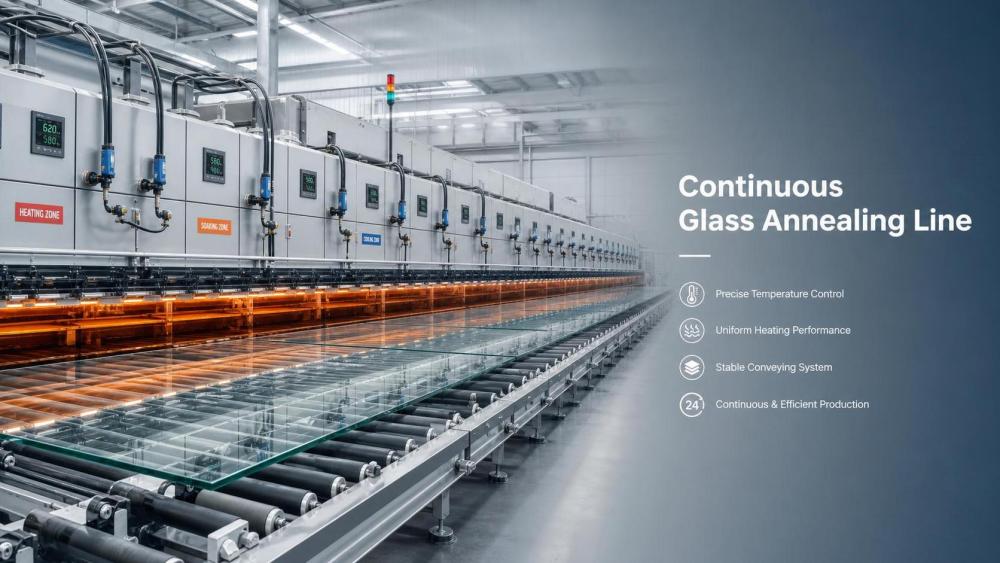
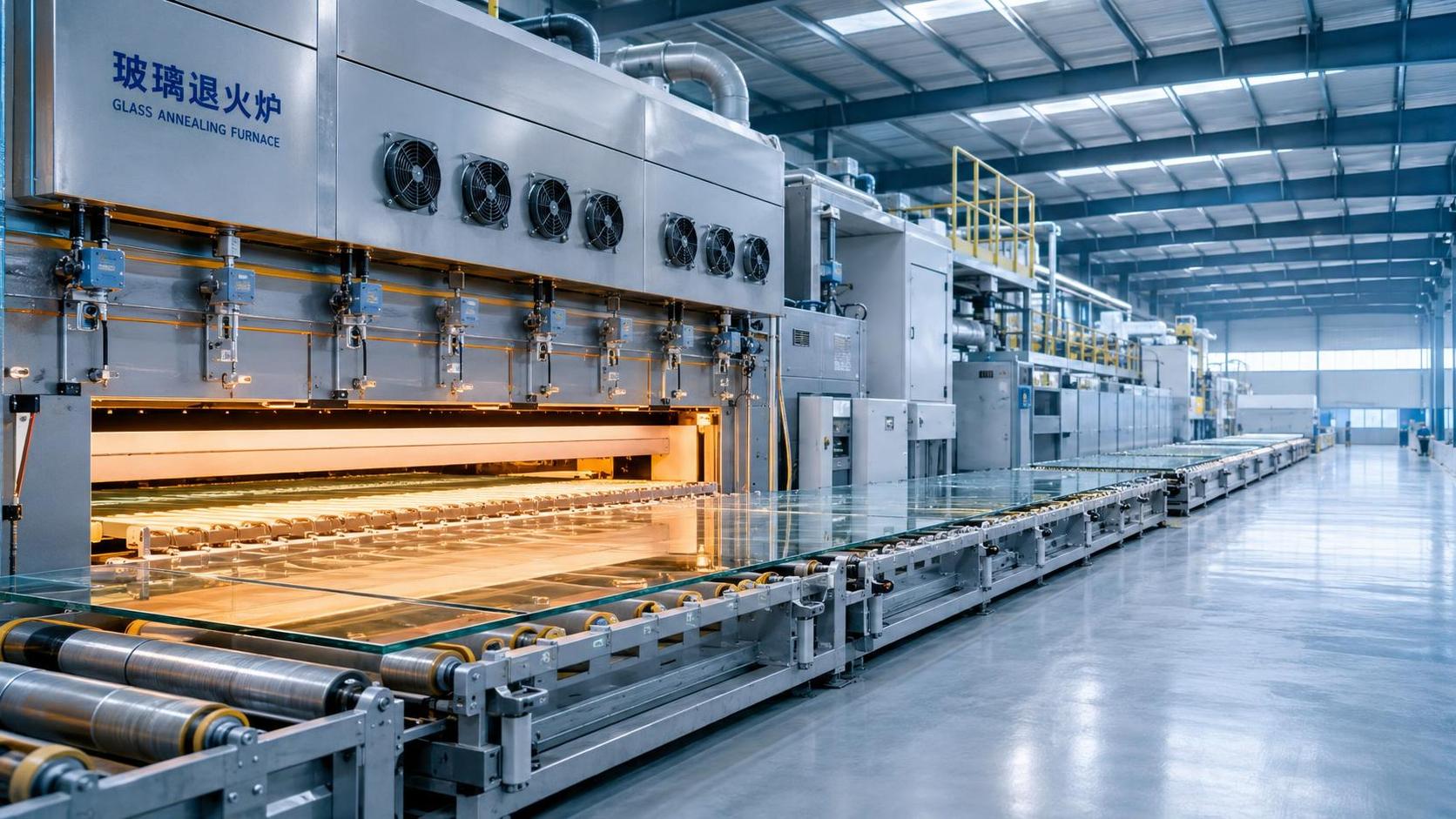
A continuous annealing system is not simply a long heated chamber with a conveyor. In production terms, it is the section that converts hot, newly formed glass into material with a controlled internal stress profile while preserving line rhythm. That distinction matters. If the equipment only performs well under ideal loading, ideal thickness, or ideal ambient conditions, it may look acceptable on paper and still fail the plant’s actual throughput target.
For evaluators, the better question is not “What is the maximum capacity?” but “What operating window allows the line to stay stable?” Stable throughput means the equipment can absorb normal variation in ribbon temperature, sheet size, thickness mix, pull speed, and maintenance cycles without losing stress uniformity or forcing operators into constant correction. In glass plants, that operating window is usually worth more than an impressive nameplate figure.
What continuous annealing really needs to control
Annealing is fundamentally about controlled cooling through the temperature range where stress can either relax or become locked into the glass. The exact temperature profile depends on glass composition and product geometry, so evaluators should be careful with generic vendor language. A line designed for one product family may not transfer cleanly to another, even when nominal dimensions look similar.
In practice, four variables determine whether a continuous line behaves well:
- temperature uniformity across the width and along the process direction,
- residence time consistency,
- conveyor or transport stability,
- and the line’s response to disturbances.
That last point is frequently underestimated. A continuous annealing lehr may run smoothly in a steady-state demonstration, yet become difficult when upstream forming temperature drifts, product changeovers are frequent, or a short stoppage forces a restart. Technical evaluation should therefore include transition behavior, not only normal production behavior.
Temperature uniformity is the obvious item, but it should be read in context. A quoted zone control count tells you very little unless it is tied to airflow design, sensor layout, heating method, cooling section logic, and how the control system compensates for widthwise thermal imbalance. Local hot and cold bands are often more damaging than an average profile that is slightly conservative. For thin glass, coated products, or applications with tight optical and breakage requirements, these local deviations become decisive.
Throughput claims need to be translated into real production conditions
One of the most common mistakes in equipment selection is taking rated throughput at face value. Vendors may present output under a specific glass thickness, sheet width, thermal input condition, or stress target. Those assumptions are not trivial details. They define whether the quoted number is commercially relevant to your line.
A useful way to test a proposal is to ask how capacity changes under the conditions your plant actually sees: partial loading, mixed product schedule, lower-than-ideal entry temperature consistency, or tighter residual stress requirements. A line that only achieves target tonnage at one narrow operating point may create hidden losses elsewhere, especially if operators compensate by reducing speed or overextending soak time.
For that reason, throughput should be evaluated together with three quality-side indicators: breakage rate after annealing, stress consistency across width, and downstream handling stability. If those move in the wrong direction as speed rises, the line is not truly supporting stable throughput; it is trading usable output for nominal output.
Where evaluators should look beyond the furnace shell
The transport system deserves more scrutiny than it usually gets. In a continuous line, the conveyor is part of the thermal process, not just a mechanical accessory. Roll distortion, belt tracking error, vibration, speed fluctuation, or uneven load transfer can all affect stress relief, surface quality, and product geometry. This is especially important for wider sheets, thinner gauges, or lines where surface marking is already a concern.
Ask how speed synchronization is managed between forming, annealing, and downstream cutting or stacking. Ask what happens during a brief upstream interruption. Ask whether the drive architecture allows stable low-speed operation during startup and controlled deceleration during upset conditions. These questions often reveal more than a specification sheet full of motor ratings.
Maintenance design is another area where paper evaluations can be misleading. A technically sound thermal layout can still become a weak asset if sensor replacement, roll access, refractory inspection, fan servicing, or cleaning procedures require long shutdown windows. In continuous glass production, maintainability is inseparable from throughput. If recurring maintenance tasks are awkward, operators will postpone them, and performance drift will show up first as quality instability rather than an obvious mechanical failure.
Digital monitoring is useful only when it supports process judgment
Most suppliers now present digital dashboards, trend logs, and some form of remote monitoring. Those tools can be valuable, but evaluators should separate useful instrumentation from decorative visibility. A good system helps engineers connect thermal zones, line speed, product specification, and defect behavior in a way that shortens diagnosis time. A weak system simply displays temperatures without making process interactions legible.
Look for monitoring architecture that supports historical analysis, alarm rationalization, sensor validation, and correlation with downstream quality checks. If the plant is moving toward digital twin modeling or broader line-level optimization, data structure and integration capability matter more than screen design. CF-Elite’s coverage of thermal industries repeatedly shows the same pattern: plants gain more from reliable, interpretable process data than from adding software layers with little engineering value.
Energy evaluation should be handled with the same discipline. Claims of efficient operation are only meaningful when tied to insulation performance, heat-loss control, fan and drive efficiency, zone management logic, and production stability. A line that consumes slightly less energy per hour but forces more scrap or more frequent stoppages is not the better thermal asset.
A practical framework for comparing proposals
When several systems look similar, a comparison matrix helps, but only if the criteria reflect process reality rather than generic procurement language. The table below is a better starting point than broad labels such as “advanced control” or “high efficiency.”
Common misunderstandings in annealing line selection
A longer lehr is not automatically a better one. More length may give process margin, but if control architecture, airflow balance, or conveyor stability are weak, the extra footprint does not solve the core problem.
More zones are not automatically better either. Zone count helps only when each zone can be measured, controlled, and translated into a useful thermal profile. Excess segmentation without solid control logic can increase complexity without improving product stability.
Another misconception is that annealing quality can be corrected later in cold-end inspection. It cannot, at least not economically. Once internal stress is locked in, downstream systems can detect symptoms, but they do not recover the material. This is why technical evaluators should treat the annealing section as a decisive quality gate, not a passive buffer between hot end and cutting.
How to reach a defensible decision
A defensible selection process usually combines thermal design review, mechanical review, control-system review, and a realistic operating scenario test. The most useful vendor discussions are often the least glamorous ones: what residual stress indicators are used in acceptance; how the line behaves after a short stop; what tuning authority operators actually have; which components most often limit performance after the first year.
In heavy thermal industries, the best equipment choice is rarely the one with the broadest promises. It is the one whose process window, maintainability, and data transparency match the plant’s real production discipline. For a continuous glass annealing line, stable throughput is not a single specification. It is the result of thermal control, transport reliability, practical maintenance, and honest capacity assumptions working together.
That is the standard worth applying when comparing options. If a supplier can explain those interactions clearly, with parameters tied to actual operating conditions, you are no longer evaluating a brochure claim. You are evaluating whether the line can hold quality and output over the long production cycle that matters.
Related News
 Thermal Energy ArchitectIndustrial Furnace Process Optimization: Reducing Fuel Use Without Sacrificing ThroughputIndustrial process optimization furnace strategies that cut fuel use while protecting throughput. Explore combustion control, heat recovery, refractory performance, and data-driven efficiency gains.Sep 19, 2026
 Ms. Elena RodriguezWhat Drives High-Pressure Extrusion Equipment Cost in Industrial Projects?High pressure extrusion equipment cost explained: compare pressure, die design, automation, wear, energy, and installation factors for smarter industrial investments.Sep 18, 2026
 Thermal Energy ArchitectHow to Size a Waste Heat Recovery Exchanger for High-Temperature Kiln Exhaust?Waste heat recovery exchanger sizing for high-temperature kiln exhaust: balance recoverable duty, fouling, corrosion limits, pressure drop, and reliable heat use.Sep 17, 2026
 Thermal Energy ArchitectWhy Heat-Resistant Materials Lose Abrasion Resistance at High TemperaturesHeat-resistant materials abrasion resistance can decline at high temperatures. Discover the thermal, chemical, and mechanical causes of wear—and how to choose longer-lasting linings.Sep 16, 2026
 Thermal Energy ArchitectHow to Evaluate a Thermal Energy Optimization Company for High-Temperature PlantsChoose a thermal energy optimization company with proven process expertise, measurable savings, and reliable delivery for high-temperature plants. Learn what to assess.Sep 15, 2026
 Thermal Energy ArchitectRotary Kiln Efficiency: How Feed Rate, Fuel Use, and Heat Loss Affect OutputRotary kiln efficiency explained: discover how feed rate, fuel use, heat loss, combustion, and cooling performance shape output, quality, and energy costs.Sep 14, 2026
 Thermal Energy ArchitectHow to Select Heat-Resistant Materials That Maintain Abrasion Resistance in KilnsHeat-resistant materials abrasion resistance: learn how to select kiln linings that withstand heat, wear, thermal cycling, and chemical attack for longer service life.Sep 13, 2026
 Thermal Energy ArchitectHow Rotary Kiln Automation Improves Temperature Control and Fuel EfficiencyRotary kiln technology automation enhances temperature control, stabilizes combustion, and improves fuel efficiency with smarter data, predictive control, and safer operations.Sep 12, 2026
 Silicate Process EngineerCement Plant Emission Control: Selecting Systems for Dust, NOx, and SO2 LimitsCement plant emission control guide: compare dust collectors, NOx reduction, and SO2 systems for reliable compliance across kiln modes, fuel changes, and operating upsets.Sep 11, 2026
 Thermal Energy ArchitectSelecting Abrasion-Resistant High-Temperature Materials for Kiln and Conveyor Wear ZonesHigh-temp material engineering guide to abrasion-resistant kiln and conveyor solutions—match wear, heat, chemistry, and installation design for longer service life.Sep 10, 2026
 Dr. Alistair VaughnIndustrial Process Engineering: How to Map Processes for Safer, More Efficient PlantsIndustrial process engineering reveals bottlenecks, safety risks, and energy losses through practical process mapping for safer, more efficient plants.Sep 09, 2026
 Optical Glass Tech FellowHow to Evaluate a Glass Annealing Equipment Manufacturer for Production StabilityChoose a glass annealing equipment manufacturer with proven thermal uniformity, reliable controls, lifecycle value, and responsive service for stable production.Sep 08, 2026
 Prof. Marcus ChenThermal Energy Architecture in North America: Strategies for Lower Building Energy UseThermal energy architecture North America helps project leaders cut building energy use through stronger envelopes, right-sized HVAC, storage, and smart commissioning.Sep 07, 2026
 Ms. Elena RodriguezHow Should Buyers Evaluate Building Material Industry Intelligence Pricing?Building material industry intelligence pricing: learn how to compare coverage, technical depth, and ROI to choose intelligence that reduces procurement risk.Sep 07, 2026
 Ms. Elena RodriguezHow to Use Building Material Intelligence Data for Market and Investment DecisionsBuilding material industry intelligence data helps leaders evaluate demand, costs, regulation, capacity, and technology to make smarter market and investment decisions.Sep 05, 2026
 Thermal Energy ArchitectHow PLC Control Improves Energy Efficiency and Temperature Stability in KilnsEnergy efficient kilns PLC control improves temperature stability, cuts fuel waste, and optimizes combustion, draft, and material flow. Explore proven strategies for smarter kiln modernization.Sep 04, 2026
 Optical Glass Tech FellowEuropean Glass Melting Processes: Furnace Choices, Energy Use, and Quality ControlGlass melting process Europe: explore furnace choices, energy efficiency, cullet strategy, and quality control to improve output, compliance, and long-term glass performance.Sep 03, 2026
 Thermal Energy ArchitectWhat Determines Refractory Lining Monitoring Price for Industrial Kilns?Refractory lining monitoring price depends on kiln size, sensor technology, installation, software, and support. Compare total lifecycle costs and choose the right solution.Sep 02, 2026
 Silicate Process EngineerCement Production System Costs: A Plant Buyer’s Guide to Budgeting and ROICement production systems cost planning made clear: compare CAPEX, operating costs, compliance, and ROI to build a resilient, profitable cement plant investment.Sep 01, 2026
 Dr. Alistair VaughnWhat Should a Process Technology Database Track for High-Temperature Plants?Process technology database essentials for high-temperature plants: track thermal profiles, feed chemistry, refractory wear, emissions, energy, and maintenance for safer, data-driven decisions.Aug 31, 2026



Related News
- 00
0000-00
How to Evaluate a Glass Annealing Equipment Manufacturer for Production Stability - 00
0000-00
European Glass Melting Processes: Furnace Choices, Energy Use, and Quality Control - 00
0000-00
How Glass Melting Furnace Design Impacts Energy Use and Glass Quality - 00
0000-00
How Can Glass Manufacturing Technology Improve Furnace Efficiency and Cut Energy Costs? - 00
0000-00
How to Evaluate Continuous Glass Annealing Equipment for Stable Throughput?
Weekly Insights
Stay ahead with our curated technology reports delivered every Monday.