
Cement Plant Dust Control in North America: Compliance Options and System Selection




Why is cement plant dust control in North America under sharper scrutiny now?
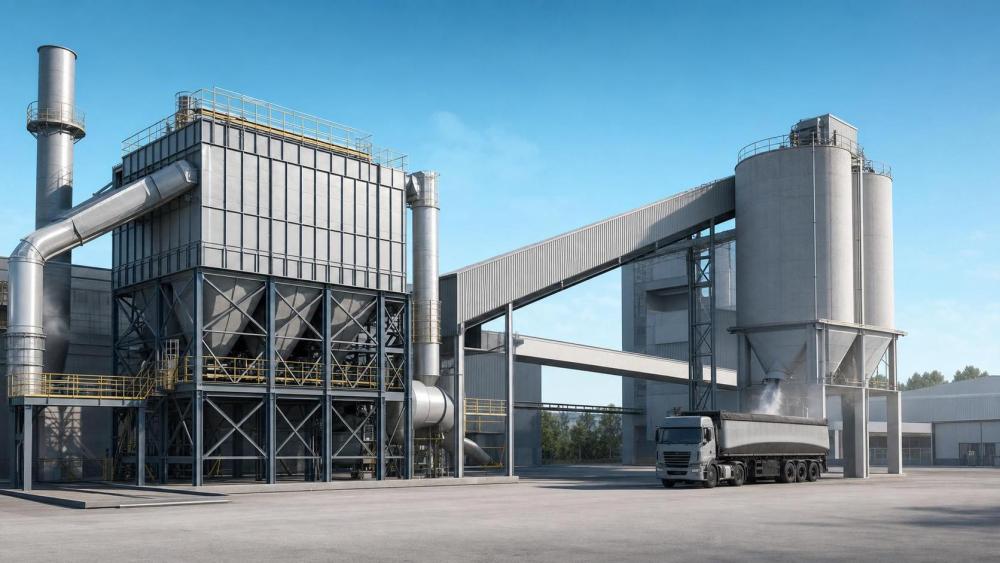
In North America, cement plant dust control has moved beyond housekeeping and visible emissions.
It now sits at the intersection of air permits, worker exposure, kiln reliability, and carbon-conscious plant upgrades.
That shift matters because dust is rarely a single-point issue.
It affects clinker handling, finish grinding, raw meal transfer, truck loading, and even fugitive emissions around storage and conveyors.
In practical terms, regulators are looking at more than stack opacity.
Plants must show that control equipment performs consistently under variable loads, fuel mixes, and maintenance conditions.
That is why cement plant dust control North America searches often lead to questions about compliance paths, not only equipment models.
Across the silicate sector, CF-Elite tracks this wider pattern.
Dust control decisions are increasingly linked with thermal management, process stability, and decarbonization planning.
A baghouse upgrade, for example, may also change fan power, heat balance, and maintenance intervals.
So the right question is not only, “What collector do we buy?”
A better question is, “Which control strategy remains compliant under real operating swings?”
Which rules usually shape dust control decisions at a cement plant?
The compliance map is layered.
Federal EPA requirements often set the baseline, but state, provincial, and local air districts may tighten expectations.
In many cases, permit conditions become the most immediate operating standard.
Those conditions may cover particulate matter limits, visible emissions, capture efficiency, maintenance records, and monitoring obligations.
Worker protection rules also matter.
Respirable dust near mills, silo tops, and packing lines can trigger occupational concerns even when the main stack stays within limit.
That is one reason cement plant dust control North America planning cannot rely on a single emissions number.
A sound review usually checks four things at once:
- Source-specific permit limits for kilns, coolers, mills, and material handling points.
- Fugitive dust obligations for roads, piles, loading zones, and transfer stations.
- Inspection and recordkeeping expectations tied to enforcement risk.
- Occupational exposure controls where maintenance or confined work is frequent.
The common mistake is treating compliance as a paperwork exercise.
In reality, regulators often focus on repeatability.
If performance collapses during upset conditions, the chosen system may be technically installed but functionally weak.
Baghouse, cartridge, or electrostatic option: what actually fits cement service?
This is where selection becomes less generic.
Cement dust behaves differently depending on temperature, moisture, alkali content, particle size, and airflow volatility.
So the “best” solution depends on source conditions, not vendor claims.
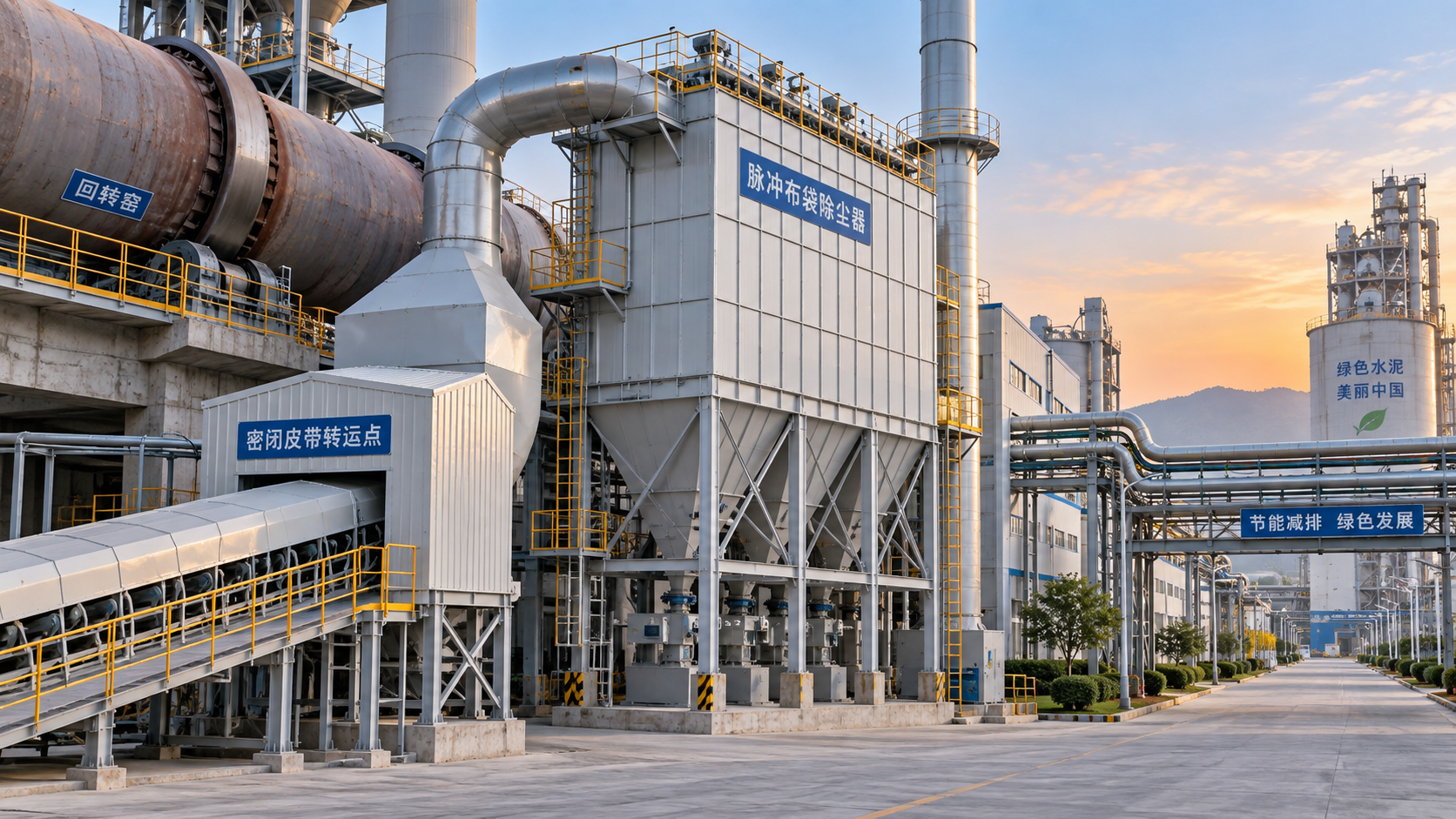
Pulse-jet baghouses remain the dominant answer for many applications.
They handle fine dust loads well and support strong outlet performance when media selection is correct.
Cartridge units can work in lighter-duty points, but they are usually less favored for hot, abrasive, or sticky cement streams.
Electrostatic precipitators still appear in legacy or high-volume settings, especially where gas conditions suit them.
Yet many facilities review them against upgrade costs, turndown behavior, and fine particulate performance.
A useful comparison looks like this:
When teams compare cement plant dust control North America options, they usually get better results by evaluating process fit before capital cost.
A cheaper system that plugs, leaks, or derates in winter conditions is rarely cheaper over five years.
How do you judge whether a dust control system is really sized correctly?
A collector can look adequate on paper and still underperform in service.
Sizing errors often begin with incomplete source data.
Design airflow, dust loading, gas temperature peaks, moisture spikes, and upset scenarios all need to be realistic.
This matters especially in cement, where process variability is normal.
A practical sizing review should ask:
- What is the true peak airflow, not only the average?
- Will the dust cake release cleanly with the chosen media?
- How much false air enters upstream ducting?
- Are isolation, explosion, and fire controls needed at this point?
- Can maintenance be done without exposing nearby areas to secondary dust release?
More advanced plants also look at online differential pressure trends, broken bag detection, and fan energy behavior.
That approach reflects a wider CF-Elite theme.
Dust control should be interpreted through process intelligence, not isolated hardware.
If a system only works when operators constantly intervene, selection was probably incomplete.
Where do plants usually go wrong when upgrading for compliance?
The most common error is focusing only on the main emission point.
Fugitive dust from clinker yards, reclaim tunnels, and truck loading can still trigger complaints and inspections.
Another mistake is replacing collector hardware without checking upstream process causes.
If condensation, hot spots, or poor hood design remain, a new unit may inherit the same problems.
Some projects also underestimate shutdown planning.
Duct rerouting, fan balancing, structural loads, and electrical integration can stretch outages well beyond estimates.
For cement plant dust control North America upgrades, the recurring pitfalls are usually these:
- Assuming permit compliance equals workplace cleanliness.
- Selecting filter media without matching temperature and chemistry.
- Ignoring maintenance access, hopper evacuation, and discharge reliability.
- Treating monitoring instruments as optional after startup.
- Missing the link between dust control and energy use.
That last point deserves attention.
Poorly designed systems can raise fan horsepower, increase compressed air use, and create unstable draft conditions.
So a compliance upgrade should also be screened for operating cost and thermal impact.
What does a sensible selection process look like before final approval?
A strong process begins with source mapping, not quotations.
List every major stack source, every recurring fugitive source, and every area where cleaning labor remains unusually high.
Then rank each location by compliance exposure, safety risk, and production consequence.
From there, compare options with a practical decision frame:
This is usually the point where technical intelligence adds value.
Cross-checking dust control choices against kiln behavior, refractory conditions, and broader silicate trends prevents narrow decisions.
That broader view is consistent with how CF-Elite interprets heavy industrial upgrades.
The equipment choice matters, but the process context matters more.
So what is the next step if a plant needs a defensible answer?
Start with evidence from the plant, not assumptions from a catalog.
Review permit limits, source conditions, complaint history, housekeeping burden, and recent maintenance patterns together.
That combined picture usually shows whether the real problem is capture, collection, transport, or operating discipline.
For cement plant dust control North America decisions, the strongest path is usually a staged one.
First, define high-risk sources.
Next, compare system fit under actual thermal and dust conditions.
Then, confirm lifecycle cost, monitoring expectations, and outage practicality before approval.
That approach keeps compliance, safety, and process performance aligned.
It also avoids the expensive cycle of replacing equipment that was never correctly matched to the source.
When the goal is durable cement plant dust control in North America, selection should be treated as an operational design decision, not a simple purchasing task.
Related News
 Structural Material AnalystHow Sustainable Material Extrusion Can Improve Wall Panel Durability and Design FlexibilityDiscover how sustainable material extrusion for wall panels improves durability, moisture resistance, design flexibility, and installation consistency for high-performing wall systems.Oct 01, 2026
 Thermal Energy ArchitectHow to Evaluate a High-Temperature Materials Manufacturer for Furnace ApplicationsChoose a high-temperature materials manufacturer with confidence: compare thermal performance, chemical resistance, quality controls, installation support, and lifecycle cost.Sep 30, 2026
 Ms. Elena RodriguezHow to Structure Global Specification Data for Faster Industrial Product EvaluationGlobal specification-oriented product information helps industrial teams compare capacity, energy, emissions, automation, and lifecycle data on a like-for-like basis for faster, confident equipment decisions.Sep 29, 2026
 Thermal Energy ArchitectHow to Specify High-Temperature Process Systems for Continuous Thermal OperationsHigh-temperature process engineering systems: learn how to specify resilient continuous thermal operations for efficiency, compliance, reliable uptime, and long-term performance.Sep 28, 2026
 Thermal Energy ArchitectHow to Evaluate a Thermal Engineering Contractor for High-Temperature Plant ProjectsChoose a thermal engineering contractor with proven process expertise, lifecycle value, emissions control, and delivery discipline for reliable high-temperature plant performance.Sep 27, 2026
 Silicate Process EngineerHow Latin American Cement Plants Can Reduce Dust Emissions in Kilns and Transfer PointsCement plant dust control Latin America: reduce kiln and transfer-point emissions with practical airflow, filtration, monitoring, and maintenance strategies.Sep 26, 2026
 Material Heat-Resist ExpertHow to Evaluate Refractory Production Lines for Output, Quality, and Energy UseRefractory production lines: learn how to assess qualified output, consistent quality, and total energy use for smarter, lower-risk investment decisions.Sep 25, 2026
 Dr. Alistair VaughnHow Waste Recycling Technology Improves Material Recovery in Industrial PlantsWaste recycling technology improves material recovery through source segregation, smart separation, thermal treatment, and quality control for industrial plants.Sep 24, 2026
 Optical Glass Tech FellowHow to Specify Glass Annealing Equipment for European Quality and Energy RequirementsGlass annealing equipment Europe: learn how to specify lehrs for consistent glass quality, energy efficiency, compliance, automation, and reliable long-term performance.Sep 23, 2026
 Optical Glass Tech FellowSilicate Process Automation: Improving Batch Consistency and Energy ControlSilicate process automation improves batch consistency, energy control, traceability, and operator confidence across high-temperature manufacturing operations.Sep 22, 2026
 Optical Glass Tech FellowHow Silicate Industrial Processes Control Viscosity, Energy Use, and Product QualitySilicate industrial processes: learn how viscosity, chemistry, heat transfer, and atmosphere control reduce energy use, improve stability, and protect product quality.Sep 21, 2026
 Thermal Energy ArchitectHow European Plants Can Evaluate Energy Recovery Equipment for High-Temperature ProcessesIndustrial energy recovery equipment Europe: learn how high-temperature plants can assess waste-heat sources, integration risks, lifecycle value, and reliable recovery routes.Sep 20, 2026
 Thermal Energy ArchitectIndustrial Furnace Process Optimization: Reducing Fuel Use Without Sacrificing ThroughputIndustrial process optimization furnace strategies that cut fuel use while protecting throughput. Explore combustion control, heat recovery, refractory performance, and data-driven efficiency gains.Sep 19, 2026
 Ms. Elena RodriguezWhat Drives High-Pressure Extrusion Equipment Cost in Industrial Projects?High pressure extrusion equipment cost explained: compare pressure, die design, automation, wear, energy, and installation factors for smarter industrial investments.Sep 18, 2026
 Thermal Energy ArchitectHow to Size a Waste Heat Recovery Exchanger for High-Temperature Kiln Exhaust?Waste heat recovery exchanger sizing for high-temperature kiln exhaust: balance recoverable duty, fouling, corrosion limits, pressure drop, and reliable heat use.Sep 17, 2026
 Thermal Energy ArchitectWhy Heat-Resistant Materials Lose Abrasion Resistance at High TemperaturesHeat-resistant materials abrasion resistance can decline at high temperatures. Discover the thermal, chemical, and mechanical causes of wear—and how to choose longer-lasting linings.Sep 16, 2026
 Thermal Energy ArchitectHow to Evaluate a Thermal Energy Optimization Company for High-Temperature PlantsChoose a thermal energy optimization company with proven process expertise, measurable savings, and reliable delivery for high-temperature plants. Learn what to assess.Sep 15, 2026
 Thermal Energy ArchitectRotary Kiln Efficiency: How Feed Rate, Fuel Use, and Heat Loss Affect OutputRotary kiln efficiency explained: discover how feed rate, fuel use, heat loss, combustion, and cooling performance shape output, quality, and energy costs.Sep 14, 2026
 Thermal Energy ArchitectHow to Select Heat-Resistant Materials That Maintain Abrasion Resistance in KilnsHeat-resistant materials abrasion resistance: learn how to select kiln linings that withstand heat, wear, thermal cycling, and chemical attack for longer service life.Sep 13, 2026
 Thermal Energy ArchitectHow Rotary Kiln Automation Improves Temperature Control and Fuel EfficiencyRotary kiln technology automation enhances temperature control, stabilizes combustion, and improves fuel efficiency with smarter data, predictive control, and safer operations.Sep 12, 2026







Related News
- 00
0000-00
How Latin American Cement Plants Can Reduce Dust Emissions in Kilns and Transfer Points - 00
0000-00
Cement Plant Emission Control: Selecting Systems for Dust, NOx, and SO2 Limits - 00
0000-00
Cement Production System Costs: A Plant Buyer’s Guide to Budgeting and ROI - 00
0000-00
How Kiln Heat Recovery Systems Cut Fuel Use in Cement and Lime Production - 00
0000-00
How to Evaluate Cement Production Plants in the Middle East for Capacity, Fuel Flexibility, and ROI
Weekly Insights
Stay ahead with our curated technology reports delivered every Monday.