
Automated Control in Glass Production Systems: Key Parameters That Affect Yield




In glass manufacturing, yield is shaped less by a single machine than by how well the entire line responds to heat, chemistry, speed, and timing. That is why glass production systems automated control has become a practical operating requirement rather than a technology upgrade.
When furnace balance drifts, forming speed outruns thermal stability, or annealing profiles lag behind product changes, losses appear quickly as bubbles, cords, edge cracks, thickness variation, or unnecessary energy use. Better control closes that gap between designed capacity and saleable output.
Across float lines, container plants, PV glass production, and specialty thin glass operations, the same pattern keeps emerging. Reliable yield comes from disciplined control of a few core parameters, supported by accurate sensing, responsive logic, and process understanding.
Why automated control matters beyond simple line stability
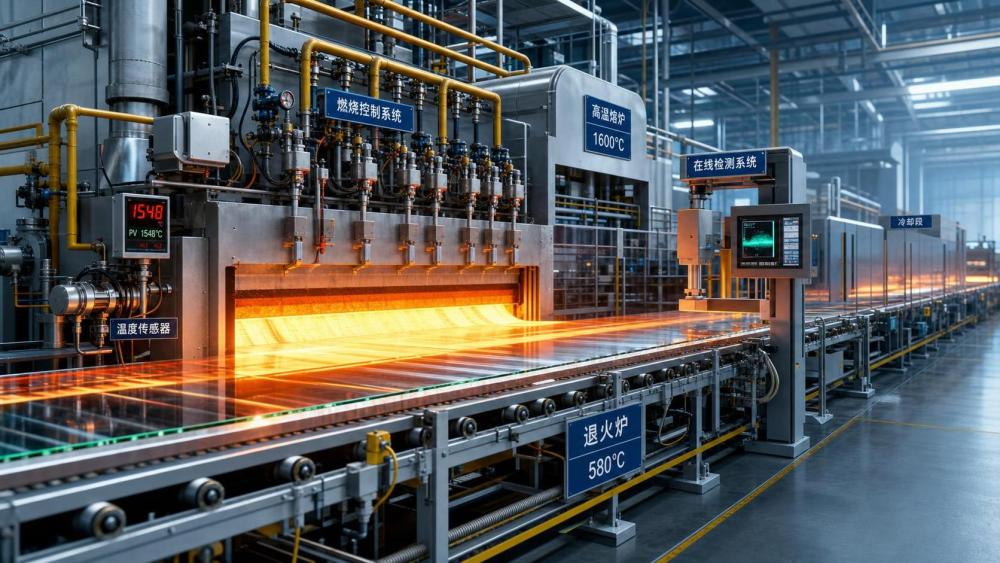
Glass plants operate inside a narrow thermal window. Small disturbances can spread across melting, conditioning, forming, and annealing much faster than manual adjustment can manage.
This is where glass production systems automated control creates value. It coordinates furnace combustion, batch feed, forehearth temperature, machine speed, and cooling profiles as one process instead of isolated points.
The result is not only fewer defects. It also improves repeatability, cuts rework, protects refractory life, and lowers the amount of energy wasted correcting unstable conditions.
That wider industrial context matters. CF-Elite tracks glass lines alongside kilns, refractory systems, and other high-temperature assets because the same operational logic applies everywhere: stable thermal management supports both productivity and decarbonization.
The control parameters that most directly affect yield
Not every variable has equal influence. Several parameters usually determine whether a line stays within profitable operating limits.
Furnace temperature distribution
Average temperature alone is not enough. Cross-furnace balance, crown temperature, pull-point stability, and local hot or cold zones all change melting quality.
Uneven heat can leave unmelted particles, cords, or viscosity swings. Automated combustion control helps maintain a tighter thermal profile and reduces overfiring.
Batch feed rate and composition response
Yield drops when feed rate changes faster than the furnace can absorb. Control systems must connect batch charging to real melting capacity, not only planned throughput.
If cullet ratio, moisture, or raw material variation shifts, the control model should recognize the effect on thermal demand and residence time.
Glass level and pull rate
Level instability changes residence conditions and can disturb downstream forming. Pull rate that is too aggressive often increases defects before it visibly raises output.
Good glass production systems automated control keeps level and pull linked to actual thermal readiness. That is one of the clearest paths to stable yield.
Forehearth and conditioning temperature
The glass may be fully melted, yet still poorly prepared for forming. Conditioning zones must hold viscosity within a narrow band suited to the product and machine setup.
Temperature lag in the forehearth often produces gob inconsistency, shape deviation, or thickness variation. Automated zoning reduces those swings faster than manual correction.
Forming speed and machine synchronization
Higher speed can increase output only when the thermal and mechanical sections remain matched. Otherwise, short-term tonnage gains become long-term yield losses.
This is especially visible in float glass ribbon control, bottle forming cycles, and thin-glass handling, where small timing errors create scrap rapidly.
Annealing curve and cooling rate
Residual stress is a hidden yield killer. Products may pass the hot end but fail later in cutting, transport, coating, or customer use.
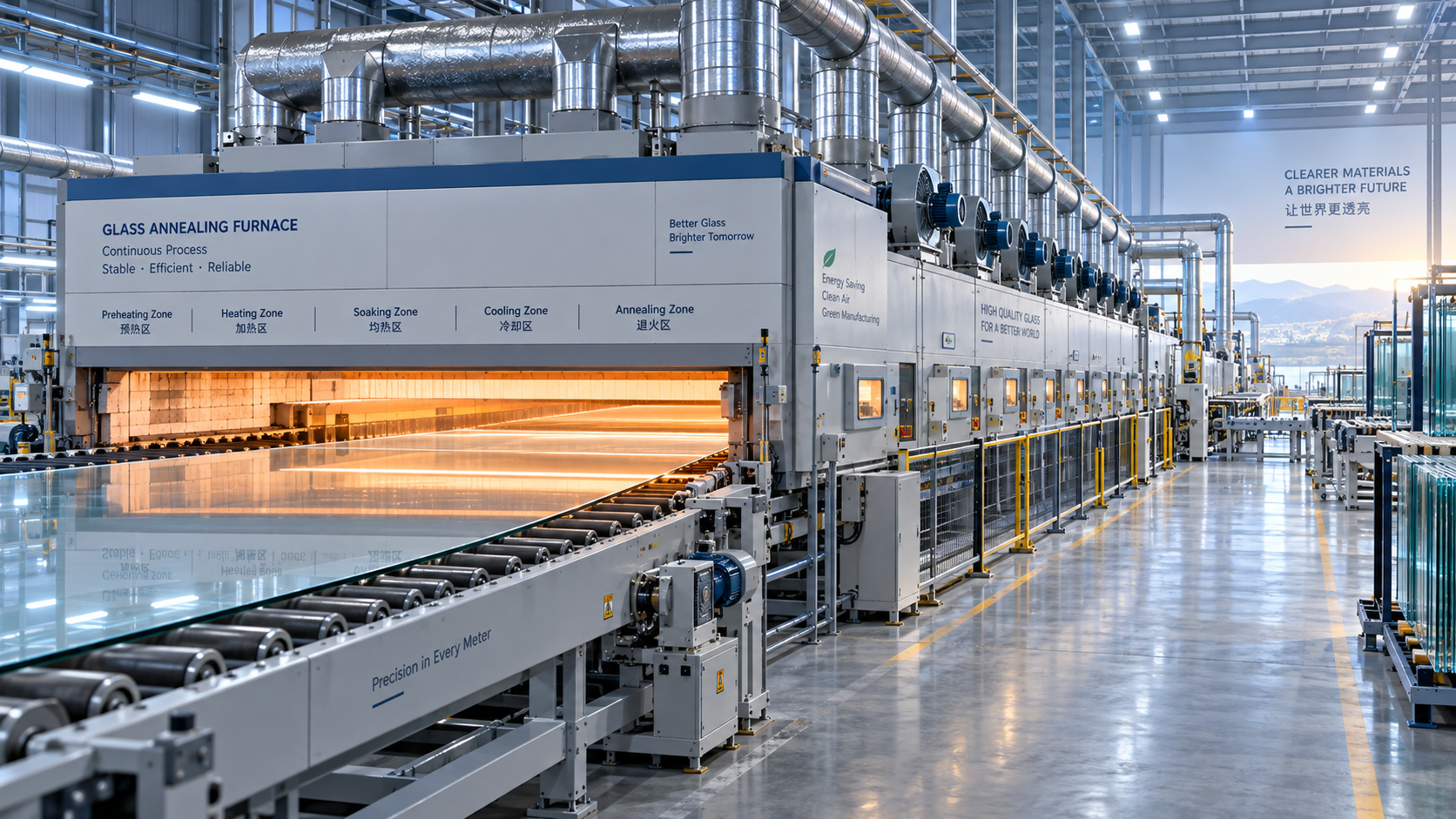
Annealing control must follow product thickness, width, composition, and line speed. A fixed recipe rarely performs well across changing production conditions.
How sensors and control logic turn data into usable yield gains
The quality of automation depends on the quality of feedback. If sensors drift, respond slowly, or miss key process points, even advanced algorithms make weak decisions.
In practice, strong glass production systems automated control usually combines several layers of information:
- Temperature measurement across furnace, forehearth, and lehr zones
- Pressure and combustion monitoring for air-fuel balance
- Level, pull, and speed signals tied to upstream and downstream sections
- Vision systems that detect surface defects, ribbon behavior, or dimensional deviation
- Historical process data used to predict instability before scrap rises
More plants are moving from simple setpoint control toward model-based logic and digital twin support. CF-Elite has followed this shift closely because it aligns with a broader industrial move toward online monitoring and intelligent thermal systems.
Still, sophistication alone does not guarantee results. The useful question is whether the control architecture helps operators see cause and effect early enough to act.
Common yield risks that automation should catch early
Many losses begin as minor deviations. They become expensive because the line keeps running while the process is already outside the ideal window.
A useful control strategy flags these trends before reject bins fill up. That is the difference between monitoring and actual yield management.
Where application priorities differ by product and plant type
The same principles apply across the industry, but the priority of each parameter changes with the product.
Float glass lines usually focus on ribbon thickness control, tin bath behavior, optical quality, and annealing stability. Small thermal variation can affect flatness and downstream coating performance.
Container glass operations pay closer attention to gob consistency, mould timing, and forehearth conditioning. In those lines, synchronized thermal and mechanical control protects both quality and machine efficiency.
PV glass and thin specialty glass often require tighter defect thresholds. Here, glass production systems automated control must support narrow viscosity control, precise cooling, and fast detection of surface deviations.
Plants dealing with energy pressure or decarbonization targets may also place more weight on combustion optimization, cullet integration, and heat recovery coordination.
What to evaluate before adjusting or upgrading control strategy
The best next step is rarely a full control replacement. More often, improvement starts by locating the part of the line where information is weak or response time is too slow.
- Check whether yield loss is linked to a thermal, mechanical, or recipe-change event
- Review sensor accuracy, calibration routines, and placement relevance
- Compare actual operator interventions with control system recommendations
- Identify recurring defects that appear after speed increases or fuel adjustments
- Assess whether current control logic reflects present product mix and cullet ratios
This structured review matters in mixed industrial environments. CF-Elite’s broader view across glass, refractory, kiln, and thermal equipment sectors shows that process yield usually improves when control decisions are tied to physical reality, not only software capability.
A practical next move for yield-focused operations
Glass production systems automated control works best when it is treated as a process discipline. The goal is to understand which parameters truly drive waste, instability, and energy loss on a specific line.
A useful starting point is to map the last three sources of yield loss against furnace behavior, conditioning response, speed changes, and annealing results. That often reveals where control quality matters most.
From there, it becomes easier to judge whether the priority is better sensing, tighter logic, digital twin support, or a revised operating window. In a sector where thermal precision defines both cost and quality, that judgment is what keeps yield moving in the right direction.
Related News
 Thermal Energy ArchitectEnergy-Efficient Silicate Production Lines: What to Compare Before SelectionSilicate production lines energy efficient selection guide: compare thermal performance, stability, emissions, controls, and lifecycle value before investing.Oct 06, 2026
 Optical Glass Tech FellowHow to Evaluate Automated Float Glass Lines for Capacity, Quality, and Energy UseEvaluate automated float glass lines for net capacity, consistent quality, energy efficiency, automation reliability, and lifecycle value. Explore key criteria for smarter investment decisions.Oct 05, 2026
 Thermal Energy ArchitectWhat Does CE Marking Require for an Energy-Efficient Industrial Kiln?Energy efficient kiln CE requirements explained: assess safety, technical files, energy performance, and EU compliance before purchase or commissioning.Oct 04, 2026
 Thermal Energy ArchitectRefractory Manufacturing Solutions for Brick Plants: How to Extend Kiln LifeRefractory manufacturing solutions for brick plant operations: discover proven strategies to extend kiln life, reduce heat loss, prevent lining failures, and plan cost-effective repairs.Oct 03, 2026
 Thermal Energy ArchitectHow to Specify Heavy Industrial Process Systems for High-Temperature PlantsHeavy industrial processes systems: learn how to specify high-temperature plants for efficiency, emissions control, maintainability, and lifecycle performance.Oct 02, 2026
 Structural Material AnalystHow Sustainable Material Extrusion Can Improve Wall Panel Durability and Design FlexibilityDiscover how sustainable material extrusion for wall panels improves durability, moisture resistance, design flexibility, and installation consistency for high-performing wall systems.Oct 01, 2026
 Thermal Energy ArchitectHow to Evaluate a High-Temperature Materials Manufacturer for Furnace ApplicationsChoose a high-temperature materials manufacturer with confidence: compare thermal performance, chemical resistance, quality controls, installation support, and lifecycle cost.Sep 30, 2026
 Ms. Elena RodriguezHow to Structure Global Specification Data for Faster Industrial Product EvaluationGlobal specification-oriented product information helps industrial teams compare capacity, energy, emissions, automation, and lifecycle data on a like-for-like basis for faster, confident equipment decisions.Sep 29, 2026
 Thermal Energy ArchitectHow to Specify High-Temperature Process Systems for Continuous Thermal OperationsHigh-temperature process engineering systems: learn how to specify resilient continuous thermal operations for efficiency, compliance, reliable uptime, and long-term performance.Sep 28, 2026
 Thermal Energy ArchitectHow to Evaluate a Thermal Engineering Contractor for High-Temperature Plant ProjectsChoose a thermal engineering contractor with proven process expertise, lifecycle value, emissions control, and delivery discipline for reliable high-temperature plant performance.Sep 27, 2026
 Silicate Process EngineerHow Latin American Cement Plants Can Reduce Dust Emissions in Kilns and Transfer PointsCement plant dust control Latin America: reduce kiln and transfer-point emissions with practical airflow, filtration, monitoring, and maintenance strategies.Sep 26, 2026
 Material Heat-Resist ExpertHow to Evaluate Refractory Production Lines for Output, Quality, and Energy UseRefractory production lines: learn how to assess qualified output, consistent quality, and total energy use for smarter, lower-risk investment decisions.Sep 25, 2026
 Dr. Alistair VaughnHow Waste Recycling Technology Improves Material Recovery in Industrial PlantsWaste recycling technology improves material recovery through source segregation, smart separation, thermal treatment, and quality control for industrial plants.Sep 24, 2026
 Optical Glass Tech FellowHow to Specify Glass Annealing Equipment for European Quality and Energy RequirementsGlass annealing equipment Europe: learn how to specify lehrs for consistent glass quality, energy efficiency, compliance, automation, and reliable long-term performance.Sep 23, 2026
 Optical Glass Tech FellowSilicate Process Automation: Improving Batch Consistency and Energy ControlSilicate process automation improves batch consistency, energy control, traceability, and operator confidence across high-temperature manufacturing operations.Sep 22, 2026
 Optical Glass Tech FellowHow Silicate Industrial Processes Control Viscosity, Energy Use, and Product QualitySilicate industrial processes: learn how viscosity, chemistry, heat transfer, and atmosphere control reduce energy use, improve stability, and protect product quality.Sep 21, 2026
 Thermal Energy ArchitectHow European Plants Can Evaluate Energy Recovery Equipment for High-Temperature ProcessesIndustrial energy recovery equipment Europe: learn how high-temperature plants can assess waste-heat sources, integration risks, lifecycle value, and reliable recovery routes.Sep 20, 2026
 Thermal Energy ArchitectIndustrial Furnace Process Optimization: Reducing Fuel Use Without Sacrificing ThroughputIndustrial process optimization furnace strategies that cut fuel use while protecting throughput. Explore combustion control, heat recovery, refractory performance, and data-driven efficiency gains.Sep 19, 2026
 Ms. Elena RodriguezWhat Drives High-Pressure Extrusion Equipment Cost in Industrial Projects?High pressure extrusion equipment cost explained: compare pressure, die design, automation, wear, energy, and installation factors for smarter industrial investments.Sep 18, 2026
 Thermal Energy ArchitectHow to Size a Waste Heat Recovery Exchanger for High-Temperature Kiln Exhaust?Waste heat recovery exchanger sizing for high-temperature kiln exhaust: balance recoverable duty, fouling, corrosion limits, pressure drop, and reliable heat use.Sep 17, 2026

Related News
- 00
0000-00
How to Evaluate Automated Float Glass Lines for Capacity, Quality, and Energy Use - 00
0000-00
How to Specify Glass Annealing Equipment for European Quality and Energy Requirements - 00
0000-00
Silicate Process Automation: Improving Batch Consistency and Energy Control - 00
0000-00
How Silicate Industrial Processes Control Viscosity, Energy Use, and Product Quality - 00
0000-00
How to Evaluate a Glass Annealing Equipment Manufacturer for Production Stability
Weekly Insights
Stay ahead with our curated technology reports delivered every Monday.