
High Pressure Extruder Selection Guide: Output, Material Compatibility, and Wear




A high pressure extruder is rarely chosen on nameplate capacity alone. In heavy industrial lines, the better decision comes from matching output targets, raw material behavior, and wear exposure to the real operating window.
That matters even more across silicate processing, refractory production, waste-derived feed preparation, and new building material extrusion. A machine that looks efficient on paper can become expensive if pressure fluctuates, liners erode early, or material flow remains inconsistent.
Within the CF-Elite view of foundation materials and thermal management, extrusion is not an isolated equipment purchase. It sits inside a larger chain shaped by energy use, downstream firing or curing, maintenance planning, and carbon-conscious production strategy.
Why selection has become more demanding
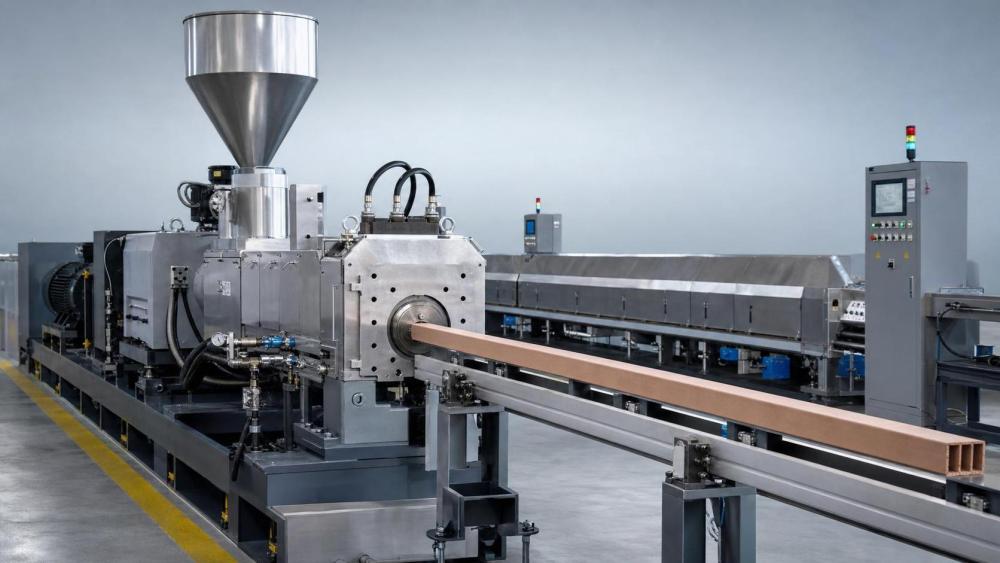
Industrial buyers now compare far more than throughput. Feedstocks vary more widely, energy costs remain volatile, and plants are under pressure to reduce waste, dust, and unplanned shutdowns.
In sectors followed by CF-Elite, extrusion often links upstream mixing with downstream drying, sintering, calcination, or thermal treatment. Any mismatch at the extruder can ripple through the whole line.
This is why the high pressure extruder has become a strategic asset rather than a simple forming machine. Its real value depends on stable output, acceptable wear life, and compatibility with changing formulations.
What a high pressure extruder must actually deliver
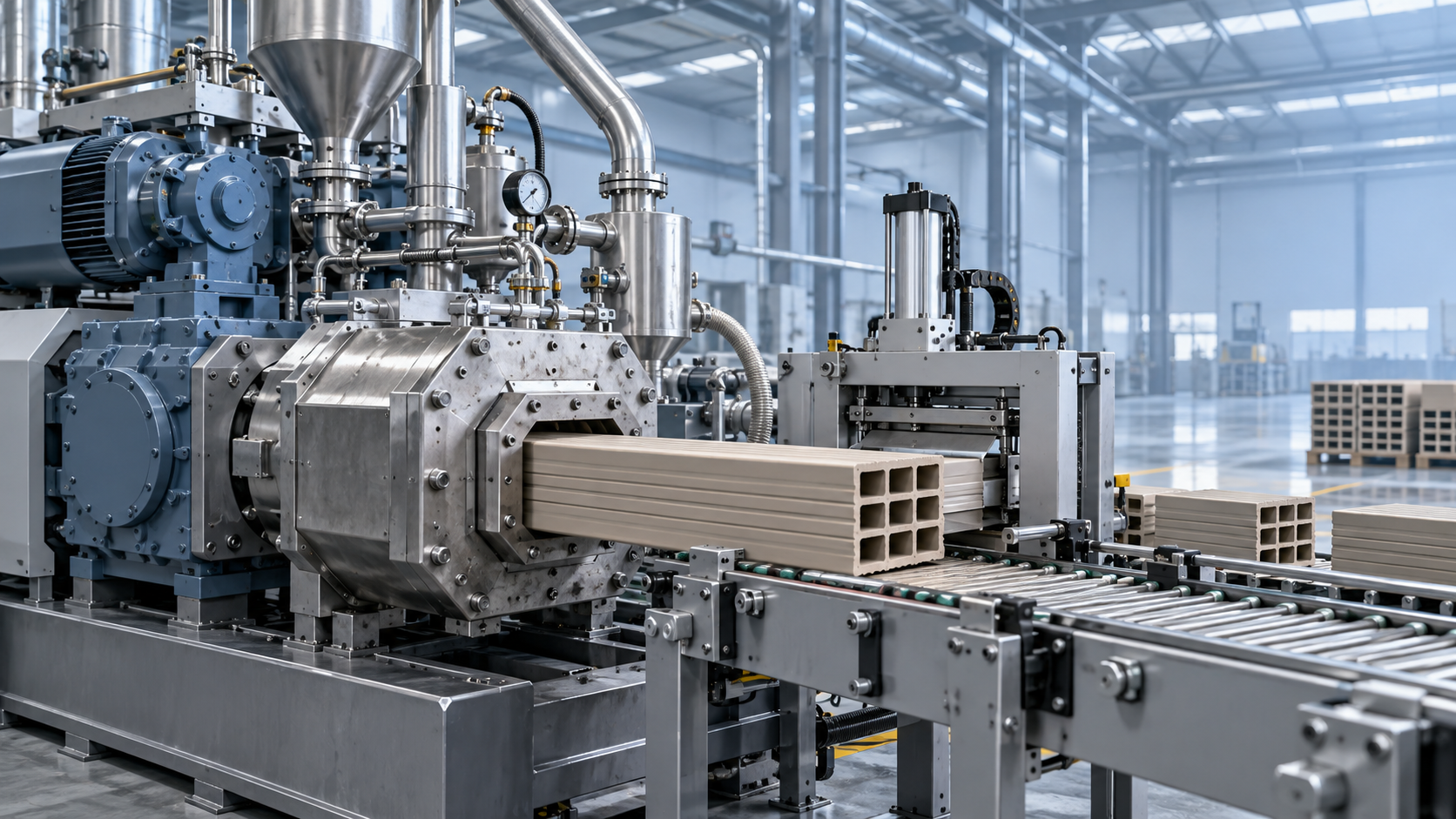
At a practical level, the equipment must compact, convey, and shape material under high load without losing control of density or profile consistency. Pressure generation is only part of the job.
A suitable high pressure extruder should also keep moisture response predictable, limit internal slip, and maintain mechanical integrity during continuous production. Those factors usually determine whether nominal output can be sustained.
For many lines, the question is not maximum tons per hour. It is stable tons per hour over months, with manageable wear and low disruption to the rest of the plant.
Output should be read as a system value
Quoted capacity often assumes controlled feed size, fixed moisture, and steady operating conditions. Real plants rarely run in such a narrow range.
When comparing a high pressure extruder, it is more useful to ask for output curves across different moisture bands, material blends, and screw speeds. That exposes the true operating envelope.
Also look beyond the extruder body. Feeder stability, de-airing efficiency, die design, and downstream handling can all limit usable capacity before the main drive reaches its rated load.
Material compatibility is where many projects succeed or fail
Different raw materials respond to pressure in very different ways. Plastic clays, silica-rich blends, grog-containing refractory mixes, ash-bearing materials, and lightweight aggregate formulations do not share the same flow logic.
Some materials compact well but abrade metal surfaces aggressively. Others are less abrasive but highly sensitive to moisture and temperature. A high pressure extruder must be matched to both rheology and chemistry.
That is especially relevant in lines pursuing resource circularity. Recycled fines, industrial byproducts, and alternative mineral feedstocks can improve sustainability, yet they often introduce wider variability.
Key compatibility questions
- How wide is the acceptable moisture window before output or shape quality declines?
- Does the material contain hard particles that accelerate screw, barrel, or die wear?
- Will the formulation bridge, segregate, or trap air under high compression?
- Are binders or additives likely to change friction, pressure peaks, or cleaning frequency?
- Can the machine handle future recipe changes without major hardware replacement?
These questions are more useful than generic claims about versatility. In practice, compatibility should be proven against representative feedstock, not only standard test material.
Wear is not a maintenance footnote
Wear cost often decides the real economics of a high pressure extruder. Abrasion, pressure cycling, and chemical attack can steadily reduce efficiency long before a visible failure appears.
Screws, liners, dies, shafts, seals, and pressure-facing surfaces deserve the same attention as installed power. A lower purchase price can quickly disappear if wear parts are expensive or difficult to replace.
In silicate and refractory applications, hard mineral content often makes wear behavior especially severe. The selection process should therefore include metallurgy, hardfacing options, replaceable wear zones, and service access.
What to compare on wear performance
A useful comparison metric is cost per stable operating hour, not simply wear life in isolation. That makes supplier claims easier to test against production reality.
Typical application contexts
The same high pressure extruder category can serve very different lines. Selection should reflect product geometry, compaction target, raw material structure, and downstream thermal process.
Where evaluation criteria change
- New building materials: focus on output uniformity, low density control, and energy-efficient shaping.
- Refractory bodies: focus on abrasion resistance, dimensional consistency, and handling of grog-rich formulations.
- Waste-derived or alternative mineral feeds: focus on adaptability, contamination tolerance, and cleaning access.
- Silicate-heavy products tied to kiln processes: focus on upstream-downstream balance and pressure stability before firing.
Across these scenarios, CF-Elite’s industry lens is useful because extrusion performance does not stop at shaping. It influences drying load, kiln behavior, reject rate, and energy intensity later in the line.
How to compare suppliers with fewer blind spots
A high pressure extruder should be evaluated with a structured request set. Technical sheets alone rarely reveal how the machine behaves under difficult feed conditions.
Ask for evidence tied to applications close to your own. Similar material families, similar pressure ranges, and similar maintenance environments matter more than broad references.
Useful decision checkpoints
- Rated output under normal, not idealized, feed conditions.
- Specific power consumption across the expected operating window.
- Documented wear-part life for comparable abrasive loads.
- Ease of die change, cleaning, inspection, and rebuild.
- Availability of local service, spare parts, and commissioning support.
- Instrumentation for pressure, load, temperature, and trend monitoring.
More advanced lines now expect data visibility from the high pressure extruder. Monitoring helps detect drift in wear, feed inconsistency, or overload before it becomes a larger production problem.
The business case extends beyond equipment price
The strongest purchase case usually comes from total operating logic. Output consistency, reduced scrap, lower wear-part spending, and smoother thermal processing can outweigh a higher initial machine cost.
This is especially true where decarbonization targets are tightening. Better extrusion quality can reduce recirculation, drying losses, and unnecessary heat demand downstream.
For organizations tracking market shifts across cement, glass, refractory, incineration, and advanced building materials, that wider view matters. It turns a high pressure extruder decision into part of a longer-term plant efficiency strategy.
A practical next step
Before comparing quotations, define three baselines clearly: required stable output, actual material range, and acceptable wear cost per operating period. Those numbers make technical discussions far more reliable.
Then review candidate machines against line integration, not isolated specifications. A high pressure extruder that fits feed variability, maintenance capacity, and downstream thermal conditions will usually deliver the better long-term result.
Where uncertainty remains, pilot data, wear history, and application-specific intelligence are the most useful filters. They help narrow the field to equipment that can perform consistently under real industrial pressure.
Related News
 Thermal Energy ArchitectEnergy-Efficient Silicate Production Lines: What to Compare Before SelectionSilicate production lines energy efficient selection guide: compare thermal performance, stability, emissions, controls, and lifecycle value before investing.Oct 06, 2026
 Optical Glass Tech FellowHow to Evaluate Automated Float Glass Lines for Capacity, Quality, and Energy UseEvaluate automated float glass lines for net capacity, consistent quality, energy efficiency, automation reliability, and lifecycle value. Explore key criteria for smarter investment decisions.Oct 05, 2026
 Thermal Energy ArchitectWhat Does CE Marking Require for an Energy-Efficient Industrial Kiln?Energy efficient kiln CE requirements explained: assess safety, technical files, energy performance, and EU compliance before purchase or commissioning.Oct 04, 2026
 Thermal Energy ArchitectRefractory Manufacturing Solutions for Brick Plants: How to Extend Kiln LifeRefractory manufacturing solutions for brick plant operations: discover proven strategies to extend kiln life, reduce heat loss, prevent lining failures, and plan cost-effective repairs.Oct 03, 2026
 Thermal Energy ArchitectHow to Specify Heavy Industrial Process Systems for High-Temperature PlantsHeavy industrial processes systems: learn how to specify high-temperature plants for efficiency, emissions control, maintainability, and lifecycle performance.Oct 02, 2026
 Structural Material AnalystHow Sustainable Material Extrusion Can Improve Wall Panel Durability and Design FlexibilityDiscover how sustainable material extrusion for wall panels improves durability, moisture resistance, design flexibility, and installation consistency for high-performing wall systems.Oct 01, 2026
 Thermal Energy ArchitectHow to Evaluate a High-Temperature Materials Manufacturer for Furnace ApplicationsChoose a high-temperature materials manufacturer with confidence: compare thermal performance, chemical resistance, quality controls, installation support, and lifecycle cost.Sep 30, 2026
 Ms. Elena RodriguezHow to Structure Global Specification Data for Faster Industrial Product EvaluationGlobal specification-oriented product information helps industrial teams compare capacity, energy, emissions, automation, and lifecycle data on a like-for-like basis for faster, confident equipment decisions.Sep 29, 2026
 Thermal Energy ArchitectHow to Specify High-Temperature Process Systems for Continuous Thermal OperationsHigh-temperature process engineering systems: learn how to specify resilient continuous thermal operations for efficiency, compliance, reliable uptime, and long-term performance.Sep 28, 2026
 Thermal Energy ArchitectHow to Evaluate a Thermal Engineering Contractor for High-Temperature Plant ProjectsChoose a thermal engineering contractor with proven process expertise, lifecycle value, emissions control, and delivery discipline for reliable high-temperature plant performance.Sep 27, 2026
 Silicate Process EngineerHow Latin American Cement Plants Can Reduce Dust Emissions in Kilns and Transfer PointsCement plant dust control Latin America: reduce kiln and transfer-point emissions with practical airflow, filtration, monitoring, and maintenance strategies.Sep 26, 2026
 Material Heat-Resist ExpertHow to Evaluate Refractory Production Lines for Output, Quality, and Energy UseRefractory production lines: learn how to assess qualified output, consistent quality, and total energy use for smarter, lower-risk investment decisions.Sep 25, 2026
 Dr. Alistair VaughnHow Waste Recycling Technology Improves Material Recovery in Industrial PlantsWaste recycling technology improves material recovery through source segregation, smart separation, thermal treatment, and quality control for industrial plants.Sep 24, 2026
 Optical Glass Tech FellowHow to Specify Glass Annealing Equipment for European Quality and Energy RequirementsGlass annealing equipment Europe: learn how to specify lehrs for consistent glass quality, energy efficiency, compliance, automation, and reliable long-term performance.Sep 23, 2026
 Optical Glass Tech FellowSilicate Process Automation: Improving Batch Consistency and Energy ControlSilicate process automation improves batch consistency, energy control, traceability, and operator confidence across high-temperature manufacturing operations.Sep 22, 2026
 Optical Glass Tech FellowHow Silicate Industrial Processes Control Viscosity, Energy Use, and Product QualitySilicate industrial processes: learn how viscosity, chemistry, heat transfer, and atmosphere control reduce energy use, improve stability, and protect product quality.Sep 21, 2026
 Thermal Energy ArchitectHow European Plants Can Evaluate Energy Recovery Equipment for High-Temperature ProcessesIndustrial energy recovery equipment Europe: learn how high-temperature plants can assess waste-heat sources, integration risks, lifecycle value, and reliable recovery routes.Sep 20, 2026
 Thermal Energy ArchitectIndustrial Furnace Process Optimization: Reducing Fuel Use Without Sacrificing ThroughputIndustrial process optimization furnace strategies that cut fuel use while protecting throughput. Explore combustion control, heat recovery, refractory performance, and data-driven efficiency gains.Sep 19, 2026
 Ms. Elena RodriguezWhat Drives High-Pressure Extrusion Equipment Cost in Industrial Projects?High pressure extrusion equipment cost explained: compare pressure, die design, automation, wear, energy, and installation factors for smarter industrial investments.Sep 18, 2026
 Thermal Energy ArchitectHow to Size a Waste Heat Recovery Exchanger for High-Temperature Kiln Exhaust?Waste heat recovery exchanger sizing for high-temperature kiln exhaust: balance recoverable duty, fouling, corrosion limits, pressure drop, and reliable heat use.Sep 17, 2026

Related News
- 00
0000-00
How Sustainable Material Extrusion Can Improve Wall Panel Durability and Design Flexibility - 00
0000-00
How to Evaluate Lightweight Material Machinery for Output, Energy Use, and Product Quality - 00
0000-00
What Thermal Barrier Technology Works Best for Lightweight Industrial Panels? - 00
0000-00
Advanced Ceramic Processing for Honeycomb: Which Methods Improve Strength and Thermal Shock Resistance? - 00
0000-00
Building Material Extrusion Equipment Supplier Selection: 7 Parameters That Affect Line Performance
Weekly Insights
Stay ahead with our curated technology reports delivered every Monday.