
Ceramic Extrusion Machinery Maintenance Checklist for Die Wear, Moisture, and Output Issues




Ceramic Extrusion Machinery Maintenance Checklist for Die Wear, Moisture, and Output Issues
For after-sales maintenance teams, keeping ceramic extrusion machinery stable means catching problems before they cut output or damage product quality.
This checklist-driven guide focuses on the most common causes behind die wear, moisture imbalance, and throughput loss.
The goal is simple: faster diagnosis, less downtime, and more consistent extrusion performance across demanding production lines.
Start with a Fast Visual Check on Ceramic Extrusion Machinery
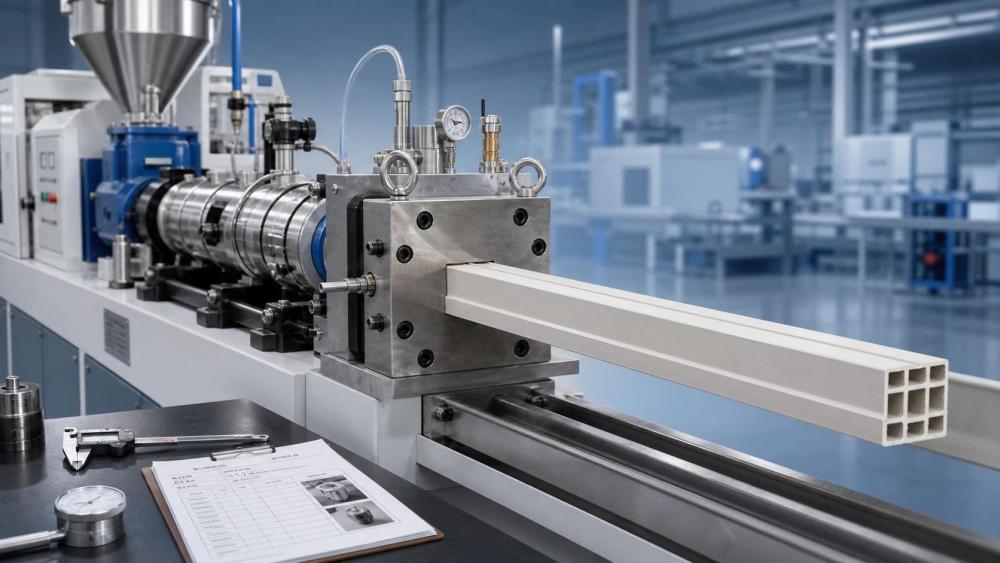
When ceramic extrusion machinery starts drifting, the first clues usually appear before alarms do.
A quick visual routine often reveals whether the issue comes from the die, feed body, vacuum section, or drive load.
In real plant conditions, small changes in texture, shape, and motor sound can signal larger mechanical or process problems.
- Check extrudate surface for tearing, lamination, rough edges, or gloss changes.
- Inspect the die face for buildup, scoring, uneven discharge, or corner cracking.
- Look for water leaks, slurry marks, and abnormal material sticking near feed zones.
- Listen for load fluctuations, chatter, or sudden pressure cycling.
- Confirm screw, auger, or pug section temperatures remain within normal range.
This first pass matters because ceramic extrusion machinery rarely fails from one cause alone.
More often, die wear, moisture shift, and output instability reinforce each other.
Checklist for Die Wear and Dimensional Drift
Die wear is one of the most frequent reasons ceramic extrusion machinery loses product accuracy.
It usually appears as profile distortion, wall thickness variation, edge rounding, or unstable pressure.
From recent maintenance trends, abrasive body formulas and higher recycled content make wear show up earlier.
What to inspect
- Measure die opening dimensions against the baseline record.
- Check internal flow channels for polished grooves and asymmetrical erosion.
- Inspect die lips for chips, rounding, and thermal stress marks.
- Verify alignment between die, barrel outlet, and extrusion axis.
- Review fastening torque and mounting surface flatness.
Common symptoms linked to wear
- One side of the product exits faster than the other.
- Cut length looks correct, but cross-section dimensions drift.
- Surface drag increases even after cleaning.
- Power consumption rises while output remains flat.
If ceramic extrusion machinery shows these signs, do not replace the die blindly.
First confirm whether the wear pattern comes from abrasive feed, poor centering, or unstable moisture.
That step prevents repeated failure on a new tool.
Checklist for Moisture Imbalance and Material Flow Problems
Moisture imbalance can make ceramic extrusion machinery look mechanically unstable, even when the hardware is sound.
That is why moisture checks should always sit beside mechanical checks.
A small shift in water content changes plasticity, vacuum response, pressure load, and final shape retention.
When material is too wet
- Extrudate slumps after leaving the die.
- Edges lose sharpness quickly.
- Vacuum readings may look normal, but shape stability drops.
- Die face buildup becomes more frequent.
When material is too dry
- Surface tearing or short cracks appear.
- Feed resistance rises and amps climb.
- Air pockets and lamination become more visible.
- Output falls even with constant screw speed.
Moisture verification routine
- Sample material from mixer discharge, pug inlet, and die-side discharge.
- Compare readings instead of relying on one-point measurement.
- Check mixer spray nozzles and water dosing response time.
- Inspect seals that may let air enter the vacuum chamber.
- Review storage time because body aging can shift flow behavior.
In practice, ceramic extrusion machinery performs best when moisture consistency is treated as a control loop, not a one-time setting.
That also means maintenance teams should compare lab values with line behavior, not isolate them.
Checklist for Output Loss, Pressure Rise, and Throughput Instability
When ceramic extrusion machinery loses output, the obvious guess is often motor weakness or feed shortage.
But a more reliable approach is to trace where resistance builds across the process.
The clearer signal is usually the relationship between rate, pressure, and product quality.
Key output checks
- Compare actual throughput with screw speed and motor load.
- Check whether pressure climbs faster than production rate.
- Inspect screens, feed passages, and transition zones for restriction.
- Confirm vacuum pump efficiency and line leakage condition.
- Review cutter timing because downstream drag can affect apparent output.
Typical root causes
- Progressive die blockage from fine material buildup.
- Inconsistent feed density entering the vacuum chamber.
- Worn auger flights reducing compression efficiency.
- Air infiltration that breaks body continuity.
- Temperature variation changing body plasticity across shifts.
This is where ceramic extrusion machinery maintenance becomes a balance between process and equipment.
If output drops while defects rise, focus on material continuity first.
If output drops with stable appearance but higher energy use, inspect wear and restriction points first.
Practical Maintenance Table for Faster Troubleshooting
A table like this helps standardize response time across shifts.
It also makes ceramic extrusion machinery troubleshooting less dependent on individual memory.
Build a Preventive Routine That Reduces Repeat Failures
The best ceramic extrusion machinery maintenance plan is not just reactive.
It links inspection intervals with actual wear rate, body formulation, and production target changes.
This matters even more on lines producing lightweight blocks, honeycomb structures, or precision ceramic profiles.
Recommended routine
- Record die dimensions at planned intervals, not only after failure.
- Track moisture by location, batch, and shift condition.
- Trend amps, vacuum, and throughput together.
- Log every adjustment to water, formulation, and tooling.
- Use the same inspection checklist after each maintenance stop.
CF-Elite follows this kind of structured view across high-temperature and foundation material industries.
The same logic applies here: stable output comes from connecting physical wear, process variation, and energy performance.
Once that link becomes visible, ceramic extrusion machinery becomes easier to maintain and easier to improve.
Final Action Points for More Reliable Ceramic Extrusion Machinery
If defects appear, start with the checklist instead of isolated fixes.
Check die wear, verify moisture consistency, and compare output against load and pressure at the same time.
That sequence saves time because ceramic extrusion machinery problems are usually connected, not separate.
A disciplined routine, clear records, and faster root-cause checks will protect quality, reduce downtime, and keep production targets realistic.
In day-to-day service work, that is what turns ceramic extrusion machinery maintenance from firefighting into reliable operational control.
Related News
 Optical Glass Tech FellowHow to Specify Glass Annealing Equipment for European Quality and Energy RequirementsGlass annealing equipment Europe: learn how to specify lehrs for consistent glass quality, energy efficiency, compliance, automation, and reliable long-term performance.Sep 23, 2026
 Optical Glass Tech FellowSilicate Process Automation: Improving Batch Consistency and Energy ControlSilicate process automation improves batch consistency, energy control, traceability, and operator confidence across high-temperature manufacturing operations.Sep 22, 2026
 Optical Glass Tech FellowHow Silicate Industrial Processes Control Viscosity, Energy Use, and Product QualitySilicate industrial processes: learn how viscosity, chemistry, heat transfer, and atmosphere control reduce energy use, improve stability, and protect product quality.Sep 21, 2026
 Thermal Energy ArchitectHow European Plants Can Evaluate Energy Recovery Equipment for High-Temperature ProcessesIndustrial energy recovery equipment Europe: learn how high-temperature plants can assess waste-heat sources, integration risks, lifecycle value, and reliable recovery routes.Sep 20, 2026
 Thermal Energy ArchitectIndustrial Furnace Process Optimization: Reducing Fuel Use Without Sacrificing ThroughputIndustrial process optimization furnace strategies that cut fuel use while protecting throughput. Explore combustion control, heat recovery, refractory performance, and data-driven efficiency gains.Sep 19, 2026
 Ms. Elena RodriguezWhat Drives High-Pressure Extrusion Equipment Cost in Industrial Projects?High pressure extrusion equipment cost explained: compare pressure, die design, automation, wear, energy, and installation factors for smarter industrial investments.Sep 18, 2026
 Thermal Energy ArchitectHow to Size a Waste Heat Recovery Exchanger for High-Temperature Kiln Exhaust?Waste heat recovery exchanger sizing for high-temperature kiln exhaust: balance recoverable duty, fouling, corrosion limits, pressure drop, and reliable heat use.Sep 17, 2026
 Thermal Energy ArchitectWhy Heat-Resistant Materials Lose Abrasion Resistance at High TemperaturesHeat-resistant materials abrasion resistance can decline at high temperatures. Discover the thermal, chemical, and mechanical causes of wear—and how to choose longer-lasting linings.Sep 16, 2026
 Thermal Energy ArchitectHow to Evaluate a Thermal Energy Optimization Company for High-Temperature PlantsChoose a thermal energy optimization company with proven process expertise, measurable savings, and reliable delivery for high-temperature plants. Learn what to assess.Sep 15, 2026
 Thermal Energy ArchitectRotary Kiln Efficiency: How Feed Rate, Fuel Use, and Heat Loss Affect OutputRotary kiln efficiency explained: discover how feed rate, fuel use, heat loss, combustion, and cooling performance shape output, quality, and energy costs.Sep 14, 2026
 Thermal Energy ArchitectHow to Select Heat-Resistant Materials That Maintain Abrasion Resistance in KilnsHeat-resistant materials abrasion resistance: learn how to select kiln linings that withstand heat, wear, thermal cycling, and chemical attack for longer service life.Sep 13, 2026
 Thermal Energy ArchitectHow Rotary Kiln Automation Improves Temperature Control and Fuel EfficiencyRotary kiln technology automation enhances temperature control, stabilizes combustion, and improves fuel efficiency with smarter data, predictive control, and safer operations.Sep 12, 2026
 Silicate Process EngineerCement Plant Emission Control: Selecting Systems for Dust, NOx, and SO2 LimitsCement plant emission control guide: compare dust collectors, NOx reduction, and SO2 systems for reliable compliance across kiln modes, fuel changes, and operating upsets.Sep 11, 2026
 Thermal Energy ArchitectSelecting Abrasion-Resistant High-Temperature Materials for Kiln and Conveyor Wear ZonesHigh-temp material engineering guide to abrasion-resistant kiln and conveyor solutions—match wear, heat, chemistry, and installation design for longer service life.Sep 10, 2026
 Dr. Alistair VaughnIndustrial Process Engineering: How to Map Processes for Safer, More Efficient PlantsIndustrial process engineering reveals bottlenecks, safety risks, and energy losses through practical process mapping for safer, more efficient plants.Sep 09, 2026
 Optical Glass Tech FellowHow to Evaluate a Glass Annealing Equipment Manufacturer for Production StabilityChoose a glass annealing equipment manufacturer with proven thermal uniformity, reliable controls, lifecycle value, and responsive service for stable production.Sep 08, 2026
 Prof. Marcus ChenThermal Energy Architecture in North America: Strategies for Lower Building Energy UseThermal energy architecture North America helps project leaders cut building energy use through stronger envelopes, right-sized HVAC, storage, and smart commissioning.Sep 07, 2026
 Ms. Elena RodriguezHow Should Buyers Evaluate Building Material Industry Intelligence Pricing?Building material industry intelligence pricing: learn how to compare coverage, technical depth, and ROI to choose intelligence that reduces procurement risk.Sep 07, 2026
 Ms. Elena RodriguezHow to Use Building Material Intelligence Data for Market and Investment DecisionsBuilding material industry intelligence data helps leaders evaluate demand, costs, regulation, capacity, and technology to make smarter market and investment decisions.Sep 05, 2026
 Thermal Energy ArchitectHow PLC Control Improves Energy Efficiency and Temperature Stability in KilnsEnergy efficient kilns PLC control improves temperature stability, cuts fuel waste, and optimizes combustion, draft, and material flow. Explore proven strategies for smarter kiln modernization.Sep 04, 2026



Related News
- 00
0000-00
How to Evaluate Lightweight Material Machinery for Output, Energy Use, and Product Quality - 00
0000-00
What Thermal Barrier Technology Works Best for Lightweight Industrial Panels? - 00
0000-00
Advanced Ceramic Processing for Honeycomb: Which Methods Improve Strength and Thermal Shock Resistance? - 00
0000-00
Building Material Extrusion Equipment Supplier Selection: 7 Parameters That Affect Line Performance - 00
0000-00
High Pressure Extruder Selection Guide: Output, Material Compatibility, and Wear
Weekly Insights
Stay ahead with our curated technology reports delivered every Monday.