
How to Choose High-Temperature Materials for Incinerators by Lining Zone and Waste Type




Why the right choice starts with operating reality
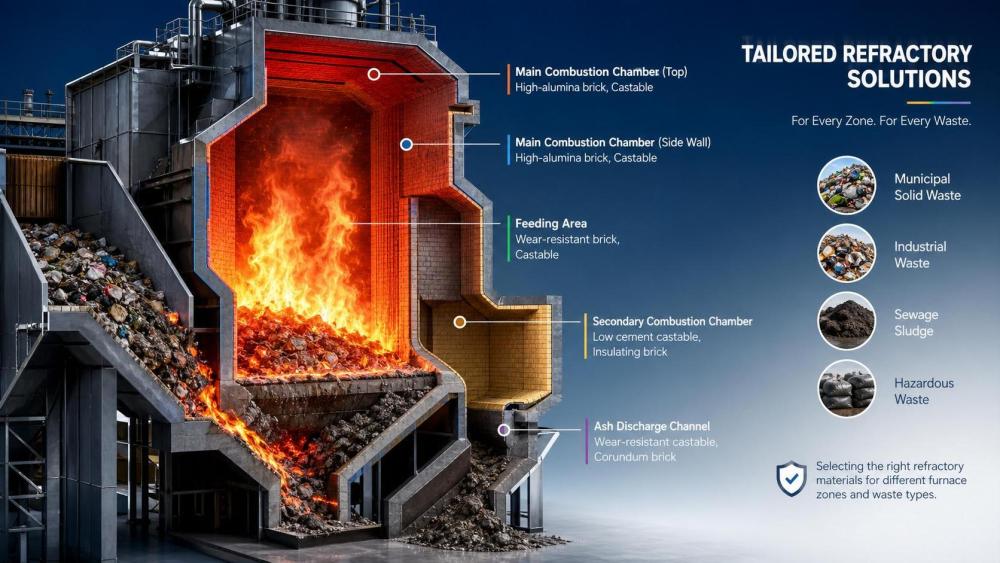
Choosing high-temperature materials for incinerators usually looks simple on paper. In operation, it rarely is.
The same furnace can expose different lining zones to flame, slag, chlorides, alkalis, abrasion, and sudden shutdowns within one cycle.
That is why high-temperature materials for incinerators should be selected by zone and waste type, not by temperature rating alone.
In real projects, the better question is not which refractory has the highest number. It is which material survives the actual chemistry and mechanical stress.
This is especially relevant in industrial incineration, where waste-to-energy goals, uptime targets, and carbon reduction programs increasingly intersect.
CF-Elite follows this intersection closely across kilns, refractory lines, and thermal process systems. The same logic applies here: performance depends on matching material behavior to process conditions.
Different lining zones do not fail for the same reason
A common mistake is to treat the entire incinerator as one thermal environment. It is usually a chain of very different stress points.
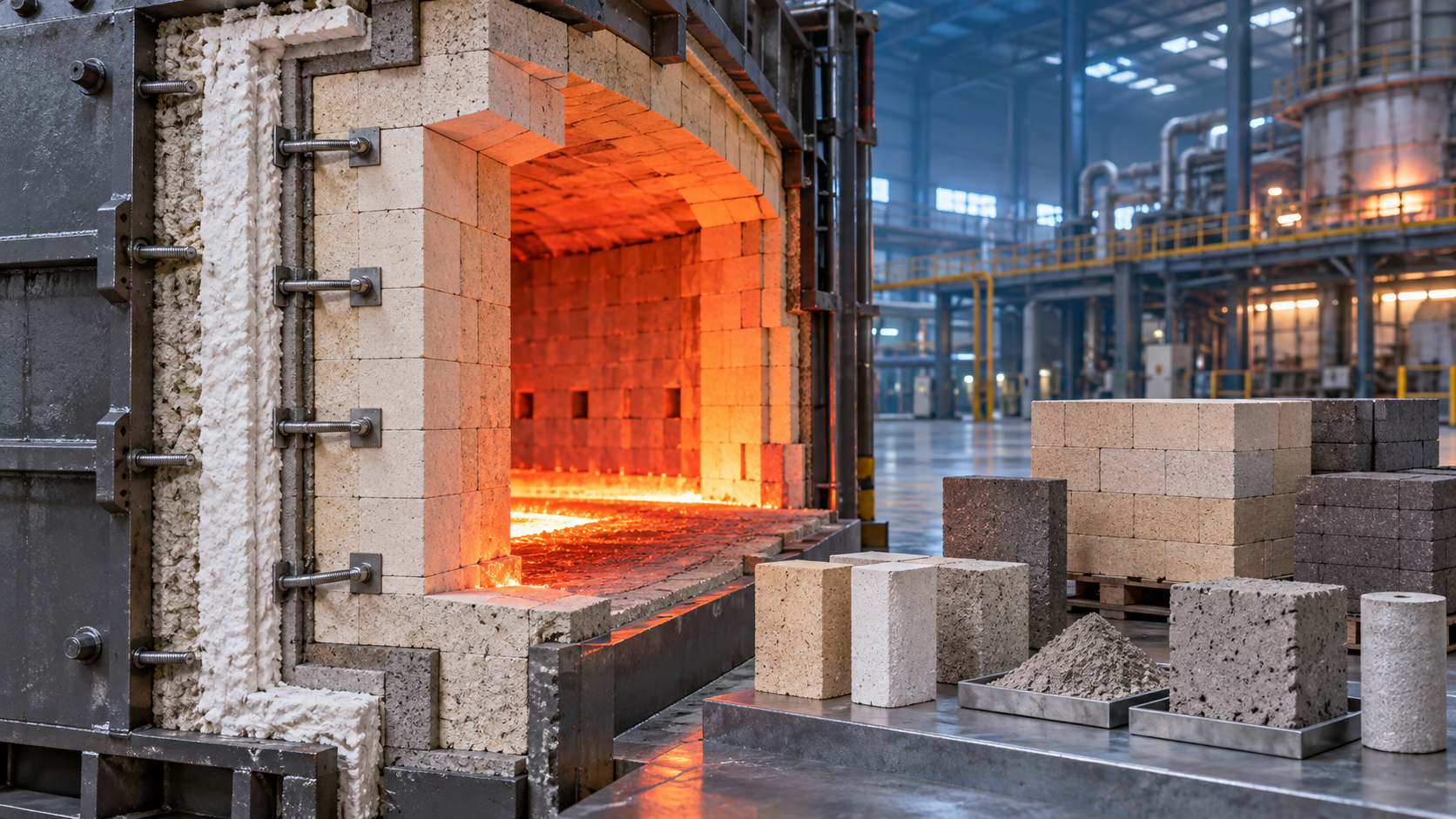
The combustion chamber crown may face peak temperature and direct flame radiation. Sidewalls may suffer slag attack and local spalling.
The charging area often sees cold-face shocks, incomplete combustion products, and irregular feed impact. The ash discharge zone may face erosion more than chemistry.
In secondary chambers, the challenge can shift again. Oxidizing atmosphere, fine particulate carryover, and corrosive gas phases become more important.
Because of that, high-temperature materials for incinerators should be evaluated zone by zone, with lining thickness, anchoring method, and backup insulation considered together.
What usually matters in each zone
This kind of split matters more than broad material labels such as alumina, silicon carbide, or castable. The same family can behave very differently depending on formulation.
Waste type changes the material requirement faster than many expect
Lining zone is only half of the decision. Waste chemistry often decides whether a lining ages slowly or fails early.
Municipal solid waste tends to bring mixed moisture, chlorides, alkalis, glass, and metal fragments. The resulting attack is rarely uniform.
Hazardous waste often produces more aggressive vapor phases, including sulfur compounds, halogens, and metal-bearing deposits. Here, corrosion resistance becomes decisive.
Medical waste can create sharp temperature swings because of batch loading, packaging variability, and intermittent operating schedules. Thermal shock may outrank absolute temperature.
Sludge and industrial residue add another layer. Sticky ash, high alkali load, and unstable combustion can drive severe slagging around burner-adjacent zones.
So when selecting high-temperature materials for incinerators, the waste stream should be described by chemical behavior, not only by industry label.
Typical differences by waste stream
- Municipal waste: mixed ash chemistry, glassy slag, intermittent hotspots, variable feed particle size.
- Hazardous waste: stronger vapor corrosion, higher concern for chloride and sulfur attack, stricter uptime consequences.
- Medical waste: repeated thermal cycling, batch inconsistency, pressure on crack resistance.
- Sewage sludge and residues: sticky deposits, alkali-rich phases, abrasion near ash handling points.
In practice, materials that work well in one feed program can underperform after a waste mix change, even if the furnace shell and burner system stay unchanged.
Where selection usually shifts in actual operating scenarios
Facilities running continuously often choose high-temperature materials for incinerators with greater emphasis on corrosion resistance and long campaign stability.
That is because the lining spends more time under sustained heat and chemical load than under repeated cold starts.
Intermittent operation changes the balance. Shutdowns, restart ramps, and partial loads increase crack risk, especially in monolithic sections.
In small or medium incinerators, feed variability can be more damaging than peak temperature. A moderate-temperature system with unstable waste can be harder on refractories than a hotter but stable line.
Waste-to-energy units with heat recovery also need attention beyond the chamber itself. Poor hot-face selection can shift heat flux, affect shell temperatures, and complicate downstream energy efficiency targets.
This broader thermal management view is one reason CF-Elite treats refractory selection as part of process intelligence, not an isolated material purchase.
A practical way to compare requirements
Common misjudgments before a lining is installed
One frequent error is choosing high-temperature materials for incinerators by maximum service temperature alone. Chemical resistance and thermal cycling can dominate sooner.
Another is assuming similar waste labels mean similar attack. Two hazardous waste streams may differ sharply in chlorine, alkali, ash fusion, and metal content.
There is also a tendency to compare only material price. That misses installation complexity, dry-out time, repair frequency, and shutdown losses.
Anchor systems, expansion joints, and insulation layers are often treated as secondary details. In many failures, they are part of the root cause.
In actual service, a technically strong castable can still underperform if the zone needs brick flexibility, or if local movement exceeds the design assumption.
How to narrow the best-fit material without overcomplicating the process
A workable selection path starts with four checks: zone map, waste chemistry, operating rhythm, and maintenance window.
Then compare candidate high-temperature materials for incinerators against the failure mode that matters most in each area.
- If slag penetration is dominant, favor low-porosity systems with proven resistance to expected ash chemistry.
- If shutdown frequency is high, prioritize thermal shock resistance and controlled expansion behavior.
- If ash abrasion is severe, check wear data and repair method, not just initial hardness.
- If emissions control and heat recovery are linked, review how lining design affects thermal balance.
It also helps to document recent feed changes, burner tuning history, and unplanned stoppages. These often explain lining damage better than catalog data.
For complex systems, the strongest decisions come from connecting refractory behavior with process data, inspection history, and lifecycle cost rather than one-time procurement metrics.
What to confirm before the next specification is finalized
The best high-temperature materials for incinerators are usually the ones matched to a precise operating envelope, not the broadest performance claim.
A useful next step is to review the incinerator by zone, then align each zone with the dominant waste-related risk and expected maintenance interval.
After that, compare candidate materials by corrosion behavior, thermal shock tolerance, installation method, and repair practicality under the actual service schedule.
Where conditions are changing, especially in waste-to-energy or co-processing systems, update the lining standard instead of reusing the last specification unchanged.
That kind of disciplined review supports longer campaigns, steadier thermal efficiency, and fewer surprises when waste composition or regulatory pressure shifts.
Related News
 Optical Glass Tech FellowHow Glass Furnace Emissions Are Measured and Controlled for Regulatory ComplianceGlass furnace emissions: learn how to measure, monitor, and control NOx, SOx, particulate, CO, and CO2 for reliable regulatory compliance.Oct 08, 2026
 Prof. Marcus ChenIndustrial Decarbonization Strategies in Europe: A Roadmap for Energy-Intensive PlantsIndustrial decarbonization strategies Europe: explore practical pathways for energy-intensive plants to cut emissions, improve efficiency, and protect performance.Oct 07, 2026
 Thermal Energy ArchitectEnergy-Efficient Silicate Production Lines: What to Compare Before SelectionSilicate production lines energy efficient selection guide: compare thermal performance, stability, emissions, controls, and lifecycle value before investing.Oct 06, 2026
 Optical Glass Tech FellowHow to Evaluate Automated Float Glass Lines for Capacity, Quality, and Energy UseEvaluate automated float glass lines for net capacity, consistent quality, energy efficiency, automation reliability, and lifecycle value. Explore key criteria for smarter investment decisions.Oct 05, 2026
 Thermal Energy ArchitectWhat Does CE Marking Require for an Energy-Efficient Industrial Kiln?Energy efficient kiln CE requirements explained: assess safety, technical files, energy performance, and EU compliance before purchase or commissioning.Oct 04, 2026
 Thermal Energy ArchitectRefractory Manufacturing Solutions for Brick Plants: How to Extend Kiln LifeRefractory manufacturing solutions for brick plant operations: discover proven strategies to extend kiln life, reduce heat loss, prevent lining failures, and plan cost-effective repairs.Oct 03, 2026
 Thermal Energy ArchitectHow to Specify Heavy Industrial Process Systems for High-Temperature PlantsHeavy industrial processes systems: learn how to specify high-temperature plants for efficiency, emissions control, maintainability, and lifecycle performance.Oct 02, 2026
 Structural Material AnalystHow Sustainable Material Extrusion Can Improve Wall Panel Durability and Design FlexibilityDiscover how sustainable material extrusion for wall panels improves durability, moisture resistance, design flexibility, and installation consistency for high-performing wall systems.Oct 01, 2026
 Thermal Energy ArchitectHow to Evaluate a High-Temperature Materials Manufacturer for Furnace ApplicationsChoose a high-temperature materials manufacturer with confidence: compare thermal performance, chemical resistance, quality controls, installation support, and lifecycle cost.Sep 30, 2026
 Ms. Elena RodriguezHow to Structure Global Specification Data for Faster Industrial Product EvaluationGlobal specification-oriented product information helps industrial teams compare capacity, energy, emissions, automation, and lifecycle data on a like-for-like basis for faster, confident equipment decisions.Sep 29, 2026
 Thermal Energy ArchitectHow to Specify High-Temperature Process Systems for Continuous Thermal OperationsHigh-temperature process engineering systems: learn how to specify resilient continuous thermal operations for efficiency, compliance, reliable uptime, and long-term performance.Sep 28, 2026
 Thermal Energy ArchitectHow to Evaluate a Thermal Engineering Contractor for High-Temperature Plant ProjectsChoose a thermal engineering contractor with proven process expertise, lifecycle value, emissions control, and delivery discipline for reliable high-temperature plant performance.Sep 27, 2026
 Silicate Process EngineerHow Latin American Cement Plants Can Reduce Dust Emissions in Kilns and Transfer PointsCement plant dust control Latin America: reduce kiln and transfer-point emissions with practical airflow, filtration, monitoring, and maintenance strategies.Sep 26, 2026
 Material Heat-Resist ExpertHow to Evaluate Refractory Production Lines for Output, Quality, and Energy UseRefractory production lines: learn how to assess qualified output, consistent quality, and total energy use for smarter, lower-risk investment decisions.Sep 25, 2026
 Dr. Alistair VaughnHow Waste Recycling Technology Improves Material Recovery in Industrial PlantsWaste recycling technology improves material recovery through source segregation, smart separation, thermal treatment, and quality control for industrial plants.Sep 24, 2026
 Optical Glass Tech FellowHow to Specify Glass Annealing Equipment for European Quality and Energy RequirementsGlass annealing equipment Europe: learn how to specify lehrs for consistent glass quality, energy efficiency, compliance, automation, and reliable long-term performance.Sep 23, 2026
 Optical Glass Tech FellowSilicate Process Automation: Improving Batch Consistency and Energy ControlSilicate process automation improves batch consistency, energy control, traceability, and operator confidence across high-temperature manufacturing operations.Sep 22, 2026
 Optical Glass Tech FellowHow Silicate Industrial Processes Control Viscosity, Energy Use, and Product QualitySilicate industrial processes: learn how viscosity, chemistry, heat transfer, and atmosphere control reduce energy use, improve stability, and protect product quality.Sep 21, 2026
 Thermal Energy ArchitectHow European Plants Can Evaluate Energy Recovery Equipment for High-Temperature ProcessesIndustrial energy recovery equipment Europe: learn how high-temperature plants can assess waste-heat sources, integration risks, lifecycle value, and reliable recovery routes.Sep 20, 2026
 Thermal Energy ArchitectIndustrial Furnace Process Optimization: Reducing Fuel Use Without Sacrificing ThroughputIndustrial process optimization furnace strategies that cut fuel use while protecting throughput. Explore combustion control, heat recovery, refractory performance, and data-driven efficiency gains.Sep 19, 2026

Related News
- 00
0000-00
Energy-Efficient Silicate Production Lines: What to Compare Before Selection - 00
0000-00
What Does CE Marking Require for an Energy-Efficient Industrial Kiln? - 00
0000-00
Refractory Manufacturing Solutions for Brick Plants: How to Extend Kiln Life - 00
0000-00
How to Specify Heavy Industrial Process Systems for High-Temperature Plants - 00
0000-00
How to Evaluate a High-Temperature Materials Manufacturer for Furnace Applications
Weekly Insights
Stay ahead with our curated technology reports delivered every Monday.