
Industrial Market Intelligence in North America: What Buyers Should Track in Supply, Pricing, and Demand




Industrial market intelligence North America is becoming more operational, not just informational
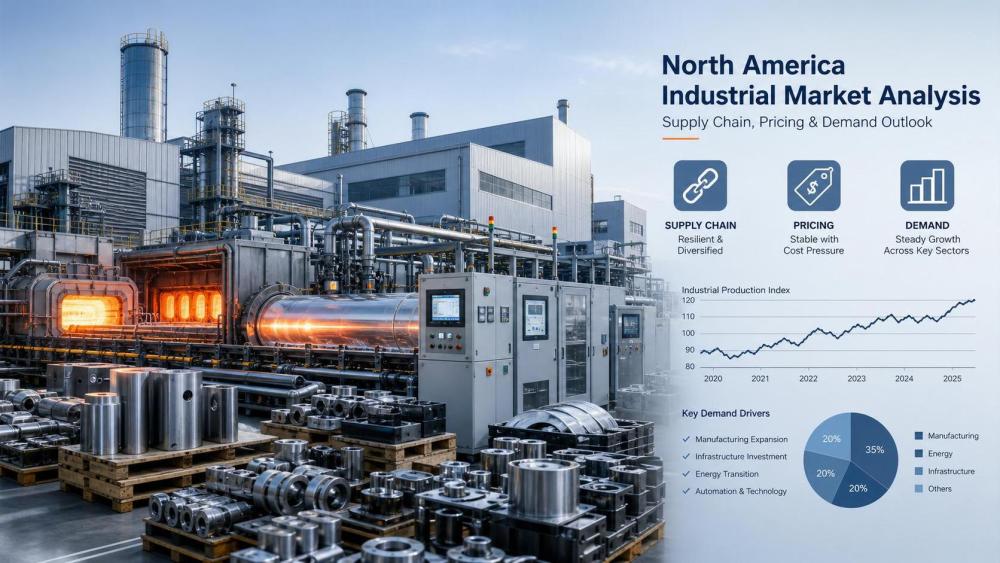
Industrial market intelligence North America now matters at a deeper level than quarterly pricing headlines.
In heavy industry, supply reliability, energy exposure, and regulatory timing are moving together.
That shift is especially visible in silicate processing, industrial kilns, glass systems, refractory production, and advanced extrusion equipment.
Across North America, buyers are no longer judging the market by equipment lead time alone.
They are reading a wider signal set: spare parts continuity, fuel cost volatility, emissions rules, labor availability, and project financing discipline.
This is where industrial market intelligence North America becomes practical.
It helps separate temporary noise from structural change, especially in long-cycle capital decisions.
For businesses evaluating thermal systems and foundation materials, the market is not simply rising or cooling.
It is reorganizing around efficiency, compliance, and resilient sourcing.
That creates risk for assumptions built on pre-2021 cost models, but it also opens room for better-timed investments.
The clearest signal is that supply conditions have improved unevenly
Recent normalization in freight and inventories has reduced some panic buying behavior.
Yet industrial market intelligence North America shows that improvement is far from uniform.
Large fabricated components, burner systems, control packages, and specialty refractories still face pockets of delay.
The reason is less about shipping congestion now, and more about production concentration.
A small number of qualified suppliers still dominate critical thermal and process subsystems.
When energy policy changes, maintenance shutdowns cluster, or environmental retrofits accelerate, lead times stretch again.
In practice, this affects cement plants, float glass lines, waste co-processing kilns, and refractory manufacturing upgrades differently.
High-tonnage mechanical packages may be available sooner than control instrumentation or lining materials.
That mismatch can delay commissioning even when the main equipment has arrived.
More careful buyers now test supplier depth, not just supplier price.
Where the supply picture is changing fastest
- Combustion and heat recovery systems are seeing stronger scrutiny because fuel switching plans are expanding.
- Refractory materials are affected by both raw mineral sourcing and installation labor constraints.
- Industrial automation packages are exposed to firmware support, sensor compatibility, and cybersecurity review cycles.
- Extrusion line components increasingly depend on tighter tolerance parts and stable downstream service support.
Pricing is no longer driven by one factor, which changes how comparisons should be made
A useful reading of industrial market intelligence North America now starts with cost composition.
Base steel prices still matter, but they explain less of the final decision than they once did.
Energy intensity, engineering hours, emissions compliance, and long-term service obligations carry more weight.
This is especially true in equipment tied to high-temperature chemistry.
A rotary kiln upgrade, glass furnace subsystem, or incineration line retrofit cannot be compared by headline quotation alone.
More visible inflation may have cooled, but hidden cost layers remain active.
This is why industrial market intelligence North America increasingly overlaps with lifecycle analysis.
A lower upfront offer can still create weaker economics over five to ten years.
Demand is shifting toward efficiency-led projects, even when capacity growth looks modest
One of the more important demand signals is that not all project activity is expansion-led.
In several North American segments, the stronger pattern is selective modernization.
Facilities are prioritizing debottlenecking, emissions upgrades, heat recovery, digital monitoring, and material efficiency.
That matters because it changes what qualifies as competitive demand.
Projects tied to green building materials, alternative fuels, circular resource use, and plant intelligence are attracting steadier attention.
CF-Elite’s sector focus helps explain why.
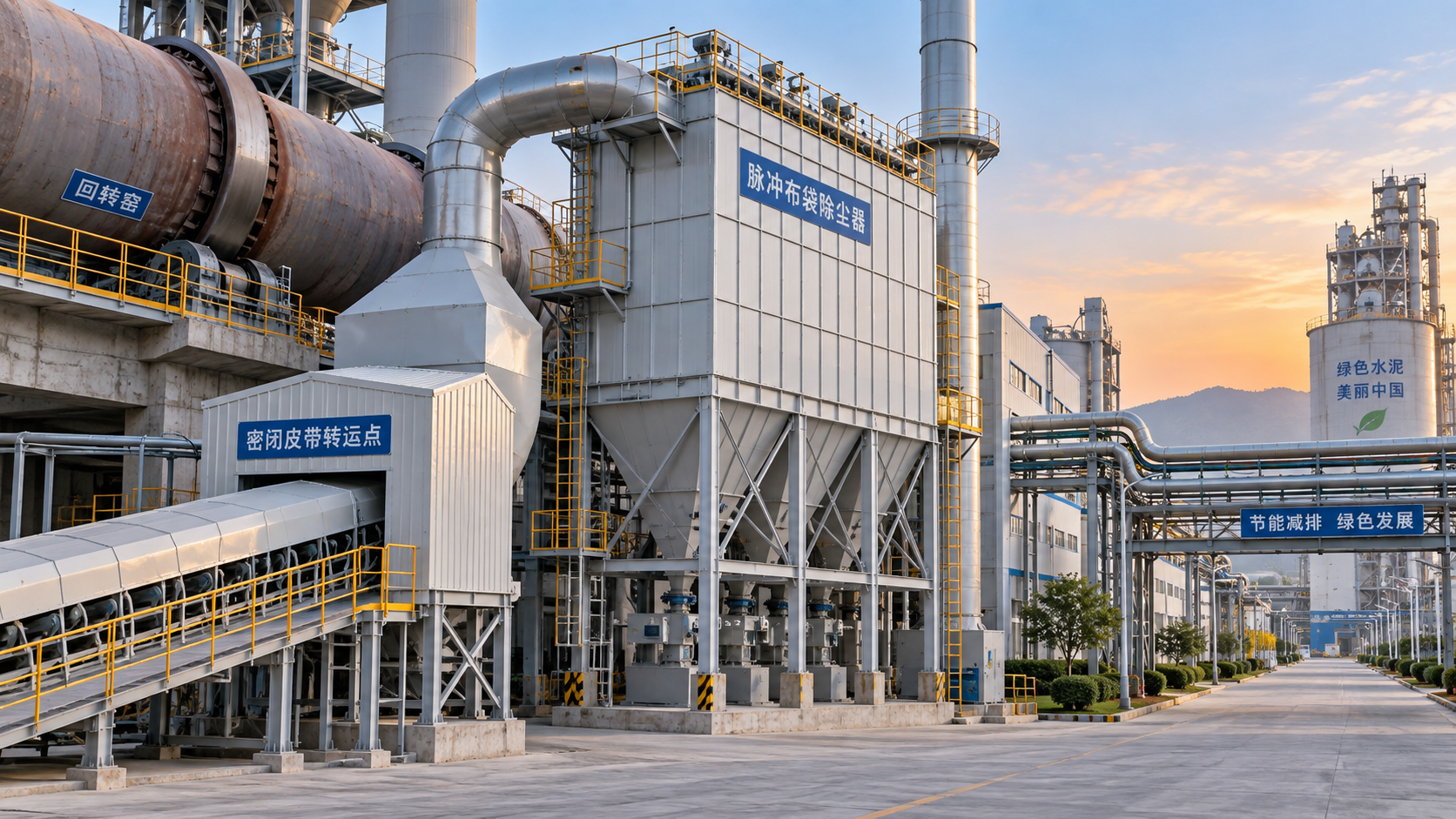
In cement, dust control and energy performance are no longer side issues.
In glass, melting precision and thermal stability directly shape product quality and energy intensity.
In industrial kilns and incineration, co-processing and waste-to-energy logic are reshaping retrofit priorities.
In refractories, lining durability and monitoring can alter shutdown frequency.
In new building material extrusion, lightweight formats and process consistency are driving new specification behavior.
So while headline demand may look mixed, technical demand is becoming more specific.
What demand signals deserve closer attention
- Projects justified by lower energy use rather than new volume alone.
- Retrofits linked to carbon reporting and plant-level emissions accountability.
- Growing interest in digital twin models and online condition monitoring.
- Preference for equipment that supports flexible feedstock or fuel input.
The next layer of industrial market intelligence North America is regulatory and technical convergence
More noticeable now is how regulation interacts with engineering choices.
Environmental policy is not just a compliance issue after purchase.
It increasingly shapes which technologies remain financeable, insurable, and scalable.
That is why industrial market intelligence North America must include standards tracking, not just price tracking.
The practical effect is clear in high-temperature industries.
Burner systems may need future fuel adaptability.
Monitoring systems may need stronger reporting granularity.
Material selections may need to support harsher thermal cycles under new operating strategies.
This is also where CF-Elite’s intelligence model becomes relevant without becoming promotional.
Its value lies in stitching together chemical kinetics, thermal management, and carbon reduction into usable market context.
That kind of cross-reading is increasingly necessary because commercial choices now carry technical lock-in effects.
Impact is spreading across evaluation, budgeting, and risk timing
These market changes do not stay inside procurement files.
They affect capex timing, maintenance planning, insurance assumptions, and long-term operating margin expectations.
A delayed refractory campaign can alter annual output planning.
A poorly scoped controls upgrade can weaken reporting readiness under tighter oversight.
An underestimated energy scenario can distort total project return.
From recent market behavior, the more resilient evaluations share three habits.
- They compare suppliers by system reliability, not by unit price alone.
- They model at least two regulatory and fuel-cost scenarios before approval.
- They track whether demand is cyclical, policy-driven, or structurally efficiency-led.
That is the more usable form of industrial market intelligence North America.
It turns broad market awareness into decision filters that hold up under operational pressure.
A practical reading framework for the next cycle
The next phase is unlikely to be defined by one dominant market story.
It will be shaped by how supply resilience, cost discipline, and decarbonization strategies interact.
For that reason, industrial market intelligence North America should be reviewed as a layered signal set.
Watch component bottlenecks alongside project approvals.
Track energy and emissions assumptions alongside equipment quotations.
Check whether demand is tied to replacement, modernization, or new capacity.
Review technical specifications for future operating flexibility, not just current fit.
That approach supports clearer market judgment in sectors where high heat, heavy assets, and long cycles leave little room for reactive decisions.
A useful next step is to build a short review matrix covering supply exposure, lifecycle cost, compliance sensitivity, and upgrade relevance.
That kind of discipline makes industrial market intelligence North America more than a research topic.
It becomes a working basis for timing, prioritization, and better industrial choices.
Related News
 Ms. Elena RodriguezHigh-Pressure Molding Innovations: How Automation and Tooling Affect PriceExplore the high-pressure molding innovations price equation: compare automation, tooling, and ownership costs to find upgrades that cut waste and deliver measurable value.Oct 13, 2026
 Ms. Elena RodriguezIndustrial Process Optimization: Where to Target Energy, Yield, and Throughput LossesIndustrial process optimization: identify energy, yield, and throughput losses to improve plant stability, reduce costs, and unlock measurable performance gains.Oct 12, 2026
 Ms. Elena RodriguezGlass Market Intelligence: How to Assess Demand, Capacity, and Regional Growth RisksGlass market intelligence for evaluating demand, effective capacity, energy exposure, trade dynamics, and regional growth risks before investing in glass manufacturing.Oct 11, 2026
 Ms. Elena RodriguezAre Green Building Materials More Expensive to Manufacture?Are green building materials more expensive to manufacture? Explore cost drivers, savings opportunities, and how sustainable production can strengthen long-term competitiveness.Oct 13, 2026
 Structural Material AnalystWhich Sustainable Construction Materials Are Suitable for Extrusion?Which sustainable construction materials are suitable for extrusion? Explore recycled clay, cementitious mixes, geopolymers, and bio-composites for reliable, lower-impact building products.Oct 12, 2026
 Optical Glass Tech FellowWhat Should a Glass Furnace Energy Specification Include?What should be included in a glass furnace energy specification? Explore performance, fuel flexibility, heat recovery, emissions, and monitoring essentials.Oct 11, 2026
 Dr. Alistair VaughnHow Process Technology Platforms Improve Control Across Multi-Line ManufacturingDiscover how a process technology platform strengthens cross-line control, connects operational data, and improves energy, quality, and maintenance decisions.Oct 10, 2026
 Optical Glass Tech FellowHow Glass Furnace Emissions Are Measured and Controlled for Regulatory ComplianceGlass furnace emissions: learn how to measure, monitor, and control NOx, SOx, particulate, CO, and CO2 for reliable regulatory compliance.Oct 08, 2026
 Prof. Marcus ChenIndustrial Decarbonization Strategies in Europe: A Roadmap for Energy-Intensive PlantsIndustrial decarbonization strategies Europe: explore practical pathways for energy-intensive plants to cut emissions, improve efficiency, and protect performance.Oct 07, 2026
 Thermal Energy ArchitectEnergy-Efficient Silicate Production Lines: What to Compare Before SelectionSilicate production lines energy efficient selection guide: compare thermal performance, stability, emissions, controls, and lifecycle value before investing.Oct 06, 2026
 Optical Glass Tech FellowHow to Evaluate Automated Float Glass Lines for Capacity, Quality, and Energy UseEvaluate automated float glass lines for net capacity, consistent quality, energy efficiency, automation reliability, and lifecycle value. Explore key criteria for smarter investment decisions.Oct 05, 2026
 Thermal Energy ArchitectWhat Does CE Marking Require for an Energy-Efficient Industrial Kiln?Energy efficient kiln CE requirements explained: assess safety, technical files, energy performance, and EU compliance before purchase or commissioning.Oct 04, 2026
 Thermal Energy ArchitectRefractory Manufacturing Solutions for Brick Plants: How to Extend Kiln LifeRefractory manufacturing solutions for brick plant operations: discover proven strategies to extend kiln life, reduce heat loss, prevent lining failures, and plan cost-effective repairs.Oct 03, 2026
 Thermal Energy ArchitectHow to Specify Heavy Industrial Process Systems for High-Temperature PlantsHeavy industrial processes systems: learn how to specify high-temperature plants for efficiency, emissions control, maintainability, and lifecycle performance.Oct 02, 2026
 Structural Material AnalystHow Sustainable Material Extrusion Can Improve Wall Panel Durability and Design FlexibilityDiscover how sustainable material extrusion for wall panels improves durability, moisture resistance, design flexibility, and installation consistency for high-performing wall systems.Oct 01, 2026
 Thermal Energy ArchitectHow to Evaluate a High-Temperature Materials Manufacturer for Furnace ApplicationsChoose a high-temperature materials manufacturer with confidence: compare thermal performance, chemical resistance, quality controls, installation support, and lifecycle cost.Sep 30, 2026
 Ms. Elena RodriguezHow to Structure Global Specification Data for Faster Industrial Product EvaluationGlobal specification-oriented product information helps industrial teams compare capacity, energy, emissions, automation, and lifecycle data on a like-for-like basis for faster, confident equipment decisions.Sep 29, 2026
 Thermal Energy ArchitectHow to Specify High-Temperature Process Systems for Continuous Thermal OperationsHigh-temperature process engineering systems: learn how to specify resilient continuous thermal operations for efficiency, compliance, reliable uptime, and long-term performance.Sep 28, 2026
 Thermal Energy ArchitectHow to Evaluate a Thermal Engineering Contractor for High-Temperature Plant ProjectsChoose a thermal engineering contractor with proven process expertise, lifecycle value, emissions control, and delivery discipline for reliable high-temperature plant performance.Sep 27, 2026
 Silicate Process EngineerHow Latin American Cement Plants Can Reduce Dust Emissions in Kilns and Transfer PointsCement plant dust control Latin America: reduce kiln and transfer-point emissions with practical airflow, filtration, monitoring, and maintenance strategies.Sep 26, 2026
















Related News
- 00
0000-00
High-Pressure Molding Innovations: How Automation and Tooling Affect Price - 00
0000-00
Industrial Process Optimization: Where to Target Energy, Yield, and Throughput Losses - 00
0000-00
Glass Market Intelligence: How to Assess Demand, Capacity, and Regional Growth Risks - 00
0000-00
Are Green Building Materials More Expensive to Manufacture? - 00
0000-00
How to Structure Global Specification Data for Faster Industrial Product Evaluation
Weekly Insights
Stay ahead with our curated technology reports delivered every Monday.