
Common Problems in Glass Annealing Lehr Systems and How to Improve Temperature Uniformity




Common Problems in Glass Annealing Lehr Systems and How to Improve Temperature Uniformity
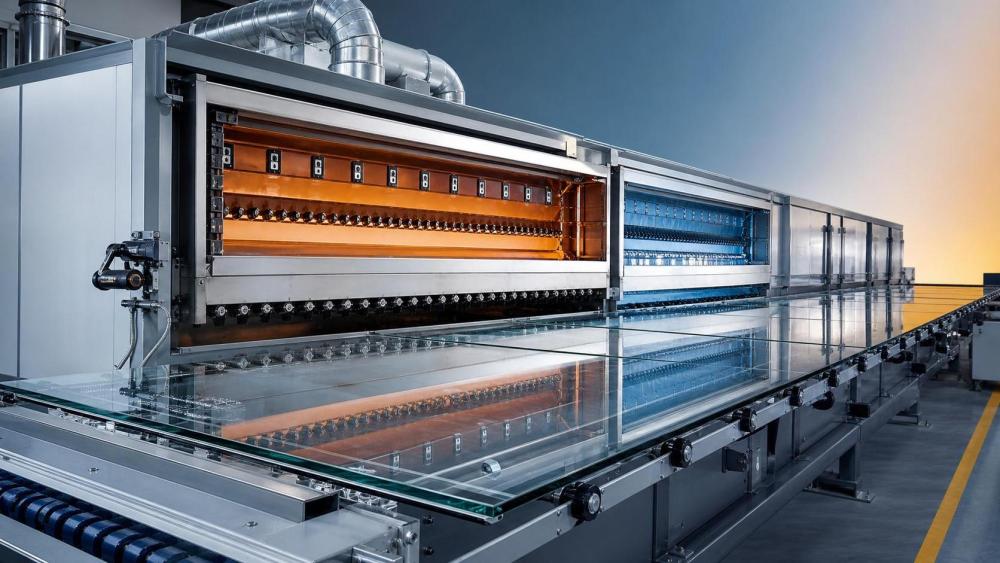
In glass manufacturing, uneven cooling in glass annealing lehr systems creates problems fast. Residual stress builds quietly. Breakage appears later. Optical defects often follow.
For maintenance work, temperature uniformity is rarely just a process issue. It usually reflects airflow, insulation, control logic, sensor health, or loading stability.
That is why troubleshooting glass annealing lehr systems needs a practical sequence. You need to isolate the thermal source, confirm the pattern, and correct the real cause.
This article focuses on common failure points and field-ready actions that improve cooling balance, product quality, and operating consistency.
Why Temperature Uniformity Matters in Glass Annealing Lehr Systems
The purpose of glass annealing lehr systems is controlled stress relief. Glass must pass through a defined temperature profile without sharp cross-sectional differences.
When one zone cools faster than another, stress becomes trapped. Sometimes the sheet survives inspection. Then it fails during cutting, tempering, transport, or end use.
Poor temperature uniformity also affects appearance. You may see wave, local haze, roller imprint emphasis, or distortion that becomes obvious under reflected light.
From a line reliability view, unstable thermal conditions create repeat interventions. Operators adjust more often. Maintenance reacts more often. Output quality becomes harder to predict.
The Most Common Problems Behind Uneven Cooling
Most temperature uniformity issues in glass annealing lehr systems come from a small group of repeating causes. The pattern changes by furnace design, but the logic is similar.
1. Airflow imbalance across zones
Blocked ducts, worn fans, damper drift, or leaking plenums can shift air volume from one side to another. This is one of the most frequent issues in glass annealing lehr systems.
The symptom is usually lateral temperature spread. One edge cools harder. The opposite edge stays warmer. Stress maps often confirm the same directional pattern.
2. Sensor drift or poor sensor placement
If thermocouples drift, the control system may look stable while the real thermal field is not. In older glass annealing lehr systems, this problem can stay hidden for months.
Placement matters too. A sensor near a local hot spot may mislead the controller. The zone average can be wrong even when the displayed reading looks reasonable.
3. Uneven heater performance
Electric elements age unevenly. Gas burners foul, misalign, or lose mixing quality. This changes heat input distribution and weakens temperature uniformity across the lehr.
A common signal is repeated controller output increase in one zone without matching process recovery. That usually points to declining thermal efficiency or local hardware loss.
4. Insulation degradation and casing leaks
Heat loss does not always look dramatic. A small crack, door seal issue, or damaged refractory area can create persistent local cooling.
Over time, these losses force compensating control actions. That usually makes glass annealing lehr systems less stable, not more stable.
5. Conveyor and roller-related disturbances
Roller speed fluctuation changes residence time. Roller wear changes support conditions. Poor synchronization may also create localized thermal history differences across the glass ribbon.
When process teams focus only on air and heat, they sometimes miss the transport side of temperature uniformity.
6. Unstable loading or product mix changes
Thickness variation, width changes, and irregular spacing alter heat capacity and cooling behavior. If recipe updates lag behind production shifts, uneven cooling becomes likely.
This is especially important when glass annealing lehr systems handle different products in short intervals.
How to Diagnose the Real Cause Faster
Good troubleshooting starts with pattern recognition. Random adjustment usually wastes time and can make the thermal profile harder to interpret.
A practical diagnostic sequence looks like this:
- Compare defect location with temperature trend history by zone.
- Check whether the issue follows machine direction, cross direction, or specific product sizes.
- Verify thermocouples against a reference during stable production.
- Inspect fan current, damper position, and airflow balance side to side.
- Review controller output trends for zones that keep hunting or saturating.
- Walk the casing and seals for abnormal skin temperature or leakage signs.
- Confirm conveyor speed stability and roller condition under load.
In actual plant work, thermal data alone is rarely enough. You need to connect process readings with mechanical condition and product behavior.
Practical Ways to Improve Temperature Uniformity
Once the main cause is known, improvement should be systematic. Quick adjustments can help, but lasting temperature uniformity in glass annealing lehr systems comes from control discipline.
Balance airflow before changing recipes
Clean ducts and nozzles. Check fan blades for fouling. Confirm damper feedback accuracy. Measure actual airflow instead of trusting position alone.
If air distribution is uneven, recipe tuning only masks the problem for a while.
Rebuild sensor confidence
Set a calibration interval based on drift history, not just calendar habit. Replace damaged protection tubes. Review whether sensor locations still represent the true control target.
Reliable measurement is the base layer for stable glass annealing lehr systems.
Tune control loops with real process response
Many zones oscillate because PID values no longer match current equipment condition. Heat transfer changes with age, product mix, and maintenance history.
Re-tuning should use logged response data. Avoid aggressive settings that create overshoot and cross-zone interference.
Repair heat losses early
Small seal failures become expensive because they slowly distort the thermal map. Infrared checks during planned stops can reveal issues before defects rise.
For glass annealing lehr systems, insulation maintenance is a quality action as much as an energy action.
Stabilize transport conditions
Check drive consistency, roller alignment, and wear pattern. Confirm that speed signals match true line movement during load changes and restarts.
This is often where hidden repeatability problems live.
A Simple Field Checklist for Recurring Lehr Issues
When the same defect keeps returning, use a short checklist before making broad adjustments:
- Are left and right zone temperatures truly matching, or only the displayed values?
- Have airflow paths been physically inspected this month?
- Do defect trends increase after product size changes?
- Are any zones operating near output limit for long periods?
- Has thermocouple calibration drifted beyond acceptable tolerance?
- Are door seals, expansion joints, and access covers still tight?
- Do roller marks or residence time clues match the thermal defect location?
A short routine like this makes glass annealing lehr systems easier to manage under production pressure.
Where Better Monitoring Creates Long-Term Gains
From recent plant upgrades, the clearest improvement signal comes from better visibility. Trend dashboards, alarm logic, and condition-based inspection reduce guesswork.
In advanced glass annealing lehr systems, teams now combine zone trends, fan load, product recipes, and defect records. That makes recurring causes easier to isolate.
This also supports broader thermal management goals. Better uniformity means less scrap, fewer emergency stops, lower rework, and more stable energy use.
For organizations following high-temperature process intelligence, this is where maintenance moves from reactive work to operational value creation.
Conclusion
Temperature uniformity problems in glass annealing lehr systems usually come from familiar sources. Airflow imbalance, sensor error, heat loss, transport instability, and recipe mismatch lead the list.
The practical answer is disciplined diagnosis, not random correction. Verify measurements. Check airflow physically. Review control response. Match thermal behavior with product and transport conditions.
When these steps become routine, glass annealing lehr systems run with better consistency and fewer hidden quality losses. That is the most direct path to stronger line reliability and more predictable output.
Related News
 Dr. Alistair VaughnIndustrial Waste Recycling: Selecting Conversion Systems by Feedstock and OutputCompare industrial waste conversion systems recycling teams can match to feedstock and output. Explore recovery routes, quality criteria, and costs to choose with confidence.Oct 14, 2026
 Ms. Elena RodriguezHigh-Pressure Molding Innovations: How Automation and Tooling Affect PriceExplore the high-pressure molding innovations price equation: compare automation, tooling, and ownership costs to find upgrades that cut waste and deliver measurable value.Oct 13, 2026
 Ms. Elena RodriguezIndustrial Process Optimization: Where to Target Energy, Yield, and Throughput LossesIndustrial process optimization: identify energy, yield, and throughput losses to improve plant stability, reduce costs, and unlock measurable performance gains.Oct 12, 2026
 Ms. Elena RodriguezGlass Market Intelligence: How to Assess Demand, Capacity, and Regional Growth RisksGlass market intelligence for evaluating demand, effective capacity, energy exposure, trade dynamics, and regional growth risks before investing in glass manufacturing.Oct 11, 2026
 Ms. Elena RodriguezAre Green Building Materials More Expensive to Manufacture?Are green building materials more expensive to manufacture? Explore cost drivers, savings opportunities, and how sustainable production can strengthen long-term competitiveness.Oct 13, 2026
 Structural Material AnalystWhich Sustainable Construction Materials Are Suitable for Extrusion?Which sustainable construction materials are suitable for extrusion? Explore recycled clay, cementitious mixes, geopolymers, and bio-composites for reliable, lower-impact building products.Oct 12, 2026
 Optical Glass Tech FellowWhat Should a Glass Furnace Energy Specification Include?What should be included in a glass furnace energy specification? Explore performance, fuel flexibility, heat recovery, emissions, and monitoring essentials.Oct 11, 2026
 Dr. Alistair VaughnHow Process Technology Platforms Improve Control Across Multi-Line ManufacturingDiscover how a process technology platform strengthens cross-line control, connects operational data, and improves energy, quality, and maintenance decisions.Oct 10, 2026
 Optical Glass Tech FellowHow Glass Furnace Emissions Are Measured and Controlled for Regulatory ComplianceGlass furnace emissions: learn how to measure, monitor, and control NOx, SOx, particulate, CO, and CO2 for reliable regulatory compliance.Oct 08, 2026
 Prof. Marcus ChenIndustrial Decarbonization Strategies in Europe: A Roadmap for Energy-Intensive PlantsIndustrial decarbonization strategies Europe: explore practical pathways for energy-intensive plants to cut emissions, improve efficiency, and protect performance.Oct 07, 2026
 Thermal Energy ArchitectEnergy-Efficient Silicate Production Lines: What to Compare Before SelectionSilicate production lines energy efficient selection guide: compare thermal performance, stability, emissions, controls, and lifecycle value before investing.Oct 06, 2026
 Optical Glass Tech FellowHow to Evaluate Automated Float Glass Lines for Capacity, Quality, and Energy UseEvaluate automated float glass lines for net capacity, consistent quality, energy efficiency, automation reliability, and lifecycle value. Explore key criteria for smarter investment decisions.Oct 05, 2026
 Thermal Energy ArchitectWhat Does CE Marking Require for an Energy-Efficient Industrial Kiln?Energy efficient kiln CE requirements explained: assess safety, technical files, energy performance, and EU compliance before purchase or commissioning.Oct 04, 2026
 Thermal Energy ArchitectRefractory Manufacturing Solutions for Brick Plants: How to Extend Kiln LifeRefractory manufacturing solutions for brick plant operations: discover proven strategies to extend kiln life, reduce heat loss, prevent lining failures, and plan cost-effective repairs.Oct 03, 2026
 Thermal Energy ArchitectHow to Specify Heavy Industrial Process Systems for High-Temperature PlantsHeavy industrial processes systems: learn how to specify high-temperature plants for efficiency, emissions control, maintainability, and lifecycle performance.Oct 02, 2026
 Structural Material AnalystHow Sustainable Material Extrusion Can Improve Wall Panel Durability and Design FlexibilityDiscover how sustainable material extrusion for wall panels improves durability, moisture resistance, design flexibility, and installation consistency for high-performing wall systems.Oct 01, 2026
 Thermal Energy ArchitectHow to Evaluate a High-Temperature Materials Manufacturer for Furnace ApplicationsChoose a high-temperature materials manufacturer with confidence: compare thermal performance, chemical resistance, quality controls, installation support, and lifecycle cost.Sep 30, 2026
 Ms. Elena RodriguezHow to Structure Global Specification Data for Faster Industrial Product EvaluationGlobal specification-oriented product information helps industrial teams compare capacity, energy, emissions, automation, and lifecycle data on a like-for-like basis for faster, confident equipment decisions.Sep 29, 2026
 Thermal Energy ArchitectHow to Specify High-Temperature Process Systems for Continuous Thermal OperationsHigh-temperature process engineering systems: learn how to specify resilient continuous thermal operations for efficiency, compliance, reliable uptime, and long-term performance.Sep 28, 2026
 Thermal Energy ArchitectHow to Evaluate a Thermal Engineering Contractor for High-Temperature Plant ProjectsChoose a thermal engineering contractor with proven process expertise, lifecycle value, emissions control, and delivery discipline for reliable high-temperature plant performance.Sep 27, 2026

Related News
- 00
0000-00
What Should a Glass Furnace Energy Specification Include? - 00
0000-00
How Glass Furnace Emissions Are Measured and Controlled for Regulatory Compliance - 00
0000-00
How to Evaluate Automated Float Glass Lines for Capacity, Quality, and Energy Use - 00
0000-00
How to Specify Glass Annealing Equipment for European Quality and Energy Requirements - 00
0000-00
Silicate Process Automation: Improving Batch Consistency and Energy Control
Weekly Insights
Stay ahead with our curated technology reports delivered every Monday.