
Glass Annealing Equipment Manufacturer Guide: Furnace Types, Temperature Control, and Use Cases




Glass Annealing Equipment Manufacturer Guide: Furnace Types, Temperature Control, and Use Cases
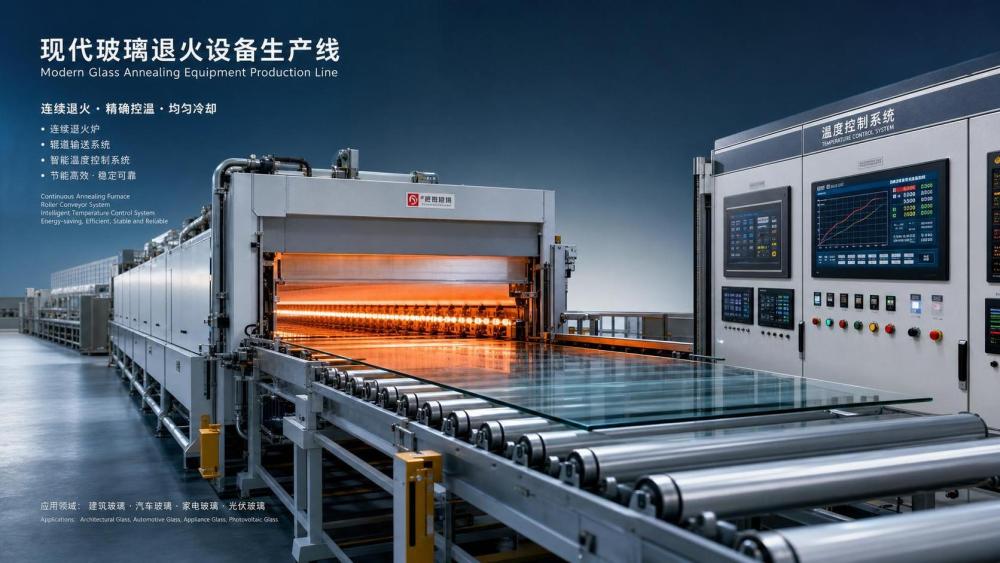
Choosing a reliable glass annealing equipment manufacturer takes more than checking furnace dimensions or comparing quotations.
The real decision point is process stability.
That includes temperature uniformity, controllable cooling gradients, line integration, and long-term operating efficiency.
For many projects, poor annealing performance does not show up on day one.
It appears later as breakage, optical distortion, residual stress, or yield loss.
This is why a capable glass annealing equipment manufacturer should be assessed as a process partner, not only as a machine supplier.
The best suppliers understand glass composition, thermal history, throughput variation, and downstream quality targets.
In practical terms, that means matching furnace design to real production conditions.
Why Annealing Equipment Selection Matters
Annealing removes internal stress created during forming and cooling.
Without proper stress relief, even well-formed glass may fail during cutting, coating, laminating, or field use.
This matters across float glass, borosilicate products, tableware, containers, display glass, and solar applications.
A strong glass annealing equipment manufacturer will usually focus on three connected outcomes.
- Consistent stress reduction across the full section of the product.
- Stable production speed with limited thermal fluctuation.
- Energy use that remains competitive over years of operation.
From a technical review perspective, these outcomes are tightly linked.
A furnace that runs fast but cools unevenly may raise output while quietly lowering product reliability.
That tradeoff is rarely acceptable in precision production.
Main Furnace Types from a Glass Annealing Equipment Manufacturer
Different product categories need different annealing systems.
A capable glass annealing equipment manufacturer should explain where each furnace type performs well and where it does not.
1. Continuous Annealing Lehr
This is the most common option for high-volume lines.
It is widely used for flat glass, container glass, and continuous formed products.
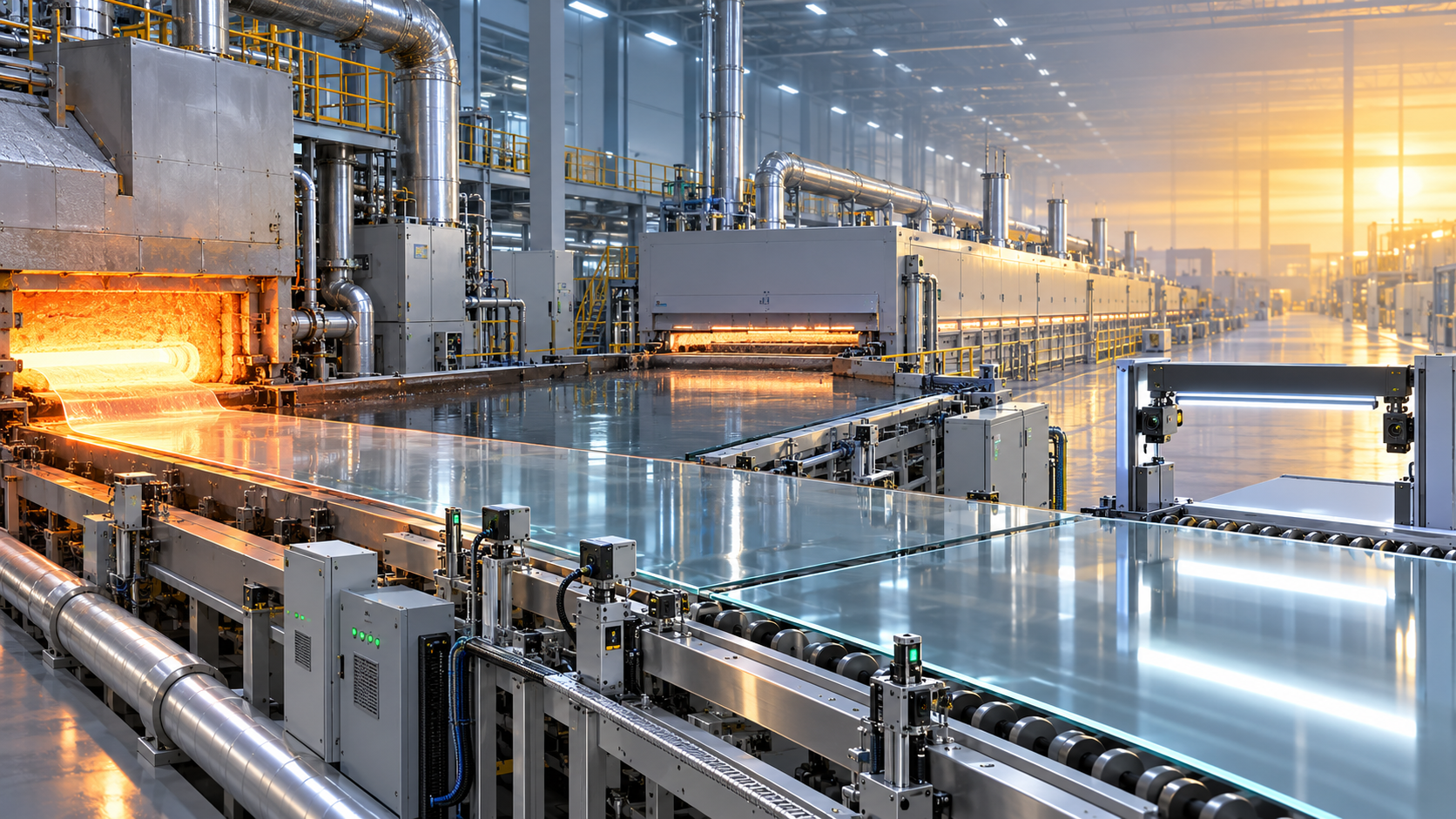
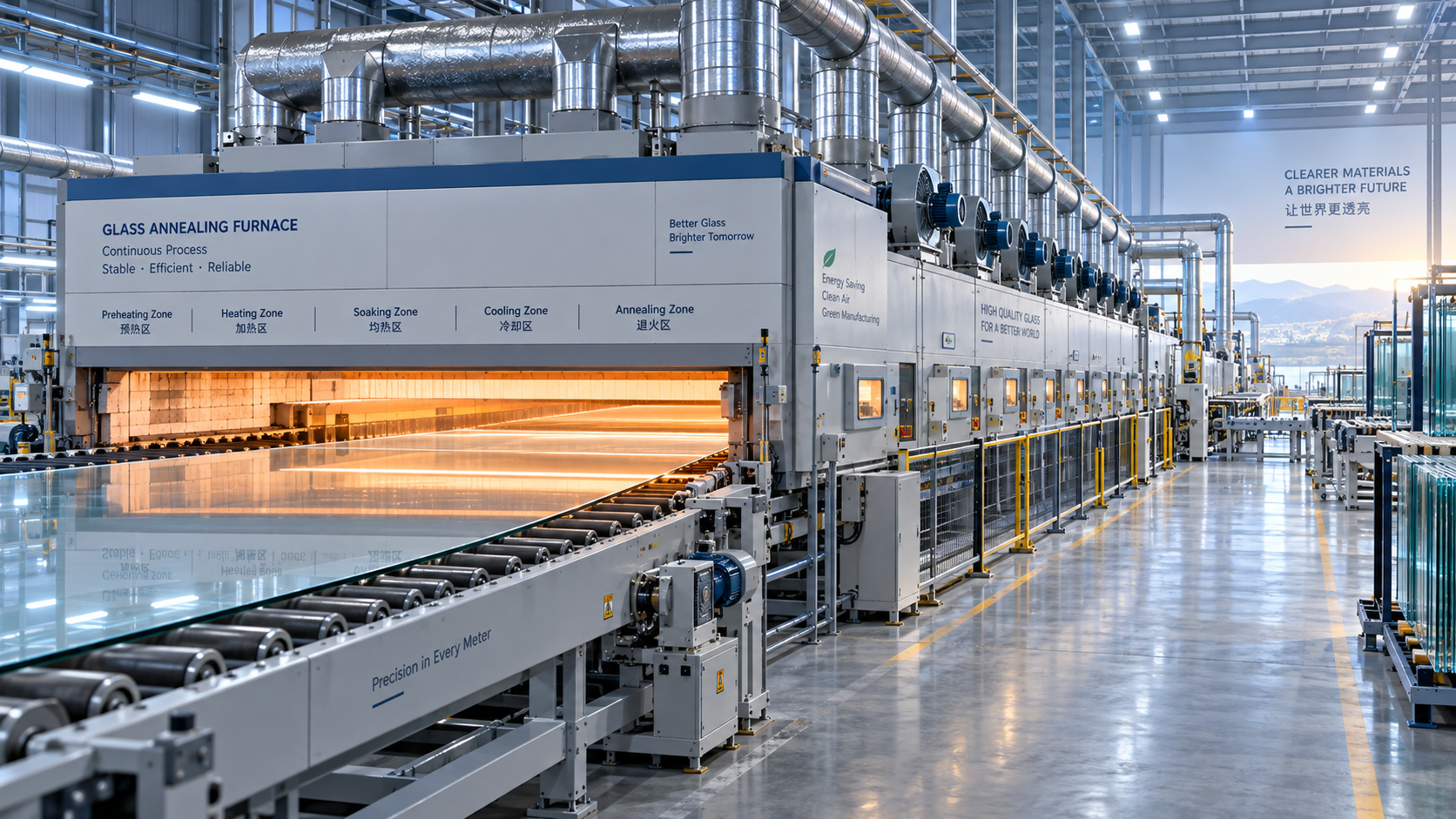
Glass moves through heating, soaking, and controlled cooling zones at a defined line speed.
Its main strength is throughput consistency.
Its main challenge is maintaining cross-width temperature balance under changing loads.
2. Batch Annealing Furnace
Batch systems suit irregular shapes, lower production volume, or specialty glass products.
They offer flexibility for frequent product changes.
They also allow longer thermal cycles for thick or stress-sensitive parts.
The tradeoff is lower output and potentially higher energy use per unit.
3. Conveyor Mesh Belt Furnace
This format is often chosen for smaller components, technical glass parts, and controlled part handling.
It supports stable transport and repeatable heat exposure.
A glass annealing equipment manufacturer should clarify belt material limits, contamination risk, and maintenance intervals.
4. Roller Hearth Annealing Furnace
Roller hearth systems are common for sheet and panel applications.
They are useful where precise transport speed and thermal zoning are required.
However, roller quality, alignment, and surface cleanliness directly affect finished glass quality.
Temperature Control: The Core Benchmark
When comparing any glass annealing equipment manufacturer, temperature control deserves the closest review.
Annealing is not just about reaching a setpoint.
It is about following the right thermal curve for the specific glass type and thickness.
More importantly, it is about repeating that curve under variable production conditions.
Key Control Factors
- Zone temperature accuracy and sensor placement.
- Uniformity across width, height, and product path.
- Response speed during line speed or load changes.
- Cooling rate control near strain and annealing points.
- Control logic integration with upstream forming systems.
In recent years, more suppliers have introduced multi-zone PID control, recipe management, and real-time trend logging.
That is useful, but software alone does not guarantee performance.
The mechanical design still matters.
Air circulation, insulation structure, heating element arrangement, and sealing quality all shape actual thermal behavior.
This also means two systems with similar control screens may perform very differently in production.
What to Ask During Technical Evaluation
- What temperature uniformity can be guaranteed under full load?
- How is the thermal profile validated during commissioning?
- What sensor redundancy exists for critical zones?
- How does the system react to product mix changes?
- What historical data can the control platform export?
Matching Furnace Design to Use Cases
A glass annealing equipment manufacturer should never recommend one universal solution.
The correct design depends on product geometry, thickness range, stress tolerance, line speed, and floor layout.
Flat Glass and Architectural Glass
These lines usually prioritize width uniformity and stable throughput.
Continuous lehrs and roller hearth systems are often the preferred choice.
Optical quality, edge stress, and downstream cutting behavior should be tracked closely.
Solar Glass and PV Cover Glass
This segment often requires high repeatability and low defect rates.
Even small thermal deviation can affect coating, transmittance, or lamination stability.
A glass annealing equipment manufacturer with PV experience will usually show stronger recipe control capability.
Container and Hollow Glass
Container lines need continuous stress relief at high production speed.
The annealing lehr must work in rhythm with forming machines and inspection units.
Here, handling stability and thermal balance are as important as heating capacity.
Technical Glass and Specialty Components
Laboratory glass, display parts, and precision components often need slower cycles and tighter process windows.
Batch furnaces can be more suitable in these cases.
The more obvious signal is that flexibility may matter more than headline throughput.
How to Compare a Glass Annealing Equipment Manufacturer
A serious comparison should move beyond brochures.
It should test whether the glass annealing equipment manufacturer understands process risk, not just machine configuration.
In actual purchasing work, factory references are especially valuable.
Ask for installations with similar glass chemistry, thickness, and output targets.
That context is far more useful than generic project lists.
Common Risks During Selection
Several mistakes appear repeatedly when teams evaluate a glass annealing equipment manufacturer.
- Choosing by peak temperature instead of usable annealing control range.
- Ignoring cooling section design and focusing only on heating power.
- Accepting nominal capacity without checking stable output quality.
- Underestimating maintenance access, spare parts, and service responsiveness.
- Assuming one furnace design can fit all future products.
These issues usually create hidden cost later.
That may include yield loss, unplanned downtime, or expensive retrofit work.
A Practical Selection Approach
A structured review usually leads to better equipment decisions.
- Define glass type, thickness range, throughput, and acceptable stress limits.
- Map the required thermal profile, including soak and cooling stages.
- Shortlist each glass annealing equipment manufacturer by comparable project evidence.
- Review thermal data, control architecture, and service response commitments.
- Confirm trial plans, commissioning scope, and post-start optimization support.
This process keeps the discussion technical and measurable.
It also helps separate experienced suppliers from those offering generic furnace packages.
Conclusion
The right glass annealing equipment manufacturer should deliver more than a furnace shell and a control cabinet.
The supplier should show clear command of furnace type selection, temperature control logic, use-case fit, and energy performance.
For technical evaluation, the most reliable path is simple.
Start with process requirements, verify thermal evidence, and compare each glass annealing equipment manufacturer against real operating conditions.
That approach gives a stronger basis for equipment selection and a better chance of stable long-term glass quality.
Related News
 Ms. Elena RodriguezGlass Market Intelligence: How to Assess Demand, Capacity, and Regional Growth RisksGlass market intelligence for evaluating demand, effective capacity, energy exposure, trade dynamics, and regional growth risks before investing in glass manufacturing.Oct 11, 2026
 Optical Glass Tech FellowWhat Should a Glass Furnace Energy Specification Include?What should be included in a glass furnace energy specification? Explore performance, fuel flexibility, heat recovery, emissions, and monitoring essentials.Oct 11, 2026
 Dr. Alistair VaughnHow Process Technology Platforms Improve Control Across Multi-Line ManufacturingDiscover how a process technology platform strengthens cross-line control, connects operational data, and improves energy, quality, and maintenance decisions.Oct 10, 2026
 Optical Glass Tech FellowHow Glass Furnace Emissions Are Measured and Controlled for Regulatory ComplianceGlass furnace emissions: learn how to measure, monitor, and control NOx, SOx, particulate, CO, and CO2 for reliable regulatory compliance.Oct 08, 2026
 Prof. Marcus ChenIndustrial Decarbonization Strategies in Europe: A Roadmap for Energy-Intensive PlantsIndustrial decarbonization strategies Europe: explore practical pathways for energy-intensive plants to cut emissions, improve efficiency, and protect performance.Oct 07, 2026
 Thermal Energy ArchitectEnergy-Efficient Silicate Production Lines: What to Compare Before SelectionSilicate production lines energy efficient selection guide: compare thermal performance, stability, emissions, controls, and lifecycle value before investing.Oct 06, 2026
 Optical Glass Tech FellowHow to Evaluate Automated Float Glass Lines for Capacity, Quality, and Energy UseEvaluate automated float glass lines for net capacity, consistent quality, energy efficiency, automation reliability, and lifecycle value. Explore key criteria for smarter investment decisions.Oct 05, 2026
 Thermal Energy ArchitectWhat Does CE Marking Require for an Energy-Efficient Industrial Kiln?Energy efficient kiln CE requirements explained: assess safety, technical files, energy performance, and EU compliance before purchase or commissioning.Oct 04, 2026
 Thermal Energy ArchitectRefractory Manufacturing Solutions for Brick Plants: How to Extend Kiln LifeRefractory manufacturing solutions for brick plant operations: discover proven strategies to extend kiln life, reduce heat loss, prevent lining failures, and plan cost-effective repairs.Oct 03, 2026
 Thermal Energy ArchitectHow to Specify Heavy Industrial Process Systems for High-Temperature PlantsHeavy industrial processes systems: learn how to specify high-temperature plants for efficiency, emissions control, maintainability, and lifecycle performance.Oct 02, 2026
 Structural Material AnalystHow Sustainable Material Extrusion Can Improve Wall Panel Durability and Design FlexibilityDiscover how sustainable material extrusion for wall panels improves durability, moisture resistance, design flexibility, and installation consistency for high-performing wall systems.Oct 01, 2026
 Thermal Energy ArchitectHow to Evaluate a High-Temperature Materials Manufacturer for Furnace ApplicationsChoose a high-temperature materials manufacturer with confidence: compare thermal performance, chemical resistance, quality controls, installation support, and lifecycle cost.Sep 30, 2026
 Ms. Elena RodriguezHow to Structure Global Specification Data for Faster Industrial Product EvaluationGlobal specification-oriented product information helps industrial teams compare capacity, energy, emissions, automation, and lifecycle data on a like-for-like basis for faster, confident equipment decisions.Sep 29, 2026
 Thermal Energy ArchitectHow to Specify High-Temperature Process Systems for Continuous Thermal OperationsHigh-temperature process engineering systems: learn how to specify resilient continuous thermal operations for efficiency, compliance, reliable uptime, and long-term performance.Sep 28, 2026
 Thermal Energy ArchitectHow to Evaluate a Thermal Engineering Contractor for High-Temperature Plant ProjectsChoose a thermal engineering contractor with proven process expertise, lifecycle value, emissions control, and delivery discipline for reliable high-temperature plant performance.Sep 27, 2026
 Silicate Process EngineerHow Latin American Cement Plants Can Reduce Dust Emissions in Kilns and Transfer PointsCement plant dust control Latin America: reduce kiln and transfer-point emissions with practical airflow, filtration, monitoring, and maintenance strategies.Sep 26, 2026
 Material Heat-Resist ExpertHow to Evaluate Refractory Production Lines for Output, Quality, and Energy UseRefractory production lines: learn how to assess qualified output, consistent quality, and total energy use for smarter, lower-risk investment decisions.Sep 25, 2026
 Dr. Alistair VaughnHow Waste Recycling Technology Improves Material Recovery in Industrial PlantsWaste recycling technology improves material recovery through source segregation, smart separation, thermal treatment, and quality control for industrial plants.Sep 24, 2026
 Optical Glass Tech FellowHow to Specify Glass Annealing Equipment for European Quality and Energy RequirementsGlass annealing equipment Europe: learn how to specify lehrs for consistent glass quality, energy efficiency, compliance, automation, and reliable long-term performance.Sep 23, 2026
 Optical Glass Tech FellowSilicate Process Automation: Improving Batch Consistency and Energy ControlSilicate process automation improves batch consistency, energy control, traceability, and operator confidence across high-temperature manufacturing operations.Sep 22, 2026

Related News
- 00
0000-00
What Should a Glass Furnace Energy Specification Include? - 00
0000-00
How Glass Furnace Emissions Are Measured and Controlled for Regulatory Compliance - 00
0000-00
How to Evaluate Automated Float Glass Lines for Capacity, Quality, and Energy Use - 00
0000-00
How to Specify Glass Annealing Equipment for European Quality and Energy Requirements - 00
0000-00
Silicate Process Automation: Improving Batch Consistency and Energy Control
Weekly Insights
Stay ahead with our curated technology reports delivered every Monday.