
How to Use Supplier Solution References in Europe to Shortlist Industrial Equipment Vendors




Why does a supplier solution reference Europe matter before you shortlist vendors?
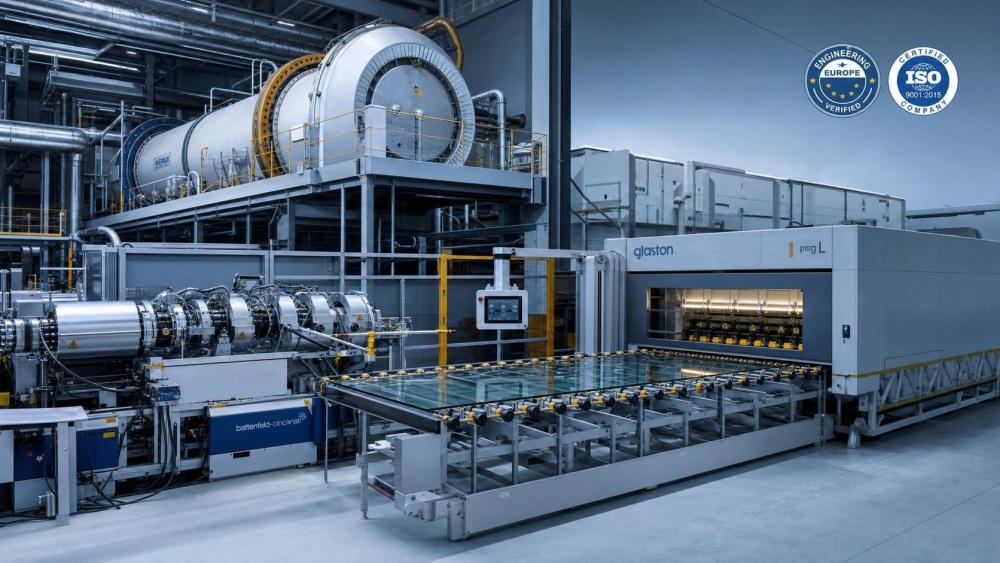
A shortlist often fails for one simple reason: claims are easy, operating proof is harder.
That is where a supplier solution reference Europe becomes useful, especially in heavy industrial equipment with long service lives.
In kilns, glass lines, refractory systems, and extrusion equipment, technical fit cannot be judged by brochures alone.
A credible European reference shows whether the supplier has already solved similar process, compliance, and uptime problems.
It also helps separate a true engineering partner from a company that only assembles a strong sales narrative.
More importantly, Europe is often a demanding proof environment.
Projects there usually involve tighter environmental rules, stronger documentation expectations, and stricter safety acceptance procedures.
So when a supplier solution reference Europe is verified, it can reveal practical readiness in a way generic case studies cannot.
For industries tracked by CF-Elite, this matters even more.
High-temperature equipment sits at the intersection of thermal efficiency, material behavior, emissions control, and lifecycle economics.
A reference should therefore be read as operational evidence, not marketing decoration.
What exactly should count as a valid European solution reference?
Not every project mention deserves equal weight.
A valid supplier solution reference Europe should connect the supplier to a real installation, a defined scope, and measurable outcomes.
If one of those pieces is missing, the reference becomes weaker.
In practical terms, the most useful references usually include the following:
- Plant type, production process, and installed equipment boundary.
- Project year and whether it was greenfield, retrofit, or upgrade.
- Throughput, temperature range, fuel logic, or material characteristics.
- Compliance context, including dust, NOx, waste handling, or energy targets.
- After-sales scope, commissioning support, and spare parts response model.
- Performance indicators after startup, not only design promises.
A stronger supplier solution reference Europe also shows continuity.
One successful handover is useful, but several years of stable operation are more convincing.
That matters in refractory lines, rotary kilns, and incineration systems where wear patterns only become visible over time.
The table below helps sort reference quality quickly.
How do you compare references across kilns, glass lines, and extrusion systems without mixing unlike cases?
This is where many evaluations become noisy.
A supplier may present ten references, but if the process logic differs too much, the number means little.
The better approach is to compare by decision layer.
Start with process similarity
Look at feed material variability, thermal load, target output, and product sensitivity.
For example, a reference in standard cement clinker handling may not prove suitability for hazardous co-processing.
Likewise, a float glass reference does not automatically validate thin-glass annealing precision.
Then examine regulatory equivalence
A supplier solution reference Europe is especially valuable when the project faced emissions, waste, or energy constraints similar to yours.
This can be more informative than a larger installation in a less regulated market.
Finally, compare operational depth
Did the supplier deliver a machine, or an integrated process solution?
In CF-Elite’s coverage areas, integration often decides real project value.
Controls, thermal modeling, refractory life monitoring, and energy optimization are rarely secondary details.
A shortlist should favor references that show process understanding, not just equipment shipment volume.
Which warning signs suggest a supplier solution reference Europe is less reliable than it looks?
Some references look polished because they were built to survive a presentation, not technical scrutiny.
A few warning signs deserve immediate attention.
- The project scope keeps changing between documents and meetings.
- The supplier claims EPC-level impact, but only supplied a subassembly.
- Performance statements are broad, yet no acceptance criteria are disclosed.
- Reference sites are all recent, with no mature operating history.
- Service capability in Europe is unclear, outsourced, or not contractually defined.
- Decarbonization claims are made without energy balance or emissions context.
In actual reviews, the most common mistake is overvaluing brand visibility.
A known name can still be a weak fit for a narrow process window or difficult fuel chemistry.
Another mistake is treating every European reference as equally relevant.
Regional labor conditions, plant modernization level, and local permitting burdens can differ widely inside Europe itself.
The best response is simple: verify the operating story behind the slide deck.
What should be asked before a reference actually helps your shortlist?
A reference becomes useful only when it answers your next decision question.
That means asking beyond installation counts.
The most effective checks usually focus on transferability, risk, and support.
Questions that sharpen the picture
- What process conditions at the reference site are closest to ours?
- Which performance targets were guaranteed, and which were only estimated?
- How long did commissioning stabilization take?
- What wear parts, refractory zones, or thermal bottlenecks appeared after startup?
- How was compliance demonstrated during acceptance and routine operation?
- What local engineering and service resources supported the project in Europe?
This kind of questioning is especially relevant for heavy lines followed by CF-Elite.
In these sectors, the commercial result is tightly linked to thermal behavior, process stability, and maintenance rhythm.
A good supplier solution reference Europe should help estimate those realities early.
How can you turn European references into a practical shortlist method?
The strongest use of a supplier solution reference Europe is not passive checking.
It should drive a scoring method that filters vendors before detailed negotiation begins.
A useful shortlist model often includes five weighted blocks.
- Technical similarity: process, capacity, fuel, temperature, and material complexity.
- Compliance proof: emissions, safety, documentation, and audit readiness.
- Operational evidence: uptime, yield, energy use, refractory life, or defect rates.
- Execution capability: commissioning quality, integration scope, and schedule control.
- Lifecycle support: spare parts availability, remote diagnostics, and field response in Europe.
Once this structure is in place, references become comparable instead of anecdotal.
That is also where intelligence platforms such as CF-Elite become useful in a quiet way.
Market movement, carbon policy, digital monitoring trends, and equipment evolution can change how a reference should be interpreted.
A five-year-old kiln reference may still be valuable, but only if its thermal strategy and emissions logic remain relevant today.
So the final shortlist should combine verified references with updated sector intelligence.
That usually leads to fewer surprises in implementation and a clearer basis for internal approval.
What is the most sensible next step after gathering supplier solution reference Europe data?
Do not jump straight to price comparison.
First, map your process risks, compliance thresholds, and expected support model.
Then align each supplier solution reference Europe against those exact conditions.
The goal is not to find the supplier with the longest reference list.
The goal is to identify the vendor whose proven European solutions most closely match your operating reality.
In complex equipment environments, that difference often decides commissioning speed, lifecycle cost, and future retrofit flexibility.
A disciplined shortlist therefore begins with evidence, not presentation quality.
Review references by process similarity, verify what was truly delivered, and note where support capability is strongest.
If needed, build a simple scoring sheet and test it against two or three candidate suppliers before expanding further.
That approach keeps the decision grounded, especially in sectors where thermal performance and long-cycle reliability leave little room for guesswork.
Related News
 Ms. Elena RodriguezGlass Market Intelligence: How to Assess Demand, Capacity, and Regional Growth RisksGlass market intelligence for evaluating demand, effective capacity, energy exposure, trade dynamics, and regional growth risks before investing in glass manufacturing.Oct 11, 2026
 Optical Glass Tech FellowWhat Should a Glass Furnace Energy Specification Include?What should be included in a glass furnace energy specification? Explore performance, fuel flexibility, heat recovery, emissions, and monitoring essentials.Oct 11, 2026
 Dr. Alistair VaughnHow Process Technology Platforms Improve Control Across Multi-Line ManufacturingDiscover how a process technology platform strengthens cross-line control, connects operational data, and improves energy, quality, and maintenance decisions.Oct 10, 2026
 Optical Glass Tech FellowHow Glass Furnace Emissions Are Measured and Controlled for Regulatory ComplianceGlass furnace emissions: learn how to measure, monitor, and control NOx, SOx, particulate, CO, and CO2 for reliable regulatory compliance.Oct 08, 2026
 Prof. Marcus ChenIndustrial Decarbonization Strategies in Europe: A Roadmap for Energy-Intensive PlantsIndustrial decarbonization strategies Europe: explore practical pathways for energy-intensive plants to cut emissions, improve efficiency, and protect performance.Oct 07, 2026
 Thermal Energy ArchitectEnergy-Efficient Silicate Production Lines: What to Compare Before SelectionSilicate production lines energy efficient selection guide: compare thermal performance, stability, emissions, controls, and lifecycle value before investing.Oct 06, 2026
 Optical Glass Tech FellowHow to Evaluate Automated Float Glass Lines for Capacity, Quality, and Energy UseEvaluate automated float glass lines for net capacity, consistent quality, energy efficiency, automation reliability, and lifecycle value. Explore key criteria for smarter investment decisions.Oct 05, 2026
 Thermal Energy ArchitectWhat Does CE Marking Require for an Energy-Efficient Industrial Kiln?Energy efficient kiln CE requirements explained: assess safety, technical files, energy performance, and EU compliance before purchase or commissioning.Oct 04, 2026
 Thermal Energy ArchitectRefractory Manufacturing Solutions for Brick Plants: How to Extend Kiln LifeRefractory manufacturing solutions for brick plant operations: discover proven strategies to extend kiln life, reduce heat loss, prevent lining failures, and plan cost-effective repairs.Oct 03, 2026
 Thermal Energy ArchitectHow to Specify Heavy Industrial Process Systems for High-Temperature PlantsHeavy industrial processes systems: learn how to specify high-temperature plants for efficiency, emissions control, maintainability, and lifecycle performance.Oct 02, 2026
 Structural Material AnalystHow Sustainable Material Extrusion Can Improve Wall Panel Durability and Design FlexibilityDiscover how sustainable material extrusion for wall panels improves durability, moisture resistance, design flexibility, and installation consistency for high-performing wall systems.Oct 01, 2026
 Thermal Energy ArchitectHow to Evaluate a High-Temperature Materials Manufacturer for Furnace ApplicationsChoose a high-temperature materials manufacturer with confidence: compare thermal performance, chemical resistance, quality controls, installation support, and lifecycle cost.Sep 30, 2026
 Ms. Elena RodriguezHow to Structure Global Specification Data for Faster Industrial Product EvaluationGlobal specification-oriented product information helps industrial teams compare capacity, energy, emissions, automation, and lifecycle data on a like-for-like basis for faster, confident equipment decisions.Sep 29, 2026
 Thermal Energy ArchitectHow to Specify High-Temperature Process Systems for Continuous Thermal OperationsHigh-temperature process engineering systems: learn how to specify resilient continuous thermal operations for efficiency, compliance, reliable uptime, and long-term performance.Sep 28, 2026
 Thermal Energy ArchitectHow to Evaluate a Thermal Engineering Contractor for High-Temperature Plant ProjectsChoose a thermal engineering contractor with proven process expertise, lifecycle value, emissions control, and delivery discipline for reliable high-temperature plant performance.Sep 27, 2026
 Silicate Process EngineerHow Latin American Cement Plants Can Reduce Dust Emissions in Kilns and Transfer PointsCement plant dust control Latin America: reduce kiln and transfer-point emissions with practical airflow, filtration, monitoring, and maintenance strategies.Sep 26, 2026
 Material Heat-Resist ExpertHow to Evaluate Refractory Production Lines for Output, Quality, and Energy UseRefractory production lines: learn how to assess qualified output, consistent quality, and total energy use for smarter, lower-risk investment decisions.Sep 25, 2026
 Dr. Alistair VaughnHow Waste Recycling Technology Improves Material Recovery in Industrial PlantsWaste recycling technology improves material recovery through source segregation, smart separation, thermal treatment, and quality control for industrial plants.Sep 24, 2026
 Optical Glass Tech FellowHow to Specify Glass Annealing Equipment for European Quality and Energy RequirementsGlass annealing equipment Europe: learn how to specify lehrs for consistent glass quality, energy efficiency, compliance, automation, and reliable long-term performance.Sep 23, 2026
 Optical Glass Tech FellowSilicate Process Automation: Improving Batch Consistency and Energy ControlSilicate process automation improves batch consistency, energy control, traceability, and operator confidence across high-temperature manufacturing operations.Sep 22, 2026


















Related News
- 00
0000-00
Glass Market Intelligence: How to Assess Demand, Capacity, and Regional Growth Risks - 00
0000-00
How to Structure Global Specification Data for Faster Industrial Product Evaluation - 00
0000-00
What Drives High-Pressure Extrusion Equipment Cost in Industrial Projects? - 00
0000-00
How Should Buyers Evaluate Building Material Industry Intelligence Pricing? - 00
0000-00
How to Use Building Material Intelligence Data for Market and Investment Decisions
Weekly Insights
Stay ahead with our curated technology reports delivered every Monday.