
Oxy Fuel Glass Melting Furnace vs Air-Fuel Systems: Which Fits Your Glass Plant Better?




Oxy Fuel Glass Melting Furnace vs Air-Fuel Systems: Which Fits Your Glass Plant Better?
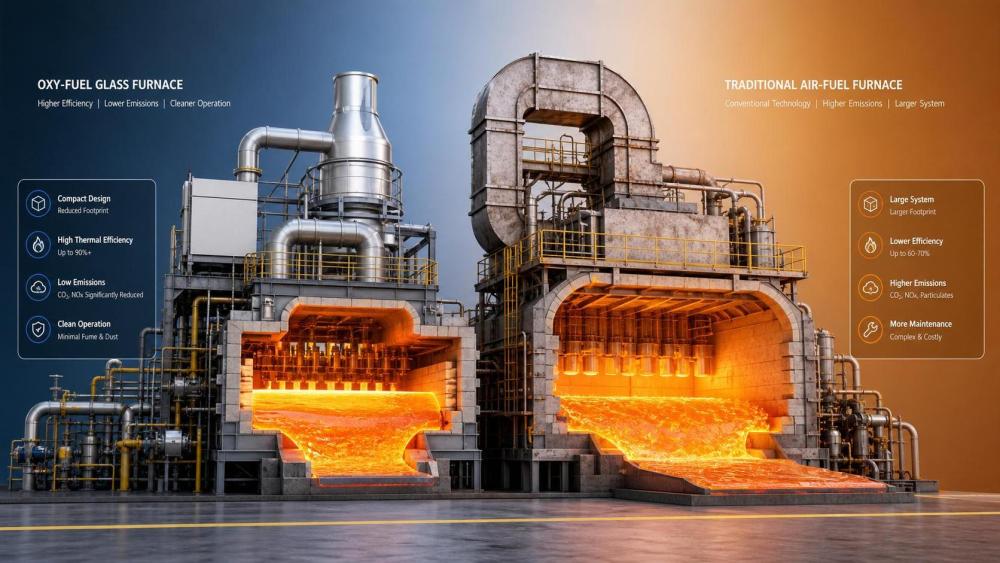
Choosing between an oxy fuel glass melting furnace and a conventional air-fuel system can reshape energy use, melt quality, emissions compliance, and long-term plant economics.
The key issue is not which technology sounds newer. It is which system fits your furnace duty, glass chemistry, production rhythm, and carbon roadmap.
That distinction matters more now. Fuel volatility, tighter NOx limits, and pressure to improve cullet utilization are changing furnace selection criteria.
For many plants, the decision between an oxy fuel glass melting furnace and an air-fuel design becomes a tradeoff between efficiency, infrastructure, flexibility, and operating discipline.
How the Two Furnace Concepts Actually Differ
An air-fuel furnace burns natural gas or other fuel with combustion air. Because air contains nitrogen, a large volume of inert gas passes through the flame.
That raises flue gas volume and often increases heat losses. It also creates a stronger path for thermal NOx formation at high flame temperatures.
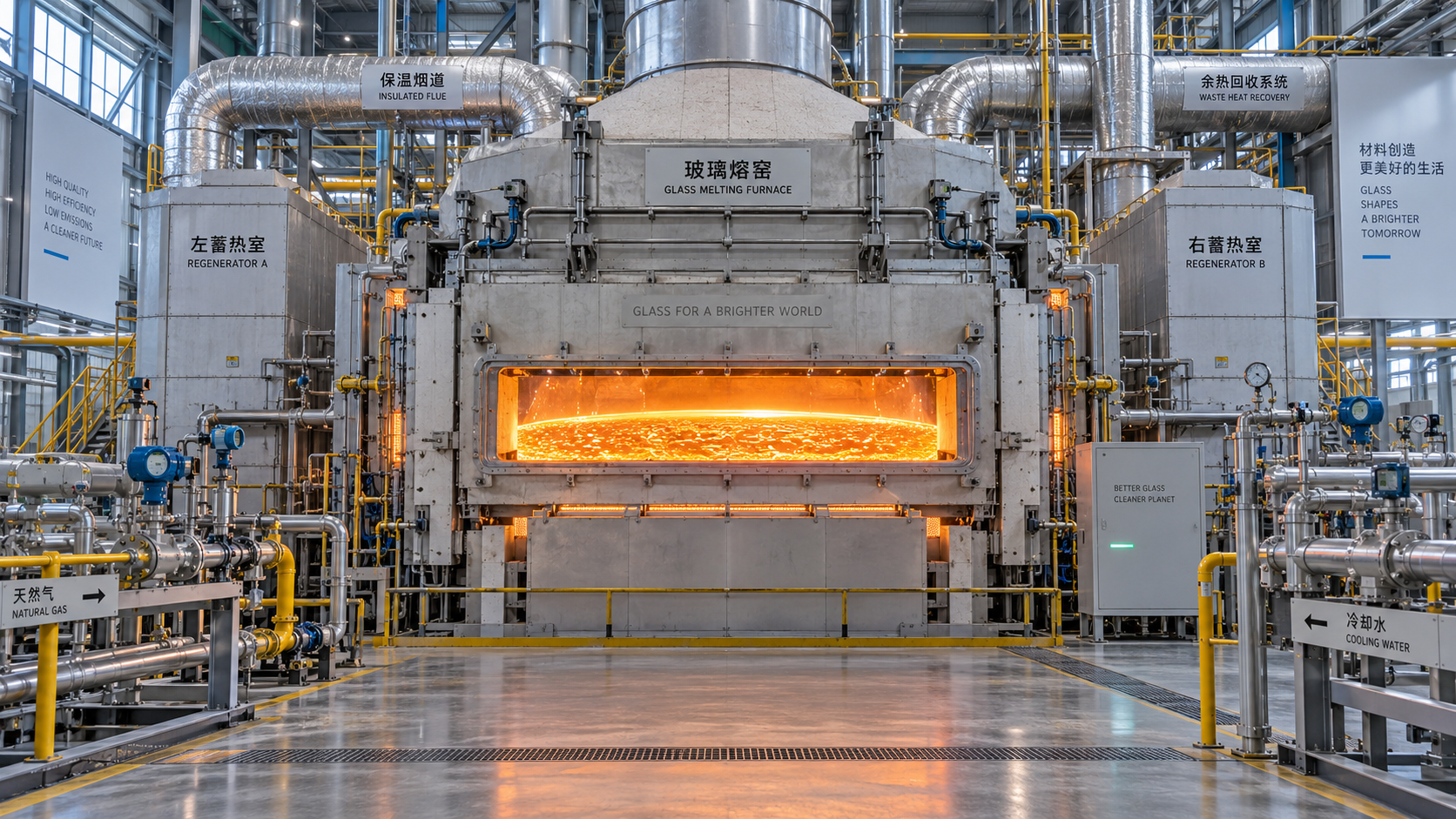
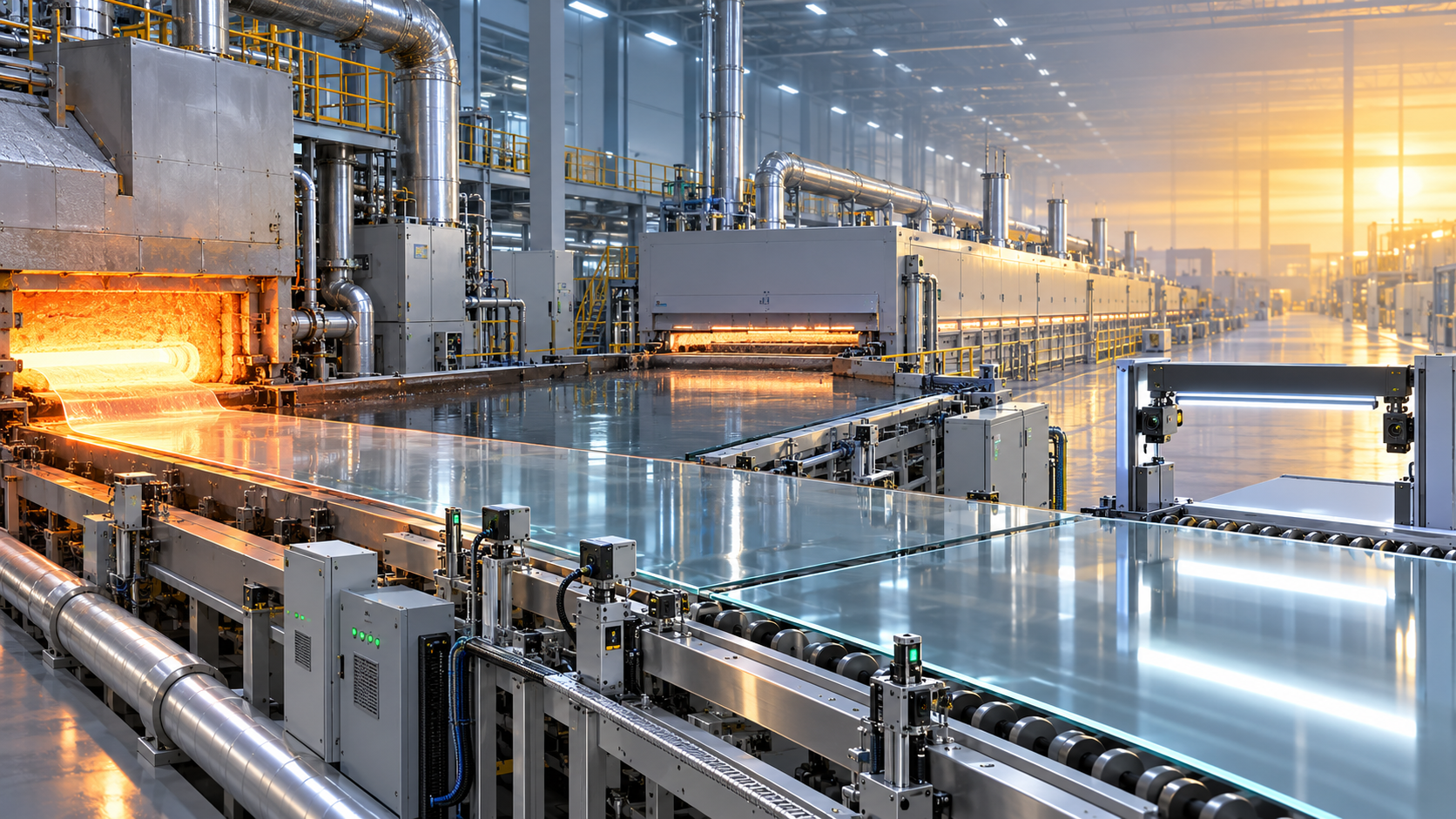
An oxy fuel glass melting furnace replaces air with high-purity oxygen. Nitrogen ballast drops sharply, so flame transfer becomes more direct and exhaust volume falls.
This usually improves thermal efficiency and supports lower stack emissions. It can also change crown temperatures, convection patterns, and batch blanket behavior.
In practical terms, an oxy fuel glass melting furnace is not just a burner swap. It affects furnace design, refractory wear profile, control philosophy, and utility dependency.
Where an Oxy Fuel Glass Melting Furnace Usually Wins
The strongest argument is energy intensity at the melting zone. Less nitrogen in the flame means more useful heat reaches the glass bath.
That often translates into lower specific fuel consumption, especially in furnaces where waste heat recovery from air-fuel systems is limited or aging.
An oxy fuel glass melting furnace also helps where emissions pressure is rising. Lower flue gas volume can simplify downstream treatment and reduce stack sizing pressure.
For plants making flint glass, specialty glass, pharmaceutical containers, or high-value technical glass, tighter process control can be another advantage.
The flame is more concentrated. That can support stable melting, faster response to pull changes, and better refinement under well-tuned operating conditions.
- Lower flue gas volume and lower heat loss through exhaust.
- Potential NOx reduction compared with conventional air-fuel melting.
- Higher thermal efficiency in many furnace configurations.
- Useful fit for decarbonization programs and energy audits.
- Good match for premium glass where consistency has high value.
Why Air-Fuel Systems Still Make Sense in Many Plants
Air-fuel systems remain common for sound reasons. The technology base is mature, operators know it well, and spare parts and service networks are widely available.
Capital cost can also be lower when oxygen supply infrastructure is absent. That matters for brownfield plants working within a limited retrofit budget.
If a plant already has efficient regenerators or recuperators, the energy gap may narrow. In those cases, air-fuel economics can still be compelling.
An air-fuel furnace may also offer more forgiving operation where oxygen purity, supply continuity, or advanced control reliability are uncertain.
For commodity glass with steady recipes and moderate compliance pressure, air-fuel systems often remain the practical baseline, especially when total lifecycle cost is tightly managed.
The Cost Question: Fuel Savings vs Oxygen Cost
This is where selection becomes plant-specific. An oxy fuel glass melting furnace can reduce fuel use, but it introduces a major cost line for oxygen supply.
That oxygen may come from bulk liquid delivery, VPSA systems, or a dedicated ASU. Each route changes reliability, footprint, and cost structure.
When fuel prices are high and carbon pricing is active, the economics often improve for an oxy fuel glass melting furnace. When oxygen is expensive, the balance can reverse.
Recent market shifts make this evaluation more dynamic than before. A static payback model can miss utility risk and future compliance costs.
A useful comparison should include these items:
- Specific energy consumption by glass type and pull rate.
- Delivered oxygen cost and supply security.
- Expected refractory life and maintenance interval changes.
- Emission control investment and permit exposure.
- Downtime risk during retrofit and commissioning.
Melt Quality, Defects, and Process Stability
Selection should never stop at energy numbers. Glass plants live or die by quality consistency, defect control, and stable forming downstream.
An oxy fuel glass melting furnace can improve melting intensity and fining conditions. But benefits depend on burner layout, residence time, and batch composition.
Poorly tuned oxy-fuel operation may create local overheating, volatile carryover, or refractory interaction issues. This is especially sensitive in borosilicate or mixed-alkali formulations.
Air-fuel systems can be more familiar in managing broad flame patterns. That familiarity sometimes supports stable day-to-day operation with fewer tuning surprises.
In real evaluations, defect data matters more than theory. Seeds, cords, bubbles, redox shifts, and color drift should all be tied to furnace selection criteria.
Emissions, Carbon Strategy, and Regulatory Fit
Environmental fit is becoming a first-order selection factor. This is where an oxy fuel glass melting furnace often receives serious attention from technical teams.
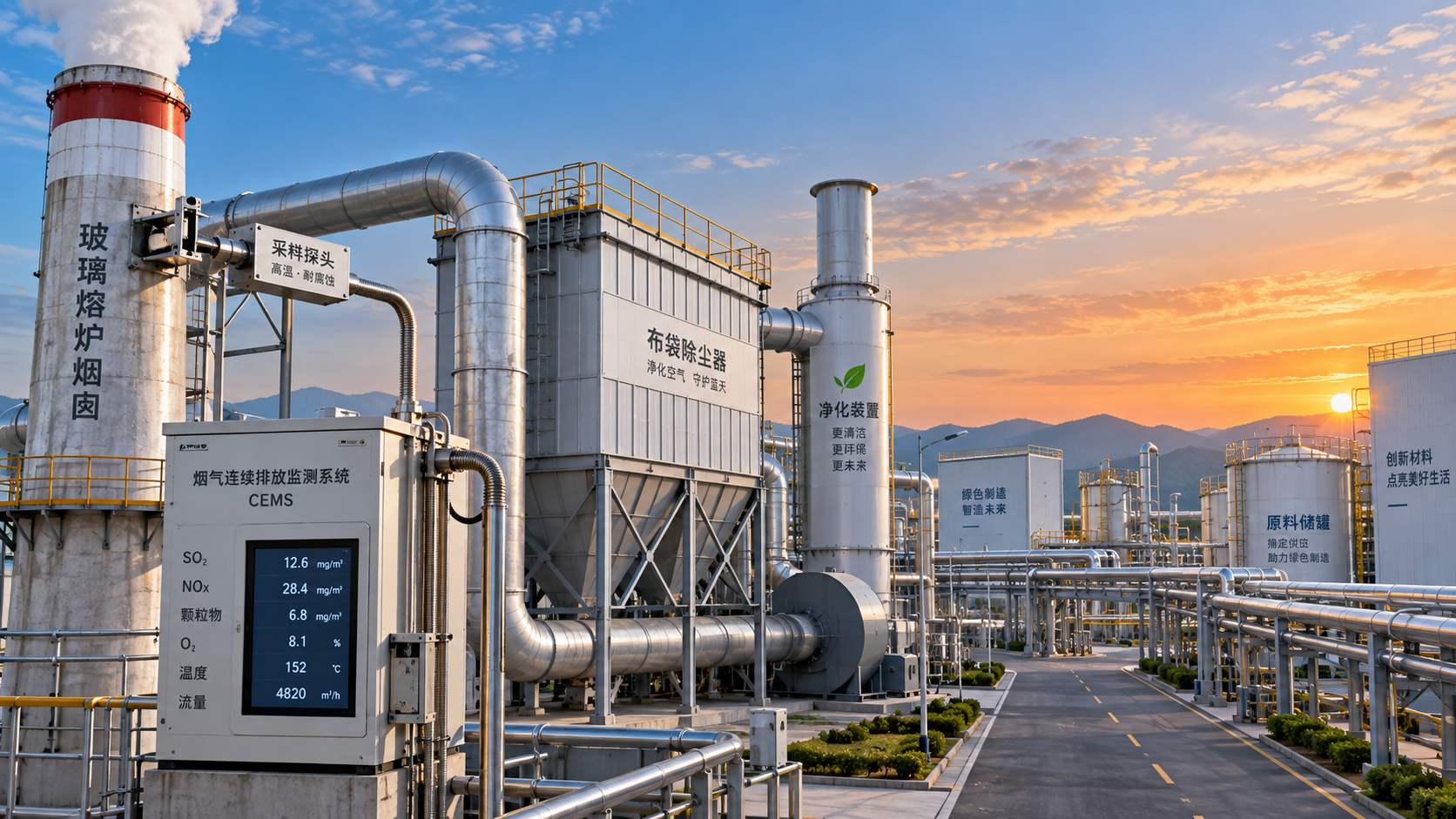
Lower exhaust volume can support easier capture strategies and reduced pollutant loading. For regions with strict NOx limits, this can influence permit confidence.
Carbon strategy is more complex. Oxy-fuel improves combustion efficiency, but total emissions still depend on fuel type, electricity mix for oxygen production, and cullet ratio.
That means the best answer is rarely generic. A plant with clean power access may see a different carbon result than one relying on carbon-intensive electricity.
If your business is building a decarbonization story for customers or regulators, model scope 1 and scope 2 impacts together before choosing the furnace route.
Best-Fit Scenarios for Each Option
An oxy fuel glass melting furnace tends to fit better when these conditions are present:
- High-value glass products with strict quality windows.
- Limited room for large regenerators or exhaust systems.
- Strong pressure to reduce NOx and improve carbon performance.
- Reliable and competitively priced oxygen supply.
- Projects where retrofit compactness matters.
Air-fuel systems often fit better under these conditions:
- Commodity production with stable recipes and long campaigns.
- Sites without dependable oxygen infrastructure.
- Lower capital budgets and strong maintenance familiarity.
- Plants already equipped with efficient heat recovery systems.
- Locations where oxygen cost weakens lifecycle economics.
A Practical Selection Framework
A sound decision process should compare both technologies using the same production case. Do not rely on brochure values or benchmark claims alone.
Build the evaluation around six questions:
- What glass family, pull rate, and cullet ratio define the real operating envelope?
- What are the current and future NOx, CO2, and particulate obligations?
- How secure is oxygen supply under normal and upset conditions?
- How will the furnace affect defect rate and downstream forming stability?
- What retrofit constraints exist around footprint, outage time, and utilities?
- Which option gives the better lifecycle result over the full campaign?
This approach turns the oxy fuel glass melting furnace decision into a measurable plant case, not a technology preference debate.
At CF-Elite, this is exactly where intelligence matters. Furnace selection sits at the intersection of thermal design, materials behavior, and long-cycle industrial economics.
The better choice is the one that keeps heat balance, melt quality, emissions exposure, and operating resilience aligned over time.
Before moving forward, compare both routes with real utility prices, defect history, and campaign assumptions. That is how an oxy fuel glass melting furnace decision becomes bankable.
Related News
 Ms. Elena RodriguezHigh-Pressure Molding Innovations: How Automation and Tooling Affect PriceExplore the high-pressure molding innovations price equation: compare automation, tooling, and ownership costs to find upgrades that cut waste and deliver measurable value.Oct 13, 2026
 Ms. Elena RodriguezIndustrial Process Optimization: Where to Target Energy, Yield, and Throughput LossesIndustrial process optimization: identify energy, yield, and throughput losses to improve plant stability, reduce costs, and unlock measurable performance gains.Oct 12, 2026
 Ms. Elena RodriguezGlass Market Intelligence: How to Assess Demand, Capacity, and Regional Growth RisksGlass market intelligence for evaluating demand, effective capacity, energy exposure, trade dynamics, and regional growth risks before investing in glass manufacturing.Oct 11, 2026
 Ms. Elena RodriguezAre Green Building Materials More Expensive to Manufacture?Are green building materials more expensive to manufacture? Explore cost drivers, savings opportunities, and how sustainable production can strengthen long-term competitiveness.Oct 13, 2026
 Structural Material AnalystWhich Sustainable Construction Materials Are Suitable for Extrusion?Which sustainable construction materials are suitable for extrusion? Explore recycled clay, cementitious mixes, geopolymers, and bio-composites for reliable, lower-impact building products.Oct 12, 2026
 Optical Glass Tech FellowWhat Should a Glass Furnace Energy Specification Include?What should be included in a glass furnace energy specification? Explore performance, fuel flexibility, heat recovery, emissions, and monitoring essentials.Oct 11, 2026
 Dr. Alistair VaughnHow Process Technology Platforms Improve Control Across Multi-Line ManufacturingDiscover how a process technology platform strengthens cross-line control, connects operational data, and improves energy, quality, and maintenance decisions.Oct 10, 2026
 Optical Glass Tech FellowHow Glass Furnace Emissions Are Measured and Controlled for Regulatory ComplianceGlass furnace emissions: learn how to measure, monitor, and control NOx, SOx, particulate, CO, and CO2 for reliable regulatory compliance.Oct 08, 2026
 Prof. Marcus ChenIndustrial Decarbonization Strategies in Europe: A Roadmap for Energy-Intensive PlantsIndustrial decarbonization strategies Europe: explore practical pathways for energy-intensive plants to cut emissions, improve efficiency, and protect performance.Oct 07, 2026
 Thermal Energy ArchitectEnergy-Efficient Silicate Production Lines: What to Compare Before SelectionSilicate production lines energy efficient selection guide: compare thermal performance, stability, emissions, controls, and lifecycle value before investing.Oct 06, 2026
 Optical Glass Tech FellowHow to Evaluate Automated Float Glass Lines for Capacity, Quality, and Energy UseEvaluate automated float glass lines for net capacity, consistent quality, energy efficiency, automation reliability, and lifecycle value. Explore key criteria for smarter investment decisions.Oct 05, 2026
 Thermal Energy ArchitectWhat Does CE Marking Require for an Energy-Efficient Industrial Kiln?Energy efficient kiln CE requirements explained: assess safety, technical files, energy performance, and EU compliance before purchase or commissioning.Oct 04, 2026
 Thermal Energy ArchitectRefractory Manufacturing Solutions for Brick Plants: How to Extend Kiln LifeRefractory manufacturing solutions for brick plant operations: discover proven strategies to extend kiln life, reduce heat loss, prevent lining failures, and plan cost-effective repairs.Oct 03, 2026
 Thermal Energy ArchitectHow to Specify Heavy Industrial Process Systems for High-Temperature PlantsHeavy industrial processes systems: learn how to specify high-temperature plants for efficiency, emissions control, maintainability, and lifecycle performance.Oct 02, 2026
 Structural Material AnalystHow Sustainable Material Extrusion Can Improve Wall Panel Durability and Design FlexibilityDiscover how sustainable material extrusion for wall panels improves durability, moisture resistance, design flexibility, and installation consistency for high-performing wall systems.Oct 01, 2026
 Thermal Energy ArchitectHow to Evaluate a High-Temperature Materials Manufacturer for Furnace ApplicationsChoose a high-temperature materials manufacturer with confidence: compare thermal performance, chemical resistance, quality controls, installation support, and lifecycle cost.Sep 30, 2026
 Ms. Elena RodriguezHow to Structure Global Specification Data for Faster Industrial Product EvaluationGlobal specification-oriented product information helps industrial teams compare capacity, energy, emissions, automation, and lifecycle data on a like-for-like basis for faster, confident equipment decisions.Sep 29, 2026
 Thermal Energy ArchitectHow to Specify High-Temperature Process Systems for Continuous Thermal OperationsHigh-temperature process engineering systems: learn how to specify resilient continuous thermal operations for efficiency, compliance, reliable uptime, and long-term performance.Sep 28, 2026
 Thermal Energy ArchitectHow to Evaluate a Thermal Engineering Contractor for High-Temperature Plant ProjectsChoose a thermal engineering contractor with proven process expertise, lifecycle value, emissions control, and delivery discipline for reliable high-temperature plant performance.Sep 27, 2026
 Silicate Process EngineerHow Latin American Cement Plants Can Reduce Dust Emissions in Kilns and Transfer PointsCement plant dust control Latin America: reduce kiln and transfer-point emissions with practical airflow, filtration, monitoring, and maintenance strategies.Sep 26, 2026

Related News
- 00
0000-00
What Should a Glass Furnace Energy Specification Include? - 00
0000-00
How Glass Furnace Emissions Are Measured and Controlled for Regulatory Compliance - 00
0000-00
How to Evaluate Automated Float Glass Lines for Capacity, Quality, and Energy Use - 00
0000-00
How to Specify Glass Annealing Equipment for European Quality and Energy Requirements - 00
0000-00
Silicate Process Automation: Improving Batch Consistency and Energy Control
Weekly Insights
Stay ahead with our curated technology reports delivered every Monday.