
Glass Industry Intelligence in Europe: Key Market Signals Buyers Should Track




Europe’s glass market is sending clearer signals than it did a year ago
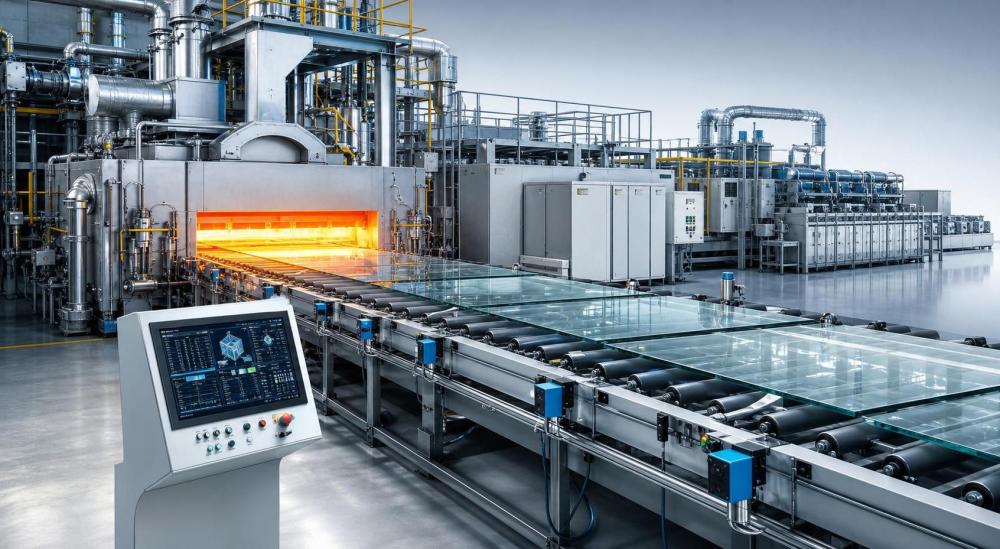
In Europe, sourcing decisions around glass equipment and materials now sit much closer to policy, energy, and technology shifts than before.
That is why glass industry intelligence Europe has moved from background reading to a practical decision layer.
The market is no longer shaped only by tonnage, lead times, and price discussions.
It is increasingly shaped by furnace age, power exposure, carbon cost visibility, and the upgrade path of each production line.
Across flat glass, container glass, technical glass, and solar-related applications, supply conditions have become more uneven.
Some plants are investing in higher efficiency and digital control.
Others are delaying major rebuilds because financing, energy uncertainty, or environmental compliance remains difficult to model.
This unevenness matters because it changes which suppliers can hold stable quality, predictable output, and credible long-term pricing.
For a market observer like CF-Elite, the interesting part is not just that volatility exists.
It is that volatility now reflects deeper structural change in thermal management, silicate processing, and decarbonization priorities.
Reading those signals early can reduce sourcing risk before contract terms start to move.
What changed first was not demand, but the cost of running heat-intensive assets
The clearest market shift came from energy economics.
European glass lines remain deeply exposed to gas, electricity, and thermal efficiency losses.
Even where energy prices eased from peak levels, planning assumptions did not return to older norms.
That has changed how producers value furnace campaigns, waste heat recovery, combustion tuning, and batch optimization.
In practical terms, glass industry intelligence Europe now depends on tracking plant-level resilience, not just regional demand sentiment.
A supplier with modern melting control may protect margins better than one offering a slightly lower headline quote.
This is especially relevant in segments where quality drift during thermal instability quickly becomes expensive.
More buyers are therefore looking beyond list pricing and asking quieter questions.
- How old is the furnace, and when is the next major rebuild due?
- What share of cost remains linked to volatile power contracts?
- How stable is cullet availability and batch composition control?
- Is the plant investing in digital monitoring or still relying on manual correction?
These details used to sit in technical due diligence.
Now they influence commercial confidence much earlier.
Carbon rules are no longer a distant policy issue
Another visible shift is regulatory pressure becoming operational pressure.
European emissions policy increasingly affects furnace strategy, raw material selection, and capex timing.
That gives glass industry intelligence Europe a stronger compliance dimension than many still assume.
Plants with a credible decarbonization roadmap tend to be viewed more favorably in long-horizon sourcing discussions.
The reason is simple.
Carbon exposure can eventually reappear as price volatility, constrained output, or delayed line upgrades.
This is where broader industrial intelligence becomes useful.
CF-Elite’s view across kilns, refractory systems, and thermal process lines helps frame glass assets as part of a larger heat-intensive ecosystem.
That perspective matters because furnace emissions cannot be separated from refractory life, combustion design, and energy recovery choices.
The table does not suggest every advanced project is already bankable.
It shows where future competitiveness is likely to concentrate.
Capacity looks available on paper, but usable capacity is more selective
One common mistake in reading the region is to treat installed capacity as accessible capacity.
That gap has widened.
Some assets are technically online but commercially constrained by energy cost, maintenance timing, product mix, or compliance burdens.
This is particularly important in specialized glass formats where line switching is costly and qualification cycles are slow.
From recent market behavior, the better signal is not whether Europe has enough furnaces overall.
It is which furnaces can reliably support the exact specification, volume rhythm, and thermal stability required.
That is why glass industry intelligence Europe increasingly overlaps with plant engineering awareness.
Float quality, annealing consistency, coating integration, and defect control are now stronger commercial differentiators.
Where product applications include solar, electronics, or advanced building envelopes, qualification risk becomes as important as price risk.
A lower-cost source can become a higher-cost decision if thermal variation creates yield loss downstream.
Technology investment is becoming a market signal in its own right
The more subtle shift is digitalization inside the furnace envelope and around line control.
Producers are not investing only to automate reporting.
They are trying to stabilize heat flow, reduce drift, predict wear, and improve campaign planning.
This links directly to the kind of intelligence CF-Elite emphasizes across thermal management and process equipment.
Digital twin simulations, online refractory monitoring, and process analytics are no longer fringe topics.
They are becoming indicators of whether a supplier can sustain performance through uncertain cost conditions.
In glass industry intelligence Europe, technology spending should therefore be read as a proxy for operational discipline.
That does not mean every new dashboard creates value.
The stronger question is whether investment improves real process control.
- Can the line detect refractory degradation before output quality shifts?
- Is annealing performance measured with enough precision to support tighter tolerances?
- Does process data shorten recovery time after thermal disturbance?
- Are energy and emissions metrics connected to production planning?
When the answer is yes, supplier risk often looks different over a multi-year horizon.
The impact is spreading across contracts, specifications, and supplier evaluation
These shifts do not stay inside the plant gate.
They show up in contract design, technical qualification, and the way supplier comparisons are structured.
A more mature use of glass industry intelligence Europe now combines market data with engineering context.
That combination helps separate temporary price opportunities from structural operational weakness.
More agreements are likely to reflect this through tighter clauses around energy surcharges, quality windows, maintenance transparency, and continuity planning.
In technical categories, the strongest suppliers may also gain leverage because their process reliability is easier to defend.
This does not automatically reduce competition.
It changes where competition happens.
Price remains important, but evidence of thermal efficiency, line stability, and upgrade readiness is carrying more weight.
The next useful step is to build a narrower watchlist
The market does not need a broader flood of headlines.
It needs sharper filtering.
For that reason, glass industry intelligence Europe is most useful when converted into a recurring watchlist.
A practical watchlist should cover five areas.
- Energy exposure by plant, not just by country.
- Furnace rebuild timing and refractory condition indicators.
- Carbon compliance direction and decarbonization credibility.
- Technology investments linked to measurable process stability.
- Application-specific capacity for solar, architectural, packaging, or technical glass.
That narrower approach makes the signal more actionable.
It also fits the logic behind CF-Elite’s intelligence model.
The most useful reading of Europe’s glass sector now comes from connecting market moves with thermal process realities.
That is where better judgment usually appears first.
Over the coming quarters, the better decisions will likely come from tracking fewer signals, but tracking them with more technical precision.
Review supplier assumptions against these indicators, compare line-level resilience, and update sourcing scenarios before the next pricing cycle hardens.
Related News
 Thermal Energy ArchitectIndustrial Furnace Optimization: Heat Recovery Retrofit Costs and PaybackExplore industrial process optimization furnace strategies to assess heat recovery retrofit costs, calculate realistic payback and cut energy bills while protecting production.Oct 15, 2026
 Dr. Alistair VaughnIndustrial Waste Recycling: Selecting Conversion Systems by Feedstock and OutputCompare industrial waste conversion systems recycling teams can match to feedstock and output. Explore recovery routes, quality criteria, and costs to choose with confidence.Oct 14, 2026
 Ms. Elena RodriguezHigh-Pressure Molding Innovations: How Automation and Tooling Affect PriceExplore the high-pressure molding innovations price equation: compare automation, tooling, and ownership costs to find upgrades that cut waste and deliver measurable value.Oct 13, 2026
 Ms. Elena RodriguezIndustrial Process Optimization: Where to Target Energy, Yield, and Throughput LossesIndustrial process optimization: identify energy, yield, and throughput losses to improve plant stability, reduce costs, and unlock measurable performance gains.Oct 12, 2026
 Ms. Elena RodriguezGlass Market Intelligence: How to Assess Demand, Capacity, and Regional Growth RisksGlass market intelligence for evaluating demand, effective capacity, energy exposure, trade dynamics, and regional growth risks before investing in glass manufacturing.Oct 11, 2026
 Silicate Process EngineerWhat Is a Realistic Energy Efficiency Target for a Cement Plant?What energy efficiency target is realistic for a cement plant? Explore practical thermal and electrical benchmarks, savings opportunities, and phased strategies to reduce costs, improve reliability, and build a credible decarbonization roadmap.Oct 14, 2026
 Ms. Elena RodriguezAre Green Building Materials More Expensive to Manufacture?Are green building materials more expensive to manufacture? Explore cost drivers, savings opportunities, and how sustainable production can strengthen long-term competitiveness.Oct 13, 2026
 Structural Material AnalystWhich Sustainable Construction Materials Are Suitable for Extrusion?Which sustainable construction materials are suitable for extrusion? Explore recycled clay, cementitious mixes, geopolymers, and bio-composites for reliable, lower-impact building products.Oct 12, 2026
 Optical Glass Tech FellowWhat Should a Glass Furnace Energy Specification Include?What should be included in a glass furnace energy specification? Explore performance, fuel flexibility, heat recovery, emissions, and monitoring essentials.Oct 11, 2026
 Dr. Alistair VaughnHow Process Technology Platforms Improve Control Across Multi-Line ManufacturingDiscover how a process technology platform strengthens cross-line control, connects operational data, and improves energy, quality, and maintenance decisions.Oct 10, 2026
 Optical Glass Tech FellowHow Glass Furnace Emissions Are Measured and Controlled for Regulatory ComplianceGlass furnace emissions: learn how to measure, monitor, and control NOx, SOx, particulate, CO, and CO2 for reliable regulatory compliance.Oct 08, 2026
 Prof. Marcus ChenIndustrial Decarbonization Strategies in Europe: A Roadmap for Energy-Intensive PlantsIndustrial decarbonization strategies Europe: explore practical pathways for energy-intensive plants to cut emissions, improve efficiency, and protect performance.Oct 07, 2026
 Thermal Energy ArchitectEnergy-Efficient Silicate Production Lines: What to Compare Before SelectionSilicate production lines energy efficient selection guide: compare thermal performance, stability, emissions, controls, and lifecycle value before investing.Oct 06, 2026
 Optical Glass Tech FellowHow to Evaluate Automated Float Glass Lines for Capacity, Quality, and Energy UseEvaluate automated float glass lines for net capacity, consistent quality, energy efficiency, automation reliability, and lifecycle value. Explore key criteria for smarter investment decisions.Oct 05, 2026
 Thermal Energy ArchitectWhat Does CE Marking Require for an Energy-Efficient Industrial Kiln?Energy efficient kiln CE requirements explained: assess safety, technical files, energy performance, and EU compliance before purchase or commissioning.Oct 04, 2026
 Thermal Energy ArchitectRefractory Manufacturing Solutions for Brick Plants: How to Extend Kiln LifeRefractory manufacturing solutions for brick plant operations: discover proven strategies to extend kiln life, reduce heat loss, prevent lining failures, and plan cost-effective repairs.Oct 03, 2026
 Thermal Energy ArchitectHow to Specify Heavy Industrial Process Systems for High-Temperature PlantsHeavy industrial processes systems: learn how to specify high-temperature plants for efficiency, emissions control, maintainability, and lifecycle performance.Oct 02, 2026
 Structural Material AnalystHow Sustainable Material Extrusion Can Improve Wall Panel Durability and Design FlexibilityDiscover how sustainable material extrusion for wall panels improves durability, moisture resistance, design flexibility, and installation consistency for high-performing wall systems.Oct 01, 2026
 Thermal Energy ArchitectHow to Evaluate a High-Temperature Materials Manufacturer for Furnace ApplicationsChoose a high-temperature materials manufacturer with confidence: compare thermal performance, chemical resistance, quality controls, installation support, and lifecycle cost.Sep 30, 2026
 Ms. Elena RodriguezHow to Structure Global Specification Data for Faster Industrial Product EvaluationGlobal specification-oriented product information helps industrial teams compare capacity, energy, emissions, automation, and lifecycle data on a like-for-like basis for faster, confident equipment decisions.Sep 29, 2026


















Related News
- 00
0000-00
High-Pressure Molding Innovations: How Automation and Tooling Affect Price - 00
0000-00
Industrial Process Optimization: Where to Target Energy, Yield, and Throughput Losses - 00
0000-00
Glass Market Intelligence: How to Assess Demand, Capacity, and Regional Growth Risks - 00
0000-00
Are Green Building Materials More Expensive to Manufacture? - 00
0000-00
How to Structure Global Specification Data for Faster Industrial Product Evaluation
Weekly Insights
Stay ahead with our curated technology reports delivered every Monday.