
Process Monitoring for Incinerators: Key Parameters, Sensors, and Compliance Checks




Process monitoring for incinerators sits at the center of safe thermal treatment, stable energy recovery, and defensible environmental performance. For plants handling municipal, hazardous, or industrial waste, the question is no longer whether to monitor, but whether the monitoring architecture captures the right signals early enough to support action. In sectors followed closely by CF-Elite, where high-temperature process control, refractory durability, emissions scrutiny, and carbon strategy increasingly intersect, monitoring quality has become a practical indicator of operational maturity.
Why monitoring now carries more operational weight
Incineration systems are under pressure from several directions at once. Feedstocks are less uniform, emissions limits are tighter, and energy efficiency expectations are rising.
At the same time, operators are expected to prove compliance with data, not assumptions. That changes how process monitoring for incinerators should be evaluated.
The strongest systems do more than show current values. They connect combustion behavior, gas cleaning performance, ash condition, and equipment health in one traceable view.
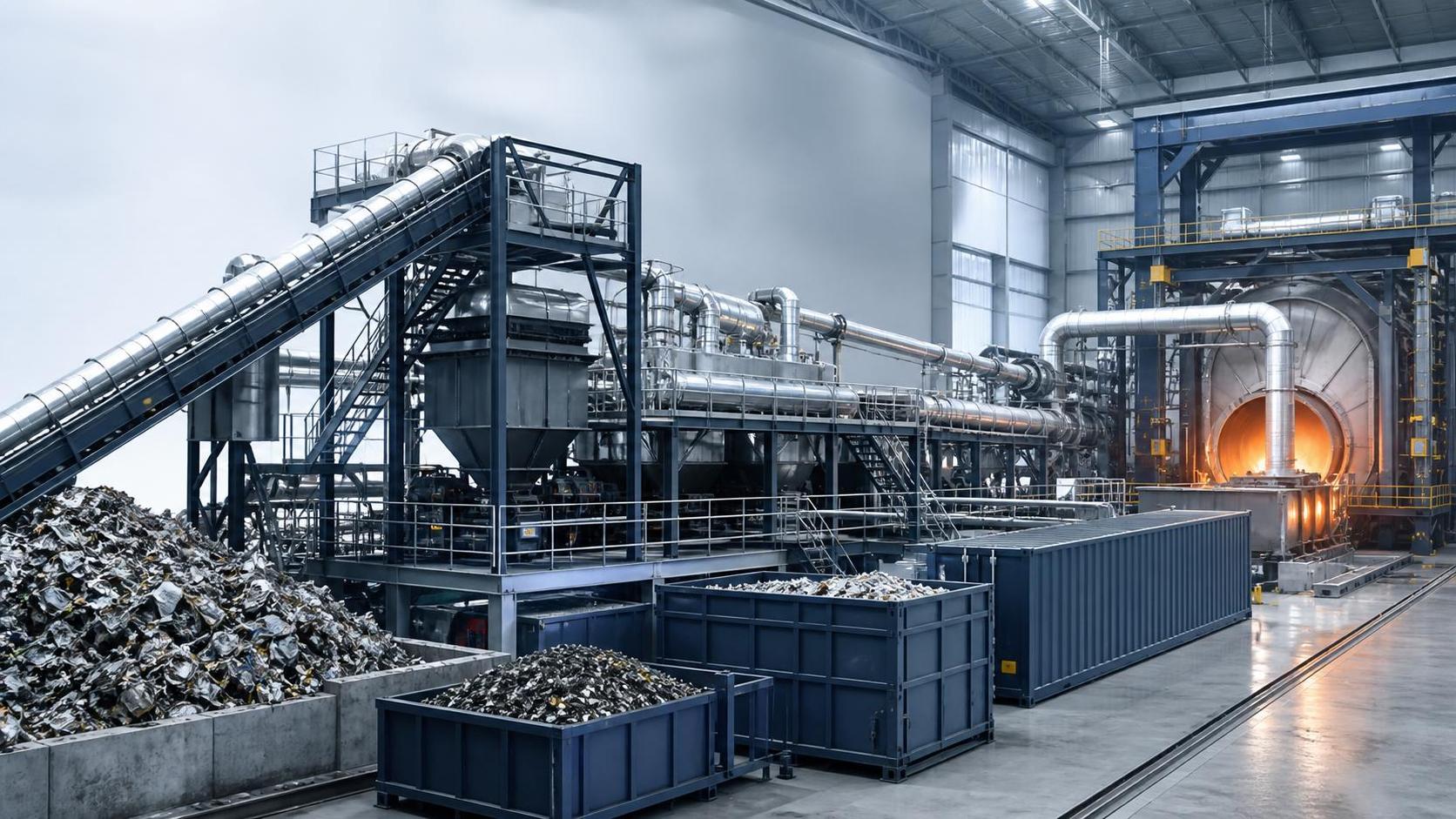
A useful image here is the monitored thermal path from waste charging to stack release.
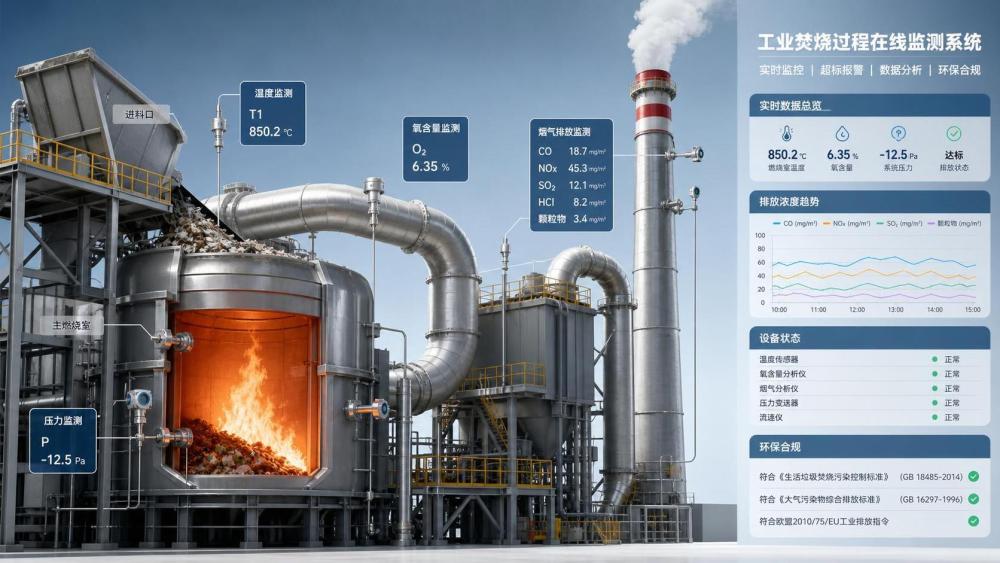
That broader perspective matters across heavy thermal industries. The same logic seen in kiln optimization, glass furnace control, and refractory line supervision also applies to incineration.
What process monitoring for incinerators really covers
In practical terms, process monitoring for incinerators means continuous observation of the variables that determine combustion completeness, heat transfer, pollutant formation, and downstream treatment stability.
It usually spans four connected zones: feed input, combustion chamber, flue gas path, and residue discharge. Weakness in any one zone can distort the others.
For example, erratic calorific value at the feed stage can create temperature swings, increase CO peaks, upset reagent consumption, and complicate stack reporting.
That is why high-value monitoring is not limited to emissions instruments at the stack. It starts upstream, where instability often begins.
Core process zones
Parameters that deserve the closest attention
Temperature remains the first reference point, but temperature alone can be misleading. A furnace may look hot enough while local mixing, oxygen distribution, or residence time is still inadequate.
That is why process monitoring for incinerators should treat temperature as part of a pattern, not a standalone proof of performance.
Combustion parameters
- Chamber temperature profile, not only one reading point.
- Oxygen concentration to judge excess air and mixing balance.
- Carbon monoxide as an early sign of incomplete combustion.
- Negative pressure or draft stability to avoid leakage and upset conditions.
- Waste feed rate and grate speed, where applicable, to match thermal demand.
Flue gas and treatment parameters
- NOx, SO2, HCl, HF, dust, and total organic carbon.
- Gas temperature entering air pollution control equipment.
- Flow rate and moisture, which affect normalization and reporting accuracy.
- Ammonia slip or reagent carryover where SNCR or SCR is installed.
Residue quality indicators
Bottom ash condition often reveals what stack numbers alone cannot. High unburned content may signal uneven burnout, poor air staging, or inconsistent feed preparation.
In hazardous applications, residue chemistry also affects classification, transport, and final disposal economics.
Sensors that shape reliable data
The best sensor suite is usually a layered one. It combines fast control instruments, durable field devices, and certified analyzers for reporting.
Selection depends on waste type, furnace design, maintenance access, and contamination risk. A technically advanced sensor is still a weak choice if it fouls too quickly.
Common sensor technologies
Sensor placement deserves as much attention as sensor type. An O2 analyzer too close to air injection may overstate oxygen availability and hide poor mixing farther downstream.
Likewise, refractory wear can alter local heat patterns and damage assumptions built into historical trending. CF-Elite frequently treats these cross-effects as part of thermal system intelligence, not isolated instrumentation issues.
Compliance checks are wider than stack limits
Many facilities still frame compliance around the final emissions report. That view is too narrow for modern process monitoring for incinerators.
A credible compliance position usually combines continuous emissions monitoring, operating condition records, calibration evidence, alarm history, and traceable corrective actions.
What a practical compliance review should include
- Verification that key combustion temperatures meet required conditions consistently.
- Review of oxygen and CO trends during start-up, transient loads, and shutdown windows.
- Confirmation that CEMS data availability, calibration, and validation meet local rules.
- Assessment of reagent use against pollutant loads to detect underdosing or wasteful overdosing.
- Cross-check of ash quality, bypass events, and maintenance logs against emissions anomalies.
This broader review matters because non-compliance often emerges from unstable operation before it appears as a formal exceedance. Early trend recognition reduces both environmental and commercial risk.
Where monitoring creates business value
Good monitoring supports more than legal conformity. It sharpens fuel and air balance, stabilizes boiler heat input, protects refractories, and improves maintenance planning.
That is especially relevant in integrated industrial environments, where incinerators may interact with steam systems, waste heat recovery, alternative fuel strategies, or carbon accounting programs.
For technical comparison work, process monitoring for incinerators also helps distinguish between equipment that merely meets specification and systems that hold performance under variable feed conditions.
In other words, the data architecture becomes part of the asset evaluation, not an accessory added after procurement.
A useful way to evaluate a monitoring setup
When reviewing a plant or proposal, a few questions usually expose the real quality of the monitoring system faster than a long feature list.
- Are the monitored parameters directly linked to control actions, or only displayed?
- Do sensor locations represent actual process conditions across the furnace and gas path?
- How is drift detected, documented, and corrected between maintenance intervals?
- Can the system explain abnormal events with synchronized time-series data?
- Does compliance reporting rely on one instrument set, or on cross-validated evidence?
Plants with clear answers here are usually better positioned for expansion, permitting reviews, and decarbonization reporting. They also adapt faster when waste composition or regulatory thresholds change.
What to do next with the data
The next step is rarely more data for its own sake. It is a cleaner decision structure around the data already being collected.
Start by mapping each critical parameter to one process risk, one compliance need, and one operational response. Gaps become visible quickly.
From there, compare sensor robustness, calibration discipline, data historian quality, and alarm logic against actual plant scenarios. That is where process monitoring for incinerators shifts from reporting activity to operational control.
For organizations tracking high-temperature industries through platforms such as CF-Elite, this kind of structured review also creates a stronger basis for benchmarking equipment, anticipating regulation, and judging long-term thermal asset performance.
Related News
 Thermal Energy ArchitectWhat Determines Refractory Lining Monitoring Price for Industrial Kilns?Refractory lining monitoring price depends on kiln size, sensor technology, installation, software, and support. Compare total lifecycle costs and choose the right solution.Sep 02, 2026
 Silicate Process EngineerCement Production System Costs: A Plant Buyer’s Guide to Budgeting and ROICement production systems cost planning made clear: compare CAPEX, operating costs, compliance, and ROI to build a resilient, profitable cement plant investment.Sep 01, 2026
 Dr. Alistair VaughnWhat Should a Process Technology Database Track for High-Temperature Plants?Process technology database essentials for high-temperature plants: track thermal profiles, feed chemistry, refractory wear, emissions, energy, and maintenance for safer, data-driven decisions.Aug 31, 2026
 Ms. Elena RodriguezHow to Evaluate a Silicate Processing Equipment Manufacturer for Plant ProjectsSilicate processing equipment manufacturer selection: assess process fit, guarantees, energy, compliance, delivery risk, and lifecycle support for dependable plant performance.Aug 30, 2026
 Dr. Alistair VaughnHow to Specify Custom Agricultural Processing Equipment for Throughput and HygieneEquipment customization services for agricultural processing: learn to specify hygienic, high-throughput lines that improve yield, reliability, and long-term efficiency.Aug 29, 2026
 Dr. Alistair VaughnHow to Select Process Plant Equipment for High-Temperature, Abrasive Production LinesProcess plant equipment selection for high-temperature, abrasive lines: reduce downtime, improve durability, and optimize lifecycle performance.Aug 28, 2026
 Silicate Process EngineerHow Kiln Heat Recovery Systems Cut Fuel Use in Cement and Lime ProductionKiln heat recovery helps cement and lime plants cut fuel use, improve thermal stability, and build practical, reliable decarbonization strategies.Aug 27, 2026
 Ms. Elena RodriguezProcess Equipment Comparison: Which Metrics Matter Most for Reliable Selection?Process equipment comparison made practical: discover which metrics truly drive reliable selection, from energy efficiency and control stability to wear life, maintainability, and uptime.Aug 26, 2026
 Ms. Elena RodriguezWhat Buyers Should Check Before Sourcing Precision Alloy Bars for Critical PartsPrecision Alloy Bars buyers should verify grade, chemistry, tolerances, surface quality, traceability, and lead time before sourcing for critical parts. Learn what prevents costly machining and reliability risks.Aug 27, 2026
 Ms. Elena RodriguezHow to Evaluate Thermal Management Solutions Insulation for High-Heat Industrial SystemsThermal management solutions insulation: learn how to assess high-heat industrial systems by thermal performance, durability, lifecycle cost, and supplier data for smarter decisions.Aug 25, 2026
 Ms. Elena RodriguezWhat Drives Waste Recycling Cost in Industrial Projects and How to Estimate It?Waste recycling cost in industrial projects depends on composition, moisture, transport, pre-treatment, and compliance. Learn how to estimate it accurately and compare suppliers with confidence.Aug 24, 2026
 Silicate Process EngineerHow to Evaluate Cement Production Plants in the Middle East for Capacity, Fuel Flexibility, and ROIcement production plants Middle East: Learn how to assess true capacity, fuel flexibility, and ROI risks to identify resilient assets and smarter investment opportunities.Aug 23, 2026
 Structural Material AnalystHow to Evaluate Lightweight Material Machinery for Output, Energy Use, and Product QualityLightweight material machinery evaluation guide: compare stable output, energy use, and product quality to choose equipment that cuts waste, lowers costs, and improves production confidence.Aug 22, 2026
 Material Heat-Resist ExpertWhat Determines Refractory Production Line Price in a Turnkey Plant Project?Refractory production line price depends on raw materials, forming method, kiln and drying design, automation, utilities, and scope. Learn what really drives turnkey plant cost before you invest.Aug 21, 2026
 Thermal Energy ArchitectHow Digital Twin Simulations Help Kiln Operators Cut Fuel Use and Stabilize OutputDigital twin simulations for kilns help operators cut fuel use, reduce overcorrection, and stabilize output by testing process changes safely before they impact quality and cost.Aug 20, 2026
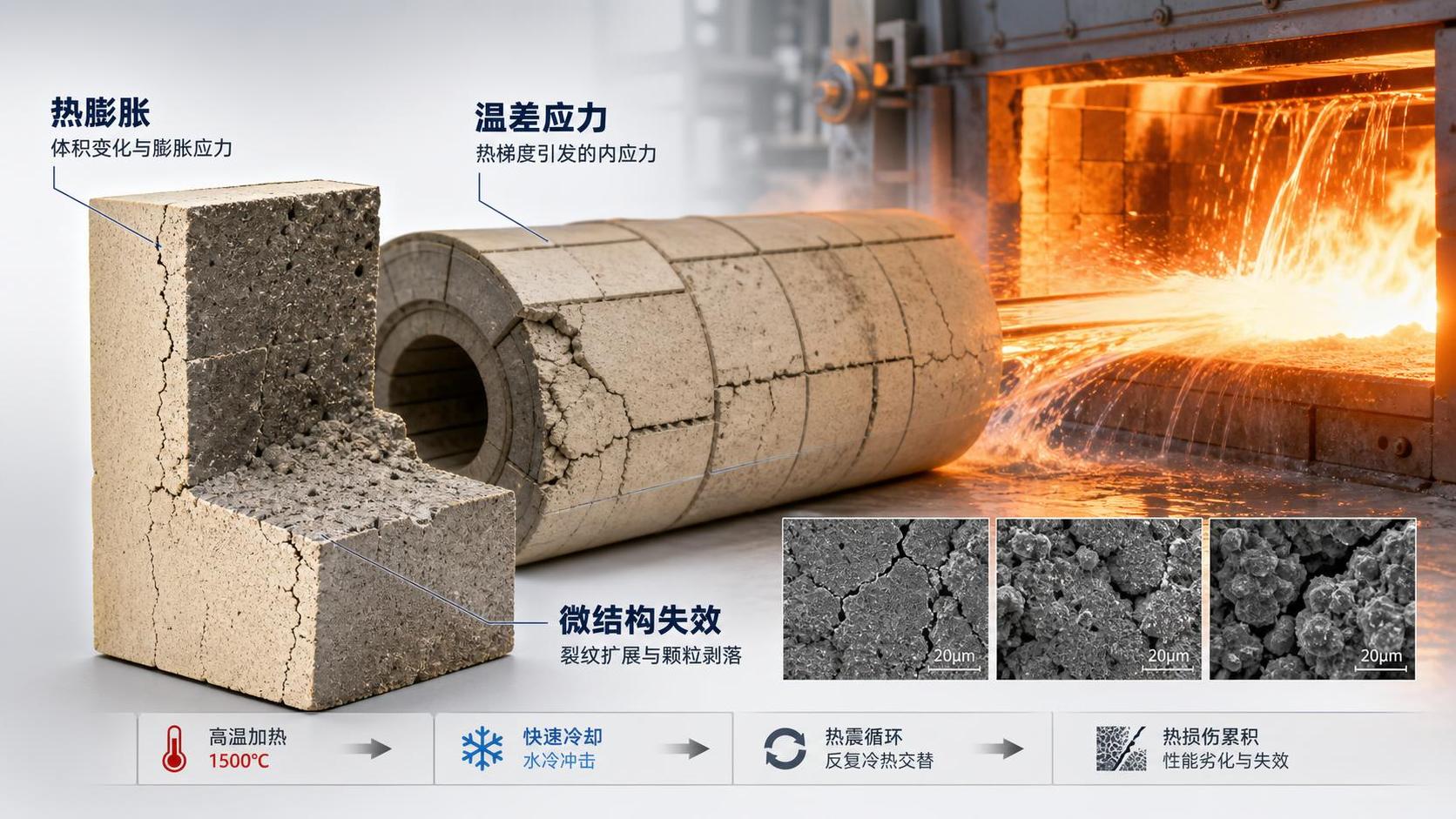
 Dr. Alistair VaughnWhat Causes Thermal Shock Failure in Heat-Resistant Materials During Development?Heat-resistant material development thermal shock failures often stem from expansion mismatch, weak microstructure, and residual stress. Learn the real causes and smarter evaluation steps.Aug 19, 2026
 Ms. Elena RodriguezWhat Is a Real Time Digital Twin and Where Does It Deliver Measurable Value?Real time digital twin explained: discover where it delivers measurable value in energy, quality, maintenance, and carbon performance for industrial operations.Aug 18, 2026
 Structural Material AnalystWhat Thermal Barrier Technology Works Best for Lightweight Industrial Panels?Thermal barrier technology lightweight industrial panels use works best when fire safety, heat stability, and weight are balanced. Compare mineral wool, silicate, ceramic, and hybrid options.Aug 17, 2026
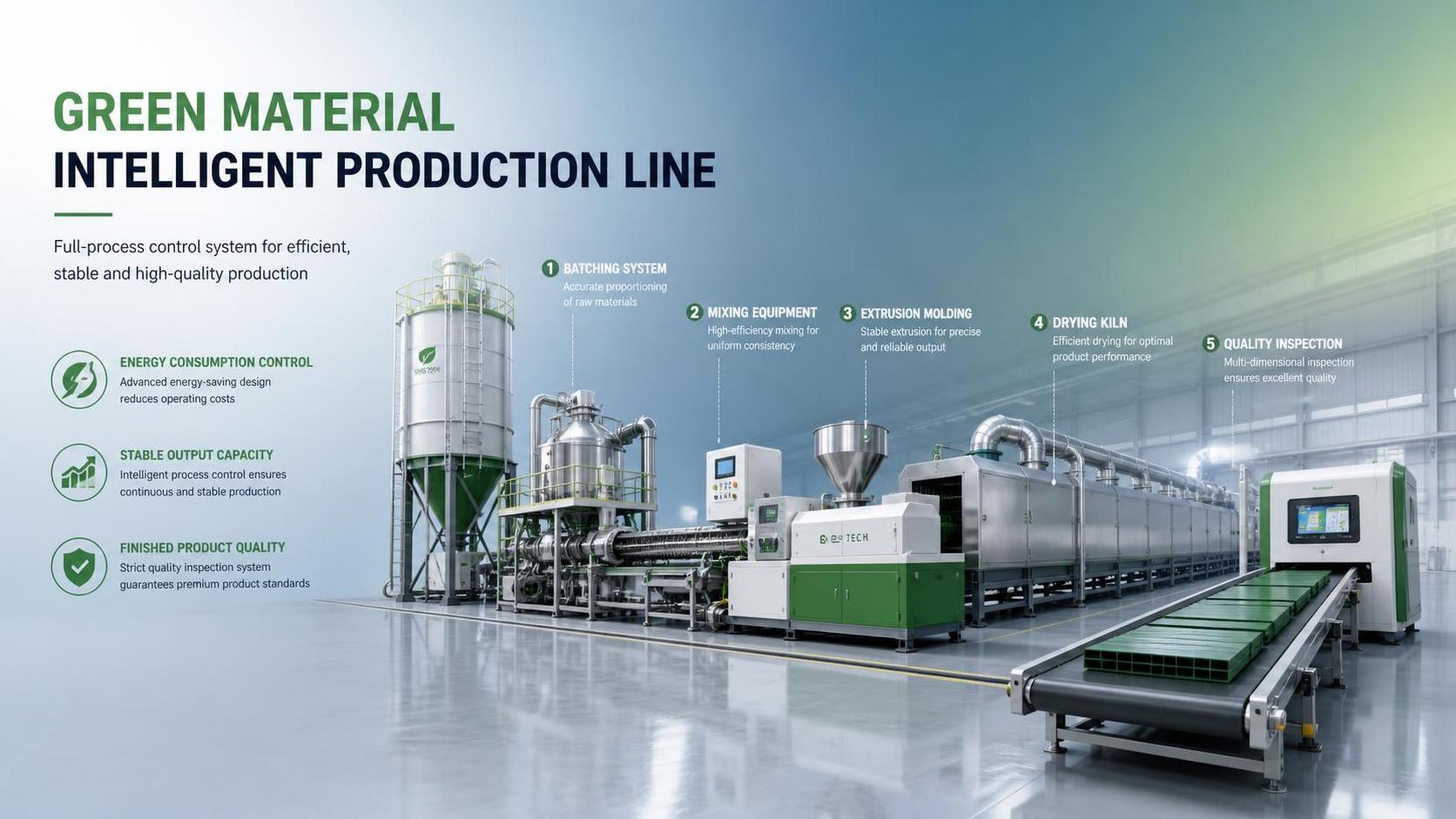
 Prof. Marcus ChenHow to Evaluate a Green Material Production Line for Energy Use, Output, and Product QualityGreen material production line evaluation made simple: compare energy use, stable output, and product quality with practical checks that help you choose the right line.Aug 16, 2026
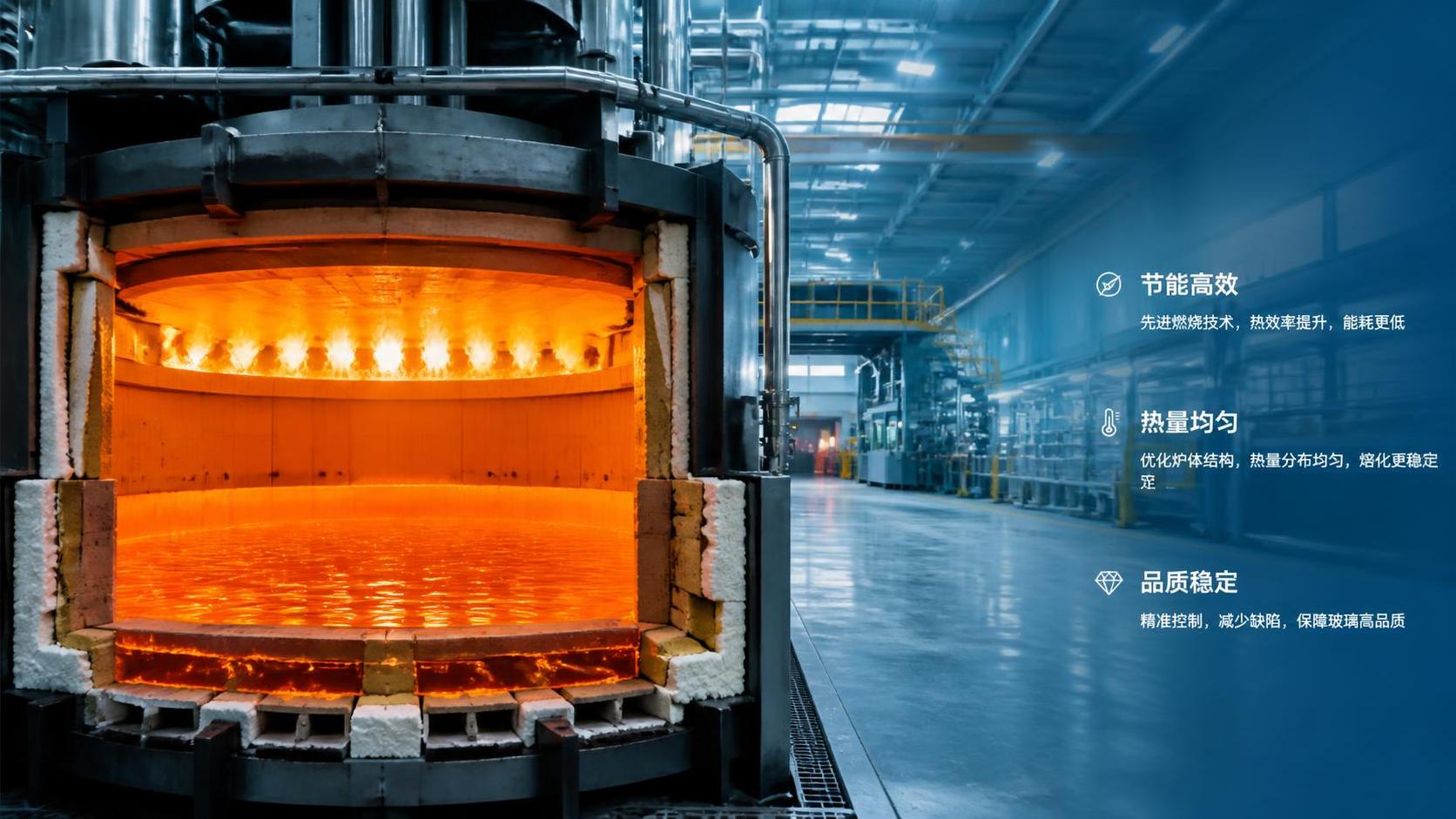
 Optical Glass Tech FellowHow Glass Melting Furnace Design Impacts Energy Use and Glass QualityGlass melting process furnace design directly impacts energy use and glass quality. Learn the key design factors that cut fuel costs, improve melt stability, and boost production results.Aug 15, 2026


Related News
- 00
0000-00
What Determines Refractory Lining Monitoring Price for Industrial Kilns? - 00
0000-00
How Digital Twin Simulations Help Kiln Operators Cut Fuel Use and Stabilize Output - 00
0000-00
What to Evaluate in a Rotary Kiln Technology Manufacturer for High-Temperature Process Projects - 00
0000-00
How to Evaluate an Incineration Equipment Exporter for Compliance, Capacity, and After-Sales Support - 00
0000-00
What Drives High-Temperature Process Engineering Cost in Kiln and Furnace Projects?
Weekly Insights
Stay ahead with our curated technology reports delivered every Monday.