
Sustainable Construction Materials: How to Compare Performance, Cost, and Use Cases




Sustainable Construction Materials: How to Compare Performance, Cost, and Use Cases
Choosing sustainable construction materials is no longer just a compliance decision. It now shapes schedule certainty, operating cost, thermal performance, and long-term asset value.
A material that looks cheaper on bid day can create hidden cost later. That often happens through maintenance, energy loss, installation delays, or inconsistent supply.
That is why a solid comparison framework matters. It helps turn sustainability targets into procurement choices that also work on site.
Why sustainable construction materials need a broader evaluation lens
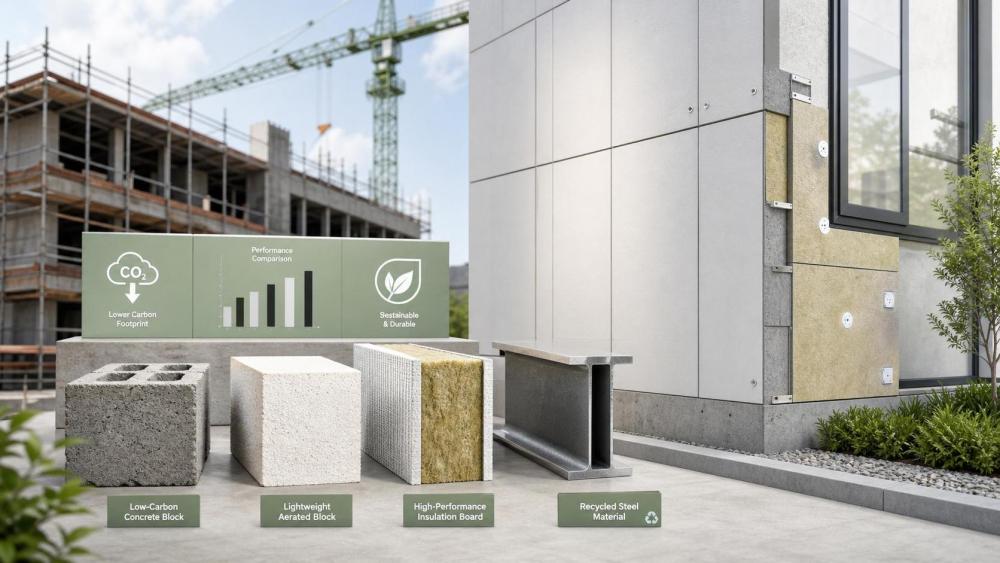
Many teams still compare materials by unit price first. In practice, that is only one part of the decision.
The better approach is to compare sustainable construction materials across three dimensions. These are technical performance, total cost, and fit for the intended use case.
This matters even more as regulations tighten. Carbon reporting, waste reduction, and thermal efficiency now influence financing, approvals, and stakeholder expectations.
From a market perspective, the strongest signal is clear. Buyers are asking not only what a material is made from, but how it performs over twenty years.
In sectors linked to cement, glass, kiln systems, refractory production, and lightweight extrusion, this shift is especially visible. Material selection now connects directly to energy strategy and lifecycle resilience.
Start with performance, not claims
When comparing sustainable construction materials, product claims are useful, but they should never be the final basis for procurement.
Start with measurable performance indicators. The exact mix depends on the building type, climate zone, and design intent.
Core performance factors to compare
- Thermal performance, including insulation value and heat retention under real operating conditions.
- Compressive and flexural strength for the expected structural load profile.
- Moisture resistance, especially for exterior envelope, roofing, and wet-area applications.
- Fire behavior, smoke profile, and compliance with local codes and insurance requirements.
- Durability under freeze-thaw cycles, abrasion, corrosion, or chemical exposure.
- Dimensional stability and installation tolerance on fast-moving job sites.
This is where context becomes important. A low-carbon block may look ideal on paper, yet underperform if the project needs higher impact resistance or tighter moisture control.
The same goes for advanced insulation panels. Strong thermal numbers can be offset by handling complexity, fire restrictions, or long lead times.
Questions that improve technical comparison
- How does the material perform after five or ten years, not just after factory testing?
- Does the supplier provide third-party data, EPDs, or verified test standards?
- Will the material require special tools, curing control, or installation training?
- How sensitive is it to weather, transport damage, or storage conditions?
These questions keep sustainable construction materials grounded in practical performance. They also reduce the risk of buying a product that looks innovative but slows execution.
Compare cost through the full project lifecycle
Cost comparison often fails because it stops at purchase price. For sustainable construction materials, that is usually where the real picture begins, not ends.
A smarter review looks at total installed cost and whole-life value. This includes labor, logistics, maintenance, and energy performance.
Cost categories worth tracking
- Unit purchase price and minimum order quantity.
- Freight, storage, breakage risk, and packaging waste.
- Installation speed, crew skill requirements, and rework probability.
- Maintenance frequency and expected replacement interval.
- Energy savings linked to thermal efficiency or reduced heat loss.
- End-of-life value, recyclability, and disposal cost.
In actual procurement, this changes the ranking fast. A recycled-content panel may cost more upfront, yet reduce crane time, labor hours, and envelope-related energy loss.
Likewise, lightweight extruded materials can lower structural load. That may cut foundation demand or speed installation, producing savings elsewhere in the package.
Simple comparison table for procurement review
Match sustainable construction materials to use case, not trend
Not every sustainable construction material fits every project. This sounds obvious, yet trend-driven selection still causes expensive mismatch.
A better way is to shortlist materials by use case first. Then compare technical and commercial variables inside that narrower group.
Common use-case priorities
- High-rise projects often prioritize fire safety, structural consistency, and delivery reliability.
- Warehouses often focus on speed, thermal envelope performance, and low maintenance surfaces.
- Public buildings often require strong environmental declarations and low operational energy use.
- Industrial facilities may value heat resistance, chemical durability, and longer service intervals.
This is also where supplier capability matters. Sustainable construction materials are only as reliable as the manufacturing process and logistics behind them.
For example, green wall systems built through controlled extrusion can offer excellent consistency. But the project still needs stable dimensional quality and dependable delivery windows.
In thermal-intensive environments, refractory-backed systems and advanced silicate materials may offer strong lifecycle value. Their advantage comes from heat stability, lower failure risk, and longer campaign life.
Watch the hidden risks behind sustainable construction materials
Even strong materials can become weak procurement choices when risk is not priced in. This is where many cost comparisons break down.
Common risk signals
- Limited production capacity or heavy dependence on one region.
- Unclear certification, missing test data, or inconsistent environmental reporting.
- Performance data based only on ideal lab conditions.
- Installation methods that do not match available crews.
- Supply chain volatility for additives, binders, or recycled feedstock.
More importantly, hidden risk often shows up as schedule loss. If a substitute material needs re-approval, training, or mock-up redesign, savings can disappear quickly.
That is why procurement reviews should include commercial and technical checkpoints together. Separate reviews tend to miss the interactions that drive real project cost.
A practical sourcing framework for better decisions
If the goal is to compare sustainable construction materials with confidence, keep the process simple and repeatable.
- Define the use case clearly, including load, climate exposure, thermal target, and design life.
- Set three weighted filters: performance, cost, and supply reliability.
- Request verified technical documents, not just marketing sheets.
- Estimate installed cost and operating effect, not purchase price alone.
- Run a shortlist review with engineering, procurement, and site execution input.
- Pilot higher-risk materials in mock-ups before full commitment.
This structure keeps sustainable construction materials tied to project outcomes. It also makes supplier discussions more precise and less sales-driven.
In sectors shaped by thermal efficiency, silicate processing, and green building transitions, the best procurement decisions increasingly come from data-linked evaluation.
That is exactly where industry intelligence becomes valuable. Market shifts, process innovation, and equipment capability often influence which materials remain competitive over time.
Final takeaway
The best sustainable construction materials are not simply the lowest carbon or the lowest price. They are the options that deliver balanced performance, controlled lifecycle cost, and reliable fit for the job.
When comparison starts with real use conditions, supported data, and full-cost thinking, procurement decisions become faster and more defensible.
The next step is straightforward. Build a short evaluation matrix, test supplier evidence early, and compare sustainable construction materials as operating assets, not commodity line items.
That approach supports carbon goals, protects schedules, and improves long-term project value without turning procurement into guesswork.
Related News
 Thermal Energy ArchitectWhy Heat-Resistant Materials Lose Abrasion Resistance at High TemperaturesHeat-resistant materials abrasion resistance can decline at high temperatures. Discover the thermal, chemical, and mechanical causes of wear—and how to choose longer-lasting linings.Sep 16, 2026
 Thermal Energy ArchitectHow to Evaluate a Thermal Energy Optimization Company for High-Temperature PlantsChoose a thermal energy optimization company with proven process expertise, measurable savings, and reliable delivery for high-temperature plants. Learn what to assess.Sep 15, 2026
 Thermal Energy ArchitectRotary Kiln Efficiency: How Feed Rate, Fuel Use, and Heat Loss Affect OutputRotary kiln efficiency explained: discover how feed rate, fuel use, heat loss, combustion, and cooling performance shape output, quality, and energy costs.Sep 14, 2026
 Thermal Energy ArchitectHow to Select Heat-Resistant Materials That Maintain Abrasion Resistance in KilnsHeat-resistant materials abrasion resistance: learn how to select kiln linings that withstand heat, wear, thermal cycling, and chemical attack for longer service life.Sep 13, 2026
 Thermal Energy ArchitectHow Rotary Kiln Automation Improves Temperature Control and Fuel EfficiencyRotary kiln technology automation enhances temperature control, stabilizes combustion, and improves fuel efficiency with smarter data, predictive control, and safer operations.Sep 12, 2026
 Silicate Process EngineerCement Plant Emission Control: Selecting Systems for Dust, NOx, and SO2 LimitsCement plant emission control guide: compare dust collectors, NOx reduction, and SO2 systems for reliable compliance across kiln modes, fuel changes, and operating upsets.Sep 11, 2026
 Thermal Energy ArchitectSelecting Abrasion-Resistant High-Temperature Materials for Kiln and Conveyor Wear ZonesHigh-temp material engineering guide to abrasion-resistant kiln and conveyor solutions—match wear, heat, chemistry, and installation design for longer service life.Sep 10, 2026
 Dr. Alistair VaughnIndustrial Process Engineering: How to Map Processes for Safer, More Efficient PlantsIndustrial process engineering reveals bottlenecks, safety risks, and energy losses through practical process mapping for safer, more efficient plants.Sep 09, 2026
 Optical Glass Tech FellowHow to Evaluate a Glass Annealing Equipment Manufacturer for Production StabilityChoose a glass annealing equipment manufacturer with proven thermal uniformity, reliable controls, lifecycle value, and responsive service for stable production.Sep 08, 2026
 Prof. Marcus ChenThermal Energy Architecture in North America: Strategies for Lower Building Energy UseThermal energy architecture North America helps project leaders cut building energy use through stronger envelopes, right-sized HVAC, storage, and smart commissioning.Sep 07, 2026
 Ms. Elena RodriguezHow Should Buyers Evaluate Building Material Industry Intelligence Pricing?Building material industry intelligence pricing: learn how to compare coverage, technical depth, and ROI to choose intelligence that reduces procurement risk.Sep 07, 2026
 Ms. Elena RodriguezHow to Use Building Material Intelligence Data for Market and Investment DecisionsBuilding material industry intelligence data helps leaders evaluate demand, costs, regulation, capacity, and technology to make smarter market and investment decisions.Sep 05, 2026
 Thermal Energy ArchitectHow PLC Control Improves Energy Efficiency and Temperature Stability in KilnsEnergy efficient kilns PLC control improves temperature stability, cuts fuel waste, and optimizes combustion, draft, and material flow. Explore proven strategies for smarter kiln modernization.Sep 04, 2026
 Optical Glass Tech FellowEuropean Glass Melting Processes: Furnace Choices, Energy Use, and Quality ControlGlass melting process Europe: explore furnace choices, energy efficiency, cullet strategy, and quality control to improve output, compliance, and long-term glass performance.Sep 03, 2026
 Thermal Energy ArchitectWhat Determines Refractory Lining Monitoring Price for Industrial Kilns?Refractory lining monitoring price depends on kiln size, sensor technology, installation, software, and support. Compare total lifecycle costs and choose the right solution.Sep 02, 2026
 Silicate Process EngineerCement Production System Costs: A Plant Buyer’s Guide to Budgeting and ROICement production systems cost planning made clear: compare CAPEX, operating costs, compliance, and ROI to build a resilient, profitable cement plant investment.Sep 01, 2026
 Dr. Alistair VaughnWhat Should a Process Technology Database Track for High-Temperature Plants?Process technology database essentials for high-temperature plants: track thermal profiles, feed chemistry, refractory wear, emissions, energy, and maintenance for safer, data-driven decisions.Aug 31, 2026
 Ms. Elena RodriguezHow to Evaluate a Silicate Processing Equipment Manufacturer for Plant ProjectsSilicate processing equipment manufacturer selection: assess process fit, guarantees, energy, compliance, delivery risk, and lifecycle support for dependable plant performance.Aug 30, 2026
 Dr. Alistair VaughnHow to Specify Custom Agricultural Processing Equipment for Throughput and HygieneEquipment customization services for agricultural processing: learn to specify hygienic, high-throughput lines that improve yield, reliability, and long-term efficiency.Aug 29, 2026
 Dr. Alistair VaughnHow to Select Process Plant Equipment for High-Temperature, Abrasive Production LinesProcess plant equipment selection for high-temperature, abrasive lines: reduce downtime, improve durability, and optimize lifecycle performance.Aug 28, 2026


Related News
- 00
0000-00
How to Evaluate Lightweight Material Machinery for Output, Energy Use, and Product Quality - 00
0000-00
What Thermal Barrier Technology Works Best for Lightweight Industrial Panels? - 00
0000-00
Advanced Ceramic Processing for Honeycomb: Which Methods Improve Strength and Thermal Shock Resistance? - 00
0000-00
Building Material Extrusion Equipment Supplier Selection: 7 Parameters That Affect Line Performance - 00
0000-00
High Pressure Extruder Selection Guide: Output, Material Compatibility, and Wear
Weekly Insights
Stay ahead with our curated technology reports delivered every Monday.