
Material Extrusion Technology Explained: Process Types, Compatible Materials, and Best-Fit Uses




Why is material extrusion technology drawing so much industrial attention?
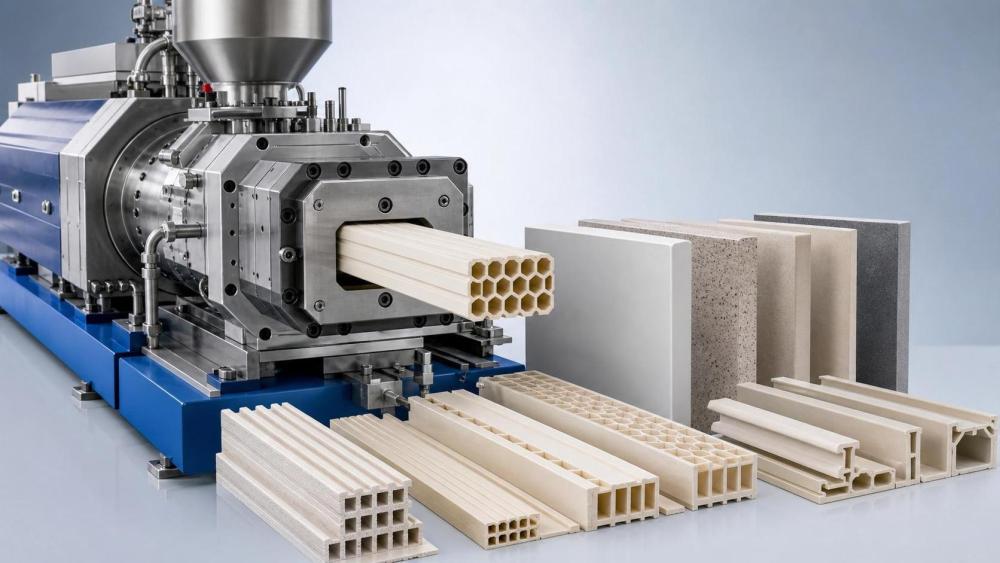
Material extrusion technology matters because it turns raw material into repeatable shapes with less waste and better process control.
That sounds simple, yet the industrial value is broader.
It affects forming efficiency, energy balance, downstream drying behavior, and even final product consistency.
In construction materials, ceramics, refractories, and specialty compounds, those factors directly influence plant economics.
Material extrusion technology is especially relevant where scale, shape stability, and continuous output matter more than one-off customization.
This is why the topic appears often in discussions around green building materials and thermally demanding production systems.
From the perspective of CF-Elite, extrusion is not just a shaping step.
It connects material rheology, thermal management, line design, and carbon reduction logic inside larger silicate production chains.
When an extruder performs well, upstream batching becomes more meaningful and downstream firing or curing becomes easier to control.
That is why researchers and industry observers keep asking the same practical question: where does material extrusion technology fit best, and where does it not?
So what exactly counts as material extrusion technology?
In practical terms, material extrusion technology pushes a prepared material through a die to create a defined cross-section.
The material may be plastic, clay-based, cementitious, ceramic-rich, polymeric, or highly filled with minerals.
The common principle is steady pressure, controlled flow, and geometric repeatability.
People often associate extrusion with plastics alone, but that is too narrow.
In heavy industry, extrusion is also used for honeycomb ceramics, refractory shapes, brick-like elements, insulation boards, and lightweight wall materials.
Different process families sit under the same umbrella.
Which process types appear most often?
A useful way to read material extrusion technology is by feed behavior and pressure method.
- Ram extrusion uses direct force and suits stiff, paste-like bodies with controlled batch discharge.
- Screw extrusion supports continuous output and stronger mixing during transport toward the die.
- Twin-screw systems improve feeding stability where formulations are sensitive or heavily filled.
- Vacuum extrusion helps remove entrained air, improving density and reducing crack-related defects.
- Warm or hot extrusion appears when temperature tuning improves flow and shape retention.
The best process is not the most advanced one on paper.
It is the one that matches moisture, viscosity, particle size, output target, and downstream thermal treatment.
Which materials actually work well in material extrusion technology?
Compatibility depends less on material category names and more on flow behavior under pressure.
A material works well when it deforms consistently, exits the die cleanly, and keeps its shape before final setting.
That is why formulation design matters as much as machine design.
What are the common compatible material groups?
- Clay and silicate bodies for bricks, tiles, honeycomb carriers, and technical ceramics.
- Cementitious and mineral blends for lightweight panels, hollow profiles, and green building products.
- Refractory mixes that require thermal shock resistance after drying and firing.
- Polymer compounds filled with fibers, powders, or flame-resistant additives.
- Waste-derived or recycled blends when the formulation remains stable and contaminants are controlled.
In actual line assessment, four checks are more useful than generic material labels.
This is also where CF-Elite’s industrial lens becomes useful.
Material extrusion technology should be read together with kiln behavior, thermal barriers, raw mix variation, and emissions strategy.
A material that extrudes smoothly but dries inefficiently may still be the wrong choice.
Where does material extrusion technology fit best, and where is it less ideal?
The strongest use cases share one feature: repeatable geometry at industrial scale.
When output must be continuous and cross-sections remain consistent, material extrusion technology usually performs well.
Best-fit uses
- Honeycomb ceramic structures for filtration, heat exchange, or catalyst carrier applications.
- Lightweight construction blocks and wall profiles requiring low waste and uniform dimensions.
- Refractory shapes used in high-temperature systems where density control matters.
- Specialized mineral boards and extruded components for energy-efficient building envelopes.
- Compound-based products needing continuous, high-throughput forming before curing or firing.
Less ideal situations
Extrusion is weaker when product geometry changes constantly or when the material cannot maintain green strength.
It is also less attractive when die wear becomes extreme because of abrasive fillers or unstable contaminants.
Another limitation appears when the whole value proposition depends on very short runs.
In those cases, tooling and setup discipline may outweigh the efficiency benefits.
For broad industrial comparison, the question is not whether material extrusion technology is good.
The better question is whether the product family rewards continuity, pressure shaping, and thermal-process integration.
How do you judge process choice without falling for common assumptions?
One common mistake is choosing equipment based only on output capacity.
A line can look productive on paper and still perform poorly if the material window is narrow.
Another mistake is treating die design as a minor detail.
In reality, die geometry often determines pressure balance, profile accuracy, and defect frequency.
A more reliable evaluation combines equipment, material, and thermal steps in one decision frame.
What should be checked before moving forward?
- Rheology under real moisture and temperature conditions, not lab assumptions alone.
- Die wear rate, especially with silica-rich or abrasive mineral systems.
- Drying, curing, or firing compatibility after extrusion.
- Energy demand across the full line, not just the extruder motor.
- Emission and circularity implications if recycled inputs are planned.
This broader view fits the CF-Elite approach to high-temperature industries.
Extrusion decisions rarely stand alone.
They interact with kiln loading, dust behavior, refractory service life, and plant decarbonization strategy.
What about cost, implementation time, and long-term performance?
This is usually where curiosity turns into real screening.
Material extrusion technology can be cost-efficient, but only when utilization, material stability, and downstream handling are aligned.
The initial investment is only part of the picture.
Ongoing value depends on tooling life, downtime, scrap rate, and thermal-process yield.
In many industrial settings, the most useful metric is not maximum speed.
It is stable, economically acceptable throughput over long campaigns.
That is especially true for lines linked to kilns, curing tunnels, or sensitive thermal profiles.
What is the smart next step if you are still comparing options?
Start by defining the product shape, target output, and downstream thermal path together.
That prevents a narrow machine-first decision.
Then test whether the candidate material really suits material extrusion technology under realistic plant conditions.
The key is not only whether the mix extrudes once.
The key is whether it remains stable across time, temperature shifts, and raw material variation.
For anyone following industrial forming trends, material extrusion technology is worth understanding because it sits at the intersection of efficiency, flexibility, and thermal-process discipline.
In sectors watched closely by CF-Elite, that intersection is becoming more important, not less.
A sensible next move is to build a comparison sheet covering material behavior, die demands, energy impact, implementation time, and defect risk.
Once those factors are visible, the right use cases for material extrusion technology usually become much easier to identify.
Related News
 Thermal Energy ArchitectHow European Plants Can Evaluate Energy Recovery Equipment for High-Temperature ProcessesIndustrial energy recovery equipment Europe: learn how high-temperature plants can assess waste-heat sources, integration risks, lifecycle value, and reliable recovery routes.Sep 20, 2026
 Thermal Energy ArchitectIndustrial Furnace Process Optimization: Reducing Fuel Use Without Sacrificing ThroughputIndustrial process optimization furnace strategies that cut fuel use while protecting throughput. Explore combustion control, heat recovery, refractory performance, and data-driven efficiency gains.Sep 19, 2026
 Ms. Elena RodriguezWhat Drives High-Pressure Extrusion Equipment Cost in Industrial Projects?High pressure extrusion equipment cost explained: compare pressure, die design, automation, wear, energy, and installation factors for smarter industrial investments.Sep 18, 2026
 Thermal Energy ArchitectHow to Size a Waste Heat Recovery Exchanger for High-Temperature Kiln Exhaust?Waste heat recovery exchanger sizing for high-temperature kiln exhaust: balance recoverable duty, fouling, corrosion limits, pressure drop, and reliable heat use.Sep 17, 2026
 Thermal Energy ArchitectWhy Heat-Resistant Materials Lose Abrasion Resistance at High TemperaturesHeat-resistant materials abrasion resistance can decline at high temperatures. Discover the thermal, chemical, and mechanical causes of wear—and how to choose longer-lasting linings.Sep 16, 2026
 Thermal Energy ArchitectHow to Evaluate a Thermal Energy Optimization Company for High-Temperature PlantsChoose a thermal energy optimization company with proven process expertise, measurable savings, and reliable delivery for high-temperature plants. Learn what to assess.Sep 15, 2026
 Thermal Energy ArchitectRotary Kiln Efficiency: How Feed Rate, Fuel Use, and Heat Loss Affect OutputRotary kiln efficiency explained: discover how feed rate, fuel use, heat loss, combustion, and cooling performance shape output, quality, and energy costs.Sep 14, 2026
 Thermal Energy ArchitectHow to Select Heat-Resistant Materials That Maintain Abrasion Resistance in KilnsHeat-resistant materials abrasion resistance: learn how to select kiln linings that withstand heat, wear, thermal cycling, and chemical attack for longer service life.Sep 13, 2026
 Thermal Energy ArchitectHow Rotary Kiln Automation Improves Temperature Control and Fuel EfficiencyRotary kiln technology automation enhances temperature control, stabilizes combustion, and improves fuel efficiency with smarter data, predictive control, and safer operations.Sep 12, 2026
 Silicate Process EngineerCement Plant Emission Control: Selecting Systems for Dust, NOx, and SO2 LimitsCement plant emission control guide: compare dust collectors, NOx reduction, and SO2 systems for reliable compliance across kiln modes, fuel changes, and operating upsets.Sep 11, 2026
 Thermal Energy ArchitectSelecting Abrasion-Resistant High-Temperature Materials for Kiln and Conveyor Wear ZonesHigh-temp material engineering guide to abrasion-resistant kiln and conveyor solutions—match wear, heat, chemistry, and installation design for longer service life.Sep 10, 2026
 Dr. Alistair VaughnIndustrial Process Engineering: How to Map Processes for Safer, More Efficient PlantsIndustrial process engineering reveals bottlenecks, safety risks, and energy losses through practical process mapping for safer, more efficient plants.Sep 09, 2026
 Optical Glass Tech FellowHow to Evaluate a Glass Annealing Equipment Manufacturer for Production StabilityChoose a glass annealing equipment manufacturer with proven thermal uniformity, reliable controls, lifecycle value, and responsive service for stable production.Sep 08, 2026
 Prof. Marcus ChenThermal Energy Architecture in North America: Strategies for Lower Building Energy UseThermal energy architecture North America helps project leaders cut building energy use through stronger envelopes, right-sized HVAC, storage, and smart commissioning.Sep 07, 2026
 Ms. Elena RodriguezHow Should Buyers Evaluate Building Material Industry Intelligence Pricing?Building material industry intelligence pricing: learn how to compare coverage, technical depth, and ROI to choose intelligence that reduces procurement risk.Sep 07, 2026
 Ms. Elena RodriguezHow to Use Building Material Intelligence Data for Market and Investment DecisionsBuilding material industry intelligence data helps leaders evaluate demand, costs, regulation, capacity, and technology to make smarter market and investment decisions.Sep 05, 2026
 Thermal Energy ArchitectHow PLC Control Improves Energy Efficiency and Temperature Stability in KilnsEnergy efficient kilns PLC control improves temperature stability, cuts fuel waste, and optimizes combustion, draft, and material flow. Explore proven strategies for smarter kiln modernization.Sep 04, 2026
 Optical Glass Tech FellowEuropean Glass Melting Processes: Furnace Choices, Energy Use, and Quality ControlGlass melting process Europe: explore furnace choices, energy efficiency, cullet strategy, and quality control to improve output, compliance, and long-term glass performance.Sep 03, 2026
 Thermal Energy ArchitectWhat Determines Refractory Lining Monitoring Price for Industrial Kilns?Refractory lining monitoring price depends on kiln size, sensor technology, installation, software, and support. Compare total lifecycle costs and choose the right solution.Sep 02, 2026
 Silicate Process EngineerCement Production System Costs: A Plant Buyer’s Guide to Budgeting and ROICement production systems cost planning made clear: compare CAPEX, operating costs, compliance, and ROI to build a resilient, profitable cement plant investment.Sep 01, 2026



Related News
- 00
0000-00
How to Evaluate Lightweight Material Machinery for Output, Energy Use, and Product Quality - 00
0000-00
What Thermal Barrier Technology Works Best for Lightweight Industrial Panels? - 00
0000-00
Advanced Ceramic Processing for Honeycomb: Which Methods Improve Strength and Thermal Shock Resistance? - 00
0000-00
Building Material Extrusion Equipment Supplier Selection: 7 Parameters That Affect Line Performance - 00
0000-00
High Pressure Extruder Selection Guide: Output, Material Compatibility, and Wear
Weekly Insights
Stay ahead with our curated technology reports delivered every Monday.