
Material extrusion innovations are changing product design




For technical evaluators in high-temperature industries, material extrusion innovations now matter less as isolated machine upgrades and more as system-level design tools. They influence dimensional stability, raw material flexibility, thermal efficiency, emissions performance, maintenance intervals, and downstream product quality. The practical question is no longer whether extrusion is evolving, but which innovations actually improve design outcomes without introducing unacceptable process risk.
That distinction is especially important in sectors tied to silicate processing, refractory manufacturing, industrial kilns, and green building materials. In these environments, product design decisions are constrained by abrasive materials, thermal loads, moisture variability, energy cost pressure, and stricter environmental compliance. Material extrusion innovations are changing product design because they help engineers move from designing only for shape and output toward designing for manufacturability, lifecycle performance, and carbon-aware production.
For evaluators, the most useful lens is not novelty but fit. The right extrusion innovation should improve controllability, broaden viable material formulations, reduce waste, and create measurable gains in consistency or total cost. The wrong one can add software complexity, tighten maintenance tolerances, or create bottlenecks upstream and downstream. This article focuses on how to judge the real value behind today’s extrusion advances, where they most affect product design, and what evidence should support adoption.
Why technical evaluators should treat extrusion innovation as a design decision
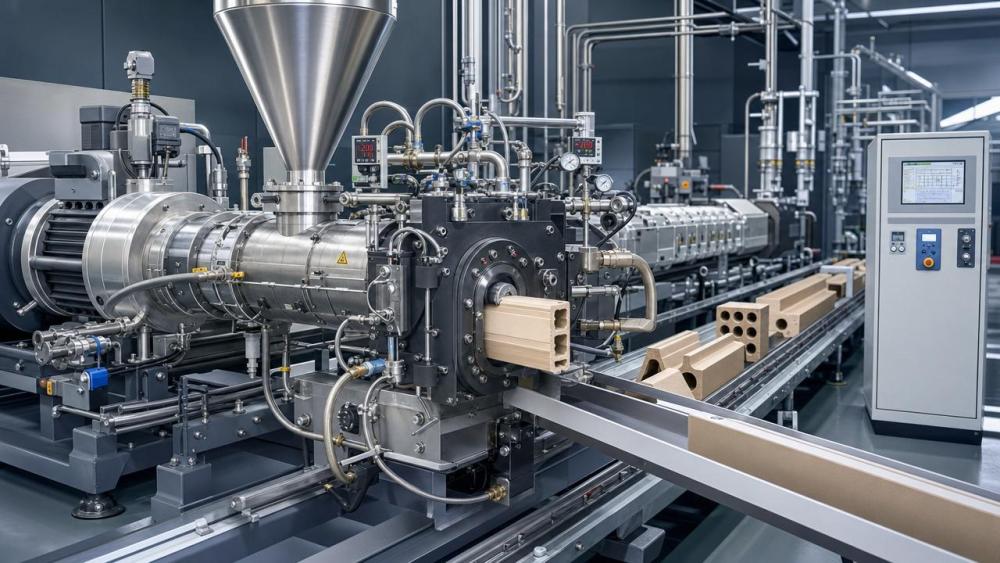
In heavy industrial applications, product design is inseparable from process capability. A lightweight wall panel, a refractory form, or a specialized silicate component may look viable in CAD, yet fail economically if extrusion cannot hold geometry, moisture tolerance, surface quality, or throughput consistency. That is why material extrusion innovations increasingly sit upstream of design approval rather than downstream in equipment selection.
Modern extrusion systems affect the degree of freedom available to design teams. Improved screw geometry, pressure control, die engineering, servo synchronization, inline sensing, and digital process monitoring allow tighter control over density, porosity, wall thickness, and green strength. Those changes let manufacturers design products that were previously too fragile, too variable, or too expensive to produce at scale.
For technical assessment teams, this means extrusion should be evaluated as a capability platform. Instead of asking only whether a machine can push material through a die, the better question is whether the extrusion line can support the product roadmap over several years. That includes future raw material substitutions, changing emissions rules, customer demand for lighter structures, and the integration of digital quality systems.
What is actually changing in material extrusion innovations
The phrase material extrusion innovations covers more than additive manufacturing or laboratory-scale prototyping. In industrial contexts, it includes advances in feedstock preparation, pressure management, die design, wear-resistant contact surfaces, thermal conditioning, moisture control, automation logic, and closed-loop quality monitoring. Each of these can materially alter product design possibilities.
One important change is the shift toward more adaptive extrusion systems. Traditional lines often required narrow feed consistency windows to maintain stable output. Newer systems use better sensor placement, variable-speed drives, and more responsive control schemes to stabilize pressure and material flow despite moderate raw material variation. That is valuable in sectors using recycled inputs, by-products, or regionally inconsistent mineral sources.
Another major development is in die and tooling engineering. Computational modeling now supports more precise die channel design, reducing dead zones, uneven shear, and shape distortion. For technical evaluators, this matters because die design quality directly influences final geometry, edge integrity, drying behavior, and defect rates. Better tooling can expand the feasible product range without needing full line replacement.
Wear management is also becoming more strategic. In abrasive silicate and refractory applications, screw flights, liners, and dies face constant degradation. Material extrusion innovations now include advanced coatings, modular wear parts, and predictive maintenance systems that help preserve dimensional repeatability over longer runs. This has direct implications for product design tolerances and quality assurance planning.
Finally, digital integration is changing how extrusion performance is understood. Inline pressure, torque, temperature, and moisture data can now be connected with quality outcomes, energy profiles, and maintenance indicators. Instead of relying on periodic inspection alone, evaluators can assess whether a line produces enough process intelligence to support continuous design optimization.
How extrusion advances are reshaping product design priorities
Historically, many industrial products were designed around what the line could reliably produce, even if that meant accepting excess material usage, conservative wall thickness, or limited geometry. With more stable and controllable extrusion, manufacturers can redesign products for weight reduction, thermal performance, assembly efficiency, and lower embodied carbon without sacrificing output reliability.
In green building materials, for example, improved extrusion control supports hollow and multi-cavity profiles that reduce mass while maintaining structural functionality. That changes the design equation by making thermal insulation, handling weight, and transportation efficiency part of the product value proposition. What once required compromise can now become a scalable commercial design choice.
For refractory and high-temperature insulation products, extrusion innovations can improve uniformity in density and shape, which influences thermal resistance, installation precision, and service life. Product designers can work with more confidence when green strength is predictable and shrinkage behavior is better controlled. This reduces the gap between theoretical performance and field performance.
In specialized material systems, better process control can also support more aggressive formulations. Designs that incorporate recycled fines, alternative binders, or performance-enhancing additives become more practical when extrusion conditions are consistently managed. As a result, product design is increasingly connected to sustainability goals, not just dimensional output.
Technical evaluators should note that these changes also alter acceptance criteria. Design validation now needs to include process robustness under realistic feed variability, wear conditions, and throughput changes. A design that performs only under ideal laboratory conditions is not competitive in industrial environments.
Which evaluation criteria matter most before adoption
When reviewing new extrusion technology, technical evaluators should first look at process stability, because every downstream benefit depends on it. Stable pressure, predictable throughput, and controlled moisture behavior are more valuable than headline capacity if the line produces frequent dimensional drift or defect spikes. Repeatability across shifts and material lots should be treated as a primary metric.
The second priority is raw material flexibility. In many high-temperature industries, feedstock quality can vary due to source changes, recycled content use, seasonal moisture, or upstream grinding differences. Material extrusion innovations deliver higher value when they widen the acceptable operating window without causing excessive energy consumption, tool wear, or product inconsistency.
Third, assess the relationship between design precision and maintenance burden. Some innovations achieve tighter tolerances only by creating narrow operating bands or requiring highly specialized service support. Evaluators should examine whether the line can maintain performance after wear begins, not only during initial commissioning. Long-run capability matters more than a perfect demonstration sample.
Fourth, consider data transparency. A modern extrusion platform should provide usable operating data rather than black-box control claims. If pressure trends, torque behavior, thermal signatures, and moisture responses are visible and traceable, the engineering team can connect process behavior with product outcomes. That supports faster troubleshooting and better future design decisions.
Finally, total energy and environmental performance must be included in the review. In sectors under decarbonization pressure, the best innovation is often the one that reduces rejects, lowers drying load, improves shape retention, or enables more sustainable formulations. A technology that raises throughput but increases waste or thermal demand may weaken long-term competitiveness.
Where the strongest value appears in high-temperature and silicate industries
The impact of material extrusion innovations is especially strong where products face thermal, mechanical, and environmental demands simultaneously. In new building material extrusion, improved pressure and moisture control can support lighter profiles with better dimensional accuracy. This reduces raw material use, transportation weight, and drying variability while improving installation consistency.
In refractory production, extrusion advances help standardize shapes used in furnaces, kilns, and high-heat enclosures. Better geometric repeatability improves lining fit, reduces installation adjustment, and can enhance service reliability under cyclic temperature conditions. For evaluators, this means product design gains should be judged alongside maintenance and field performance data.
For industrial equipment components and specialized silicate products, innovations in die engineering and wear-resistant materials can make previously difficult cross-sections more manufacturable. This has commercial importance because differentiated geometries can create stronger technical barriers in mature markets. The design value is not only functional but strategic.
Another area of value is waste and secondary material utilization. As environmental regulations tighten, manufacturers are looking to incorporate alternative mineral inputs, industrial by-products, or recycled fractions. Advanced extrusion systems can make these formulations more practical by stabilizing flow behavior and compensating for moderate inconsistency. That expands both compliance options and product innovation pathways.
Common risks that are often underestimated
One common mistake is overvaluing output speed while underestimating system integration complexity. A faster or smarter extruder may still fail to deliver value if mixing, aging, de-airing, cutting, drying, or firing stages cannot match the new process profile. Technical evaluators should map the entire production chain before treating extrusion performance claims as bankable.
Another risk is assuming digital controls automatically improve quality. Data collection is only useful when sensor reliability, calibration discipline, alarm logic, and staff response routines are well established. Without those foundations, the line may generate more information but not better decisions. In some plants, this can even delay fault recognition.
Tooling dependence is another concern. Some innovative extrusion designs rely heavily on proprietary die systems or specific wear components. That may be acceptable in exchange for strong performance, but evaluators should clarify lead times, replacement cost, local service capability, and changeover flexibility. A design advantage can become a supply risk if parts support is weak.
There is also a formulation risk. A line that performs excellently with one benchmark material may become unstable when binders, particle size distribution, or moisture patterns shift. Pilot testing should therefore include realistic production variability, not just optimized reference batches. This is essential for any business planning feedstock diversification or recycled-content strategies.
How to build a practical evaluation framework
A strong evaluation framework starts with the intended product and business objective, not with equipment marketing claims. Define whether the priority is shape complexity, lighter weight, lower reject rate, broader raw material acceptance, lower energy intensity, or support for new product families. Only then can the relevant extrusion innovations be ranked properly.
Next, create a test matrix that links process variables to design outcomes. Include pressure stability, throughput variation, die wear response, moisture sensitivity, green strength, dimensional deviation, drying performance, and defect frequency. The goal is to identify whether the innovation improves the whole design-to-production pathway or only one isolated step.
Evaluators should also request evidence under extended operating conditions. Short demonstrations often hide wear effects, thermal buildup, cleaning difficulty, and control drift. Multi-shift or long-duration trials are far more useful, especially in abrasive or high-solid applications. If possible, compare results across at least two material formulations and more than one geometry.
Commercial review should not be separated from technical review. Quantify expected gains in scrap reduction, formulation flexibility, product performance, energy intensity, maintenance interval, and time to introduce new designs. This helps distinguish meaningful innovation from expensive marginal improvement. In capital-intensive sectors, small repeatability gains can justify investment if they unlock scalable product differentiation.
Finally, assess strategic fit. The best extrusion technology is the one that aligns with likely market and regulatory trends over the next investment cycle. If decarbonization, circular materials, stricter emissions oversight, and higher quality traceability are all becoming more important, then extrusion innovations that enable those outcomes deserve greater weight than narrow throughput advantages.
Conclusion: the real design shift is from shaping materials to engineering outcomes
Material extrusion innovations are changing product design because they expand what can be produced reliably, sustainably, and competitively in real industrial conditions. For technical evaluators, the key opportunity is to treat extrusion not as a fixed production step but as an enabler of new geometry, smarter formulations, better lifecycle performance, and lower process waste.
The most valuable innovations are rarely the most dramatic on paper. They are the ones that improve control, preserve quality under variable conditions, reduce wear-related drift, and generate actionable process data. In high-temperature and silicate industries, those capabilities directly affect product design freedom and long-term plant economics.
For organizations evaluating future-ready manufacturing pathways, the right question is simple: which extrusion advances create durable design advantages across efficiency, quality, and carbon performance? Answer that with disciplined testing and system-level analysis, and material extrusion innovations become more than equipment upgrades. They become a practical route to stronger products and smarter industrial strategy.
Related News
 Optical Glass Tech FellowHow to Evaluate a Glass Annealing Equipment Manufacturer for Production StabilityChoose a glass annealing equipment manufacturer with proven thermal uniformity, reliable controls, lifecycle value, and responsive service for stable production.Sep 08, 2026
 Prof. Marcus ChenThermal Energy Architecture in North America: Strategies for Lower Building Energy UseThermal energy architecture North America helps project leaders cut building energy use through stronger envelopes, right-sized HVAC, storage, and smart commissioning.Sep 07, 2026
 Ms. Elena RodriguezHow Should Buyers Evaluate Building Material Industry Intelligence Pricing?Building material industry intelligence pricing: learn how to compare coverage, technical depth, and ROI to choose intelligence that reduces procurement risk.Sep 07, 2026
 Ms. Elena RodriguezHow to Use Building Material Intelligence Data for Market and Investment DecisionsBuilding material industry intelligence data helps leaders evaluate demand, costs, regulation, capacity, and technology to make smarter market and investment decisions.Sep 05, 2026
 Thermal Energy ArchitectHow PLC Control Improves Energy Efficiency and Temperature Stability in KilnsEnergy efficient kilns PLC control improves temperature stability, cuts fuel waste, and optimizes combustion, draft, and material flow. Explore proven strategies for smarter kiln modernization.Sep 04, 2026
 Optical Glass Tech FellowEuropean Glass Melting Processes: Furnace Choices, Energy Use, and Quality ControlGlass melting process Europe: explore furnace choices, energy efficiency, cullet strategy, and quality control to improve output, compliance, and long-term glass performance.Sep 03, 2026
 Thermal Energy ArchitectWhat Determines Refractory Lining Monitoring Price for Industrial Kilns?Refractory lining monitoring price depends on kiln size, sensor technology, installation, software, and support. Compare total lifecycle costs and choose the right solution.Sep 02, 2026
 Silicate Process EngineerCement Production System Costs: A Plant Buyer’s Guide to Budgeting and ROICement production systems cost planning made clear: compare CAPEX, operating costs, compliance, and ROI to build a resilient, profitable cement plant investment.Sep 01, 2026
 Dr. Alistair VaughnWhat Should a Process Technology Database Track for High-Temperature Plants?Process technology database essentials for high-temperature plants: track thermal profiles, feed chemistry, refractory wear, emissions, energy, and maintenance for safer, data-driven decisions.Aug 31, 2026
 Ms. Elena RodriguezHow to Evaluate a Silicate Processing Equipment Manufacturer for Plant ProjectsSilicate processing equipment manufacturer selection: assess process fit, guarantees, energy, compliance, delivery risk, and lifecycle support for dependable plant performance.Aug 30, 2026
 Dr. Alistair VaughnHow to Specify Custom Agricultural Processing Equipment for Throughput and HygieneEquipment customization services for agricultural processing: learn to specify hygienic, high-throughput lines that improve yield, reliability, and long-term efficiency.Aug 29, 2026
 Dr. Alistair VaughnHow to Select Process Plant Equipment for High-Temperature, Abrasive Production LinesProcess plant equipment selection for high-temperature, abrasive lines: reduce downtime, improve durability, and optimize lifecycle performance.Aug 28, 2026
 Silicate Process EngineerHow Kiln Heat Recovery Systems Cut Fuel Use in Cement and Lime ProductionKiln heat recovery helps cement and lime plants cut fuel use, improve thermal stability, and build practical, reliable decarbonization strategies.Aug 27, 2026
 Ms. Elena RodriguezProcess Equipment Comparison: Which Metrics Matter Most for Reliable Selection?Process equipment comparison made practical: discover which metrics truly drive reliable selection, from energy efficiency and control stability to wear life, maintainability, and uptime.Aug 26, 2026
 Ms. Elena RodriguezWhat Buyers Should Check Before Sourcing Precision Alloy Bars for Critical PartsPrecision Alloy Bars buyers should verify grade, chemistry, tolerances, surface quality, traceability, and lead time before sourcing for critical parts. Learn what prevents costly machining and reliability risks.Aug 27, 2026
 Ms. Elena RodriguezHow to Evaluate Thermal Management Solutions Insulation for High-Heat Industrial SystemsThermal management solutions insulation: learn how to assess high-heat industrial systems by thermal performance, durability, lifecycle cost, and supplier data for smarter decisions.Aug 25, 2026
 Ms. Elena RodriguezWhat Drives Waste Recycling Cost in Industrial Projects and How to Estimate It?Waste recycling cost in industrial projects depends on composition, moisture, transport, pre-treatment, and compliance. Learn how to estimate it accurately and compare suppliers with confidence.Aug 24, 2026
 Silicate Process EngineerHow to Evaluate Cement Production Plants in the Middle East for Capacity, Fuel Flexibility, and ROIcement production plants Middle East: Learn how to assess true capacity, fuel flexibility, and ROI risks to identify resilient assets and smarter investment opportunities.Aug 23, 2026
 Structural Material AnalystHow to Evaluate Lightweight Material Machinery for Output, Energy Use, and Product QualityLightweight material machinery evaluation guide: compare stable output, energy use, and product quality to choose equipment that cuts waste, lowers costs, and improves production confidence.Aug 22, 2026
 Material Heat-Resist ExpertWhat Determines Refractory Production Line Price in a Turnkey Plant Project?Refractory production line price depends on raw materials, forming method, kiln and drying design, automation, utilities, and scope. Learn what really drives turnkey plant cost before you invest.Aug 21, 2026




Related News
- 00
0000-00
How to Evaluate Lightweight Material Machinery for Output, Energy Use, and Product Quality - 00
0000-00
What Thermal Barrier Technology Works Best for Lightweight Industrial Panels? - 00
0000-00
Advanced Ceramic Processing for Honeycomb: Which Methods Improve Strength and Thermal Shock Resistance? - 00
0000-00
Building Material Extrusion Equipment Supplier Selection: 7 Parameters That Affect Line Performance - 00
0000-00
High Pressure Extruder Selection Guide: Output, Material Compatibility, and Wear
Weekly Insights
Stay ahead with our curated technology reports delivered every Monday.