
Heavy industrial processes face new pressure on efficiency




As energy costs, carbon targets, and uptime expectations rise together, heavy industrial processes are under unprecedented scrutiny. For researchers tracking cement, glass, kilns, refractories, and extrusion systems, understanding where efficiency gains truly come from is now essential. This article explores how data-led intelligence, thermal optimization, and process innovation are reshaping performance standards across high-temperature industries.
The core answer is clear: efficiency pressure is no longer driven by fuel prices alone. It now comes from carbon regulation, production volatility, maintenance risk, raw material inconsistency, and stricter quality demands.
For information researchers, the key question is not whether heavy industrial processes must improve. It is where the most meaningful gains can be found, how progress should be measured, and which technologies matter most.
Why are heavy industrial processes facing a new wave of efficiency pressure?
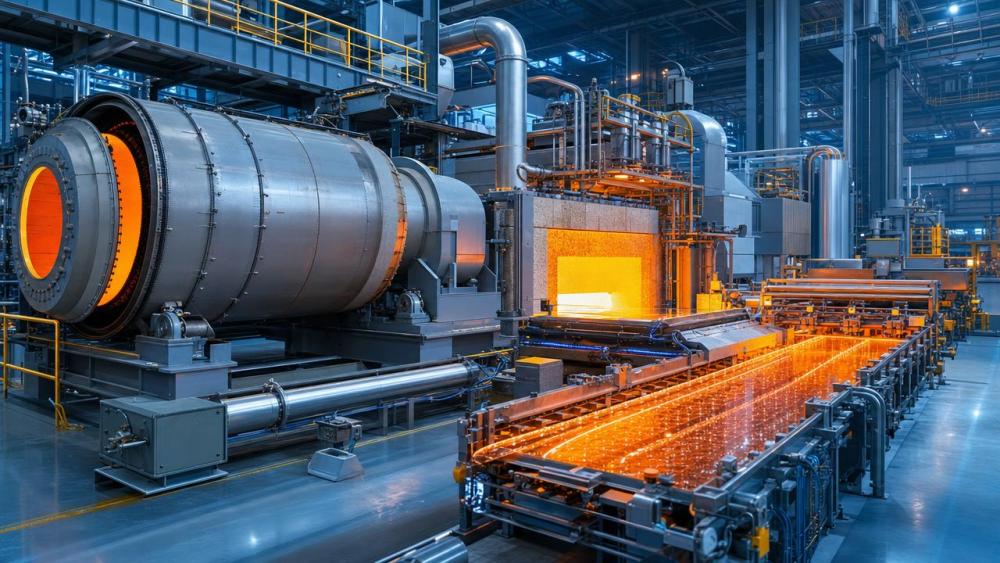
Across high-temperature sectors, operating conditions have changed faster than many legacy systems were designed to handle. Plants must now balance throughput, product quality, emissions, and maintenance with far less tolerance for waste.
In cement production, kiln fuel use, clinker quality, and dust management are under simultaneous review. In glass manufacturing, melting stability, thermal uniformity, and defect control have become linked directly to energy performance.
Industrial kilns and incineration systems face growing pressure to recover more value from waste streams while keeping emissions compliant. Refractory lines and extrusion plants must improve consistency without raising thermal losses or equipment wear.
This is why the discussion around heavy industrial processes has moved beyond simple cost reduction. Efficiency now means the ability to convert energy, materials, data, and operating time into stable output with lower carbon intensity.
For researchers, this shift matters because older performance benchmarks can be misleading. A line that once looked efficient on fuel consumption alone may now underperform when downtime, product rejects, and compliance costs are included.
What do researchers and market watchers most need to understand?
Target readers in this field are often not looking for basic definitions. They want a reliable framework for judging where performance pressure originates and which responses are commercially or technically credible.
The first concern is comparability. Heavy industrial processes vary widely by plant age, fuel mix, automation maturity, feedstock quality, and production scale. Efficiency claims are only useful when tied to a specific operating context.
The second concern is causality. Many reported improvements come from combined interventions, such as burner upgrades, process control tuning, refractory redesign, and waste heat recovery operating together. Isolating the main value driver is essential.
The third concern is durability. Some gains appear quickly during optimization campaigns but fade over time because operator practices drift, sensors lose accuracy, or maintenance schedules fail to keep systems within design conditions.
That is why useful intelligence should connect process engineering with measurable plant outcomes. Researchers need to know not only what technologies exist, but which ones consistently improve thermal balance, yield, uptime, and compliance.
Where do the biggest efficiency gains usually come from?
The most important insight is that major gains in heavy industrial processes often come from system interaction, not isolated equipment replacement. A highly efficient component can still underperform inside a poorly balanced production line.
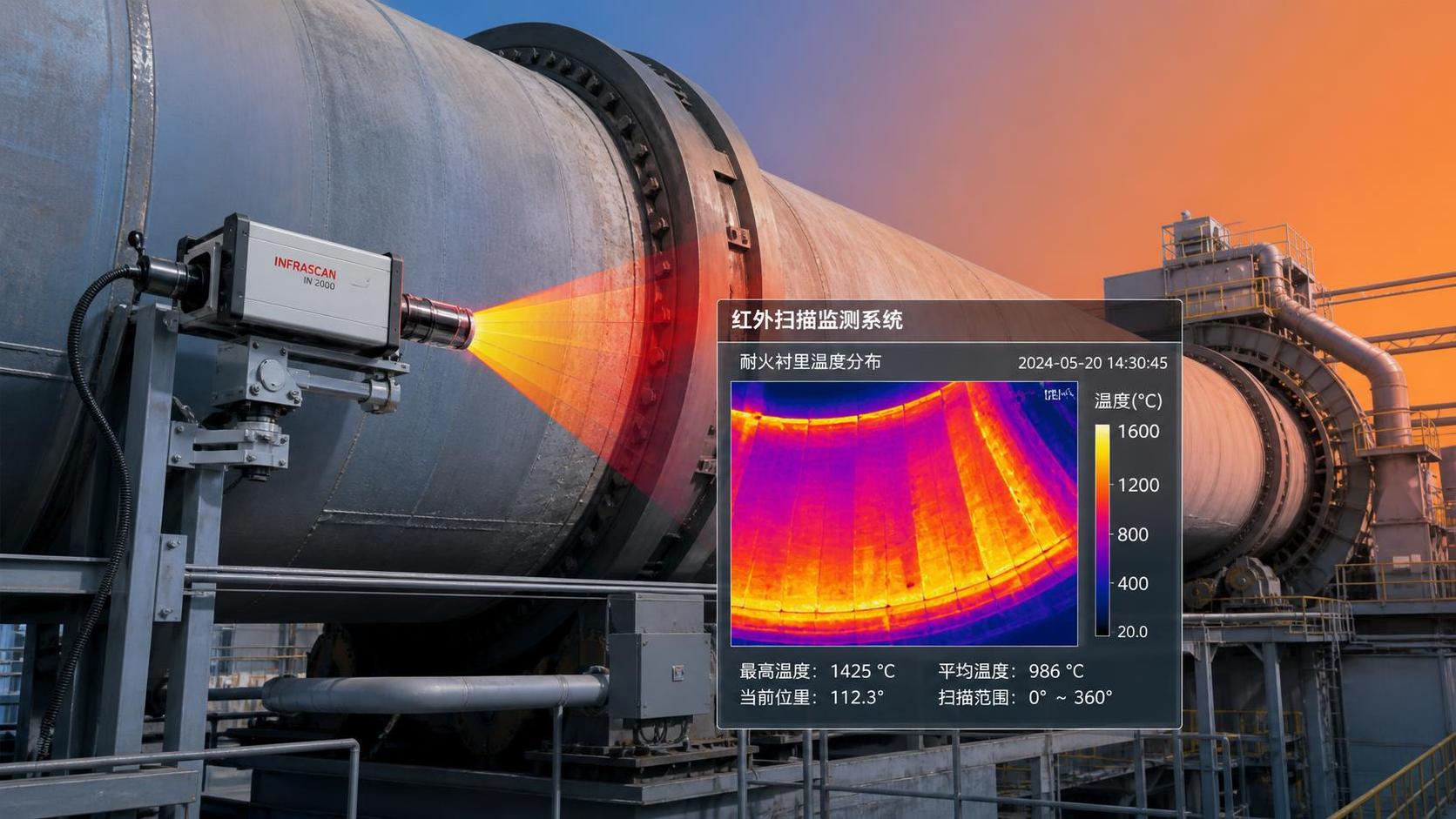
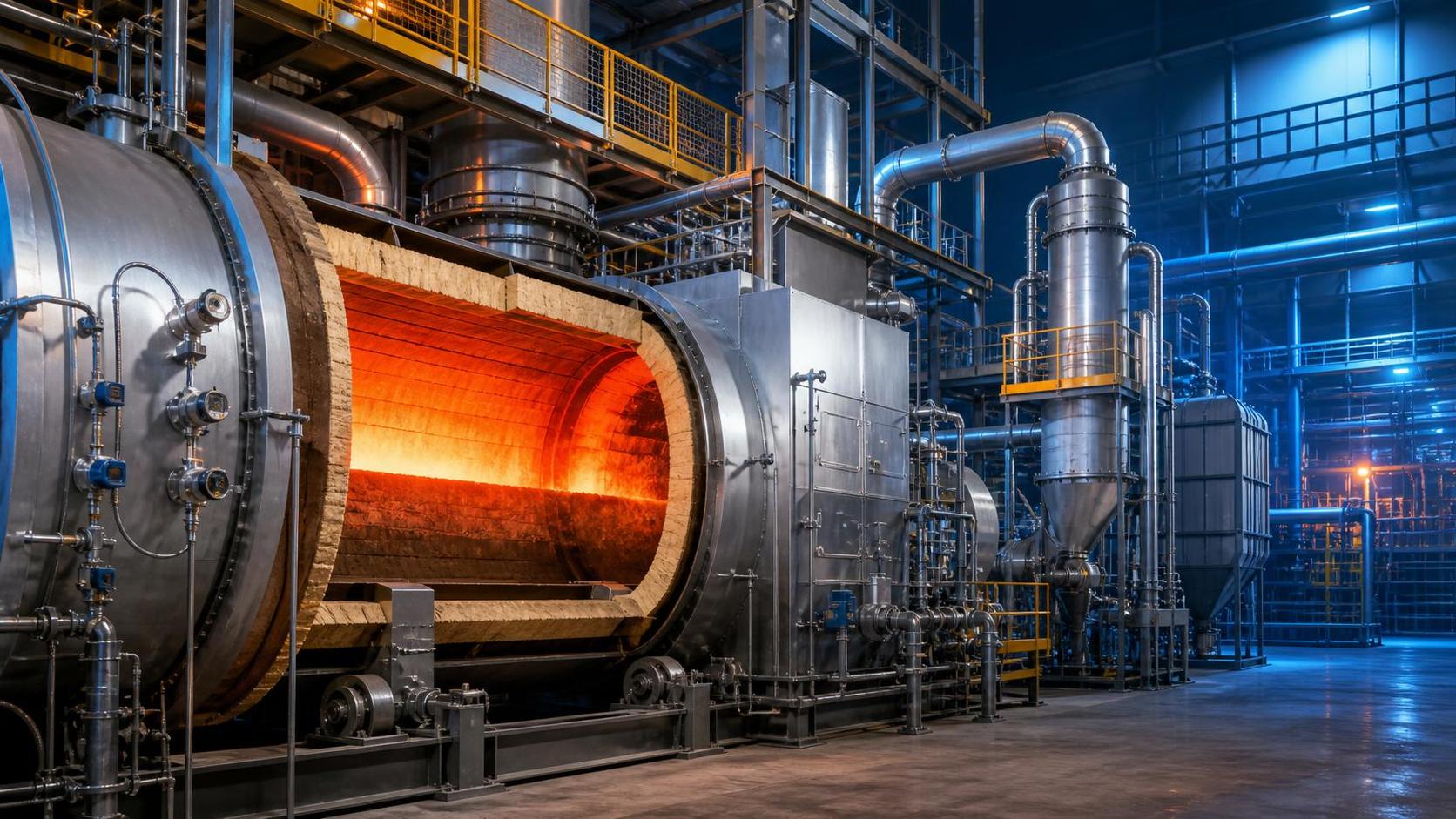
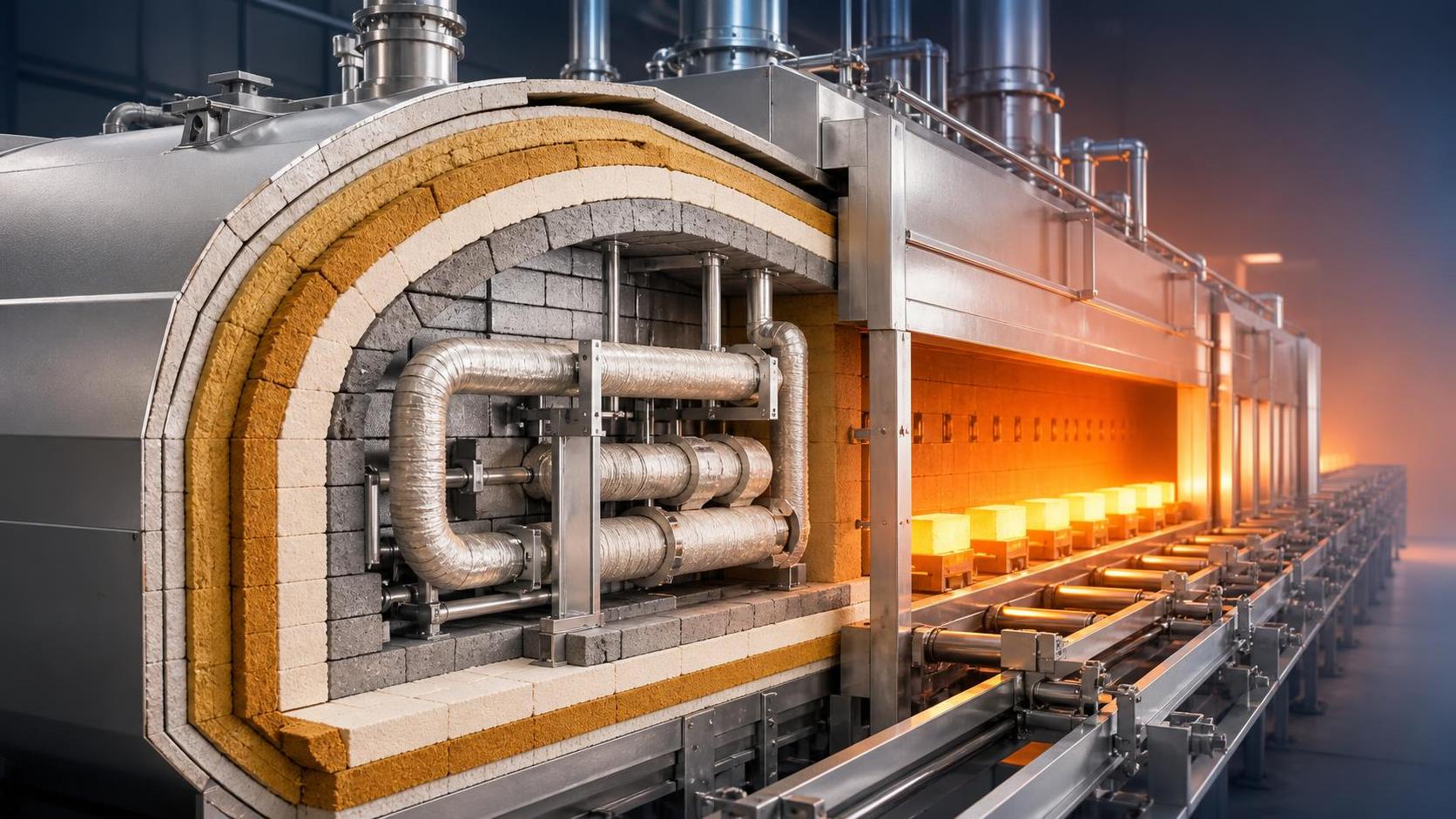
One major source of improvement is thermal optimization. In kilns, furnaces, and melting systems, temperature distribution matters as much as peak temperature. Uneven heat transfer increases fuel use, damages refractories, and reduces output stability.
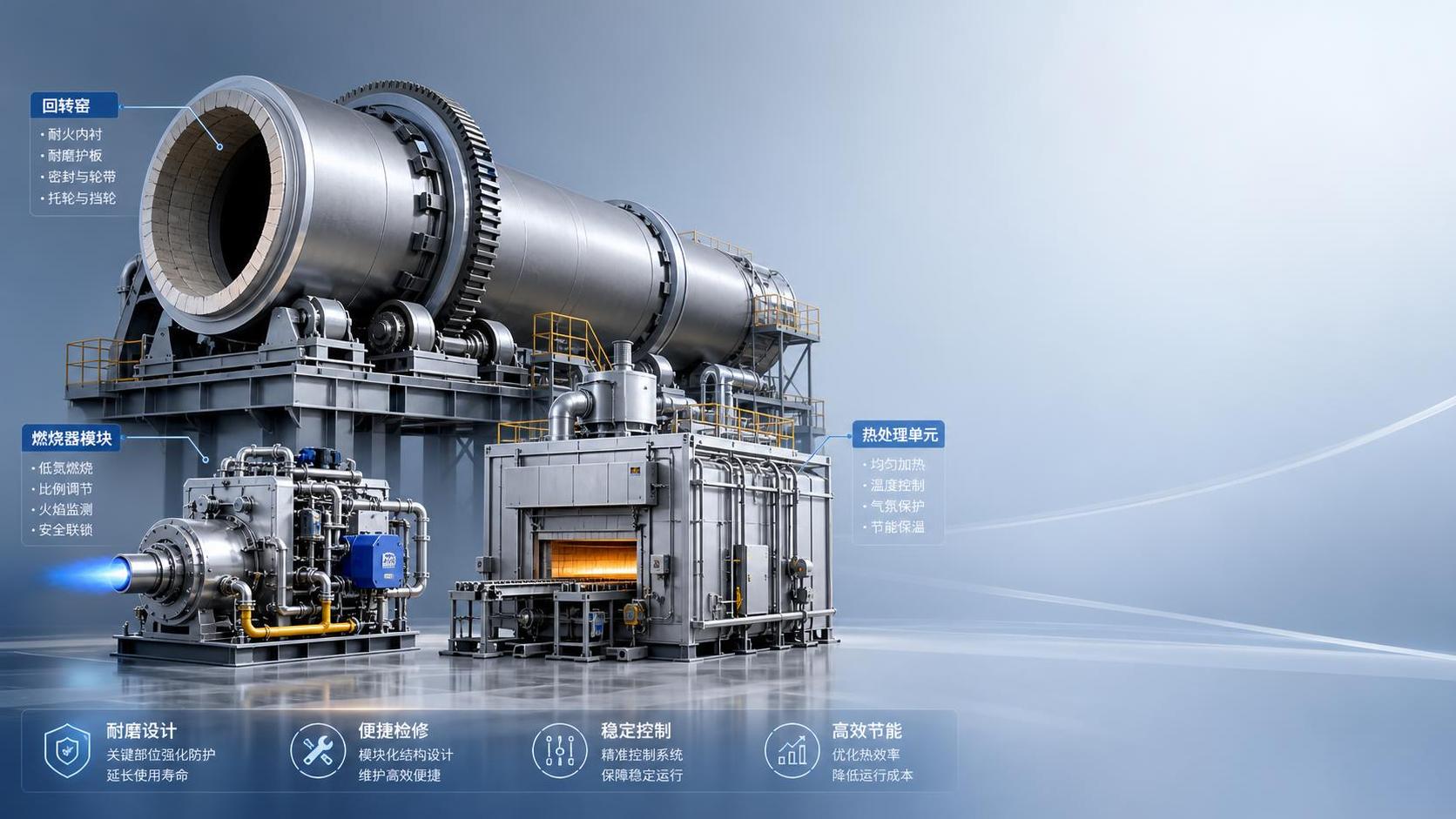
Another critical source is combustion control. Optimizing air-fuel ratios, burner positioning, flame geometry, and oxygen availability can reduce energy loss while improving process consistency. This is especially valuable in rotary kilns and incineration systems.
Waste heat recovery remains a strong opportunity, but its value depends on integration quality. Recovering heat is useful only when the recovered energy can be applied effectively to drying, preheating, power generation, or auxiliary operations.
Material consistency is another overlooked lever. In cement, refractory, and extrusion lines, variable feed chemistry or moisture content can disrupt thermal efficiency more than operators initially realize. Better raw material control often unlocks hidden savings.
Digital process monitoring is increasingly central. Online condition tracking, model-based controls, and digital twin analysis help operators detect drift before it becomes fuel waste, quality loss, or unplanned downtime.
How does this play out in cement, glass, kilns, refractories, and extrusion?
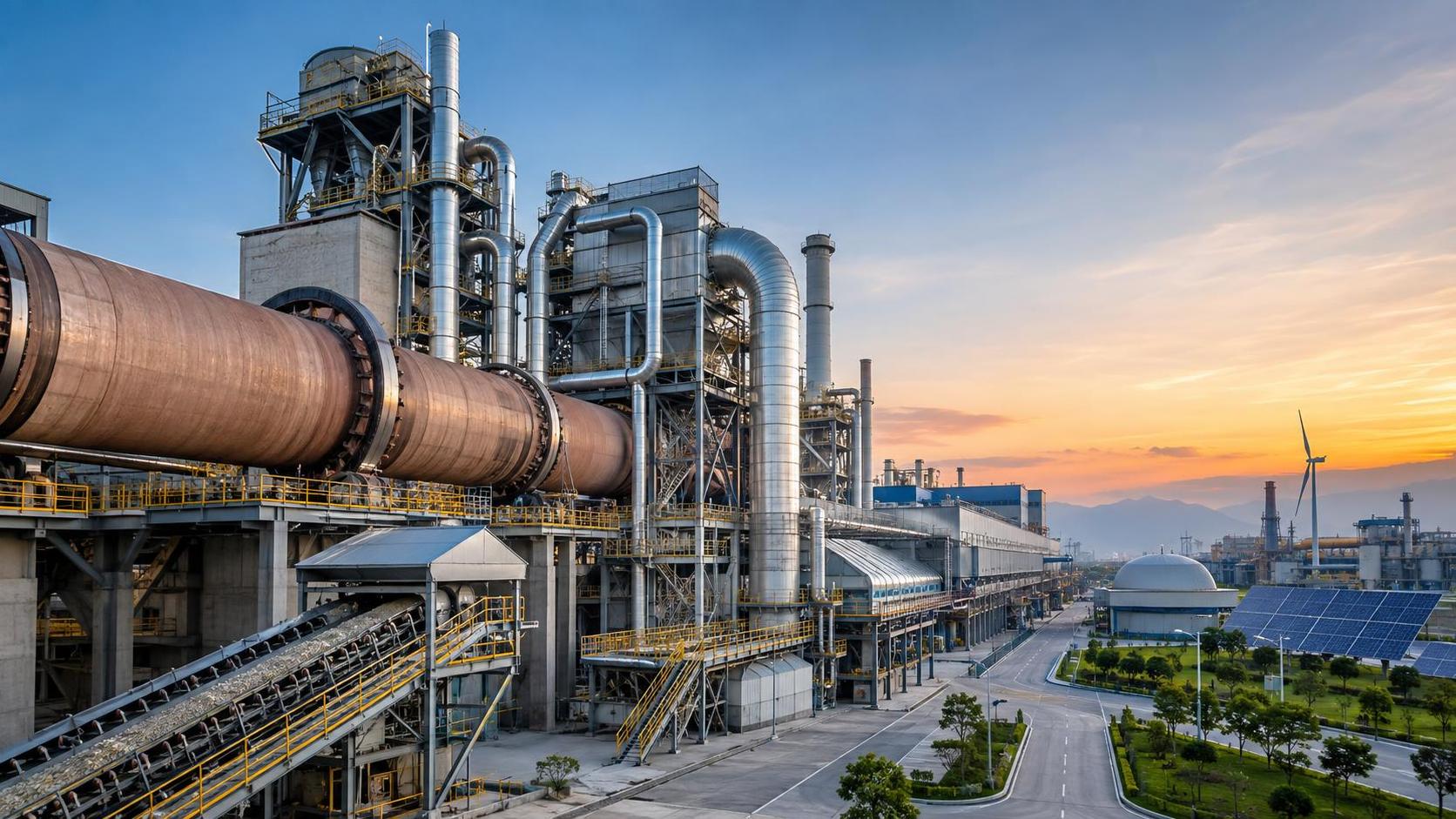
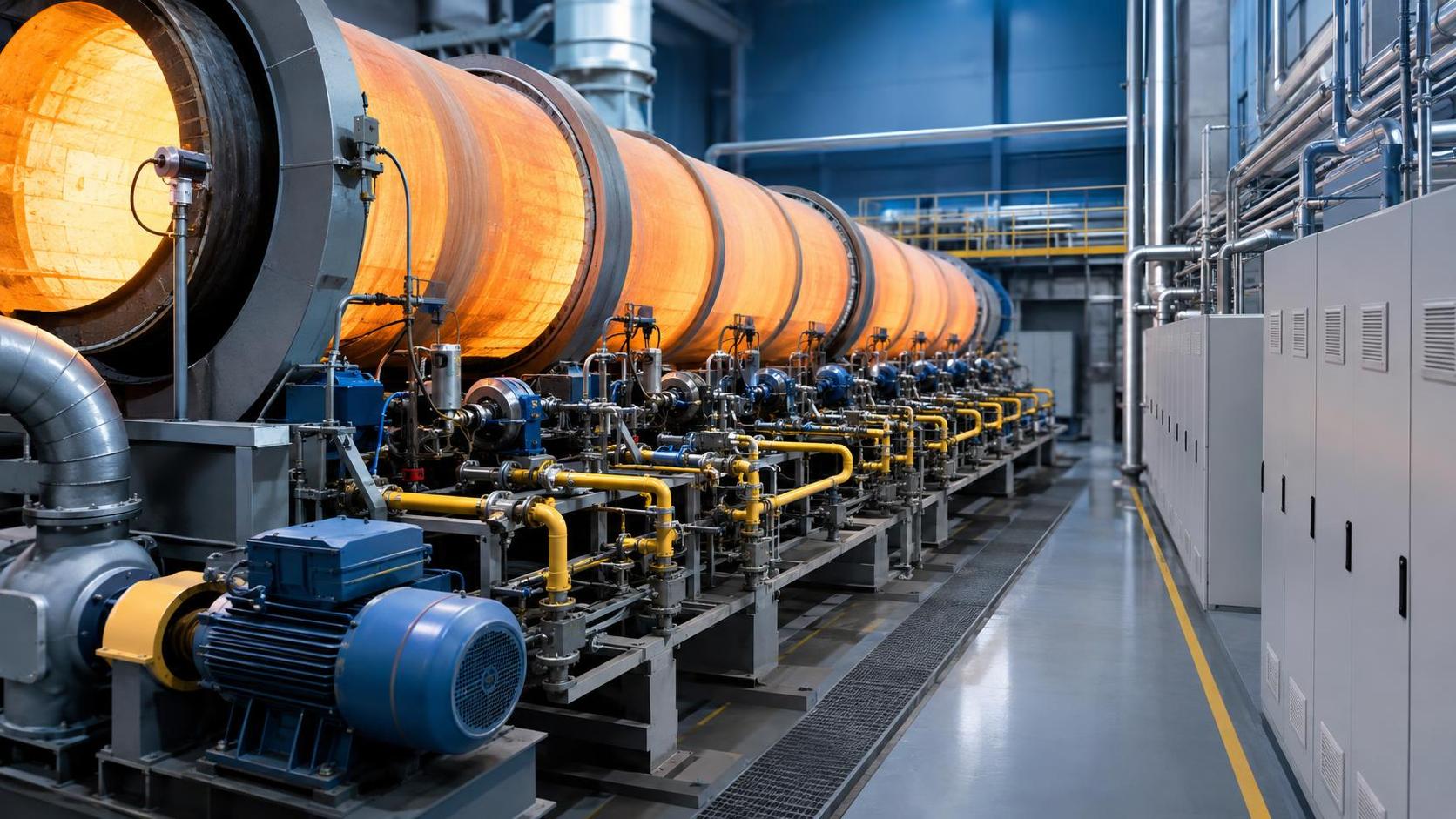
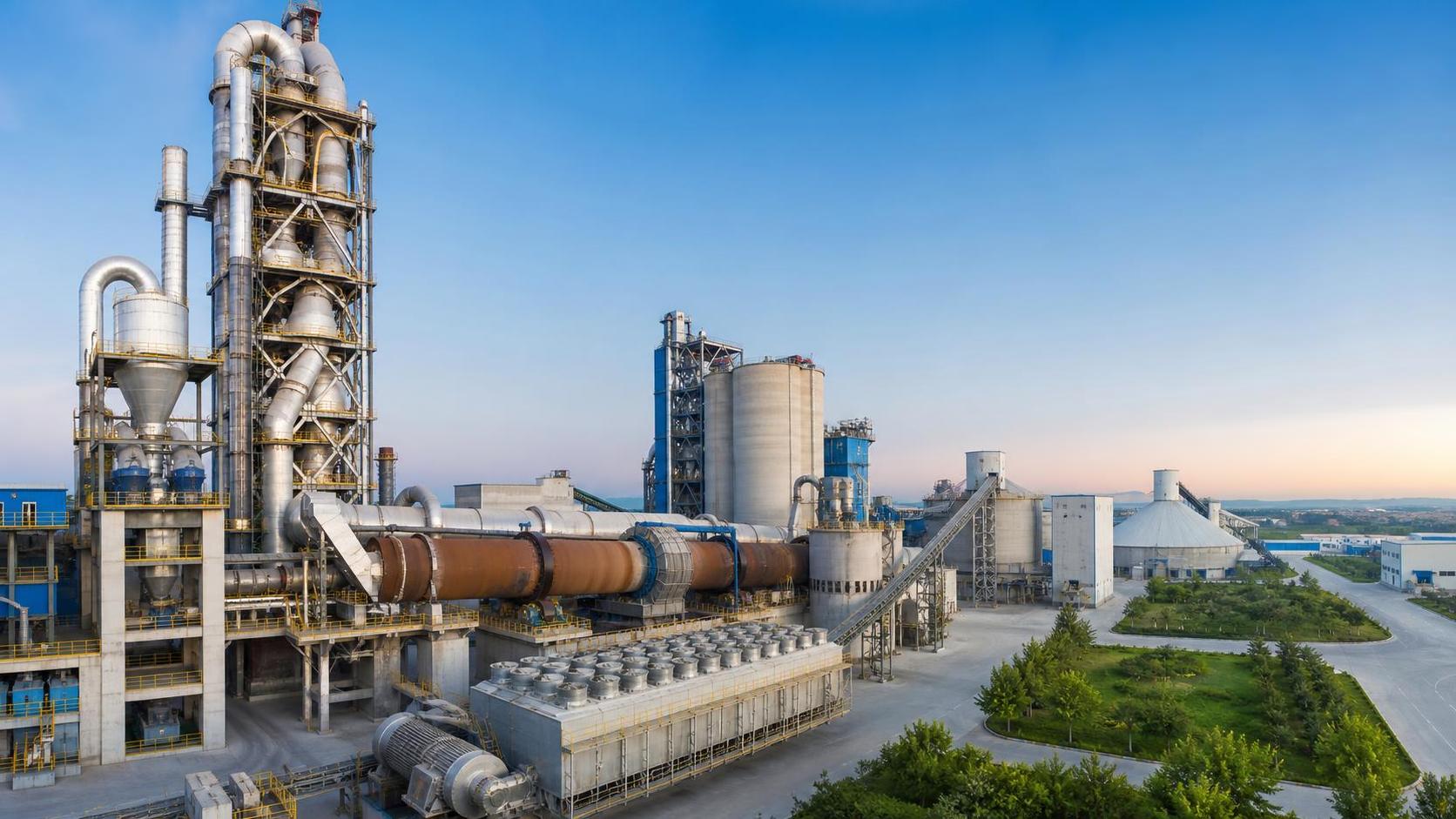
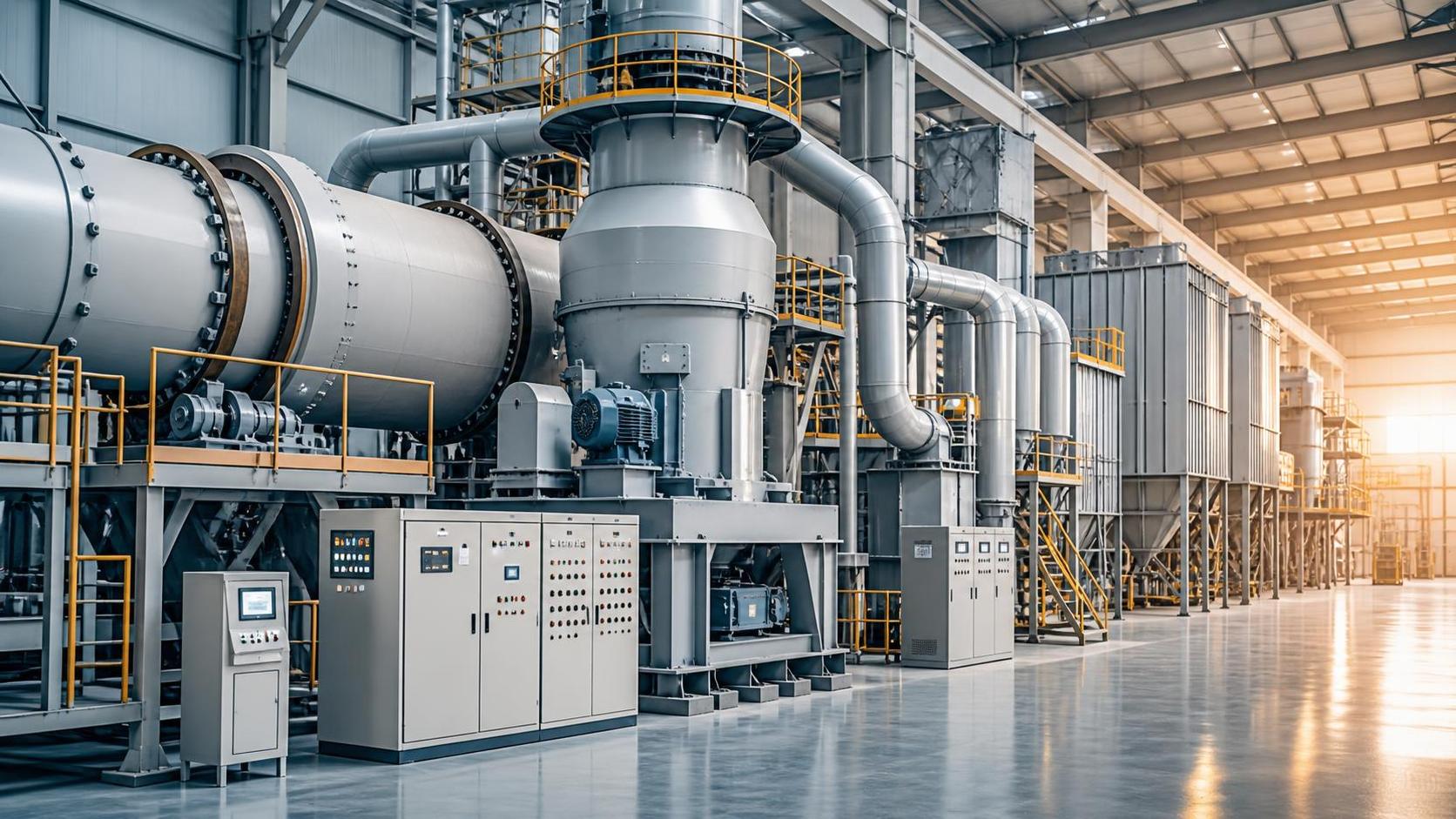
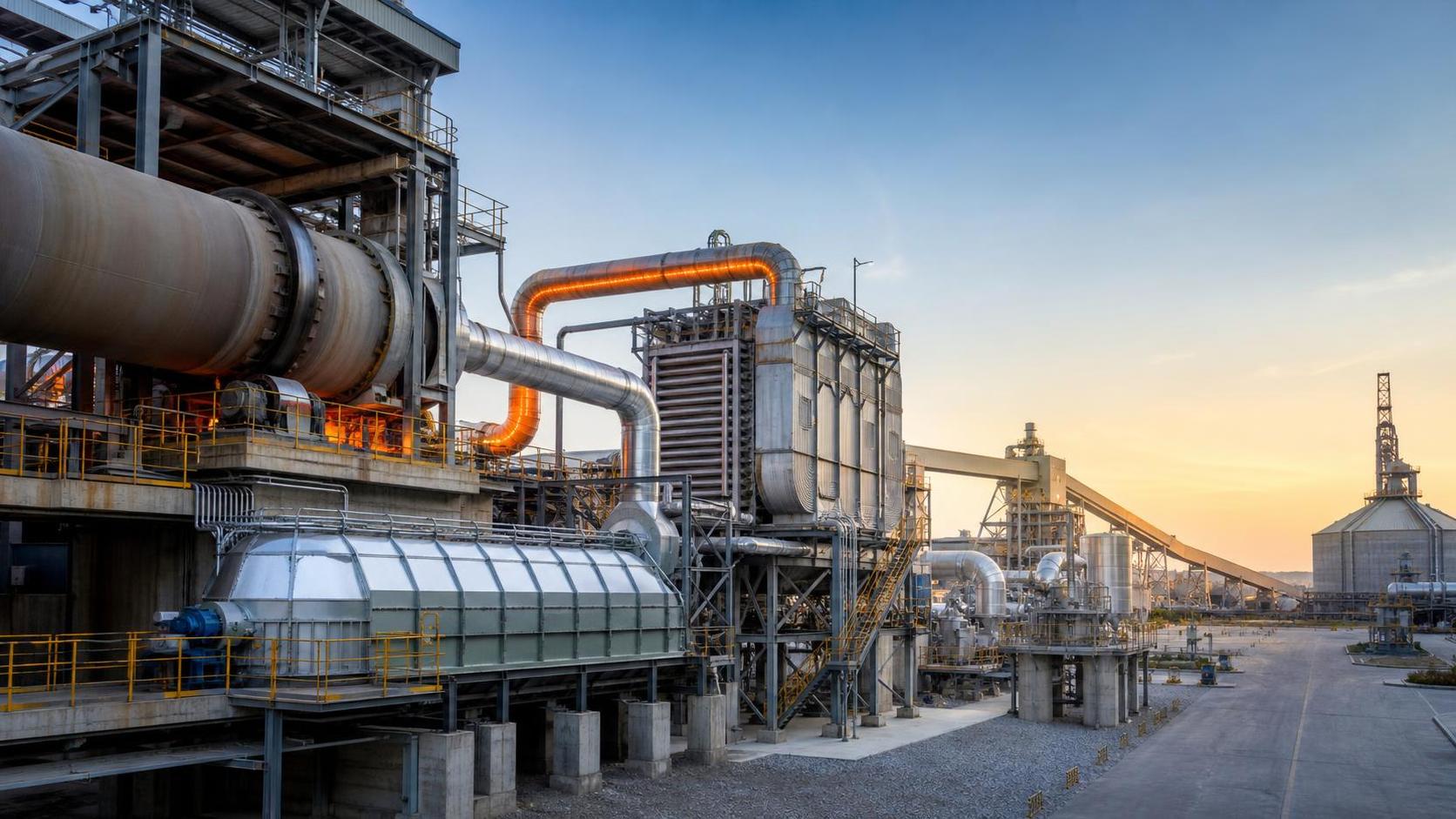
In cement production plants, efficiency pressure centers on kiln stability, alternative fuel handling, clinker quality, and emissions. Plants are expected to lower heat consumption while maintaining throughput and controlling dust and NOx exposure.
The strongest gains often come from better preheater performance, kiln shell heat management, combustion tuning, and coordinated raw mix control. Researchers should also watch co-processing strategies, since waste-derived inputs can change thermal behavior.
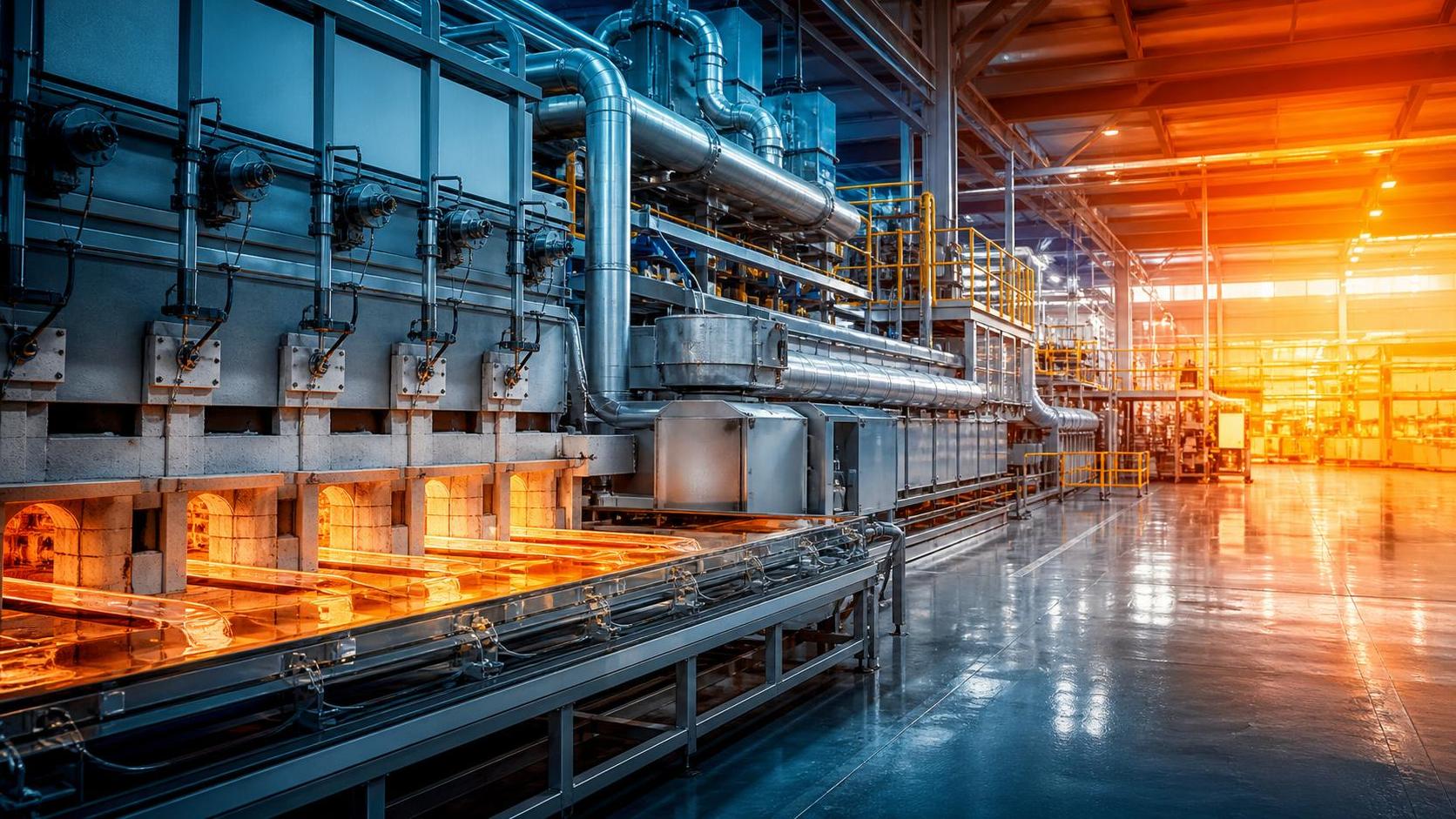
In glass manufacturing gear, efficiency is closely tied to melting precision. Poor thermal distribution raises defect rates, stresses furnace structures, and drives excess energy use. Furnace atmosphere control and batch consistency are therefore strategic variables.
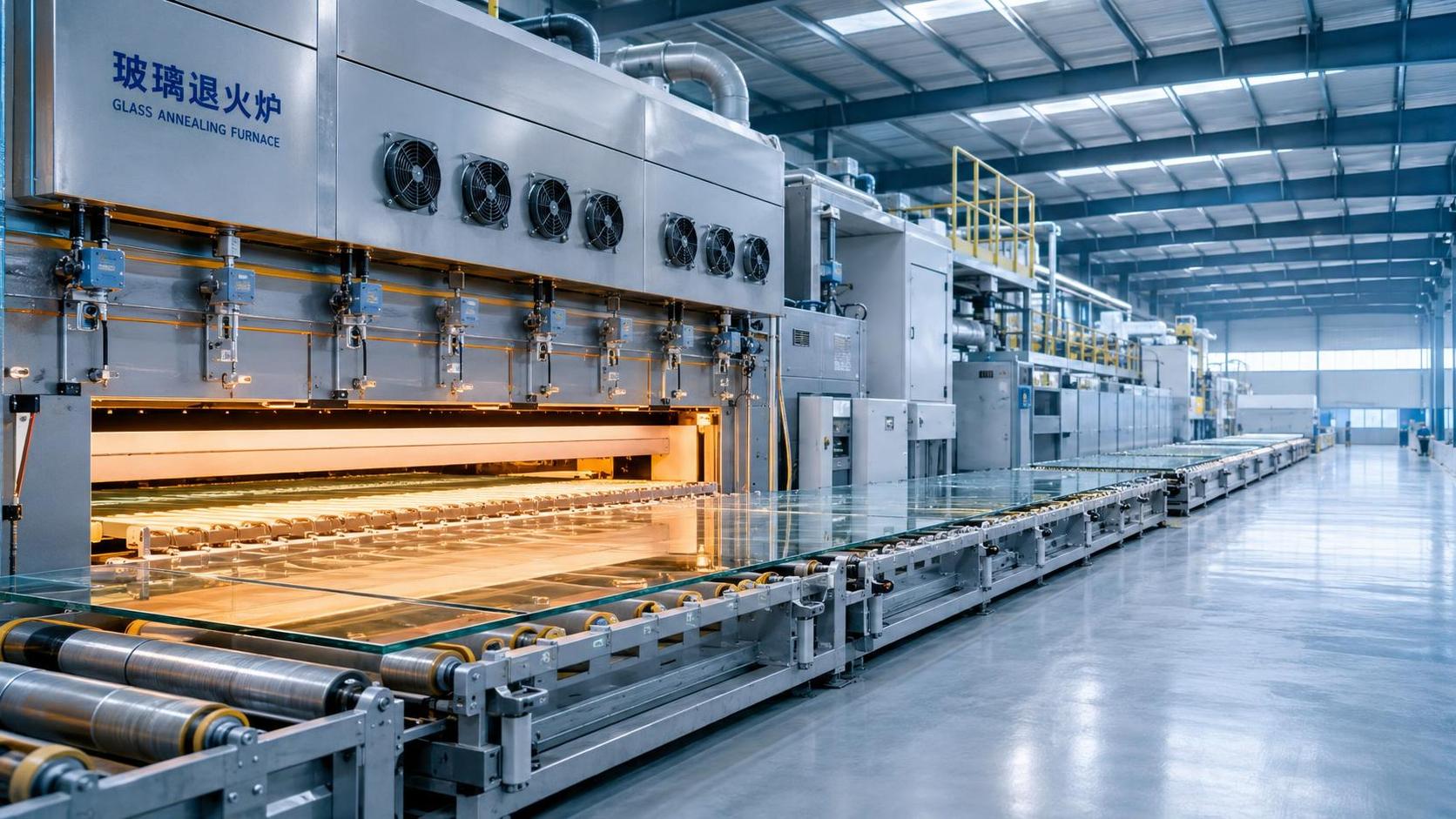
Annealing stages also deserve attention. Energy efficiency in glass does not stop at melting. Temperature profile discipline across downstream sections influences reject rates, mechanical performance, and overall line economics.
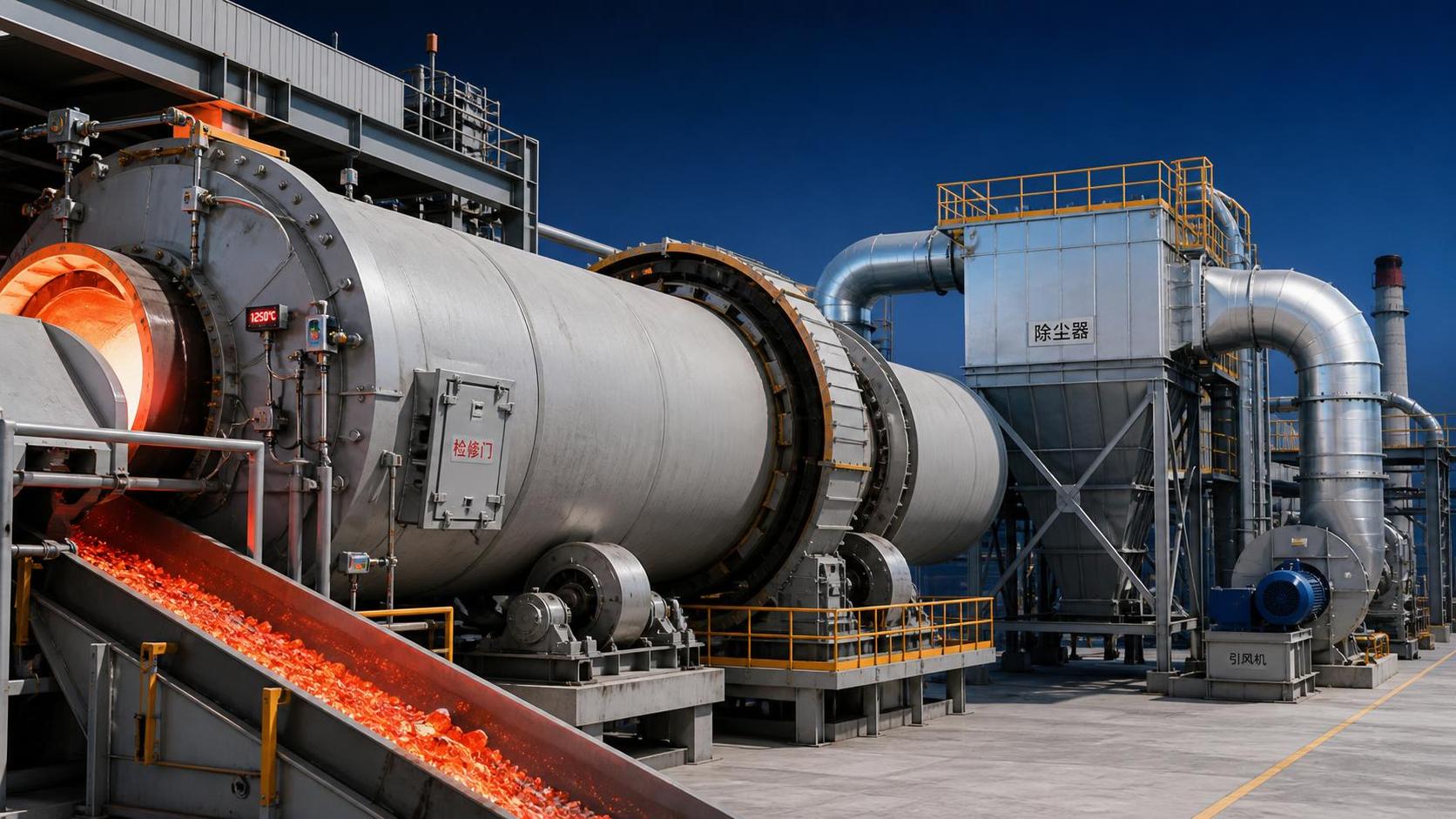
For industrial kilns and incineration, the challenge is to maintain stable destruction or transformation conditions despite variable input streams. Efficiency depends on retention time control, combustion stability, heat recovery, and refractory reliability.
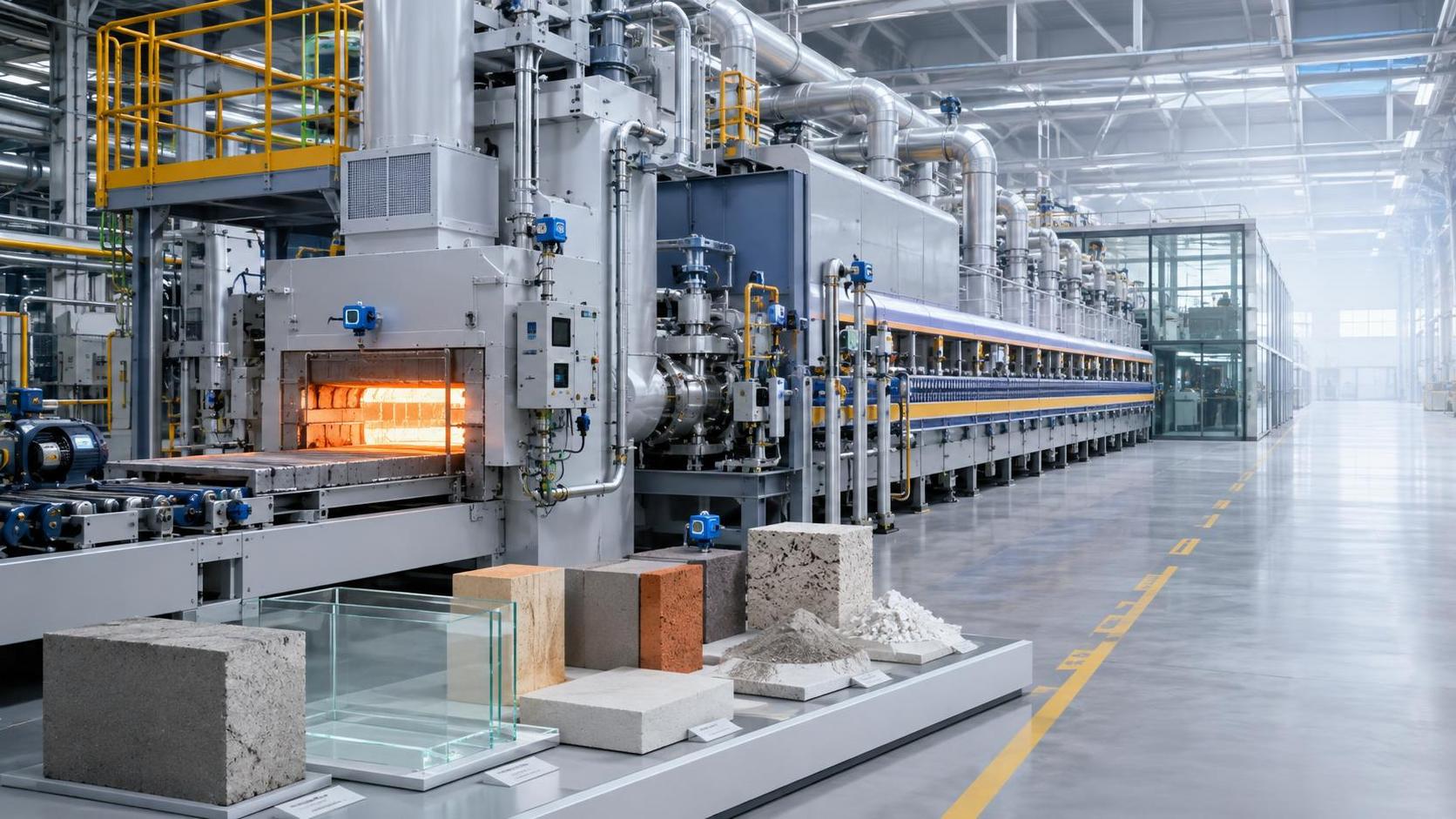
In refractory production lines, firing cycles, insulation design, and kiln loading patterns shape both product quality and thermal cost. Since refractories support other high-temperature industries, their own production efficiency has wider supply chain impact.
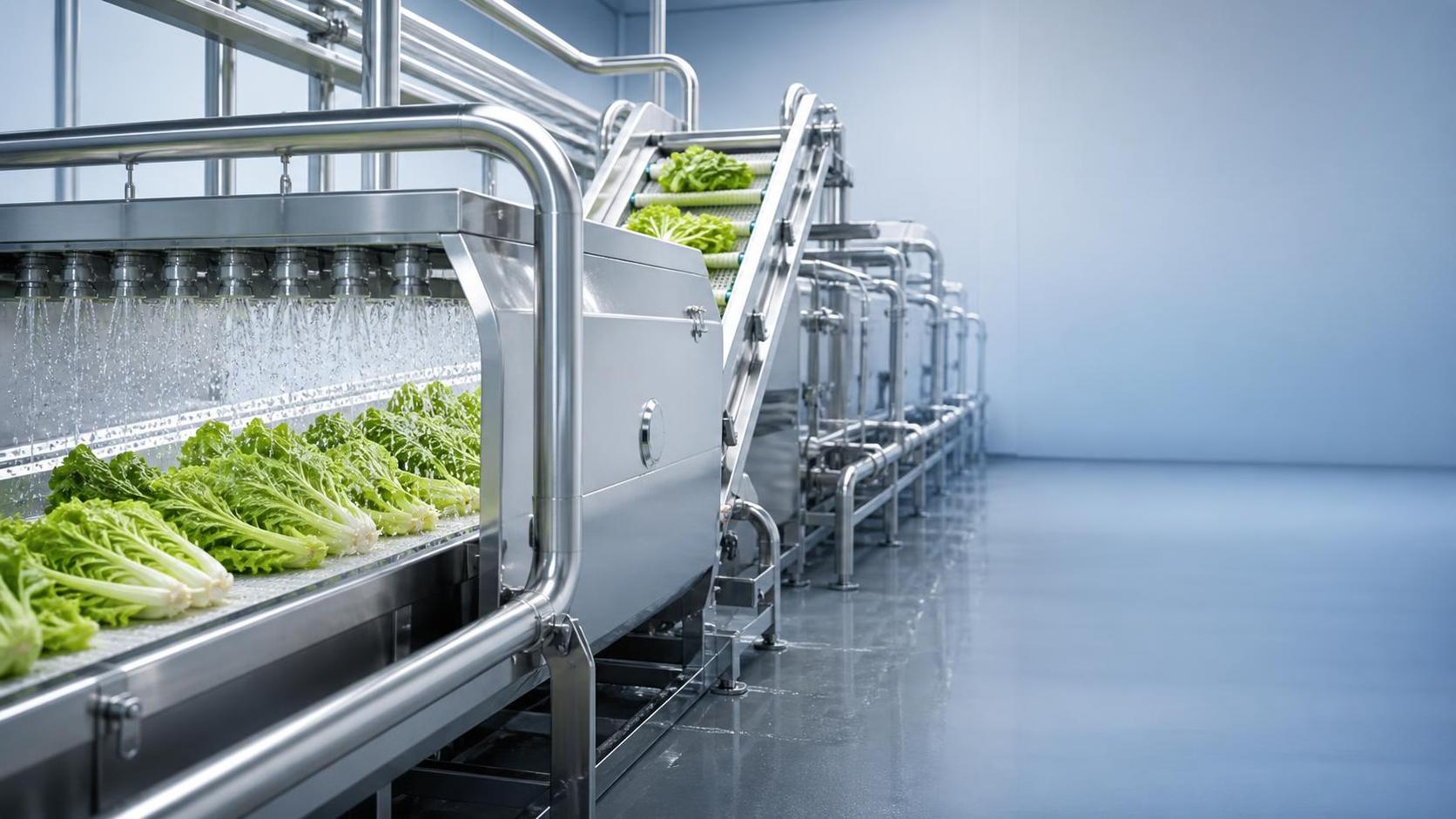
New building material extrusion systems face a different balance. They must combine pressure, moisture control, material homogeneity, and drying discipline to produce lightweight, green construction materials at competitive energy intensity.
Why is data-led intelligence becoming more valuable than isolated equipment claims?
Many equipment vendors emphasize nominal efficiency ratings, but researchers increasingly need process-level evidence. Heavy industrial processes are too complex for single-point claims to provide a complete picture of operational value.
Data-led intelligence helps reveal whether a solution improves only one metric or creates broader gains. For example, a burner modification may reduce fuel use, but if it increases refractory wear, the total efficiency case becomes weaker.
This is why integrated monitoring matters. Temperature profiles, pressure trends, exhaust composition, lining condition, throughput stability, and reject rates should be read together rather than as separate maintenance or production indicators.
Digital twins are particularly useful in glass and kiln applications because they allow simulation of thermal and flow conditions without disrupting production. For researchers, they offer a stronger basis for comparing scenarios than anecdotal reporting.
Similarly, online monitoring of refractory linings can shift maintenance from reactive replacement to predictive planning. That improves uptime and reduces the energy penalties associated with degraded thermal barriers or emergency shutdown conditions.
At the strategic level, intelligence platforms such as CF-Elite create value by stitching together engineering signals, policy shifts, technology trends, and market demand patterns. This supports better judgment in long-cycle industrial decision environments.
What risks can undermine efficiency programs even when the technology is sound?
One common risk is treating efficiency as a one-time retrofit instead of an operating discipline. Heavy industrial processes drift over time, so gains must be maintained through calibration, training, inspection, and process review.
Another risk is overestimating digital maturity. Plants may install sensors or dashboards without ensuring data quality, response workflows, or cross-functional accountability. In that case, visibility increases but performance does not.
Fuel transition is also a major source of uncertainty. Alternative fuels, waste inputs, and decarbonization strategies can improve economics or carbon results, yet they may complicate flame stability, ash behavior, corrosion, or product chemistry.
Maintenance misalignment is equally important. If process upgrades raise thermal intensity or throughput without corresponding maintenance redesign, efficiency gains can be offset by higher failure rates and shorter campaign life.
Researchers should therefore assess solutions through a full-system lens. The best-performing plants are not always those with the newest hardware, but those with the strongest alignment between process design, control logic, maintenance, and operator capability.
How should researchers evaluate whether an efficiency trend is truly meaningful?
A useful starting point is to examine whether the reported improvement affects more than one business-critical metric. Strong efficiency trends typically improve energy use, product quality, uptime, or emissions at the same time.
Next, check time horizon. Sustainable gains are more credible when performance is demonstrated across multiple production cycles, raw material conditions, and maintenance intervals rather than during short optimization windows.
Context is also essential. A meaningful benchmark in a modern float glass line may not translate directly to an older kiln-based system. Researchers should compare like-for-like operating realities whenever possible.
It is also important to watch for bottleneck migration. An intervention may improve furnace efficiency but expose limitations in cooling, conveying, dust collection, or finishing sections. True process improvement reduces constraints across the line.
Finally, look at strategic fit. The most relevant efficiency investments are those aligned with future regulation, lower carbon pathways, and digital operating models. Short-term savings alone may not justify systems that limit future flexibility.
What is the broader outlook for heavy industrial processes?
The outlook is not simply one of tighter pressure, but of sharper differentiation. Plants and equipment ecosystems that can combine thermal precision, digital visibility, and carbon-aware operations will increasingly set market standards.
In practical terms, heavy industrial processes are moving toward integrated efficiency models. These models treat energy, materials, emissions, and uptime as linked variables rather than separate engineering targets.
That favors organizations able to connect sector news with process intelligence. Cement, glass, incineration, refractory, and extrusion markets are all being reshaped by the same broad forces: decarbonization, electrification pressure, raw material variability, and traceable performance demands.
For researchers, this means the most valuable insight will come from comparing how different industries solve similar thermal and operational problems. Cross-sector learning is becoming a major source of competitive understanding.
CF-Elite’s focus on foundation materials and thermal management reflects this reality. The future of efficiency will be defined less by isolated machinery and more by how well industrial systems coordinate heat, chemistry, mechanics, and data.
Conclusion: efficiency pressure is now a strategic filter, not just an operating issue
Heavy industrial processes face new pressure on efficiency because the definition of performance has expanded. Energy consumption still matters, but so do carbon exposure, uptime resilience, product consistency, and process adaptability.
For information researchers, the most useful approach is to look beyond broad claims and identify where measurable gains are created: thermal balance, combustion quality, raw material stability, digital monitoring, and maintenance coordination.
The industries covered by CF-Elite show that efficiency is no longer a narrow engineering metric. It is a strategic filter for evaluating technologies, suppliers, production models, and long-term competitiveness in high-temperature manufacturing.
The clearest takeaway is simple. In today’s industrial environment, the leaders in heavy industrial processes will be those that turn operational complexity into disciplined, data-backed efficiency gains that last.
Related News
 Optical Glass Tech FellowHow to Evaluate a Glass Annealing Equipment Manufacturer for Production StabilityChoose a glass annealing equipment manufacturer with proven thermal uniformity, reliable controls, lifecycle value, and responsive service for stable production.Sep 08, 2026
 Prof. Marcus ChenThermal Energy Architecture in North America: Strategies for Lower Building Energy UseThermal energy architecture North America helps project leaders cut building energy use through stronger envelopes, right-sized HVAC, storage, and smart commissioning.Sep 07, 2026
 Ms. Elena RodriguezHow Should Buyers Evaluate Building Material Industry Intelligence Pricing?Building material industry intelligence pricing: learn how to compare coverage, technical depth, and ROI to choose intelligence that reduces procurement risk.Sep 07, 2026
 Ms. Elena RodriguezHow to Use Building Material Intelligence Data for Market and Investment DecisionsBuilding material industry intelligence data helps leaders evaluate demand, costs, regulation, capacity, and technology to make smarter market and investment decisions.Sep 05, 2026
 Thermal Energy ArchitectHow PLC Control Improves Energy Efficiency and Temperature Stability in KilnsEnergy efficient kilns PLC control improves temperature stability, cuts fuel waste, and optimizes combustion, draft, and material flow. Explore proven strategies for smarter kiln modernization.Sep 04, 2026
 Optical Glass Tech FellowEuropean Glass Melting Processes: Furnace Choices, Energy Use, and Quality ControlGlass melting process Europe: explore furnace choices, energy efficiency, cullet strategy, and quality control to improve output, compliance, and long-term glass performance.Sep 03, 2026
 Thermal Energy ArchitectWhat Determines Refractory Lining Monitoring Price for Industrial Kilns?Refractory lining monitoring price depends on kiln size, sensor technology, installation, software, and support. Compare total lifecycle costs and choose the right solution.Sep 02, 2026
 Silicate Process EngineerCement Production System Costs: A Plant Buyer’s Guide to Budgeting and ROICement production systems cost planning made clear: compare CAPEX, operating costs, compliance, and ROI to build a resilient, profitable cement plant investment.Sep 01, 2026
 Dr. Alistair VaughnWhat Should a Process Technology Database Track for High-Temperature Plants?Process technology database essentials for high-temperature plants: track thermal profiles, feed chemistry, refractory wear, emissions, energy, and maintenance for safer, data-driven decisions.Aug 31, 2026
 Ms. Elena RodriguezHow to Evaluate a Silicate Processing Equipment Manufacturer for Plant ProjectsSilicate processing equipment manufacturer selection: assess process fit, guarantees, energy, compliance, delivery risk, and lifecycle support for dependable plant performance.Aug 30, 2026
 Dr. Alistair VaughnHow to Specify Custom Agricultural Processing Equipment for Throughput and HygieneEquipment customization services for agricultural processing: learn to specify hygienic, high-throughput lines that improve yield, reliability, and long-term efficiency.Aug 29, 2026
 Dr. Alistair VaughnHow to Select Process Plant Equipment for High-Temperature, Abrasive Production LinesProcess plant equipment selection for high-temperature, abrasive lines: reduce downtime, improve durability, and optimize lifecycle performance.Aug 28, 2026
 Silicate Process EngineerHow Kiln Heat Recovery Systems Cut Fuel Use in Cement and Lime ProductionKiln heat recovery helps cement and lime plants cut fuel use, improve thermal stability, and build practical, reliable decarbonization strategies.Aug 27, 2026
 Ms. Elena RodriguezProcess Equipment Comparison: Which Metrics Matter Most for Reliable Selection?Process equipment comparison made practical: discover which metrics truly drive reliable selection, from energy efficiency and control stability to wear life, maintainability, and uptime.Aug 26, 2026
 Ms. Elena RodriguezWhat Buyers Should Check Before Sourcing Precision Alloy Bars for Critical PartsPrecision Alloy Bars buyers should verify grade, chemistry, tolerances, surface quality, traceability, and lead time before sourcing for critical parts. Learn what prevents costly machining and reliability risks.Aug 27, 2026
 Ms. Elena RodriguezHow to Evaluate Thermal Management Solutions Insulation for High-Heat Industrial SystemsThermal management solutions insulation: learn how to assess high-heat industrial systems by thermal performance, durability, lifecycle cost, and supplier data for smarter decisions.Aug 25, 2026
 Ms. Elena RodriguezWhat Drives Waste Recycling Cost in Industrial Projects and How to Estimate It?Waste recycling cost in industrial projects depends on composition, moisture, transport, pre-treatment, and compliance. Learn how to estimate it accurately and compare suppliers with confidence.Aug 24, 2026
 Silicate Process EngineerHow to Evaluate Cement Production Plants in the Middle East for Capacity, Fuel Flexibility, and ROIcement production plants Middle East: Learn how to assess true capacity, fuel flexibility, and ROI risks to identify resilient assets and smarter investment opportunities.Aug 23, 2026
 Structural Material AnalystHow to Evaluate Lightweight Material Machinery for Output, Energy Use, and Product QualityLightweight material machinery evaluation guide: compare stable output, energy use, and product quality to choose equipment that cuts waste, lowers costs, and improves production confidence.Aug 22, 2026
 Material Heat-Resist ExpertWhat Determines Refractory Production Line Price in a Turnkey Plant Project?Refractory production line price depends on raw materials, forming method, kiln and drying design, automation, utilities, and scope. Learn what really drives turnkey plant cost before you invest.Aug 21, 2026

Related News
- 00
0000-00
Thermal Energy Architecture in North America: Strategies for Lower Building Energy Use - 00
0000-00
How to Evaluate a Green Material Production Line for Energy Use, Output, and Product Quality - 00
0000-00
Silicate Technology Trends: What New Process Upgrades Matter for Refractory and Cement Plants? - 00
0000-00
Thermal Engineering Optimization: Which Process Parameters Most Affect Energy Use? - 00
0000-00
Material Extrusion Technology in Europe: Which Materials and Production Goals Fit Best?
Weekly Insights
Stay ahead with our curated technology reports delivered every Monday.