
What cement industry trends are reshaping plant upgrades?




From decarbonization targets to digital process control, cement industry trends are redefining how plant upgrades are planned and prioritized. For project managers and engineering leaders, the challenge is no longer just replacing aging assets, but aligning efficiency, emissions, fuel flexibility, and long-term competitiveness. This article explores the key shifts shaping upgrade decisions across modern cement production facilities.
For capital-intensive plants, upgrade decisions now affect far more than kiln uptime. They influence CO2 exposure, fuel sourcing, maintenance cycles, permitting risk, and the ability to operate profitably under tighter environmental controls.
Within this landscape, cement industry trends are converging around a practical question: which upgrades deliver measurable gains within 12-36 months, while also supporting a plant roadmap for the next 10-15 years? For project leaders, the answer requires tighter coordination between process engineering, thermal management, procurement, and long-cycle shutdown planning.
Why cement plant upgrades are being redefined
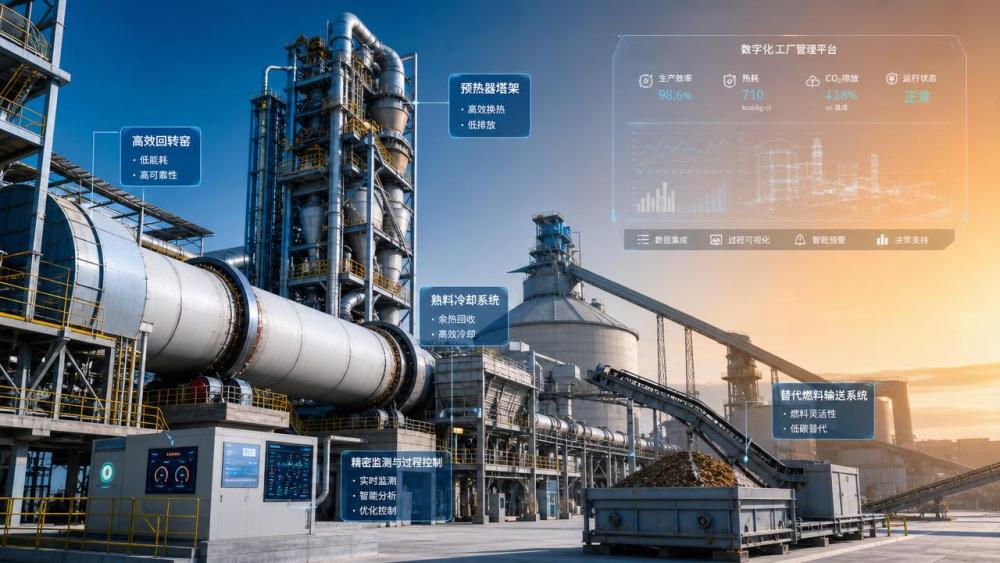
The traditional model of upgrading single assets in isolation is losing value. Many plants now evaluate line performance as an integrated system that includes raw mix stability, preheater efficiency, kiln fuel use, clinker cooling, grinding energy, and emissions control.
This shift is driven by 4 major pressures: rising energy costs, stricter dust and NOx limits, demand for lower-clinker products, and the growing need for flexible operation under variable fuel and power conditions. In many regions, even a 3%-5% thermal efficiency improvement can materially change plant economics.
From replacement projects to performance-driven modernization
Older upgrade strategies often focused on age-based replacement after 15-25 years of service. Today, project managers are increasingly prioritizing bottleneck removal, emissions resilience, and digital visibility. The result is a more selective investment model, where one targeted intervention can unlock gains across several process steps.
- Preheater and calciner retrofits to improve heat recovery and fuel burn quality
- Alternative fuel systems to reduce fossil dependence and improve cost flexibility
- Clinker cooler upgrades to recover secondary air more effectively
- Grinding system optimization to reduce kWh per ton of cement
- Continuous emissions and condition monitoring for compliance and maintenance planning
The planning window is getting shorter, but the consequences are larger
One of the clearest cement industry trends is the compression of decision time. Plants that once planned around major outages every 4-6 years now face more frequent intervention windows, often limited to 7-21 days for critical work. This increases the importance of front-end engineering, spares readiness, and site logistics.
At the same time, the cost of poor sequencing has risen. A delayed refractory interface, an underspecified burner, or a late electrical integration issue can extend shutdowns by several days and erase expected returns for an entire fiscal period.
What project leaders are measuring more closely
Engineering teams are moving beyond simple nameplate comparisons. More upgrade decisions are now screened against 6 practical metrics that influence both ROI and operational resilience.
- Specific thermal energy consumption
- Electrical intensity in kWh per ton
- Dust, NOx, and SOx compliance margin
- Alternative fuel substitution rate
- Unplanned downtime hours per quarter
- Maintenance access and refractory service life
The table below shows how common upgrade triggers are changing in current cement plant planning.
The key takeaway is that cement industry trends are shifting investment logic from isolated equipment renewal to cross-functional performance optimization. That change favors teams that can evaluate thermal, chemical, and operational impacts together rather than line by line.
The biggest cement industry trends shaping upgrade priorities
Several trends now appear repeatedly across feasibility studies, revamp packages, and plant performance reviews. While each site has unique constraints, the upgrade priorities below are becoming standard discussion points in budget and shutdown planning.
1. Decarbonization is moving from policy pressure to equipment criteria
Decarbonization no longer sits outside core engineering decisions. It directly influences calciner design, clinker factor strategy, waste heat recovery, and the viability of alternative fuels. In practical terms, plants are asking whether new equipment will remain useful under tighter carbon accounting over the next 8-12 years.
For many lines, the first-stage opportunity is not a full transformation project. It is a sequence of upgrades that improve thermal efficiency, stabilize combustion, and reduce clinker-related emissions intensity before larger carbon capture decisions are made.
2. Fuel flexibility is becoming a resilience requirement
Another defining cement industry trend is the move toward broader fuel capability. Plants are increasingly retrofitting handling, dosing, and burner systems to support mixed fuel streams, including refuse-derived fuels, biomass fractions, and selected industrial residues.
This is not only a cost issue. Fuel flexibility can reduce supply risk, improve carbon performance, and strengthen local permitting narratives around circular resource use. However, substitution rates above 20%-40% often require tighter control of particle size, moisture, feeding consistency, and flame stability.
3. Digitalization is shifting from dashboards to process action
Basic visualization platforms are no longer enough. Project teams now expect actionable insights from process data, especially in kilns, coolers, mills, and emissions systems. Digital tools are being used to detect ring formation risk, refractory stress, abnormal draft behavior, and grinding inefficiency before they trigger production losses.
In some plants, online condition systems are reviewed daily, while advanced process control loops may update key setpoints every few seconds. That operational cadence is influencing upgrade design, because instruments, control architecture, and data reliability must be considered from the start.
4. Maintenance strategy is becoming more predictive
Traditional preventive maintenance remains necessary, but it is being supplemented with higher-frequency condition checks. Bearings, fans, refractory zones, and gas handling systems are increasingly managed through trend-based maintenance rather than purely calendar-based intervals.
For project managers, this changes upgrade scope. Access platforms, sensor integration, spare parts standardization, and inspection points can now be as important as peak throughput. A design that reduces a 16-hour inspection task to 6 hours creates real lifecycle value.
5. Water, dust, and local compliance factors are gaining weight
Not all cement industry trends are carbon-led. In many jurisdictions, dust load, fugitive emissions, noise, and water use are becoming equally decisive. A technically strong revamp can still stall if it fails to address local environmental conditions or community sensitivity near the plant boundary.
This is why modern upgrade packages often include bag filter retrofits, enclosed conveying, optimized transfer points, and better negative pressure balancing, even when the original investment trigger comes from thermal or capacity constraints.
How project managers should prioritize upgrade packages
A common mistake in plant modernization is treating every issue as equally urgent. In practice, project managers need a ranking framework that separates strategic upgrades from maintenance catch-up. That discipline becomes critical when budget release happens in phases and outages are limited.
A practical 4-layer prioritization model
The following model helps teams connect plant pain points to upgrade logic. It is especially useful during concept design, CAPEX screening, and supplier comparison.
- Compliance-critical items: dust, NOx, safety, refractory failure risk
- Energy-critical items: kiln heat use, cooler recovery, grinding power
- Availability-critical items: bottlenecks, recurring breakdowns, spare part obsolescence
- Strategic items: fuel flexibility, digital control, future low-carbon readiness
Questions to ask before approving scope
- Will the upgrade pay back within a realistic 2-5 year operating horizon?
- Can installation be completed during a planned 10-14 day shutdown?
- Does the change improve more than one KPI at the same time?
- Will it remain compatible with future AF, WHR, or digital upgrades?
- What new maintenance skill or spare inventory will it require?
The comparison table below can be used as a screening tool when multiple upgrade packages compete for the same budget cycle.
This comparison highlights a key pattern in cement industry trends: the best upgrade packages often combine short-term operating gains with future flexibility. That is why integrated projects tend to outperform isolated mechanical replacements.
Common procurement and execution mistakes
Even technically sound projects can fail during procurement or execution. The most frequent issue is underestimating interfaces between process, refractory, civil, electrical, and controls teams. For heavy industrial lines, one missing interface drawing can delay commissioning by 48-72 hours.
- Choosing equipment on CAPEX alone without lifecycle review
- Ignoring fuel and raw material variability during specification
- Insufficient spare part planning for the first 12 months
- Late operator training and weak commissioning protocols
- Overlooking dust, access, or structural constraints at tie-in points
What implementation looks like in a modern upgrade roadmap
Execution quality is now a decisive differentiator. As cement industry trends push plants toward more integrated systems, successful upgrades depend on stronger sequencing, better data before shutdown, and clearer acceptance criteria after startup.
A 5-step rollout approach
- Baseline assessment: process audit, thermal review, maintenance history, bottleneck map
- Concept selection: compare 2-4 technical pathways with outage and ROI assumptions
- Detailed engineering: define interfaces, instruments, refractory limits, and commissioning logic
- Shutdown execution: align contractors, spares, safety permits, and startup sequence
- Post-start stabilization: verify KPIs over 30-90 days and retune control loops if needed
Post-upgrade acceptance should be measurable
Too many projects close after mechanical completion. A stronger practice is to use 3 acceptance layers: installation quality, process performance, and stable operation. That means checking not only whether the system runs, but whether it holds target conditions under normal production variability.
Examples include verifying dust levels remain within permit range, confirming fuel or power savings over a defined operating period, and measuring whether process deviations have narrowed compared with the pre-upgrade baseline.
Why intelligence-led planning matters
For organizations operating across cement, glass, kilns, incineration, refractories, and advanced building material lines, plant modernization is no longer a narrow equipment task. It sits at the intersection of thermal physics, material behavior, emissions constraints, and capital planning.
This is where sector intelligence becomes valuable. Platforms such as CF-Elite help project stakeholders compare process pathways, track environmental direction, and understand where equipment demand is moving in high-temperature industries. For project managers, that broader context supports better timing, better specification, and fewer blind spots during procurement.
The cement industry trends reshaping plant upgrades are clear: decarbonization, fuel flexibility, digital control, predictive maintenance, and tighter compliance are now central to investment planning. The strongest upgrade strategies are those that connect immediate plant constraints with a realistic long-term operating model.
If you are evaluating kiln, cooler, grinding, refractory, or emissions-related upgrades, a structured intelligence-led review can reduce execution risk and improve capital efficiency. Contact CF-Elite to discuss project priorities, request a tailored upgrade perspective, or explore more solutions for modern high-temperature production lines.
Related News
 Optical Glass Tech FellowHow to Evaluate a Glass Annealing Equipment Manufacturer for Production StabilityChoose a glass annealing equipment manufacturer with proven thermal uniformity, reliable controls, lifecycle value, and responsive service for stable production.Sep 08, 2026
 Prof. Marcus ChenThermal Energy Architecture in North America: Strategies for Lower Building Energy UseThermal energy architecture North America helps project leaders cut building energy use through stronger envelopes, right-sized HVAC, storage, and smart commissioning.Sep 07, 2026
 Ms. Elena RodriguezHow Should Buyers Evaluate Building Material Industry Intelligence Pricing?Building material industry intelligence pricing: learn how to compare coverage, technical depth, and ROI to choose intelligence that reduces procurement risk.Sep 07, 2026
 Ms. Elena RodriguezHow to Use Building Material Intelligence Data for Market and Investment DecisionsBuilding material industry intelligence data helps leaders evaluate demand, costs, regulation, capacity, and technology to make smarter market and investment decisions.Sep 05, 2026
 Thermal Energy ArchitectHow PLC Control Improves Energy Efficiency and Temperature Stability in KilnsEnergy efficient kilns PLC control improves temperature stability, cuts fuel waste, and optimizes combustion, draft, and material flow. Explore proven strategies for smarter kiln modernization.Sep 04, 2026
 Optical Glass Tech FellowEuropean Glass Melting Processes: Furnace Choices, Energy Use, and Quality ControlGlass melting process Europe: explore furnace choices, energy efficiency, cullet strategy, and quality control to improve output, compliance, and long-term glass performance.Sep 03, 2026
 Thermal Energy ArchitectWhat Determines Refractory Lining Monitoring Price for Industrial Kilns?Refractory lining monitoring price depends on kiln size, sensor technology, installation, software, and support. Compare total lifecycle costs and choose the right solution.Sep 02, 2026
 Silicate Process EngineerCement Production System Costs: A Plant Buyer’s Guide to Budgeting and ROICement production systems cost planning made clear: compare CAPEX, operating costs, compliance, and ROI to build a resilient, profitable cement plant investment.Sep 01, 2026
 Dr. Alistair VaughnWhat Should a Process Technology Database Track for High-Temperature Plants?Process technology database essentials for high-temperature plants: track thermal profiles, feed chemistry, refractory wear, emissions, energy, and maintenance for safer, data-driven decisions.Aug 31, 2026
 Ms. Elena RodriguezHow to Evaluate a Silicate Processing Equipment Manufacturer for Plant ProjectsSilicate processing equipment manufacturer selection: assess process fit, guarantees, energy, compliance, delivery risk, and lifecycle support for dependable plant performance.Aug 30, 2026
 Dr. Alistair VaughnHow to Specify Custom Agricultural Processing Equipment for Throughput and HygieneEquipment customization services for agricultural processing: learn to specify hygienic, high-throughput lines that improve yield, reliability, and long-term efficiency.Aug 29, 2026
 Dr. Alistair VaughnHow to Select Process Plant Equipment for High-Temperature, Abrasive Production LinesProcess plant equipment selection for high-temperature, abrasive lines: reduce downtime, improve durability, and optimize lifecycle performance.Aug 28, 2026
 Silicate Process EngineerHow Kiln Heat Recovery Systems Cut Fuel Use in Cement and Lime ProductionKiln heat recovery helps cement and lime plants cut fuel use, improve thermal stability, and build practical, reliable decarbonization strategies.Aug 27, 2026
 Ms. Elena RodriguezProcess Equipment Comparison: Which Metrics Matter Most for Reliable Selection?Process equipment comparison made practical: discover which metrics truly drive reliable selection, from energy efficiency and control stability to wear life, maintainability, and uptime.Aug 26, 2026
 Ms. Elena RodriguezWhat Buyers Should Check Before Sourcing Precision Alloy Bars for Critical PartsPrecision Alloy Bars buyers should verify grade, chemistry, tolerances, surface quality, traceability, and lead time before sourcing for critical parts. Learn what prevents costly machining and reliability risks.Aug 27, 2026
 Ms. Elena RodriguezHow to Evaluate Thermal Management Solutions Insulation for High-Heat Industrial SystemsThermal management solutions insulation: learn how to assess high-heat industrial systems by thermal performance, durability, lifecycle cost, and supplier data for smarter decisions.Aug 25, 2026
 Ms. Elena RodriguezWhat Drives Waste Recycling Cost in Industrial Projects and How to Estimate It?Waste recycling cost in industrial projects depends on composition, moisture, transport, pre-treatment, and compliance. Learn how to estimate it accurately and compare suppliers with confidence.Aug 24, 2026
 Silicate Process EngineerHow to Evaluate Cement Production Plants in the Middle East for Capacity, Fuel Flexibility, and ROIcement production plants Middle East: Learn how to assess true capacity, fuel flexibility, and ROI risks to identify resilient assets and smarter investment opportunities.Aug 23, 2026
 Structural Material AnalystHow to Evaluate Lightweight Material Machinery for Output, Energy Use, and Product QualityLightweight material machinery evaluation guide: compare stable output, energy use, and product quality to choose equipment that cuts waste, lowers costs, and improves production confidence.Aug 22, 2026
 Material Heat-Resist ExpertWhat Determines Refractory Production Line Price in a Turnkey Plant Project?Refractory production line price depends on raw materials, forming method, kiln and drying design, automation, utilities, and scope. Learn what really drives turnkey plant cost before you invest.Aug 21, 2026

Related News
- 00
0000-00
Cement Production System Costs: A Plant Buyer’s Guide to Budgeting and ROI - 00
0000-00
How Kiln Heat Recovery Systems Cut Fuel Use in Cement and Lime Production - 00
0000-00
How to Evaluate Cement Production Plants in the Middle East for Capacity, Fuel Flexibility, and ROI - 00
0000-00
What Drives Cement Plant Upgrade Cost and How to Estimate ROI Before Investing - 00
0000-00
How Cement Grinding Technology Affects Energy Use, Fineness, and Plant Output
Weekly Insights
Stay ahead with our curated technology reports delivered every Monday.