
How to Choose Ceramic Extrusion Machinery for Output, Die Design, and Material Consistency




How to Choose Ceramic Extrusion Machinery for Output, Die Design, and Material Consistency
Selecting the right ceramic extrusion machinery is a technical decision that directly affects throughput, die performance, and material consistency.
For evaluation teams, the real challenge goes beyond nameplate capacity and purchase price.
You need to verify forming stability, rheology control, die compatibility, wear behavior, and long-term maintenance needs.
That is especially true in industrial projects where consistency matters as much as output.
A good ceramic extrusion machinery decision supports production quality today and process flexibility tomorrow.
This guide breaks down the key points to compare before committing to an extrusion system.
Start with Output Targets, but Define Output Correctly
Many buyers begin with hourly tonnage, which makes sense, but that number alone can be misleading.
In ceramic extrusion machinery, useful output means stable, saleable output under real material conditions.
A machine may hit peak throughput in a short test, then drift once moisture or particle size shifts.
That is why output should be reviewed through several lenses at the same time.
- Nominal throughput at standard feed conditions.
- Sustained throughput over a full shift.
- Output loss during die change, cleaning, and restart.
- Reject rate caused by cracks, density variation, or profile distortion.
- Specific energy use per ton of qualified product.
From a decision standpoint, the best ceramic extrusion machinery is not always the fastest machine.
It is the machine that delivers repeatable output with low variation and acceptable operating cost.
In actual plant reviews, that usually means comparing performance by product family, not generic capacity.
Match Ceramic Extrusion Machinery to Die Design Complexity
Die design often determines whether a line performs smoothly or becomes a constant troubleshooting exercise.
This is where ceramic extrusion machinery selection becomes highly technical.
Simple solid sections demand one kind of pressure balance, while hollow or multi-void sections demand another.
The more complex the profile, the more sensitive the process becomes to pressure distribution and flow uniformity.
Key questions for die-related evaluation
- Can the screw or pug system feed the die evenly across the full face?
- Does the barrel and vacuum section minimize trapped air before shaping?
- Can the machine maintain pressure without surging at low or high rates?
- How easy is die alignment during product changeover?
- What is the wear pattern on high-friction die zones?
These points matter because die geometry and machine behavior are tightly linked.
A strong ceramic extrusion machinery platform should support custom die design, not fight against it.
More clearly, the machine should keep pressure stable while allowing practical die maintenance.
If the supplier cannot explain the interaction between die land, vacuum level, and body rheology, that is a warning sign.
Material Consistency Is the Real Test of Equipment Quality
Even well-designed ceramic extrusion machinery will struggle if it cannot handle normal material variation.
That is why material consistency should sit at the center of any evaluation process.
Clay blends, additives, recycled fines, and moisture shifts all change flow behavior.
A capable machine absorbs some of that variation without creating shape instability or internal defects.
What to verify during trials
- Feed moisture range the machine can tolerate without major output drift.
- Vacuum efficiency under different body formulations.
- Density uniformity across the extruded section.
- Surface finish when fines content rises or plasticity changes.
- Dimensional repeatability after continuous operation.
Recent market changes make this even more important.
More producers are using variable raw materials to manage cost and sustainability targets.
That means ceramic extrusion machinery must be evaluated for process window width, not ideal-condition performance only.
Compare the Core Mechanical and Process Features
Once output, die design, and material behavior are defined, compare the machine architecture in detail.
This step reveals whether the ceramic extrusion machinery is built for stable industrial duty or only for basic demonstration runs.
In practice, these details shape the daily experience of operating the line.
A lower-cost machine can become expensive if downtime, die wear, and rejects climb too quickly.
That is why ceramic extrusion machinery comparisons should always include lifecycle cost, not only acquisition cost.
Assess Supplier Capability, Not Just the Machine
An extrusion line is never just hardware.
Supplier knowledge in process engineering often has a direct effect on project results.
This is especially true when ceramic extrusion machinery must integrate with mixers, cutters, dryers, and downstream handling systems.
Look for these supplier strengths
- Trial support using your own raw materials and target profiles.
- Experience with similar products, densities, and die structures.
- Clear data on wear parts, service cycles, and spare inventory.
- Ability to advise on upstream preparation and moisture control.
- Practical commissioning and operator training resources.
A credible supplier should discuss process risks openly.
If every product is described as easy, the evaluation is probably too shallow.
The best ceramic extrusion machinery partnerships usually begin with honest trial data and realistic operating assumptions.
Build a Practical Decision Framework
When several options look similar, a structured scoring model helps simplify the final choice.
This keeps the ceramic extrusion machinery decision grounded in measurable factors.
A practical model often includes weighted scores for output stability, die suitability, material tolerance, energy use, maintenance, and supplier service.
You can also include ramp-up risk, spare part lead time, and expansion flexibility.
Suggested decision checklist
- Define qualified output, not only maximum output.
- Match machine pressure behavior to die complexity.
- Test with realistic material variation.
- Review wear points and cleaning accessibility.
- Verify supplier process support after installation.
- Compare total cost across the expected service life.
This approach also fits broader industrial trends.
Across foundation materials and thermal processing sectors, buyers are under pressure to improve efficiency and reduce waste.
That makes ceramic extrusion machinery selection a strategic process decision, not a simple equipment purchase.
Final Takeaway
The right ceramic extrusion machinery should align output goals, die behavior, and material consistency in one stable production window.
If one of those three elements is ignored, the line may look capable on paper but underperform in the plant.
A careful evaluation focuses on qualified throughput, realistic die demands, and tolerance for raw material variation.
That is usually where strong long-term results begin.
Before making the final decision, request trial data, challenge assumptions, and score each ceramic extrusion machinery option against actual production priorities.
A disciplined review now will save time, cost, and process instability later.
Related News
 Thermal Energy ArchitectHow to Select Heat-Resistant Materials That Maintain Abrasion Resistance in KilnsHeat-resistant materials abrasion resistance: learn how to select kiln linings that withstand heat, wear, thermal cycling, and chemical attack for longer service life.Sep 13, 2026
 Thermal Energy ArchitectHow Rotary Kiln Automation Improves Temperature Control and Fuel EfficiencyRotary kiln technology automation enhances temperature control, stabilizes combustion, and improves fuel efficiency with smarter data, predictive control, and safer operations.Sep 12, 2026
 Silicate Process EngineerCement Plant Emission Control: Selecting Systems for Dust, NOx, and SO2 LimitsCement plant emission control guide: compare dust collectors, NOx reduction, and SO2 systems for reliable compliance across kiln modes, fuel changes, and operating upsets.Sep 11, 2026
 Thermal Energy ArchitectSelecting Abrasion-Resistant High-Temperature Materials for Kiln and Conveyor Wear ZonesHigh-temp material engineering guide to abrasion-resistant kiln and conveyor solutions—match wear, heat, chemistry, and installation design for longer service life.Sep 10, 2026
 Dr. Alistair VaughnIndustrial Process Engineering: How to Map Processes for Safer, More Efficient PlantsIndustrial process engineering reveals bottlenecks, safety risks, and energy losses through practical process mapping for safer, more efficient plants.Sep 09, 2026
 Optical Glass Tech FellowHow to Evaluate a Glass Annealing Equipment Manufacturer for Production StabilityChoose a glass annealing equipment manufacturer with proven thermal uniformity, reliable controls, lifecycle value, and responsive service for stable production.Sep 08, 2026
 Prof. Marcus ChenThermal Energy Architecture in North America: Strategies for Lower Building Energy UseThermal energy architecture North America helps project leaders cut building energy use through stronger envelopes, right-sized HVAC, storage, and smart commissioning.Sep 07, 2026
 Ms. Elena RodriguezHow Should Buyers Evaluate Building Material Industry Intelligence Pricing?Building material industry intelligence pricing: learn how to compare coverage, technical depth, and ROI to choose intelligence that reduces procurement risk.Sep 07, 2026
 Ms. Elena RodriguezHow to Use Building Material Intelligence Data for Market and Investment DecisionsBuilding material industry intelligence data helps leaders evaluate demand, costs, regulation, capacity, and technology to make smarter market and investment decisions.Sep 05, 2026
 Thermal Energy ArchitectHow PLC Control Improves Energy Efficiency and Temperature Stability in KilnsEnergy efficient kilns PLC control improves temperature stability, cuts fuel waste, and optimizes combustion, draft, and material flow. Explore proven strategies for smarter kiln modernization.Sep 04, 2026
 Optical Glass Tech FellowEuropean Glass Melting Processes: Furnace Choices, Energy Use, and Quality ControlGlass melting process Europe: explore furnace choices, energy efficiency, cullet strategy, and quality control to improve output, compliance, and long-term glass performance.Sep 03, 2026
 Thermal Energy ArchitectWhat Determines Refractory Lining Monitoring Price for Industrial Kilns?Refractory lining monitoring price depends on kiln size, sensor technology, installation, software, and support. Compare total lifecycle costs and choose the right solution.Sep 02, 2026
 Silicate Process EngineerCement Production System Costs: A Plant Buyer’s Guide to Budgeting and ROICement production systems cost planning made clear: compare CAPEX, operating costs, compliance, and ROI to build a resilient, profitable cement plant investment.Sep 01, 2026
 Dr. Alistair VaughnWhat Should a Process Technology Database Track for High-Temperature Plants?Process technology database essentials for high-temperature plants: track thermal profiles, feed chemistry, refractory wear, emissions, energy, and maintenance for safer, data-driven decisions.Aug 31, 2026
 Ms. Elena RodriguezHow to Evaluate a Silicate Processing Equipment Manufacturer for Plant ProjectsSilicate processing equipment manufacturer selection: assess process fit, guarantees, energy, compliance, delivery risk, and lifecycle support for dependable plant performance.Aug 30, 2026
 Dr. Alistair VaughnHow to Specify Custom Agricultural Processing Equipment for Throughput and HygieneEquipment customization services for agricultural processing: learn to specify hygienic, high-throughput lines that improve yield, reliability, and long-term efficiency.Aug 29, 2026
 Dr. Alistair VaughnHow to Select Process Plant Equipment for High-Temperature, Abrasive Production LinesProcess plant equipment selection for high-temperature, abrasive lines: reduce downtime, improve durability, and optimize lifecycle performance.Aug 28, 2026
 Silicate Process EngineerHow Kiln Heat Recovery Systems Cut Fuel Use in Cement and Lime ProductionKiln heat recovery helps cement and lime plants cut fuel use, improve thermal stability, and build practical, reliable decarbonization strategies.Aug 27, 2026
 Ms. Elena RodriguezProcess Equipment Comparison: Which Metrics Matter Most for Reliable Selection?Process equipment comparison made practical: discover which metrics truly drive reliable selection, from energy efficiency and control stability to wear life, maintainability, and uptime.Aug 26, 2026
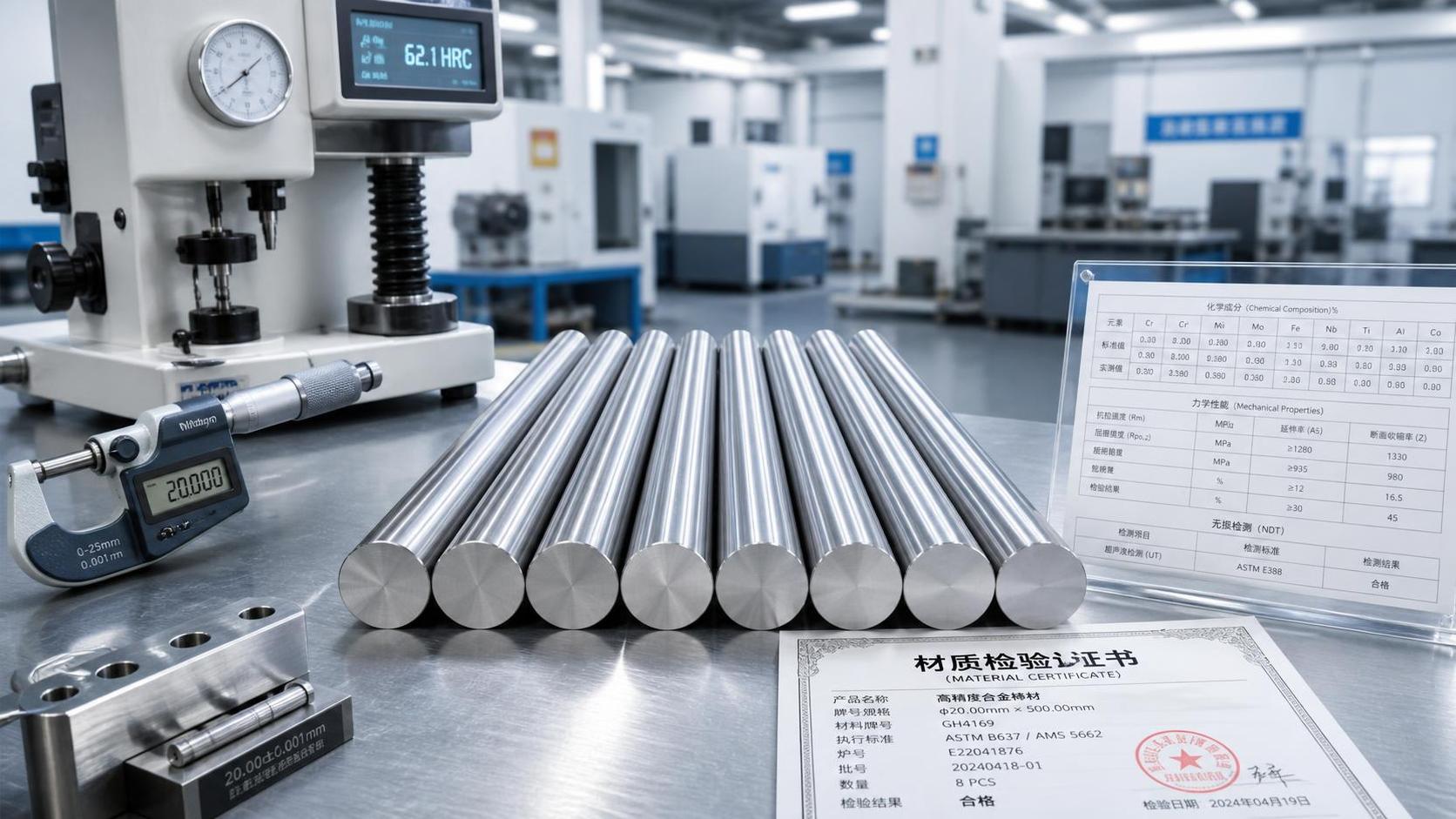
 Ms. Elena RodriguezWhat Buyers Should Check Before Sourcing Precision Alloy Bars for Critical PartsPrecision Alloy Bars buyers should verify grade, chemistry, tolerances, surface quality, traceability, and lead time before sourcing for critical parts. Learn what prevents costly machining and reliability risks.Aug 27, 2026



Related News
- 00
0000-00
How to Evaluate Lightweight Material Machinery for Output, Energy Use, and Product Quality - 00
0000-00
What Thermal Barrier Technology Works Best for Lightweight Industrial Panels? - 00
0000-00
Advanced Ceramic Processing for Honeycomb: Which Methods Improve Strength and Thermal Shock Resistance? - 00
0000-00
Building Material Extrusion Equipment Supplier Selection: 7 Parameters That Affect Line Performance - 00
0000-00
High Pressure Extruder Selection Guide: Output, Material Compatibility, and Wear
Weekly Insights
Stay ahead with our curated technology reports delivered every Monday.