
Industrial Material Science Explained: Key Properties That Affect Product Performance




Why does industrial material science matter so much in heavy industry?
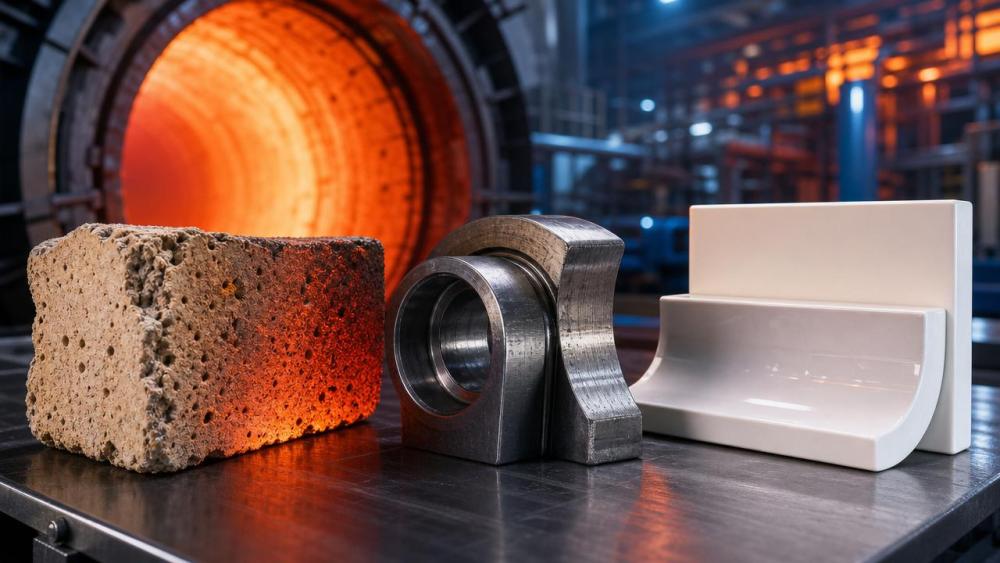
Industrial material science is not only about picking a strong metal or a durable ceramic.
It explains why one liner lasts for years, while another cracks after a short shutdown cycle.
In cement plants, glass lines, kilns, incineration systems, and extrusion equipment, performance depends on how materials behave under real stress.
That stress is rarely simple. Heat, abrasion, pressure, corrosive gases, and thermal shock often arrive together.
So when people search for industrial material science, they are usually asking a practical question.
Which material properties actually change product reliability, energy efficiency, and service life?
A useful answer must connect lab properties with operating conditions.
That is also where CF-Elite’s perspective becomes relevant.
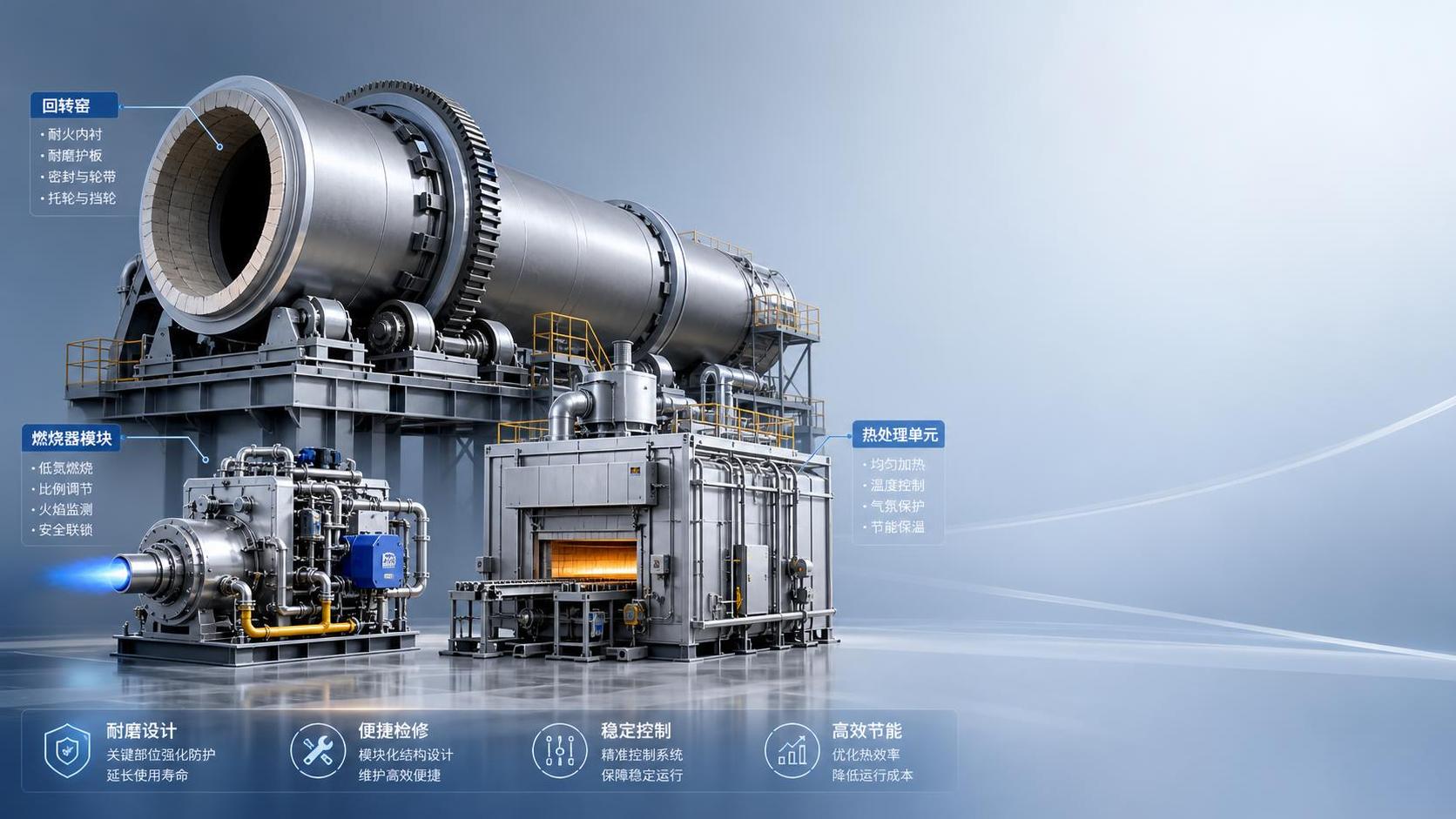
Its coverage of silicate production, thermal management, rotary kilns, refractory lines, and industrial decarbonization reflects the real environments where these properties decide outcomes.
In other words, industrial material science becomes meaningful when it helps explain why a system runs cleaner, cooler, longer, or more efficiently.
Which material properties affect product performance first?
The short answer is that no single property leads every decision.
Still, a few parameters appear again and again across high-temperature industries.
More common evaluation starts with the following questions.
- Can the material keep its strength at operating temperature?
- Does it resist rapid heating and cooling without cracking?
- Will it react with alkalis, acids, slag, ash, or molten glass?
- How quickly does its surface wear under friction or particle flow?
- Does it transfer or retain heat in a way that supports energy targets?
These questions point to core properties such as thermal stability, hardness, fracture toughness, corrosion resistance, creep resistance, and thermal conductivity.
For example, refractory bricks in a kiln need chemical stability and insulation balance.
A glass contact component may need smoothness, low contamination risk, and dimensional stability at heat.
An extruder screw or die may face wear, pressure, and heat at the same time.
Industrial material science helps compare these demands instead of assuming one “high-performance” material fits everything.
A quick property guide for early judgment
Before going deeper, this table helps translate common performance concerns into material science terms.
Is high strength always the best indicator of a better material?
Not really, and this is one of the most common misunderstandings in industrial material science.
A material can show excellent strength in a datasheet and still fail in service.
The reason is simple.
Industrial performance depends on the match between property profile and operating reality.
Take a dense refractory with high compressive strength.
It may resist load well, yet perform poorly if the line experiences repeated thermal cycling.
In that case, thermal shock resistance and microstructural flexibility may matter more.
The same logic applies to wear parts.
Higher hardness can improve abrasion resistance, but excessive brittleness may increase cracking risk under impact.
That is why industrial material science looks at property combinations, not isolated numbers.
In practical review, it helps to separate three questions.
- What damages the component most often?
- Is the damage sudden, gradual, or cycle-related?
- Which property declines fastest at real operating temperature?
This kind of reasoning is more reliable than choosing the strongest or most expensive option by default.
How do different sectors apply industrial material science differently?
The principles are shared, but the weighting changes by process.
That is why cross-sector intelligence is valuable.
CF-Elite’s focus areas show this clearly.
In cement production, industrial material science often centers on abrasion, alkali attack, thermal efficiency, and uptime.
For glass manufacturing gear, purity, thermal uniformity, and resistance to distortion become more critical.
In industrial kilns and incineration, the environment is chemically aggressive and thermally unstable.
There, materials must survive ash chemistry, flame variation, and emissions-related operating adjustments.
Refractory production lines care deeply about pore structure, sintering behavior, and long-term thermal barrier performance.
New building material extrusion adds another layer.
Pressure stability, die wear, moisture interaction, and dimensional control all shape final product quality.
So if two sectors both use ceramics or heat-resistant alloys, that does not mean they need the same specification.
Industrial material science becomes useful when it explains which property deserves priority in each line.
Where do selection mistakes usually happen?
Selection errors usually come from incomplete operating definitions, not from lack of material names.
In actual projects, several mistakes appear repeatedly.
- Using peak temperature only, while ignoring temperature fluctuation and dwell time.
- Focusing on chemical resistance, while missing mechanical fatigue or vibration.
- Comparing purchase price, while overlooking shutdown cost and replacement frequency.
- Reading standard test results without checking whether process conditions are similar.
- Assuming decarbonization upgrades do not change material demands.
That last point deserves attention.
As lines adopt alternative fuels, waste co-processing, or tighter heat recovery targets, the service environment can shift significantly.
A previously stable lining may now face new ash chemistry or steeper gradients.
This is where industrial material science links directly to carbon reduction strategy.
Material choice affects not just durability, but also energy loss, maintenance rhythm, and emissions performance.
A practical check before comparing options
A better evaluation usually starts with a short diagnostic list.
- Map normal temperature, upset temperature, and restart frequency.
- Identify dominant wear mode: chemical, thermal, mechanical, or mixed.
- Check whether heat retention or heat transfer is the real target.
- Review expected campaign life against replacement access and downtime cost.
- Confirm whether process upgrades will change fuel, feed, or atmosphere.
How should early-stage researchers judge lifecycle value instead of headline performance?
This is often the turning point in understanding industrial material science.
A good material is not simply the one with the best single-property score.
It is the one that supports stable operation over time, with acceptable energy use and manageable maintenance.
Lifecycle value usually combines five dimensions.
- Service life under actual load and chemistry.
- Effect on heat loss, fuel consumption, or cooling demand.
- Installation complexity and commissioning sensitivity.
- Risk of contamination, cracking, or unscheduled outage.
- Compatibility with future efficiency or emissions upgrades.
This broader view explains why intelligence-driven analysis matters.
Platforms like CF-Elite do more than follow material trends.
They help connect process engineering, thermal behavior, market shifts, and environmental constraints into one decision frame.
For anyone studying industrial material science, that connection is often more useful than isolated technical data.
It shows why materials are not passive inputs.
They shape operating economics, energy pathways, and resilience across the whole system.
What is the smartest next step after learning the basics?
The best next step is to turn general understanding into a structured comparison.
Start by defining the real operating window, not the ideal one.
Then link each failure risk to the property most likely to control it.
If the application is in cement, glass, refractory systems, incineration, or extrusion, compare options using both performance and thermal efficiency logic.
That approach makes industrial material science actionable.
It also supports better questions when reviewing technical literature, supplier data, or sector intelligence.
In practice, a strong review should clarify temperature profile, chemical exposure, wear mode, maintenance interval, and decarbonization impact before any final judgment.
If those factors are visible, material selection becomes less about guesswork and more about fit.
That is the real value of industrial material science: understanding how material properties translate into reliable, efficient, and future-ready industrial performance.
Related News
 Thermal Energy ArchitectHow to Select Heat-Resistant Materials That Maintain Abrasion Resistance in KilnsHeat-resistant materials abrasion resistance: learn how to select kiln linings that withstand heat, wear, thermal cycling, and chemical attack for longer service life.Sep 13, 2026
 Thermal Energy ArchitectHow Rotary Kiln Automation Improves Temperature Control and Fuel EfficiencyRotary kiln technology automation enhances temperature control, stabilizes combustion, and improves fuel efficiency with smarter data, predictive control, and safer operations.Sep 12, 2026
 Silicate Process EngineerCement Plant Emission Control: Selecting Systems for Dust, NOx, and SO2 LimitsCement plant emission control guide: compare dust collectors, NOx reduction, and SO2 systems for reliable compliance across kiln modes, fuel changes, and operating upsets.Sep 11, 2026
 Thermal Energy ArchitectSelecting Abrasion-Resistant High-Temperature Materials for Kiln and Conveyor Wear ZonesHigh-temp material engineering guide to abrasion-resistant kiln and conveyor solutions—match wear, heat, chemistry, and installation design for longer service life.Sep 10, 2026
 Dr. Alistair VaughnIndustrial Process Engineering: How to Map Processes for Safer, More Efficient PlantsIndustrial process engineering reveals bottlenecks, safety risks, and energy losses through practical process mapping for safer, more efficient plants.Sep 09, 2026
 Optical Glass Tech FellowHow to Evaluate a Glass Annealing Equipment Manufacturer for Production StabilityChoose a glass annealing equipment manufacturer with proven thermal uniformity, reliable controls, lifecycle value, and responsive service for stable production.Sep 08, 2026
 Prof. Marcus ChenThermal Energy Architecture in North America: Strategies for Lower Building Energy UseThermal energy architecture North America helps project leaders cut building energy use through stronger envelopes, right-sized HVAC, storage, and smart commissioning.Sep 07, 2026
 Ms. Elena RodriguezHow Should Buyers Evaluate Building Material Industry Intelligence Pricing?Building material industry intelligence pricing: learn how to compare coverage, technical depth, and ROI to choose intelligence that reduces procurement risk.Sep 07, 2026
 Ms. Elena RodriguezHow to Use Building Material Intelligence Data for Market and Investment DecisionsBuilding material industry intelligence data helps leaders evaluate demand, costs, regulation, capacity, and technology to make smarter market and investment decisions.Sep 05, 2026
 Thermal Energy ArchitectHow PLC Control Improves Energy Efficiency and Temperature Stability in KilnsEnergy efficient kilns PLC control improves temperature stability, cuts fuel waste, and optimizes combustion, draft, and material flow. Explore proven strategies for smarter kiln modernization.Sep 04, 2026
 Optical Glass Tech FellowEuropean Glass Melting Processes: Furnace Choices, Energy Use, and Quality ControlGlass melting process Europe: explore furnace choices, energy efficiency, cullet strategy, and quality control to improve output, compliance, and long-term glass performance.Sep 03, 2026
 Thermal Energy ArchitectWhat Determines Refractory Lining Monitoring Price for Industrial Kilns?Refractory lining monitoring price depends on kiln size, sensor technology, installation, software, and support. Compare total lifecycle costs and choose the right solution.Sep 02, 2026
 Silicate Process EngineerCement Production System Costs: A Plant Buyer’s Guide to Budgeting and ROICement production systems cost planning made clear: compare CAPEX, operating costs, compliance, and ROI to build a resilient, profitable cement plant investment.Sep 01, 2026
 Dr. Alistair VaughnWhat Should a Process Technology Database Track for High-Temperature Plants?Process technology database essentials for high-temperature plants: track thermal profiles, feed chemistry, refractory wear, emissions, energy, and maintenance for safer, data-driven decisions.Aug 31, 2026
 Ms. Elena RodriguezHow to Evaluate a Silicate Processing Equipment Manufacturer for Plant ProjectsSilicate processing equipment manufacturer selection: assess process fit, guarantees, energy, compliance, delivery risk, and lifecycle support for dependable plant performance.Aug 30, 2026
 Dr. Alistair VaughnHow to Specify Custom Agricultural Processing Equipment for Throughput and HygieneEquipment customization services for agricultural processing: learn to specify hygienic, high-throughput lines that improve yield, reliability, and long-term efficiency.Aug 29, 2026
 Dr. Alistair VaughnHow to Select Process Plant Equipment for High-Temperature, Abrasive Production LinesProcess plant equipment selection for high-temperature, abrasive lines: reduce downtime, improve durability, and optimize lifecycle performance.Aug 28, 2026
 Silicate Process EngineerHow Kiln Heat Recovery Systems Cut Fuel Use in Cement and Lime ProductionKiln heat recovery helps cement and lime plants cut fuel use, improve thermal stability, and build practical, reliable decarbonization strategies.Aug 27, 2026
 Ms. Elena RodriguezProcess Equipment Comparison: Which Metrics Matter Most for Reliable Selection?Process equipment comparison made practical: discover which metrics truly drive reliable selection, from energy efficiency and control stability to wear life, maintainability, and uptime.Aug 26, 2026
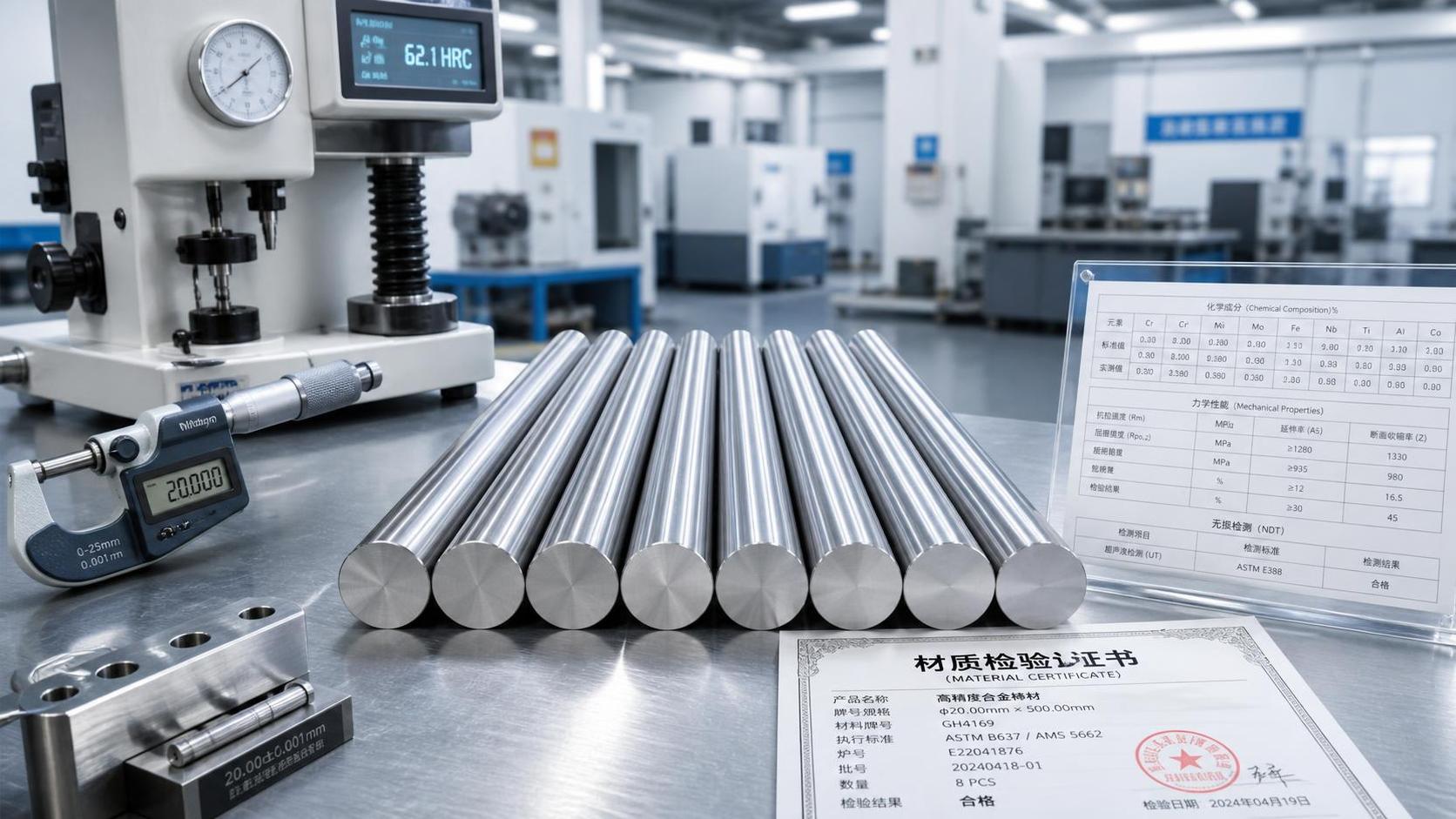
 Ms. Elena RodriguezWhat Buyers Should Check Before Sourcing Precision Alloy Bars for Critical PartsPrecision Alloy Bars buyers should verify grade, chemistry, tolerances, surface quality, traceability, and lead time before sourcing for critical parts. Learn what prevents costly machining and reliability risks.Aug 27, 2026



Related News
- 00
0000-00
Industrial Process Engineering: How to Map Processes for Safer, More Efficient Plants - 00
0000-00
What Should a Process Technology Database Track for High-Temperature Plants? - 00
0000-00
How to Specify Custom Agricultural Processing Equipment for Throughput and Hygiene - 00
0000-00
How to Select Process Plant Equipment for High-Temperature, Abrasive Production Lines - 00
0000-00
What Causes Thermal Shock Failure in Heat-Resistant Materials During Development?
Weekly Insights
Stay ahead with our curated technology reports delivered every Monday.