
How to Choose Industrial Thermal Systems for Continuous vs Batch Production




Choosing between industrial thermal systems for continuous or batch production is rarely a simple equipment decision. It shapes fuel efficiency, temperature stability, emissions performance, maintenance rhythm, and the economics of future expansion.
That is especially true in sectors where heat defines product quality, including cement, glass, refractory materials, industrial incineration, and advanced extrusion lines. In these environments, thermal design sits at the center of both production reliability and decarbonization strategy.
CF-Elite tracks this intersection closely because high-temperature industries no longer evaluate kilns, furnaces, dryers, and burners in isolation. They are judged by how well they connect process kinetics, energy use, refractory life, and environmental compliance.
Why production mode changes the thermal decision
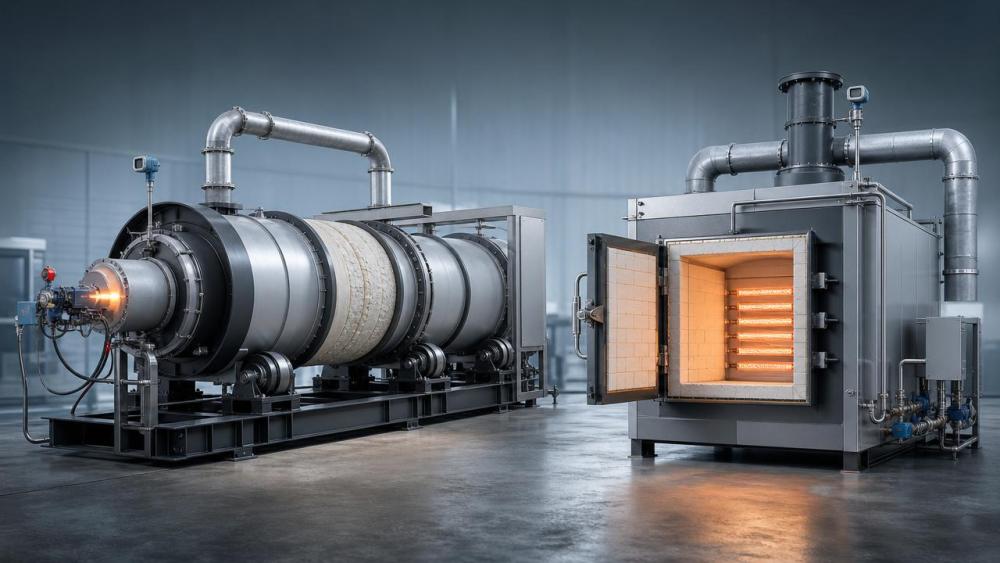
The same heat duty can demand very different industrial thermal systems when production mode changes. Continuous lines reward thermal consistency over long operating periods. Batch lines need flexibility, repeatability, and controlled cycling.
In continuous production, heat input is expected to remain stable across shifts, feed changes, and ambient variations. Small thermal deviations can become large quality losses when a line runs without interruption.
Batch production behaves differently. Every start, soak, transfer, and cooldown adds thermal transitions. The system must respond quickly without overshoot, hot spots, or long recovery times.
This is why selecting industrial thermal systems starts with process rhythm, not with burner size or installed capacity alone.
A practical way to read continuous and batch demand
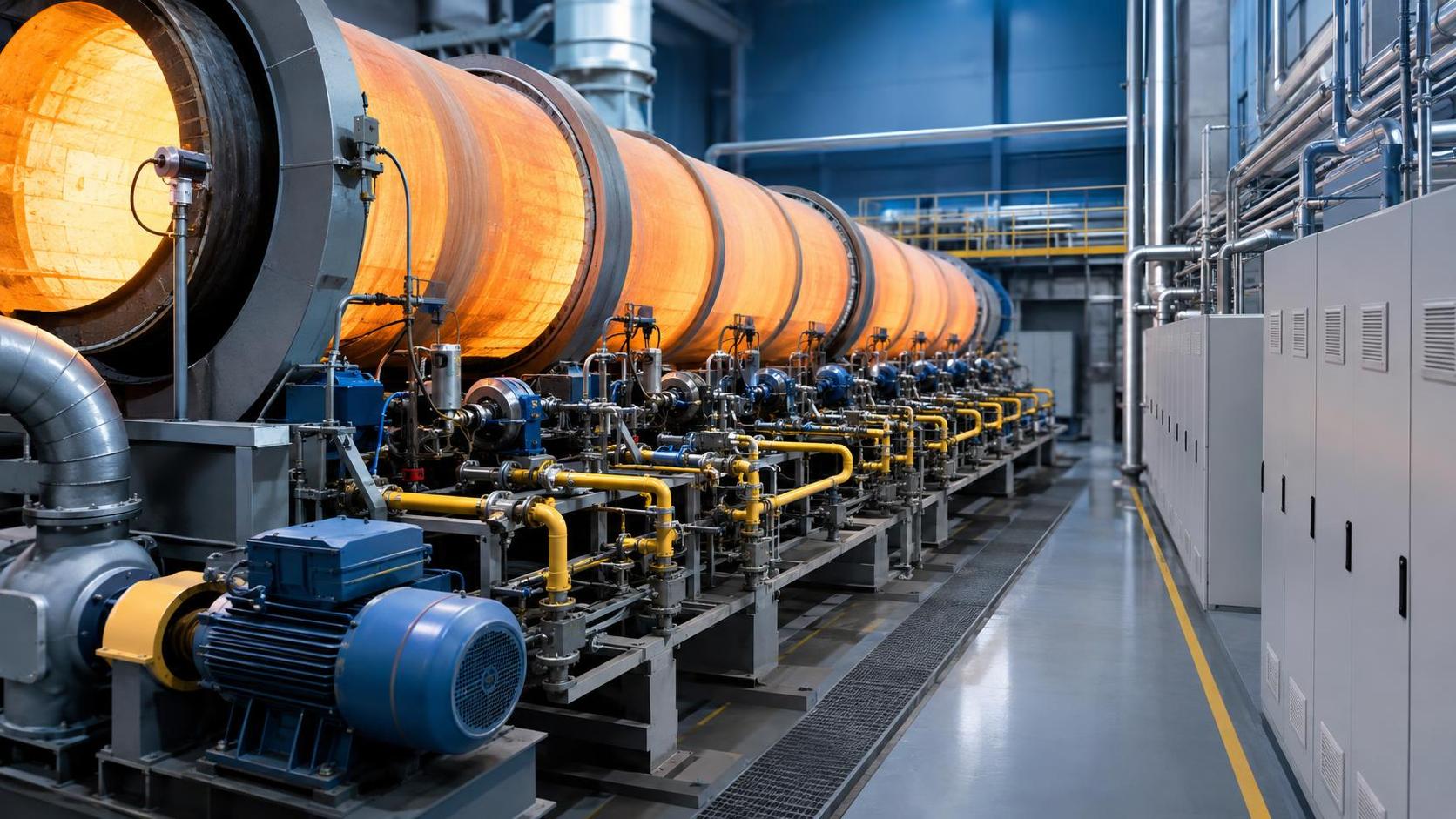
Continuous production usually supports high-throughput materials with narrow process windows. Rotary kilns, float glass lines, tunnel kilns, and some extrusion dryers depend on steady-state heating profiles.
Batch production appears where product mix changes often, treatment time varies, or thermal recipes need adjustment. Shuttle kilns, chamber furnaces, curing systems, and specialty material processing often fit this pattern.
The difference is not only operational. It affects combustion architecture, insulation strategy, automation depth, flue gas treatment, and maintenance planning.
In practice, many plants sit between these categories. That makes it useful to compare heat behavior over a full production week, not only during nameplate conditions.
What to evaluate beyond temperature
Temperature target matters, but it is only one layer of thermal performance. Better decisions come from examining how heat moves, how fast it responds, and how consistently it reaches the material bed or product surface.
Heat transfer profile
Some industrial thermal systems rely mainly on radiant heat, while others use convection, conduction, or mixed transfer. Cement clinker, annealed glass, refractory firing, and waste co-processing all respond differently.
A mismatch here can create uneven core temperatures, surface defects, incomplete reactions, or unnecessary fuel use.
Turndown and response speed
Batch operations often need wide turndown capability and fast control response. Continuous lines usually value narrow but highly stable control ranges.
If the system cannot modulate cleanly, cycle stability weakens and emissions can rise during transient operation.
Thermal mass and insulation
High thermal mass can help smooth continuous production. The same mass may become a penalty in batch lines, where reheating and cooling consume time and fuel.
Refractory selection, shell losses, and heat storage behavior should therefore be reviewed as part of the system, not as separate procurement items.
Where industry attention is shifting now
The market is paying closer attention to industrial thermal systems because energy volatility and carbon pressure are changing investment logic. Plants now compare options through lifecycle cost, not only capital expenditure.
This is visible across the sectors CF-Elite monitors. Cement plants are reassessing co-processing and waste heat recovery. Glass producers are modeling furnace behavior with digital twins. Refractory lines are expanding online lining monitoring.
Industrial incineration projects are also under pressure to prove stable destruction efficiency while recovering usable energy. Meanwhile, extrusion and new building material lines need thermal precision without compromising throughput.
In all of these cases, the preferred thermal solution is the one that supports process control, fuel adaptability, and measurable environmental performance at the same time.
Selecting a system for continuous production
For continuous lines, the strongest industrial thermal systems usually share one trait: they protect uniformity under load variation. That means more than holding a setpoint on the operator screen.
The real test is how the system behaves when feed moisture changes, raw material chemistry drifts, fuel composition varies, or maintenance windows are delayed.
- Prioritize stable combustion and strong zone control.
- Review heat recovery potential from exhaust streams.
- Check refractory compatibility with long residence times.
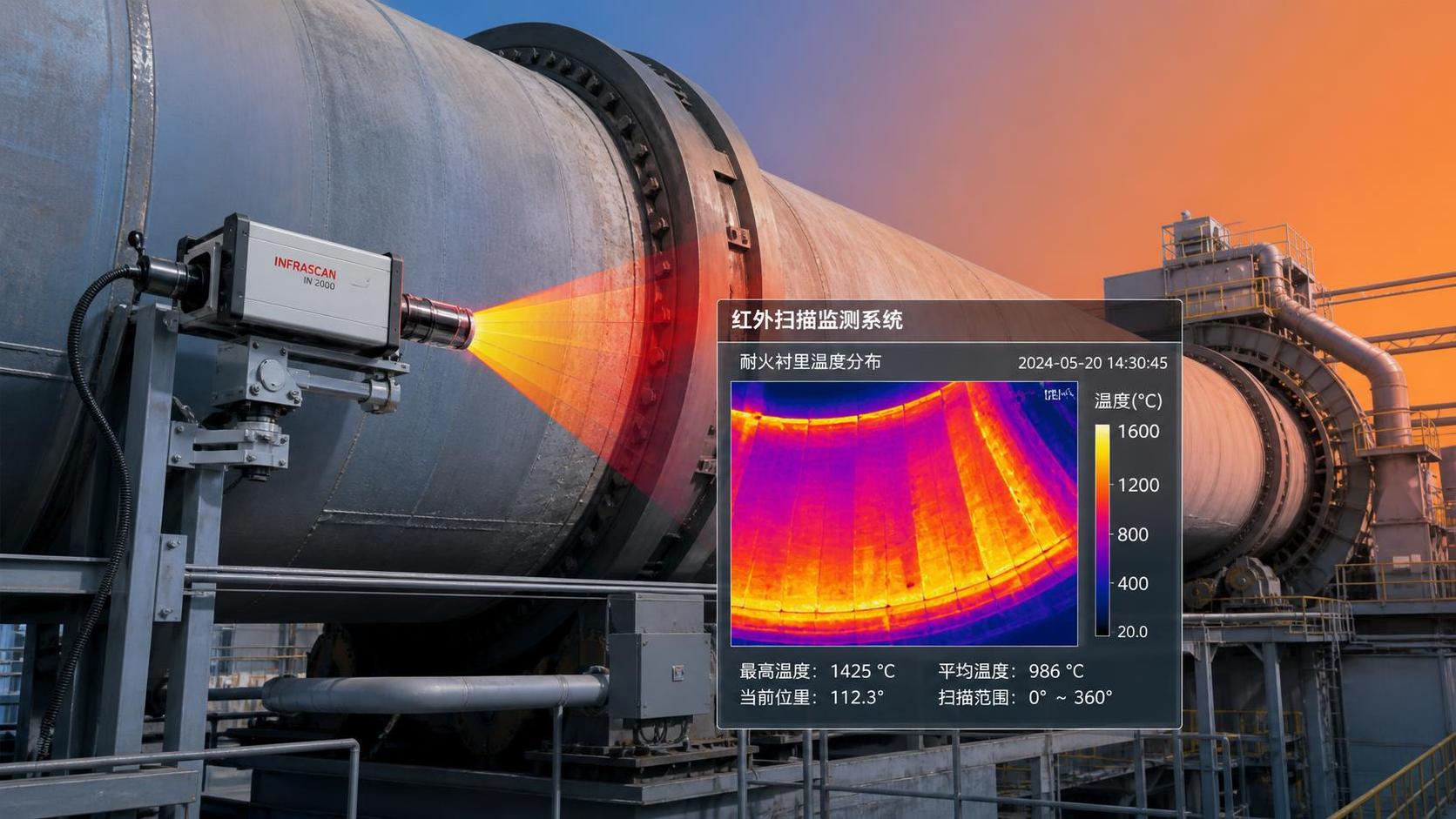
- Assess instrumentation for real-time thermal mapping.
- Model downtime costs against maintenance intervals.
A continuous line can appear efficient at startup but lose value if thermal drift forces lower throughput or higher reject rates after several months of operation.
Selecting a system for batch production
Batch operations need industrial thermal systems that can repeat a thermal recipe reliably. Uniform ramps, soak accuracy, and controlled cooldown often matter as much as peak heating capacity.
This is common in specialty ceramics, refractory products, heat treatment, and customized material preparation. Product value often depends on repeating the same thermal history across different lots.
- Measure time to setpoint under real loading patterns.
- Compare control accuracy during ramp and soak stages.
- Evaluate door losses, sealing quality, and air leakage.
- Check recipe management within the automation platform.
- Estimate energy cost per batch, not per installed kilowatt.
Systems that look flexible on paper may still perform poorly if loading patterns are irregular or if the controls cannot handle product-to-product transitions.
Common mistakes during specification
One frequent mistake is selecting industrial thermal systems only from design temperature and hourly output. That leaves out transient behavior, fuel quality, process chemistry, and local emissions constraints.
Another is treating combustion, refractory, controls, and exhaust handling as separate packages. In high-temperature industries, these elements succeed or fail together.
A third mistake is underestimating data needs. Digital monitoring is no longer optional in many applications. Temperature profiles, fuel use, lining condition, and off-gas trends are now part of asset performance.
Questions worth asking before commitment
- How does the system behave at minimum, normal, and peak load?
- What is the expected efficiency after one year, not only on day one?
- Which emissions limits apply during transient conditions?
- Can the line accept alternative fuels or electrification later?
- How will maintenance affect production continuity?
Turning thermal selection into a stronger project decision
The most useful approach is to build a decision matrix that connects production mode, material behavior, utility cost, environmental targets, and expansion plans. That creates a better basis than comparing suppliers by headline efficiency alone.
For many projects, the next step is not choosing a brand immediately. It is clarifying thermal load profile, cycle pattern, control precision, fuel pathway, and expected maintenance philosophy.
When those inputs are defined, industrial thermal systems can be compared in a way that reflects real operating conditions. That is where stronger decisions emerge, especially in high-temperature sectors where process stability and energy strategy are tightly linked.
A practical review of recent line data, planned throughput changes, and decarbonization constraints will usually reveal whether the priority should be steady-state efficiency, thermal agility, or a carefully balanced hybrid design.
Related News
 Optical Glass Tech FellowHow to Evaluate a Glass Annealing Equipment Manufacturer for Production StabilityChoose a glass annealing equipment manufacturer with proven thermal uniformity, reliable controls, lifecycle value, and responsive service for stable production.Sep 08, 2026
 Prof. Marcus ChenThermal Energy Architecture in North America: Strategies for Lower Building Energy UseThermal energy architecture North America helps project leaders cut building energy use through stronger envelopes, right-sized HVAC, storage, and smart commissioning.Sep 07, 2026
 Ms. Elena RodriguezHow Should Buyers Evaluate Building Material Industry Intelligence Pricing?Building material industry intelligence pricing: learn how to compare coverage, technical depth, and ROI to choose intelligence that reduces procurement risk.Sep 07, 2026
 Ms. Elena RodriguezHow to Use Building Material Intelligence Data for Market and Investment DecisionsBuilding material industry intelligence data helps leaders evaluate demand, costs, regulation, capacity, and technology to make smarter market and investment decisions.Sep 05, 2026
 Thermal Energy ArchitectHow PLC Control Improves Energy Efficiency and Temperature Stability in KilnsEnergy efficient kilns PLC control improves temperature stability, cuts fuel waste, and optimizes combustion, draft, and material flow. Explore proven strategies for smarter kiln modernization.Sep 04, 2026
 Optical Glass Tech FellowEuropean Glass Melting Processes: Furnace Choices, Energy Use, and Quality ControlGlass melting process Europe: explore furnace choices, energy efficiency, cullet strategy, and quality control to improve output, compliance, and long-term glass performance.Sep 03, 2026
 Thermal Energy ArchitectWhat Determines Refractory Lining Monitoring Price for Industrial Kilns?Refractory lining monitoring price depends on kiln size, sensor technology, installation, software, and support. Compare total lifecycle costs and choose the right solution.Sep 02, 2026
 Silicate Process EngineerCement Production System Costs: A Plant Buyer’s Guide to Budgeting and ROICement production systems cost planning made clear: compare CAPEX, operating costs, compliance, and ROI to build a resilient, profitable cement plant investment.Sep 01, 2026
 Dr. Alistair VaughnWhat Should a Process Technology Database Track for High-Temperature Plants?Process technology database essentials for high-temperature plants: track thermal profiles, feed chemistry, refractory wear, emissions, energy, and maintenance for safer, data-driven decisions.Aug 31, 2026
 Ms. Elena RodriguezHow to Evaluate a Silicate Processing Equipment Manufacturer for Plant ProjectsSilicate processing equipment manufacturer selection: assess process fit, guarantees, energy, compliance, delivery risk, and lifecycle support for dependable plant performance.Aug 30, 2026
 Dr. Alistair VaughnHow to Specify Custom Agricultural Processing Equipment for Throughput and HygieneEquipment customization services for agricultural processing: learn to specify hygienic, high-throughput lines that improve yield, reliability, and long-term efficiency.Aug 29, 2026
 Dr. Alistair VaughnHow to Select Process Plant Equipment for High-Temperature, Abrasive Production LinesProcess plant equipment selection for high-temperature, abrasive lines: reduce downtime, improve durability, and optimize lifecycle performance.Aug 28, 2026
 Silicate Process EngineerHow Kiln Heat Recovery Systems Cut Fuel Use in Cement and Lime ProductionKiln heat recovery helps cement and lime plants cut fuel use, improve thermal stability, and build practical, reliable decarbonization strategies.Aug 27, 2026
 Ms. Elena RodriguezProcess Equipment Comparison: Which Metrics Matter Most for Reliable Selection?Process equipment comparison made practical: discover which metrics truly drive reliable selection, from energy efficiency and control stability to wear life, maintainability, and uptime.Aug 26, 2026
 Ms. Elena RodriguezWhat Buyers Should Check Before Sourcing Precision Alloy Bars for Critical PartsPrecision Alloy Bars buyers should verify grade, chemistry, tolerances, surface quality, traceability, and lead time before sourcing for critical parts. Learn what prevents costly machining and reliability risks.Aug 27, 2026
 Ms. Elena RodriguezHow to Evaluate Thermal Management Solutions Insulation for High-Heat Industrial SystemsThermal management solutions insulation: learn how to assess high-heat industrial systems by thermal performance, durability, lifecycle cost, and supplier data for smarter decisions.Aug 25, 2026
 Ms. Elena RodriguezWhat Drives Waste Recycling Cost in Industrial Projects and How to Estimate It?Waste recycling cost in industrial projects depends on composition, moisture, transport, pre-treatment, and compliance. Learn how to estimate it accurately and compare suppliers with confidence.Aug 24, 2026
 Silicate Process EngineerHow to Evaluate Cement Production Plants in the Middle East for Capacity, Fuel Flexibility, and ROIcement production plants Middle East: Learn how to assess true capacity, fuel flexibility, and ROI risks to identify resilient assets and smarter investment opportunities.Aug 23, 2026
 Structural Material AnalystHow to Evaluate Lightweight Material Machinery for Output, Energy Use, and Product QualityLightweight material machinery evaluation guide: compare stable output, energy use, and product quality to choose equipment that cuts waste, lowers costs, and improves production confidence.Aug 22, 2026
 Material Heat-Resist ExpertWhat Determines Refractory Production Line Price in a Turnkey Plant Project?Refractory production line price depends on raw materials, forming method, kiln and drying design, automation, utilities, and scope. Learn what really drives turnkey plant cost before you invest.Aug 21, 2026

Related News
- 00
0000-00
What Should a Process Technology Database Track for High-Temperature Plants? - 00
0000-00
How to Specify Custom Agricultural Processing Equipment for Throughput and Hygiene - 00
0000-00
How to Select Process Plant Equipment for High-Temperature, Abrasive Production Lines - 00
0000-00
What Causes Thermal Shock Failure in Heat-Resistant Materials During Development? - 00
0000-00
How Digital Twin Simulations Improve Process Plant Design, Safety, and Uptime
Weekly Insights
Stay ahead with our curated technology reports delivered every Monday.