
How global material supply chain risks affect lead times




For high-temperature industries, global material supply chain volatility now shapes delivery performance as much as engineering capacity. Lead times for kilns, refractory systems, glass equipment, and extrusion lines are increasingly influenced by upstream shortages, logistics stress, regulation shifts, and energy costs.
When global material supply chain conditions tighten, delivery dates move, buffer stock rises, and project schedules lose certainty. A clear view of these signals helps reduce disruption, protect commercial outcomes, and improve timing decisions across complex industrial sourcing.
Why global material supply chain risks are becoming a lead-time issue
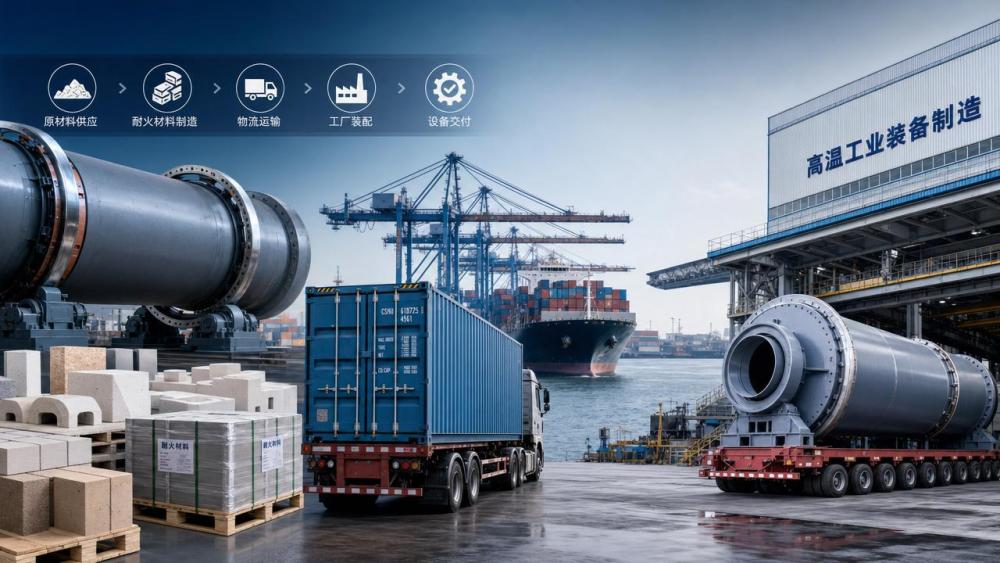
The current environment shows a structural shift rather than a temporary disturbance. Long-cycle industrial equipment depends on layered supply networks, and each layer can extend lead times when conditions deteriorate.
In cement, glass, incineration, and refractory production, critical inputs often cross several borders before final assembly. Ore extraction, mineral processing, shaped parts, thermal components, controls, and shipping schedules are tightly linked.
A disruption at any node can delay the whole chain. That is why global material supply chain risk now acts as a direct timing variable, not just a background market concern.
The strongest trend signals visible across industrial sourcing
Several signals suggest that longer and less predictable lead times may remain a baseline condition. These signals appear across heavy equipment, thermal materials, and engineered components.
- More frequent export controls on minerals, metals, and energy-intensive materials.
- Higher freight volatility on key sea lanes and inland rail corridors.
- Rising maintenance shutdowns at smelters, furnaces, and chemical processing sites.
- Longer qualification cycles for alternate suppliers and substitute materials.
- Stricter environmental compliance affecting mining, firing, and transport capacity.
- Growing concentration risk in specialized components such as burners, insulation, sensors, and castables.
These signals matter because global material supply chain pressure rarely appears as one dramatic event. More often, small disruptions accumulate and quietly stretch planning assumptions.
What is driving global material supply chain disruption now
Lead times are being extended by a combination of geopolitical, operational, and environmental drivers. For capital-intensive industrial sectors, the interaction between these drivers is especially important.
This mix explains why global material supply chain issues persist even when one cost category eases. A freight improvement does not remove raw material concentration or compliance bottlenecks.
How delays spread from raw materials to finished industrial systems
Lead-time inflation often starts upstream. A delayed mineral feedstock can postpone shaped refractory products, which then shifts kiln installation windows and commissioning dates.
The same pattern applies to control panels, fans, steel structures, combustion systems, and thermal sensors. One late item can hold back packing, factory testing, or shipment release.
Impacts across key business links
- Design phases may be frozen longer while engineers wait for confirmed component availability.
- Commercial quotations may have shorter validity because input costs remain unstable.
- Production planning may require resequencing to match partial material arrivals.
- Installation schedules may be compressed, increasing execution pressure at site level.
- After-sales support may face spare-parts gaps if common wear items are constrained.
For sectors covered by CF-Elite, these impacts are magnified by heat, safety, and performance requirements. Not every delayed item can be replaced with an equivalent alternative.
Which materials and components are most exposed
Not all categories carry the same global material supply chain risk. The highest exposure usually sits where energy intensity, technical qualification, and source concentration overlap.
- Refractory minerals and shaped linings for kilns, furnaces, and incinerators.
- Specialty steel, castings, and alloy parts used in hot-zone assemblies.
- Burners, valves, fans, and control hardware with limited approved vendors.
- Glass line components requiring tight thermal tolerance and precision processing.
- Extrusion tooling, screws, dies, and wear-resistant internal parts.
These categories deserve extra monitoring because shortages here can stop a full line, even when most lower-value items remain available.
What deserves closer attention in the next planning cycle
A stronger response begins with better visibility. The goal is not to predict every disruption, but to identify where timing risk is building before formal delays appear.
Priority watchpoints
- Supplier dependency by material family, country, and transport route.
- Difference between quoted lead time and proven delivery performance.
- Exposure to energy-intensive inputs with volatile production economics.
- Single-source engineered items with long qualification requirements.
- Regulatory developments affecting mining, combustion, emissions, or customs clearance.
- Inventory health for critical spares linked to shutdowns and maintenance cycles.
Watching these points helps translate global material supply chain noise into decision-ready risk signals. That supports better scheduling discipline across design, sourcing, and execution.
Practical ways to reduce lead-time exposure
Mitigation works best when commercial, technical, and logistics choices are aligned early. Lead-time resilience cannot be built only at the purchase order stage.
These actions are especially useful where global material supply chain pressure affects both new projects and installed-base support. The same disruption can delay expansion and maintenance at once.
A smarter next step for timing resilience
The most effective response is to combine market intelligence with technical prioritization. Timing risk should be reviewed by component function, source geography, qualification difficulty, and installation sequence.
For organizations tracking cement plants, glass manufacturing gear, industrial kilns, incineration systems, refractory lines, or extrusion equipment, a structured global material supply chain watchlist can turn uncertainty into earlier action.
Use the next planning cycle to identify the top delay-sensitive materials, compare quoted versus actual lead times, and test fallback options before urgency arrives. In a volatile global material supply chain, speed comes from preparation, not reaction.
Related News
 Optical Glass Tech FellowHow to Evaluate a Glass Annealing Equipment Manufacturer for Production StabilityChoose a glass annealing equipment manufacturer with proven thermal uniformity, reliable controls, lifecycle value, and responsive service for stable production.Sep 08, 2026
 Prof. Marcus ChenThermal Energy Architecture in North America: Strategies for Lower Building Energy UseThermal energy architecture North America helps project leaders cut building energy use through stronger envelopes, right-sized HVAC, storage, and smart commissioning.Sep 07, 2026
 Ms. Elena RodriguezHow Should Buyers Evaluate Building Material Industry Intelligence Pricing?Building material industry intelligence pricing: learn how to compare coverage, technical depth, and ROI to choose intelligence that reduces procurement risk.Sep 07, 2026
 Ms. Elena RodriguezHow to Use Building Material Intelligence Data for Market and Investment DecisionsBuilding material industry intelligence data helps leaders evaluate demand, costs, regulation, capacity, and technology to make smarter market and investment decisions.Sep 05, 2026
 Thermal Energy ArchitectHow PLC Control Improves Energy Efficiency and Temperature Stability in KilnsEnergy efficient kilns PLC control improves temperature stability, cuts fuel waste, and optimizes combustion, draft, and material flow. Explore proven strategies for smarter kiln modernization.Sep 04, 2026
 Optical Glass Tech FellowEuropean Glass Melting Processes: Furnace Choices, Energy Use, and Quality ControlGlass melting process Europe: explore furnace choices, energy efficiency, cullet strategy, and quality control to improve output, compliance, and long-term glass performance.Sep 03, 2026
 Thermal Energy ArchitectWhat Determines Refractory Lining Monitoring Price for Industrial Kilns?Refractory lining monitoring price depends on kiln size, sensor technology, installation, software, and support. Compare total lifecycle costs and choose the right solution.Sep 02, 2026
 Silicate Process EngineerCement Production System Costs: A Plant Buyer’s Guide to Budgeting and ROICement production systems cost planning made clear: compare CAPEX, operating costs, compliance, and ROI to build a resilient, profitable cement plant investment.Sep 01, 2026
 Dr. Alistair VaughnWhat Should a Process Technology Database Track for High-Temperature Plants?Process technology database essentials for high-temperature plants: track thermal profiles, feed chemistry, refractory wear, emissions, energy, and maintenance for safer, data-driven decisions.Aug 31, 2026
 Ms. Elena RodriguezHow to Evaluate a Silicate Processing Equipment Manufacturer for Plant ProjectsSilicate processing equipment manufacturer selection: assess process fit, guarantees, energy, compliance, delivery risk, and lifecycle support for dependable plant performance.Aug 30, 2026
 Dr. Alistair VaughnHow to Specify Custom Agricultural Processing Equipment for Throughput and HygieneEquipment customization services for agricultural processing: learn to specify hygienic, high-throughput lines that improve yield, reliability, and long-term efficiency.Aug 29, 2026
 Dr. Alistair VaughnHow to Select Process Plant Equipment for High-Temperature, Abrasive Production LinesProcess plant equipment selection for high-temperature, abrasive lines: reduce downtime, improve durability, and optimize lifecycle performance.Aug 28, 2026
 Silicate Process EngineerHow Kiln Heat Recovery Systems Cut Fuel Use in Cement and Lime ProductionKiln heat recovery helps cement and lime plants cut fuel use, improve thermal stability, and build practical, reliable decarbonization strategies.Aug 27, 2026
 Ms. Elena RodriguezProcess Equipment Comparison: Which Metrics Matter Most for Reliable Selection?Process equipment comparison made practical: discover which metrics truly drive reliable selection, from energy efficiency and control stability to wear life, maintainability, and uptime.Aug 26, 2026
 Ms. Elena RodriguezWhat Buyers Should Check Before Sourcing Precision Alloy Bars for Critical PartsPrecision Alloy Bars buyers should verify grade, chemistry, tolerances, surface quality, traceability, and lead time before sourcing for critical parts. Learn what prevents costly machining and reliability risks.Aug 27, 2026
 Ms. Elena RodriguezHow to Evaluate Thermal Management Solutions Insulation for High-Heat Industrial SystemsThermal management solutions insulation: learn how to assess high-heat industrial systems by thermal performance, durability, lifecycle cost, and supplier data for smarter decisions.Aug 25, 2026
 Ms. Elena RodriguezWhat Drives Waste Recycling Cost in Industrial Projects and How to Estimate It?Waste recycling cost in industrial projects depends on composition, moisture, transport, pre-treatment, and compliance. Learn how to estimate it accurately and compare suppliers with confidence.Aug 24, 2026
 Silicate Process EngineerHow to Evaluate Cement Production Plants in the Middle East for Capacity, Fuel Flexibility, and ROIcement production plants Middle East: Learn how to assess true capacity, fuel flexibility, and ROI risks to identify resilient assets and smarter investment opportunities.Aug 23, 2026
 Structural Material AnalystHow to Evaluate Lightweight Material Machinery for Output, Energy Use, and Product QualityLightweight material machinery evaluation guide: compare stable output, energy use, and product quality to choose equipment that cuts waste, lowers costs, and improves production confidence.Aug 22, 2026
 Material Heat-Resist ExpertWhat Determines Refractory Production Line Price in a Turnkey Plant Project?Refractory production line price depends on raw materials, forming method, kiln and drying design, automation, utilities, and scope. Learn what really drives turnkey plant cost before you invest.Aug 21, 2026

Related News
- 00
0000-00
What Should a Process Technology Database Track for High-Temperature Plants? - 00
0000-00
How to Specify Custom Agricultural Processing Equipment for Throughput and Hygiene - 00
0000-00
How to Select Process Plant Equipment for High-Temperature, Abrasive Production Lines - 00
0000-00
What Causes Thermal Shock Failure in Heat-Resistant Materials During Development? - 00
0000-00
How Digital Twin Simulations Improve Process Plant Design, Safety, and Uptime
Weekly Insights
Stay ahead with our curated technology reports delivered every Monday.